
Concept Cartoons in Science Class
Stephen Taylor
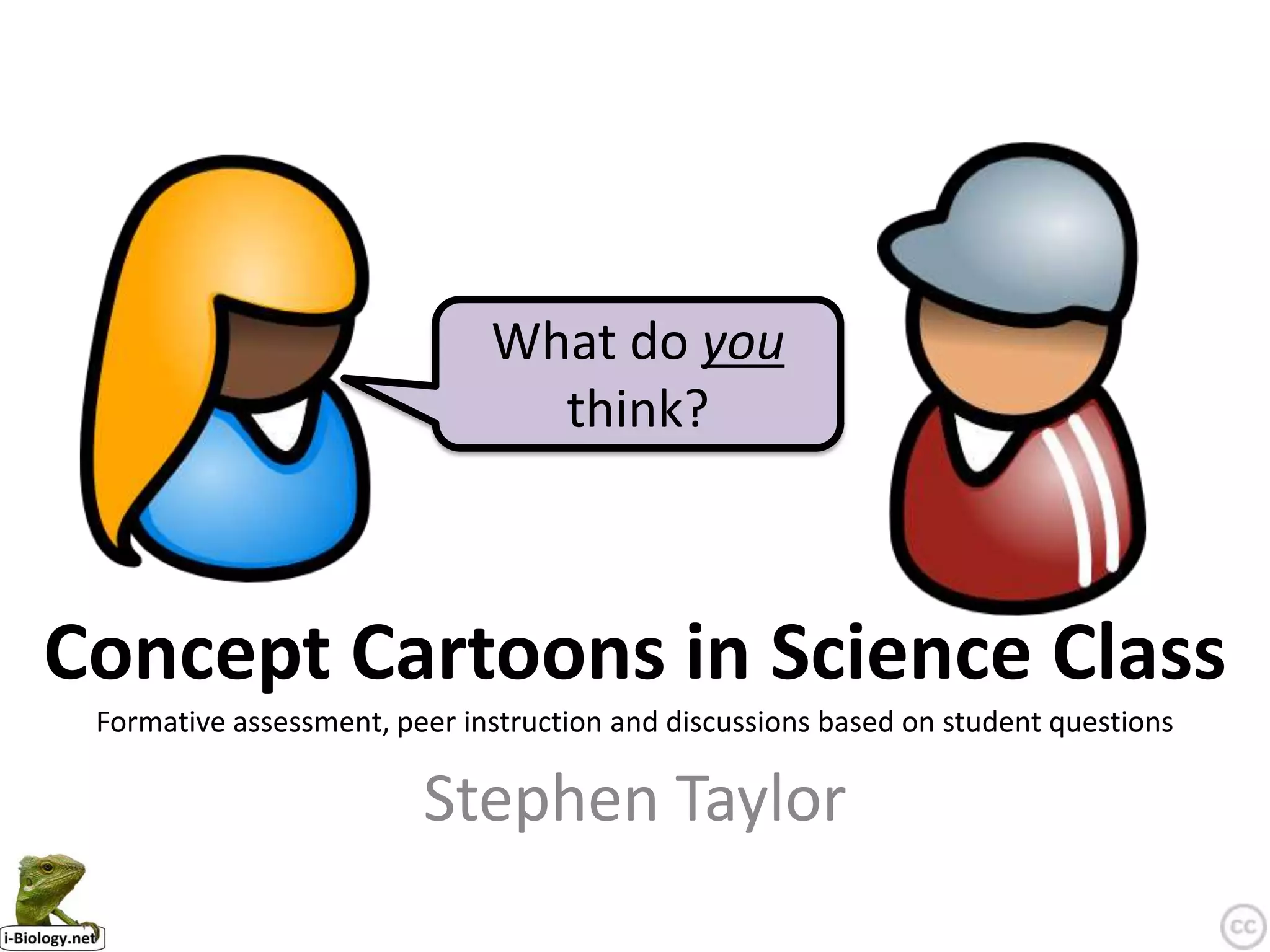
What do you
think?
Formative assessment, peer instruction and discussions based on student questions
Concept Cartoons in Science Education
http://www.millgatehouse.co.uk/science/ccsbcd
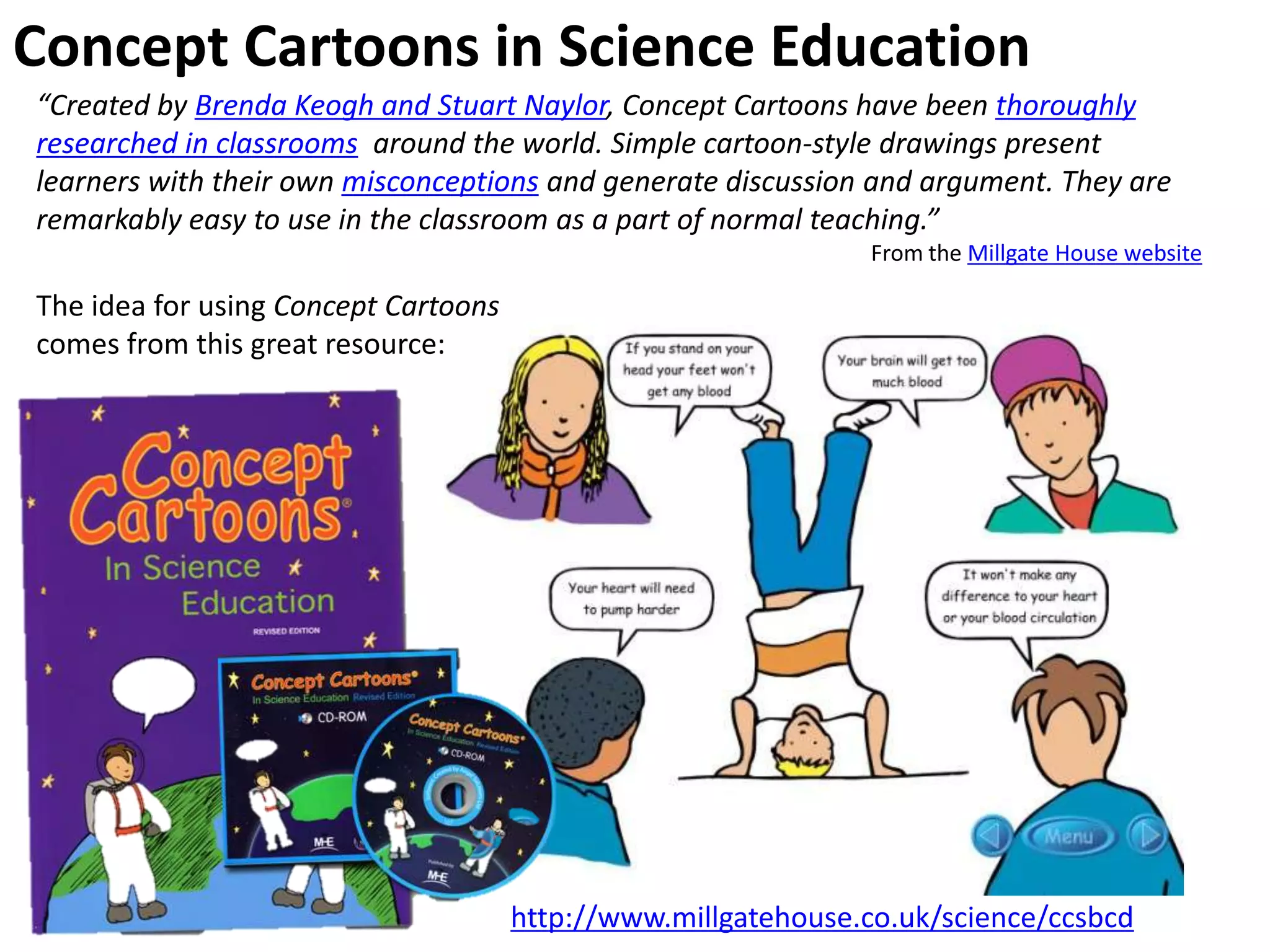
“Created by Brenda Keogh and Stuart Naylor, Concept Cartoons have been thoroughly
researched in classrooms around the world. Simple cartoon-style drawings present
learners with their own misconceptions and generate discussion and argument. They are
remarkably easy to use in the classroom as a part of normal teaching.”
From the Millgate House website
The idea for using Concept Cartoons
comes from this great resource:
Concept Cartoons in Science Education
http://www.millgatehouse.co.uk/science/ccsbcd
“Created by Brenda Keogh and Stuart Naylor, Concept Cartoons have been thoroughly
researched in classrooms around the world. Simple cartoon-style drawings present
learners with their own misconceptions and generate discussion and argument. They are
remarkably easy to use in the classroom as a part of normal teaching.”
From the Millgate House website
The idea for using Concept Cartoons
comes from this great resource:
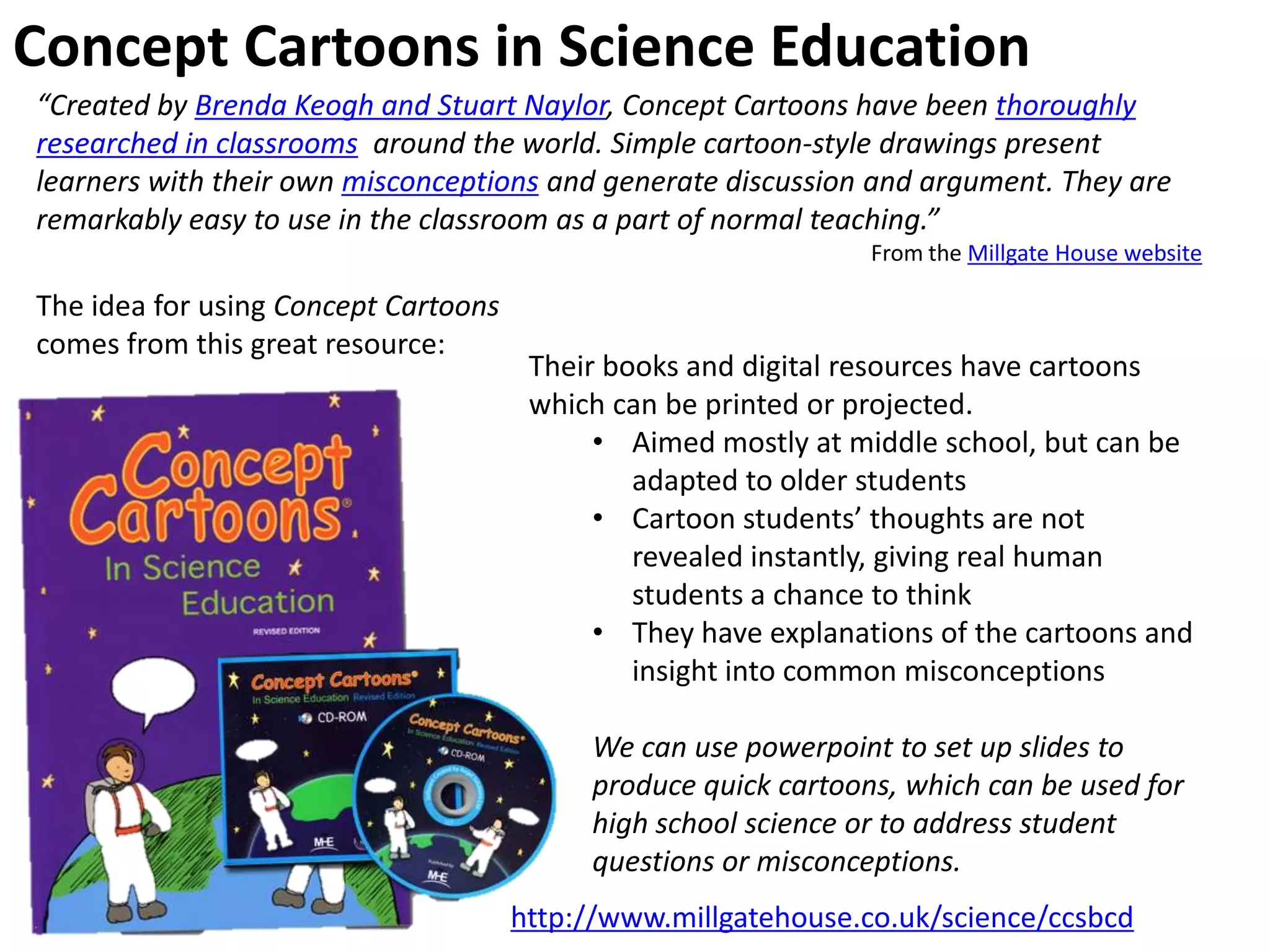
Their books and digital resources have cartoons
which can be printed or projected.
• Aimed mostly at middle school, but can be
adapted to older students
• Cartoon students’ thoughts are not
revealed instantly, giving real human
students a chance to think
• They have explanations of the cartoons and
insight into common misconceptions
We can use powerpoint to set up slides to
produce quick cartoons, which can be used for
high school science or to address student
questions or misconceptions.
Hinge Questions
Concept cartoons could be used at
a crucial ‘hinge’ point in the lesson
to determine if students are ready
to move on.
Image: 'Day Lilies’, by Roger Lynn
http://www.flickr.com/photos/17366766@N00/236620380
Found on flickrcc.net
Concept Cartoons: Making Them Up!
Some quick ideas:
• Set up a cartoon for key lesson understandings
• If interesting student questions, observations or
disagreements arise, quickly add a slide to show the
discussion and open it up to the class
• Use a clicker service like Socrative to elicit student ideas
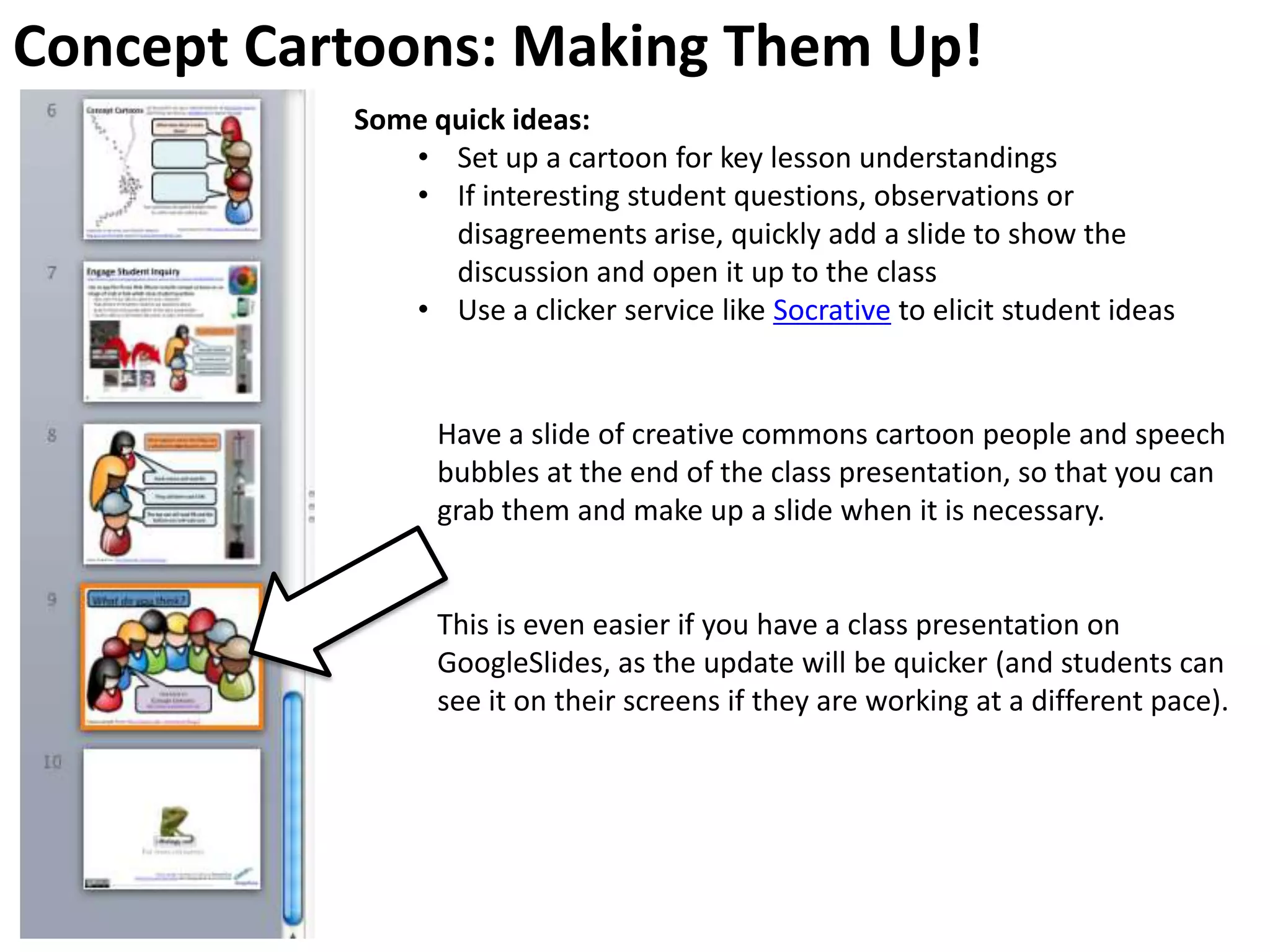
Have a slide of creative commons cartoon people and speech
bubbles at the end of the class presentation, so that you can
grab them and make up a slide when it is necessary.
This is even easier if you have a class presentation on
GoogleSlides, as the update will be quicker (and students can
see it on their screens if they are working at a different pace).
Clipart people from: http://www.clker.com/search/krug/1
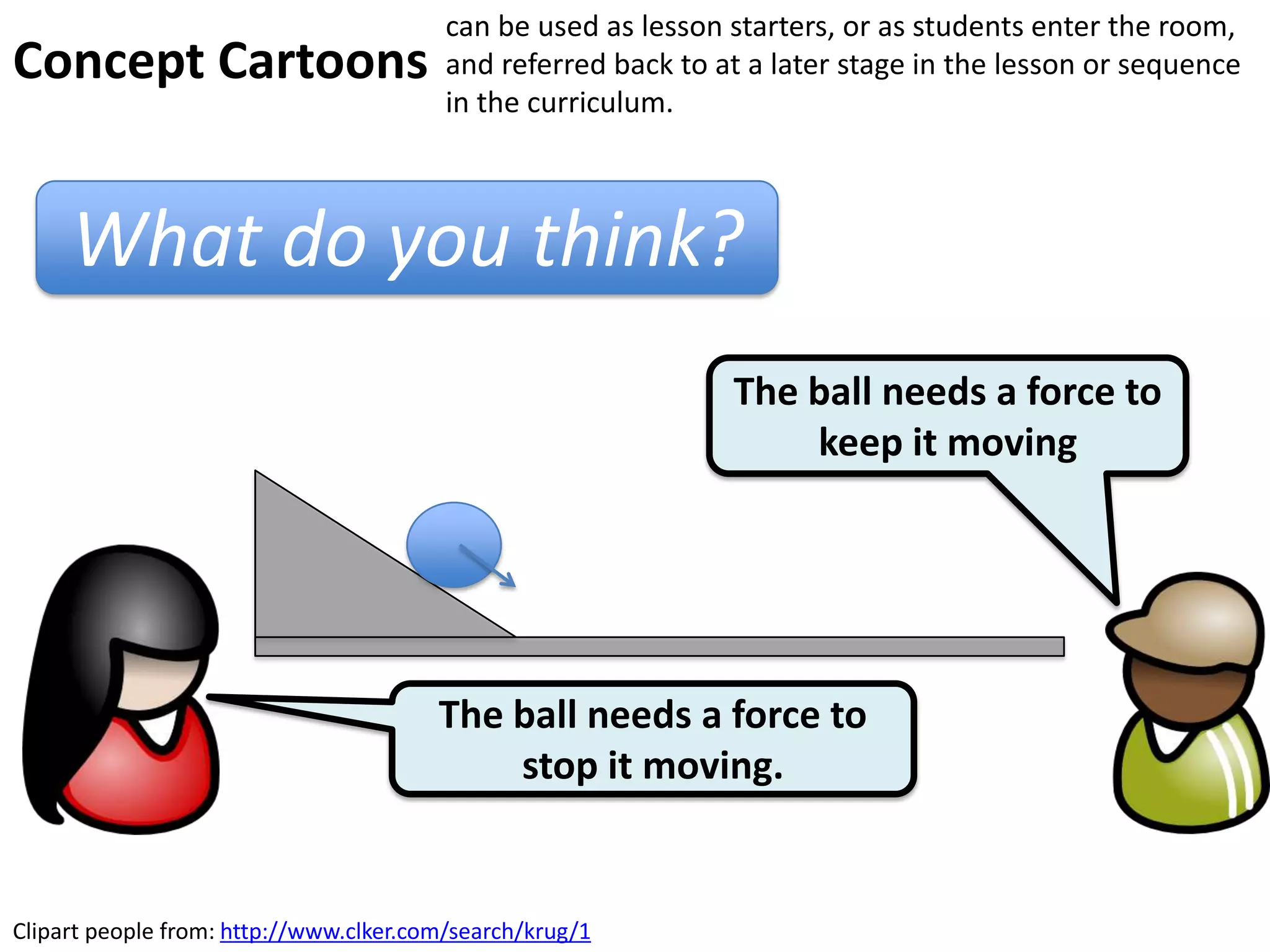
The ball needs a force to
stop it moving.
The ball needs a force to
keep it moving
What do you think?
Concept Cartoons
can be used as lesson starters, or as students enter the
room, and referred back to at a later stage in the lesson or
sequence in the curriculum.
Clipart people from: http://www.clker.com/search/krug/1
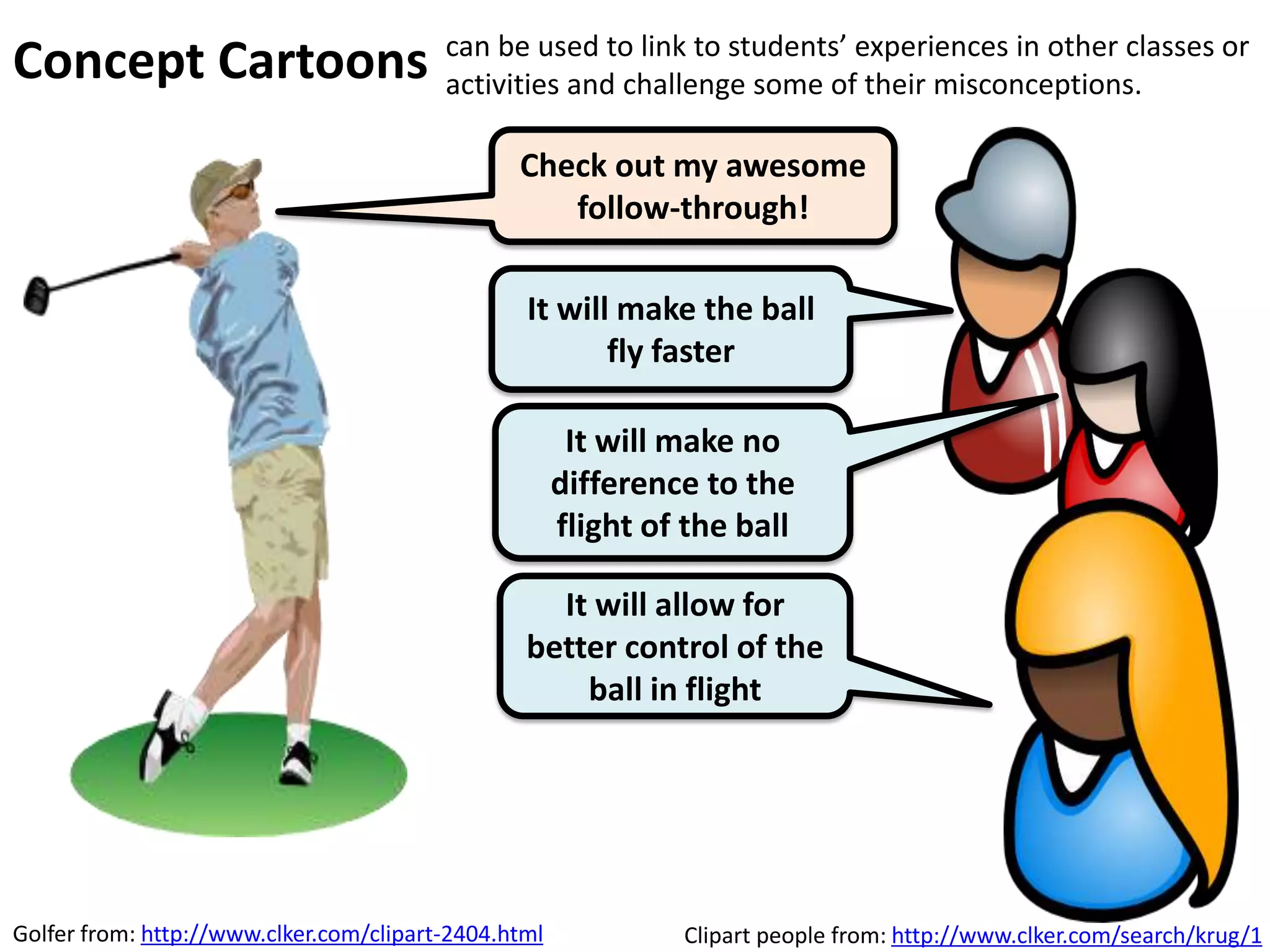
It will make the ball
fly faster
It will make no
difference to the
flight of the ball
Check out my awesome
follow-through!
It will allow for
better control of the
ball in flight
Golfer from: http://www.clker.com/clipart-2404.html
Concept Cartoons can be used to link to students’ experiences in other classes or
activities and challenge some of their misconceptions.
Clipart people from: http://www.clker.com/search/krug/1
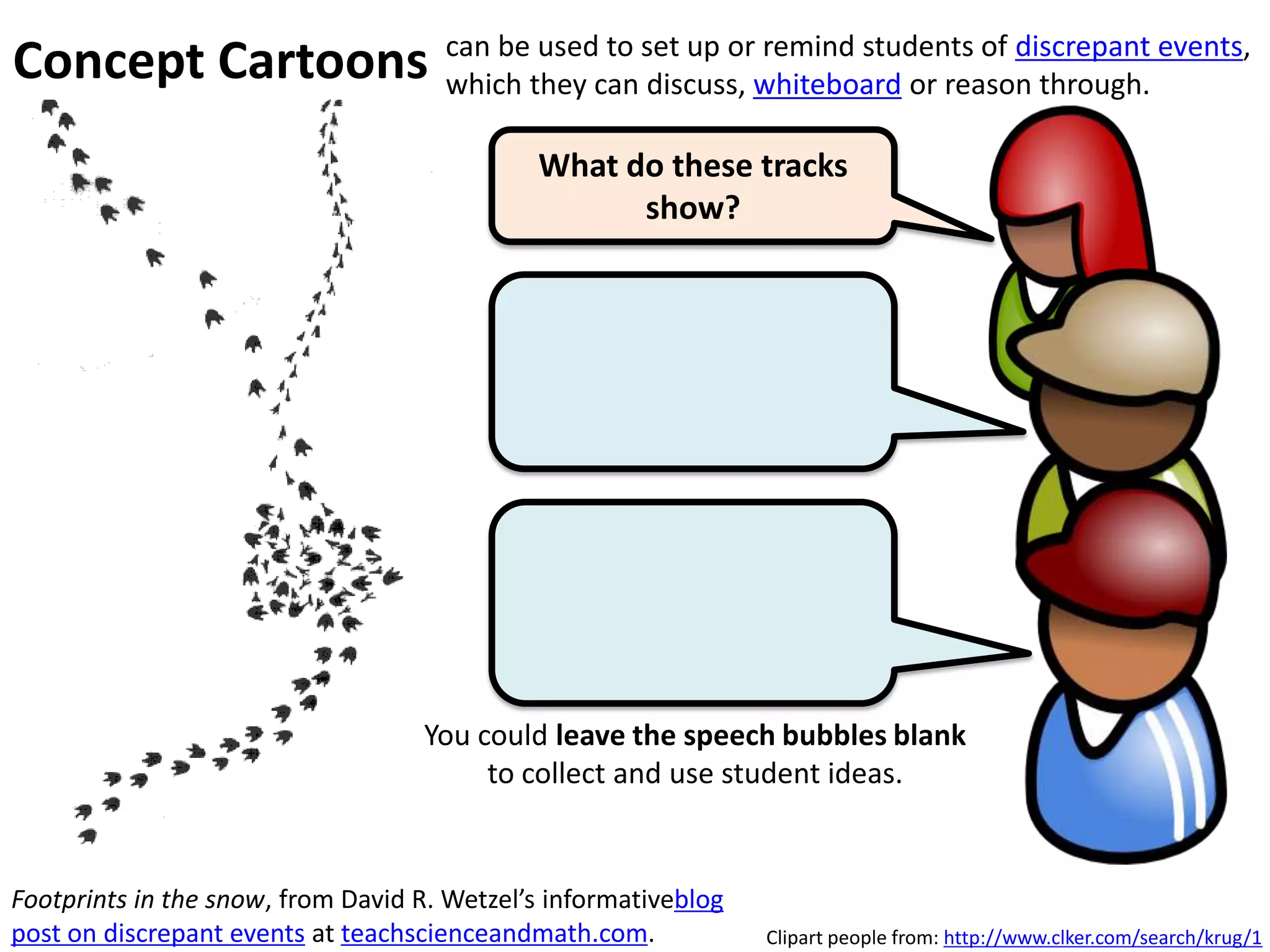
What do these tracks
show?
Concept Cartoons can be used to set up or remind students of discrepant events,
which they can discuss, whiteboard or reason through.
You could leave the speech bubbles blank
to collect and use student ideas.
Footprints in the snow, from David R. Wetzel’s informativeblog
post on discrepant events at teachscienceandmath.com.
Clipart people from: http://www.clker.com/search/krug/1
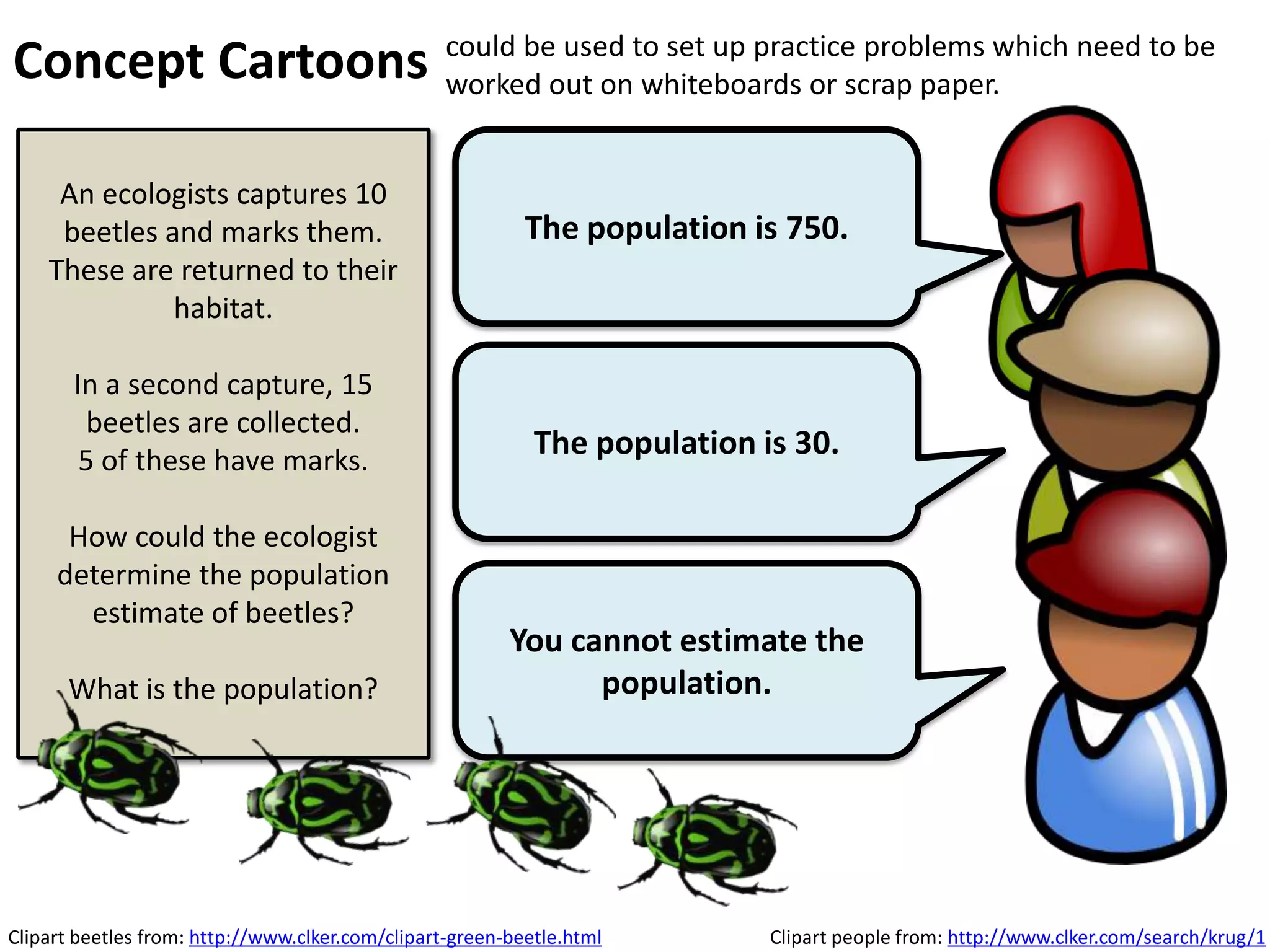
The population is 750.
Concept Cartoons could be used to set up practice problems which need to be
worked out on whiteboards or scrap paper.
An ecologists captures 10
beetles and marks them.
These are returned to their
habitat.
In a second capture, 15
beetles are collected.
5 of these have marks.
How could the ecologist
determine the population
estimate of beetles?
What is the population?
The population is 30.
You cannot estimate the
population.
Clipart beetles from: http://www.clker.com/clipart-green-beetle.html
10
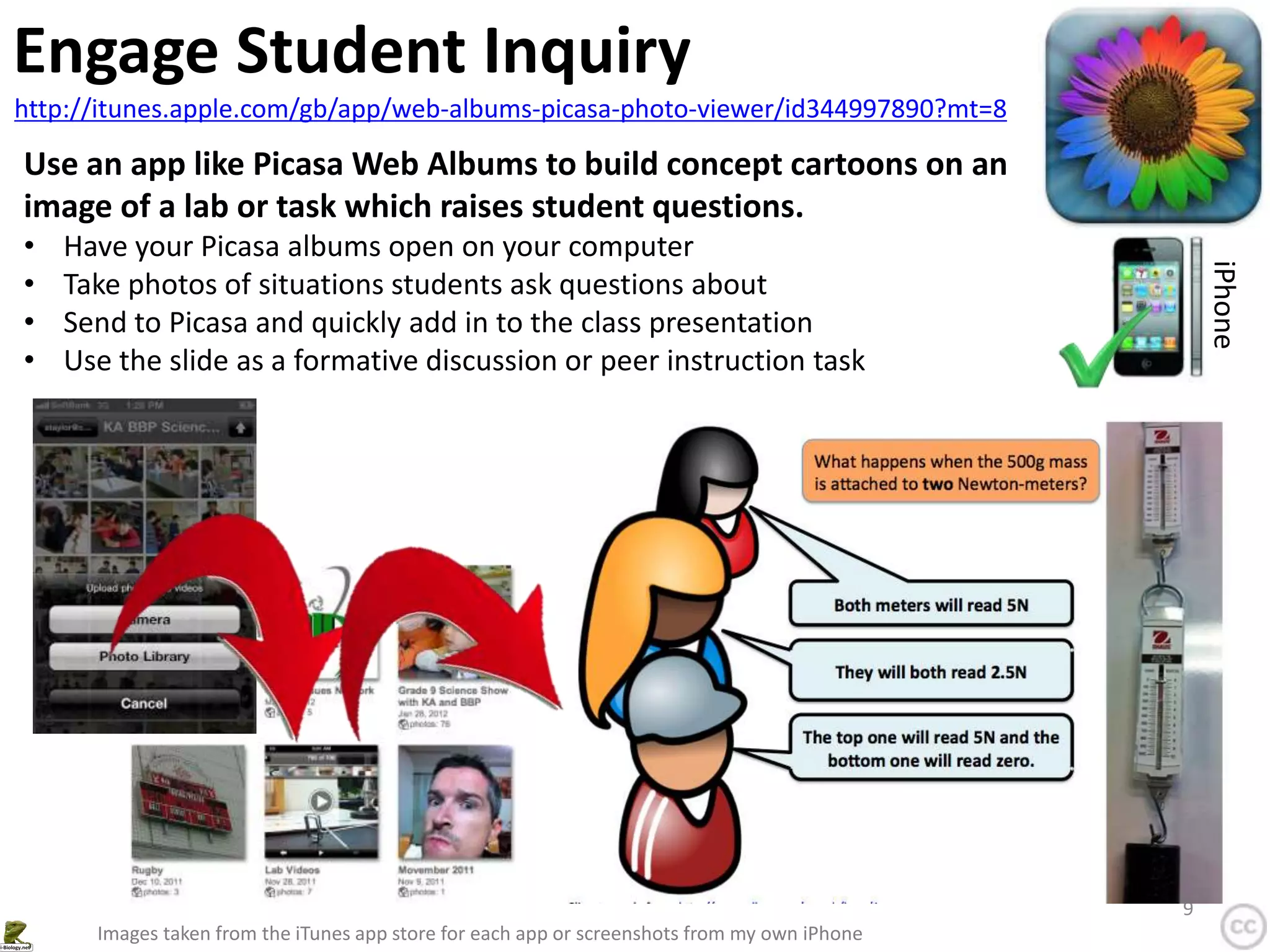
http://itunes.apple.com/gb/app/web-albums-picasa-photo-viewer/id344997890?mt=8
Engage Student Inquiry
iPhone
Images taken from the iTunes app store for each app or screenshots from my own iPhone
Use an app like Picasa Web Albums to build concept cartoons on an
image of a lab or task which raises student questions.
• Have your Picasa albums open on your computer
• Take photos of situations students ask questions about
• Send to Picasa and quickly add in to the class presentation
• Use the slide as a formative discussion or peer instruction task
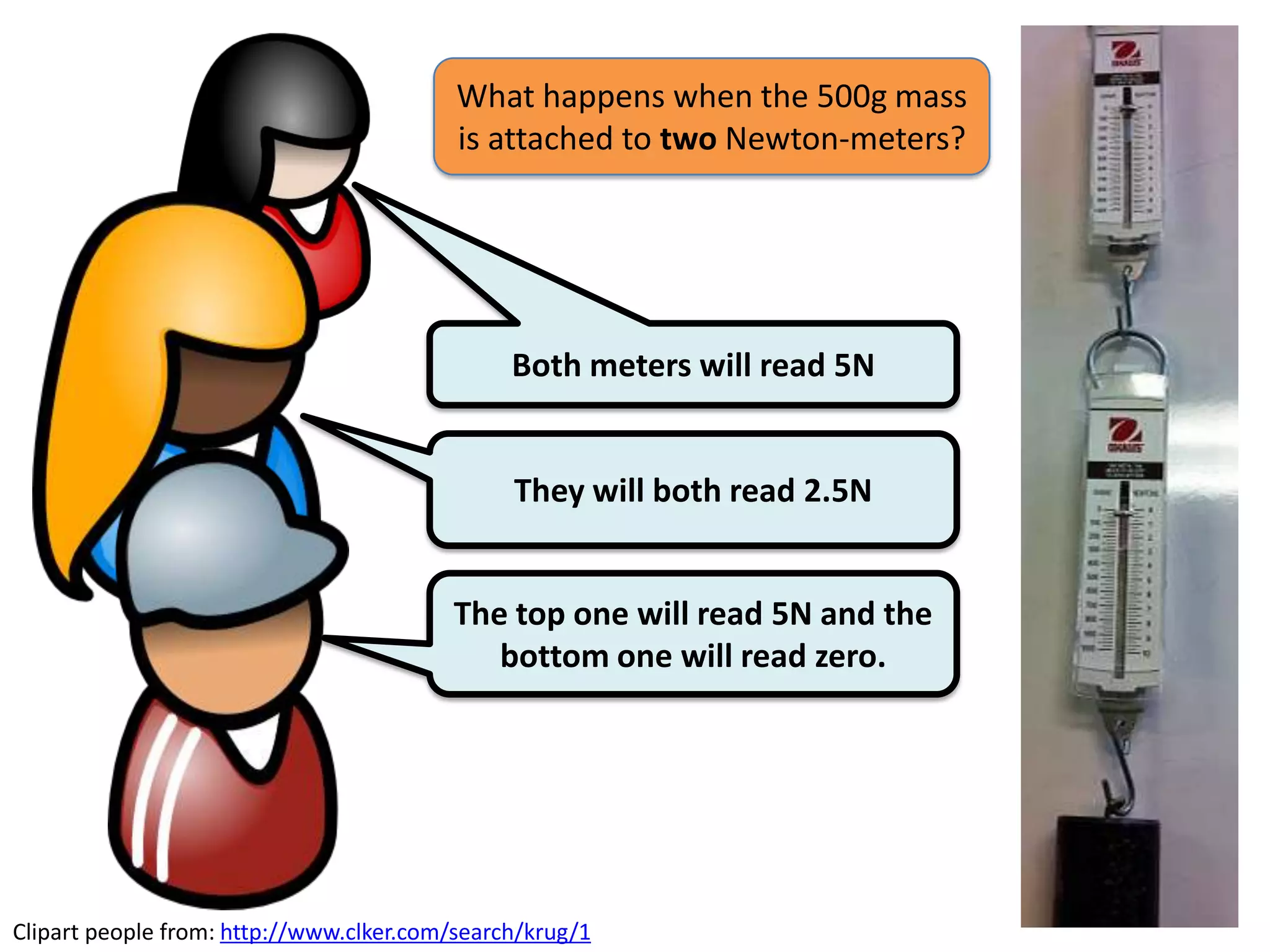
Clipart people from: http://www.clker.com/search/krug/1
The top one will read 5N and the
bottom one will read zero.
Both meters will read 5N
They will both read 2.5N
What happens when the 500g mass
is attached to two Newton-meters?
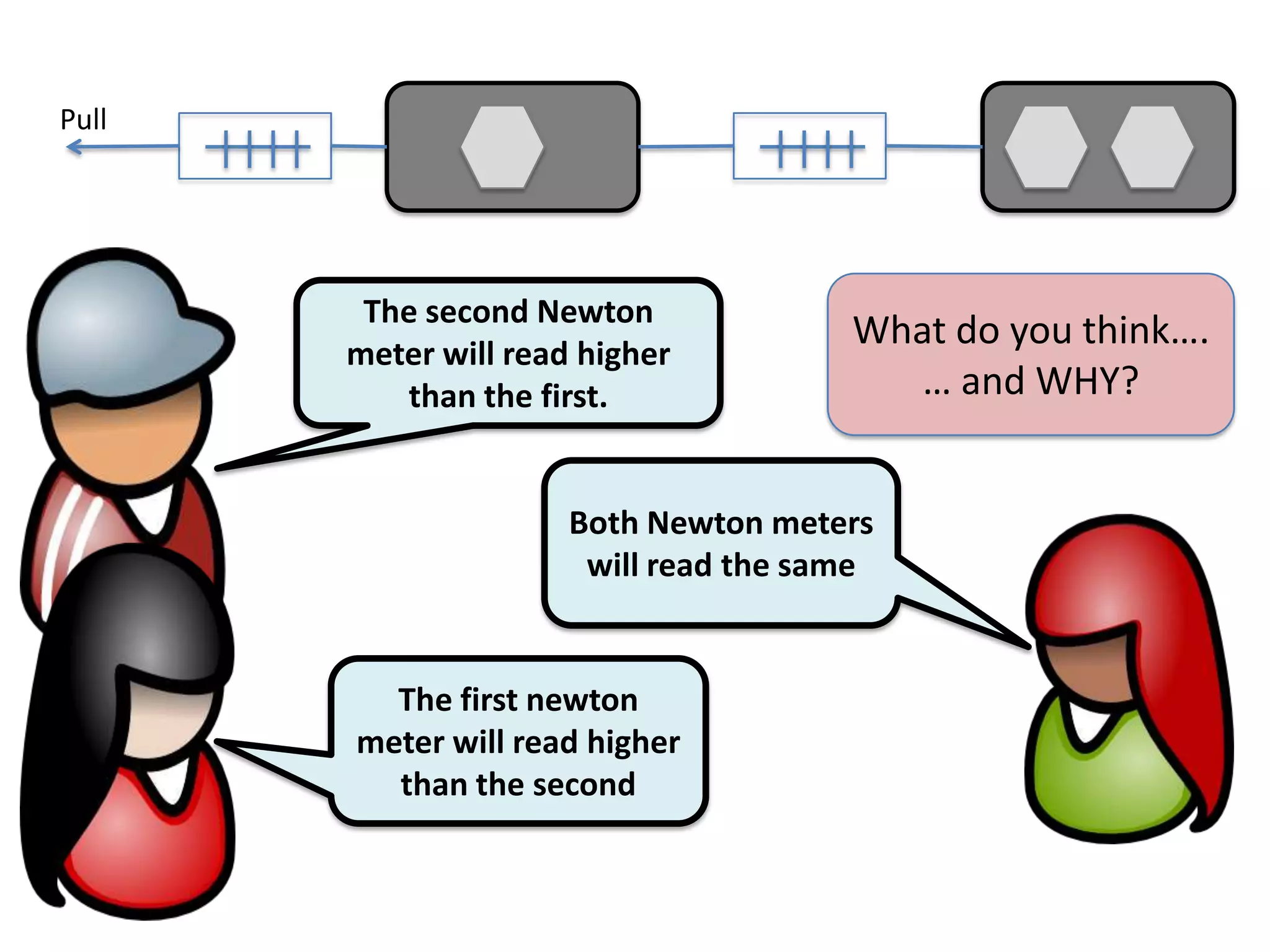
The first newton
meter will read higher
than the second
Both Newton meters
will read the same
The second Newton
meter will read higher
than the first.
Pull
What do you think….
… and WHY?
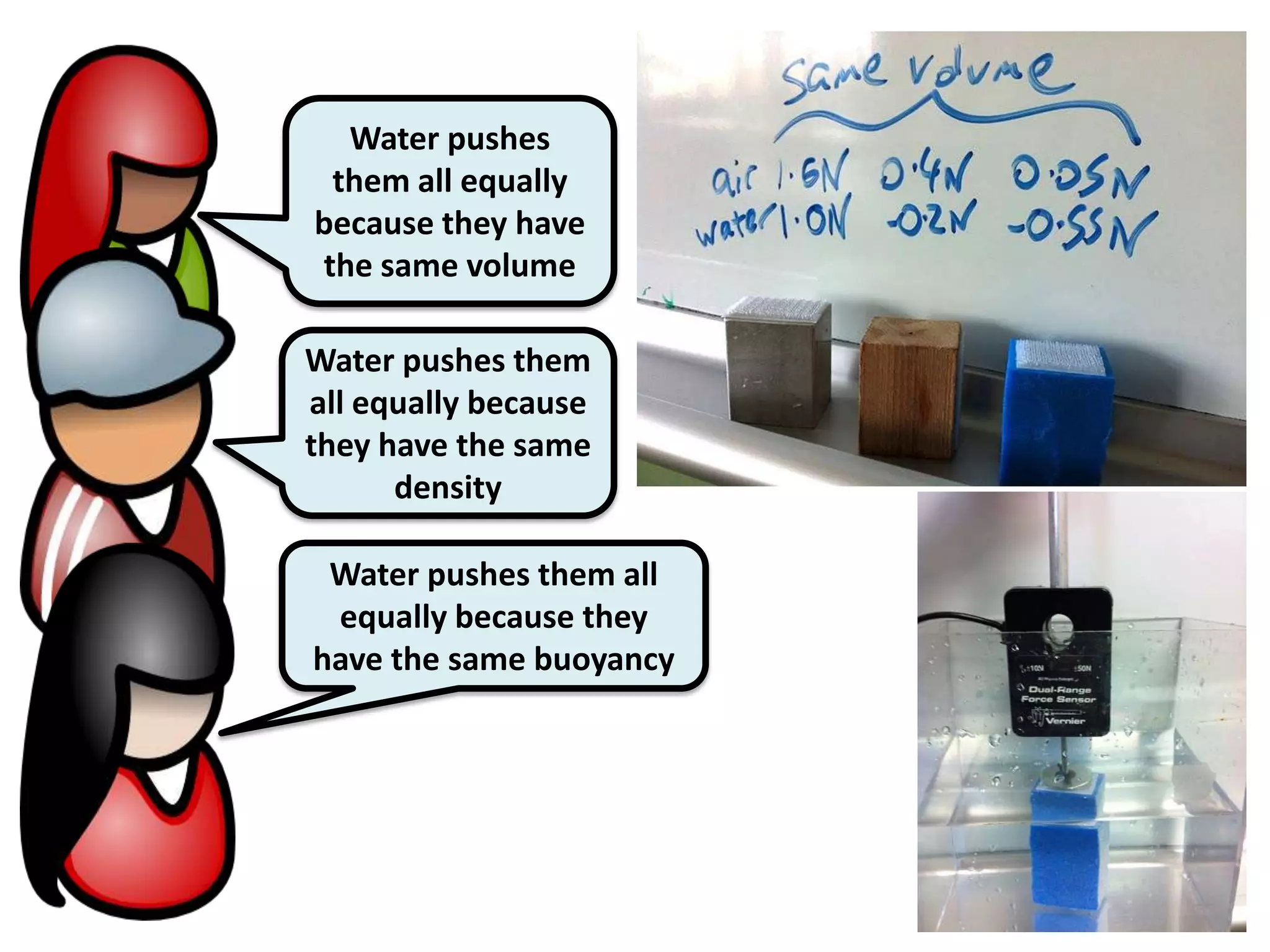
Water pushes them
all equally because
they have the same
density
Water pushes
them all equally
because they have
the same volume
Water pushes them all
equally because they
have the same buoyancy
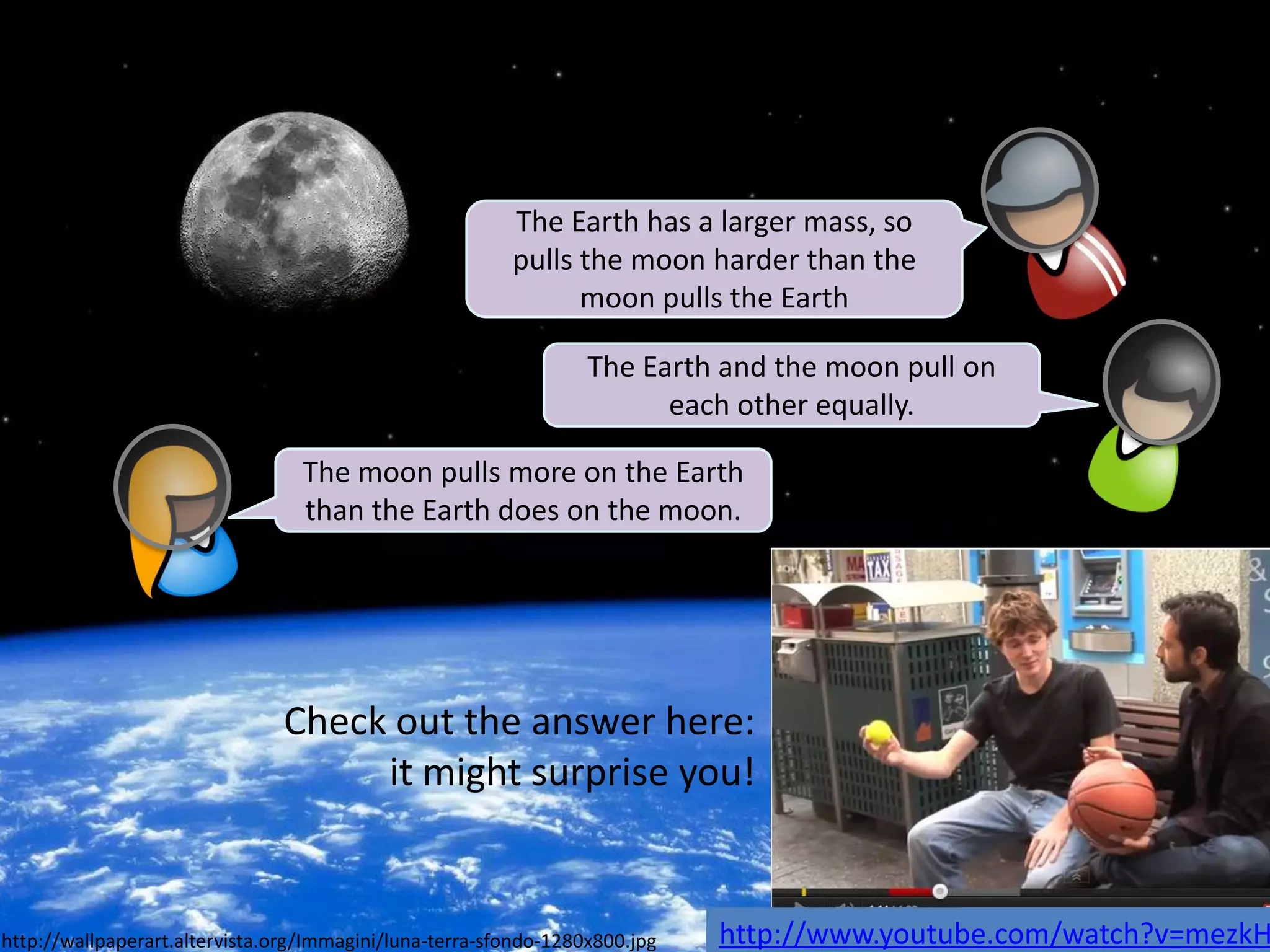
The moon pulls more on the Earth
than the Earth does on the moon.
The Earth and the moon pull on
each other equally.
The Earth has a larger mass, so
pulls the moon harder than the
moon pulls the Earth
http://wallpaperart.altervista.org/Immagini/luna-terra-sfondo-1280x800.jpg
Check out the answer here:
it might surprise you!
http://www.youtube.com/watch?v=mezkH
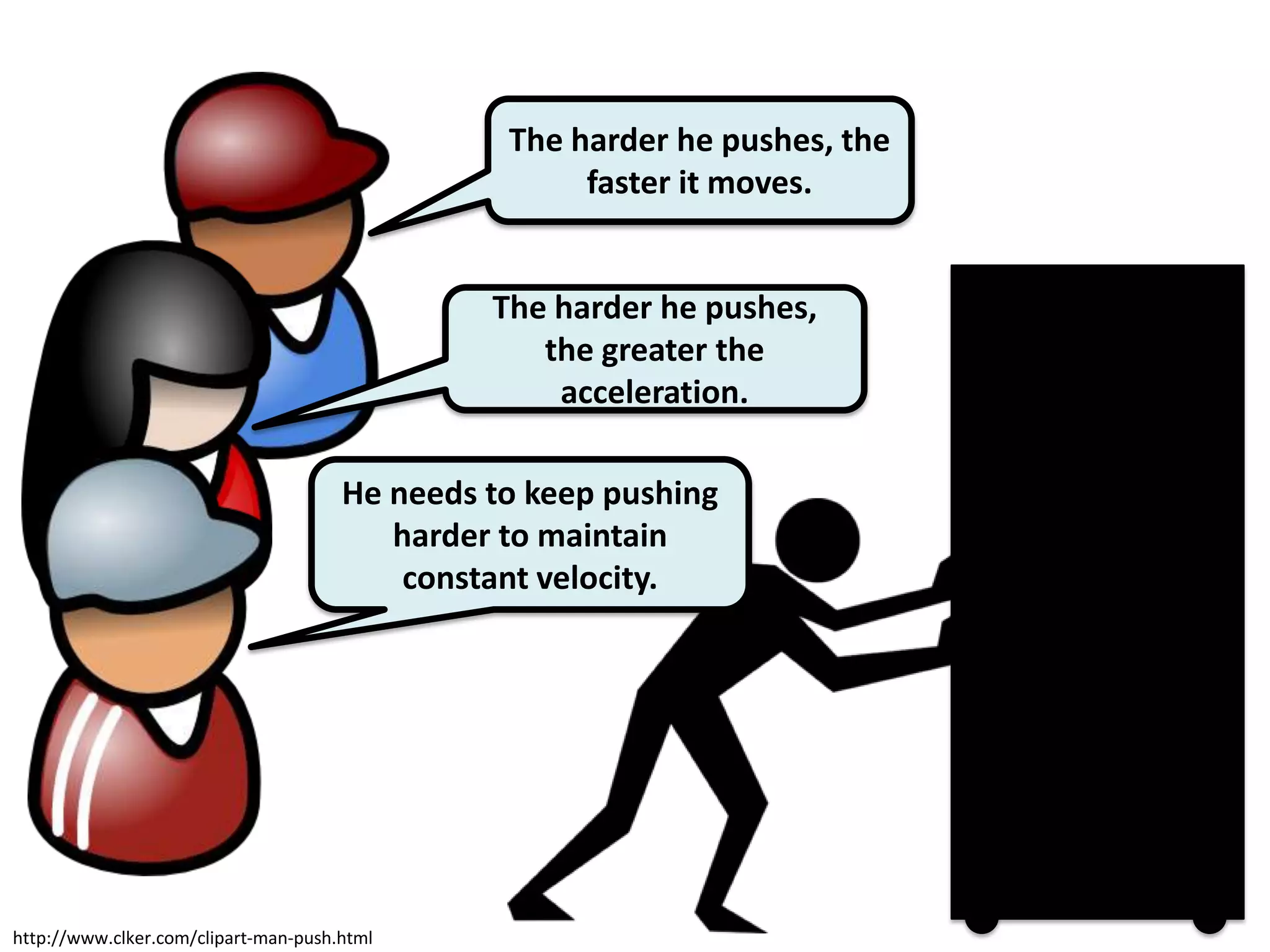
The harder he pushes, the
faster it moves.
The harder he
pushes, the greater the
acceleration.
He needs to keep pushing
harder to maintain
constant velocity.
http://www.clker.com/clipart-man-push.html
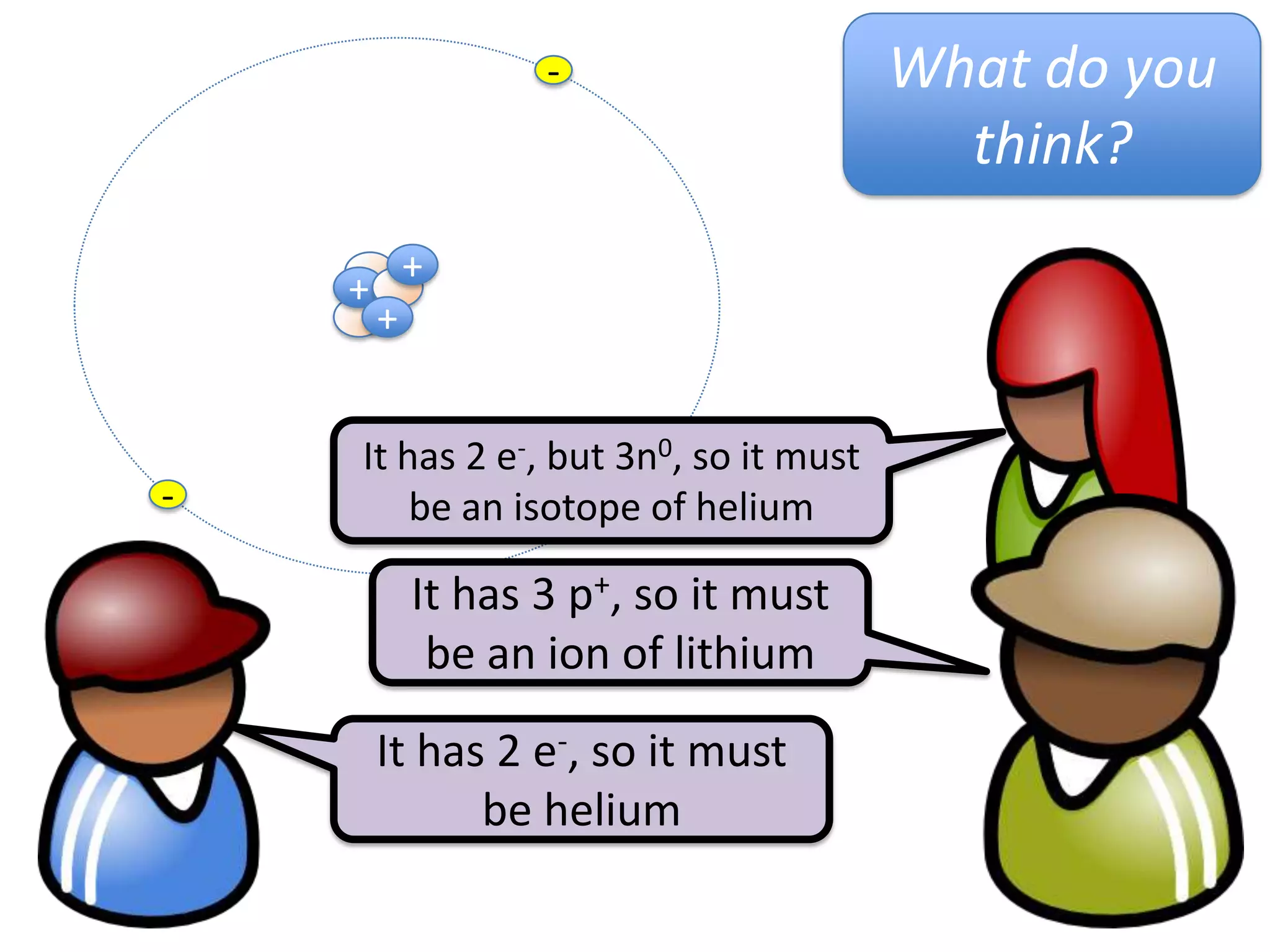
+
+
-
-
It has 2 e-, so it must
be helium
It has 3 p+, so it must
be an ion of lithium
It has 2 e-, but 3n0, so it must
be an isotope of helium
What do you
think?
+
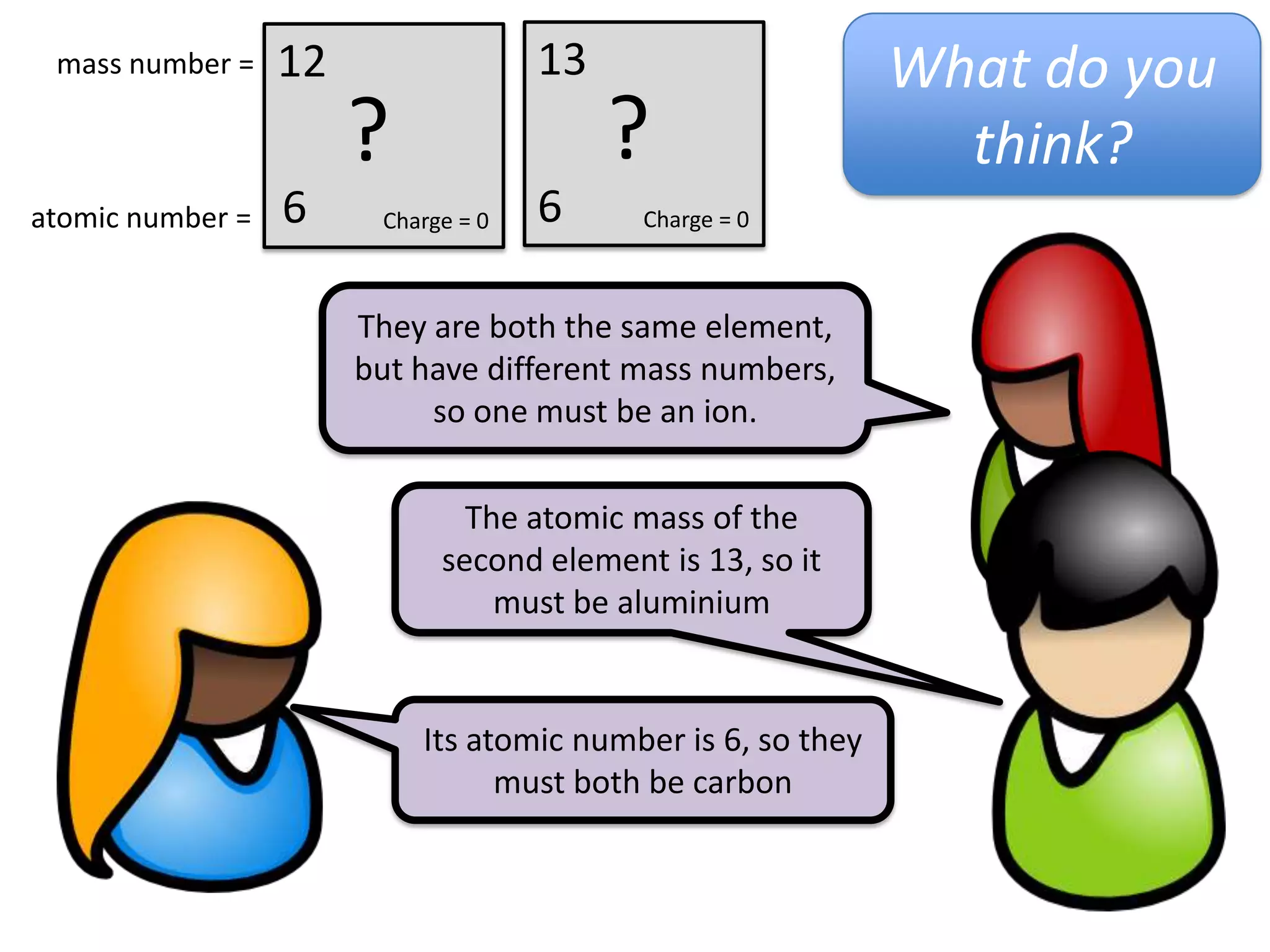
Its atomic number is 6, so they
must both be carbon
The atomic mass of the
second element is 13, so it
must be aluminium
They are both the same
element, but have different mass
numbers, so one must be an ion.
What do you
think?
12
6
?
Charge = 0
13
6
?
Charge = 0atomic number =
mass number =
What do you think?
Clipart people from: http://www.clker.com/search/krug/1
Ideas based on
Concept Cartoons:
http://www.conceptcartoons.com
For more resources.
This is a Creative Commons presentation. It may be linked and embedded but not sold or re-hosted.
Please consider a donation to charity via Biology4Good.
Click here for more information about Biology4Good charity donations.

Concept Cartoons in Science Class

  • 1.
    Concept Cartoons inScience Class Stephen Taylor What do you think? Formative assessment, peer instruction and discussions based on student questions
  • 2.
    Concept Cartoons inScience Education http://www.millgatehouse.co.uk/science/ccsbcd “Created by Brenda Keogh and Stuart Naylor, Concept Cartoons have been thoroughly researched in classrooms around the world. Simple cartoon-style drawings present learners with their own misconceptions and generate discussion and argument. They are remarkably easy to use in the classroom as a part of normal teaching.” From the Millgate House website The idea for using Concept Cartoons comes from this great resource:
  • 3.
    Concept Cartoons inScience Education http://www.millgatehouse.co.uk/science/ccsbcd “Created by Brenda Keogh and Stuart Naylor, Concept Cartoons have been thoroughly researched in classrooms around the world. Simple cartoon-style drawings present learners with their own misconceptions and generate discussion and argument. They are remarkably easy to use in the classroom as a part of normal teaching.” From the Millgate House website The idea for using Concept Cartoons comes from this great resource: Their books and digital resources have cartoons which can be printed or projected. • Aimed mostly at middle school, but can be adapted to older students • Cartoon students’ thoughts are not revealed instantly, giving real human students a chance to think • They have explanations of the cartoons and insight into common misconceptions We can use powerpoint to set up slides to produce quick cartoons, which can be used for high school science or to address student questions or misconceptions.
  • 4.
    Hinge Questions Concept cartoonscould be used at a crucial ‘hinge’ point in the lesson to determine if students are ready to move on. Image: 'Day Lilies’, by Roger Lynn http://www.flickr.com/photos/17366766@N00/236620380 Found on flickrcc.net
  • 5.
    Concept Cartoons: MakingThem Up! Some quick ideas: • Set up a cartoon for key lesson understandings • If interesting student questions, observations or disagreements arise, quickly add a slide to show the discussion and open it up to the class • Use a clicker service like Socrative to elicit student ideas Have a slide of creative commons cartoon people and speech bubbles at the end of the class presentation, so that you can grab them and make up a slide when it is necessary. This is even easier if you have a class presentation on GoogleSlides, as the update will be quicker (and students can see it on their screens if they are working at a different pace).
  • 6.
    Clipart people from:http://www.clker.com/search/krug/1 The ball needs a force to stop it moving. The ball needs a force to keep it moving What do you think? Concept Cartoons can be used as lesson starters, or as students enter the room, and referred back to at a later stage in the lesson or sequence in the curriculum.
  • 7.
    Clipart people from:http://www.clker.com/search/krug/1 It will make the ball fly faster It will make no difference to the flight of the ball Check out my awesome follow-through! It will allow for better control of the ball in flight Golfer from: http://www.clker.com/clipart-2404.html Concept Cartoons can be used to link to students’ experiences in other classes or activities and challenge some of their misconceptions.
  • 8.
    Clipart people from:http://www.clker.com/search/krug/1 What do these tracks show? Concept Cartoons can be used to set up or remind students of discrepant events, which they can discuss, whiteboard or reason through. You could leave the speech bubbles blank to collect and use student ideas. Footprints in the snow, from David R. Wetzel’s informativeblog post on discrepant events at teachscienceandmath.com.
  • 9.
    Clipart people from:http://www.clker.com/search/krug/1 The population is 750. Concept Cartoons could be used to set up practice problems which need to be worked out on whiteboards or scrap paper. An ecologists captures 10 beetles and marks them. These are returned to their habitat. In a second capture, 15 beetles are collected. 5 of these have marks. How could the ecologist determine the population estimate of beetles? What is the population? The population is 30. You cannot estimate the population. Clipart beetles from: http://www.clker.com/clipart-green-beetle.html
  • 10.
    10 http://itunes.apple.com/gb/app/web-albums-picasa-photo-viewer/id344997890?mt=8 Engage Student Inquiry iPhone Imagestaken from the iTunes app store for each app or screenshots from my own iPhone Use an app like Picasa Web Albums to build concept cartoons on an image of a lab or task which raises student questions. • Have your Picasa albums open on your computer • Take photos of situations students ask questions about • Send to Picasa and quickly add in to the class presentation • Use the slide as a formative discussion or peer instruction task
  • 11.
    Clipart people from:http://www.clker.com/search/krug/1 The top one will read 5N and the bottom one will read zero. Both meters will read 5N They will both read 2.5N What happens when the 500g mass is attached to two Newton-meters?
  • 12.
    The first newton meterwill read higher than the second Both Newton meters will read the same The second Newton meter will read higher than the first. Pull What do you think…. … and WHY?
  • 13.
    Water pushes them allequally because they have the same density Water pushes them all equally because they have the same volume Water pushes them all equally because they have the same buoyancy
  • 14.
    The moon pullsmore on the Earth than the Earth does on the moon. The Earth and the moon pull on each other equally. The Earth has a larger mass, so pulls the moon harder than the moon pulls the Earth http://wallpaperart.altervista.org/Immagini/luna-terra-sfondo-1280x800.jpg Check out the answer here: it might surprise you! http://www.youtube.com/watch?v=mezkH
  • 15.
    The harder hepushes, the faster it moves. The harder he pushes, the greater the acceleration. He needs to keep pushing harder to maintain constant velocity. http://www.clker.com/clipart-man-push.html
  • 16.
    + + - - It has 2e-, so it must be helium It has 3 p+, so it must be an ion of lithium It has 2 e-, but 3n0, so it must be an isotope of helium What do you think? +
  • 17.
    Its atomic numberis 6, so they must both be carbon The atomic mass of the second element is 13, so it must be aluminium They are both the same element, but have different mass numbers, so one must be an ion. What do you think? 12 6 ? Charge = 0 13 6 ? Charge = 0atomic number = mass number =
  • 18.
    What do youthink? Clipart people from: http://www.clker.com/search/krug/1 Ideas based on Concept Cartoons: http://www.conceptcartoons.com
  • 19.
    For more resources. Thisis a Creative Commons presentation. It may be linked and embedded but not sold or re-hosted. Please consider a donation to charity via Biology4Good. Click here for more information about Biology4Good charity donations.