Ch - 1
Computer
System – An
Overview
Introduction
 Computers, these days, have become an
essential part of our day-ta-day life.
 The word Computer is derived from Latin
word Computare, which means to Count or
Compute. So the word Computer can be
used for any device that can perform
calculations.
 It can also process various types user data
and that too with 100% accuracy.
What is Computer?
An electronic device which is capable
of receiving information (data) in a
particular form and of performing a
sequence of operations in
accordance with a predetermined but
variable set of procedural instructions
(program) to produce a result in the
form of information or signals.
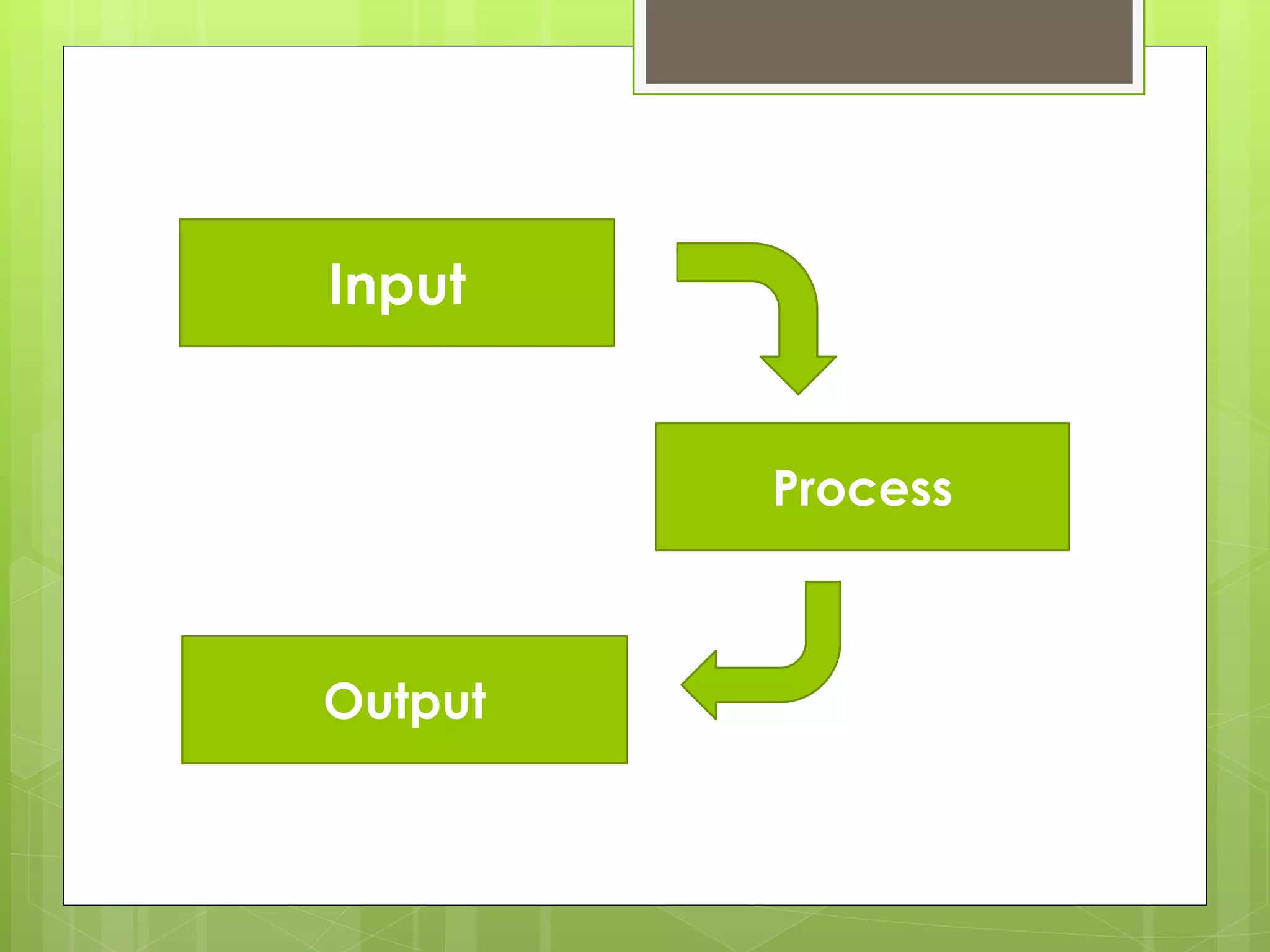
Input
Process
Output
Functioning of the Computer
System
Input: Accepts data and instructions.
Processing: Manipulates data as per
instructions
Output: Produces desired
output/information.
Storage: Stores data, instructions and
information.
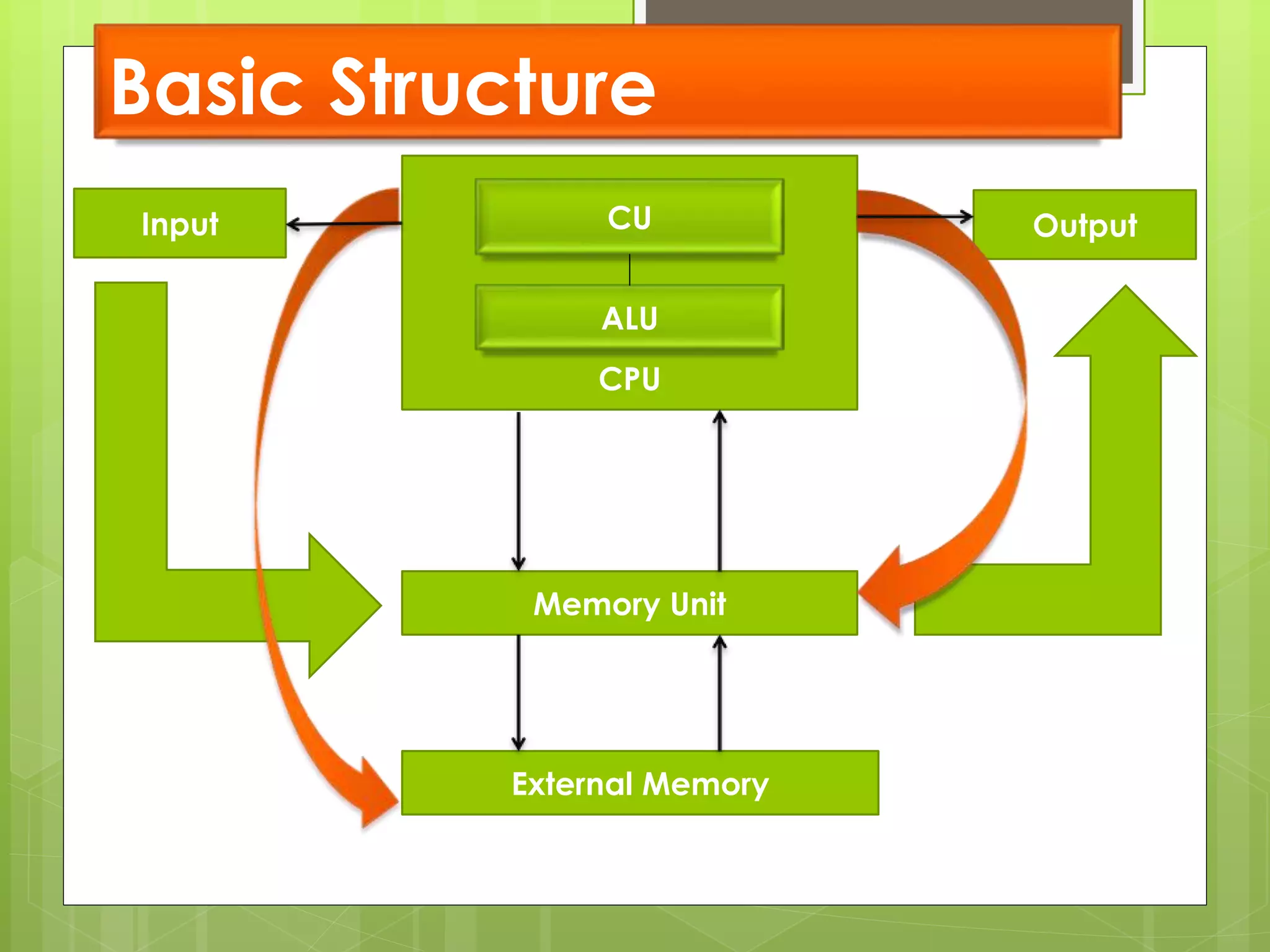
Basic Structure
CPU
CU
ALU
OutputInput
Memory Unit
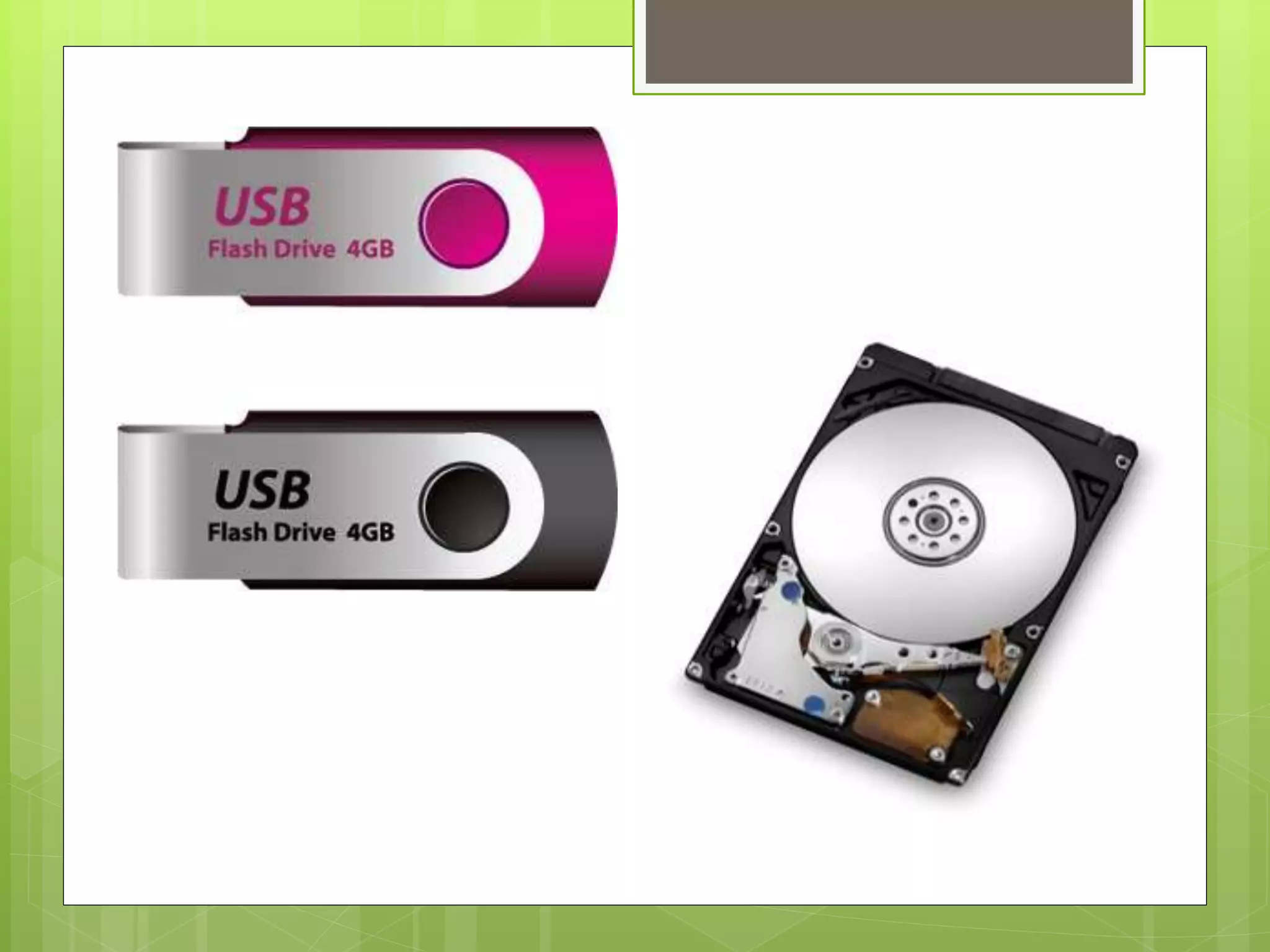
External Memory
Input Unit
Data and Instruction are entered in the
computer systems with the help of input unit,
which act like a link between user and
computer. Different types of input units are
used with the computer depending on the
type of data or the format of the instructions
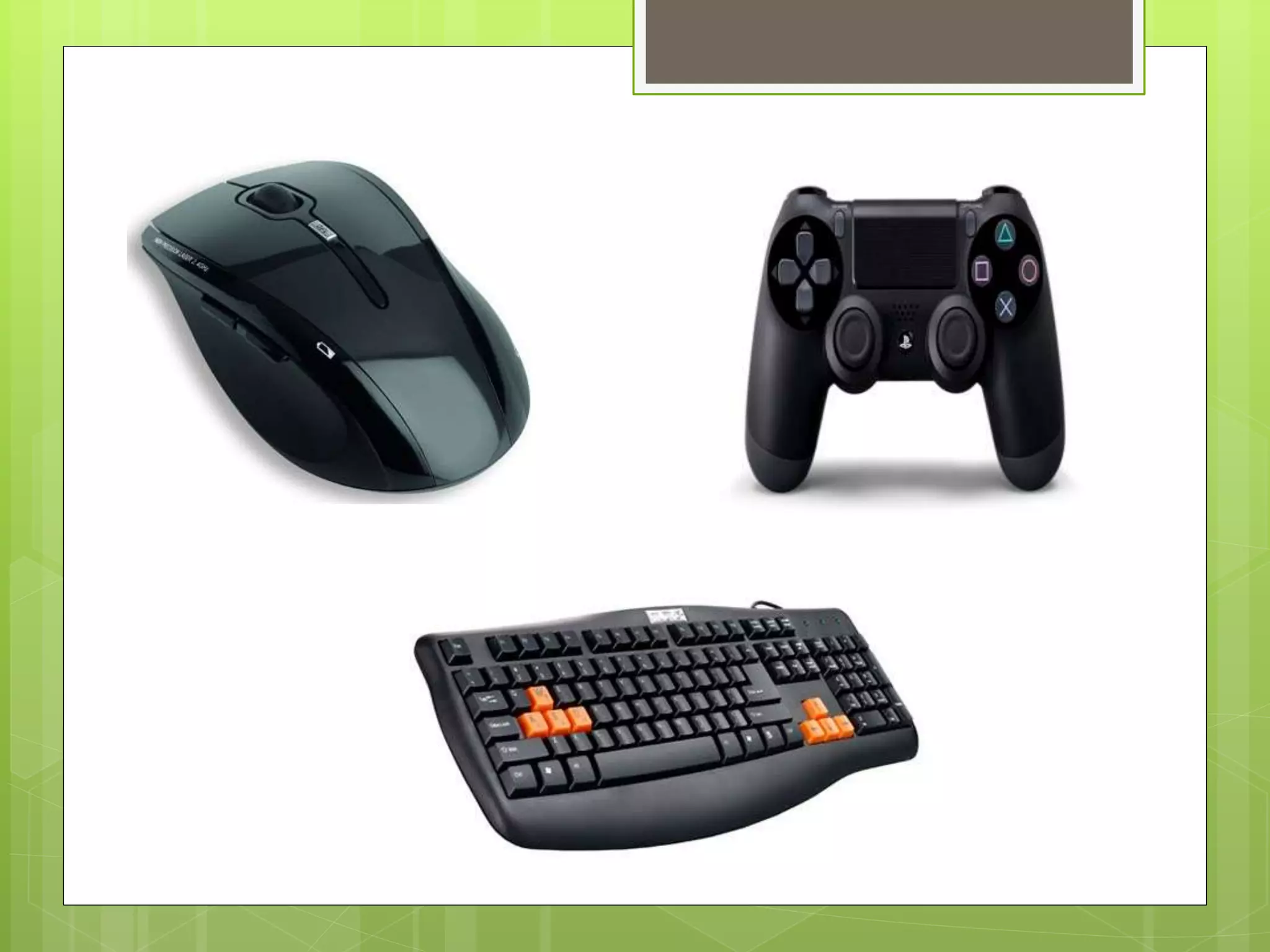
to be given to the computer like keyboard,
mouse, scanner, microphone, etc. It converts
the data into the binary form and stores it into
the main memory of the computer.
Processing Unit
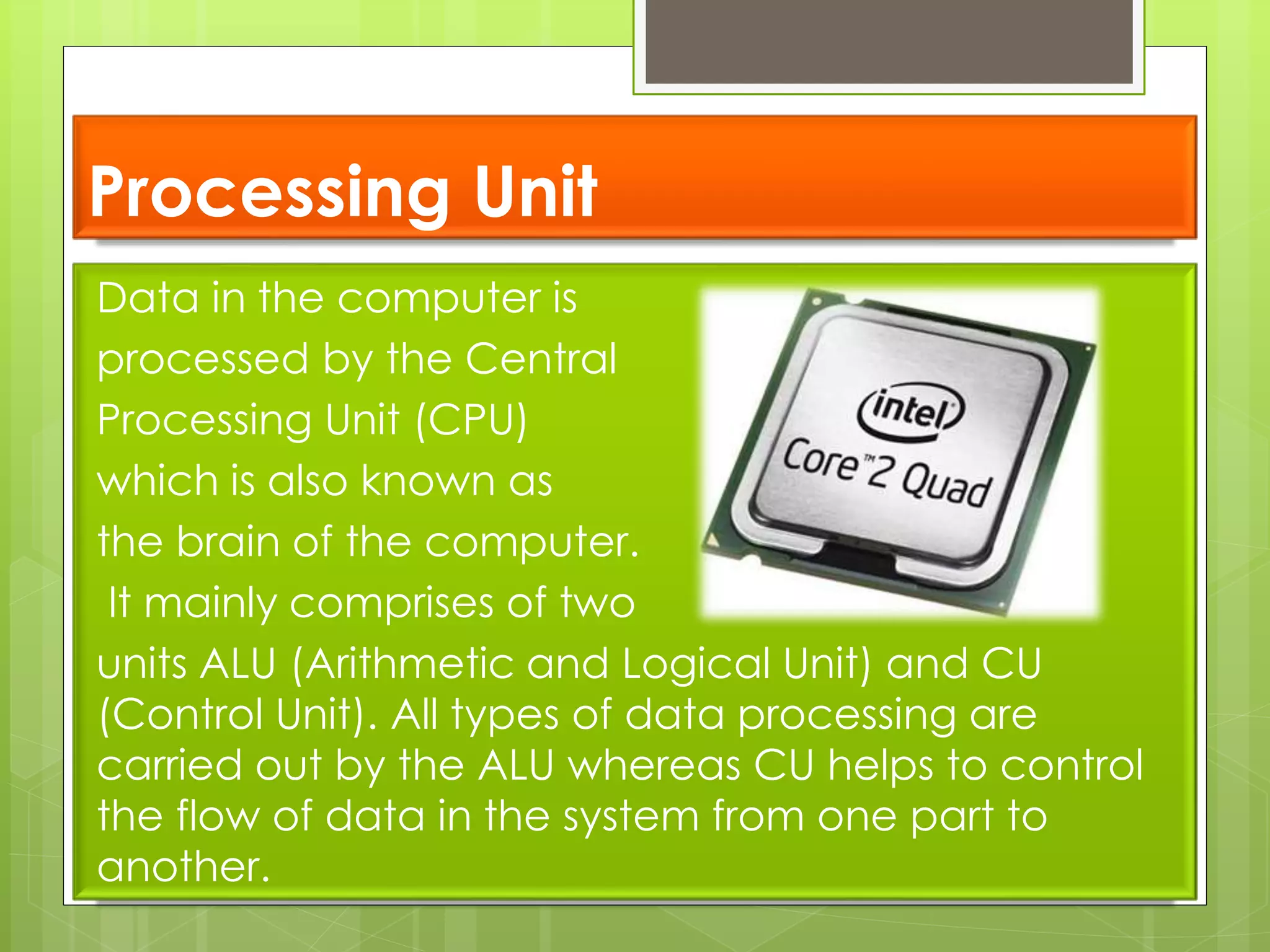
Data in the computer is
processed by the Central
Processing Unit (CPU)
which is also known as
the brain of the computer.
It mainly comprises of two
units ALU (Arithmetic and Logical Unit) and CU
(Control Unit). All types of data processing are
carried out by the ALU whereas CU helps to control
the flow of data in the system from one part to
another.
Output Unit
Once the data is processed, the results are
stored back into the main memory of the
system which is received by the users on the
output unit. The information stored in the
binary form inside the computer is converted
into the user readable form before it appears
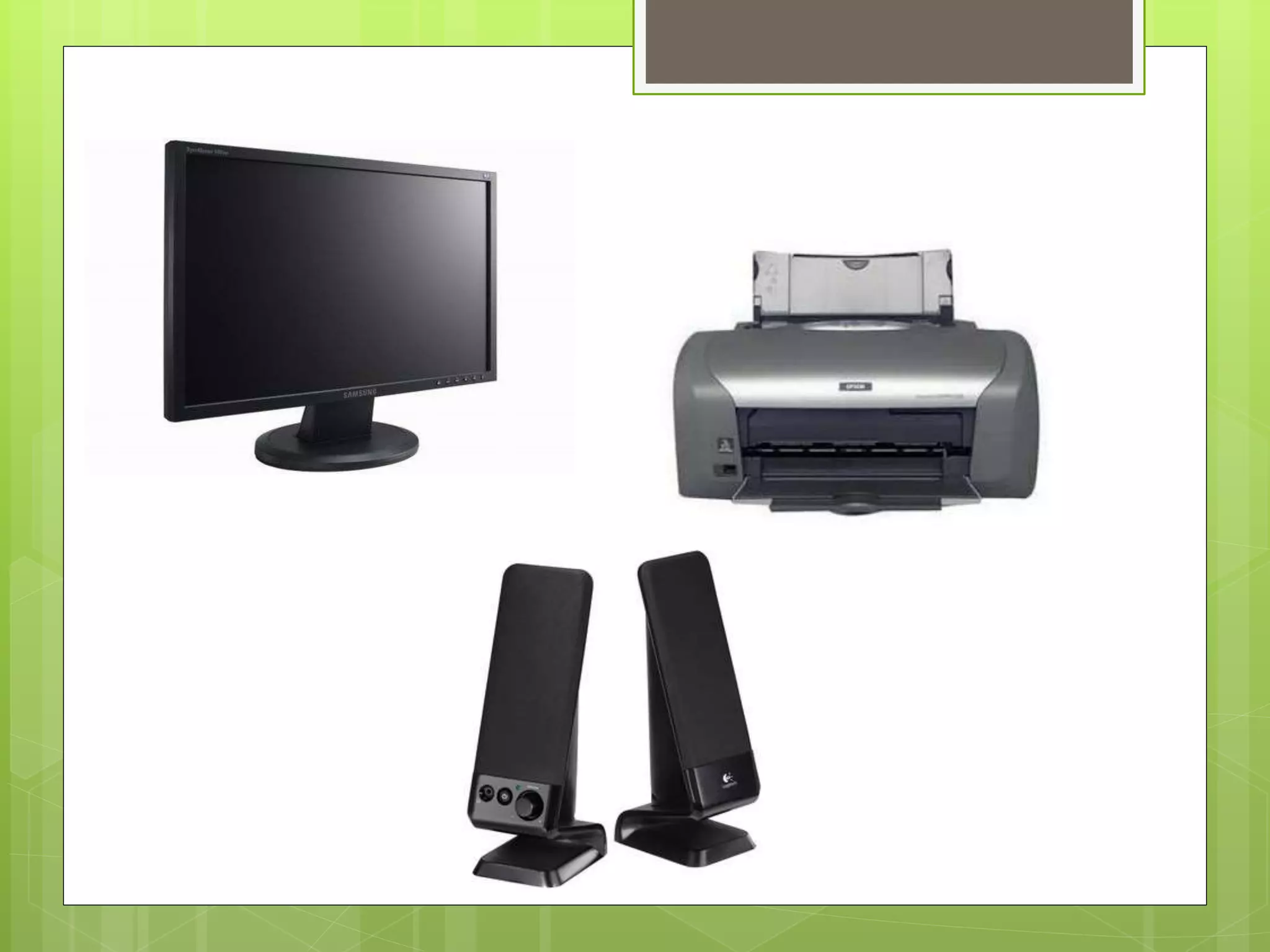
on the output unit. Commonly used output
devices are VDU or monitor, printer, speaker,
plotter, etc.
Storage Unit
This is also known as the memory unit where
data and information are stored temporarily
in binary form. This is the main memory of the
system which is like a storage brain of the
computer. It interacts directly with the CPU to
provide the required data and instructions
and to get back the processed information. It
also interacts with the external memory for
storing the information permanently and to
retrieve the stored information in it.
Characteristics of Computer
Computers can perform highly complex tasks with
great ease and accuracy which are difficult for
human being to perform. Some are as follows:
 Speed
 Accuracy
 Diligence
 High Storage Capacity
 Versatility
Limitations of the Computer
 Zero IQ
 Lack of Decision Making Power
 No Learning Power
Applications of a Computer
Computers, nowadays are widely used in a variety of
fields because of the advantages like quick processing
and ability to process different types of data with an
ease. Some of the major areas of computer applications
are listed below:
 Business
 Research
 Education
 Communication
 Defence
 Medicines and Healthcares
 Entertainment
 Computer Aided Manufacturing (CAM
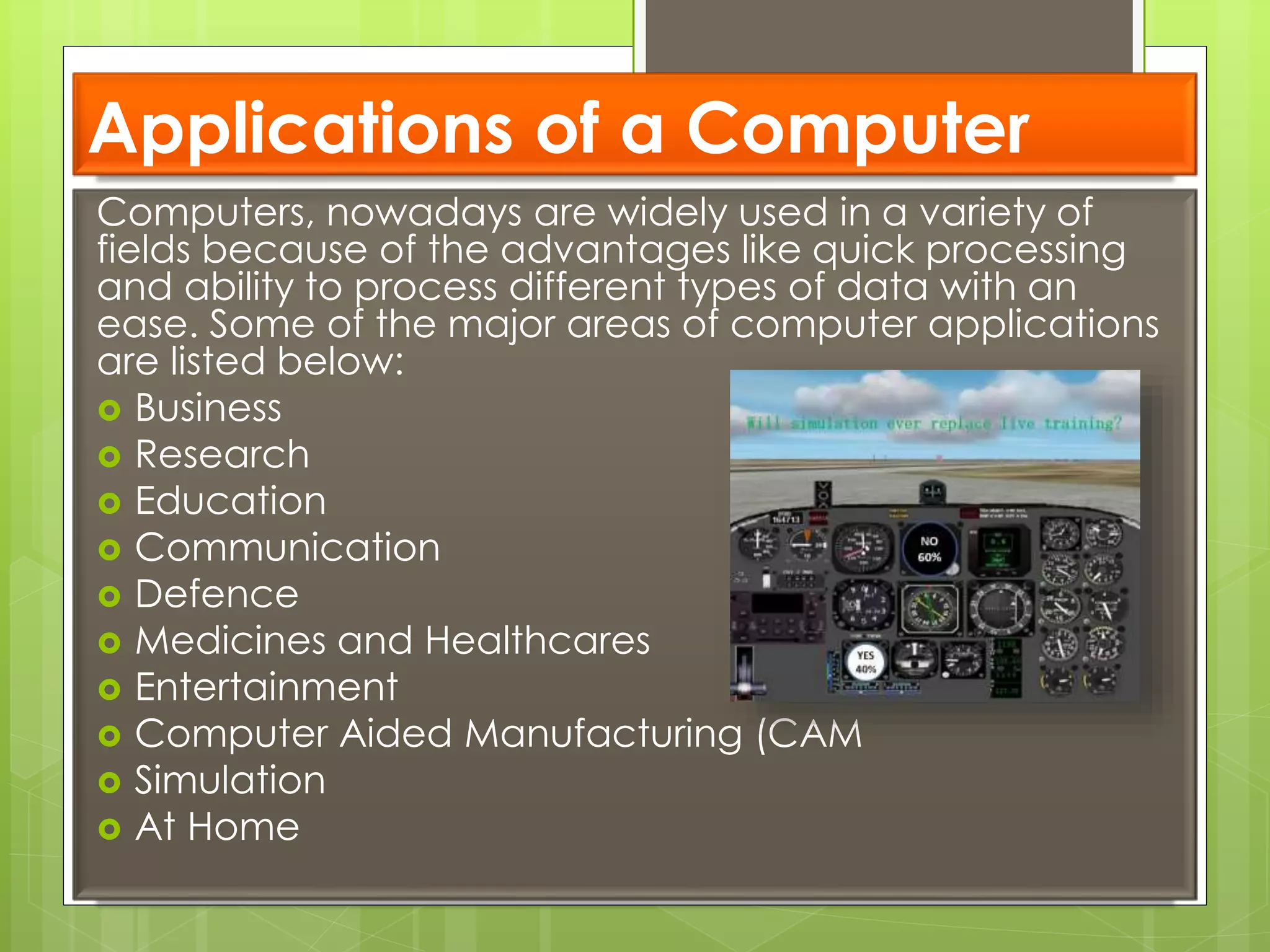
 Simulation
 At Home
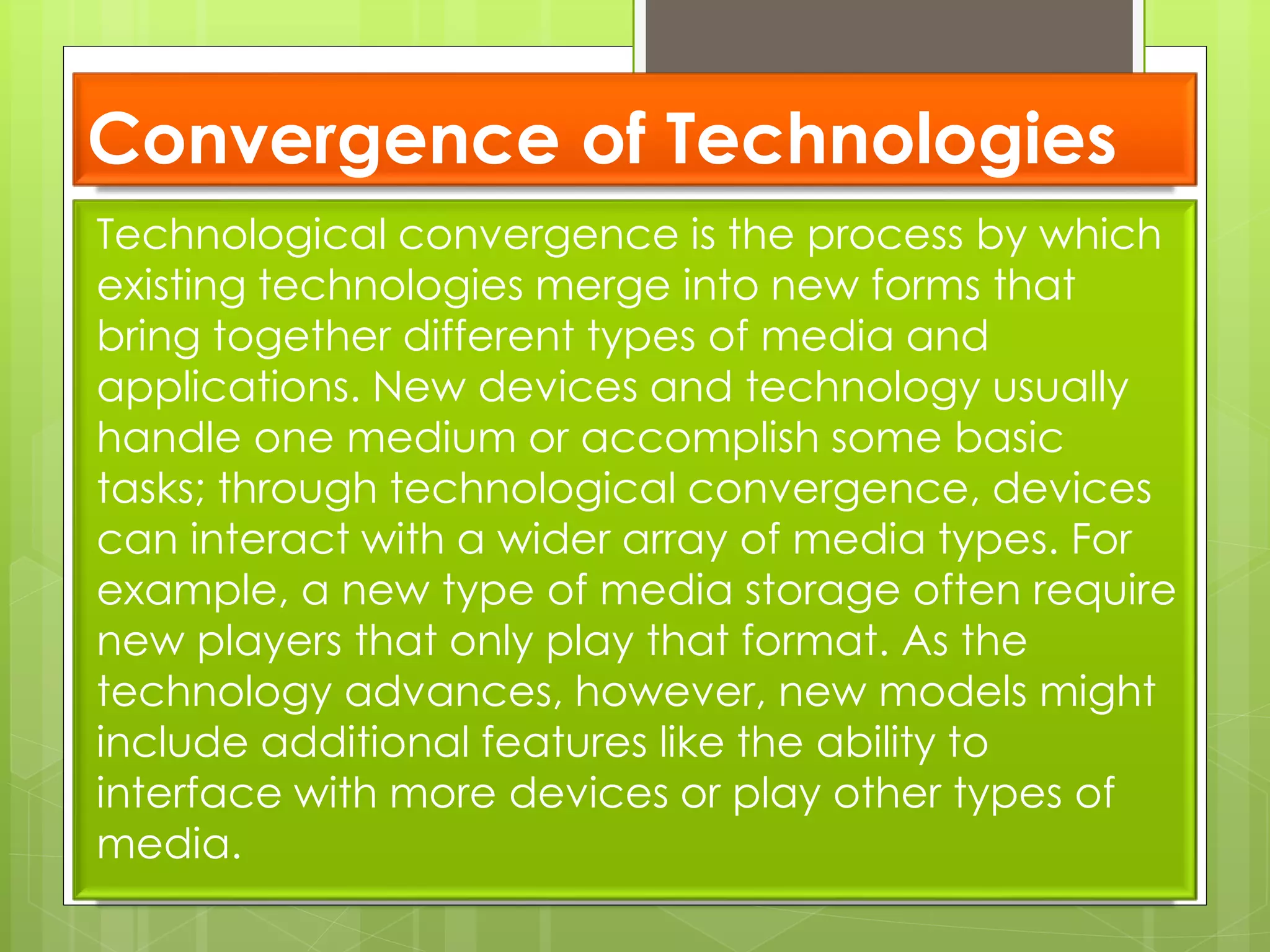
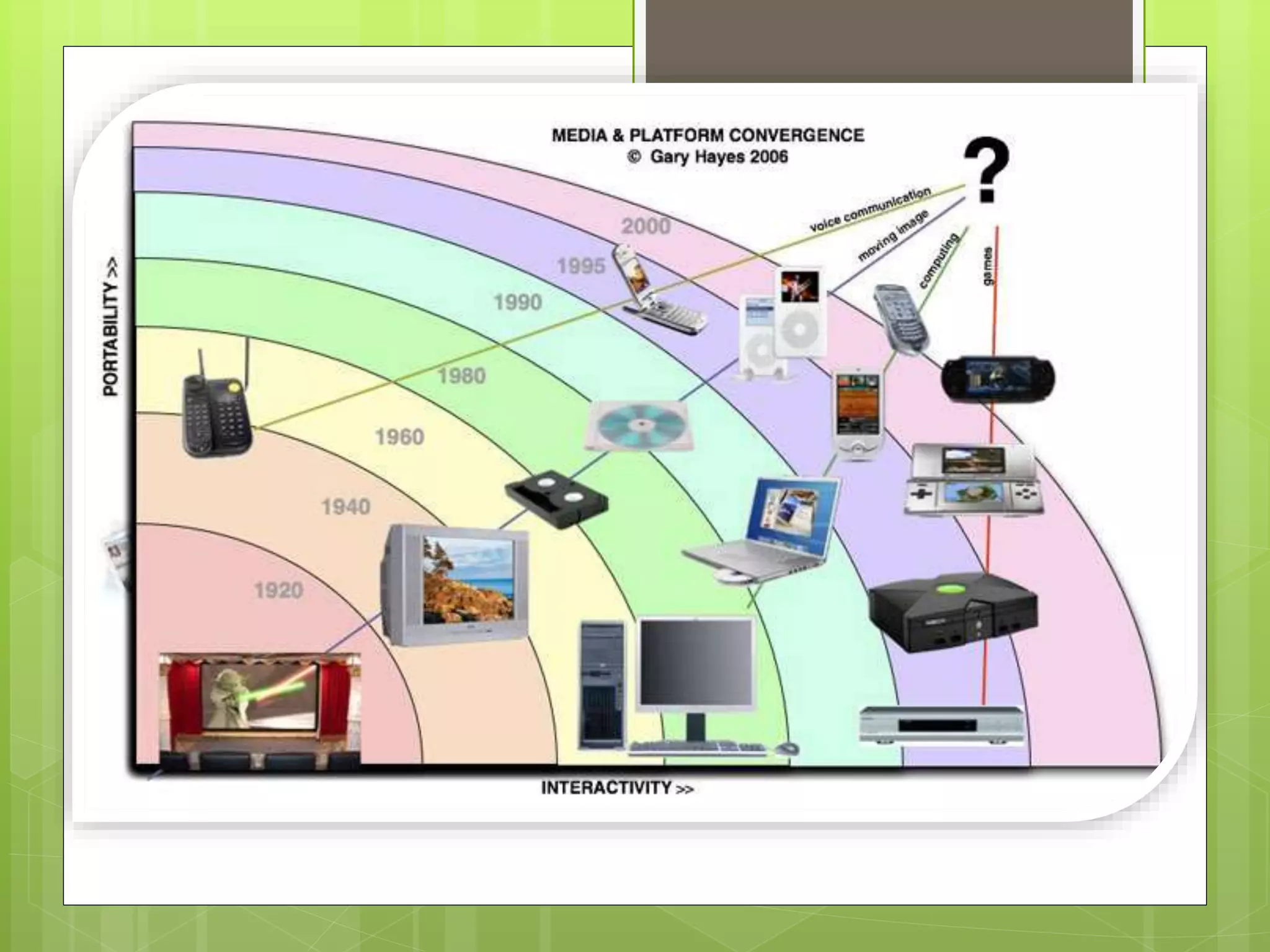
Convergence of Technologies
Technological convergence is the process by which
existing technologies merge into new forms that
bring together different types of media and
applications. New devices and technology usually
handle one medium or accomplish some basic
tasks; through technological convergence, devices
can interact with a wider array of media types. For
example, a new type of media storage often require
new players that only play that format. As the
technology advances, however, new models might
include additional features like the ability to
interface with more devices or play other types of
media.
LETS’S SUMMARIZE
 Computer is an electronic device which
converts raw data into useful information as
per user’s instructions.
 Computer works on the principle of Input –
Process – Output, i.e., IPO cycle.
 CPU is the main data processing unit also
known as the brain of the computer.
 ALU and CU are the main components of
CPU.
Made by –
Hitesh Singh
IX A 20

Computer System - An Overview

  • 1.
    Ch - 1 Computer System– An Overview
  • 2.
    Introduction  Computers, thesedays, have become an essential part of our day-ta-day life.  The word Computer is derived from Latin word Computare, which means to Count or Compute. So the word Computer can be used for any device that can perform calculations.  It can also process various types user data and that too with 100% accuracy.
  • 3.
    What is Computer? Anelectronic device which is capable of receiving information (data) in a particular form and of performing a sequence of operations in accordance with a predetermined but variable set of procedural instructions (program) to produce a result in the form of information or signals.
  • 4.
  • 5.
    Functioning of theComputer System Input: Accepts data and instructions. Processing: Manipulates data as per instructions Output: Produces desired output/information. Storage: Stores data, instructions and information.
  • 6.
  • 7.
    Input Unit Data andInstruction are entered in the computer systems with the help of input unit, which act like a link between user and computer. Different types of input units are used with the computer depending on the type of data or the format of the instructions to be given to the computer like keyboard, mouse, scanner, microphone, etc. It converts the data into the binary form and stores it into the main memory of the computer.
  • 9.
    Processing Unit Data inthe computer is processed by the Central Processing Unit (CPU) which is also known as the brain of the computer. It mainly comprises of two units ALU (Arithmetic and Logical Unit) and CU (Control Unit). All types of data processing are carried out by the ALU whereas CU helps to control the flow of data in the system from one part to another.
  • 10.
    Output Unit Once thedata is processed, the results are stored back into the main memory of the system which is received by the users on the output unit. The information stored in the binary form inside the computer is converted into the user readable form before it appears on the output unit. Commonly used output devices are VDU or monitor, printer, speaker, plotter, etc.
  • 12.
    Storage Unit This isalso known as the memory unit where data and information are stored temporarily in binary form. This is the main memory of the system which is like a storage brain of the computer. It interacts directly with the CPU to provide the required data and instructions and to get back the processed information. It also interacts with the external memory for storing the information permanently and to retrieve the stored information in it.
  • 14.
    Characteristics of Computer Computerscan perform highly complex tasks with great ease and accuracy which are difficult for human being to perform. Some are as follows:  Speed  Accuracy  Diligence  High Storage Capacity  Versatility
  • 15.
    Limitations of theComputer  Zero IQ  Lack of Decision Making Power  No Learning Power
  • 16.
    Applications of aComputer Computers, nowadays are widely used in a variety of fields because of the advantages like quick processing and ability to process different types of data with an ease. Some of the major areas of computer applications are listed below:  Business  Research  Education  Communication  Defence  Medicines and Healthcares  Entertainment  Computer Aided Manufacturing (CAM  Simulation  At Home
  • 17.
    Convergence of Technologies Technologicalconvergence is the process by which existing technologies merge into new forms that bring together different types of media and applications. New devices and technology usually handle one medium or accomplish some basic tasks; through technological convergence, devices can interact with a wider array of media types. For example, a new type of media storage often require new players that only play that format. As the technology advances, however, new models might include additional features like the ability to interface with more devices or play other types of media.
  • 19.
    LETS’S SUMMARIZE  Computeris an electronic device which converts raw data into useful information as per user’s instructions.  Computer works on the principle of Input – Process – Output, i.e., IPO cycle.  CPU is the main data processing unit also known as the brain of the computer.  ALU and CU are the main components of CPU.
  • 21.
    Made by – HiteshSingh IX A 20