CHAPTER 1: INFORMATION
AND COMMUNICATION
TECHNOLOGY
Computer security
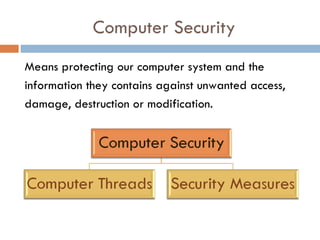
Computer Security
Means protecting our computer system and the
information they contains against unwanted access,
damage, destruction or modification.
Computer Threads
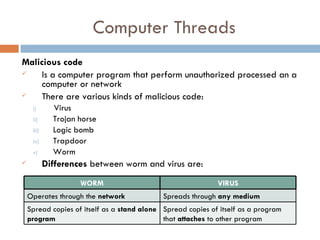
Malicious code
   Is a computer program that perform unauthorized processed an a
    computer or network
   There are various kinds of malicious code:
     i)       Virus
     ii)      Trojan horse
     iii)     Logic bomb
     iv)      Trapdoor
     v)       Worm
           Differences between worm and virus are:
                     WORM                                    VIRUS
    Operates through the network             Spreads through any medium
    Spread copies of itself as a stand alone Spread copies of itself as a program
    program                                  that attaches to other program
   A computer infected by a virus, worm or trojan
    horse has one or more of the following symptoms:
       Screen displays unusual message or image
       Music or unusual sound plays randomly
       Available memory is less than expected
       Existing programs and files disappear
       Files become corrupted
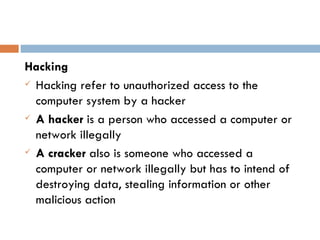
Hacking
 Hacking refer to unauthorized access to the

  computer system by a hacker
 A hacker is a person who accessed a computer or

  network illegally
 A cracker also is someone who accessed a

  computer or network illegally but has to intend of
  destroying data, stealing information or other
  malicious action
Nature threads
 Computers are threatened by natural or

  environmental disaster. Be it at home, stores, offices
  and also automobiles
 Examples: flood, fire, earthquakes, storms,

  tornados, excessive heat and inadequate power
Theft
 Two types of theft

    i)     Computer is used to steal money, goods, information
           and resources
    ii)    Stealing of computers especially notebook and PDA
   3 approaches to prevent theft:
    i)     Prevent access by using locks, smart card or
           password
    ii)    Prevent portability by restricting the hardware from
           being moved
    iii)   Detect and guard all exits and record any hardware
Security Measures
   Security measures are measures taken as a
    precaution against theft or espionage or sabotage
    or possible danger or failure
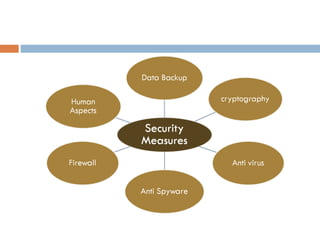
   Usually we use antivirus, cryptography, firewall and
    data backup to protect sensitive information
Anti-virus
 Is a utility program that we use to protect a computer

  against viruses by identifying and removing computer
  viruses found in the computer memory, computer storage or
  incoming e-mails files
 Examples:

                Norton Antivirus
                AVG
                Kaspersky
                Bitdefender
                Nod32
Anti-spyware
 Is a utility program that we use to protect the

  computers from spyware
 Spyware is a software or computer program that is

  designed secretly record and report an individual’s
  activities on the Internet
 Examples:

               Spybot Search and Destroy
               Ad-ware
               Spyware Blaster
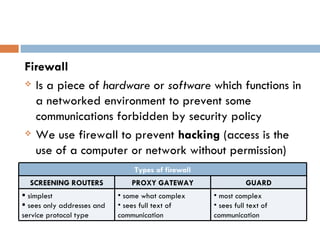
Firewall
 Is a piece of hardware or software which functions in

  a networked environment to prevent some
  communications forbidden by security policy
 We use firewall to prevent hacking (access is the

  use of a computer or network without permission)
                                Types of firewall
  SCREENING ROUTERS            PROXY GATEWAY                   GUARD
 simplest                  • some what complex     • most complex
 sees only addresses and   • sees full text of     • sees full text of
service protocol type       communication           communication
Backup
 Is a utility program that makes copy of all files that

  have been saved onto a disk
 Backup data is important when original data is

  corrupted
 When data corrupted, it is spoilt and cannot be

  properly used because it has become changed in
  wrong ways
Cryptography
 Is a process of transforming plaintext into cipheart

  then back again
 Encryption is a process of converting plaintext into

  cipertext. Decryption is the process of converting
  ciphertext into plaintext
 Encryption was used only by intelligence services,

  militaries and banks. We use cryptography to
  secure the information and prevent hacking or
  unauthorized access.
plaintext   encrypt   ciphertext


plaintext   decrypt   ciphertext
Human aspects
 The user and also the intruder of a computer system

 The hardest aspects to give protection

 The most common problem of human aspect security

  is the lack of achieving a good information
  security procedure
COMPUTER SECURITY

COMPUTER SECURITY

  • 1.
    CHAPTER 1: INFORMATION ANDCOMMUNICATION TECHNOLOGY Computer security
  • 2.
    Computer Security Means protectingour computer system and the information they contains against unwanted access, damage, destruction or modification.
  • 3.
    Computer Threads Malicious code  Is a computer program that perform unauthorized processed an a computer or network  There are various kinds of malicious code: i) Virus ii) Trojan horse iii) Logic bomb iv) Trapdoor v) Worm  Differences between worm and virus are: WORM VIRUS Operates through the network Spreads through any medium Spread copies of itself as a stand alone Spread copies of itself as a program program that attaches to other program
  • 4.
    A computer infected by a virus, worm or trojan horse has one or more of the following symptoms:  Screen displays unusual message or image  Music or unusual sound plays randomly  Available memory is less than expected  Existing programs and files disappear  Files become corrupted
  • 5.
    Hacking  Hacking referto unauthorized access to the computer system by a hacker  A hacker is a person who accessed a computer or network illegally  A cracker also is someone who accessed a computer or network illegally but has to intend of destroying data, stealing information or other malicious action
  • 6.
    Nature threads  Computersare threatened by natural or environmental disaster. Be it at home, stores, offices and also automobiles  Examples: flood, fire, earthquakes, storms, tornados, excessive heat and inadequate power
  • 7.
    Theft  Two typesof theft i) Computer is used to steal money, goods, information and resources ii) Stealing of computers especially notebook and PDA  3 approaches to prevent theft: i) Prevent access by using locks, smart card or password ii) Prevent portability by restricting the hardware from being moved iii) Detect and guard all exits and record any hardware
  • 8.
    Security Measures  Security measures are measures taken as a precaution against theft or espionage or sabotage or possible danger or failure  Usually we use antivirus, cryptography, firewall and data backup to protect sensitive information
  • 9.
    Anti-virus  Is autility program that we use to protect a computer against viruses by identifying and removing computer viruses found in the computer memory, computer storage or incoming e-mails files  Examples: Norton Antivirus AVG Kaspersky Bitdefender Nod32
  • 10.
    Anti-spyware  Is autility program that we use to protect the computers from spyware  Spyware is a software or computer program that is designed secretly record and report an individual’s activities on the Internet  Examples: Spybot Search and Destroy Ad-ware Spyware Blaster
  • 11.
    Firewall  Is apiece of hardware or software which functions in a networked environment to prevent some communications forbidden by security policy  We use firewall to prevent hacking (access is the use of a computer or network without permission) Types of firewall SCREENING ROUTERS PROXY GATEWAY GUARD  simplest • some what complex • most complex  sees only addresses and • sees full text of • sees full text of service protocol type communication communication
  • 12.
    Backup  Is autility program that makes copy of all files that have been saved onto a disk  Backup data is important when original data is corrupted  When data corrupted, it is spoilt and cannot be properly used because it has become changed in wrong ways
  • 13.
    Cryptography  Is aprocess of transforming plaintext into cipheart then back again  Encryption is a process of converting plaintext into cipertext. Decryption is the process of converting ciphertext into plaintext  Encryption was used only by intelligence services, militaries and banks. We use cryptography to secure the information and prevent hacking or unauthorized access.
  • 14.
    plaintext encrypt ciphertext plaintext decrypt ciphertext
  • 15.
    Human aspects  Theuser and also the intruder of a computer system  The hardest aspects to give protection  The most common problem of human aspect security is the lack of achieving a good information security procedure