
System security and tools
Subtopics covered :
1. System Vulnerability and Abuse
2. Techs. And Tools for Protecting Info Resources

                Group members are:
              1. Karan Bhandari(39)
              2. Gurshawn Singh(35)
                3. Nishad Prabhu(3)
Introduction

As we all know, Technology has tremendously
affected us and our way of living.

Daily Mail is now Best as E-mail, Newspapers
are on Large screens, Communication is highly
globalized and storage is within the size range
of our fingers.

But, All this does come with its drawbacks…
Viruses ! Trojans !
Why Systems are Vulnerable ?

A set of things working together as parts of a mechanism or

an interconnecting network.

Due to storage of electronic data, Access points are Endless

The potential for unauthorized access, abuse or fraud is high
Access control
To gain access a user must be authorized and
authenticated – established by using passwords

Passwords have their disadvantages

New technologies like tokens, smart cards, and
biometric authentication
Malicious software:
Viruses, Worms, Trojan Horses and
            Spyware

Malicious software programs are referred to as
malware and include a variety of threats such as
computer viruses, worms and trojan horses.


COMPUTER VIRUS: a rogue software program.
viruses usually deliver a payload.
WORMS: are independent computer programs

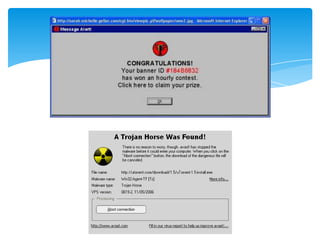
TROJAN HORSE: appears to be benign but then does
something other than expected.

SPYWARE: install themselves on computer to monitor user
activities

KEYLOGGERS: record every keystroke made on a computer.
Hackers and Computer Crime


A HACKER is an individual who intends to gain
unauthorized access to a computer system.


Hacker vs. cracker


hacker activities include theft, damage and cyber
vandalism.
Spoofing and Sniffing


Hackers attempting to hide their true identities often
spoof, or misrepresent themselves


This is known as SPOOFING.


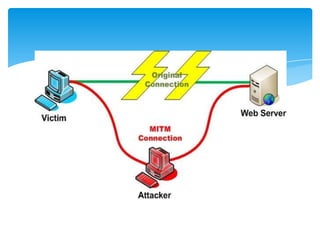
A SNIFFER is a type of eavesdropping program that
monitors information travelling over a network.
Denial of Service Attacks


In a DoS attack, hackers flood a network server or web
server with many thousands of false communications or
requests for services to crash the network


A Distributed denial-of-service (DDoS) attack uses
numerous computers from different launch points to
inundate and overwhelm the network.
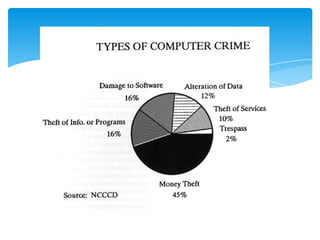
Computer Crime


Computer crime is defined by the U.S. Department of
Justice as “any violations of criminal law that involve
a knowledge of computer technology for their
perpetrations, invesigation or prosecution.
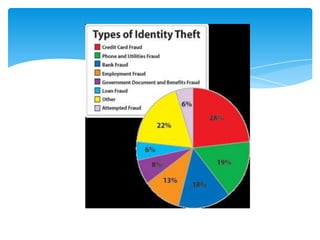
Identity Theft


Identity Theft is a crime in which an imposter obtains key
pieces of personal information.


Popular tactic is a form of spoofing called PHISHING.


EVIL TWINS and PHARMING are harder to detect.
Click Fraud & Global Threat


CLICK FRAUD: occurs when an individual or computer
program fraudulently clicks on an online ad without any
intention of learning more about the advertiser or making
a purchase.


GLOBAL THREAT: Involves Cyber terrorism and cyber
warfare.
Internet Threats: Employees


Malicious intruders seeking system access sometimes
trick employees into revealing their passwords and
other information.


This practice is called SOCIAL ENGINEERING.
Software Vulnerability


Software poses a constant threat to information systems,
causing untold losses in productivity.


There may be presence of hidden Bugs or Program Code
Defects.


Zero defects cannot be achieved in larger programs
Technologies and tools for
protecting information resources

 • Securing systems

 • Ensuring system availability

 • Ensuring software quality
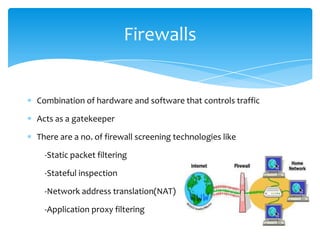
Firewalls


Combination of hardware and software that controls traffic

Acts as a gatekeeper

There are a no. of firewall screening technologies like

  -Static packet filtering

  -Stateful inspection

  -Network address translation(NAT)

  -Application proxy filtering
Intrusion detection systems

Placed at the hotspots

Generates a alarm if it finds a suspicious or anomalous
event

Looks for known methods of computer attacks

Detects removal or modification of files

Examines events as they are happening
Anti-Virus and Anti-spyware

Checks for presence of viruses


Most softwares are effective only against known viruses


Available widely
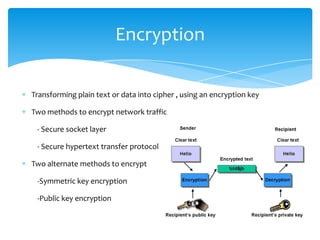
Encryption

Transforming plain text or data into cipher , using an encryption key

Two methods to encrypt network traffic

 - Secure socket layer

 - Secure hypertext transfer protocol

Two alternate methods to encrypt

 -Symmetric key encryption

 -Public key encryption
Ensuring system availability


Ensuring system and application availability is a must
for companies eg. Airline service
Fault tolerant systems use special software to detect
harware failures and automatically switch to backup
Should not be confused with high availability
computing
Basics of System Security and Tools

Basics of System Security and Tools

  • 1.
    System security andtools Subtopics covered : 1. System Vulnerability and Abuse 2. Techs. And Tools for Protecting Info Resources Group members are: 1. Karan Bhandari(39) 2. Gurshawn Singh(35) 3. Nishad Prabhu(3)
  • 2.
    Introduction As we allknow, Technology has tremendously affected us and our way of living. Daily Mail is now Best as E-mail, Newspapers are on Large screens, Communication is highly globalized and storage is within the size range of our fingers. But, All this does come with its drawbacks… Viruses ! Trojans !
  • 3.
    Why Systems areVulnerable ? A set of things working together as parts of a mechanism or an interconnecting network. Due to storage of electronic data, Access points are Endless The potential for unauthorized access, abuse or fraud is high
  • 4.
    Access control To gainaccess a user must be authorized and authenticated – established by using passwords Passwords have their disadvantages New technologies like tokens, smart cards, and biometric authentication
  • 5.
    Malicious software: Viruses, Worms,Trojan Horses and Spyware Malicious software programs are referred to as malware and include a variety of threats such as computer viruses, worms and trojan horses. COMPUTER VIRUS: a rogue software program. viruses usually deliver a payload.
  • 6.
    WORMS: are independentcomputer programs TROJAN HORSE: appears to be benign but then does something other than expected. SPYWARE: install themselves on computer to monitor user activities KEYLOGGERS: record every keystroke made on a computer.
  • 8.
    Hackers and ComputerCrime A HACKER is an individual who intends to gain unauthorized access to a computer system. Hacker vs. cracker hacker activities include theft, damage and cyber vandalism.
  • 9.
    Spoofing and Sniffing Hackersattempting to hide their true identities often spoof, or misrepresent themselves This is known as SPOOFING. A SNIFFER is a type of eavesdropping program that monitors information travelling over a network.
  • 11.
    Denial of ServiceAttacks In a DoS attack, hackers flood a network server or web server with many thousands of false communications or requests for services to crash the network A Distributed denial-of-service (DDoS) attack uses numerous computers from different launch points to inundate and overwhelm the network.
  • 12.
    Computer Crime Computer crimeis defined by the U.S. Department of Justice as “any violations of criminal law that involve a knowledge of computer technology for their perpetrations, invesigation or prosecution.
  • 14.
    Identity Theft Identity Theftis a crime in which an imposter obtains key pieces of personal information. Popular tactic is a form of spoofing called PHISHING. EVIL TWINS and PHARMING are harder to detect.
  • 16.
    Click Fraud &Global Threat CLICK FRAUD: occurs when an individual or computer program fraudulently clicks on an online ad without any intention of learning more about the advertiser or making a purchase. GLOBAL THREAT: Involves Cyber terrorism and cyber warfare.
  • 17.
    Internet Threats: Employees Maliciousintruders seeking system access sometimes trick employees into revealing their passwords and other information. This practice is called SOCIAL ENGINEERING.
  • 18.
    Software Vulnerability Software posesa constant threat to information systems, causing untold losses in productivity. There may be presence of hidden Bugs or Program Code Defects. Zero defects cannot be achieved in larger programs
  • 19.
    Technologies and toolsfor protecting information resources • Securing systems • Ensuring system availability • Ensuring software quality
  • 20.
    Firewalls Combination of hardwareand software that controls traffic Acts as a gatekeeper There are a no. of firewall screening technologies like -Static packet filtering -Stateful inspection -Network address translation(NAT) -Application proxy filtering
  • 21.
    Intrusion detection systems Placedat the hotspots Generates a alarm if it finds a suspicious or anomalous event Looks for known methods of computer attacks Detects removal or modification of files Examines events as they are happening
  • 22.
    Anti-Virus and Anti-spyware Checksfor presence of viruses Most softwares are effective only against known viruses Available widely
  • 23.
    Encryption Transforming plain textor data into cipher , using an encryption key Two methods to encrypt network traffic - Secure socket layer - Secure hypertext transfer protocol Two alternate methods to encrypt -Symmetric key encryption -Public key encryption
  • 24.
    Ensuring system availability Ensuringsystem and application availability is a must for companies eg. Airline service Fault tolerant systems use special software to detect harware failures and automatically switch to backup Should not be confused with high availability computing