COMPUTER AIDED PROCESS
PLANNING
Dr.M. Bala Theja,M.Tech,Ph.D
Associate Professor
Department of Mechanical Engineering
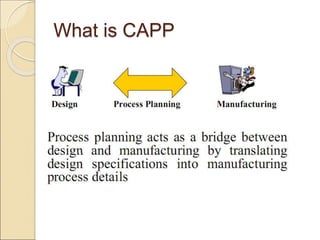
What is CAPP
Process Plan
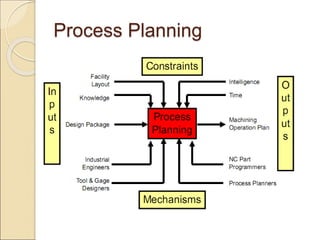
Process Planning
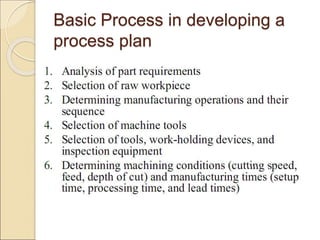
Basic Process in developing a
process plan
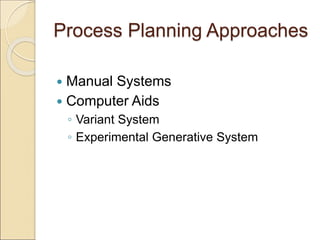
Process Planning Approaches
 Manual Systems
 Computer Aids
◦ Variant System
◦ Experimental Generative System
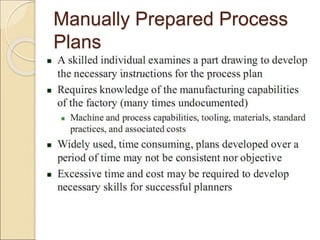
Manually Prepared Process
Plans
Computer Aids
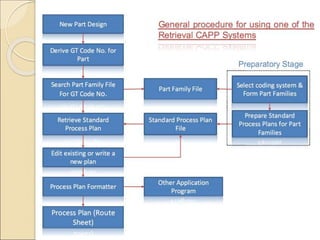
Variant (Retrieval) CAPP
Methodology
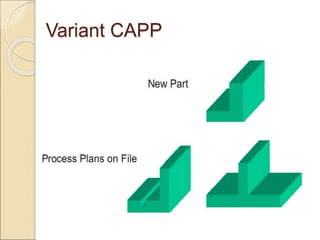
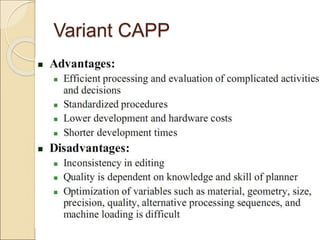
Variant CAPP
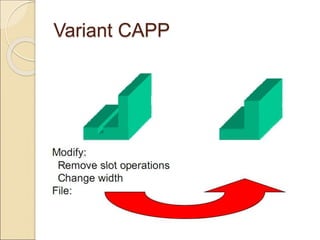
Variant CAPP
Variant CAPP
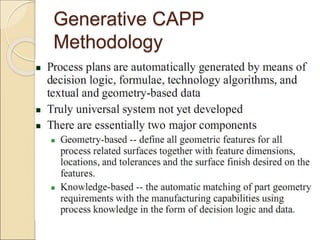
Generative CAPP
Methodology
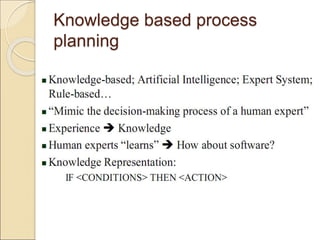
Knowledge based process
planning
Kendall & Kendall 9-16
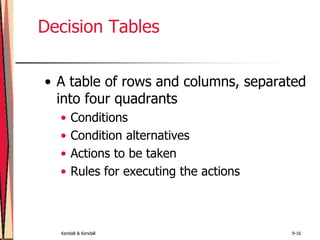
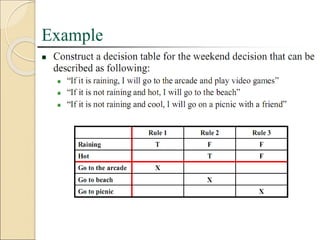
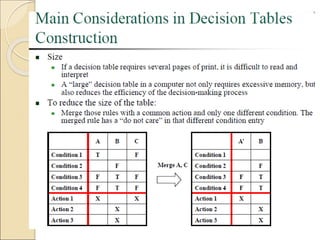
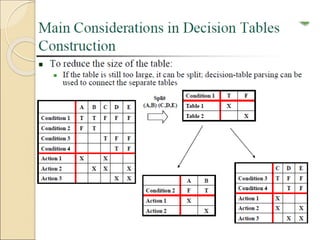
Decision Tables
• A table of rows and columns, separated
into four quadrants
• Conditions
• Condition alternatives
• Actions to be taken
• Rules for executing the actions
Kendall & Kendall 9-17
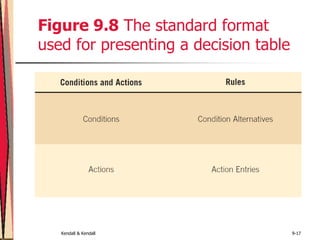
Figure 9.8 The standard format
used for presenting a decision table
Kendall & Kendall 9-18
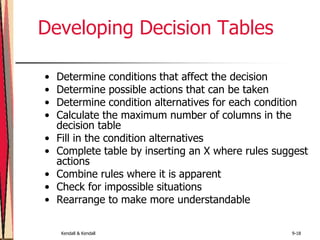
Developing Decision Tables
• Determine conditions that affect the decision
• Determine possible actions that can be taken
• Determine condition alternatives for each condition
• Calculate the maximum number of columns in the
decision table
• Fill in the condition alternatives
• Complete table by inserting an X where rules suggest
actions
• Combine rules where it is apparent
• Check for impossible situations
• Rearrange to make more understandable
Kendall & Kendall 9-19
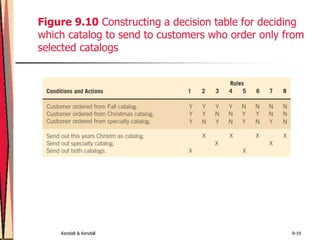
Figure 9.10 Constructing a decision table for deciding
which catalog to send to customers who order only from
selected catalogs
Kendall & Kendall 9-20
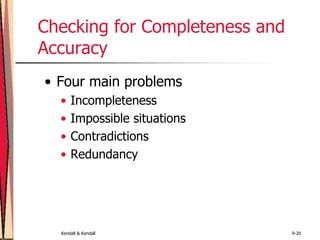
Checking for Completeness and
Accuracy
• Four main problems
• Incompleteness
• Impossible situations
• Contradictions
• Redundancy
Kendall & Kendall 9-21
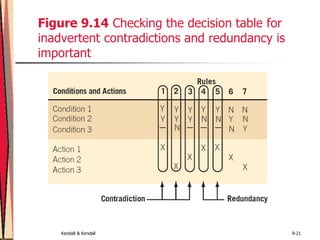
Figure 9.14 Checking the decision table for
inadvertent contradictions and redundancy is
important
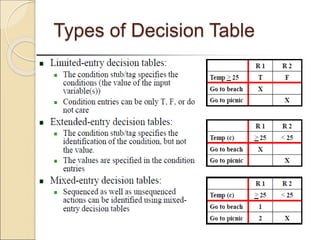
Types of Decision Table
Computer Aided Process.ppt

Computer Aided Process.ppt