Topic:
components
of motivation
and its model
PRESENTED BY SAQIB IFTIKHAR
Contents
 MOTIVATION
 COMPONENTS OF MOTIVATION
 NEED
• PRIMARY NEED
• SECONDARY NEED
 DRIVE
 INCENTIVES
• FINANCIAL INCENTIVES
• NON FINANCIAL INCENTIVES
 GOALS DIRECTION
 MOTIVATIONAL MODEL
MOTIVATION
IS OFTEN DEFINED AS AN INTERNAL OR EXTERNAL
DESIRETO ACHIEVE A GOAL IN LIFE.
OR
 THEWISH OR DESIRE OF A PERSON AND ITS FULFILLMENT IS CALLED
MOTIVATION.
COMPONENTS OF MOTIVATION

o Need,
o Drive,
o INCENTIVES ,
o GOALS DIRECTION
NEED
 Need are the group of goals that a person seek to fulfill a
desire.
 Such a need must be felt or recognized by the individual who
has that need.
TYPES
 Types of need
 There are two types of need
1. Basic need
2. Secondary need
 Basic need:
The basic need is also called primary need or physiological
need
 The physiological need is defined as
cont
 PHYSIOLOGICAL NEED:
THE PHYSICAL NEED OF A PERSON ARE CALLED
PHYSIOLOGICAL NEED.
 FOR EXAMPLE:
FOOD, SHELTER ,CLOTHING, ETC…………
cont
 Secondary need:
Secondary need are also called psychological need
Psychological need is defined as,
 Psychological need:
The study of individual behavior are called psychological need.
cont
 For example,
To feel secure, to achieve some things
etc………………….
Drive
The drive and tension motivate the individual to
engage in action which may result to achieve the
goals.
Incentives
 Incentives is an instrument which are used to inducing people for a desire
course of action.
 Types:
There are two types of incentives
1. Financial
2. Non- financial
cont
 FINANCIAL INCENTIVES:
wages, salaries, insurance, pension plans employees discount
etc……
are all financial incentives
 NON FINANCIAL INCENTIVES:
They are also called personal incentives because they offer an
opportunity to develop personal initiative and achievement
 for example:
Responsibility , good supervision , good working condition etc………..
Goals direction
 THE EXPERIENCE OF A CERTAIN AMOUNT OF
TENSION AND HIS BEHAVIOR ISTO BECOME A GOAL
DIRECTION.
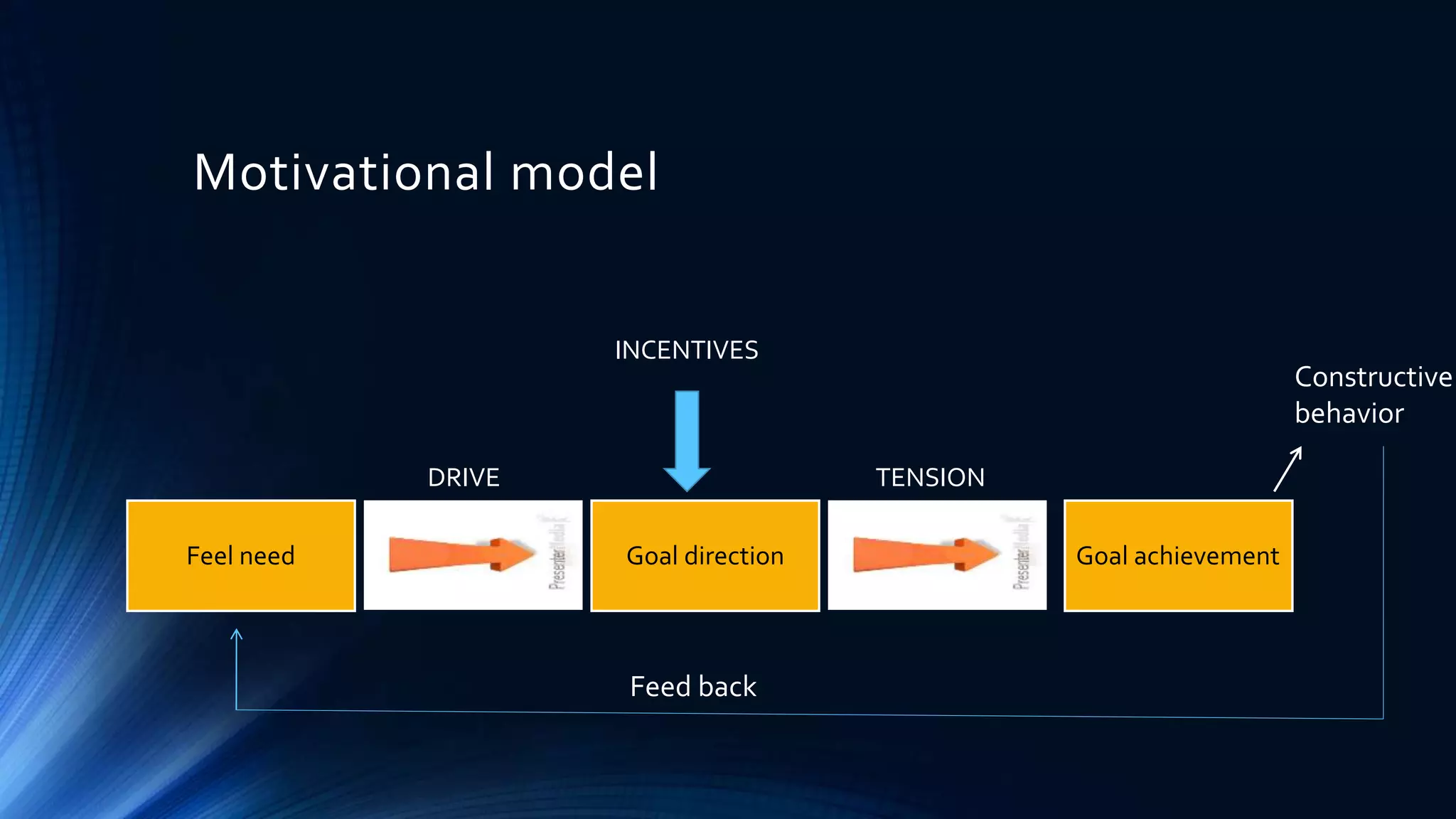
Motivational model
Feel need Goal direction Goal achievement
DRIVE
INCENTIVES
TENSION
Constructive
behavior
Feed back
A N Y Q U E S T I O N
Components of motivation

Components of motivation

  • 2.
    Topic: components of motivation and itsmodel PRESENTED BY SAQIB IFTIKHAR
  • 3.
    Contents  MOTIVATION  COMPONENTSOF MOTIVATION  NEED • PRIMARY NEED • SECONDARY NEED  DRIVE  INCENTIVES • FINANCIAL INCENTIVES • NON FINANCIAL INCENTIVES  GOALS DIRECTION  MOTIVATIONAL MODEL
  • 4.
    MOTIVATION IS OFTEN DEFINEDAS AN INTERNAL OR EXTERNAL DESIRETO ACHIEVE A GOAL IN LIFE. OR  THEWISH OR DESIRE OF A PERSON AND ITS FULFILLMENT IS CALLED MOTIVATION.
  • 5.
    COMPONENTS OF MOTIVATION  oNeed, o Drive, o INCENTIVES , o GOALS DIRECTION
  • 6.
    NEED  Need arethe group of goals that a person seek to fulfill a desire.  Such a need must be felt or recognized by the individual who has that need.
  • 7.
    TYPES  Types ofneed  There are two types of need 1. Basic need 2. Secondary need  Basic need: The basic need is also called primary need or physiological need  The physiological need is defined as
  • 8.
    cont  PHYSIOLOGICAL NEED: THEPHYSICAL NEED OF A PERSON ARE CALLED PHYSIOLOGICAL NEED.  FOR EXAMPLE: FOOD, SHELTER ,CLOTHING, ETC…………
  • 9.
    cont  Secondary need: Secondaryneed are also called psychological need Psychological need is defined as,  Psychological need: The study of individual behavior are called psychological need.
  • 10.
    cont  For example, Tofeel secure, to achieve some things etc………………….
  • 11.
    Drive The drive andtension motivate the individual to engage in action which may result to achieve the goals.
  • 12.
    Incentives  Incentives isan instrument which are used to inducing people for a desire course of action.  Types: There are two types of incentives 1. Financial 2. Non- financial
  • 13.
    cont  FINANCIAL INCENTIVES: wages,salaries, insurance, pension plans employees discount etc…… are all financial incentives  NON FINANCIAL INCENTIVES: They are also called personal incentives because they offer an opportunity to develop personal initiative and achievement  for example: Responsibility , good supervision , good working condition etc………..
  • 14.
    Goals direction  THEEXPERIENCE OF A CERTAIN AMOUNT OF TENSION AND HIS BEHAVIOR ISTO BECOME A GOAL DIRECTION.
  • 15.
    Motivational model Feel needGoal direction Goal achievement DRIVE INCENTIVES TENSION Constructive behavior Feed back
  • 16.
    A N YQ U E S T I O N