3-1
Defining a Business Concept
Overview of the Chapter:
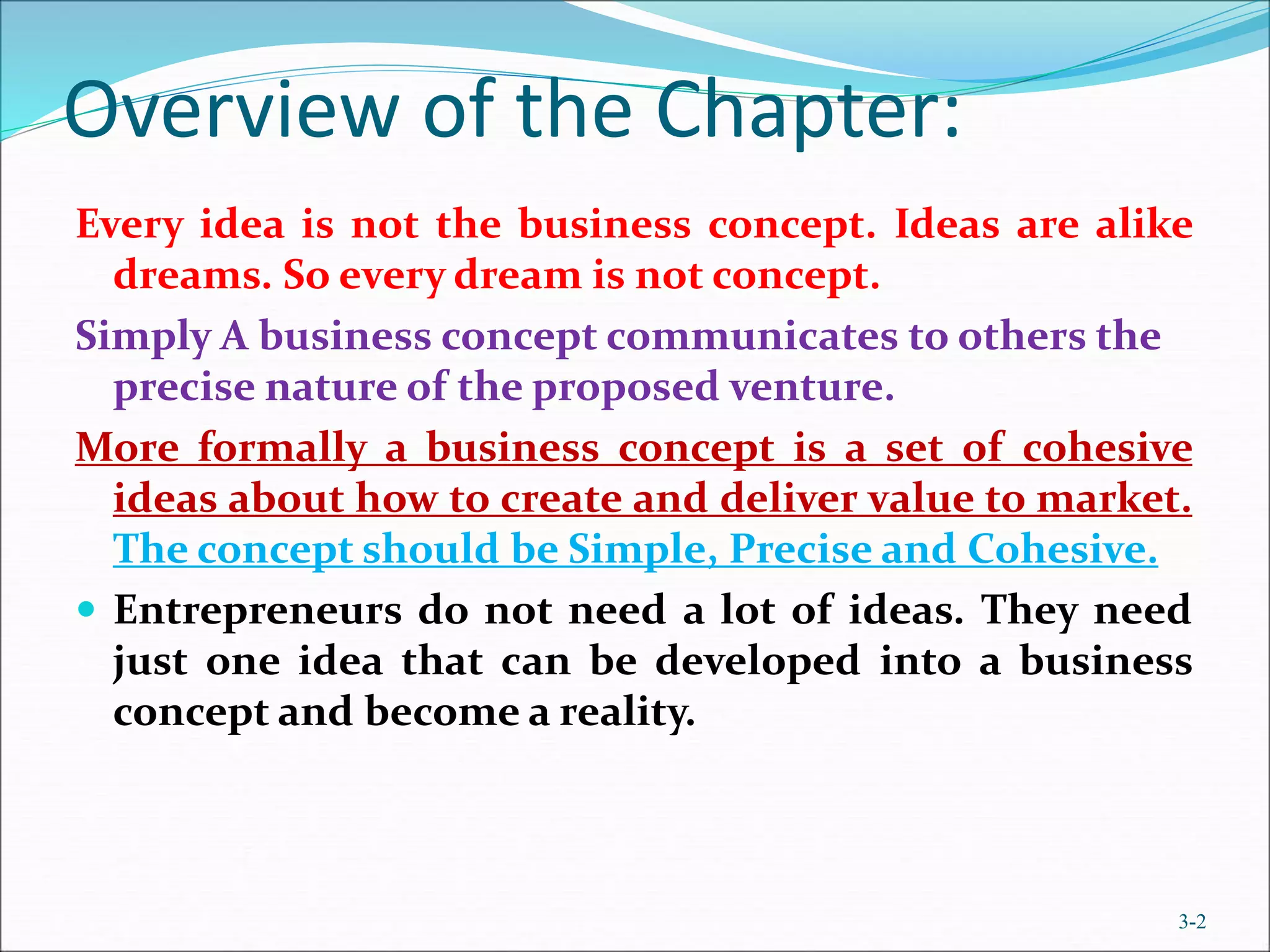
Every idea is not the business concept. Ideas are alike
dreams. So every dream is not concept.
Simply A business concept communicates to others the
precise nature of the proposed venture.
More formally a business concept is a set of cohesive
ideas about how to create and deliver value to market.
The concept should be Simple, Precise and Cohesive.
 Entrepreneurs do not need a lot of ideas. They need
just one idea that can be developed into a business
concept and become a reality.
3-2
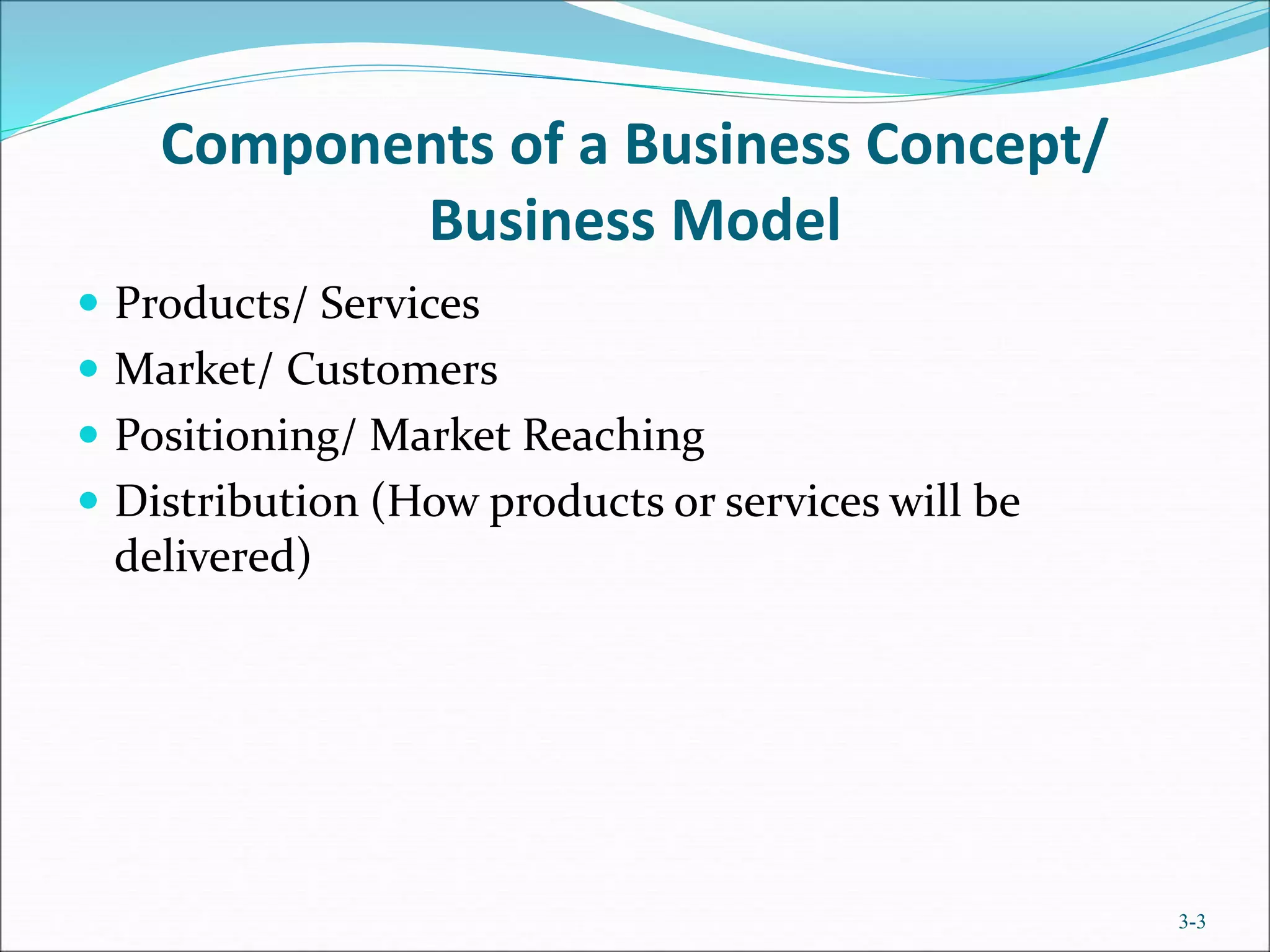
Components of a Business Concept/
Business Model
 Products/ Services
 Market/ Customers
 Positioning/ Market Reaching
 Distribution (How products or services will be
delivered)
3-3
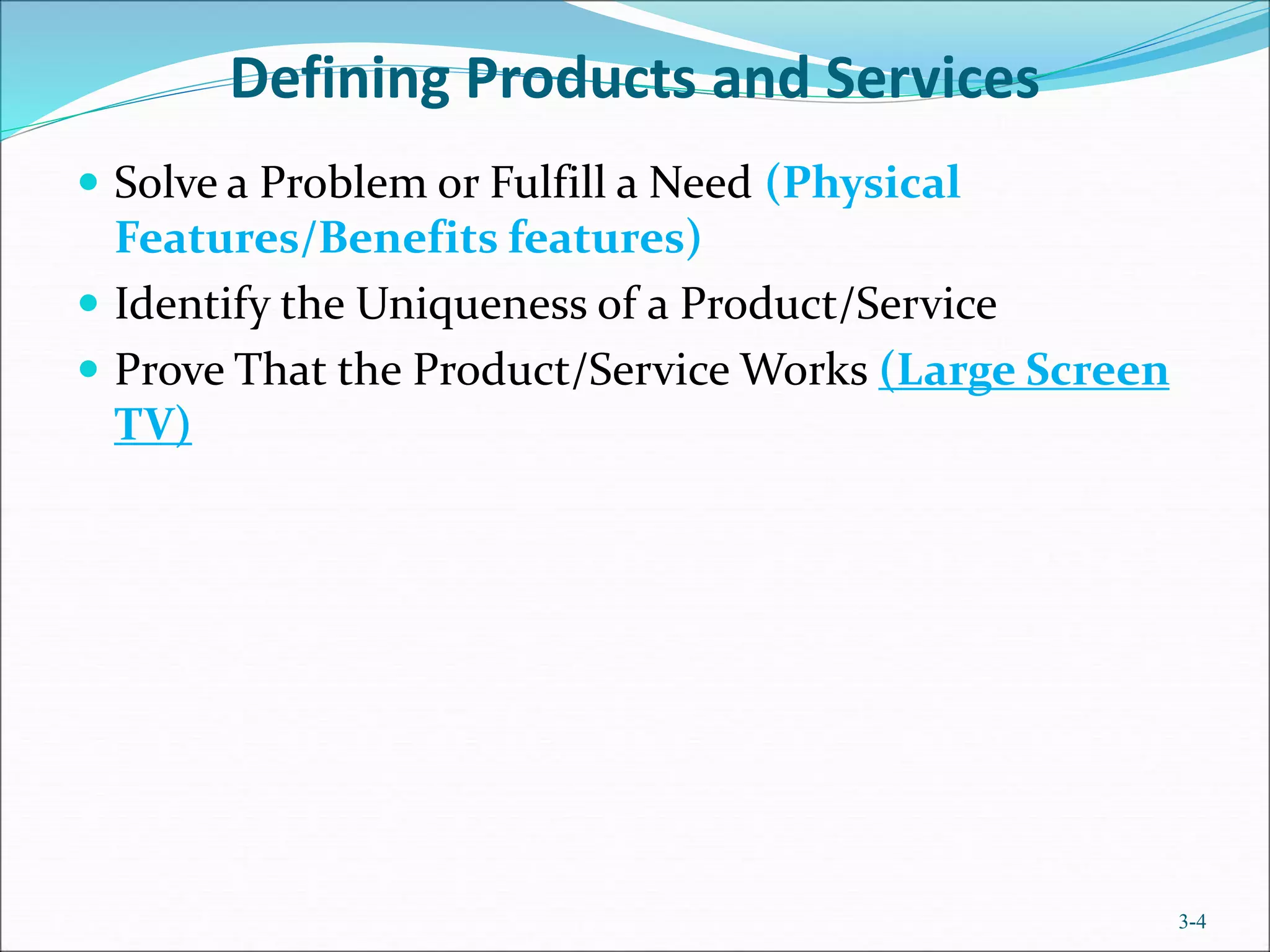
Defining Products and Services
 Solve a Problem or Fulfill a Need (Physical
Features/Benefits features)
 Identify the Uniqueness of a Product/Service
 Prove That the Product/Service Works (Large Screen
TV)
3-4
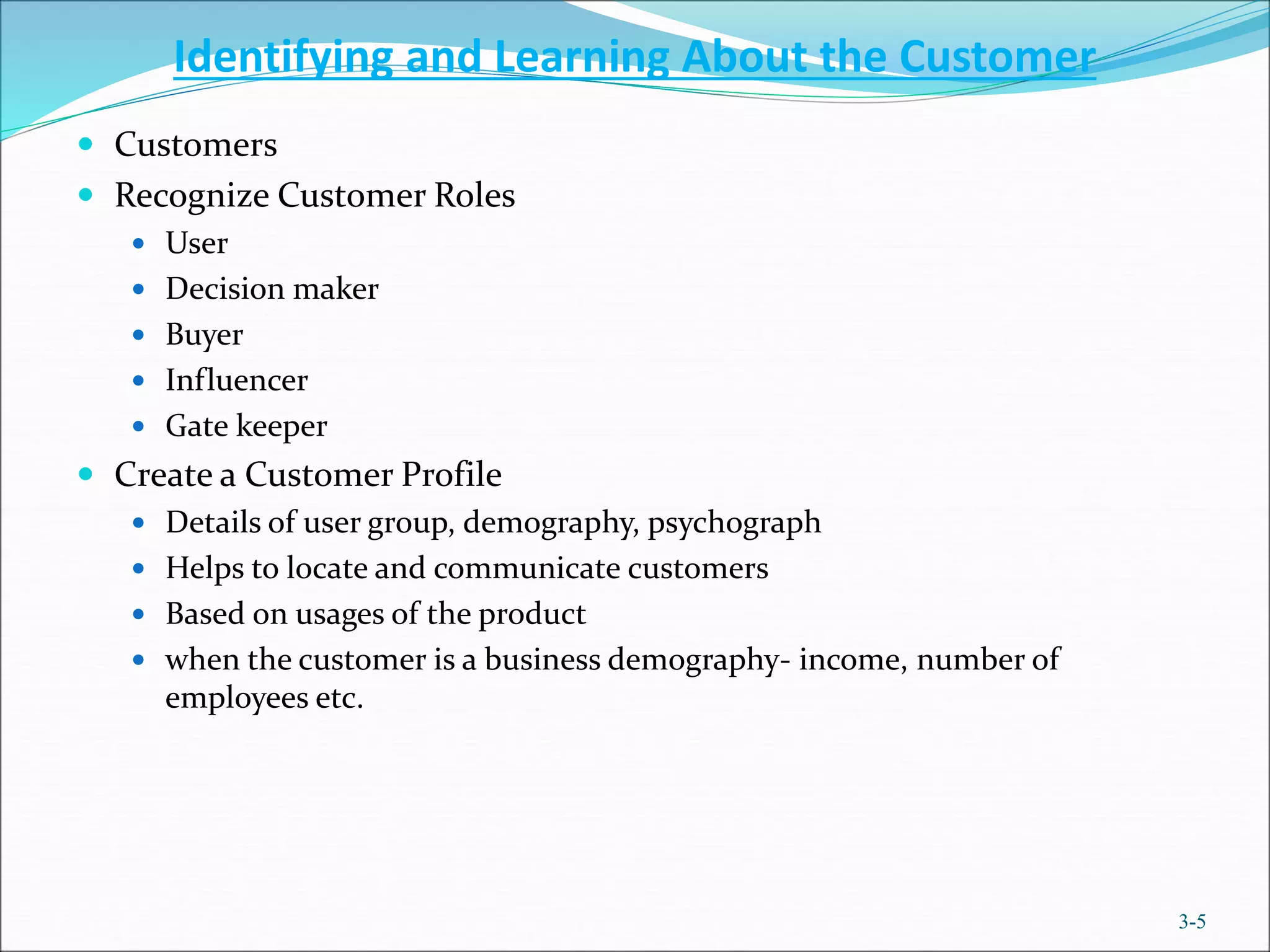
Identifying and Learning About the Customer
 Customers
 Recognize Customer Roles
 User
 Decision maker
 Buyer
 Influencer
 Gate keeper
 Create a Customer Profile
 Details of user group, demography, psychograph
 Helps to locate and communicate customers
 Based on usages of the product
 when the customer is a business demography- income, number of
employees etc.
3-5
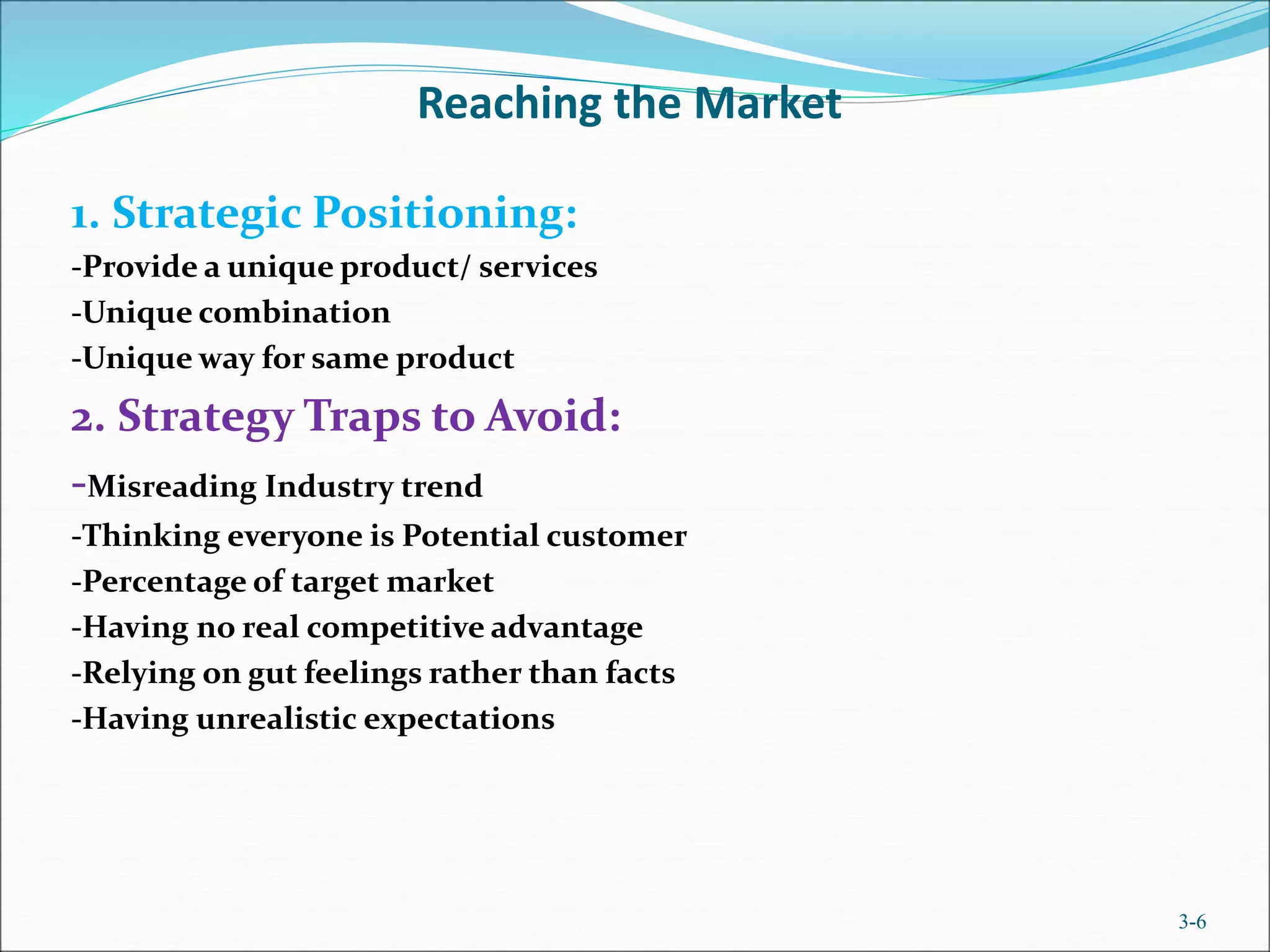
Reaching the Market
1. Strategic Positioning:
-Provide a unique product/ services
-Unique combination
-Unique way for same product
2. Strategy Traps to Avoid:
-Misreading Industry trend
-Thinking everyone is Potential customer
-Percentage of target market
-Having no real competitive advantage
-Relying on gut feelings rather than facts
-Having unrealistic expectations
3-6
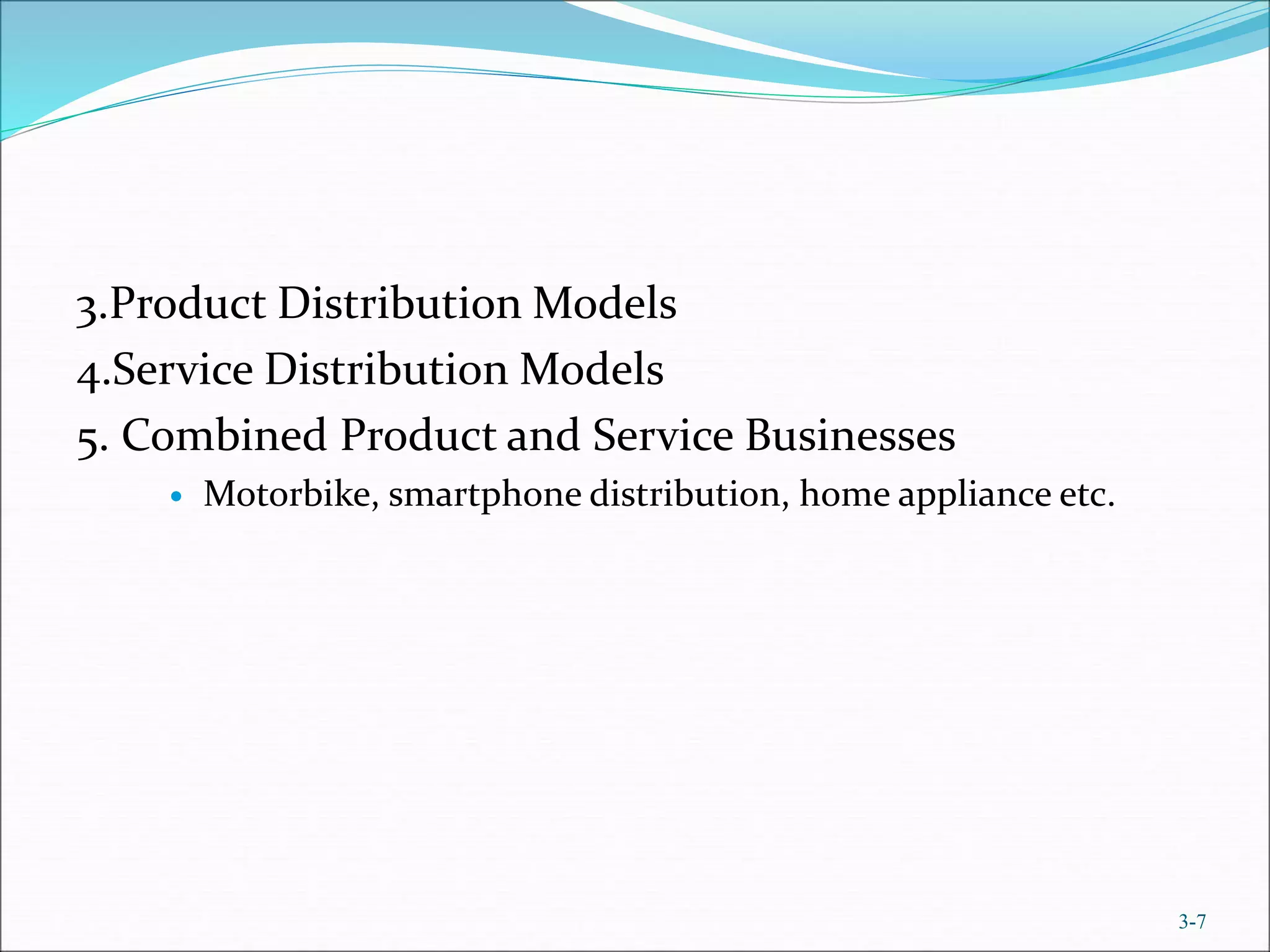
3.Product Distribution Models
4.Service Distribution Models
5. Combined Product and Service Businesses
 Motorbike, smartphone distribution, home appliance etc.
3-7
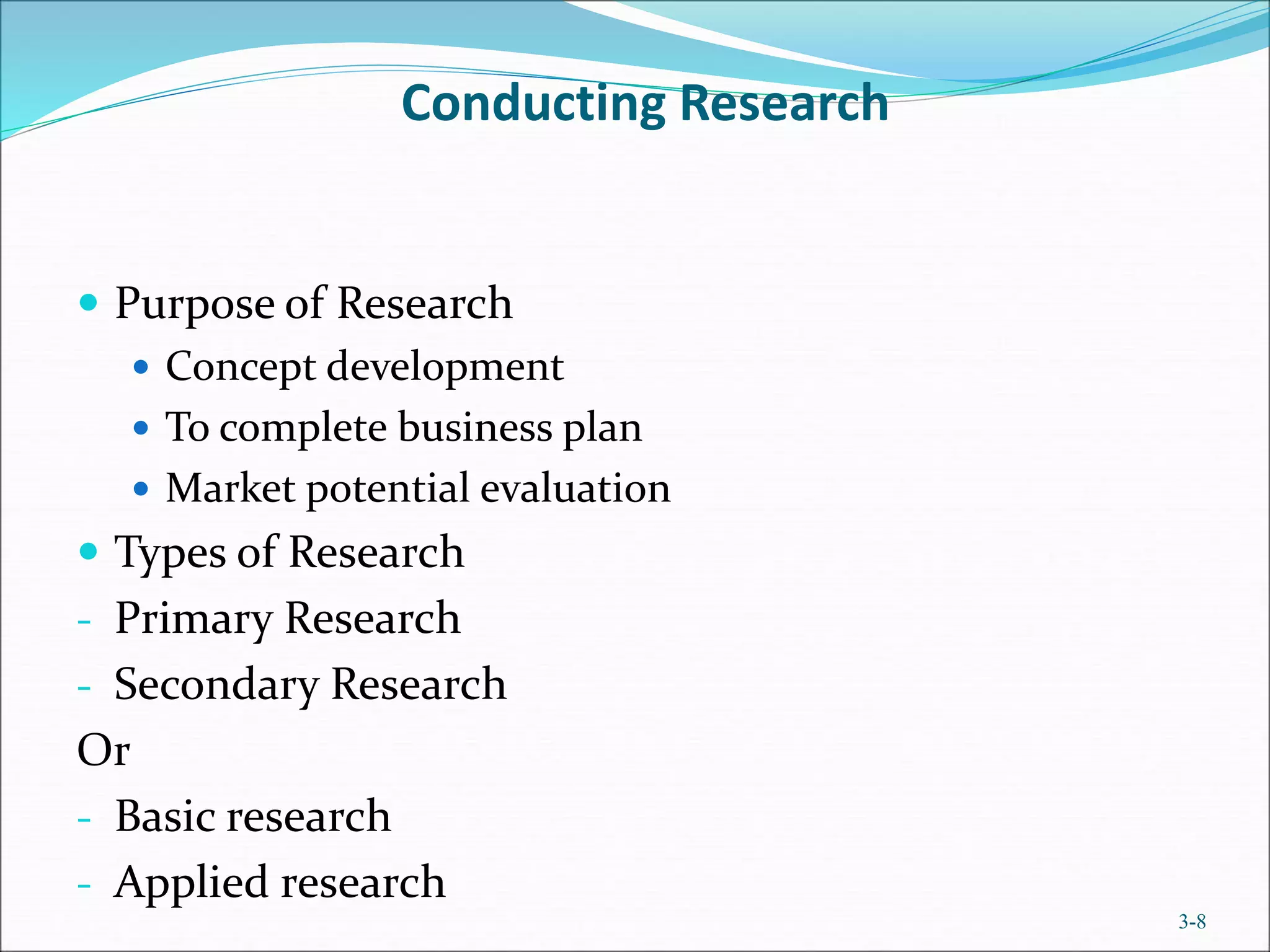
Conducting Research
 Purpose of Research
 Concept development
 To complete business plan
 Market potential evaluation
 Types of Research
- Primary Research
- Secondary Research
Or
- Basic research
- Applied research
3-8
Five areas to research
The entrepreneurs will conduct research for the business
plan in five areas:
 Industry
 Market
 Competition
 Financial
 Legal
3-9
Primary research
 Customer surveys
 Ask the customer about product/ service
 Preview of product to the potential customer
 Focus group discussion
 Additional customer insight
 More information cheaply
 Valuable insight obtained
 Skilled mentor is needed
3-10
Business Concepts
 Attributes of Successful Business Concepts
 Involves significant savings
 Solves a serious problem
 Offers convenience
 Attract media attention
 Clearly identify the market
 Captures monopoly
 Promises a big upside and a low downside
 Fatal Flaws of Business Concepts:
-No real need
- Hidden Traps
- Unfortunate economics
- No protection
- Obsolescence
- Requires changes in consumer behavior
3-11

Components of a Business Concept/ Business Model

  • 1.
  • 2.
    Overview of theChapter: Every idea is not the business concept. Ideas are alike dreams. So every dream is not concept. Simply A business concept communicates to others the precise nature of the proposed venture. More formally a business concept is a set of cohesive ideas about how to create and deliver value to market. The concept should be Simple, Precise and Cohesive.  Entrepreneurs do not need a lot of ideas. They need just one idea that can be developed into a business concept and become a reality. 3-2
  • 3.
    Components of aBusiness Concept/ Business Model  Products/ Services  Market/ Customers  Positioning/ Market Reaching  Distribution (How products or services will be delivered) 3-3
  • 4.
    Defining Products andServices  Solve a Problem or Fulfill a Need (Physical Features/Benefits features)  Identify the Uniqueness of a Product/Service  Prove That the Product/Service Works (Large Screen TV) 3-4
  • 5.
    Identifying and LearningAbout the Customer  Customers  Recognize Customer Roles  User  Decision maker  Buyer  Influencer  Gate keeper  Create a Customer Profile  Details of user group, demography, psychograph  Helps to locate and communicate customers  Based on usages of the product  when the customer is a business demography- income, number of employees etc. 3-5
  • 6.
    Reaching the Market 1.Strategic Positioning: -Provide a unique product/ services -Unique combination -Unique way for same product 2. Strategy Traps to Avoid: -Misreading Industry trend -Thinking everyone is Potential customer -Percentage of target market -Having no real competitive advantage -Relying on gut feelings rather than facts -Having unrealistic expectations 3-6
  • 7.
    3.Product Distribution Models 4.ServiceDistribution Models 5. Combined Product and Service Businesses  Motorbike, smartphone distribution, home appliance etc. 3-7
  • 8.
    Conducting Research  Purposeof Research  Concept development  To complete business plan  Market potential evaluation  Types of Research - Primary Research - Secondary Research Or - Basic research - Applied research 3-8
  • 9.
    Five areas toresearch The entrepreneurs will conduct research for the business plan in five areas:  Industry  Market  Competition  Financial  Legal 3-9
  • 10.
    Primary research  Customersurveys  Ask the customer about product/ service  Preview of product to the potential customer  Focus group discussion  Additional customer insight  More information cheaply  Valuable insight obtained  Skilled mentor is needed 3-10
  • 11.
    Business Concepts  Attributesof Successful Business Concepts  Involves significant savings  Solves a serious problem  Offers convenience  Attract media attention  Clearly identify the market  Captures monopoly  Promises a big upside and a low downside  Fatal Flaws of Business Concepts: -No real need - Hidden Traps - Unfortunate economics - No protection - Obsolescence - Requires changes in consumer behavior 3-11