Comparison of three Highthroughput sequencing techniques

Speaker
P. RAMESH
Ph.D
HIGH-THROUGHPUT SEQUENCING

3 sequencing methods:
 MegaBACETM Method

454 sequencingTM
Single Molecule Real Time (SMRTTM) DNA
sequencing
MegaBACETM Method
 First PCR amplification
 After the amplification DYEnamic™ ET dye terminators and

Thermo SequenaseTM II DNA Polymerase is used
 Polymerase incorporates dNTPs in to the newly synthesized

DNA strand during a PCR reaction
 Dye terminators are fluorescently dye labelled ddNTPs that

terminates further elongation of newly synthesized DNA

strands
Cont….
Each of the four ddNTPs has different dye labels

Dye marked fragments are separated in the MegaBACE
instrument, which is a fluorescence based detection capillary
electrophoresis system that separate fragments according to
their size
454 SEQUENCINGTM METHOD
First developed in Sweden in the 90s

(Ronaghi et al.,1998)

An Emulsion based method, amplify DNA fragments invitro together with sequencing method (Pyrosequencing)

Nucleic acids are randomly split into fragments 300-800
bp in length

Speical adaptor (Biotinylated) are ligated to the fragments
Cont….
Adaptors consist of two different primers, which are
specific for 3’ and 5’ end of the fragments

Individual fragments are ligated to special DNA capture
beads (Streptavidin) against using the adaptors

Beads are placed in heat stable water-in-oil emulsion &
become captured in the water droplets

Droplets contains PCR reagents
After amplification the emulsion is broken from the beads
Cont….
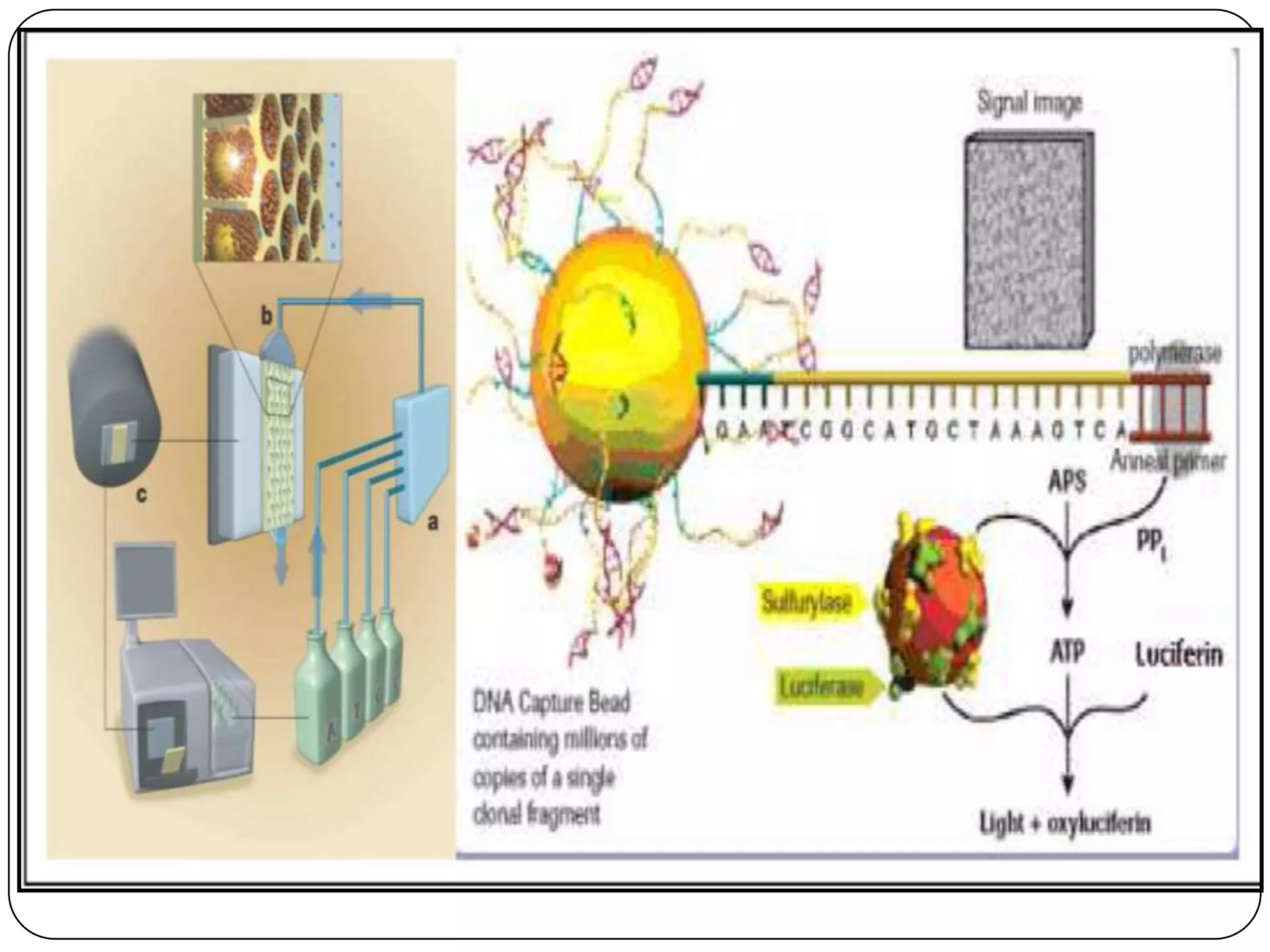
 Beads which are carrying DNA fragments incubated with DNA
bead Incubation Mix (DNA polymerase)

 Loaded onto PicoTiter plate device for sequencing
 PicoTiter plate is a fibre optic slide consists of open wells, that
are so small, (75*10-12 l) that one bead can fit one well

 Smaller enzymatic beads (Sulfurylase & Luciferase) are also
loaded into the slide

 PicoTiter plate is placed in the sequencing instrument
(Sequence reagents, buffers & nucleotides)
Single Molecule Real Time (SMRTTM) DNA
sequencing Method
Built on single sequencing by synthesis with fluorescent
based detection

 Sequence procedure takes place on SMRTTM chips
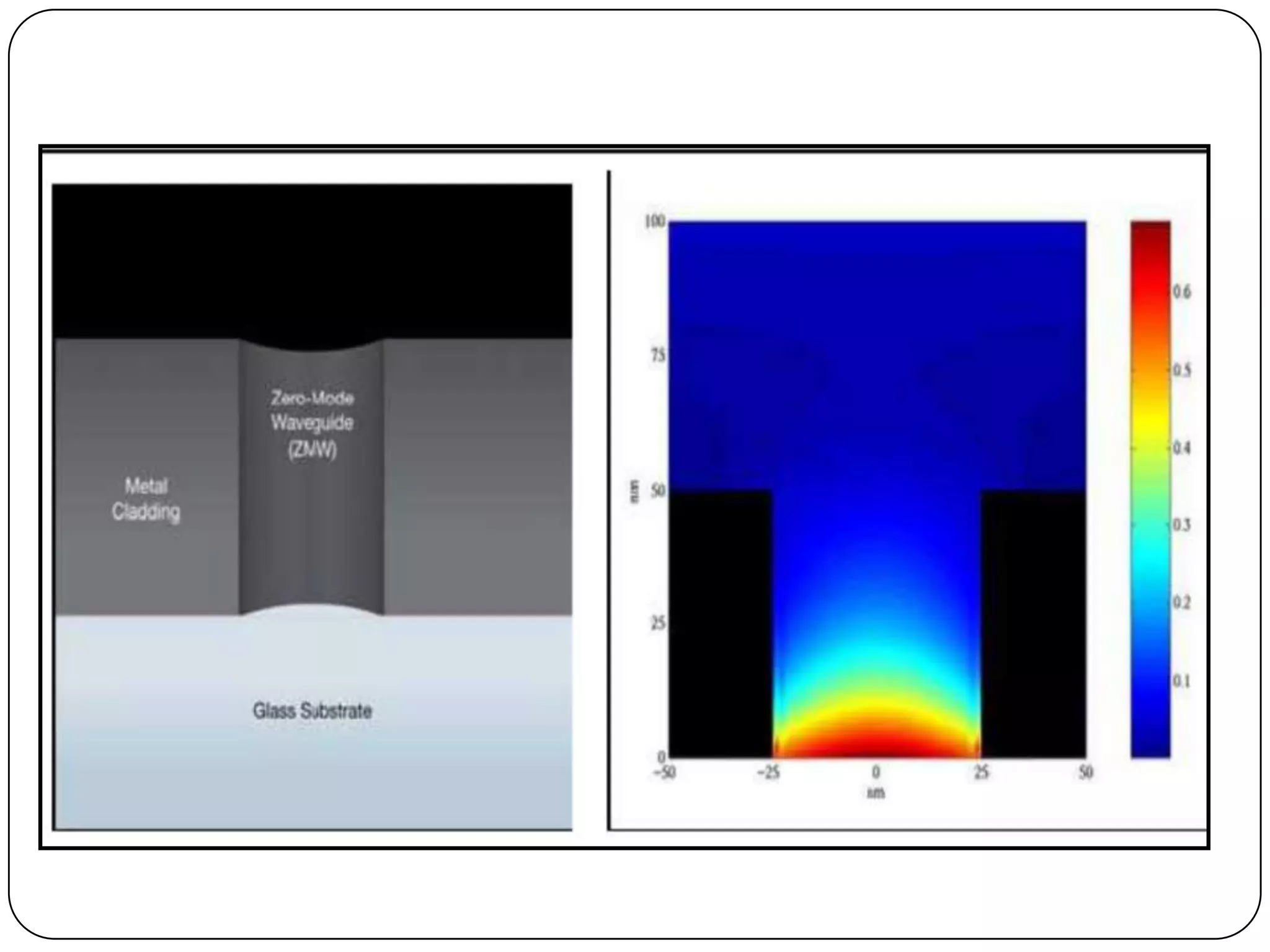
 On each chip there is thousands of Zero-mode waveguides
(ZMV)

 ZMV are cylindrical holes just a few tens of nm in diameter
 Holes perforate a thin metal film i.e supported by a
transparent substrate
Cont….
When laser light comes through the transparent substrate, the
wavelength of the light is too large to pass through the small
ZMVs

Light does not stop directly at the opening of the ZMVs,
instead attenuated light penetrates the lower 20-30nm of each
ZMV

A single DNA polymerase is attached to the transparent
substrate at the bottom of each ZMV

Phospholinked nucleotides are introduced into the ZMVs
Each base carries a different coloured fluorophore
Cont….
When a nucleotide is incorporated into the DNA strand, the
polymerase holds the dye marked nucleotide in the ZMV’s
detection volume for tens of milliseconds

This creates a flash of bright light that can be detected
light emitted by the fluorephores passes through a prism that
deflects the light according to its colour. The light is thereafter
transferred to a single-photon sensitive CCD array

Position of the deflected light reveals which base that was
creating the signal
SYSTEM PERFORMANCES
Throughput
 MegaBACE simultaneosuly analyzes 384 DNA samples in
one run, it can sequence 1920 templates within 8 hrs &
generate 2 million bases

 454 sequence has an average yield of 400 000 reads/run &
generates more than 100 million bases/7.5 hrs run

 SMRT can sequence 3000 templates/run, can improved 100
billion bases/hr
Time

Cont….

 MegaBACE can run less than 2 hrs
 454 sequence, the whole procedure takes 20 hrs &
instruments run time is 7.5 hr

 SMRT will take just a few minutes; it incorporates bases with a
speed of 10 bases/sec

DNA requirments
 MegaBACE: 250-500 ng of plasmid or M13 DNA or 30-60ng of
PCR prodcut is required

 454 Sequence: 10-50 ng DNA & have conc.5ng/µl or more
 SMRT: DNA requirement is not clear
Read-length
 MegaBACE: Avg read length is 500 bases. If using a slower 3
hr run time read lengths upto 1000 bases can be obtained

 454 has an average read length of 200-300 bases. In 2008 it
should be more than 400 bases

(Roche Applied ScienceTM)

 SMRT has read-length of 1500 bases & it can reach 10000
bases or more

(Pacific BioscienceTM 2008)
Comparison of three High-throughput sequencing techniques

Comparison of three High-throughput sequencing techniques

  • 1.
    Comparison of threeHighthroughput sequencing techniques Speaker P. RAMESH Ph.D
  • 2.
    HIGH-THROUGHPUT SEQUENCING 3 sequencingmethods:  MegaBACETM Method 454 sequencingTM Single Molecule Real Time (SMRTTM) DNA sequencing
  • 3.
    MegaBACETM Method  FirstPCR amplification  After the amplification DYEnamic™ ET dye terminators and Thermo SequenaseTM II DNA Polymerase is used  Polymerase incorporates dNTPs in to the newly synthesized DNA strand during a PCR reaction  Dye terminators are fluorescently dye labelled ddNTPs that terminates further elongation of newly synthesized DNA strands
  • 4.
    Cont…. Each of thefour ddNTPs has different dye labels Dye marked fragments are separated in the MegaBACE instrument, which is a fluorescence based detection capillary electrophoresis system that separate fragments according to their size
  • 5.
    454 SEQUENCINGTM METHOD Firstdeveloped in Sweden in the 90s (Ronaghi et al.,1998) An Emulsion based method, amplify DNA fragments invitro together with sequencing method (Pyrosequencing) Nucleic acids are randomly split into fragments 300-800 bp in length Speical adaptor (Biotinylated) are ligated to the fragments
  • 6.
    Cont…. Adaptors consist oftwo different primers, which are specific for 3’ and 5’ end of the fragments Individual fragments are ligated to special DNA capture beads (Streptavidin) against using the adaptors Beads are placed in heat stable water-in-oil emulsion & become captured in the water droplets Droplets contains PCR reagents After amplification the emulsion is broken from the beads
  • 7.
    Cont….  Beads whichare carrying DNA fragments incubated with DNA bead Incubation Mix (DNA polymerase)  Loaded onto PicoTiter plate device for sequencing  PicoTiter plate is a fibre optic slide consists of open wells, that are so small, (75*10-12 l) that one bead can fit one well  Smaller enzymatic beads (Sulfurylase & Luciferase) are also loaded into the slide  PicoTiter plate is placed in the sequencing instrument (Sequence reagents, buffers & nucleotides)
  • 10.
    Single Molecule RealTime (SMRTTM) DNA sequencing Method Built on single sequencing by synthesis with fluorescent based detection  Sequence procedure takes place on SMRTTM chips  On each chip there is thousands of Zero-mode waveguides (ZMV)  ZMV are cylindrical holes just a few tens of nm in diameter  Holes perforate a thin metal film i.e supported by a transparent substrate
  • 11.
    Cont…. When laser lightcomes through the transparent substrate, the wavelength of the light is too large to pass through the small ZMVs Light does not stop directly at the opening of the ZMVs, instead attenuated light penetrates the lower 20-30nm of each ZMV A single DNA polymerase is attached to the transparent substrate at the bottom of each ZMV Phospholinked nucleotides are introduced into the ZMVs Each base carries a different coloured fluorophore
  • 12.
    Cont…. When a nucleotideis incorporated into the DNA strand, the polymerase holds the dye marked nucleotide in the ZMV’s detection volume for tens of milliseconds This creates a flash of bright light that can be detected light emitted by the fluorephores passes through a prism that deflects the light according to its colour. The light is thereafter transferred to a single-photon sensitive CCD array Position of the deflected light reveals which base that was creating the signal
  • 15.
    SYSTEM PERFORMANCES Throughput  MegaBACEsimultaneosuly analyzes 384 DNA samples in one run, it can sequence 1920 templates within 8 hrs & generate 2 million bases  454 sequence has an average yield of 400 000 reads/run & generates more than 100 million bases/7.5 hrs run  SMRT can sequence 3000 templates/run, can improved 100 billion bases/hr
  • 16.
    Time Cont….  MegaBACE canrun less than 2 hrs  454 sequence, the whole procedure takes 20 hrs & instruments run time is 7.5 hr  SMRT will take just a few minutes; it incorporates bases with a speed of 10 bases/sec DNA requirments  MegaBACE: 250-500 ng of plasmid or M13 DNA or 30-60ng of PCR prodcut is required  454 Sequence: 10-50 ng DNA & have conc.5ng/µl or more  SMRT: DNA requirement is not clear
  • 17.
    Read-length  MegaBACE: Avgread length is 500 bases. If using a slower 3 hr run time read lengths upto 1000 bases can be obtained  454 has an average read length of 200-300 bases. In 2008 it should be more than 400 bases (Roche Applied ScienceTM)  SMRT has read-length of 1500 bases & it can reach 10000 bases or more (Pacific BioscienceTM 2008)