By: 
Anant Jain (A2305212443) 
Amit Sehrawat (A2305212450) 
Akshay Seth (A2305212448) 
Arjit Jain (A2305211077)
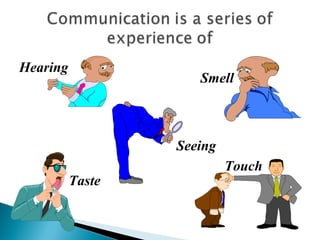
Hearing 
Smell 
Seeing 
Taste 
Touch
Communication skills is the ability to use language 
(receptive) and express (expressive) information. 
Effective communication skills are a critical 
element in your career and personal lives.
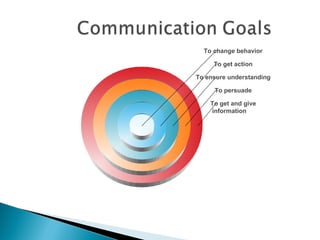
To change behavior 
To get action 
To ensure understanding 
To persuade 
To get and give 
information
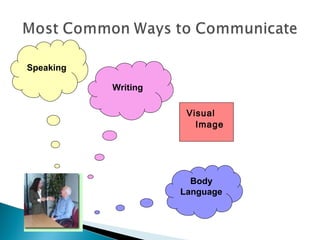
Visual 
Image 
Speaking 
Writing 
Body 
Language
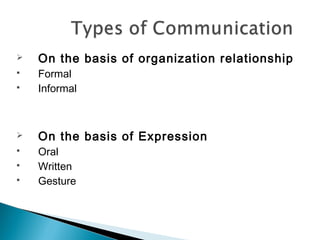
 On the basis of organization relationship 
 Formal 
 Informal 
 On the basis of Expression 
 Oral 
 Written 
 Gesture
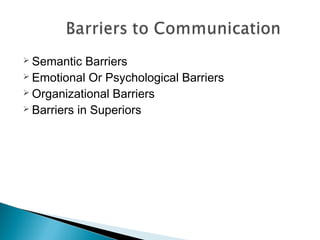
 Semantic Barriers 
 Emotional Or Psychological Barriers 
 Organizational Barriers 
 Barriers in Superiors
 Symbols with different meaning 
 Badly expressed message 
 Faulty translation 
 Unclarified assumption 
 Specialist’s language
 Premature evolution 
 Inattention 
 Loss of transmission & poor retention 
 Undue reliance on the written word 
 Distrust of communication 
 Failure to communicate
 Organizational policy 
 Organization rules & regulation 
 Status relation 
 Complexity in organization
Barriers in Superior 
 Attitude of Superior 
 Fear of challenge of authority 
 Lack of time 
 Lack of awareness
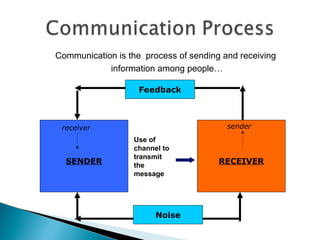
Communication is the process of sending and receiving 
information among people… 
Feedback 
receiver sender 
Use of 
channel to 
transmit 
the 
message 
SENDER RECEIVER 
Noise
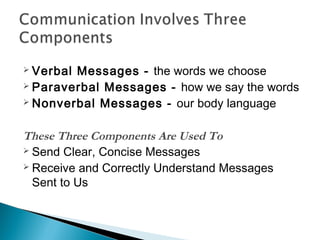
 Verbal Messages - the words we choose 
 Paraverbal Messages - how we say the words 
 Nonverbal Messages - our body language 
These Three Components Are Used To 
 Send Clear, Concise Messages 
 Receive and Correctly Understand Messages 
Sent to Us
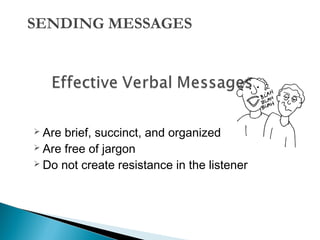
SENDING MESSAGES 
 Are brief, succinct, and organized 
 Are free of jargon 
 Do not create resistance in the listener
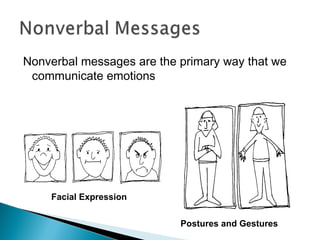
Nonverbal messages are the primary way that we 
communicate emotions 
Facial Expression 
Postures and Gestures
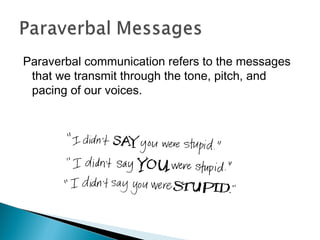
Paraverbal communication refers to the messages 
that we transmit through the tone, pitch, and 
pacing of our voices.
Listening 
Requires concentration and energy 
Involves a psychological connection with the 
speaker 
 Includes a desire and willingness to try and see 
things from another's perspective 
Requires that we suspend judgment and 
evaluation
Key Listening Skills 
Nonverbal 
 Giving full physical attention to the speaker; 
 Being aware of the speaker's nonverbal 
messages; 
Verbal 
 Paying attention to the words and feelings that are 
being expressed
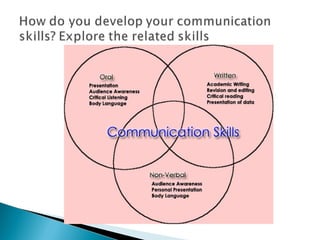
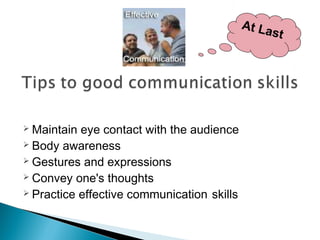
 Maintain eye contact with the audience 
 Body awareness 
 Gestures and expressions 
 Convey one's thoughts 
 Practice effective communication skills 
At Last
It is two way. 
It involves active listening. 
It reflects the accountability of speaker and listener. 
It utilizes feedback. 
It is free of stress. 
It is clear.
Thanks

Non-Verbal Communication (Group Presentation)

  • 1.
    By: Anant Jain(A2305212443) Amit Sehrawat (A2305212450) Akshay Seth (A2305212448) Arjit Jain (A2305211077)
  • 2.
  • 3.
    Communication skills isthe ability to use language (receptive) and express (expressive) information. Effective communication skills are a critical element in your career and personal lives.
  • 4.
    To change behavior To get action To ensure understanding To persuade To get and give information
  • 5.
    Visual Image Speaking Writing Body Language
  • 6.
     On thebasis of organization relationship  Formal  Informal  On the basis of Expression  Oral  Written  Gesture
  • 7.
     Semantic Barriers  Emotional Or Psychological Barriers  Organizational Barriers  Barriers in Superiors
  • 8.
     Symbols withdifferent meaning  Badly expressed message  Faulty translation  Unclarified assumption  Specialist’s language
  • 9.
     Premature evolution  Inattention  Loss of transmission & poor retention  Undue reliance on the written word  Distrust of communication  Failure to communicate
  • 10.
     Organizational policy  Organization rules & regulation  Status relation  Complexity in organization
  • 11.
    Barriers in Superior  Attitude of Superior  Fear of challenge of authority  Lack of time  Lack of awareness
  • 12.
    Communication is theprocess of sending and receiving information among people… Feedback receiver sender Use of channel to transmit the message SENDER RECEIVER Noise
  • 13.
     Verbal Messages- the words we choose  Paraverbal Messages - how we say the words  Nonverbal Messages - our body language These Three Components Are Used To  Send Clear, Concise Messages  Receive and Correctly Understand Messages Sent to Us
  • 14.
    SENDING MESSAGES Are brief, succinct, and organized  Are free of jargon  Do not create resistance in the listener
  • 15.
    Nonverbal messages arethe primary way that we communicate emotions Facial Expression Postures and Gestures
  • 16.
    Paraverbal communication refersto the messages that we transmit through the tone, pitch, and pacing of our voices.
  • 17.
    Listening Requires concentrationand energy Involves a psychological connection with the speaker  Includes a desire and willingness to try and see things from another's perspective Requires that we suspend judgment and evaluation
  • 18.
    Key Listening Skills Nonverbal  Giving full physical attention to the speaker;  Being aware of the speaker's nonverbal messages; Verbal  Paying attention to the words and feelings that are being expressed
  • 20.
     Maintain eyecontact with the audience  Body awareness  Gestures and expressions  Convey one's thoughts  Practice effective communication skills At Last
  • 21.
    It is twoway. It involves active listening. It reflects the accountability of speaker and listener. It utilizes feedback. It is free of stress. It is clear.
  • 22.