
Functional Theory of
Communication
Prepared by:
Mary Joy P. Atendido
AB AVC 3A
Functional Theory of
Communication
O attempts to explain how and why
communication is related to the quality of
the decisions groups make.
O Also known as the Functional Group
Communications theory
Origins and Influences
O Dennis Gouran and Randy Hirokowa
Origins and Influences
O John Dewey and his work on reflective
thinking
O Robert Bales and his work on interaction
process analysis
O Irving Janis and his work on vigilant
decision making
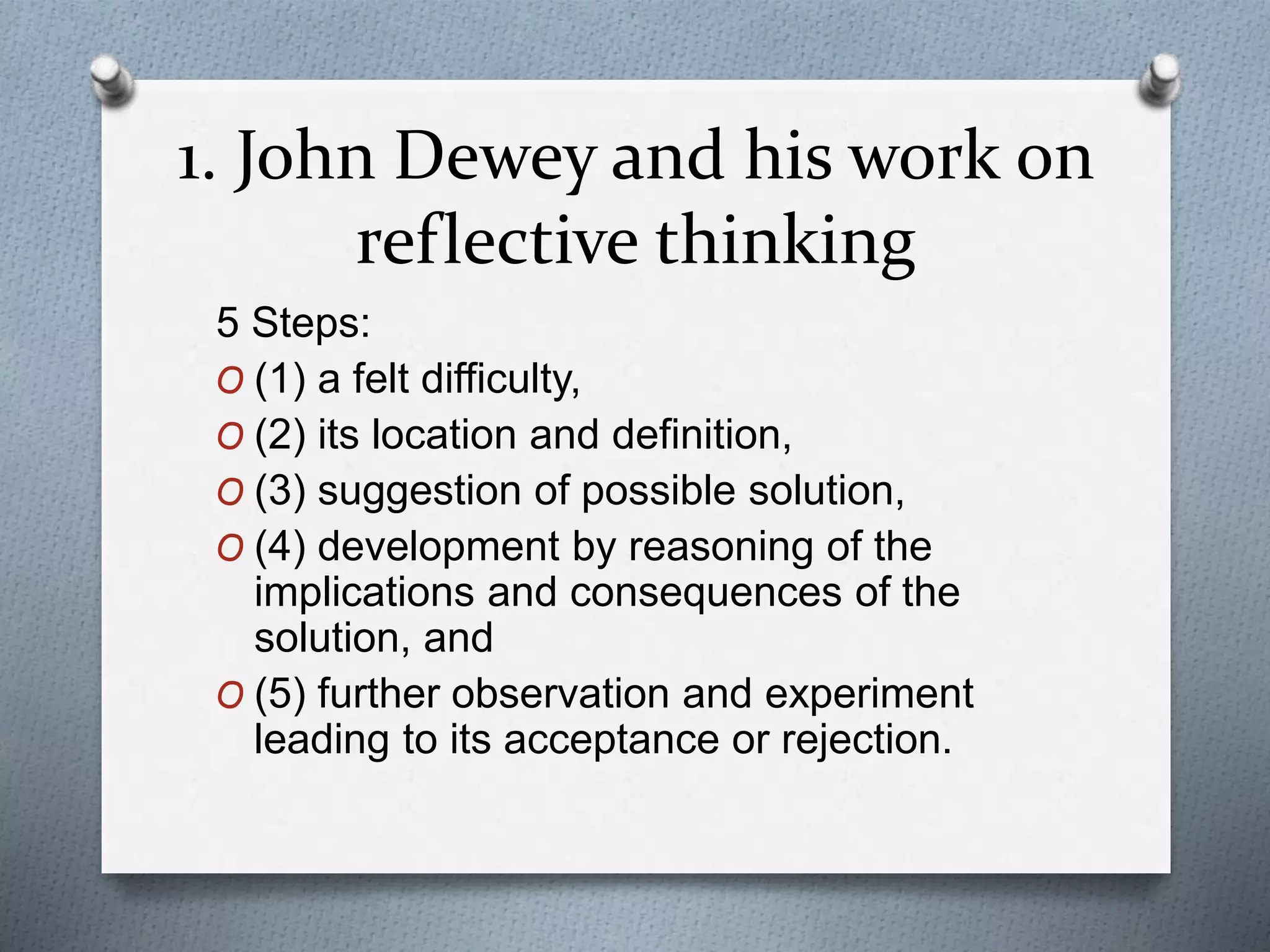
1. John Dewey and his work on
reflective thinking
5 Steps:
O (1) a felt difficulty,
O (2) its location and definition,
O (3) suggestion of possible solution,
O (4) development by reasoning of the
implications and consequences of the
solution, and
O (5) further observation and experiment
leading to its acceptance or rejection.
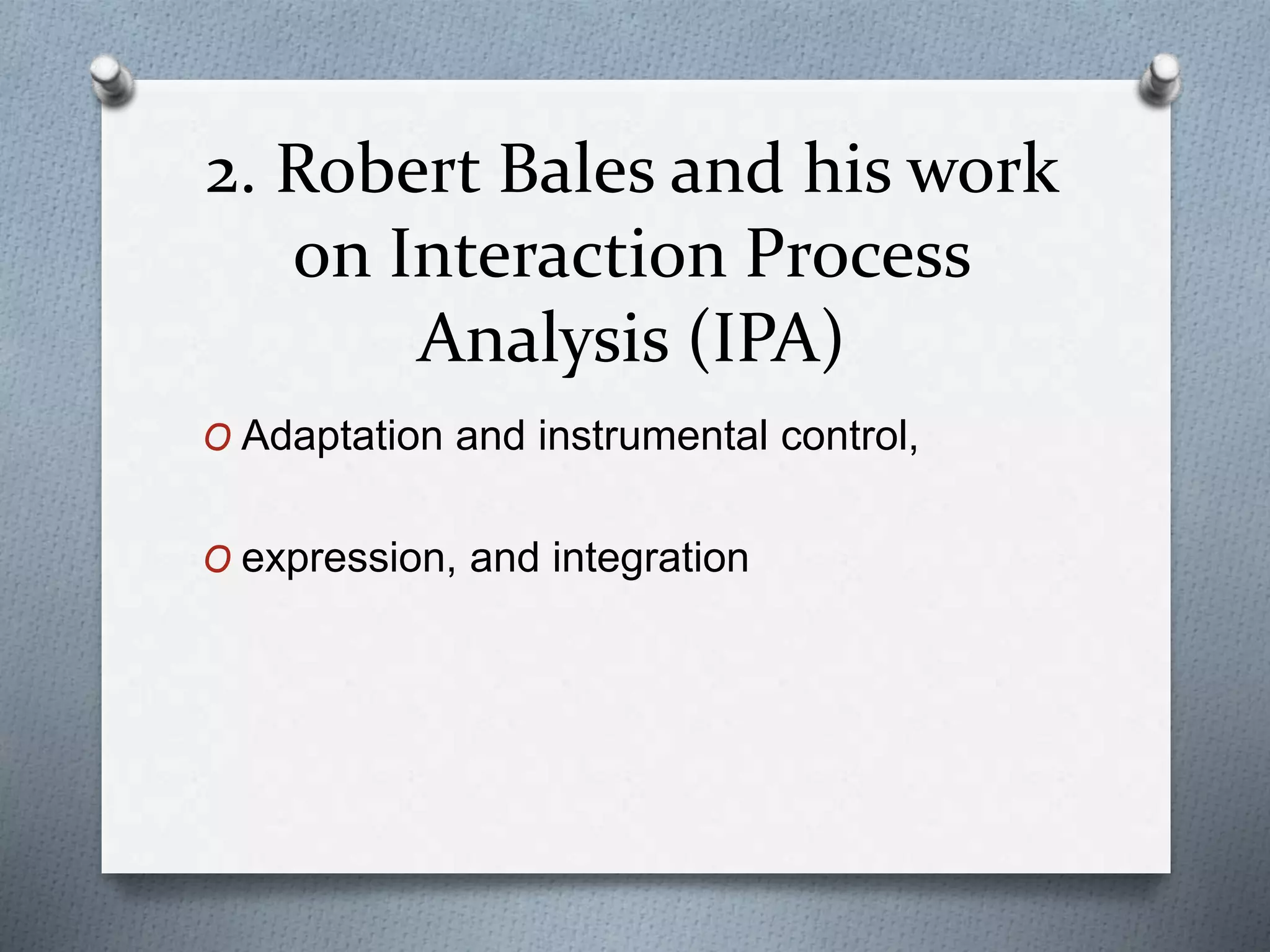
2. Robert Bales and his work
on Interaction Process
Analysis (IPA)
O Adaptation and instrumental control,
O expression, and integration
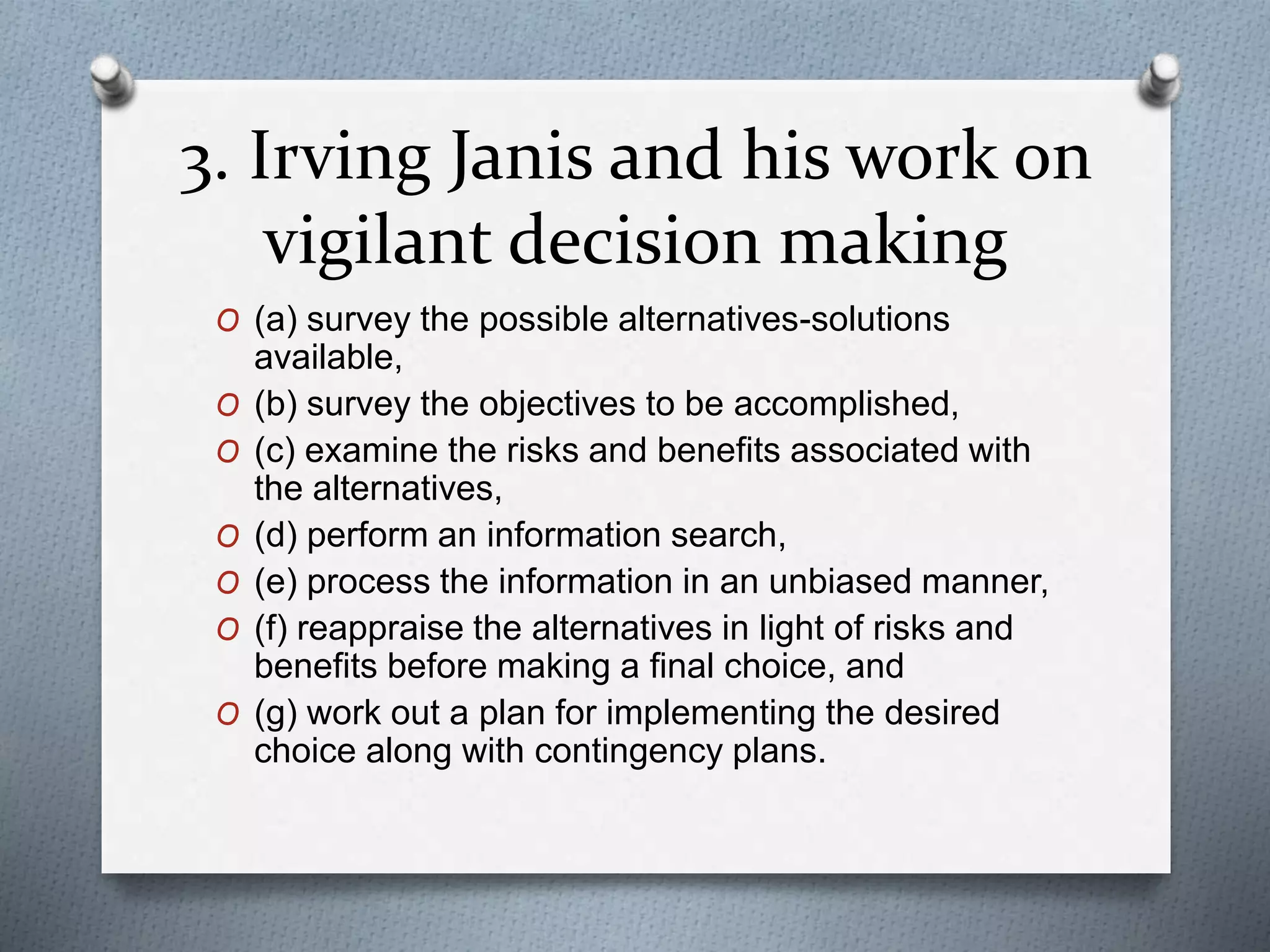
3. Irving Janis and his work on
vigilant decision making
O (a) survey the possible alternatives-solutions
available,
O (b) survey the objectives to be accomplished,
O (c) examine the risks and benefits associated with
the alternatives,
O (d) perform an information search,
O (e) process the information in an unbiased manner,
O (f) reappraise the alternatives in light of risks and
benefits before making a final choice, and
O (g) work out a plan for implementing the desired
choice along with contingency plans.
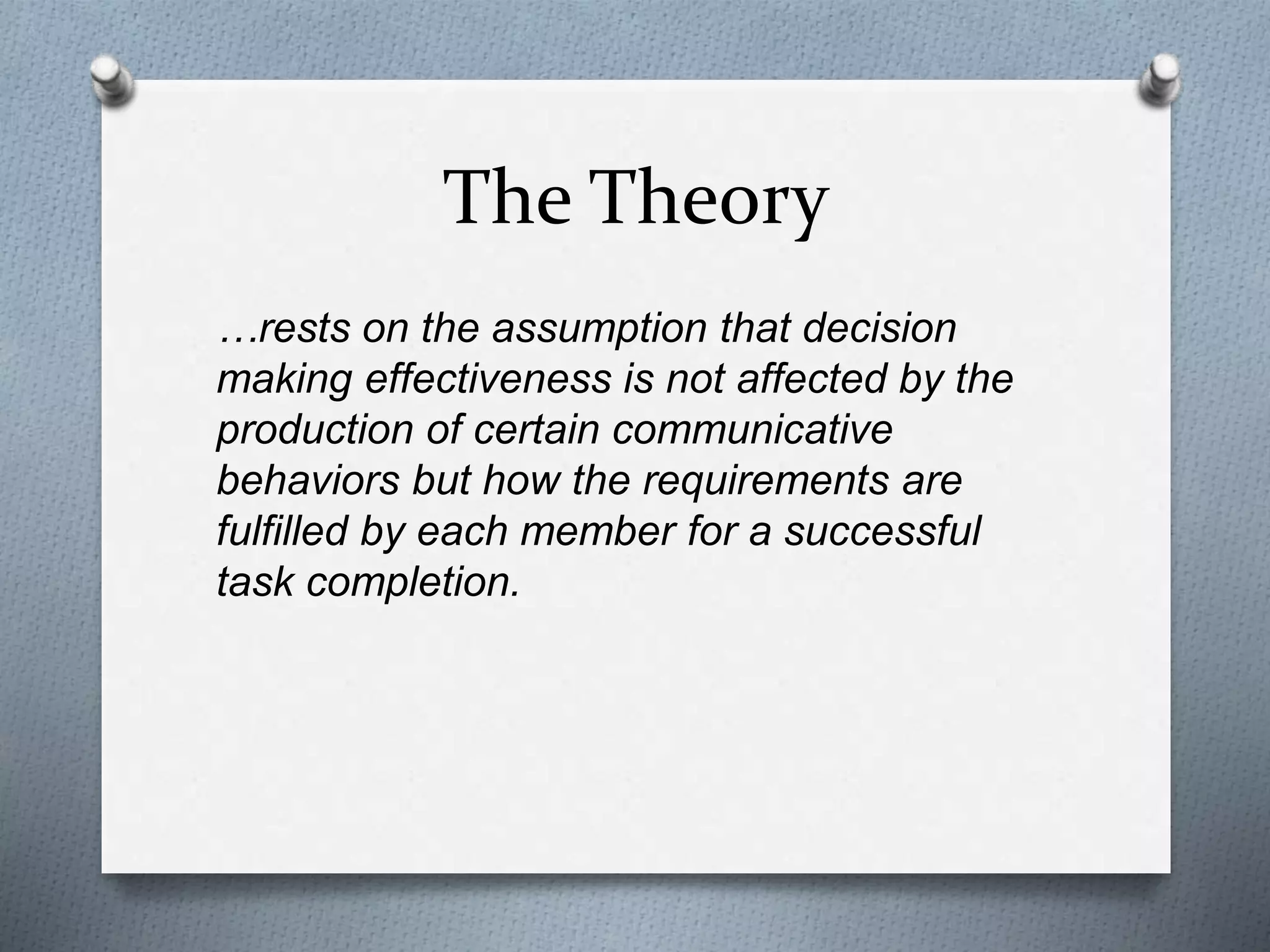
The Theory
…rests on the assumption that decision
making effectiveness is not affected by the
production of certain communicative
behaviors but how the requirements are
fulfilled by each member for a successful
task completion.
Functional Prerequisites:
O Understand the type of answer for which the issue under
consideration calls. These answers are in response to the type of
question the group is attempting to answer—fact, conjecture, value,
or policy.
O Determine the characteristics of an acceptable answer. Group
members develop criteria that the desired choice should satisfy.
O Marshal a realistic range of alternatives among which an acceptable
answer is presumed to exist. Group members generate a broad
range of possible answers/alternatives/solutions to the issue under
consideration.
O Critically examine every alternative in relation to each criterion used
to define an acceptable answer. This requisite assumes skill,
knowledge, and a sense of objectivity on the part of group
members.
O Select the alternative that best conforms to the characteristics of an
acceptable answer. Group members should also compare the
alternatives against each other to determine which appear to be the
most desirable and appropriate.
Conclusion…
O The theory predicts that groups that better
fulfill the requisites of effective decision
making will make more effective
decisions.
Functional theory of communication

Functional theory of communication

  • 1.
    Functional Theory of Communication Preparedby: Mary Joy P. Atendido AB AVC 3A
  • 2.
    Functional Theory of Communication Oattempts to explain how and why communication is related to the quality of the decisions groups make. O Also known as the Functional Group Communications theory
  • 3.
    Origins and Influences ODennis Gouran and Randy Hirokowa
  • 4.
    Origins and Influences OJohn Dewey and his work on reflective thinking O Robert Bales and his work on interaction process analysis O Irving Janis and his work on vigilant decision making
  • 5.
    1. John Deweyand his work on reflective thinking 5 Steps: O (1) a felt difficulty, O (2) its location and definition, O (3) suggestion of possible solution, O (4) development by reasoning of the implications and consequences of the solution, and O (5) further observation and experiment leading to its acceptance or rejection.
  • 6.
    2. Robert Balesand his work on Interaction Process Analysis (IPA) O Adaptation and instrumental control, O expression, and integration
  • 7.
    3. Irving Janisand his work on vigilant decision making O (a) survey the possible alternatives-solutions available, O (b) survey the objectives to be accomplished, O (c) examine the risks and benefits associated with the alternatives, O (d) perform an information search, O (e) process the information in an unbiased manner, O (f) reappraise the alternatives in light of risks and benefits before making a final choice, and O (g) work out a plan for implementing the desired choice along with contingency plans.
  • 8.
    The Theory …rests onthe assumption that decision making effectiveness is not affected by the production of certain communicative behaviors but how the requirements are fulfilled by each member for a successful task completion.
  • 9.
    Functional Prerequisites: O Understandthe type of answer for which the issue under consideration calls. These answers are in response to the type of question the group is attempting to answer—fact, conjecture, value, or policy. O Determine the characteristics of an acceptable answer. Group members develop criteria that the desired choice should satisfy. O Marshal a realistic range of alternatives among which an acceptable answer is presumed to exist. Group members generate a broad range of possible answers/alternatives/solutions to the issue under consideration. O Critically examine every alternative in relation to each criterion used to define an acceptable answer. This requisite assumes skill, knowledge, and a sense of objectivity on the part of group members. O Select the alternative that best conforms to the characteristics of an acceptable answer. Group members should also compare the alternatives against each other to determine which appear to be the most desirable and appropriate.
  • 10.
    Conclusion… O The theorypredicts that groups that better fulfill the requisites of effective decision making will make more effective decisions.