Communication Skills in
High-Stake Environment
Department of Emergency
Medicine, AIIMS, Delhi
Building a World-Class Emergency
Department through Communication
Department of Emergency
Medicine, AIIMS, Delhi
A patient is a person seeking
help, relief and reassurance
Harrison Principles of Internal Medicine
Communication – a process
• At birth child communicates by crying
• A cognitive behavior
• Can be good and skilled / poor and unskilled
• Gesticulations / Histrionics / Verbal / Written /
Body language / Electronic
• Individual strengths and weaknesses to
gesticulate, dramatize, verbalize, write or
messaging
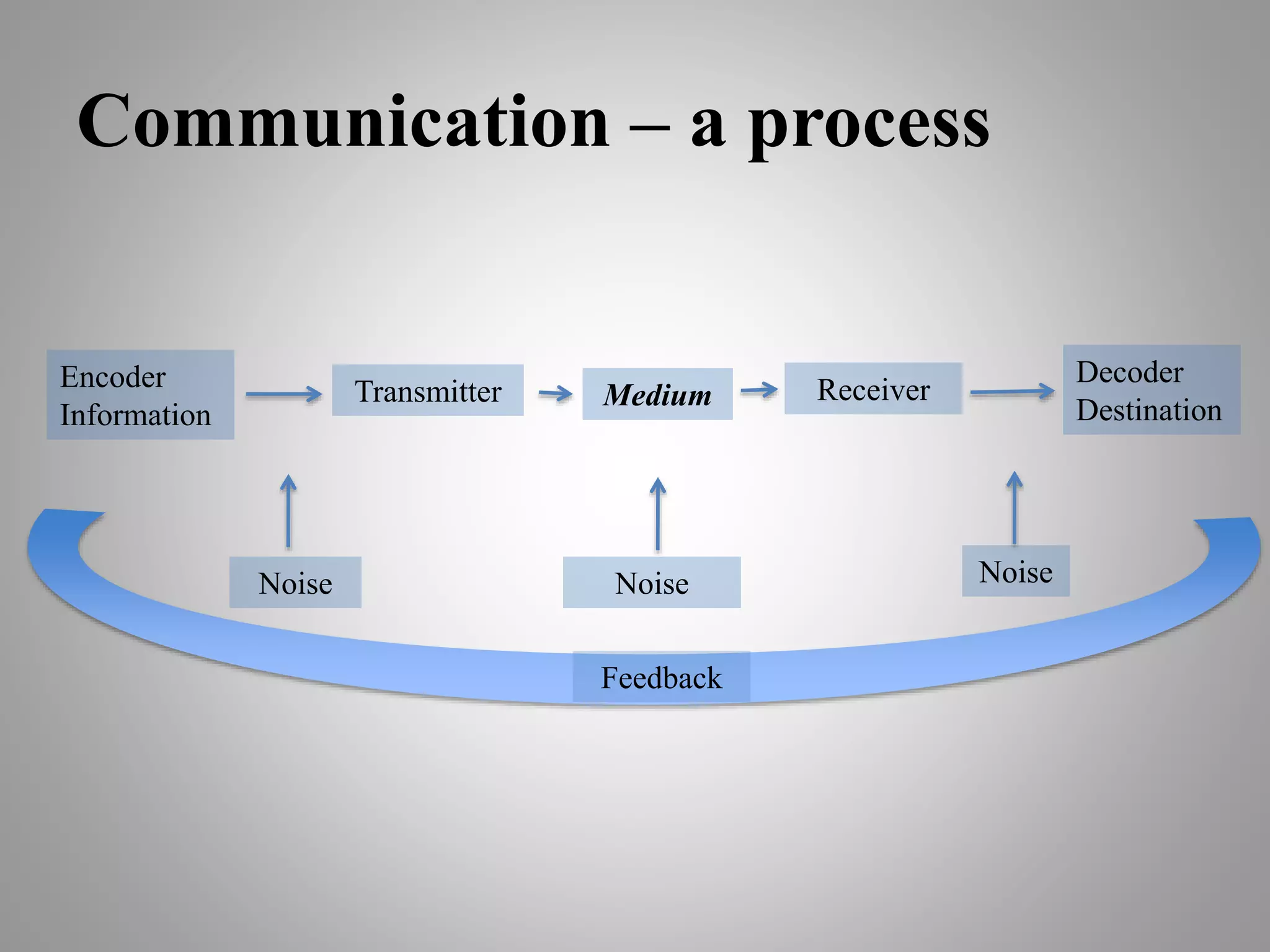
Communication – a process
Encoder
Information
Transmitter Receiver
Decoder
Destination
Noise
Medium
NoiseNoise
Feedback
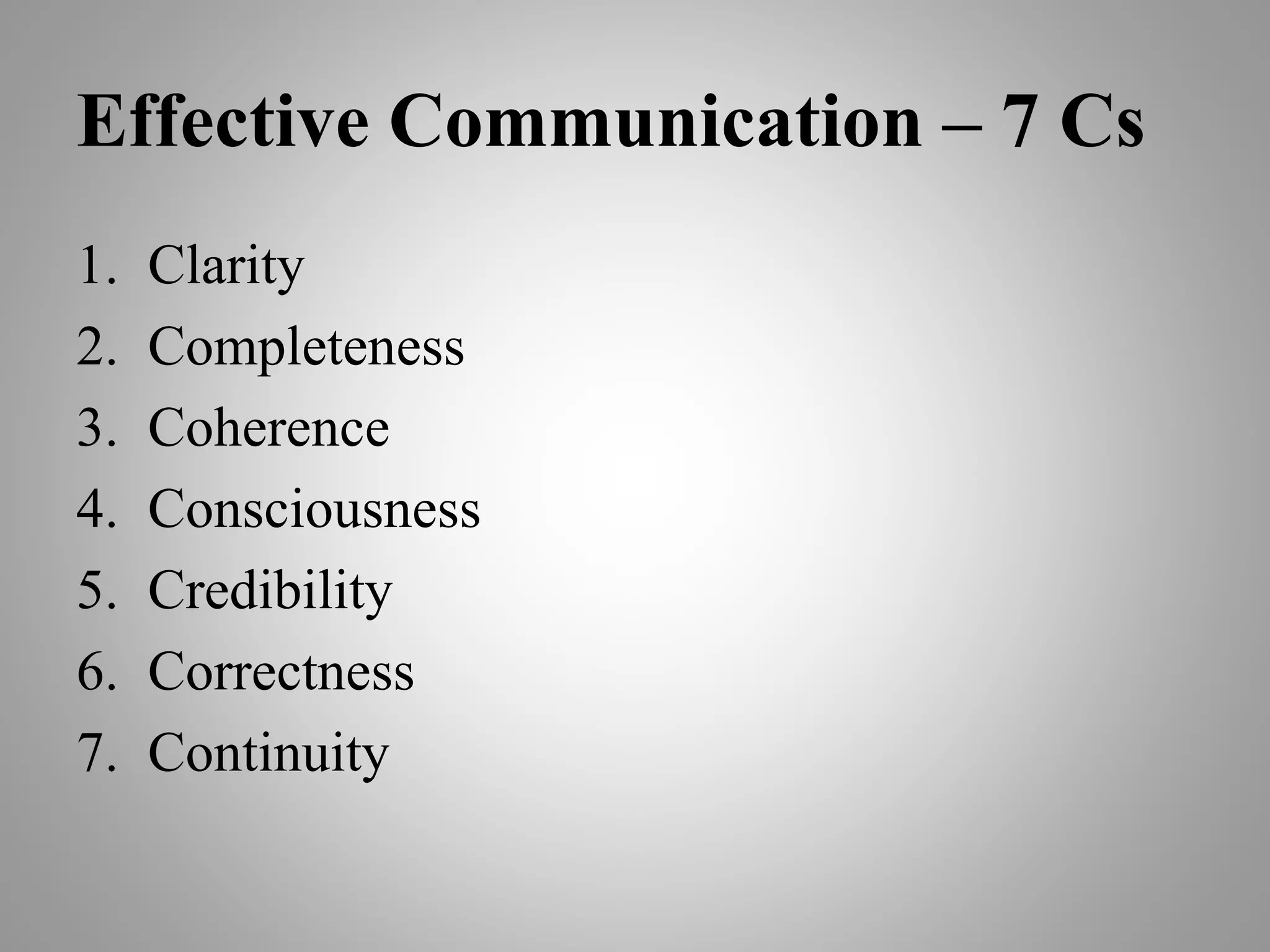
Effective Communication – 7 Cs
1. Clarity
2. Completeness
3. Coherence
4. Consciousness
5. Credibility
6. Correctness
7. Continuity
Ultimate Goal in Emergency Care
Patient Safety
Quality
Emergency
Care
Patient
satisfaction
Communication
Patient Safety FIRST
In the words of Edward Livingston Trudeau
Cure sometimes
Relieve often
Comfort always
Emergency Room
Emergency Room
• Uncontrolled environment
• Congested, Large number of sick patients
• Anxiety, Emotions are high
• Police, Medico-legal cases
• Long waiting lines for patients and relatives
causing frustration
• No privacy
• Noise
• Frequent interruptions
• Rapid turnover of patients
Why Communicate?
• For all the above reasons
• Good communication influences patients’
health, symptoms, function and physiology
• Time efficient & decreases inappropriate
work-up
• Inter-personal conflicts
• Litigation
• Enhances compliance and follow-up
Why Communicate
• Collaboration to improve cooperation
• Team Work = Quality Emergency Care
• Non-technical skills as important as
technical skills
• Bad communication leads to stress, lack
of job satisfaction
Highlighting Studies
• Patient satisfaction not related to interview
length
Korsch etal
• Patients presented all their concerns in average of
75 secs Langewitz etal
• Discharge interview (5 min) increased compliance
and follow up by more than 50% Waggoner etal
• Patient satisfaction and willingness to return poor
with poor explanation of problems Sun etal
Korsch BM etal . Gaps in doctor–patient communication. Pediatrics 1968
Langewitz W etal. Spontaneous talking time at start of consultation in outpatient clinic. BMJ 2002
Waggoner DM etal. Physician influence on patient compliance: a clinical trial. Ann Emerg Med 1981
Sun BC etal. Determinants of patient satisfaction and willingness to return with emergency care. Ann Emerg Med 2000
Other Studies
• Consistently show poor communication leads
to poor satisfaction among patients
• Patients were frequently interrupted
• Patients consistently not given diagnosis and
follow-up information in over 40% instances
Rhodes KV etal. Resuscitating the Physician-Patient Relationship Emergency Department Communication
in an Academic Medical Center. Ann Emerg Med. 2004.
Care provider-to-patient
• Understand the agendas of our patients
• Do we really know what the patient wants
• Stand in our patient’s shoes
• Strive for an authentic human encounter
• Assess emotional distress
• Communicate honestly and compassionately
• Treat with kindness and respect
Care provider-to-patient
Society for Academic Emergency Medicine
• Early
• Establish Rapport
• Gather information
• Give information
• Provide comfort – Listening to distressed
• Collaborate
• Feedback to the communication
Care provider-to-patient
• Transfer of cognitive data and emotional
data
• Balance the dialogue with a mix of cognition
and emotion
• Handle emotion by non-verbal expressions
• Serious illnesses may lead to psychological
morbidity
• Address concerns to facilitate effective coping
and reduce complaints
A sincere emergency care
provider
Best Non-Verbal Communication
High Yield Communication
Early
Communication
Discharge
Interview
Address specific
concerns. Why
are you here
today?
Breaking Bad News
S P I K E S endorsed by American Society of Clinical Oncology
and several other societies
• Setting up the Scene
• Assessing patients Perception
• Patients Invitation to share the information
• Giving Knowledge and information to the
patient
• Address patients Emotions & Empathize
• Strategy and Summary
Care provider-to-Care provider
ISBAR – Widely used for relaying clinical information. First used by US Navy
I - Introduction of self
S - Situation
B - Background
A - Assessment
R - Recommendation
Feedback to the conversation
Acknowledgment
Repeat History
Plan of Action
Leadership
• Leader needs NO TITLE
• Everyone is a leader
Leading the Code Blue
• Most senior/experienced person usually leads the
code
• Designating job to team members
• Call people by name
• Involving para-medical staff in active
resuscitation
• Closed loop communication
• Team work should not require anyone to shout,
everyone should be playing their part
Documentation
• If not documented it never happened
• ED notes - short, clear, crisp, dated and timed
• Assessing the patient – Write notes A B C
approach
• Highlighting current issues and
management and plan
• Summarizing the events in few lines
Hand-Over
• The summary in the medical notes
• Physical handover over the patients’ bed
• Print a list of patients
• Highlight the priority patients
• Be specific
All Talk and no Work!
There has to be hard and sincere skillful
delivery of the health care product
Empathetic human resource
Judicious use of technology to achieve the 3
goals of safety, satisfaction and quality care.
A bit of Empathy and a little
bit of humor go a long way
I hear & I forget
I see & I remember
I do & I understand
Chinese Proverb
Get to Work!
Our Emergency patients do not need
condolences
Further problem identification is not
required
We need to Get interested and Get to
WORK!

Communication Skills in High-Stake Environment

  • 1.
    Communication Skills in High-StakeEnvironment Department of Emergency Medicine, AIIMS, Delhi
  • 2.
    Building a World-ClassEmergency Department through Communication Department of Emergency Medicine, AIIMS, Delhi
  • 3.
    A patient isa person seeking help, relief and reassurance Harrison Principles of Internal Medicine
  • 4.
    Communication – aprocess • At birth child communicates by crying • A cognitive behavior • Can be good and skilled / poor and unskilled • Gesticulations / Histrionics / Verbal / Written / Body language / Electronic • Individual strengths and weaknesses to gesticulate, dramatize, verbalize, write or messaging
  • 5.
    Communication – aprocess Encoder Information Transmitter Receiver Decoder Destination Noise Medium NoiseNoise Feedback
  • 6.
    Effective Communication –7 Cs 1. Clarity 2. Completeness 3. Coherence 4. Consciousness 5. Credibility 6. Correctness 7. Continuity
  • 7.
    Ultimate Goal inEmergency Care Patient Safety Quality Emergency Care Patient satisfaction Communication
  • 8.
  • 9.
    In the wordsof Edward Livingston Trudeau Cure sometimes Relieve often Comfort always
  • 10.
  • 11.
    Emergency Room • Uncontrolledenvironment • Congested, Large number of sick patients • Anxiety, Emotions are high • Police, Medico-legal cases • Long waiting lines for patients and relatives causing frustration • No privacy • Noise • Frequent interruptions • Rapid turnover of patients
  • 12.
    Why Communicate? • Forall the above reasons • Good communication influences patients’ health, symptoms, function and physiology • Time efficient & decreases inappropriate work-up • Inter-personal conflicts • Litigation • Enhances compliance and follow-up
  • 15.
    Why Communicate • Collaborationto improve cooperation • Team Work = Quality Emergency Care • Non-technical skills as important as technical skills • Bad communication leads to stress, lack of job satisfaction
  • 16.
    Highlighting Studies • Patientsatisfaction not related to interview length Korsch etal • Patients presented all their concerns in average of 75 secs Langewitz etal • Discharge interview (5 min) increased compliance and follow up by more than 50% Waggoner etal • Patient satisfaction and willingness to return poor with poor explanation of problems Sun etal Korsch BM etal . Gaps in doctor–patient communication. Pediatrics 1968 Langewitz W etal. Spontaneous talking time at start of consultation in outpatient clinic. BMJ 2002 Waggoner DM etal. Physician influence on patient compliance: a clinical trial. Ann Emerg Med 1981 Sun BC etal. Determinants of patient satisfaction and willingness to return with emergency care. Ann Emerg Med 2000
  • 17.
    Other Studies • Consistentlyshow poor communication leads to poor satisfaction among patients • Patients were frequently interrupted • Patients consistently not given diagnosis and follow-up information in over 40% instances Rhodes KV etal. Resuscitating the Physician-Patient Relationship Emergency Department Communication in an Academic Medical Center. Ann Emerg Med. 2004.
  • 18.
    Care provider-to-patient • Understandthe agendas of our patients • Do we really know what the patient wants • Stand in our patient’s shoes • Strive for an authentic human encounter • Assess emotional distress • Communicate honestly and compassionately • Treat with kindness and respect
  • 19.
    Care provider-to-patient Society forAcademic Emergency Medicine • Early • Establish Rapport • Gather information • Give information • Provide comfort – Listening to distressed • Collaborate • Feedback to the communication
  • 20.
    Care provider-to-patient • Transferof cognitive data and emotional data • Balance the dialogue with a mix of cognition and emotion • Handle emotion by non-verbal expressions • Serious illnesses may lead to psychological morbidity • Address concerns to facilitate effective coping and reduce complaints
  • 21.
    A sincere emergencycare provider Best Non-Verbal Communication
  • 22.
  • 23.
    Breaking Bad News SP I K E S endorsed by American Society of Clinical Oncology and several other societies • Setting up the Scene • Assessing patients Perception • Patients Invitation to share the information • Giving Knowledge and information to the patient • Address patients Emotions & Empathize • Strategy and Summary
  • 24.
    Care provider-to-Care provider ISBAR– Widely used for relaying clinical information. First used by US Navy I - Introduction of self S - Situation B - Background A - Assessment R - Recommendation Feedback to the conversation Acknowledgment Repeat History Plan of Action
  • 25.
    Leadership • Leader needsNO TITLE • Everyone is a leader
  • 26.
    Leading the CodeBlue • Most senior/experienced person usually leads the code • Designating job to team members • Call people by name • Involving para-medical staff in active resuscitation • Closed loop communication • Team work should not require anyone to shout, everyone should be playing their part
  • 27.
    Documentation • If notdocumented it never happened • ED notes - short, clear, crisp, dated and timed • Assessing the patient – Write notes A B C approach • Highlighting current issues and management and plan • Summarizing the events in few lines
  • 28.
    Hand-Over • The summaryin the medical notes • Physical handover over the patients’ bed • Print a list of patients • Highlight the priority patients • Be specific
  • 29.
    All Talk andno Work! There has to be hard and sincere skillful delivery of the health care product Empathetic human resource Judicious use of technology to achieve the 3 goals of safety, satisfaction and quality care.
  • 30.
    A bit ofEmpathy and a little bit of humor go a long way
  • 31.
    I hear &I forget I see & I remember I do & I understand Chinese Proverb
  • 32.
    Get to Work! OurEmergency patients do not need condolences Further problem identification is not required We need to Get interested and Get to WORK!