CEUTEH‘16
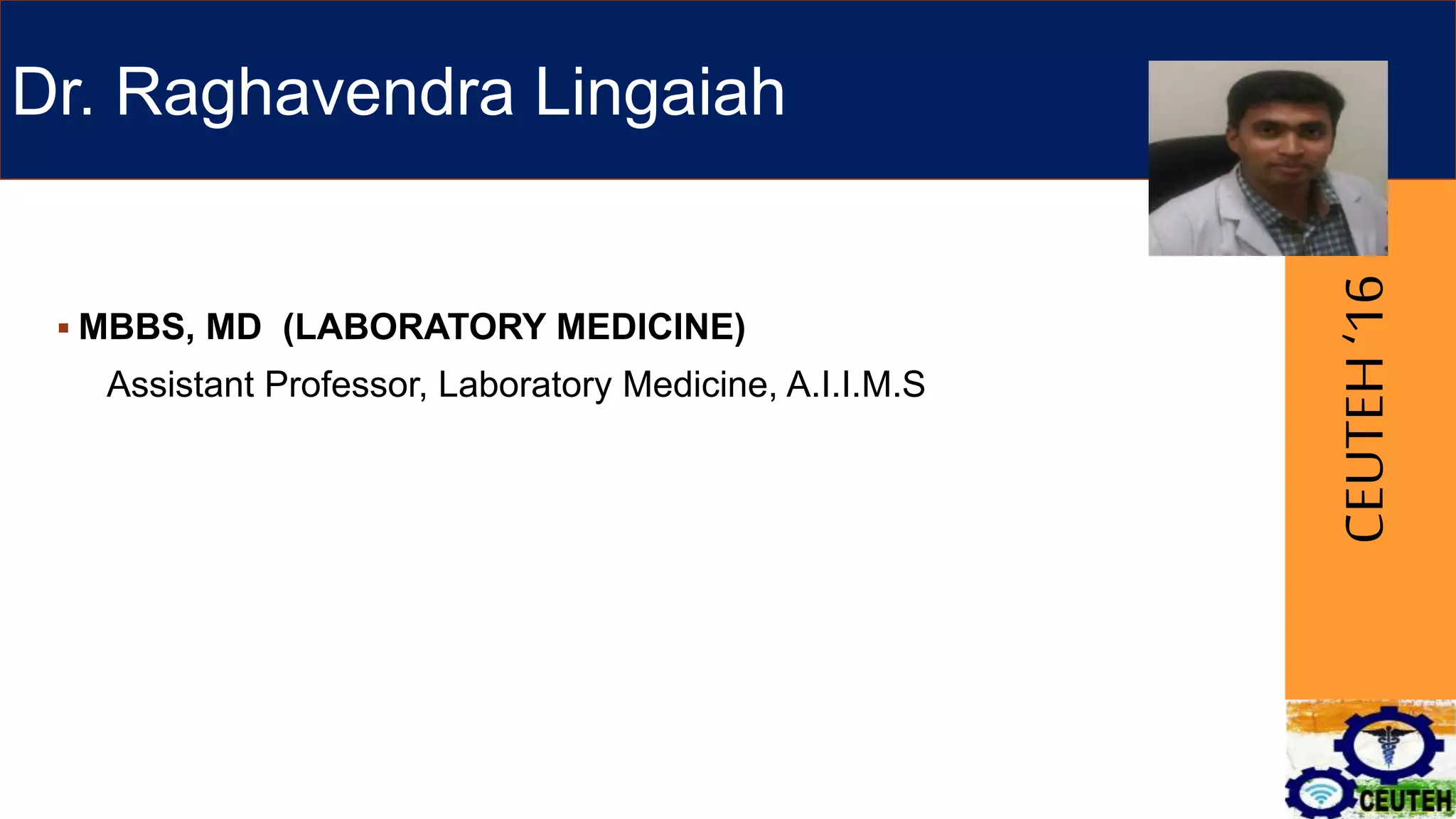
Dr. Raghavendra Lingaiah
 MBBS, MD (LABORATORY MEDICINE)
Assistant Professor, Laboratory Medicine, A.I.I.M.S
Dr. Raghavendra. L, MBBS,MD
Assistant Professor
Dept. Of Laboratory Medicine, AIIMS
 Management of the Information Explosion
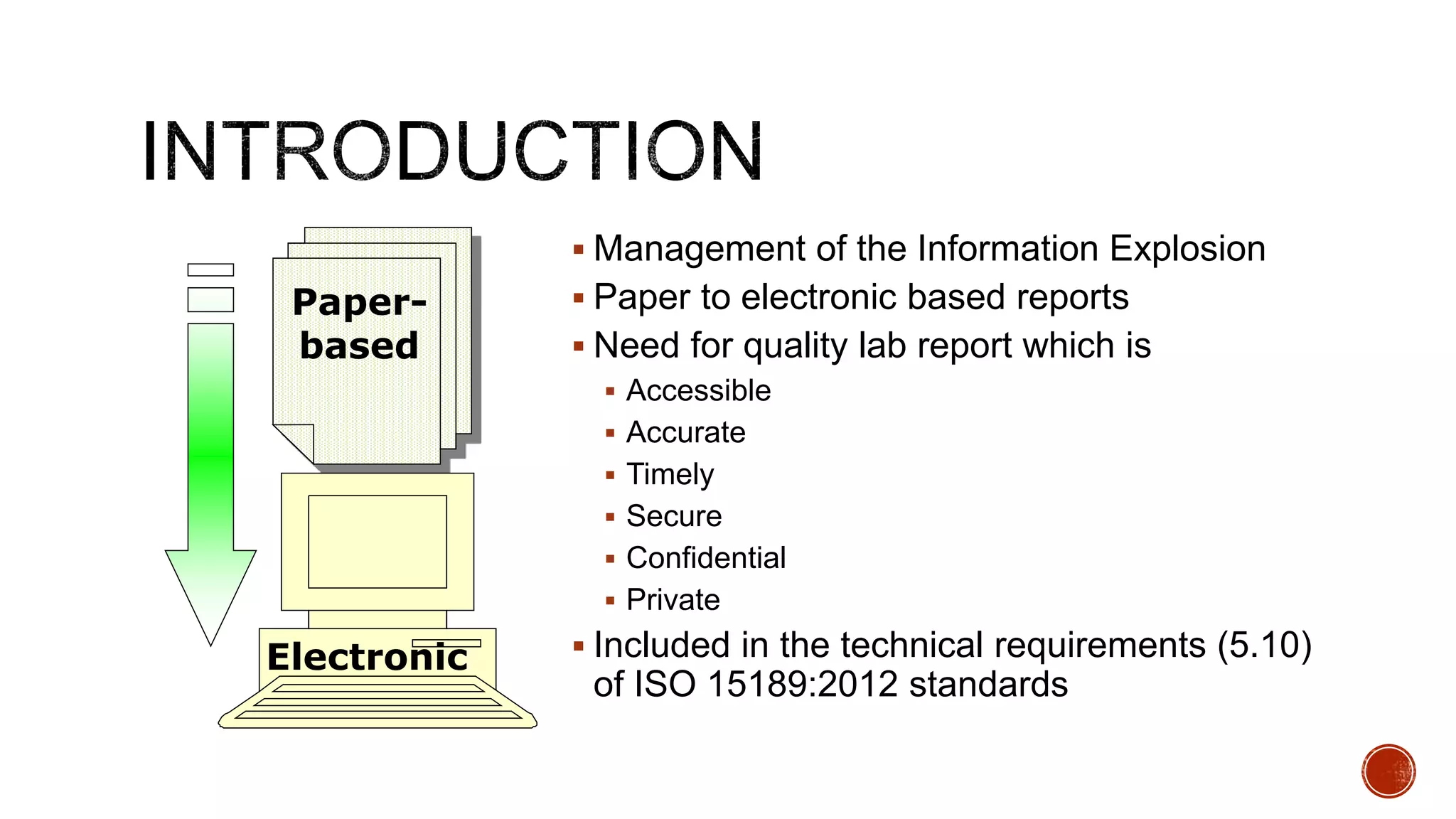
 Paper to electronic based reports
 Need for quality lab report which is
 Accessible
 Accurate
 Timely
 Secure
 Confidential
 Private
 Included in the technical requirements (5.10)
of ISO 15189:2012 standards
Paper-
based
Electronic
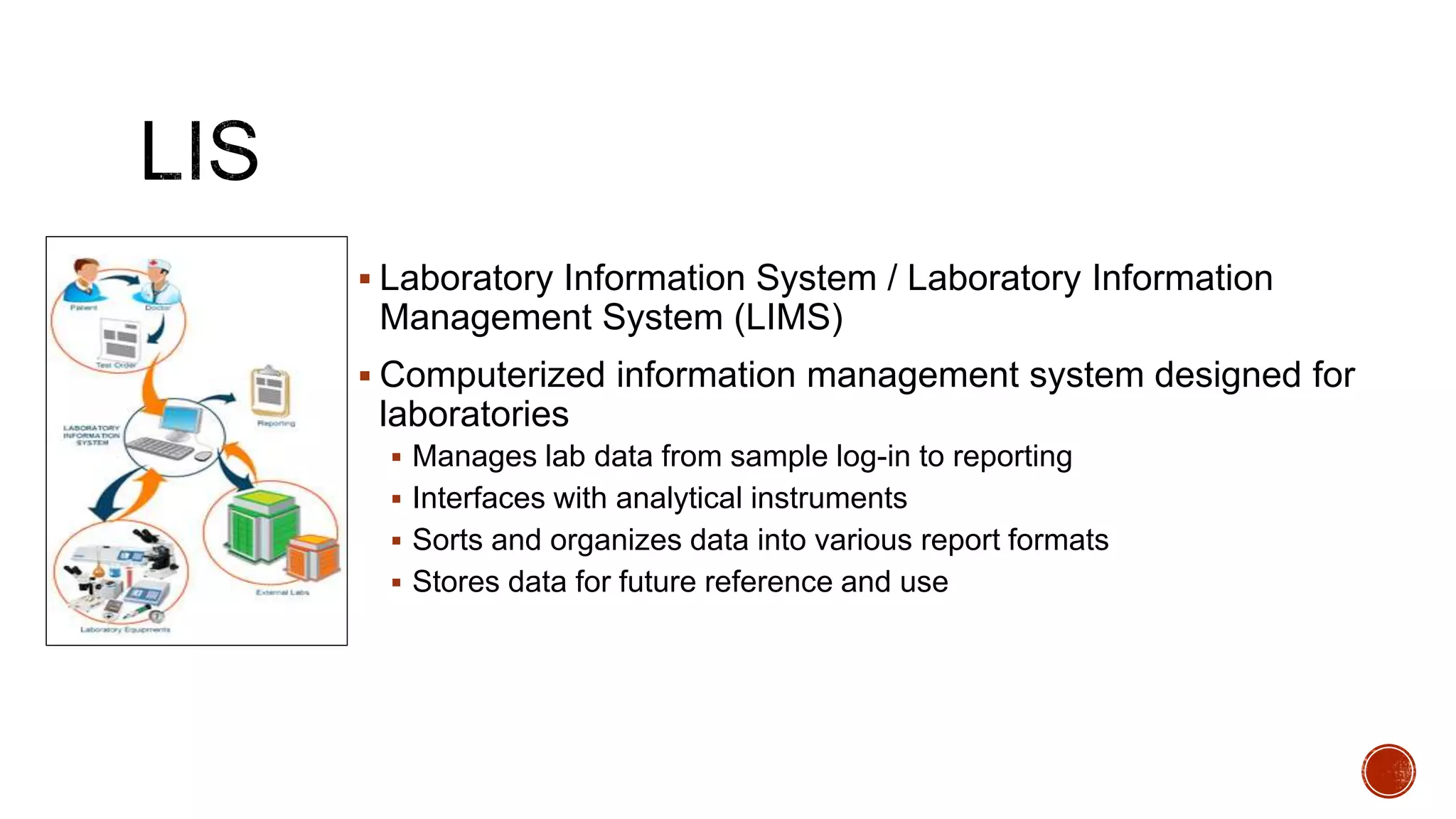
 Laboratory Information System / Laboratory Information
Management System (LIMS)
 Computerized information management system designed for
laboratories
 Manages lab data from sample log-in to reporting
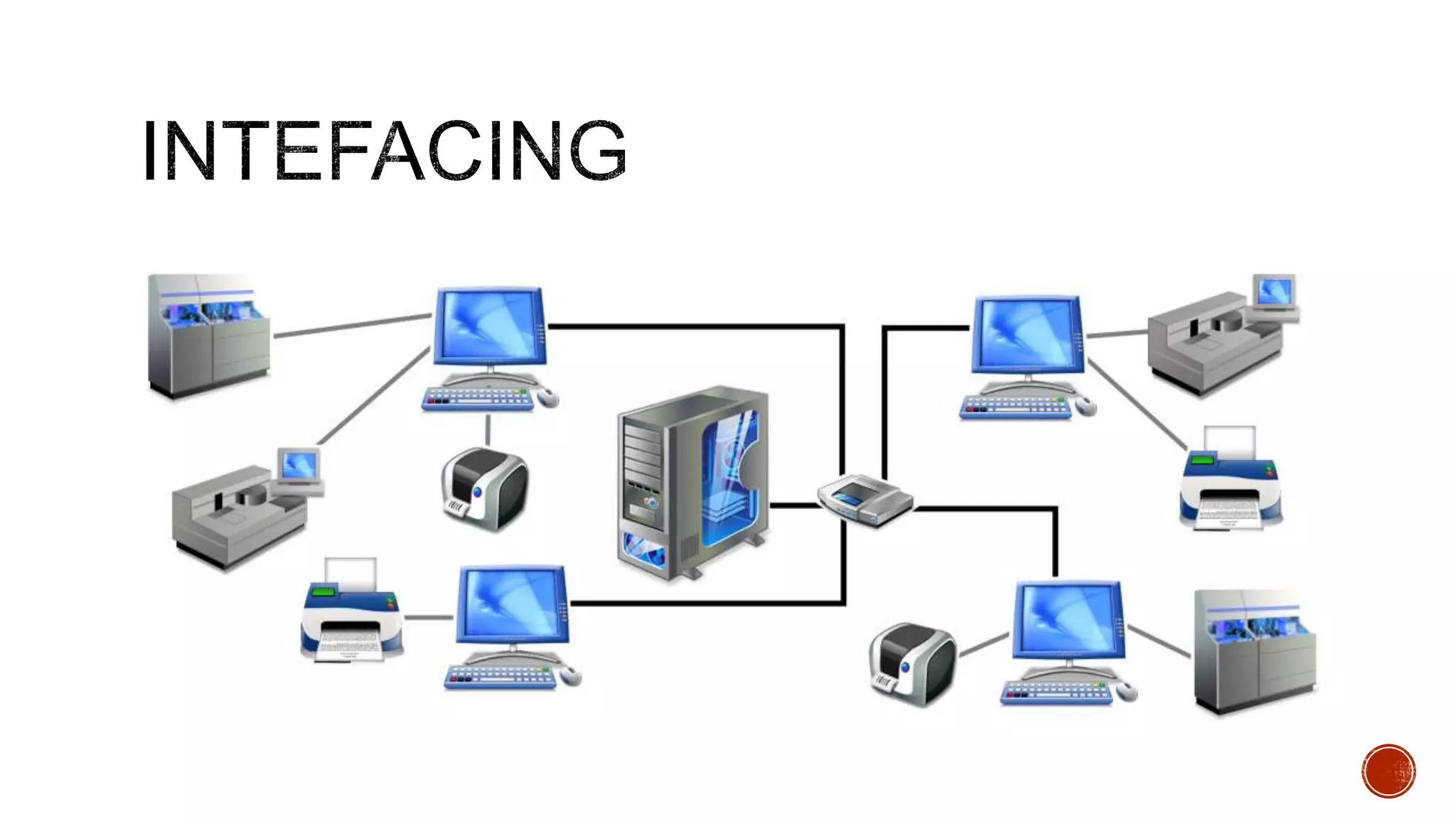
 Interfaces with analytical instruments
 Sorts and organizes data into various report formats
 Stores data for future reference and use
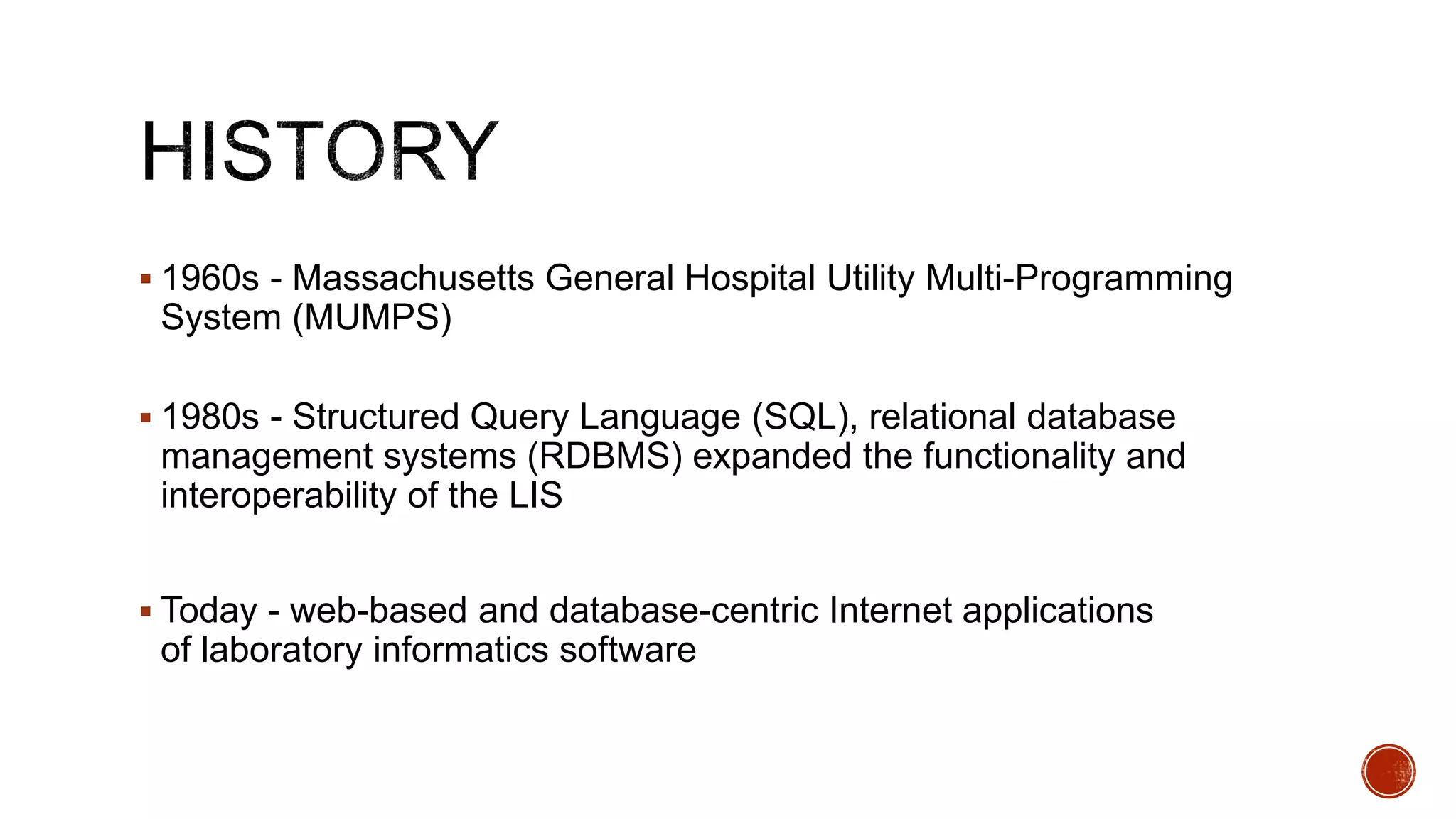
 1960s - Massachusetts General Hospital Utility Multi-Programming
System (MUMPS)
 1980s - Structured Query Language (SQL), relational database
management systems (RDBMS) expanded the functionality and
interoperability of the LIS
 Today - web-based and database-centric Internet applications
of laboratory informatics software
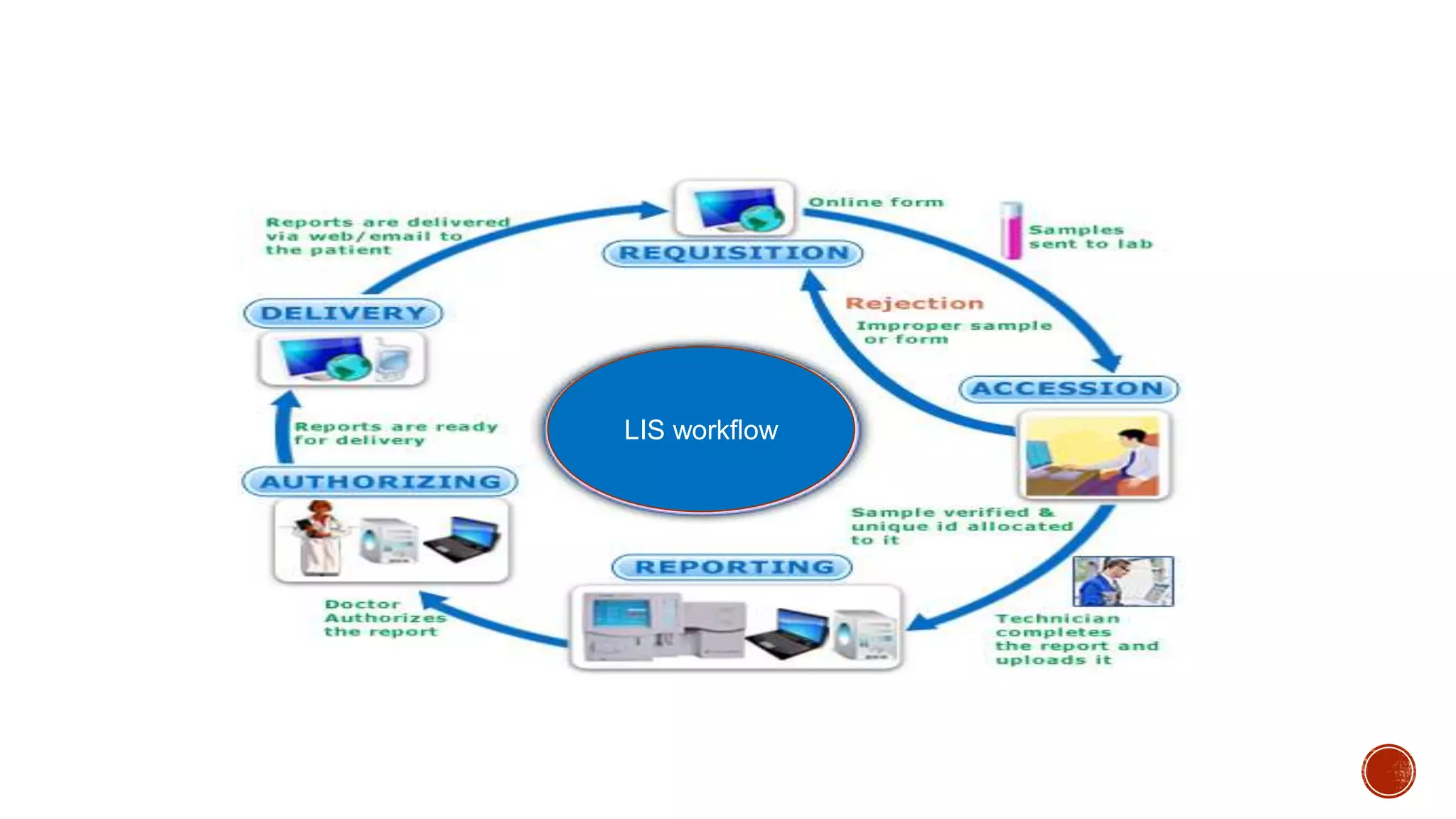
LIS workflow
Traditionally can be divided into
 Pre analytical phase
 Analytical phase
 Post analytical phase
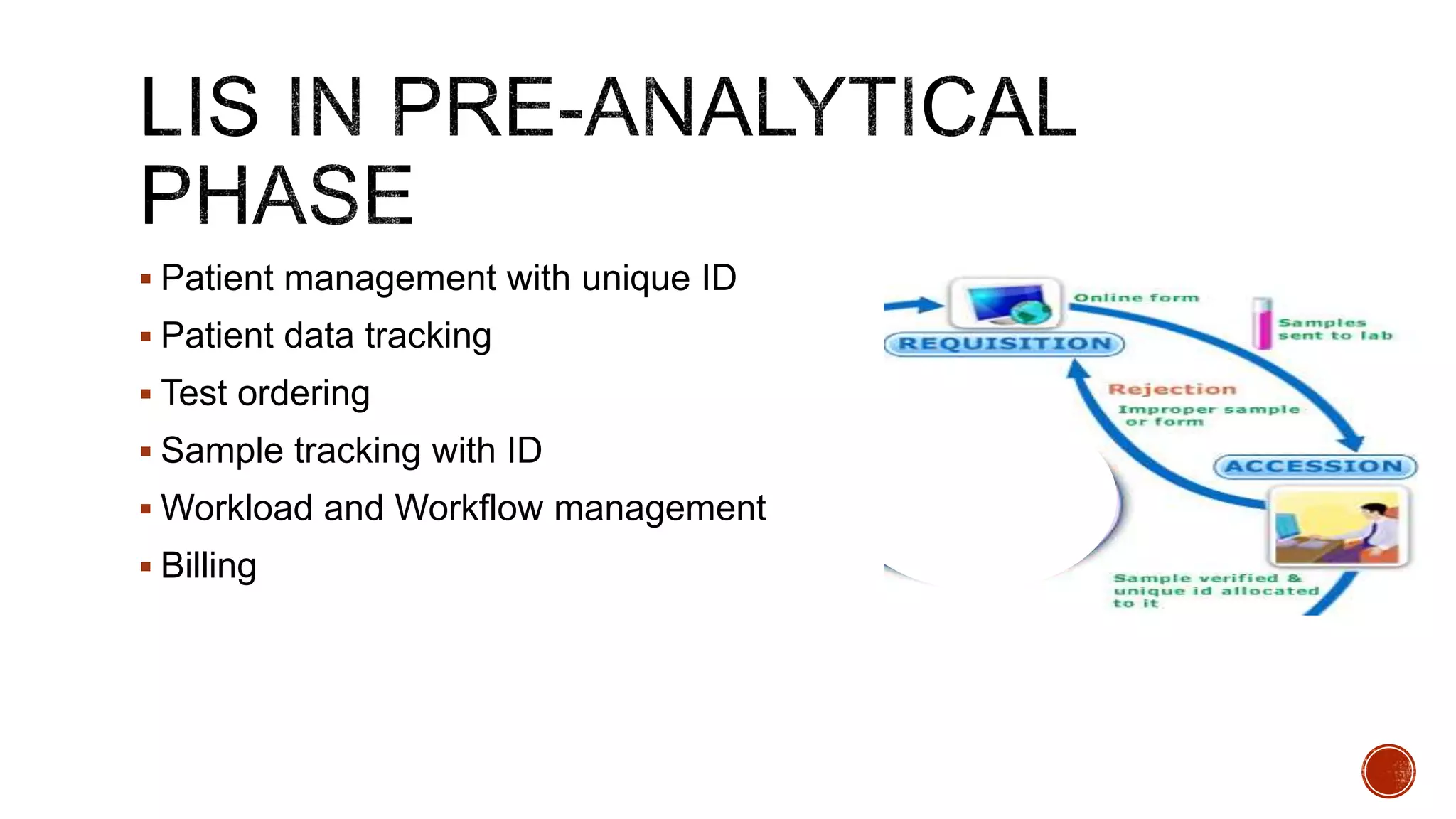
 Patient management with unique ID
 Patient data tracking
 Test ordering
 Sample tracking with ID
 Workload and Workflow management
 Billing
LIS workflow
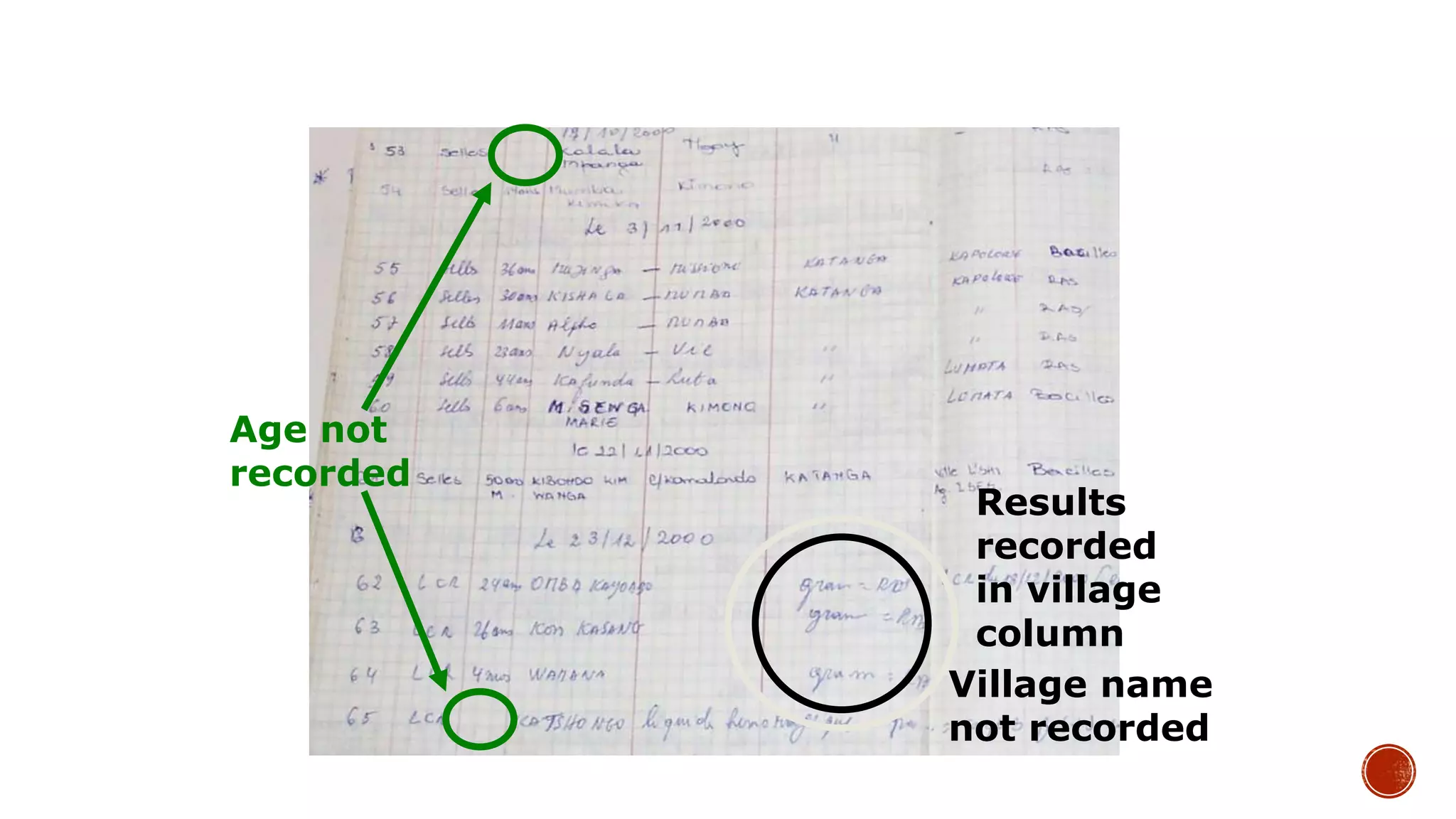
Age not
recorded
Village name
not recorded
Results
recorded
in village
column
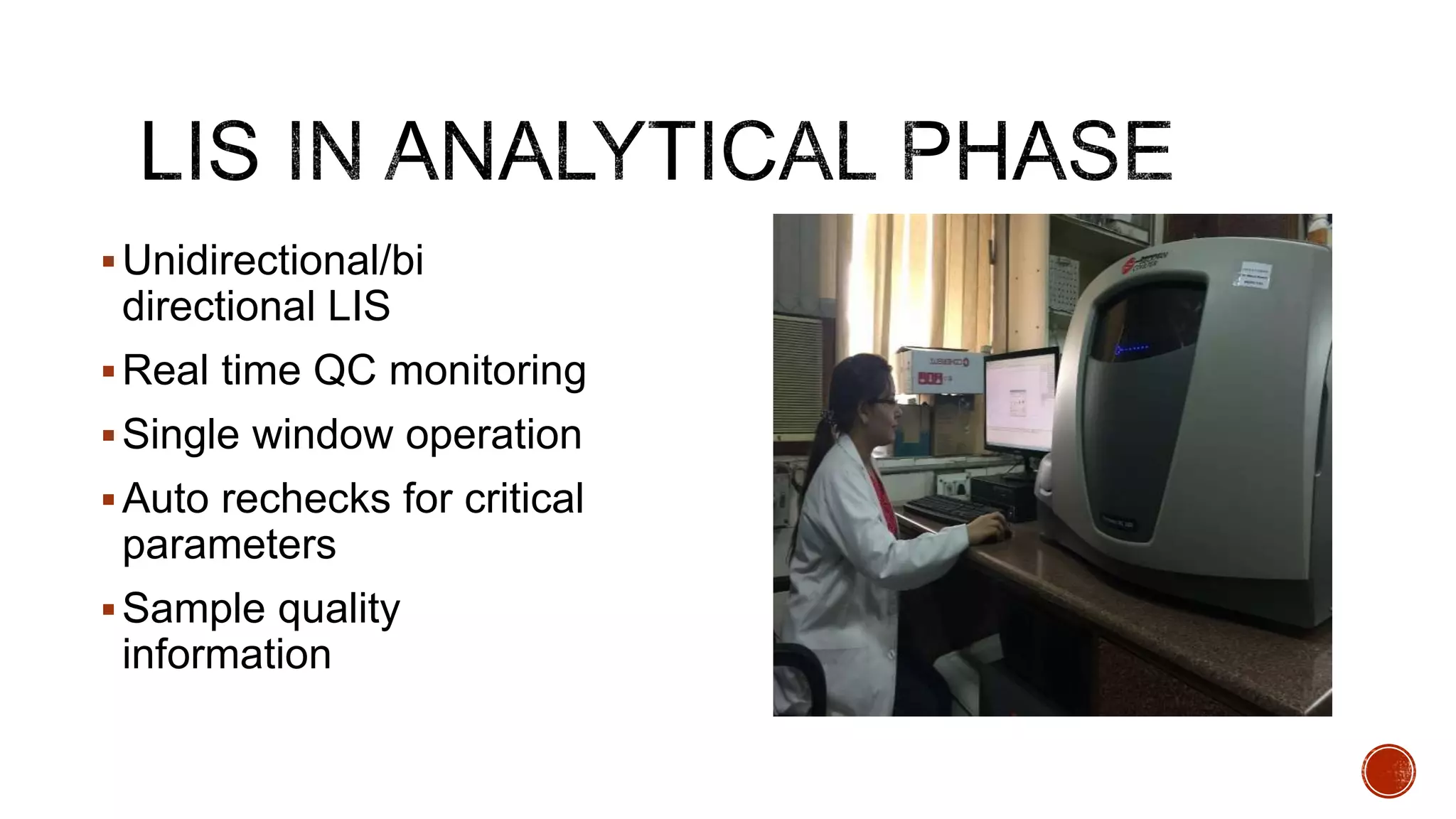
Unidirectional/bi
directional LIS
Real time QC monitoring
Single window operation
Auto rechecks for critical
parameters
Sample quality
information
 Fewer transcription errors
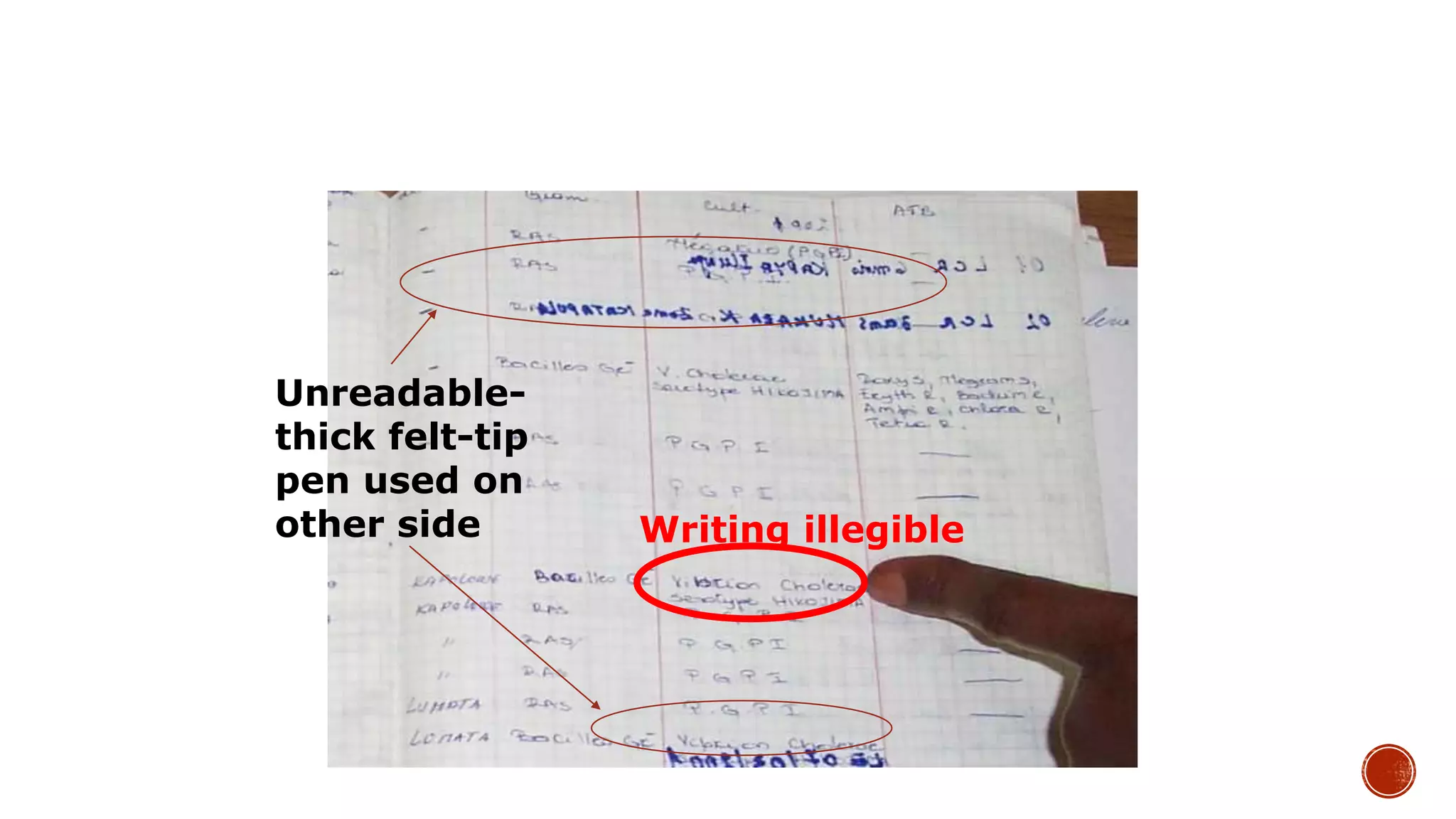
Unreadable-
thick felt-tip
pen used on
other side Writing illegible
 Fewer transcription errors
 Faster processing with direct instrument uploads
 Multi-level checks before releasing the report
 Direct report generation meeting specific requirements - Auto-
verification
 Easy access and correlation with previous reports
 Direct communication of critical values to treating physicians
 Timely information to the patients for consultation
 Report management
 Improve data management in lab to increase lab potential
 Enable centralization of information
 Support and enhance business processes of the lab
 Take advantage of new lab information technology
 Provide easy access to data
17
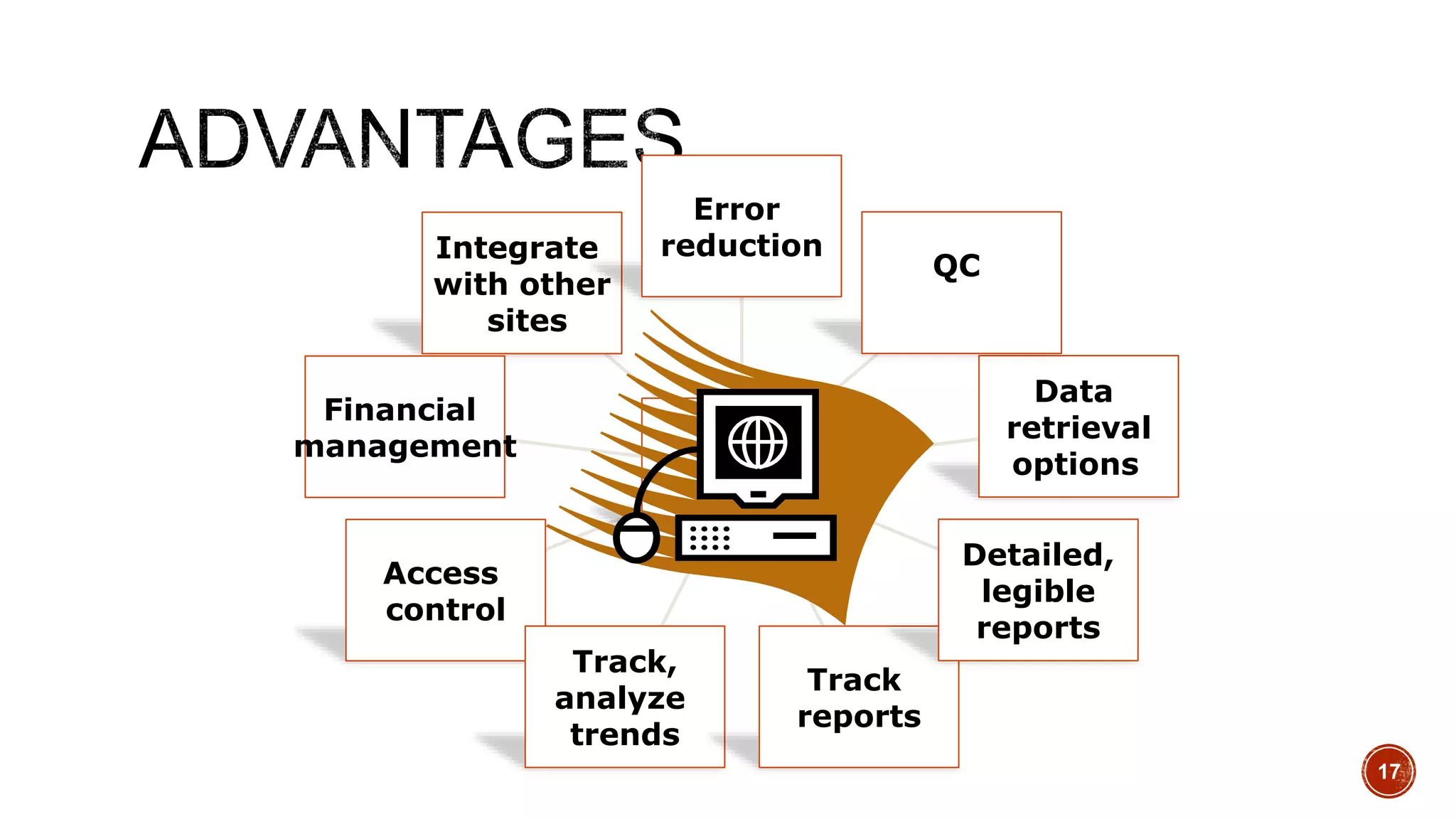
Integrate
with other
sites
Financial
management
Access
control
Track,
analyze
trends
Track
reports
Detailed,
legible
reports
Data
retrieval
options
QC
Error
reduction
18
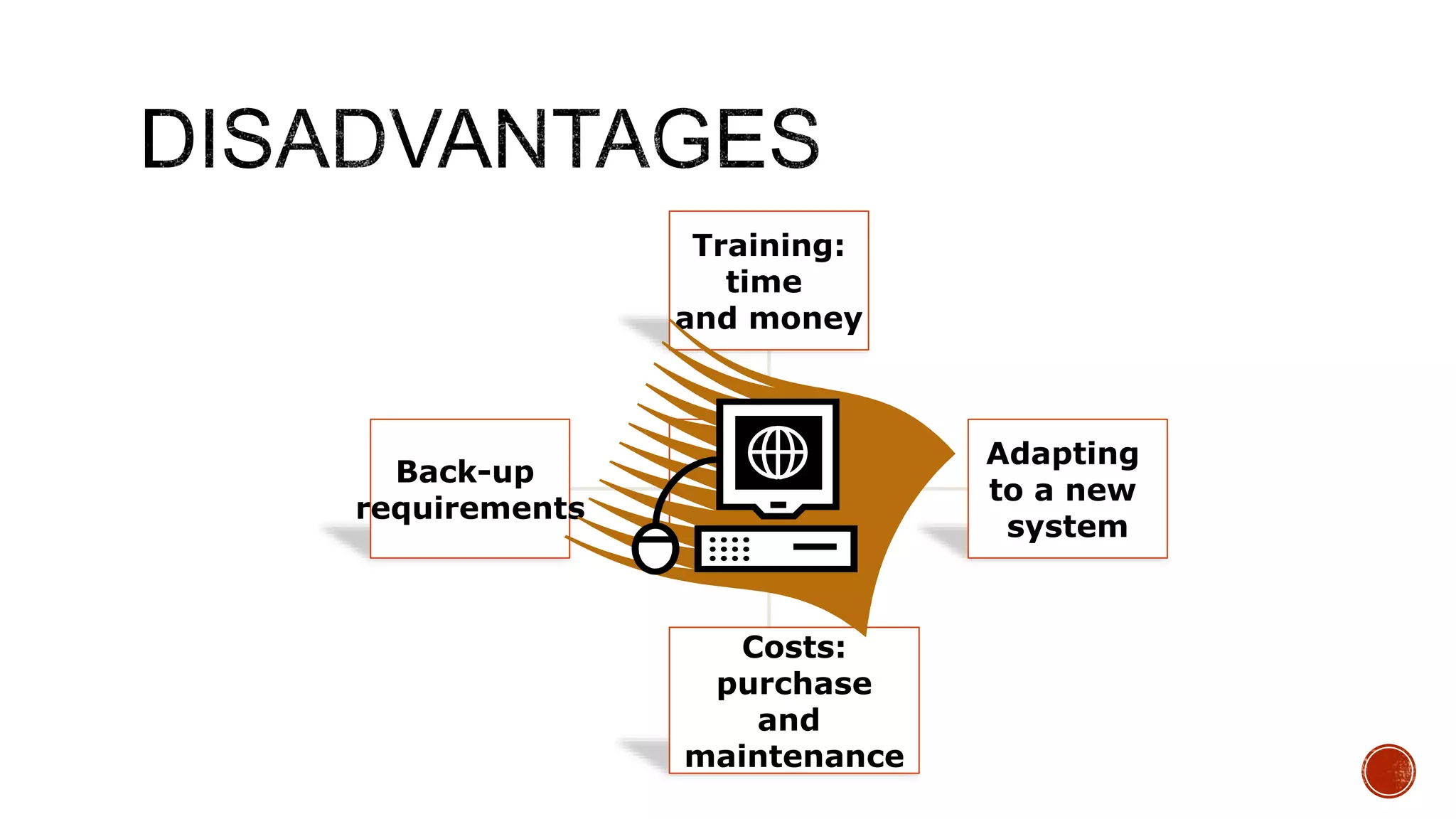
Back-up
requirements
Costs:
purchase
and
maintenance
Adapting
to a new
system
Training:
time
and money
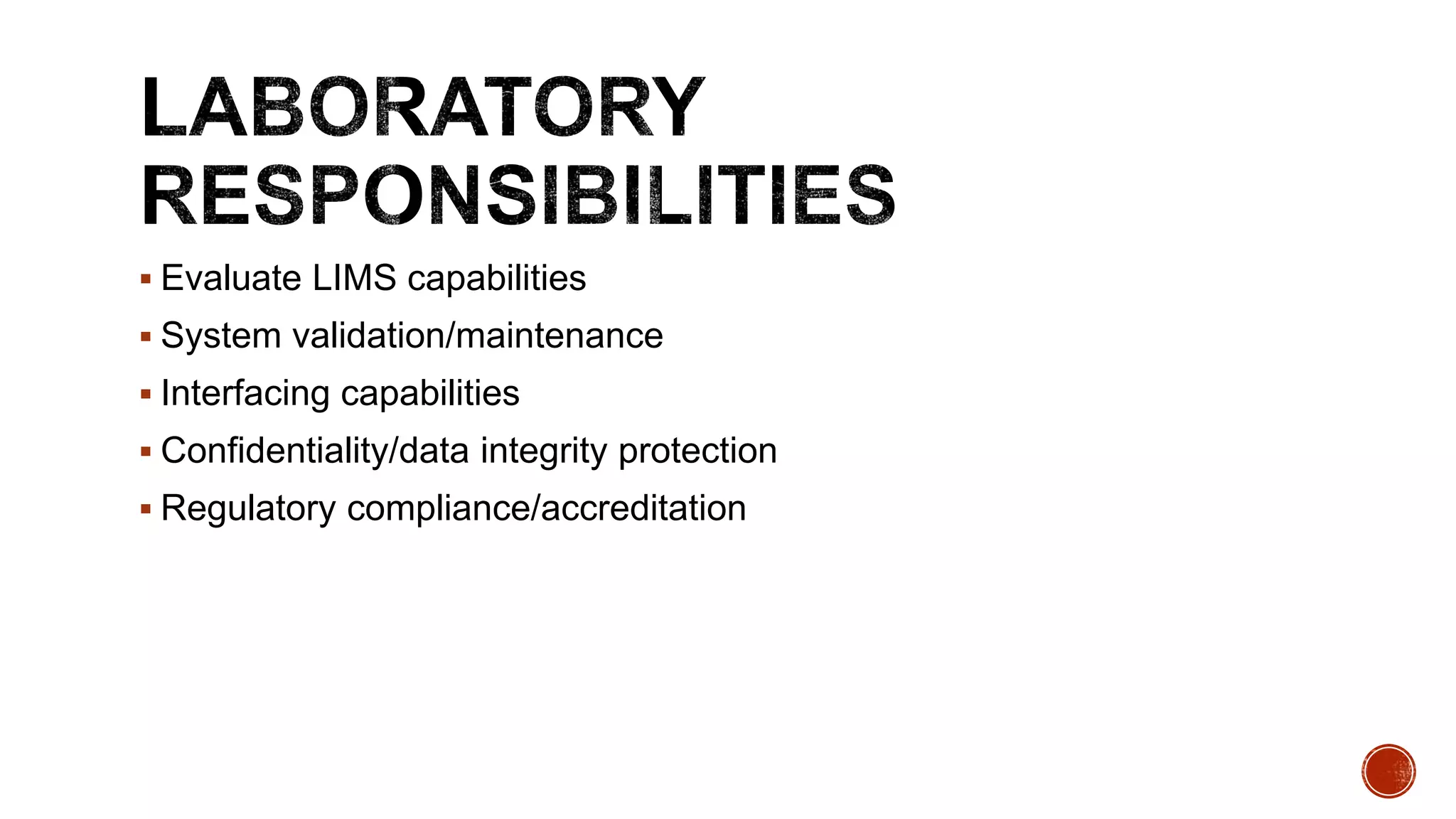
 Evaluate LIMS capabilities
 System validation/maintenance
 Interfacing capabilities
 Confidentiality/data integrity protection
 Regulatory compliance/accreditation
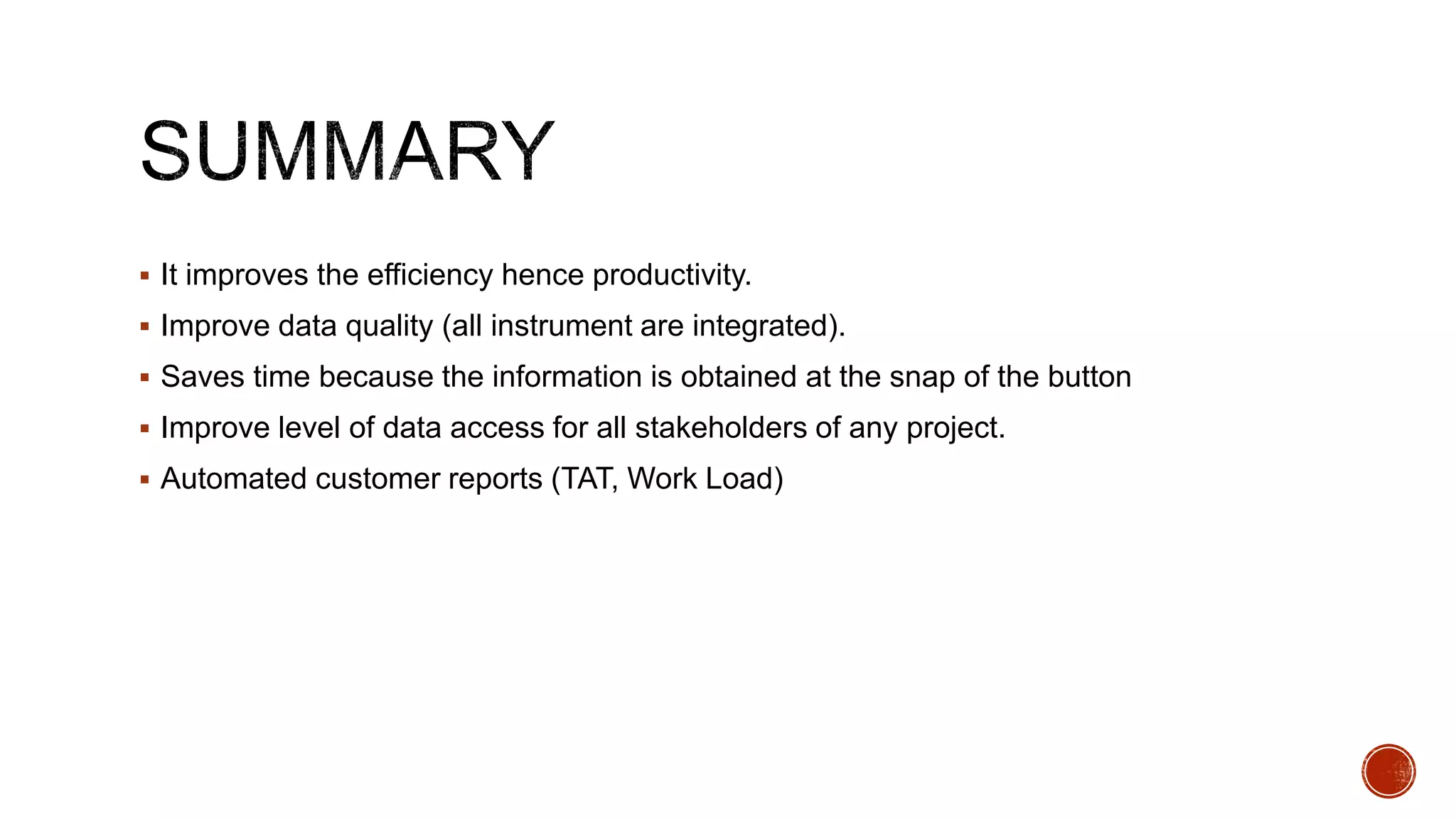
 It improves the efficiency hence productivity.
 Improve data quality (all instrument are integrated).
 Saves time because the information is obtained at the snap of the button
 Improve level of data access for all stakeholders of any project.
 Automated customer reports (TAT, Work Load)
BENEFITS OF LIS IN BIOCHEMISTRY LAB

BENEFITS OF LIS IN BIOCHEMISTRY LAB