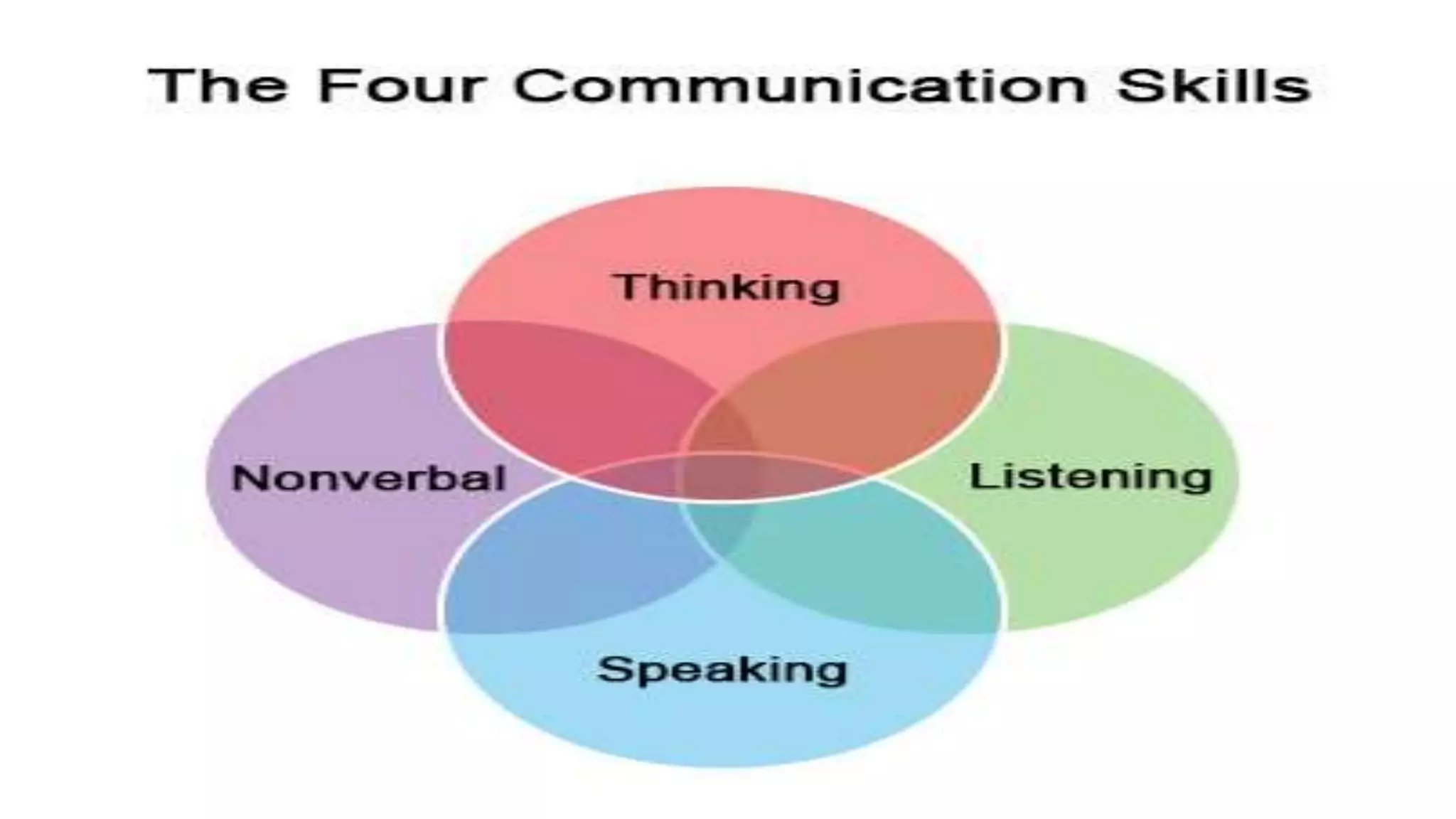
COMMUNICATION 
SKILLS 
Presented To: Dr. Tayyab Husnain 
19 August 2014
By: 
Saadia 
Aslam 
Iqra 
Almas 
Mehwish 
Shahid 
Murtaza
WHAT IS COMMUNICATION PROCESS? 
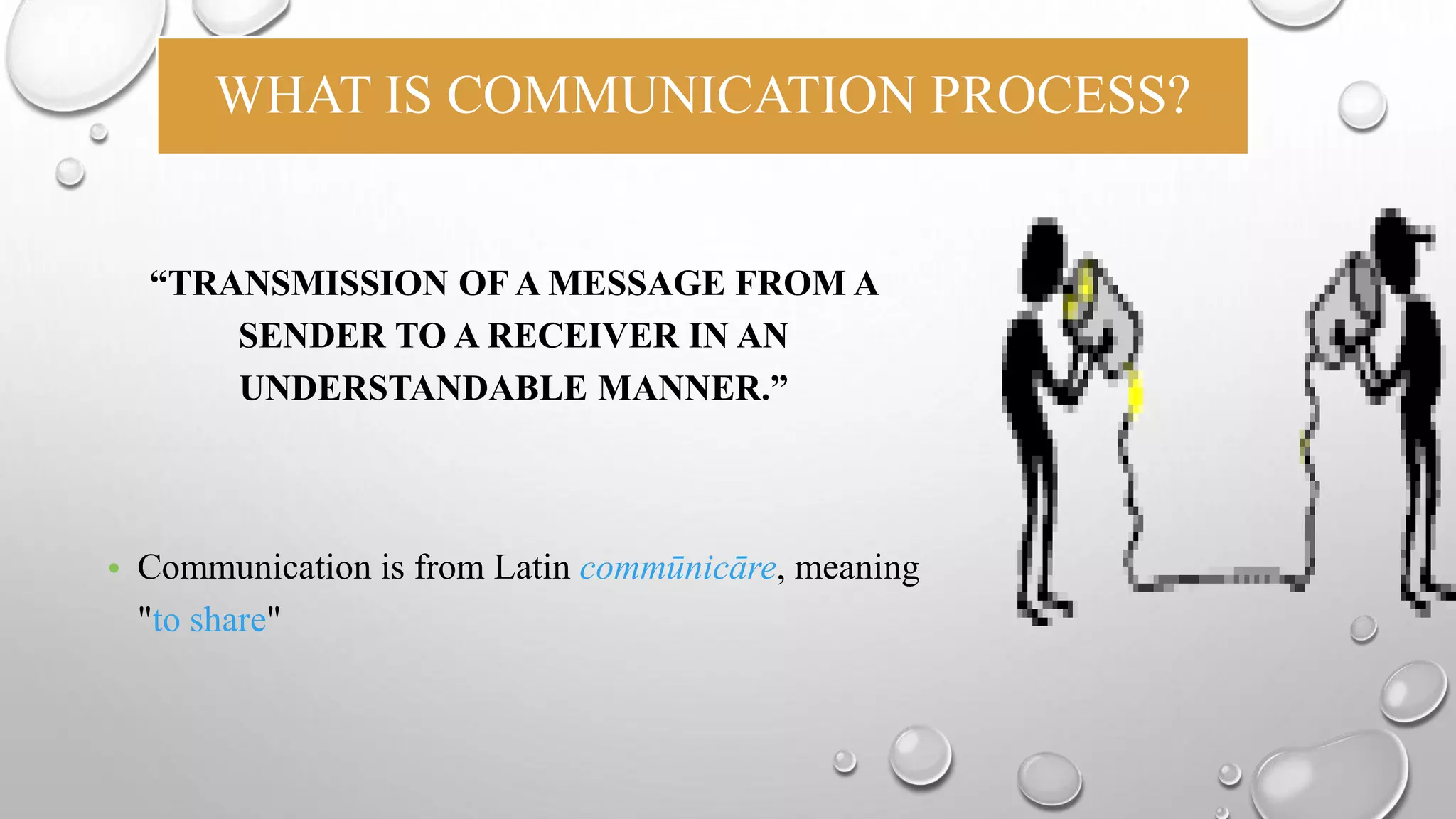
“TRANSMISSION OF A MESSAGE FROM A 
SENDER TO A RECEIVER IN AN 
UNDERSTANDABLE MANNER.” 
• Communication is from Latin commūnicāre, meaning 
"to share"
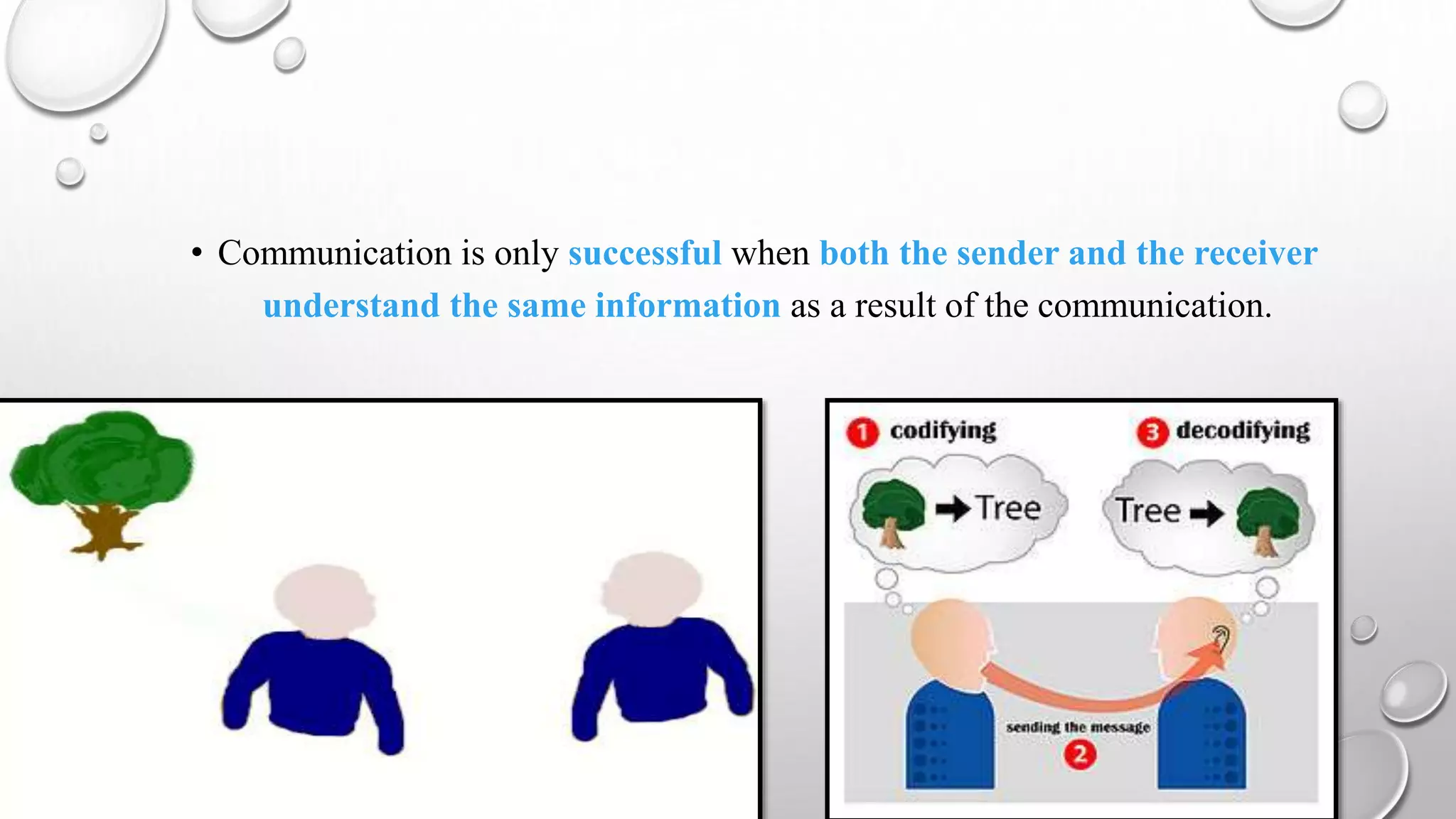
• Communication is only successful when both the sender and the receiver 
understand the same information as a result of the communication.
WHO IS THE BEST COMMUNICATOR OF 2013 
AROUND THE WORLD??? 
• DO YOU KNOW????
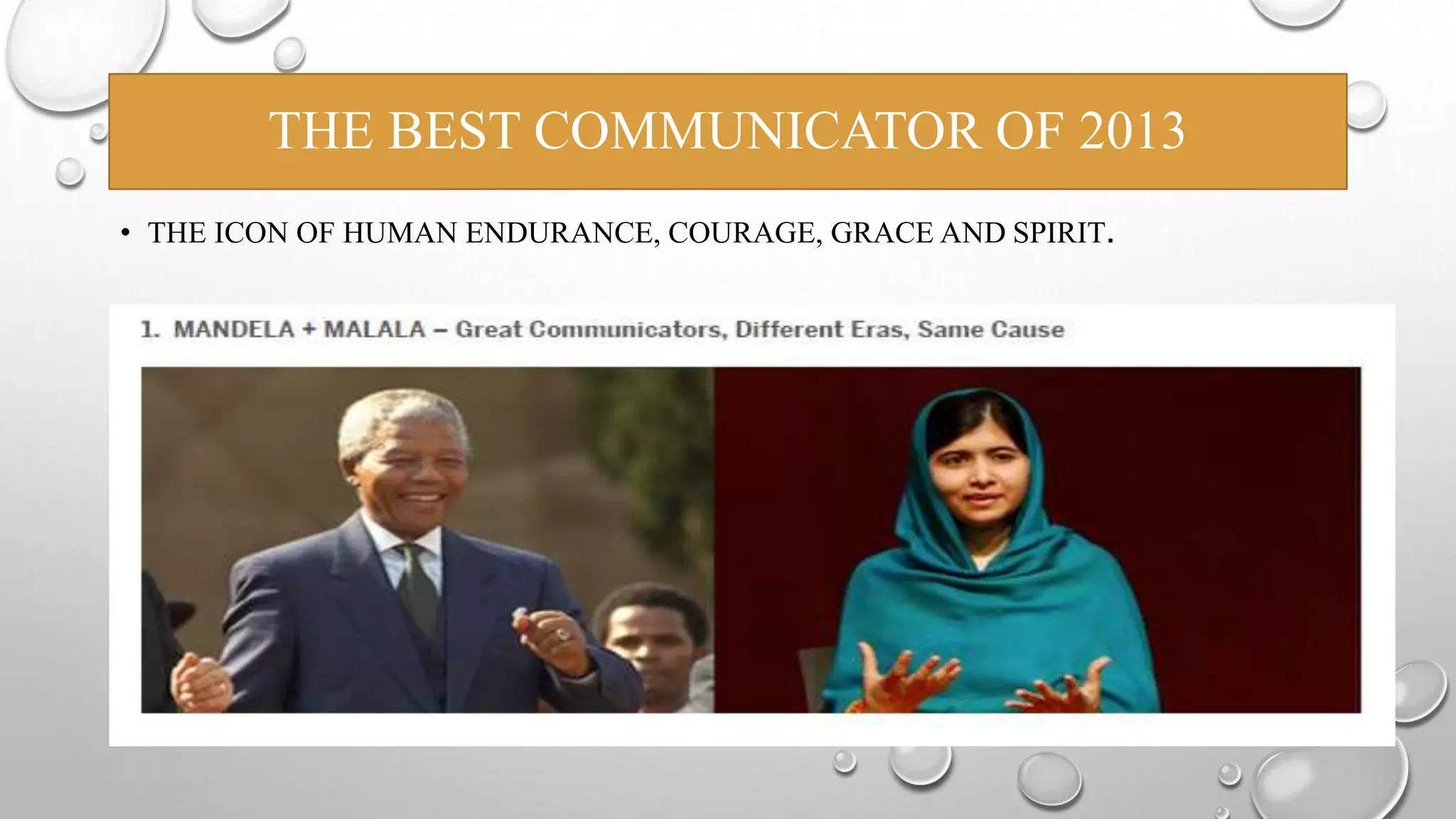
THE BEST COMMUNICATOR OF 2013 
• THE ICON OF HUMAN ENDURANCE, COURAGE, GRACE AND SPIRIT.
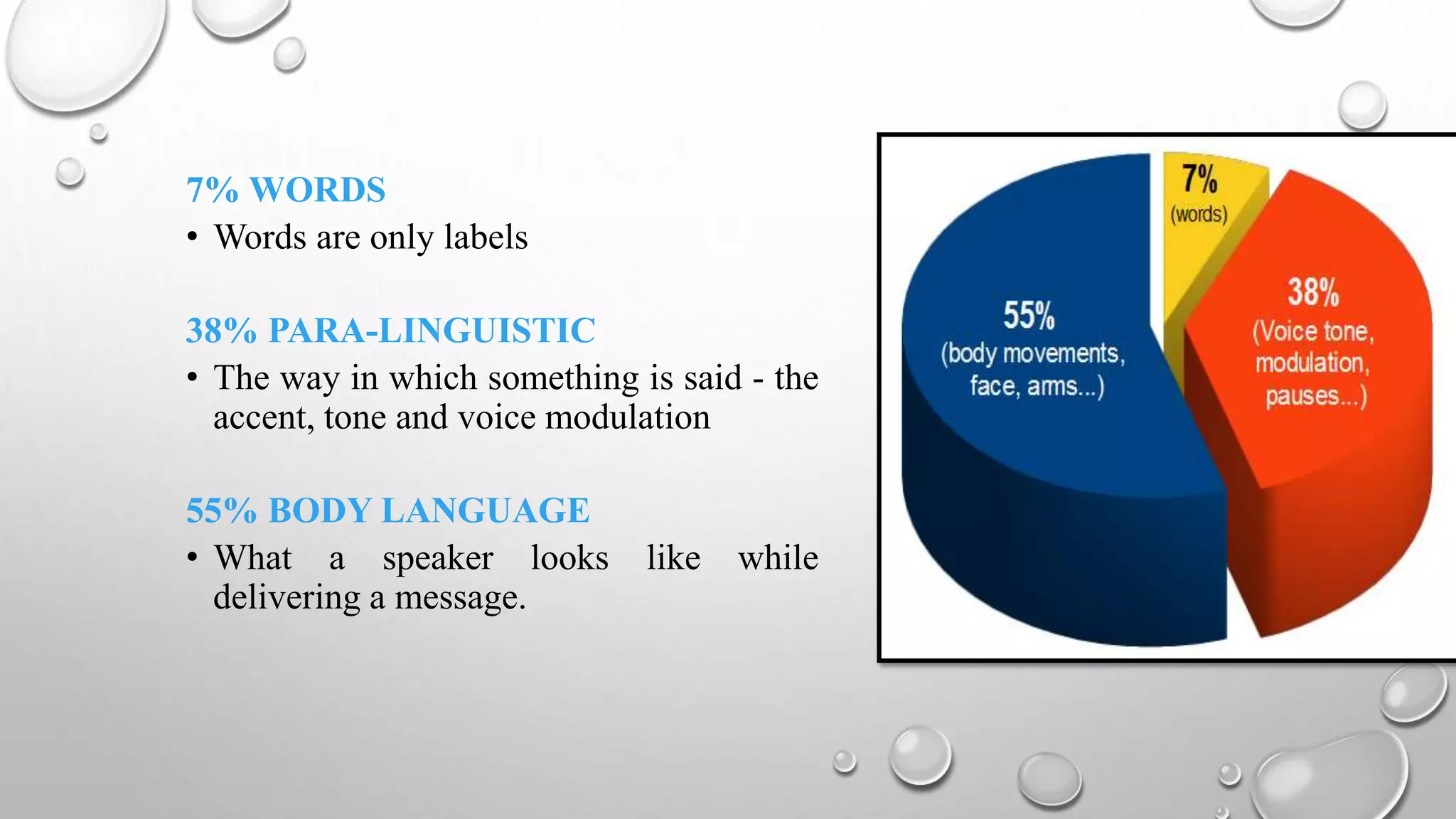
7%WORDS 
• Words are only labels 
38% PARA-LINGUISTIC 
• The way in which something is said - the 
accent, tone and voice modulation 
55% BODY LANGUAGE 
• What a speaker looks like while 
delivering a message.
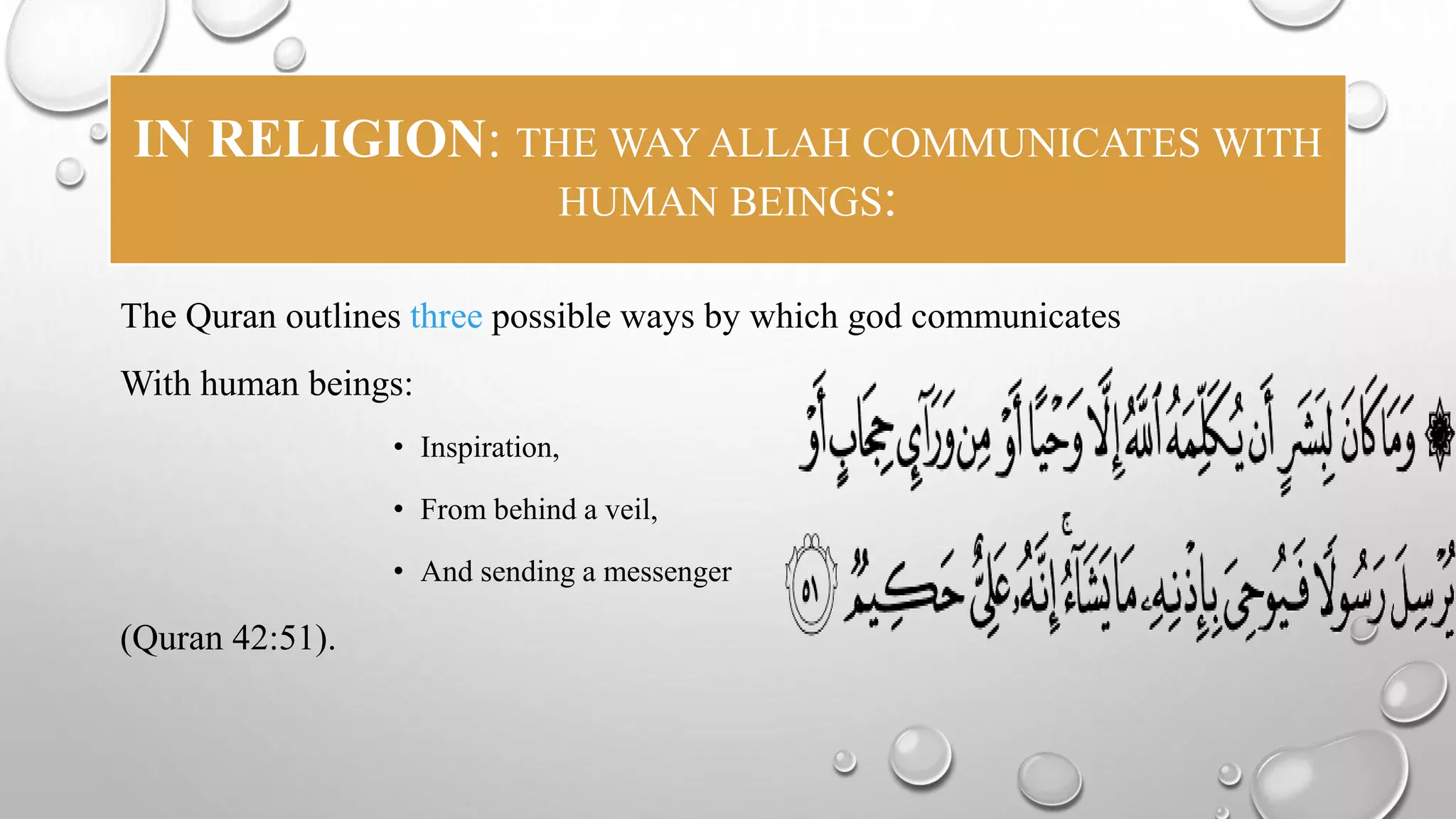
IN RELIGION: THE WAY ALLAH COMMUNICATES WITH 
HUMAN BEINGS: 
The Quran outlines three possible ways by which god communicates 
With human beings: 
• Inspiration, 
• From behind a veil, 
• And sending a messenger 
(Quran 42:51).
REMEMBER THAT YOU ARE DEALING WITH 
• (P)OSTURES & GESTURES 
• (E)PRESSIONS OF EMOTION 
• (O)RIENTATION 
• (P)RESENTATION 
• (L)OOKS 
• (E)YE CONTACT 
“PEOPLE”
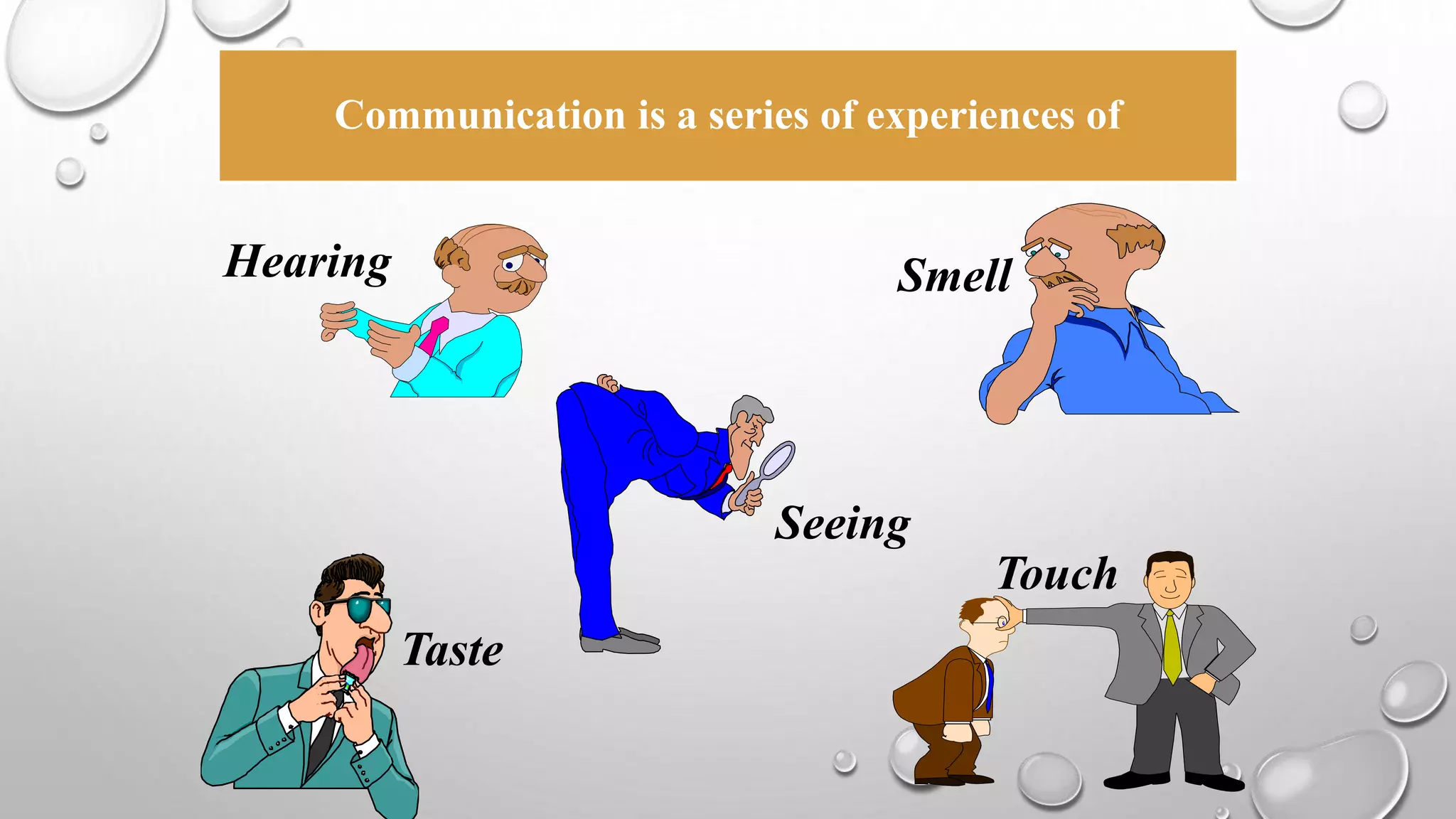
Communication is a series of experiences of 
Hearing 
Smell 
Seeing 
Touch 
Taste
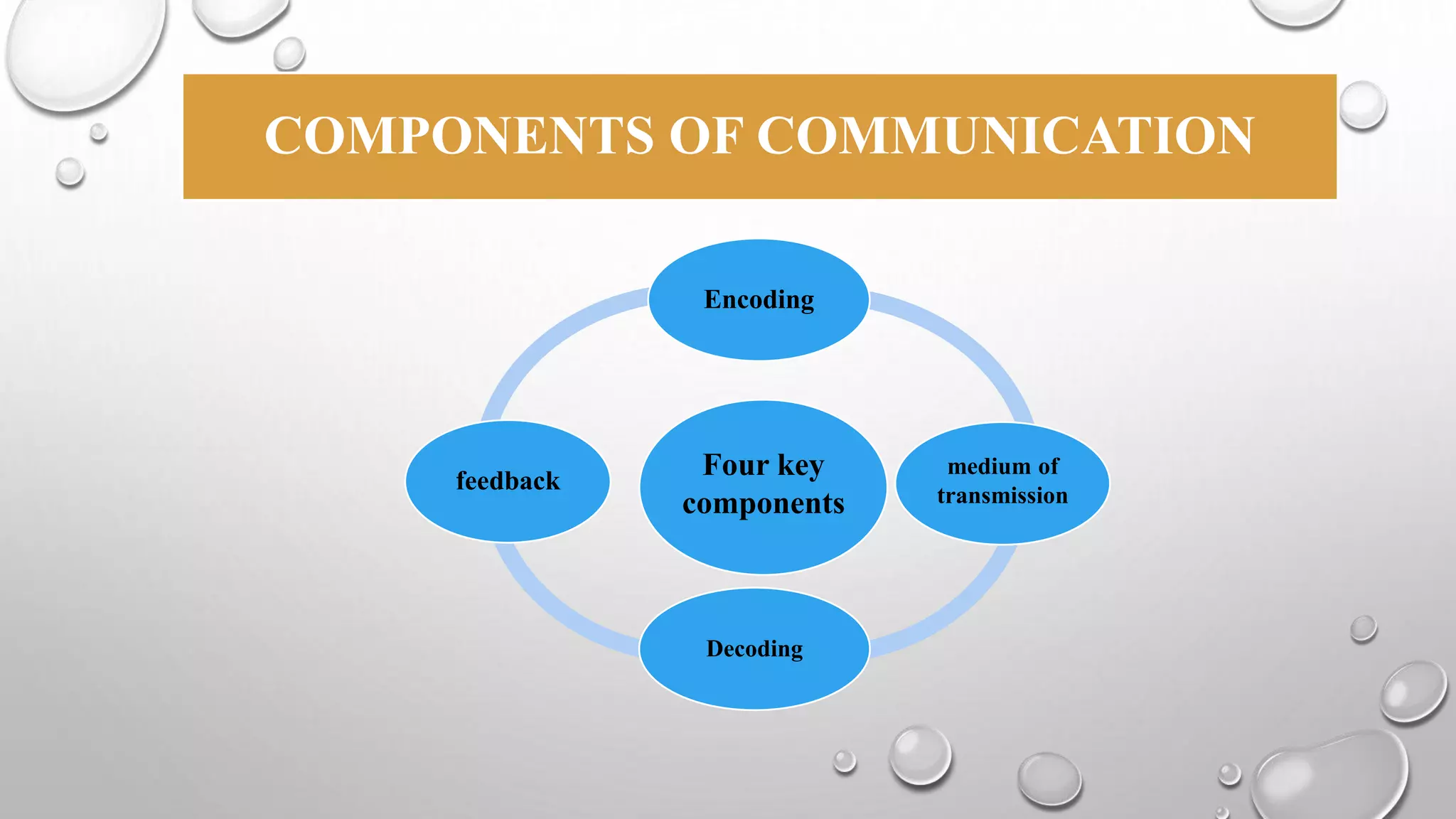
COMPONENTS OF COMMUNICATION 
Four key 
components 
feedback 
Encoding 
medium of 
transmission 
Decoding
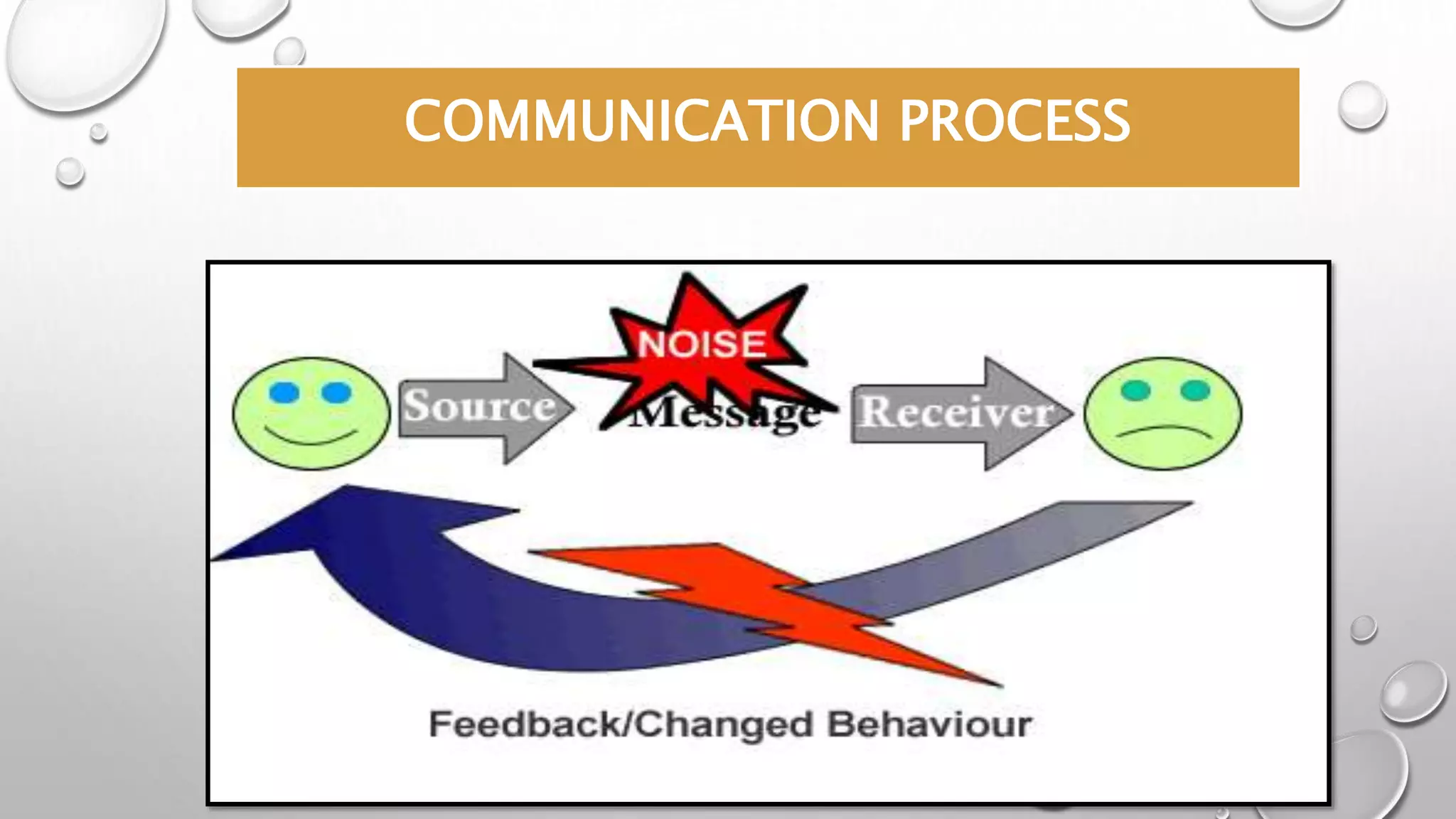
COMMUNICATION PROCESS
LEVELS of COMMUNICATION 
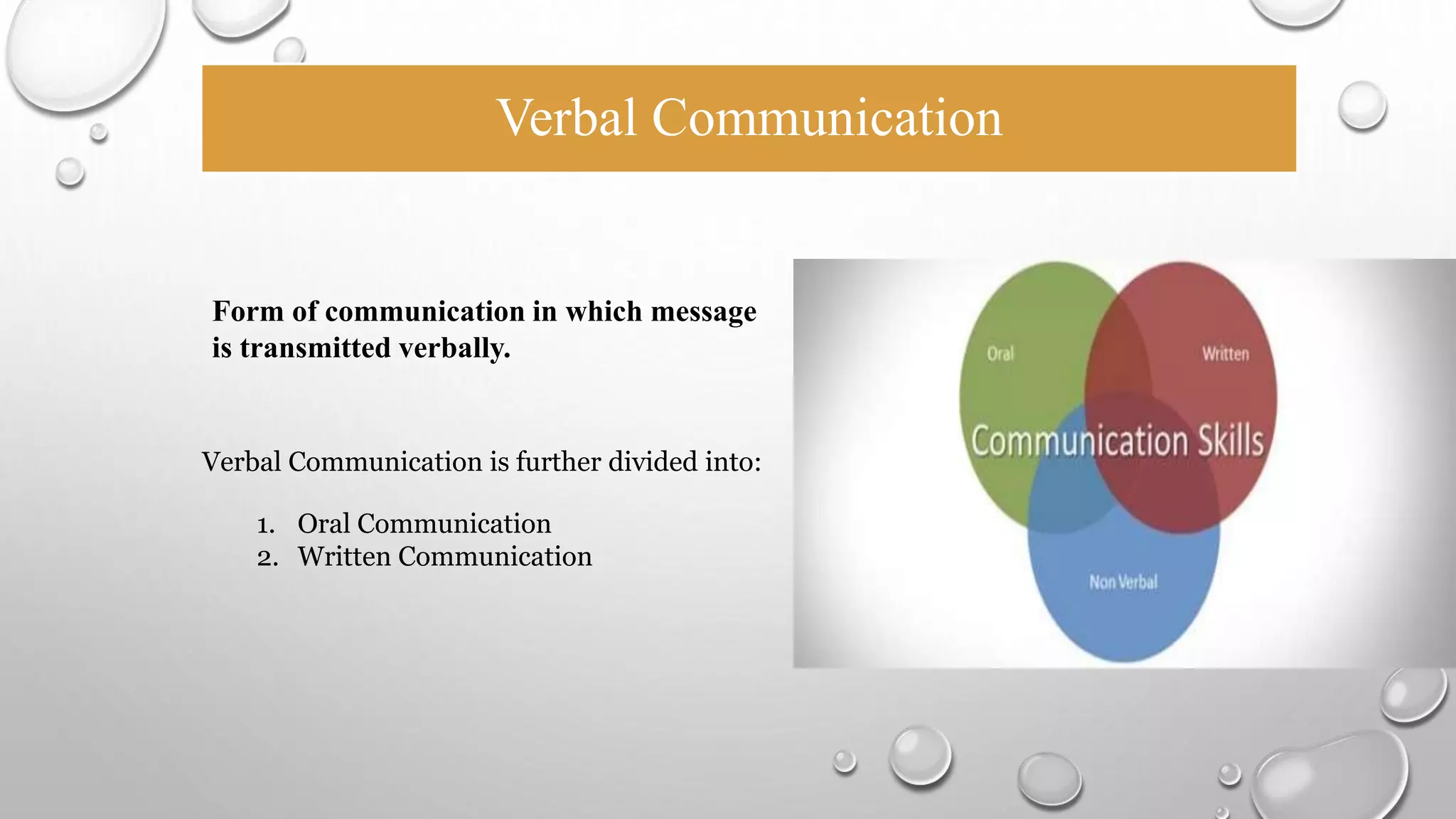
• Verbal 
• Non-verbal
Verbal Communication 
Form of communication in which message 
is transmitted verbally. 
Verbal Communication is further divided into: 
1. Oral Communication 
2. Written Communication
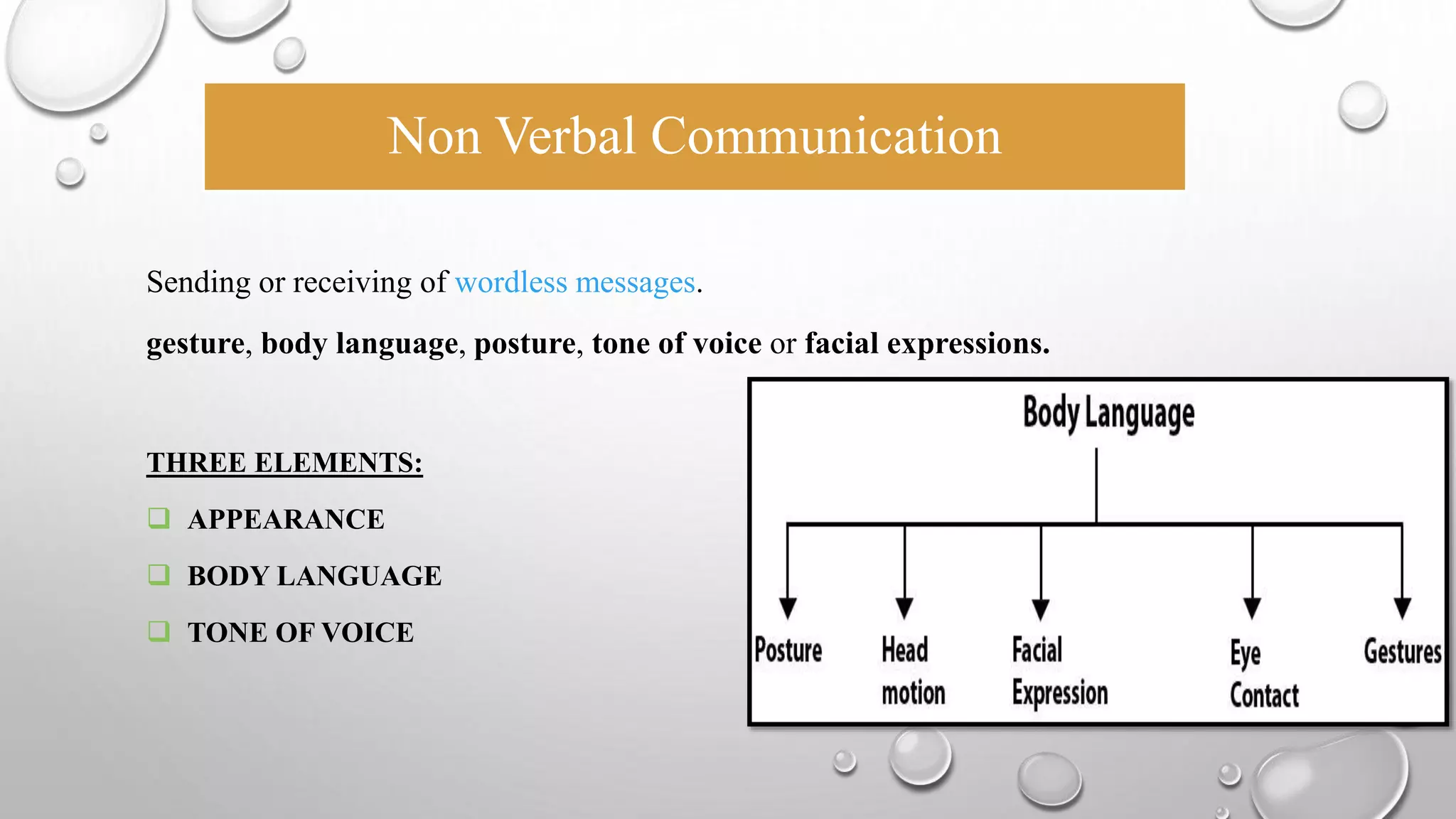
Non Verbal Communication 
Sending or receiving of wordless messages. 
gesture, body language, posture, tone of voice or facial expressions. 
THREE ELEMENTS: 
 APPEARANCE 
 BODY LANGUAGE 
 TONE OF VOICE
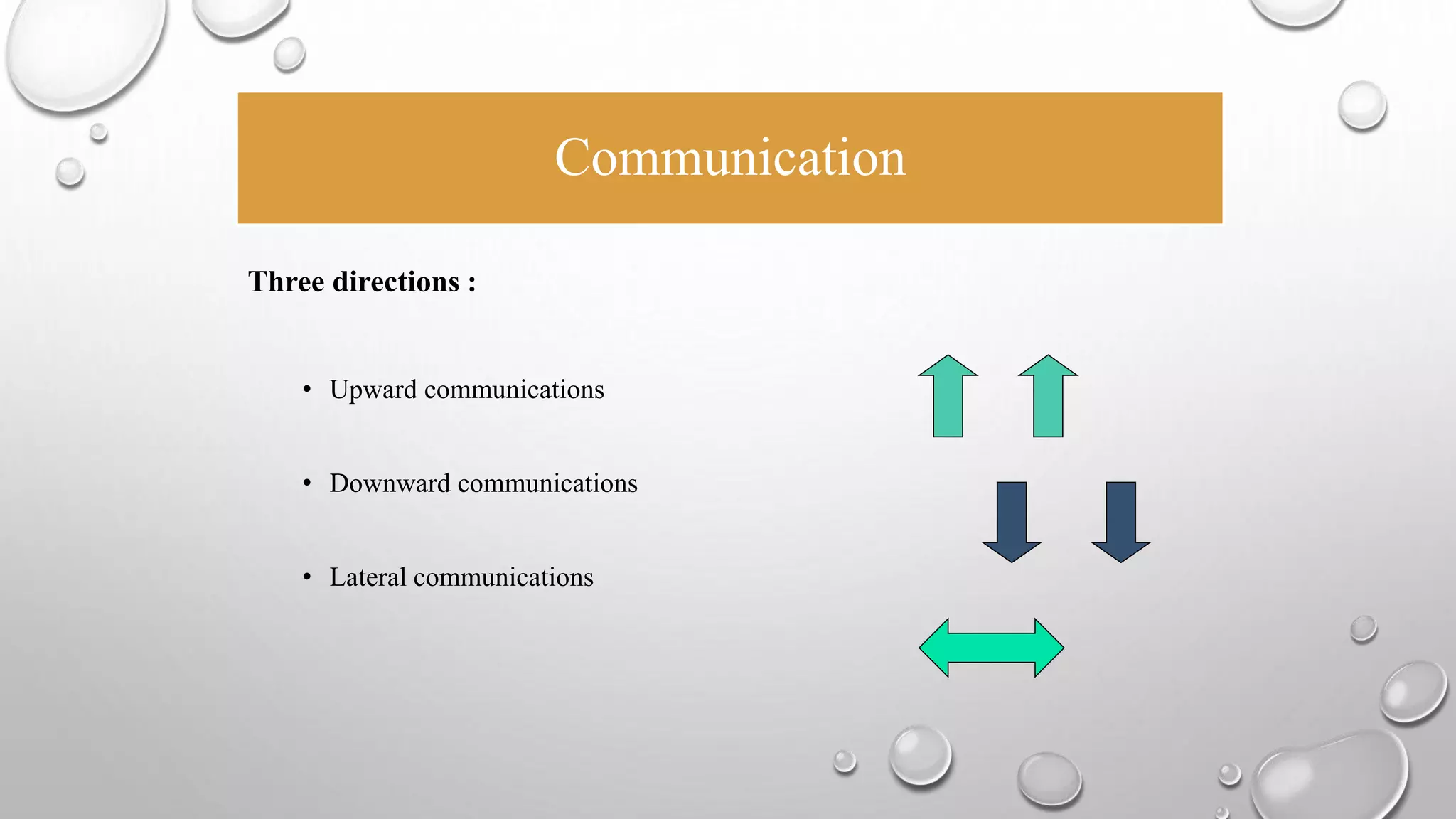
Communication 
Three directions : 
• Upward communications 
• Downward communications 
• Lateral communications
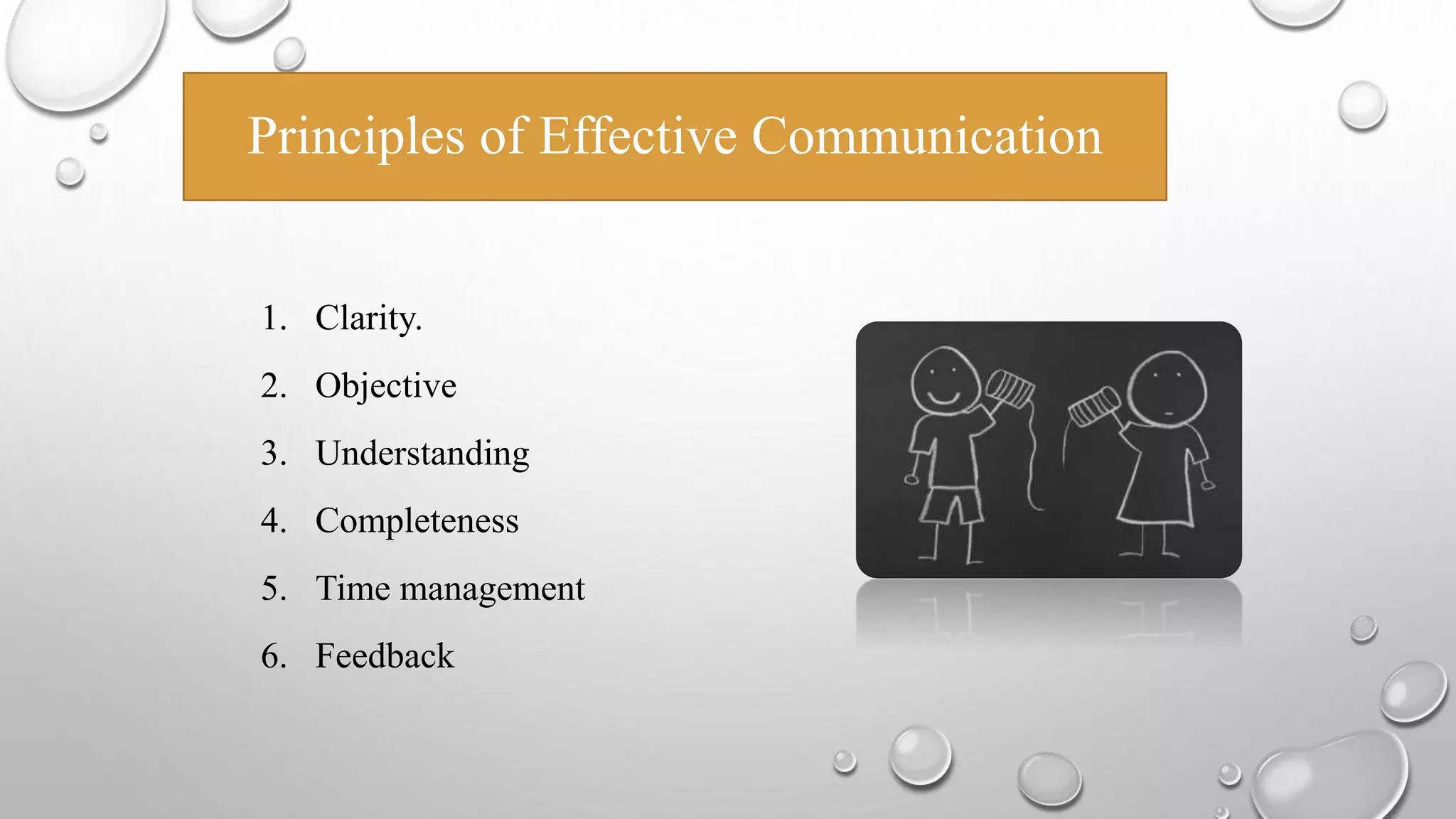
Principles of Effective Communication 
1. Clarity. 
2. Objective 
3. Understanding 
4. Completeness 
5. Time management 
6. Feedback
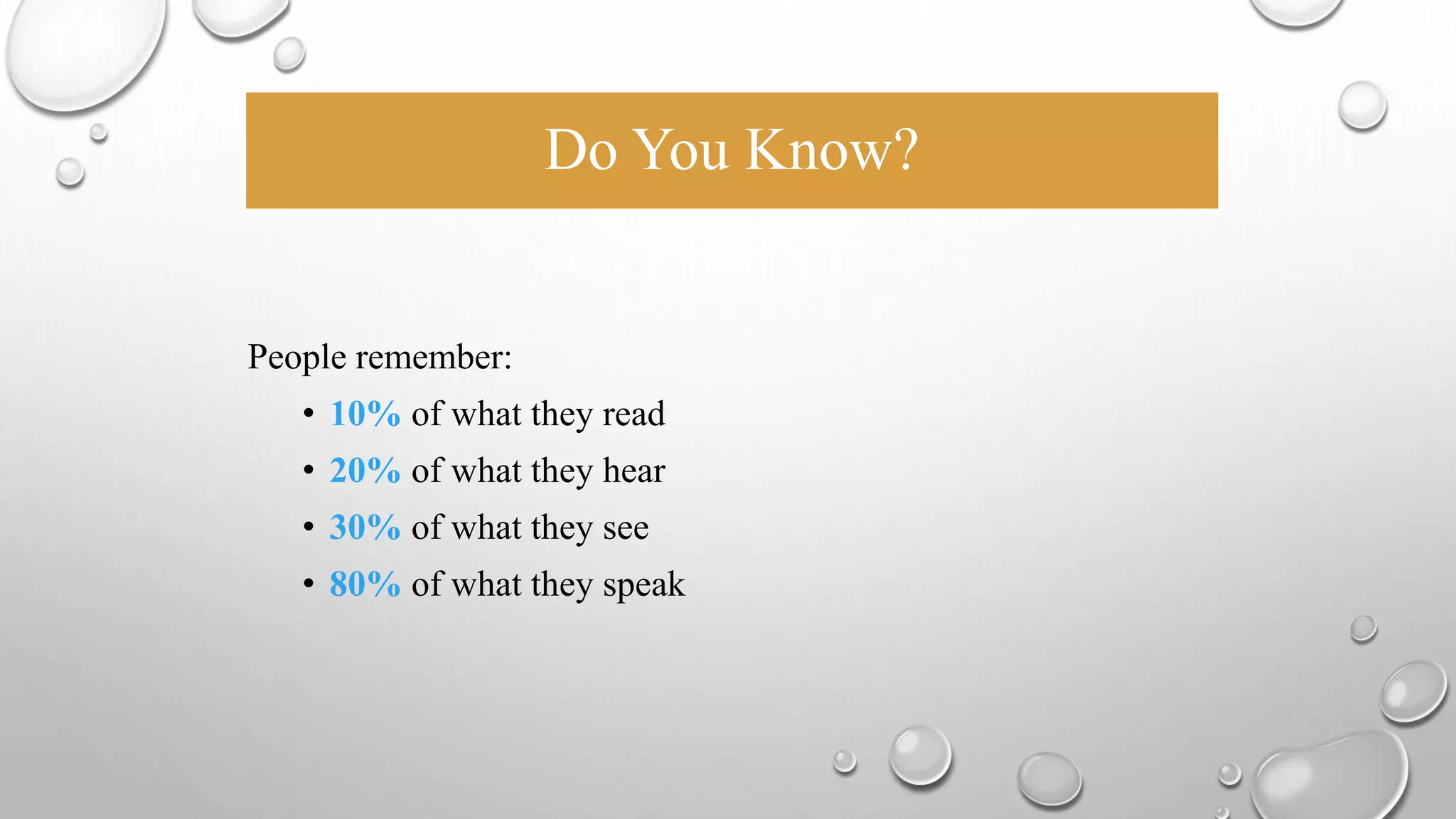
Do You Know? 
People remember: 
• 10% of what they read 
• 20% of what they hear 
• 30% of what they see 
• 80% of what they speak
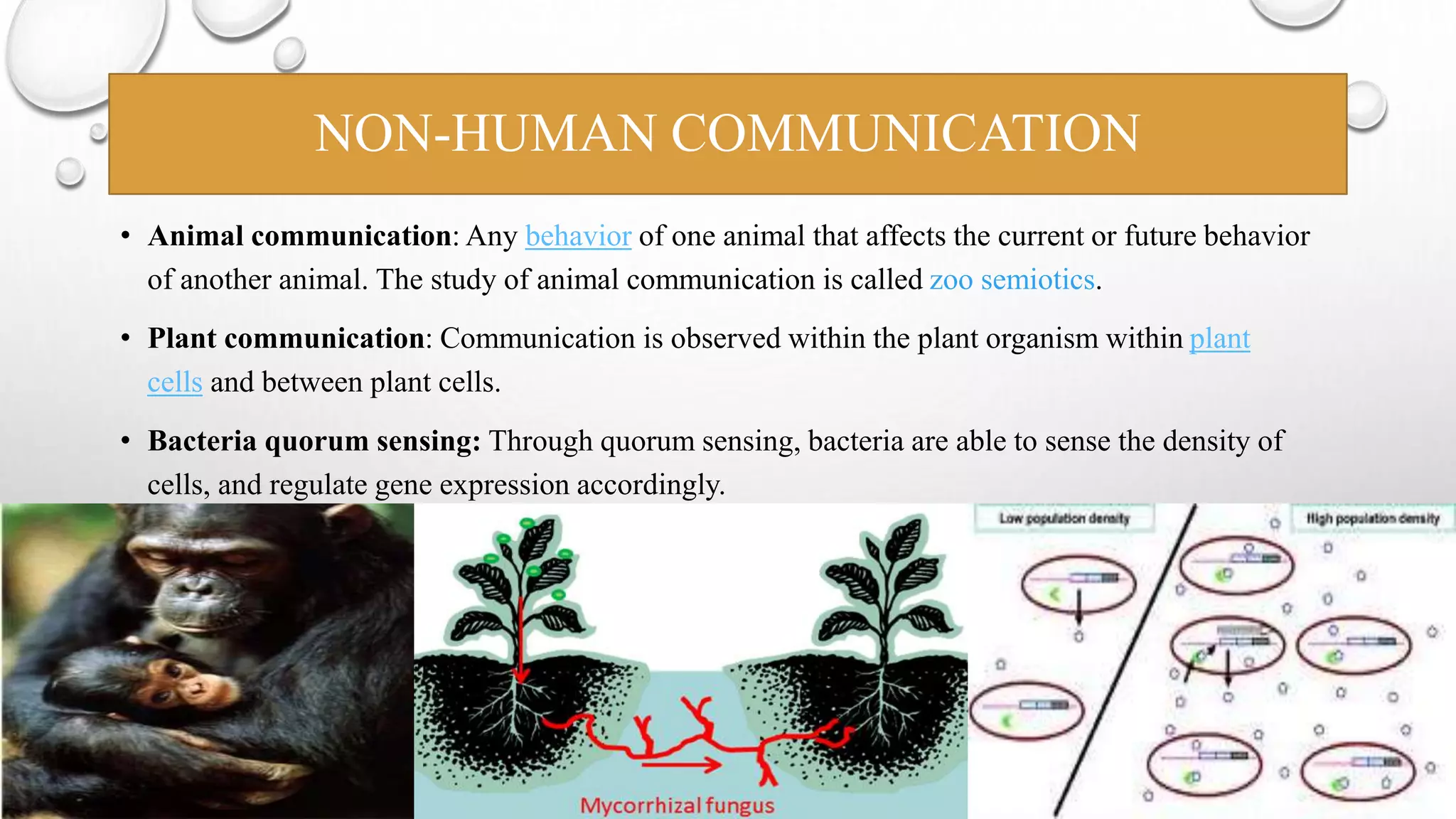
NON-HUMAN COMMUNICATION 
• Animal communication: Any behavior of one animal that affects the current or future behavior 
of another animal. The study of animal communication is called zoo semiotics. 
• Plant communication: Communication is observed within the plant organism within plant 
cells and between plant cells. 
• Bacteria quorum sensing: Through quorum sensing, bacteria are able to sense the density of 
cells, and regulate gene expression accordingly.
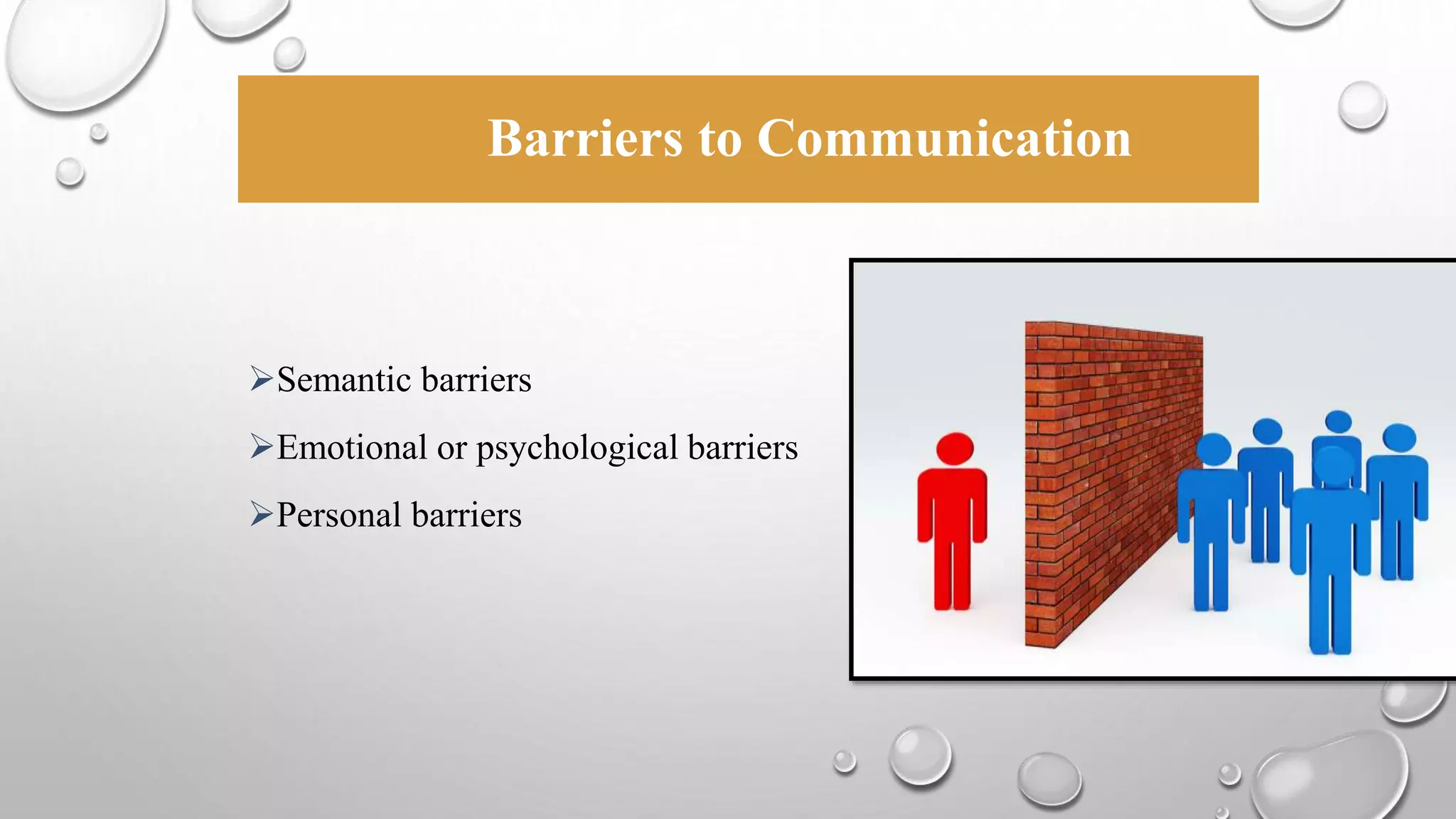
Barriers to Communication 
Semantic barriers 
Emotional or psychological barriers 
Personal barriers
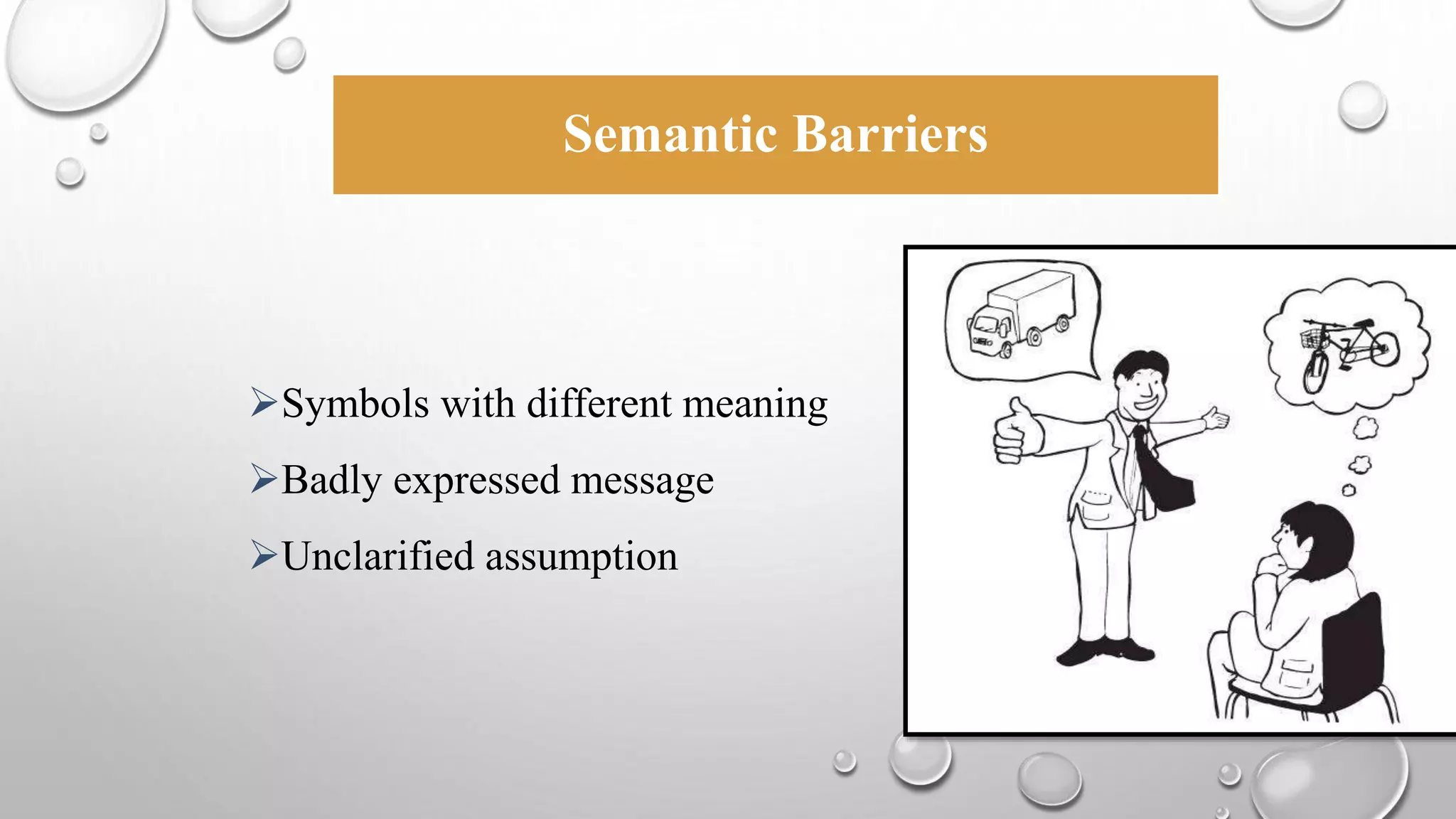
Semantic Barriers 
Symbols with different meaning 
Badly expressed message 
Unclarified assumption
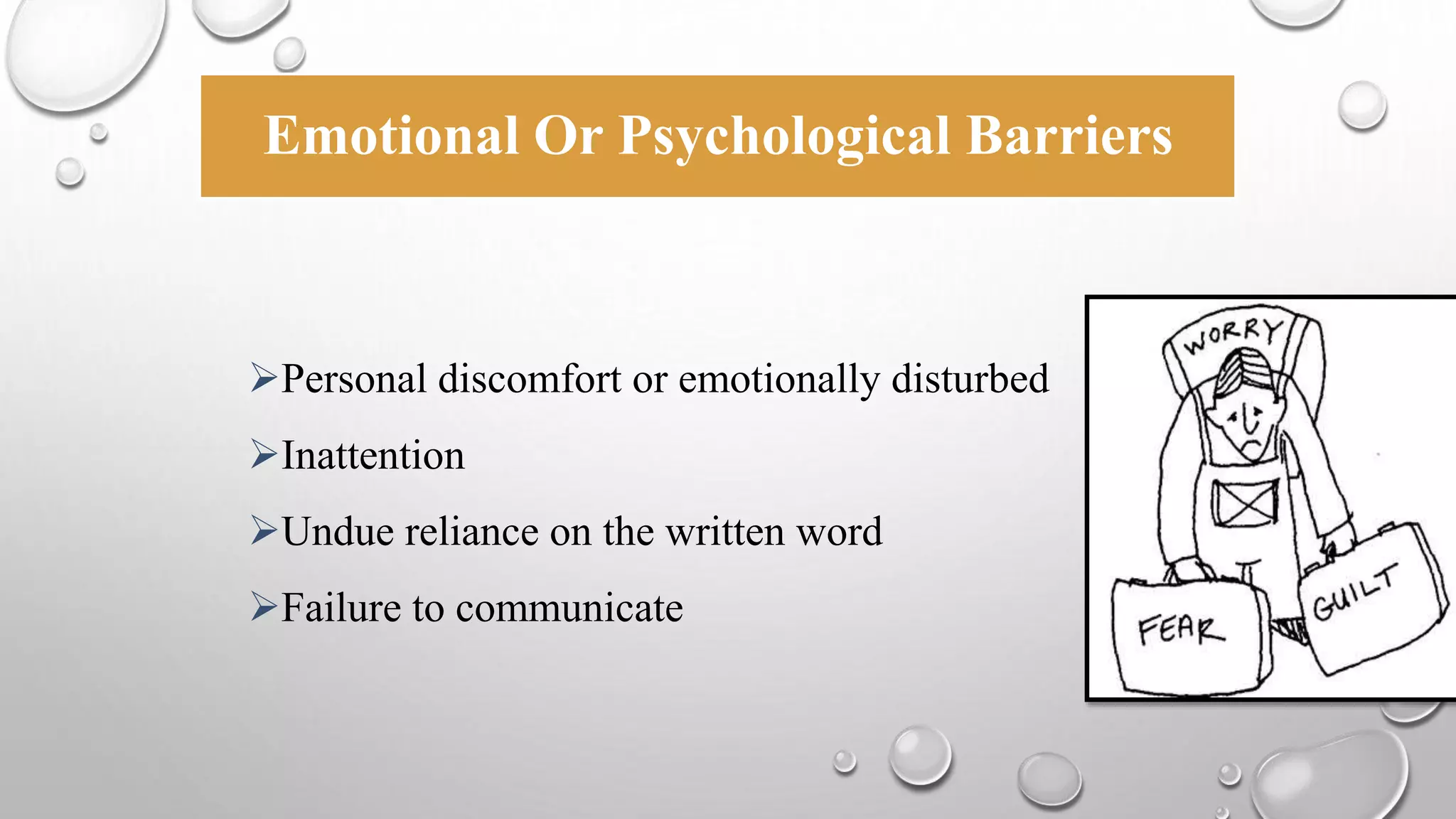
Emotional Or Psychological Barriers 
Personal discomfort or emotionally disturbed 
Inattention 
Undue reliance on the written word 
Failure to communicate
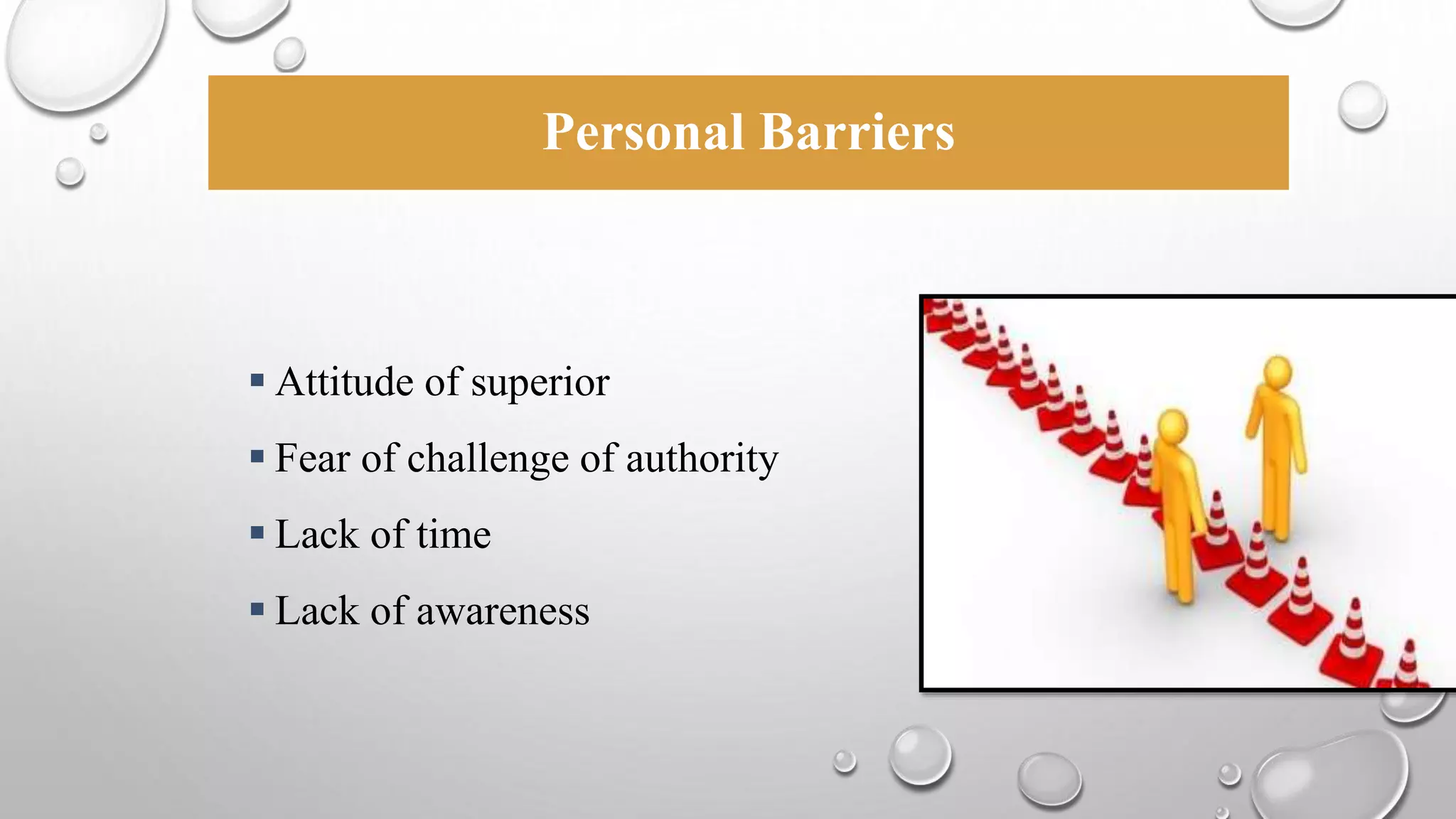
Personal Barriers 
 Attitude of superior 
 Fear of challenge of authority 
 Lack of time 
 Lack of awareness
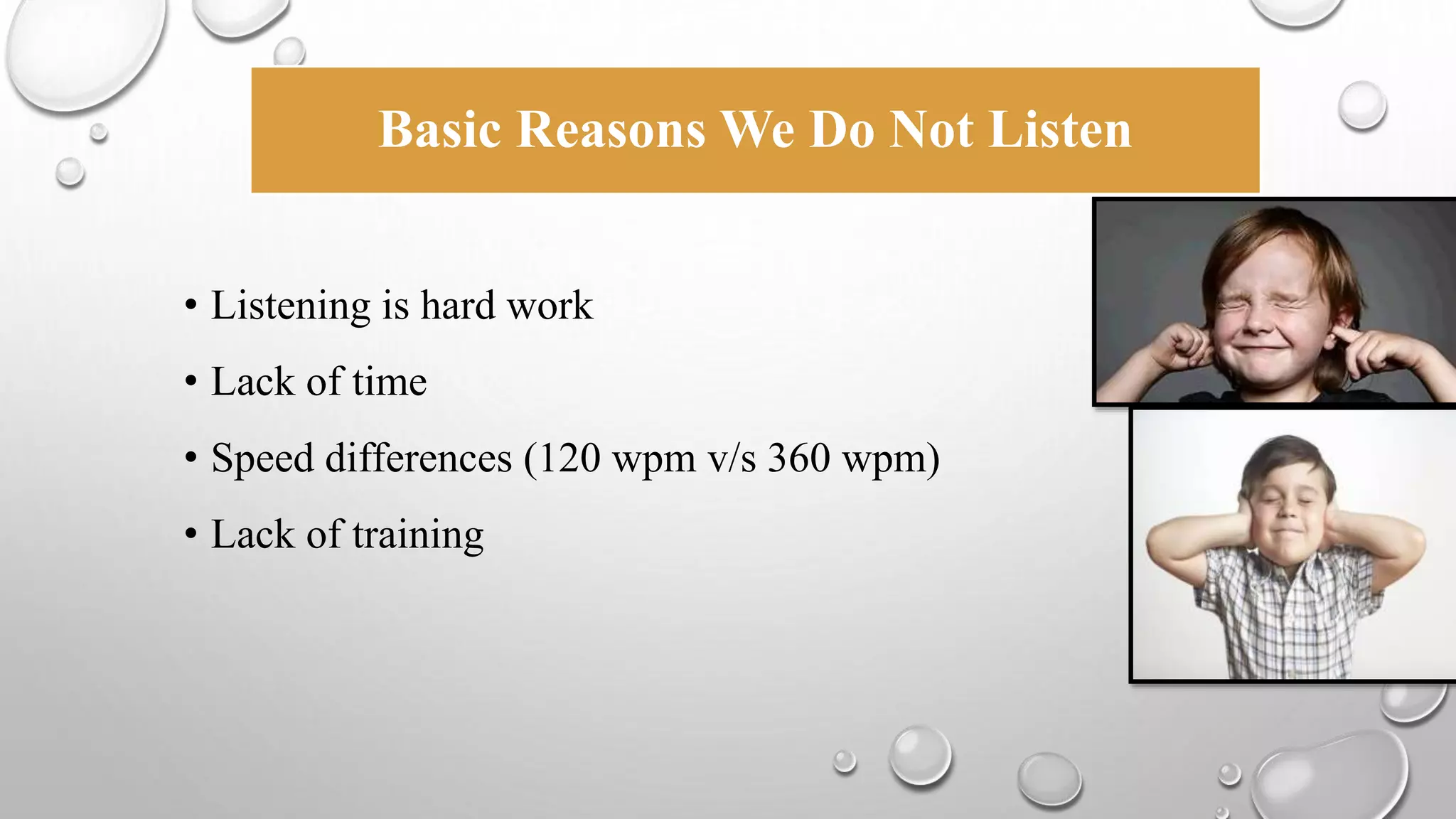
Basic Reasons We Do Not Listen 
• Listening is hard work 
• Lack of time 
• Speed differences (120 wpm v/s 360 wpm) 
• Lack of training
Tips to Good Communication Skills 
Maintain eye contact with the audience 
Body awareness 
Expressions 
Manage time properly 
Practice effective communication skills 
At Last
Final Thoughts 
• Communicating to be understood and being a good 
listener are crucial. 
• Another important aspect of communication is to think 
about what you are saying before you say it. 
• Today’s communications set the tone for tomorrow’s 
relationships.
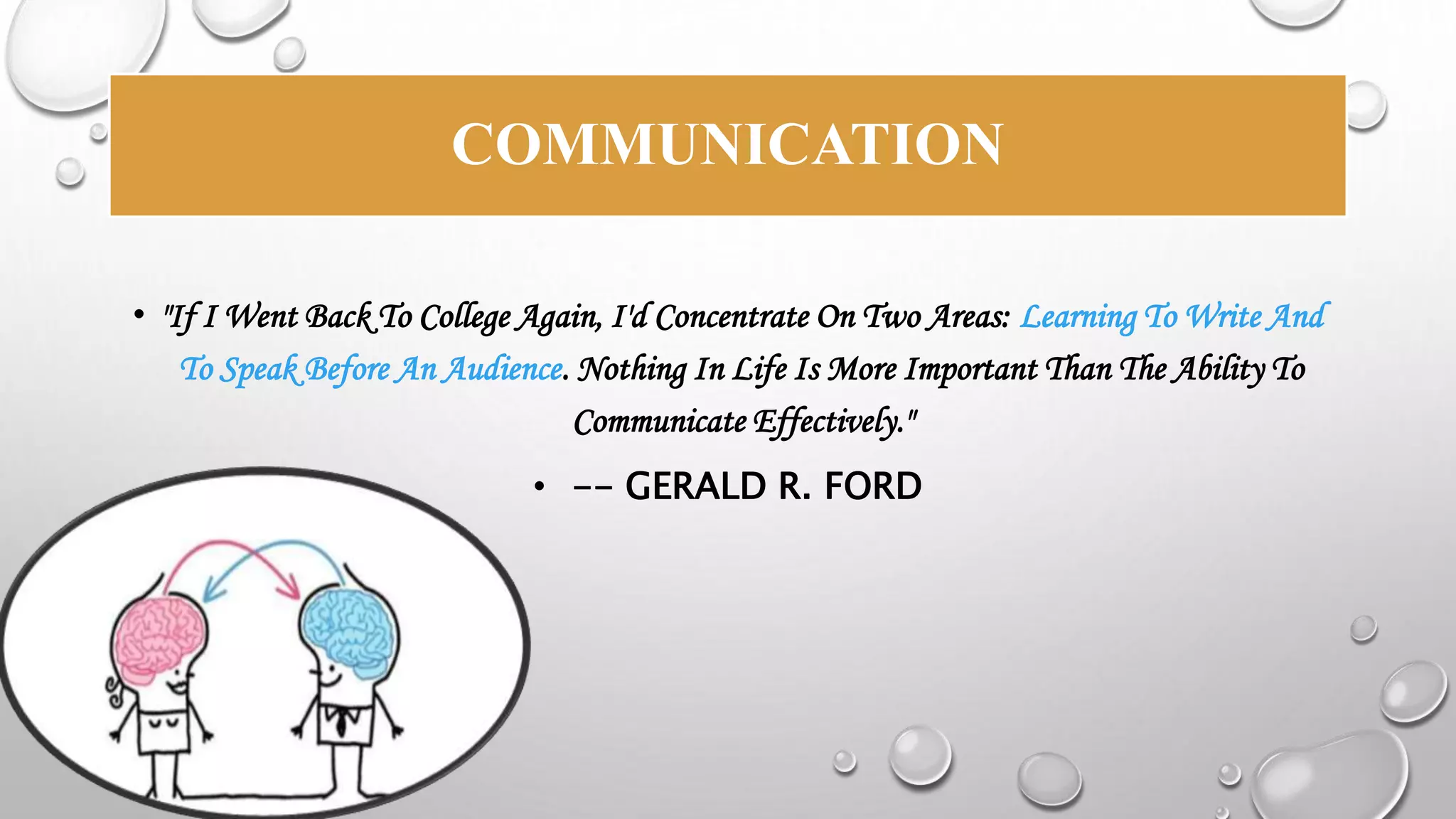
COMMUNICATION 
• "If I Went Back To College Again, I'd Concentrate On Two Areas: Learning To Write And 
To Speak Before An Audience. Nothing In Life Is More Important Than The Ability To 
Communicate Effectively." 
• -- GERALD R. FORD
Communication skills

Communication skills

  • 2.
    COMMUNICATION SKILLS PresentedTo: Dr. Tayyab Husnain 19 August 2014
  • 3.
    By: Saadia Aslam Iqra Almas Mehwish Shahid Murtaza
  • 4.
    WHAT IS COMMUNICATIONPROCESS? “TRANSMISSION OF A MESSAGE FROM A SENDER TO A RECEIVER IN AN UNDERSTANDABLE MANNER.” • Communication is from Latin commūnicāre, meaning "to share"
  • 5.
    • Communication isonly successful when both the sender and the receiver understand the same information as a result of the communication.
  • 8.
    WHO IS THEBEST COMMUNICATOR OF 2013 AROUND THE WORLD??? • DO YOU KNOW????
  • 9.
    THE BEST COMMUNICATOROF 2013 • THE ICON OF HUMAN ENDURANCE, COURAGE, GRACE AND SPIRIT.
  • 11.
    7%WORDS • Wordsare only labels 38% PARA-LINGUISTIC • The way in which something is said - the accent, tone and voice modulation 55% BODY LANGUAGE • What a speaker looks like while delivering a message.
  • 12.
    IN RELIGION: THEWAY ALLAH COMMUNICATES WITH HUMAN BEINGS: The Quran outlines three possible ways by which god communicates With human beings: • Inspiration, • From behind a veil, • And sending a messenger (Quran 42:51).
  • 13.
    REMEMBER THAT YOUARE DEALING WITH • (P)OSTURES & GESTURES • (E)PRESSIONS OF EMOTION • (O)RIENTATION • (P)RESENTATION • (L)OOKS • (E)YE CONTACT “PEOPLE”
  • 14.
    Communication is aseries of experiences of Hearing Smell Seeing Touch Taste
  • 15.
    COMPONENTS OF COMMUNICATION Four key components feedback Encoding medium of transmission Decoding
  • 16.
  • 17.
    LEVELS of COMMUNICATION • Verbal • Non-verbal
  • 18.
    Verbal Communication Formof communication in which message is transmitted verbally. Verbal Communication is further divided into: 1. Oral Communication 2. Written Communication
  • 19.
    Non Verbal Communication Sending or receiving of wordless messages. gesture, body language, posture, tone of voice or facial expressions. THREE ELEMENTS:  APPEARANCE  BODY LANGUAGE  TONE OF VOICE
  • 20.
    Communication Three directions: • Upward communications • Downward communications • Lateral communications
  • 21.
    Principles of EffectiveCommunication 1. Clarity. 2. Objective 3. Understanding 4. Completeness 5. Time management 6. Feedback
  • 23.
    Do You Know? People remember: • 10% of what they read • 20% of what they hear • 30% of what they see • 80% of what they speak
  • 24.
    NON-HUMAN COMMUNICATION •Animal communication: Any behavior of one animal that affects the current or future behavior of another animal. The study of animal communication is called zoo semiotics. • Plant communication: Communication is observed within the plant organism within plant cells and between plant cells. • Bacteria quorum sensing: Through quorum sensing, bacteria are able to sense the density of cells, and regulate gene expression accordingly.
  • 25.
    Barriers to Communication Semantic barriers Emotional or psychological barriers Personal barriers
  • 26.
    Semantic Barriers Symbolswith different meaning Badly expressed message Unclarified assumption
  • 27.
    Emotional Or PsychologicalBarriers Personal discomfort or emotionally disturbed Inattention Undue reliance on the written word Failure to communicate
  • 28.
    Personal Barriers Attitude of superior  Fear of challenge of authority  Lack of time  Lack of awareness
  • 29.
    Basic Reasons WeDo Not Listen • Listening is hard work • Lack of time • Speed differences (120 wpm v/s 360 wpm) • Lack of training
  • 30.
    Tips to GoodCommunication Skills Maintain eye contact with the audience Body awareness Expressions Manage time properly Practice effective communication skills At Last
  • 31.
    Final Thoughts •Communicating to be understood and being a good listener are crucial. • Another important aspect of communication is to think about what you are saying before you say it. • Today’s communications set the tone for tomorrow’s relationships.
  • 33.
    COMMUNICATION • "IfI Went Back To College Again, I'd Concentrate On Two Areas: Learning To Write And To Speak Before An Audience. Nothing In Life Is More Important Than The Ability To Communicate Effectively." • -- GERALD R. FORD