COMMUNICATION IN CLIENT
SERVER SYSTEM
BY SIVANI. M
 Client/Server communication involves two components, namely a client and a
server.
 They are usually multiple clients in communication with a single server.
 The clients send requests to the server and the server responds to the client
requests.
 There are three main methods to client/server communication.
Sockets
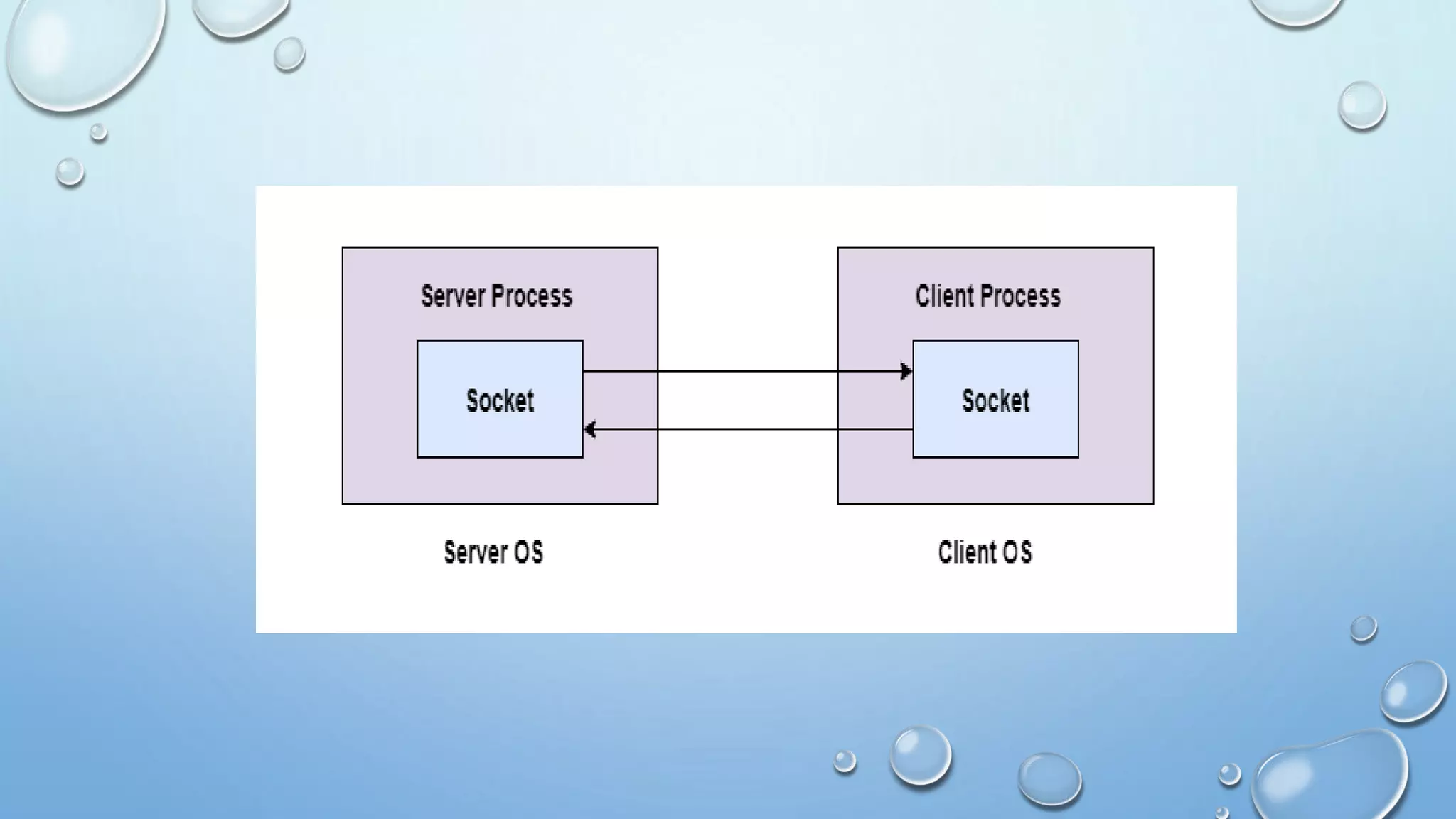
Sockets facilitate communication between two processes on the same machine or
different machines.
 used in a client/server framework and consist of the IP address and port number.
 Many application protocols use sockets for data connection and data transfer
between a client and a server.
 Socket communication is quite low-level as sockets only transfer an unstructured
byte stream across processes.
Remote Procedure Calls
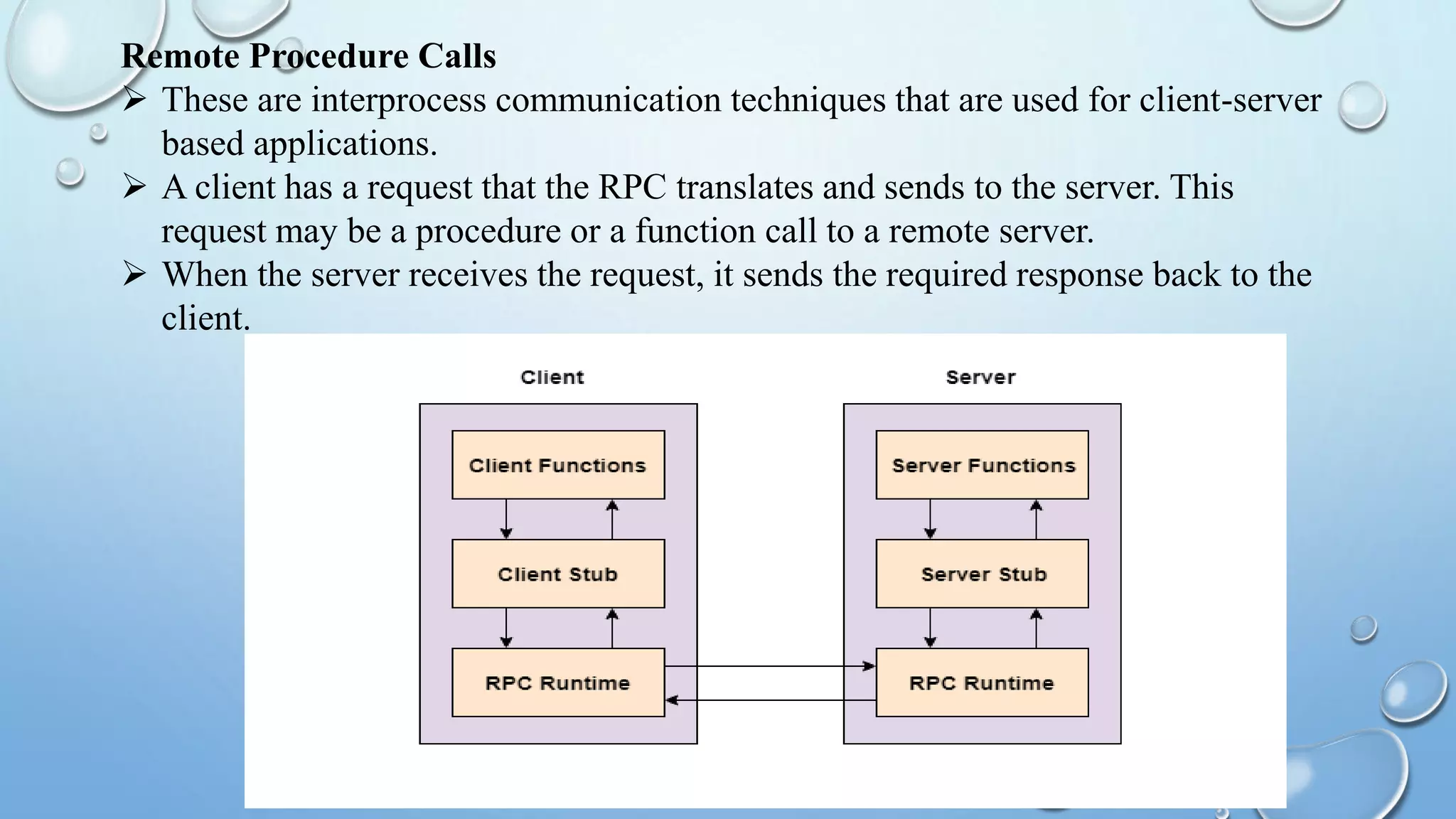
 These are interprocess communication techniques that are used for client-server
based applications.
 A client has a request that the RPC translates and sends to the server. This
request may be a procedure or a function call to a remote server.
 When the server receives the request, it sends the required response back to the
client.
Pipes
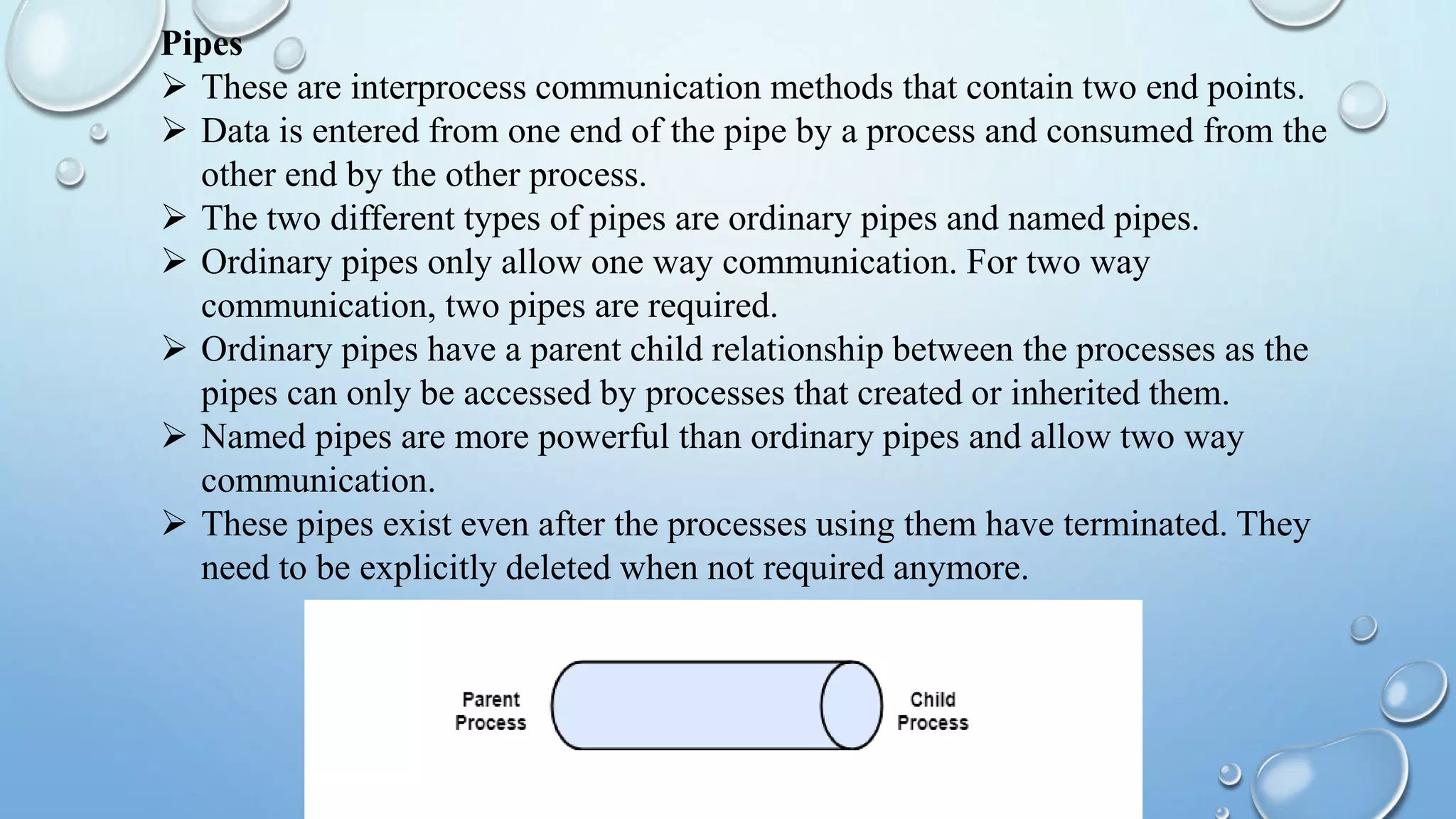
 These are interprocess communication methods that contain two end points.
 Data is entered from one end of the pipe by a process and consumed from the
other end by the other process.
 The two different types of pipes are ordinary pipes and named pipes.
 Ordinary pipes only allow one way communication. For two way
communication, two pipes are required.
 Ordinary pipes have a parent child relationship between the processes as the
pipes can only be accessed by processes that created or inherited them.
 Named pipes are more powerful than ordinary pipes and allow two way
communication.
 These pipes exist even after the processes using them have terminated. They
need to be explicitly deleted when not required anymore.

Communication in client server system.pptx

  • 1.
    COMMUNICATION IN CLIENT SERVERSYSTEM BY SIVANI. M
  • 2.
     Client/Server communicationinvolves two components, namely a client and a server.  They are usually multiple clients in communication with a single server.  The clients send requests to the server and the server responds to the client requests.  There are three main methods to client/server communication. Sockets Sockets facilitate communication between two processes on the same machine or different machines.  used in a client/server framework and consist of the IP address and port number.  Many application protocols use sockets for data connection and data transfer between a client and a server.  Socket communication is quite low-level as sockets only transfer an unstructured byte stream across processes.
  • 4.
    Remote Procedure Calls These are interprocess communication techniques that are used for client-server based applications.  A client has a request that the RPC translates and sends to the server. This request may be a procedure or a function call to a remote server.  When the server receives the request, it sends the required response back to the client.
  • 5.
    Pipes  These areinterprocess communication methods that contain two end points.  Data is entered from one end of the pipe by a process and consumed from the other end by the other process.  The two different types of pipes are ordinary pipes and named pipes.  Ordinary pipes only allow one way communication. For two way communication, two pipes are required.  Ordinary pipes have a parent child relationship between the processes as the pipes can only be accessed by processes that created or inherited them.  Named pipes are more powerful than ordinary pipes and allow two way communication.  These pipes exist even after the processes using them have terminated. They need to be explicitly deleted when not required anymore.