1.1 Computer Networks
Circuit Switching
Circuit Switching
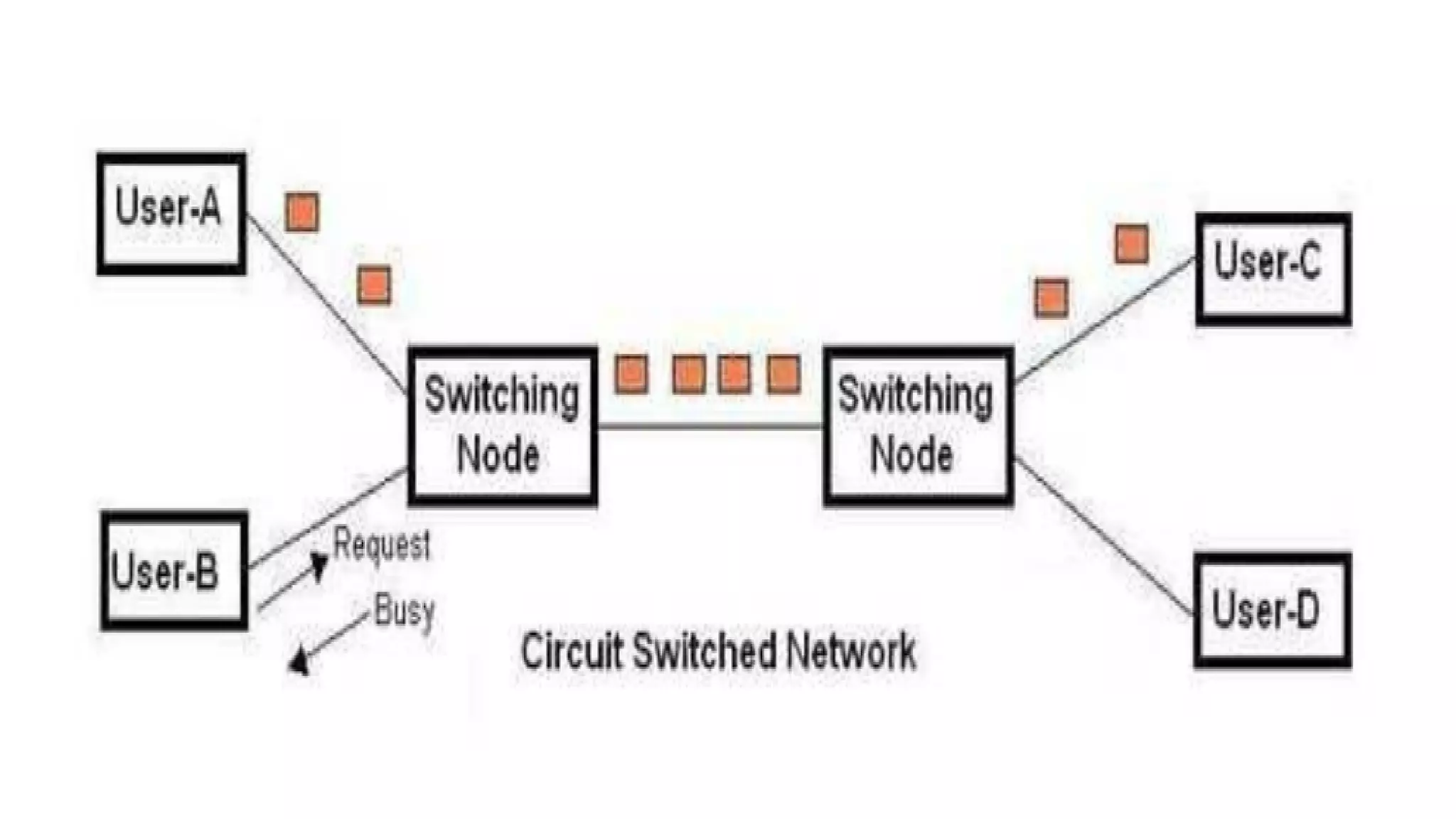
Establishes a dedicated physical path between the sender
and receiver of the message before a message is
delivered
The entire message travels through the established path
from sender to the receiver
Received Message is Acknowledged by Receiver
Same as Telephone Communication
Pros of Circuit Switching
a)Dedicated path/circuit provides guaranteed
data delivery
b)is suitable for long continuous transmission.
c)Uses Connection Oriented Services
Cons of Circuit Switching
a) Waste of bandwidth if its Idle.
b) Require more bandwidth.
c) Time Required to establish a link is too long
Packet Switching
Packet Switching
doesn’t establish any physical connection before the
transmission starts
Message is divided into Packets and routed
Independently
Uses Connection Less Services
Pros of Packet Switching
a) High Data Transmission
b) No time Lost for Establishing Link
c) Faster
d) Independent Travel
Cons of Packet Switching
a) Packets May Lost their Routes
b) Wrong Order of Packets
c) Large Amount of Resources needed to handle Packets
Circuit Switching
vs
Packet Switching
Circuit Switching Packet Switching
Connection Oriented Connection Less
Entire Message Have to follow same
route during transmission
Entire Message can be divided and
routed Independently
Implemented at Physical Layer Implemented at Network Layer
Waste of bandwidth if Idle No Waste of bandwidth if Idle
Initially designed for Voice
Transmission
Initially designed for Data
Transmission
Virtual Circuits Networks
Virtual Circuit Networks
Is a packet switching methodology but establishes
Link before communication
Entire Message must have to follow same Link to
destination
is connection orientated
Virtual circuit is cleared after the data transfer is
completed
Pros of Virtual Circuits Networks
a) Uses Connection Oriented Services
b) Can use Diferent Physical Links each time
Cons of Virtual Circuits Networks
a) Link Setup Time
b) Resilience to the loss of a trunk i.e. no
dynamic switching in case of link failure
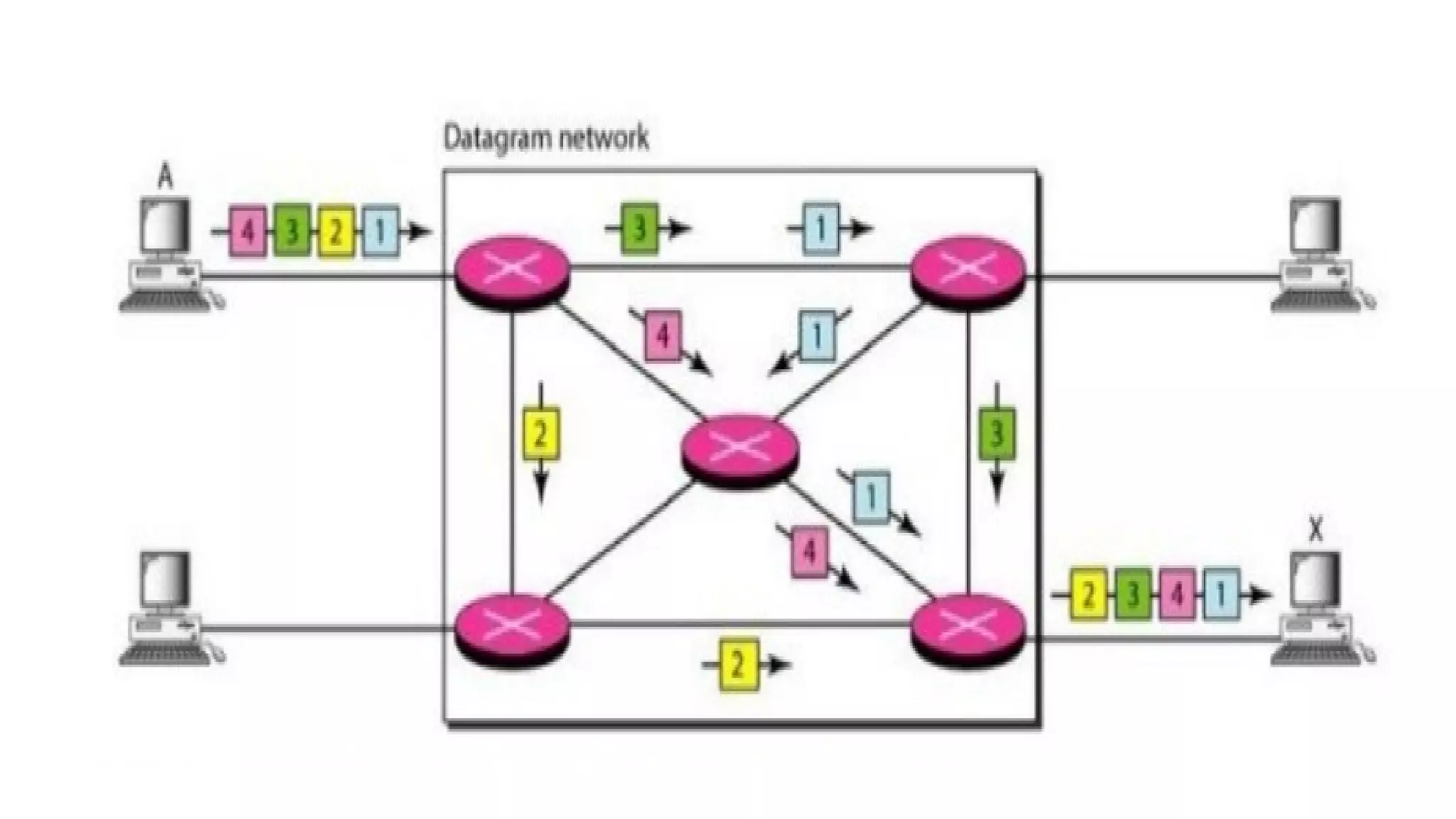
Datagram Networks
Datagram Networks
Is a packet switching methodology but no any
Dedicated Link
Message have to divided into Datagrams and
Each Packets are treated Independently
Connection Less
Pros of Datagram Networks
a) It is connectionless service
b) Every datagrams are treated Independently
c) Faster
Cons of Datagram Networks
a) Not Reliable
b)Packet May lost and no Service for
Retransmission
c) Need of High Resources
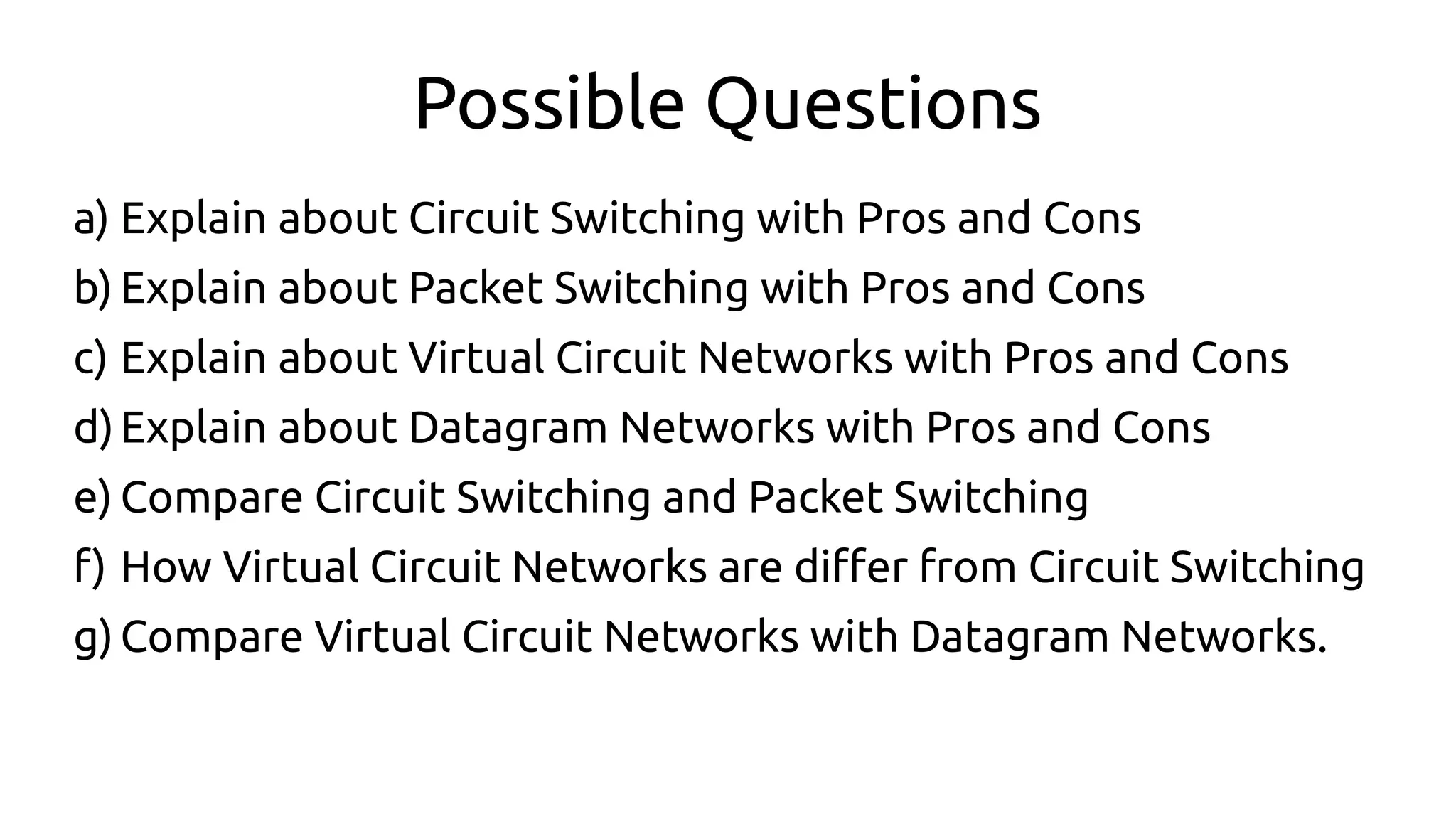
Possible Questions
a) Explain about Circuit Switching with Pros and Cons
b) Explain about Packet Switching with Pros and Cons
c) Explain about Virtual Circuit Networks with Pros and Cons
d)Explain about Datagram Networks with Pros and Cons
e) Compare Circuit Switching and Packet Switching
f) How Virtual Circuit Networks are difer from Circuit Switching
g) Compare Virtual Circuit Networks with Datagram Networks.
Next Lecture
Dial Up Modem
DSL
Hybrid Fiber Coaxial Cable
Wireless Networks
Thank You !!!!

Circuit Switching, Packet Switching, Virtual Circuit Networks and Datagram Networks

  • 1.
  • 2.
  • 3.
    Circuit Switching Establishes adedicated physical path between the sender and receiver of the message before a message is delivered The entire message travels through the established path from sender to the receiver Received Message is Acknowledged by Receiver Same as Telephone Communication
  • 5.
    Pros of CircuitSwitching a)Dedicated path/circuit provides guaranteed data delivery b)is suitable for long continuous transmission. c)Uses Connection Oriented Services
  • 6.
    Cons of CircuitSwitching a) Waste of bandwidth if its Idle. b) Require more bandwidth. c) Time Required to establish a link is too long
  • 7.
  • 8.
    Packet Switching doesn’t establishany physical connection before the transmission starts Message is divided into Packets and routed Independently Uses Connection Less Services
  • 10.
    Pros of PacketSwitching a) High Data Transmission b) No time Lost for Establishing Link c) Faster d) Independent Travel
  • 11.
    Cons of PacketSwitching a) Packets May Lost their Routes b) Wrong Order of Packets c) Large Amount of Resources needed to handle Packets
  • 12.
  • 13.
    Circuit Switching PacketSwitching Connection Oriented Connection Less Entire Message Have to follow same route during transmission Entire Message can be divided and routed Independently Implemented at Physical Layer Implemented at Network Layer Waste of bandwidth if Idle No Waste of bandwidth if Idle Initially designed for Voice Transmission Initially designed for Data Transmission
  • 14.
  • 15.
    Virtual Circuit Networks Isa packet switching methodology but establishes Link before communication Entire Message must have to follow same Link to destination is connection orientated Virtual circuit is cleared after the data transfer is completed
  • 16.
    Pros of VirtualCircuits Networks a) Uses Connection Oriented Services b) Can use Diferent Physical Links each time
  • 17.
    Cons of VirtualCircuits Networks a) Link Setup Time b) Resilience to the loss of a trunk i.e. no dynamic switching in case of link failure
  • 18.
  • 19.
    Datagram Networks Is apacket switching methodology but no any Dedicated Link Message have to divided into Datagrams and Each Packets are treated Independently Connection Less
  • 21.
    Pros of DatagramNetworks a) It is connectionless service b) Every datagrams are treated Independently c) Faster
  • 22.
    Cons of DatagramNetworks a) Not Reliable b)Packet May lost and no Service for Retransmission c) Need of High Resources
  • 23.
    Possible Questions a) Explainabout Circuit Switching with Pros and Cons b) Explain about Packet Switching with Pros and Cons c) Explain about Virtual Circuit Networks with Pros and Cons d)Explain about Datagram Networks with Pros and Cons e) Compare Circuit Switching and Packet Switching f) How Virtual Circuit Networks are difer from Circuit Switching g) Compare Virtual Circuit Networks with Datagram Networks.
  • 24.
    Next Lecture Dial UpModem DSL Hybrid Fiber Coaxial Cable Wireless Networks
  • 25.