





Conversation
     and
 One-on-One
Communication
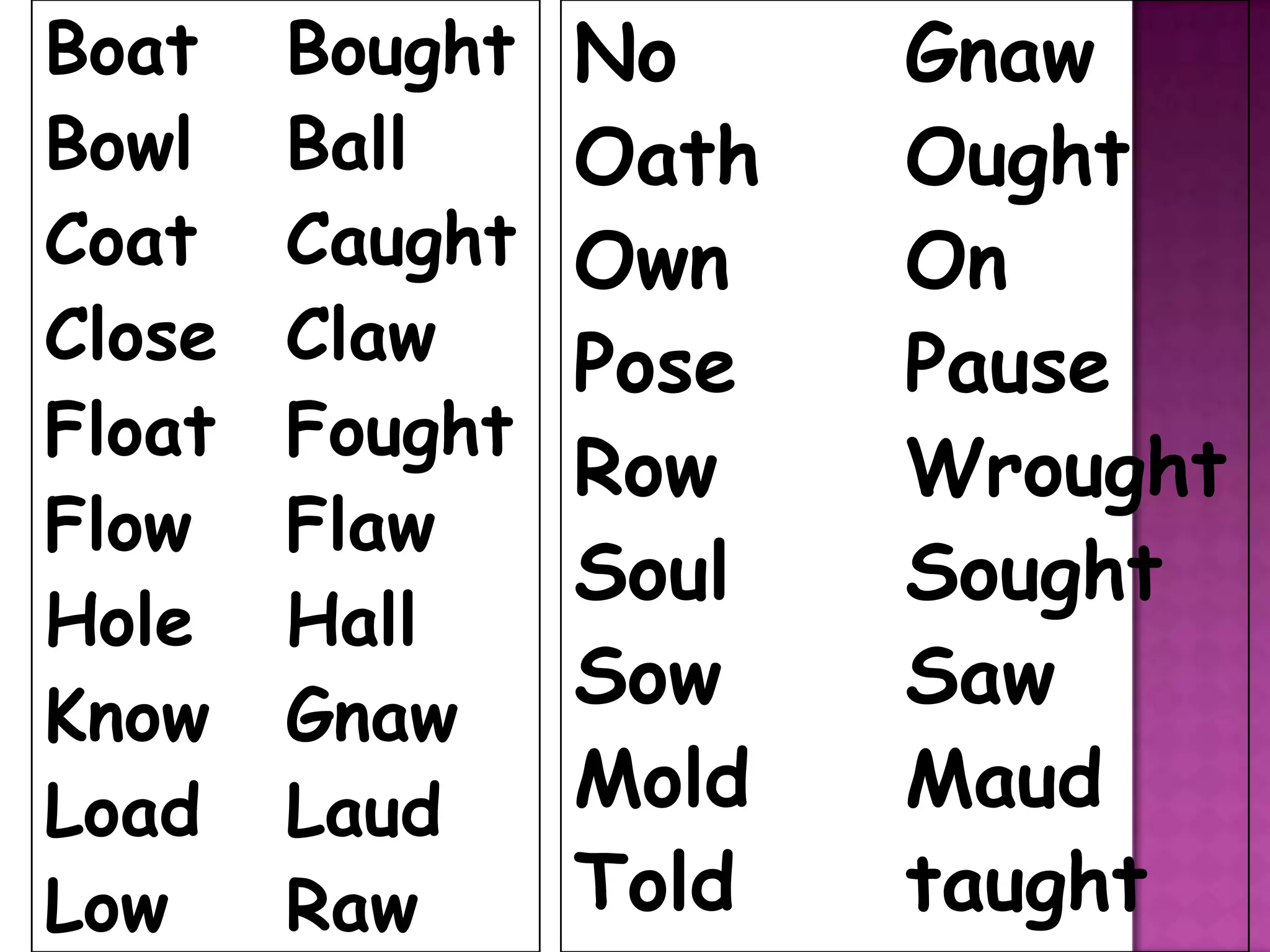
Boat    Bought   No     Gnaw
Bowl    Ball     Oath   Ought
Coat    Caught   Own    On
Close   Claw     Pose   Pause
Float   Fought
                 Row    Wrought
Flow    Flaw
                 Soul   Sought
Hole    Hall
Know    Gnaw
                 Sow    Saw
Load    Laud     Mold   Maud
Low     Raw      Told   taught
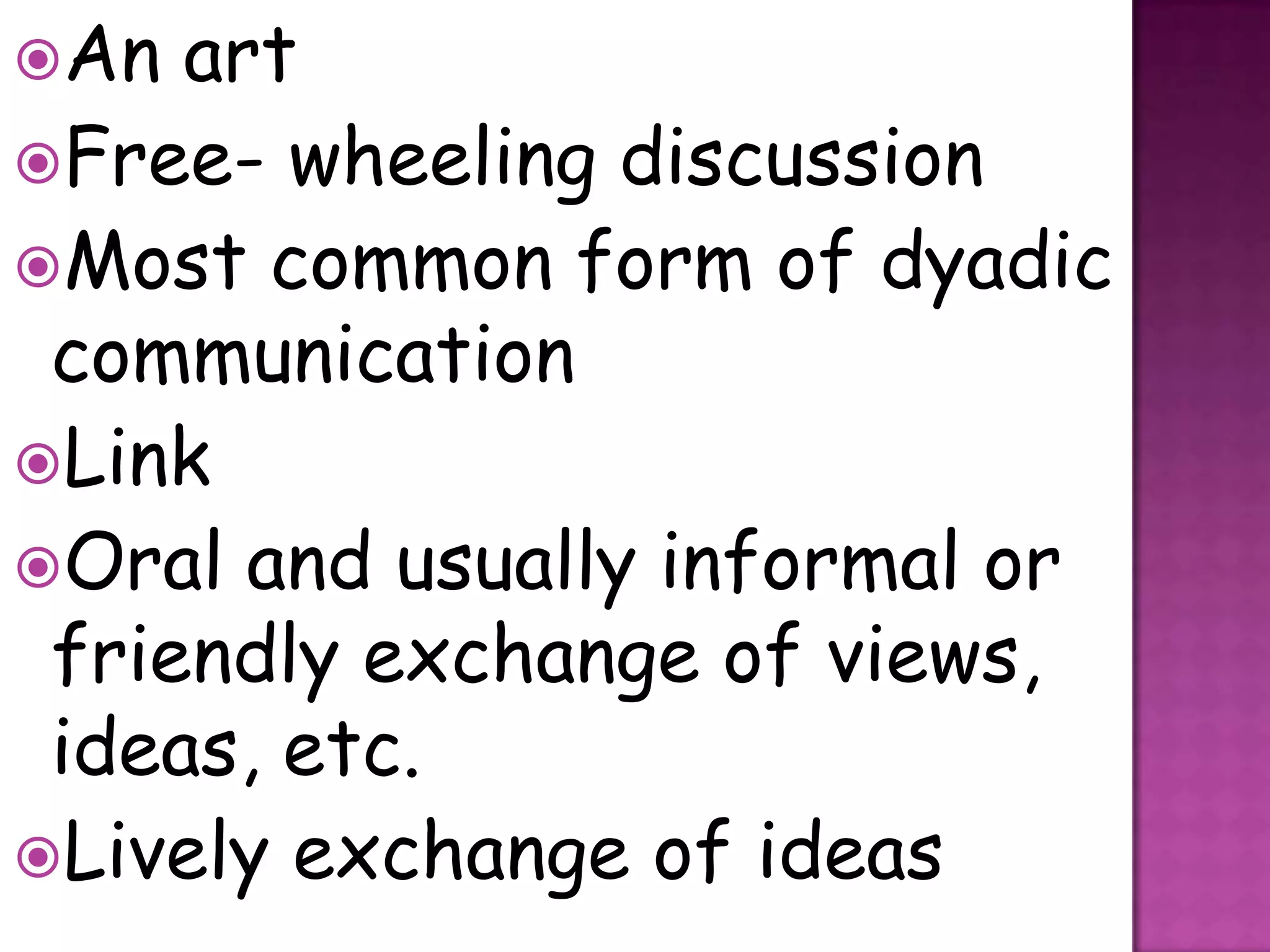
An  art
Free- wheeling discussion
Most common form of dyadic
 communication
Link
Oral and usually informal or
 friendly exchange of views,
 ideas, etc.
Lively exchange of ideas
To  transfer a
 message as smoothly
 as possible.
To talk with and not
 to lecture.
1. Be yourself
2. Less is more
3. Be patient
4. Be attentive
5. Mind your own
   business
Do not pretend
someone you
are not.
Being a good
listener is better
than being a
good talker.
Wait  for your turn.
Do not interrupt
 people while they
 are explaining
 themselves.
Pay close
attention to what
the other person
is saying to avoid
miscommunication.
Converse to gain
information, not
to exchange
comments about
other people.
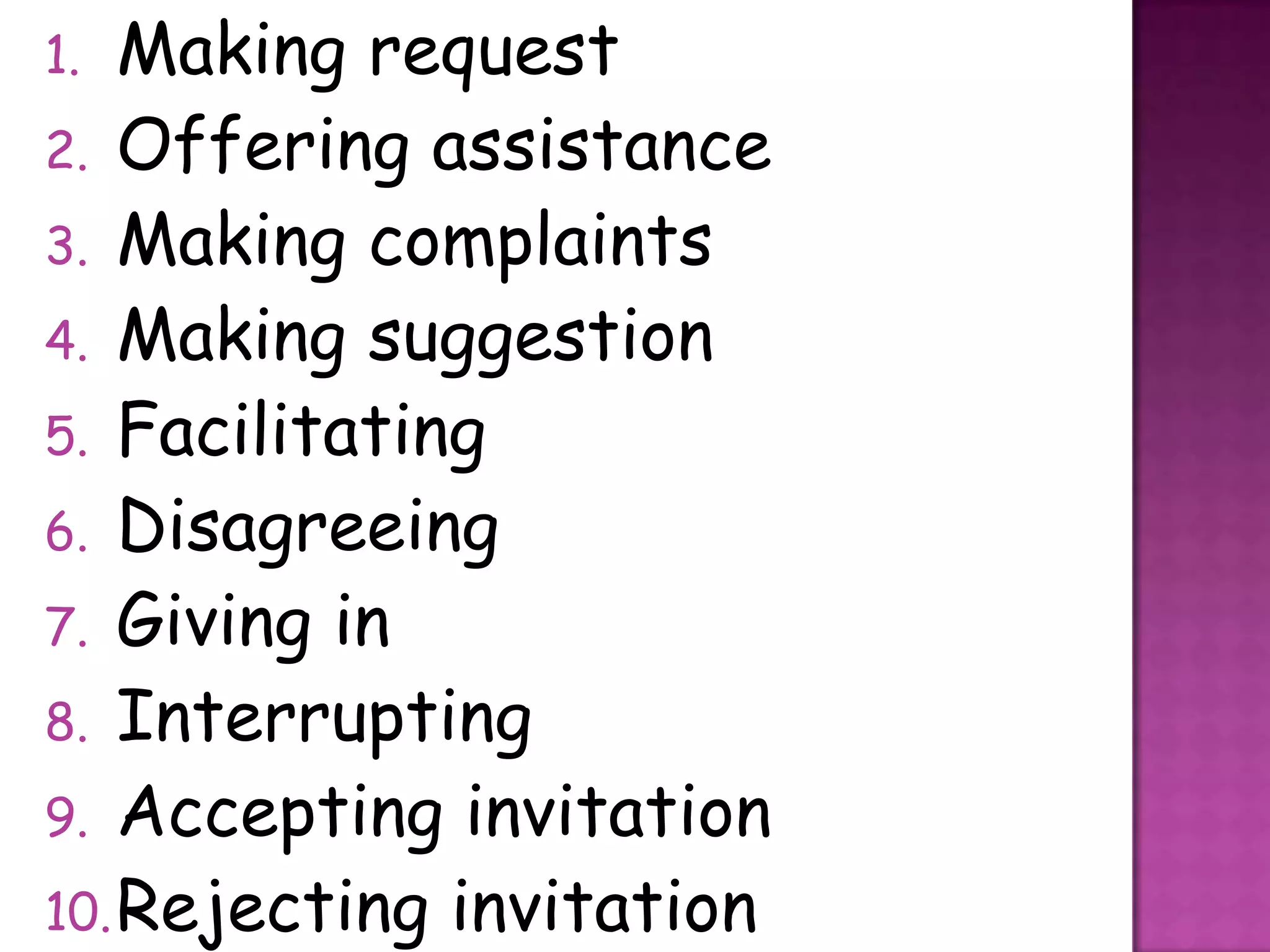
1.  Making request
2. Offering assistance
3. Making complaints
4. Making suggestion
5. Facilitating
6. Disagreeing
7. Giving in
8. Interrupting
9. Accepting invitation
10. Rejecting invitation
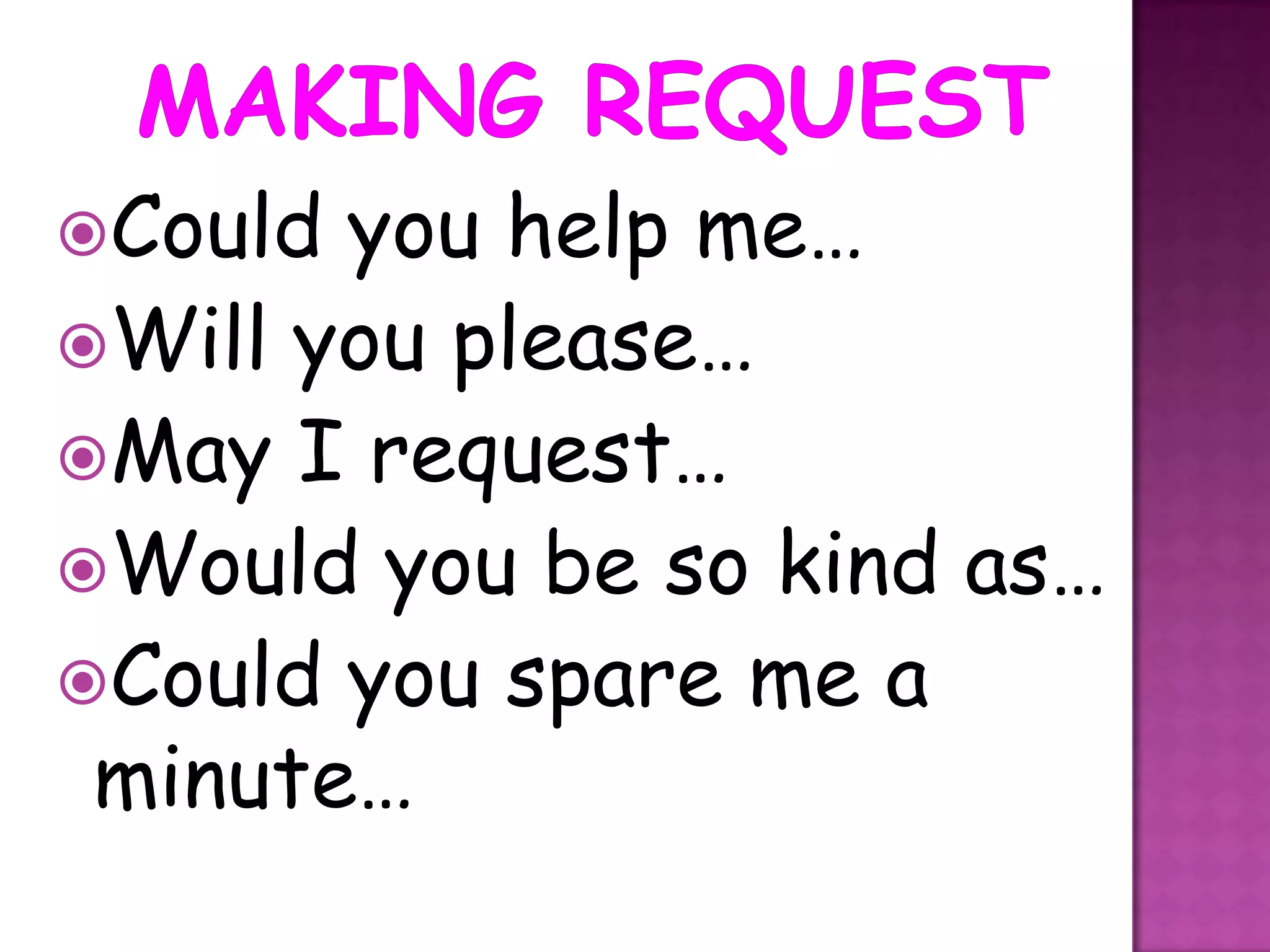
Could you help me…
Will you please…
May I request…
Would you be so kind as…
Could you spare me a
 minute…
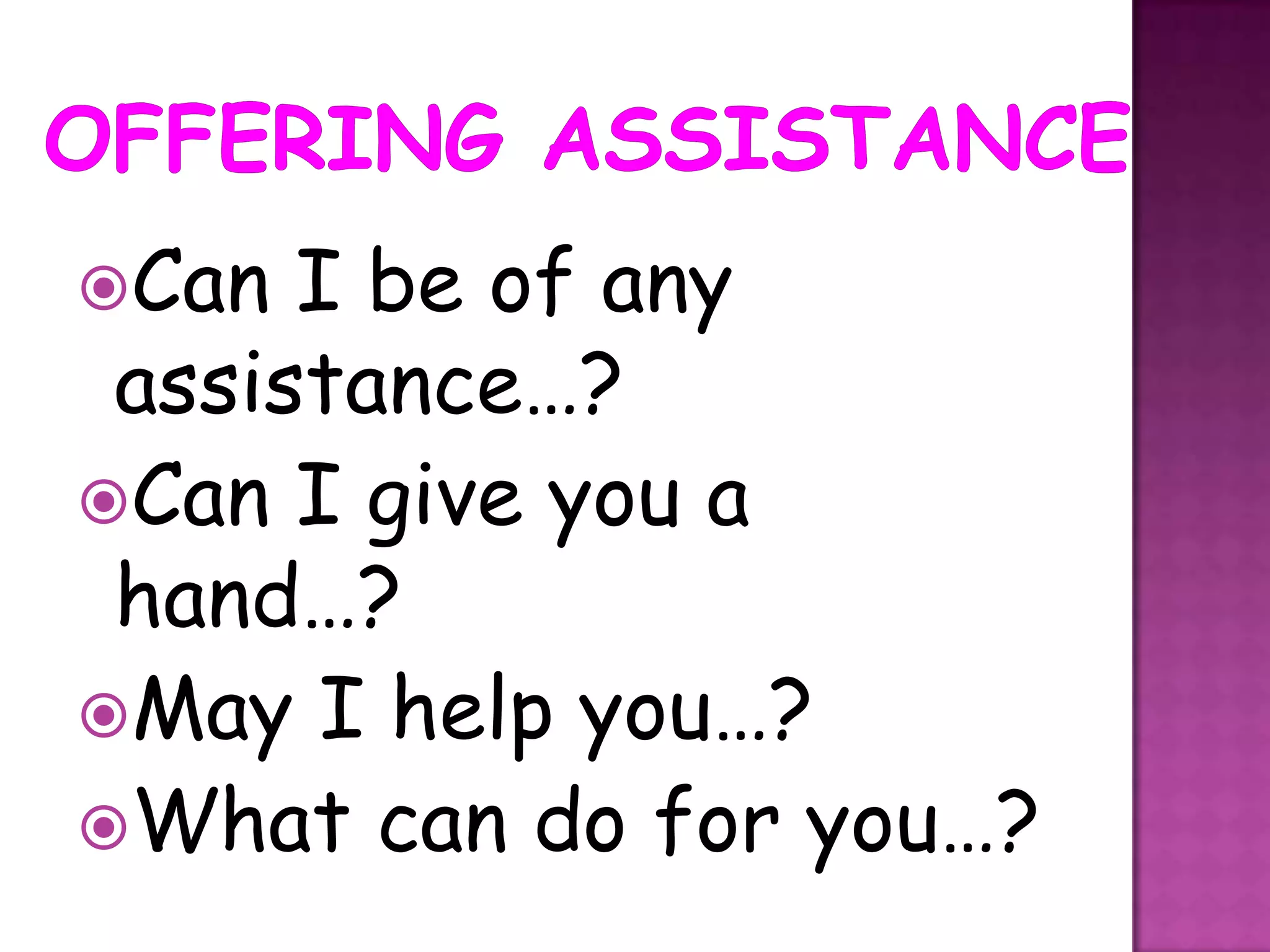
Can  I be of any
 assistance…?
Can I give you a
 hand…?
May I help you…?
What can do for you…?
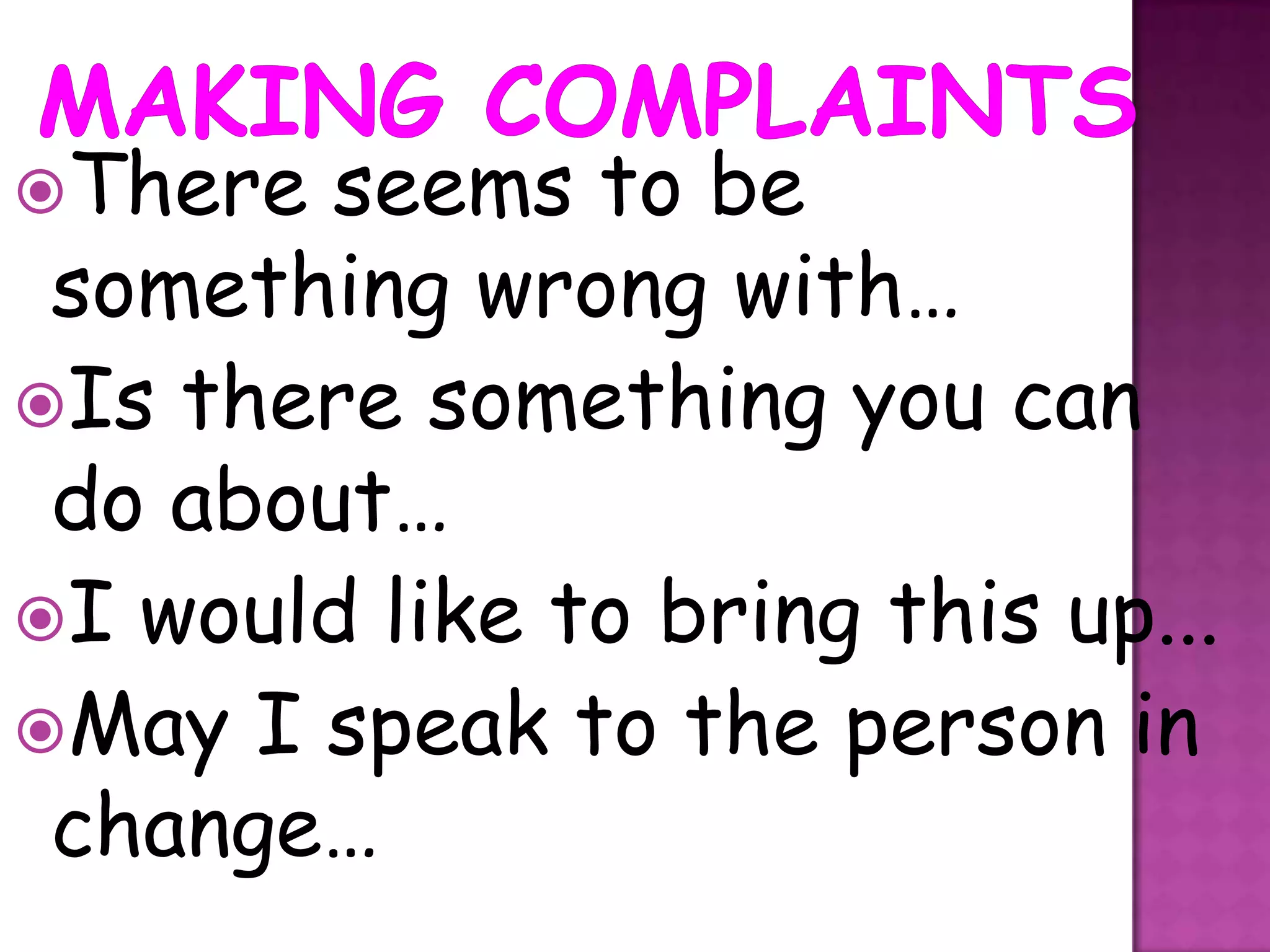
There  seems to be
 something wrong with…
Is there something you can
 do about…
I would like to bring this up...
May I speak to the person in
 change…
Pleasehear me out…
Maybe you can…
How about…
Perhaps you ought to…
Would you consider…
How  interesting!
I couldn’t agree with you more!
I’ve been thinking of the same
 thing!
Is that right?
I heard about that.
That’s true!
I see your point, but…
You may be right, but…
You have every right to feel
 that way, but…
Yes, that’s quite true…
In that case…
If there’s no other way…
Since, I have no choice…
Well, if that’s so…
On second thought…
When you put it that way…
Pardon me for interrupting…
Excuse me for breaking out…
Excuse, but I can’t help but…
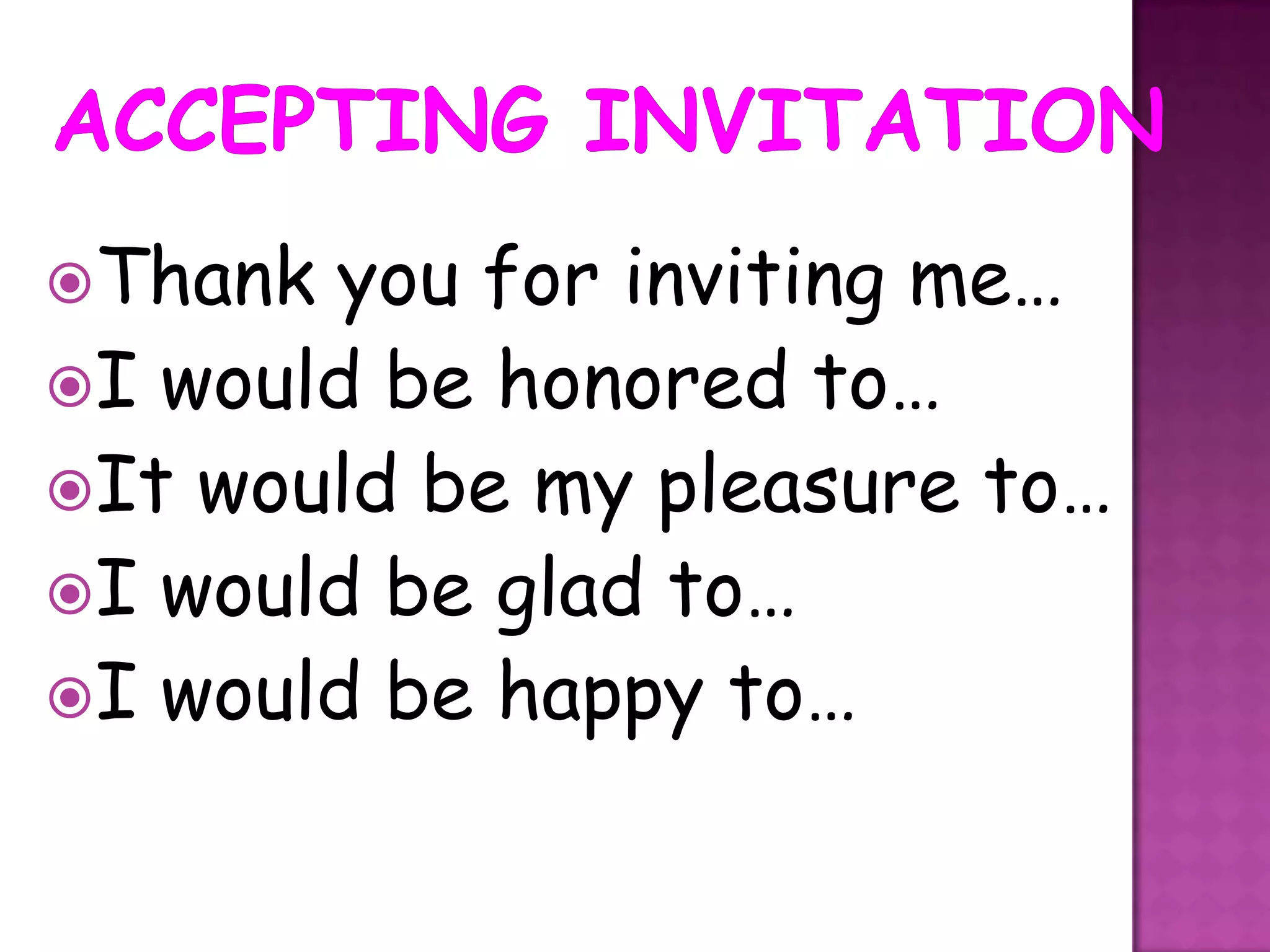
Thank you for inviting me…
I would be honored to…
It would be my pleasure to…
I would be glad to…
I would be happy to…
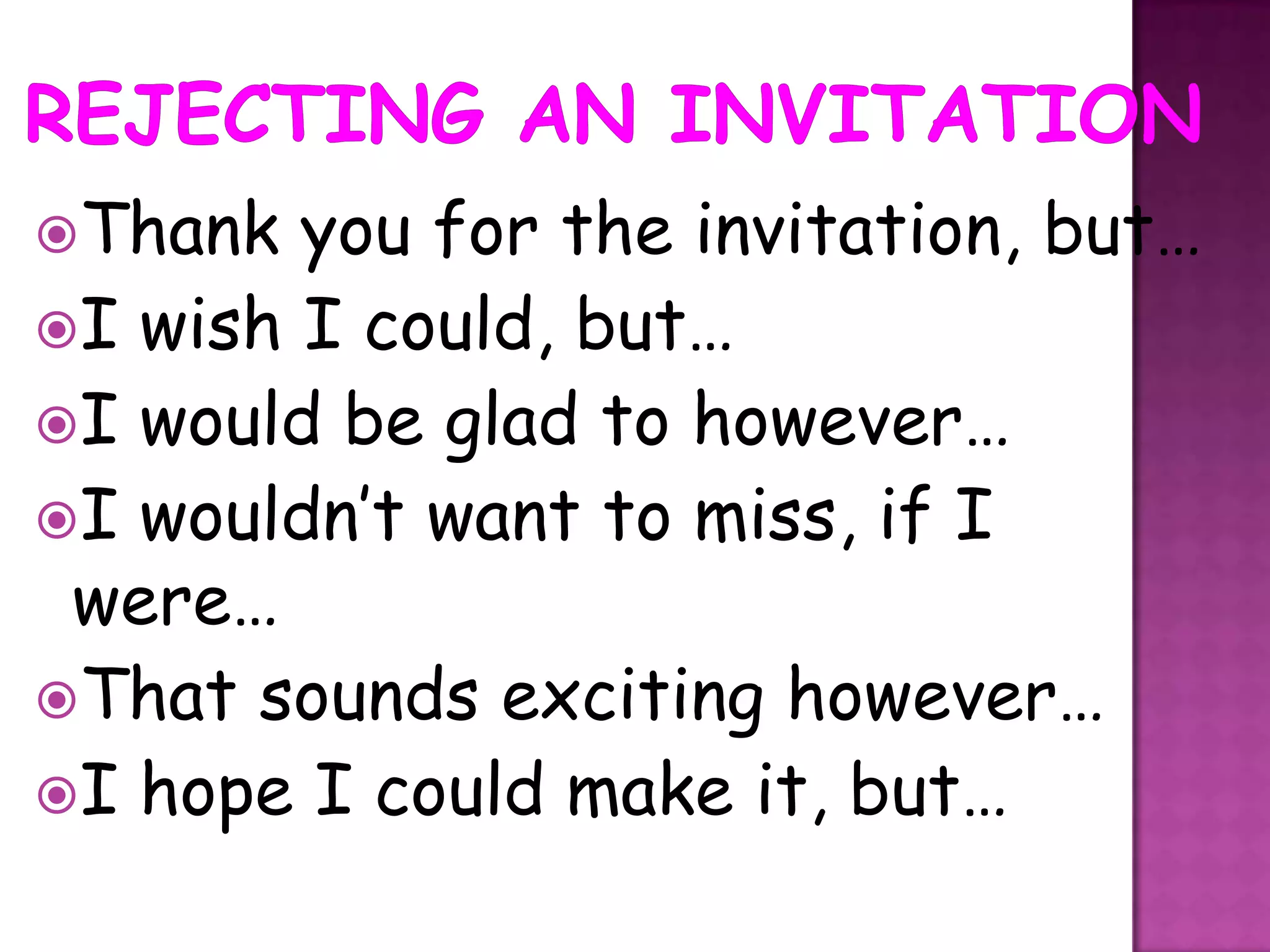
Thank  you for the invitation, but…
I wish I could, but…
I would be glad to however…
I wouldn’t want to miss, if I
 were…
That sounds exciting however…
I hope I could make it, but…
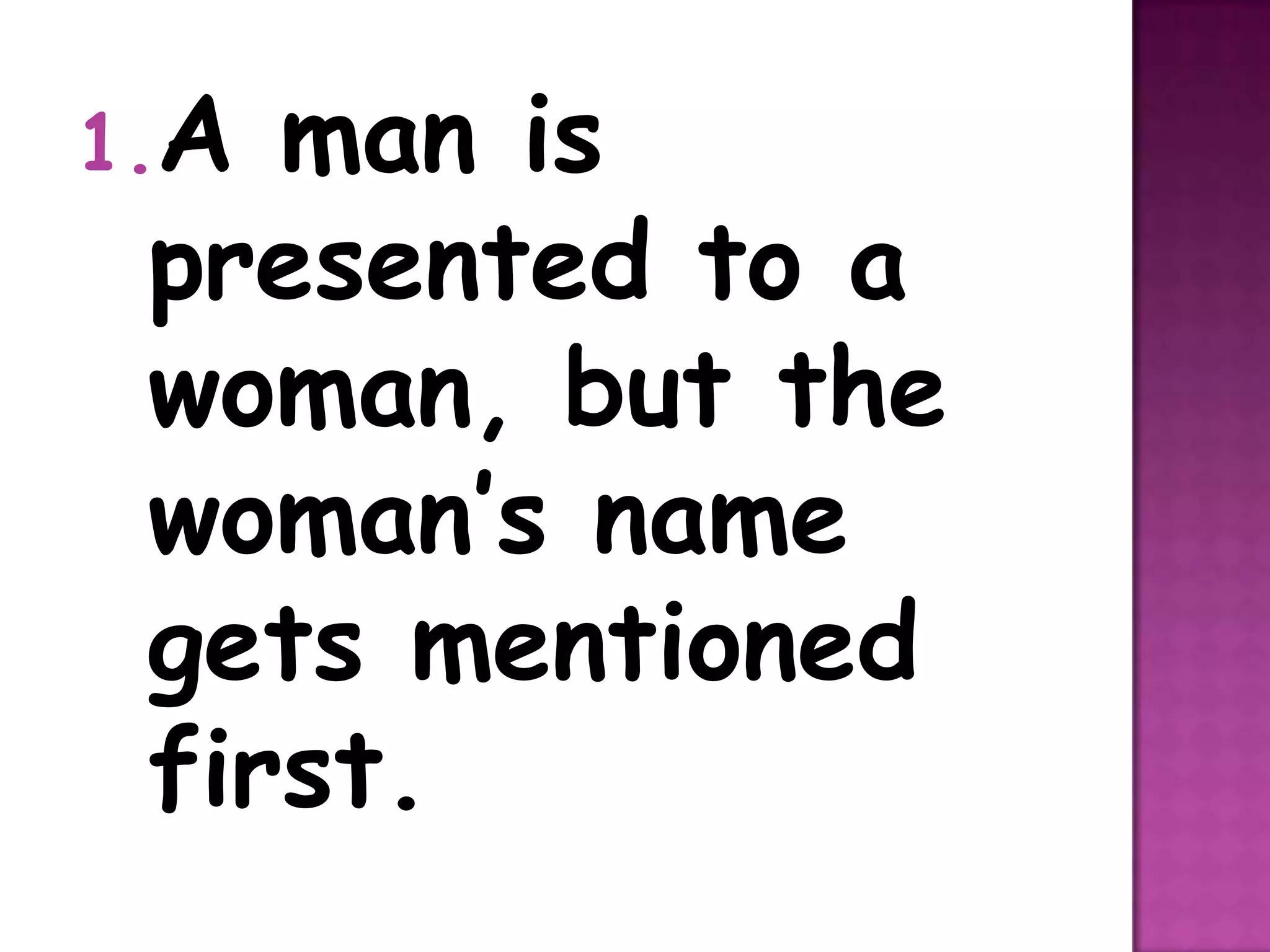
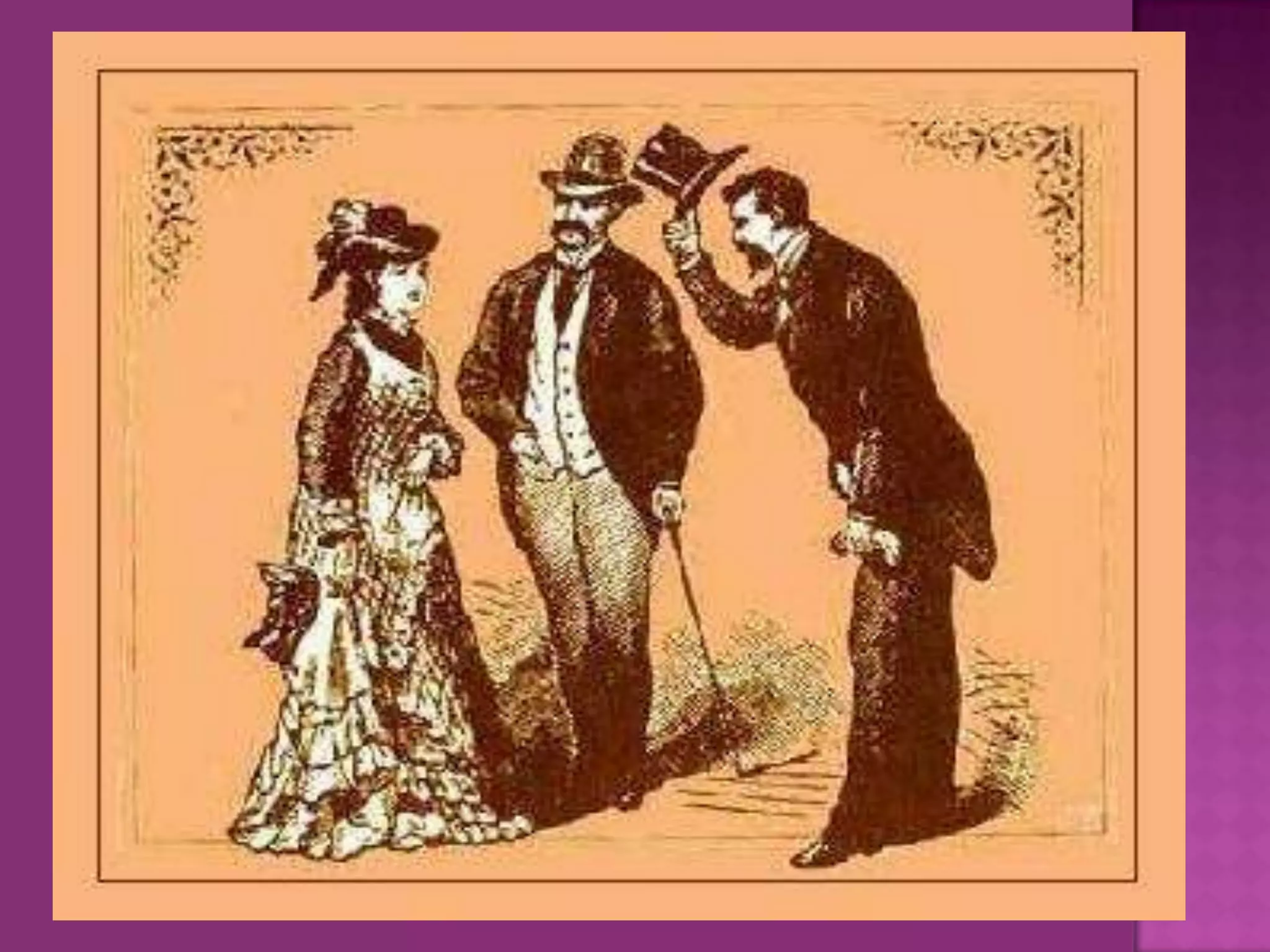
1.A man is
 presented to a
 woman, but the
 woman’s name
 gets mentioned
 first.
Example:
 Mr. Lim: Ms. Sanchez, I
 would like you to meet my
 friend, Mr. Santos.
 Ms. Sanchez: How do you
 do?
 Mr. Santos: It’s a
 pleasure to meet you.
2. A young man is presented
  to an older man, same way
  as a young woman is
  presented first to an older
  woman. But if both parties
  are of the same age, it
  matters not who gets
  introduced first.
Example:
 Ms.Ditas: Mr. Reyes, I
 would like you to meet my
 friend, Ms. Sheila.
 Mr. Reyes: Ms. Sheila,
 nice to meet you.
 Ms. Sheila: It’s also nice
 to meet you, sir.
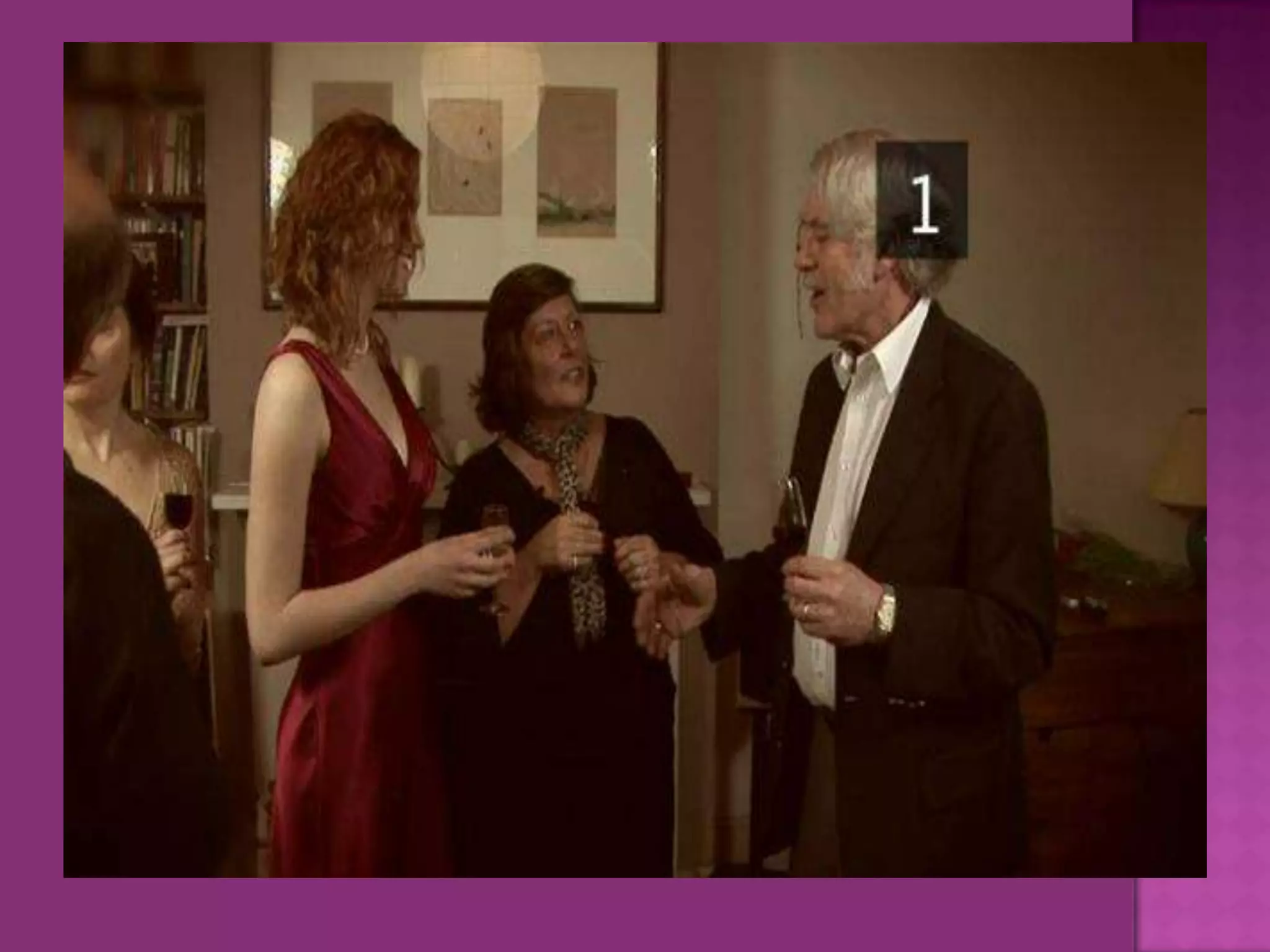
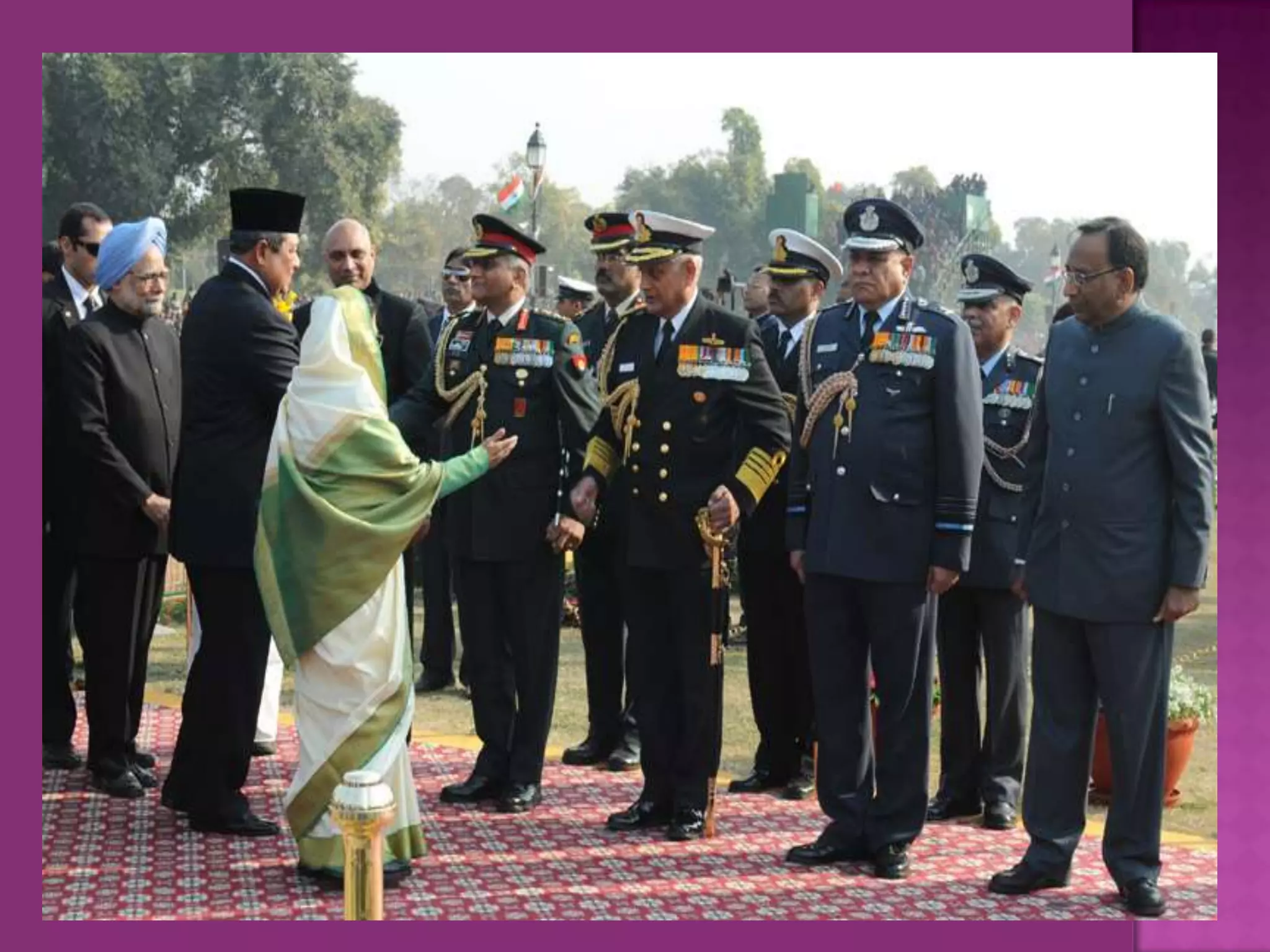
3. Introduce a less
 important individual
 to a widely
 popular/distinguish
 ed individual.
Example:
 Carolyn: President Flavier,
 I would like to present to
 you, General Santos.
 General Santos: It’s great
 to meet you Mr. President.
 President: The pleasure is
 mine.
A  good telephone manners
 should be acquired by everyone.
Talking on phone should not be
 a mere substitute for actual for
 actual interaction, it should be
 responsible for the furtherance
 of relationship.
Is considered to be the most
 critical of every expedition
 that brings you face-to-face
 with future boss.
One must prepare for it with
 the same tenacity and
 quickness as one does for a
 speech contest or debate.
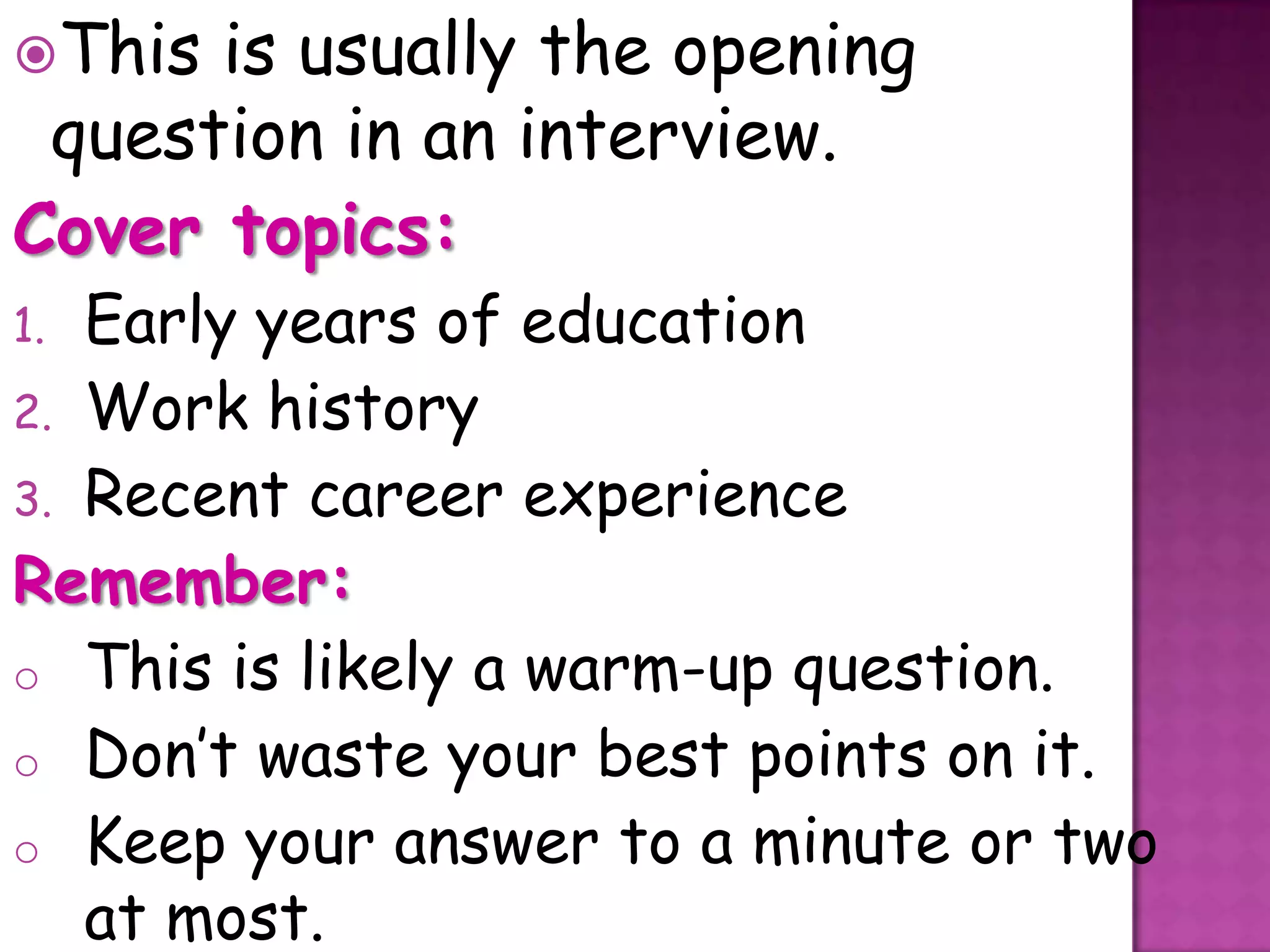
This is usually the opening
 question in an interview.
Cover topics:
1. Early years of education
2. Work history
3. Recent career experience
Remember:
o This is likely a warm-up question.
o Don’t waste your best points on it.
o Keep your answer to a minute or two
   at most.
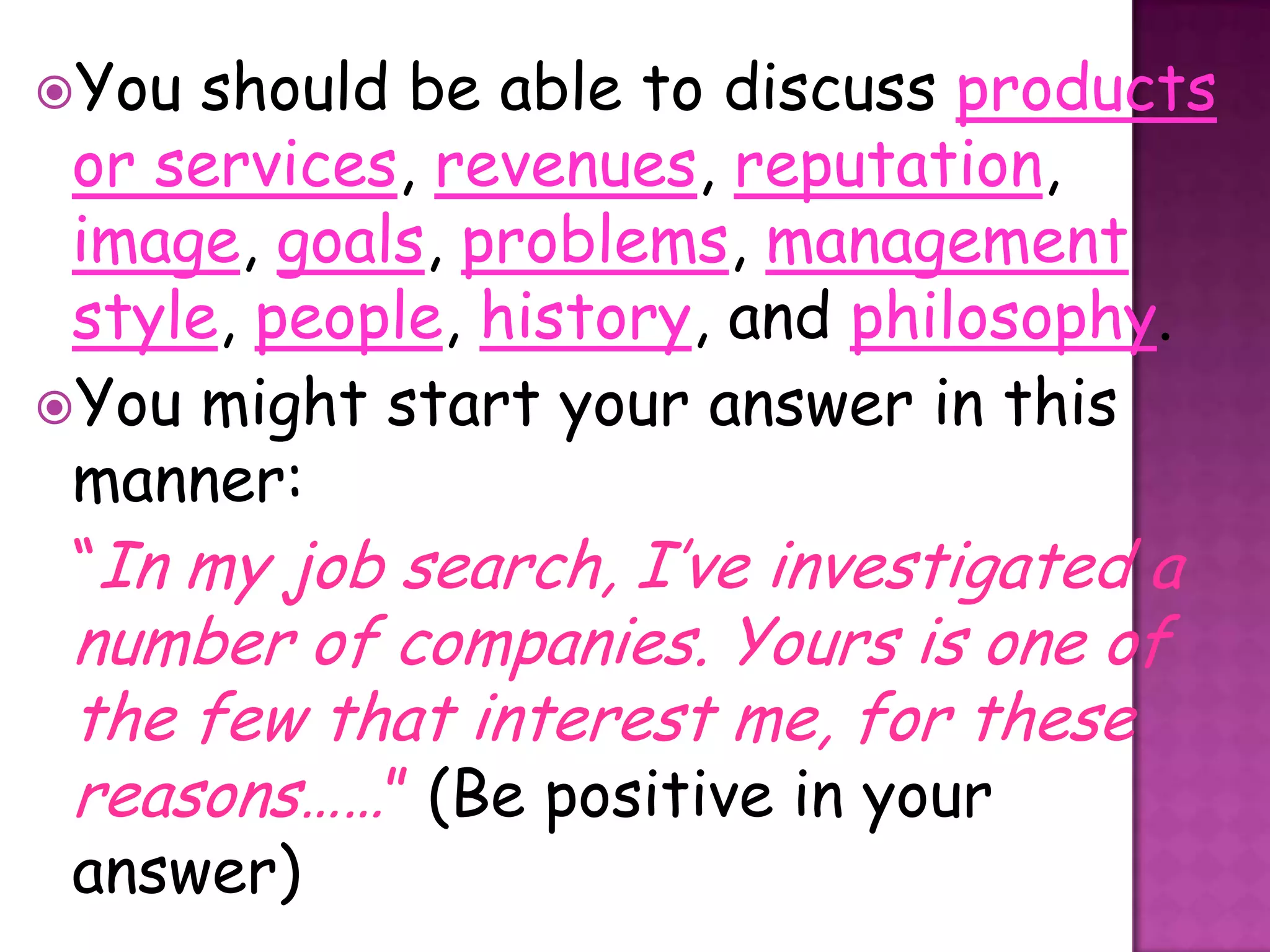
You  should be able to discuss products
 or services, revenues, reputation,
 image, goals, problems, management
 style, people, history, and philosophy.
You might start your answer in this
 manner:
 “In my job search, I’ve investigated a
 number of companies. Yours is one of
 the few that interest me, for these
 reasons……” (Be positive in your
 answer)
Speak     in terms of the company
 needs.
Example:
  if the organization is known for strong
   management, your answer should mention that
   fact and show that you would like to be a part of
   the team.
  if the company places a great deal of emphasis on
   research and development, emphasize the face
   that you want to create new things and that you
   know this.
Learn enough about the company, so
 you don’t tell a lie just to get the
 job that you don’t really want.
Create  your answer by thinking in
 terms of your ability, your
 experience, and your energy.
Talk about your record of getting
 things done, and mention specific
 item from your resumé at least of
 career accomplishments.
Mention your ability to set
 priorities, identify problems, and
 use your experience and energy to
 solve them.
Keep  your answer oriented to
 opportunities at this
 organization.
Talk about your desire to
 perform and be recognized
 for your contributions.
Make your answer oriented
 toward opportunity than self
 security.
Keep  your answer brief and task-
 oriented.
Think in terms of responsibilities and
 accountability.
Make sure that you really do
 understand what the position involves
 before you attempt to answer.
If you are not certain, ask the
 interviewer, he/she may answer the
 question for you.
Be  realistic.
Say that, while you would expect
 to meet pressing demands and
 pull your own weight from the
 first day, it might take six
 months to a year before you
 could expect to know the
 organization and its needs well
 enough to make a major
 contribution.
Say  that your interested
in a career with the
organization, but admit
that you would have to
continue to feel
challenged to remain with
any organization.
Be  prepared with two
or three trends that
illustrate how well you
understand your
industry.
Salary is a delicate topic.
As much as possible be polite.
You might say, “ I understand that the
 range for this job is between
 P_____and _____. That seems
 appropriate for the job as I understand
 it.
You might answer a question with a
 question:
 “Perhaps you can help this one. Can you
 tell me if there is a range for similar
 jobs in the organization?”
Research   on the
company you are
visiting for an
interview.
Prepare  your attire
 the night before.
Make sure have a
 clean and neat
 appearance.
Bringall the necessary
documents such as
transcript of records,
SSS, TIN, NBI
clearance, 2x2 or 1x1
picture, etc.
You want to make the right
 impression and arriving early
 suggest a responsible attitude.
Being late for an interview will
 make you more anxious and will
 make the interviewer doubt for
 your enthusiasm for the job.
Anticipate questions the
 interviewer may ask.
Rehearse with a friend
 and ask for comments on
 your performance.
Just  like delivering a speech
 before a large audience, consider
 the interviewer a friend, not an
 enemy.
Sit straight, don’t slouch and make
 sure you were asked to ne seated
 before sitting down.
A firm handshake helps in
 indicating confidence.
It helps in making
the interviewer
aware of your
sincerity and
candidness.
Make  sure you
understand the
interviewer’s question
before answering
them.
Don’t beat around the bush.
Make sure your responses are
 short, honest, and concise.
Remember:
 you are also interviewing the
 interviewer to make sure you
 get accepted in a job you will
 feel good about.
Communication and one-on-one conversation

Communication and one-on-one conversation

  • 1.
    Conversation and One-on-One Communication
  • 3.
    Boat Bought No Gnaw Bowl Ball Oath Ought Coat Caught Own On Close Claw Pose Pause Float Fought Row Wrought Flow Flaw Soul Sought Hole Hall Know Gnaw Sow Saw Load Laud Mold Maud Low Raw Told taught
  • 5.
    An art Free-wheeling discussion Most common form of dyadic communication Link Oral and usually informal or friendly exchange of views, ideas, etc. Lively exchange of ideas
  • 6.
    To transfera message as smoothly as possible. To talk with and not to lecture.
  • 8.
    1. Be yourself 2.Less is more 3. Be patient 4. Be attentive 5. Mind your own business
  • 9.
  • 10.
    Being a good listeneris better than being a good talker.
  • 11.
    Wait foryour turn. Do not interrupt people while they are explaining themselves.
  • 12.
    Pay close attention towhat the other person is saying to avoid miscommunication.
  • 13.
    Converse to gain information,not to exchange comments about other people.
  • 15.
    1. Makingrequest 2. Offering assistance 3. Making complaints 4. Making suggestion 5. Facilitating 6. Disagreeing 7. Giving in 8. Interrupting 9. Accepting invitation 10. Rejecting invitation
  • 16.
    Could you helpme… Will you please… May I request… Would you be so kind as… Could you spare me a minute…
  • 17.
    Can Ibe of any assistance…? Can I give you a hand…? May I help you…? What can do for you…?
  • 18.
    There seemsto be something wrong with… Is there something you can do about… I would like to bring this up... May I speak to the person in change…
  • 19.
    Pleasehear me out… Maybeyou can… How about… Perhaps you ought to… Would you consider…
  • 20.
    How interesting! Icouldn’t agree with you more! I’ve been thinking of the same thing! Is that right? I heard about that. That’s true!
  • 21.
    I see yourpoint, but… You may be right, but… You have every right to feel that way, but… Yes, that’s quite true…
  • 22.
    In that case… Ifthere’s no other way… Since, I have no choice… Well, if that’s so… On second thought… When you put it that way…
  • 23.
    Pardon me forinterrupting… Excuse me for breaking out… Excuse, but I can’t help but…
  • 24.
    Thank you forinviting me… I would be honored to… It would be my pleasure to… I would be glad to… I would be happy to…
  • 25.
    Thank youfor the invitation, but… I wish I could, but… I would be glad to however… I wouldn’t want to miss, if I were… That sounds exciting however… I hope I could make it, but…
  • 27.
    1.A man is presented to a woman, but the woman’s name gets mentioned first.
  • 29.
    Example: Mr. Lim:Ms. Sanchez, I would like you to meet my friend, Mr. Santos. Ms. Sanchez: How do you do? Mr. Santos: It’s a pleasure to meet you.
  • 30.
    2. A youngman is presented to an older man, same way as a young woman is presented first to an older woman. But if both parties are of the same age, it matters not who gets introduced first.
  • 32.
    Example: Ms.Ditas: Mr.Reyes, I would like you to meet my friend, Ms. Sheila. Mr. Reyes: Ms. Sheila, nice to meet you. Ms. Sheila: It’s also nice to meet you, sir.
  • 33.
    3. Introduce aless important individual to a widely popular/distinguish ed individual.
  • 35.
    Example: Carolyn: PresidentFlavier, I would like to present to you, General Santos. General Santos: It’s great to meet you Mr. President. President: The pleasure is mine.
  • 37.
    A goodtelephone manners should be acquired by everyone. Talking on phone should not be a mere substitute for actual for actual interaction, it should be responsible for the furtherance of relationship.
  • 39.
    Is considered tobe the most critical of every expedition that brings you face-to-face with future boss. One must prepare for it with the same tenacity and quickness as one does for a speech contest or debate.
  • 42.
    This is usuallythe opening question in an interview. Cover topics: 1. Early years of education 2. Work history 3. Recent career experience Remember: o This is likely a warm-up question. o Don’t waste your best points on it. o Keep your answer to a minute or two at most.
  • 44.
    You shouldbe able to discuss products or services, revenues, reputation, image, goals, problems, management style, people, history, and philosophy. You might start your answer in this manner: “In my job search, I’ve investigated a number of companies. Yours is one of the few that interest me, for these reasons……” (Be positive in your answer)
  • 46.
    Speak in terms of the company needs. Example:  if the organization is known for strong management, your answer should mention that fact and show that you would like to be a part of the team.  if the company places a great deal of emphasis on research and development, emphasize the face that you want to create new things and that you know this. Learn enough about the company, so you don’t tell a lie just to get the job that you don’t really want.
  • 48.
    Create youranswer by thinking in terms of your ability, your experience, and your energy. Talk about your record of getting things done, and mention specific item from your resumé at least of career accomplishments. Mention your ability to set priorities, identify problems, and use your experience and energy to solve them.
  • 50.
    Keep youranswer oriented to opportunities at this organization. Talk about your desire to perform and be recognized for your contributions. Make your answer oriented toward opportunity than self security.
  • 52.
    Keep youranswer brief and task- oriented. Think in terms of responsibilities and accountability. Make sure that you really do understand what the position involves before you attempt to answer. If you are not certain, ask the interviewer, he/she may answer the question for you.
  • 54.
    Be realistic. Saythat, while you would expect to meet pressing demands and pull your own weight from the first day, it might take six months to a year before you could expect to know the organization and its needs well enough to make a major contribution.
  • 56.
    Say thatyour interested in a career with the organization, but admit that you would have to continue to feel challenged to remain with any organization.
  • 58.
    Be preparedwith two or three trends that illustrate how well you understand your industry.
  • 60.
    Salary is adelicate topic. As much as possible be polite. You might say, “ I understand that the range for this job is between P_____and _____. That seems appropriate for the job as I understand it. You might answer a question with a question: “Perhaps you can help this one. Can you tell me if there is a range for similar jobs in the organization?”
  • 62.
    Research on the company you are visiting for an interview.
  • 63.
    Prepare yourattire the night before. Make sure have a clean and neat appearance.
  • 64.
    Bringall the necessary documentssuch as transcript of records, SSS, TIN, NBI clearance, 2x2 or 1x1 picture, etc.
  • 65.
    You want tomake the right impression and arriving early suggest a responsible attitude. Being late for an interview will make you more anxious and will make the interviewer doubt for your enthusiasm for the job.
  • 66.
    Anticipate questions the interviewer may ask. Rehearse with a friend and ask for comments on your performance.
  • 68.
    Just likedelivering a speech before a large audience, consider the interviewer a friend, not an enemy. Sit straight, don’t slouch and make sure you were asked to ne seated before sitting down. A firm handshake helps in indicating confidence.
  • 69.
    It helps inmaking the interviewer aware of your sincerity and candidness.
  • 70.
    Make sureyou understand the interviewer’s question before answering them.
  • 71.
    Don’t beat aroundthe bush. Make sure your responses are short, honest, and concise. Remember: you are also interviewing the interviewer to make sure you get accepted in a job you will feel good about.