DEVELOPING EFFECTIVE
COMMUNICATION SKILLS
A module on :
 Basics of Communication
 Telephone Etiquettes
 Listening
 Questioning
Basics ofBasics of
CommunicationCommunication
Communication is simply a two way process of exchangingCommunication is simply a two way process of exchanging
ideas, information or transmitting verbal and non-verbalideas, information or transmitting verbal and non-verbal
messages.messages.
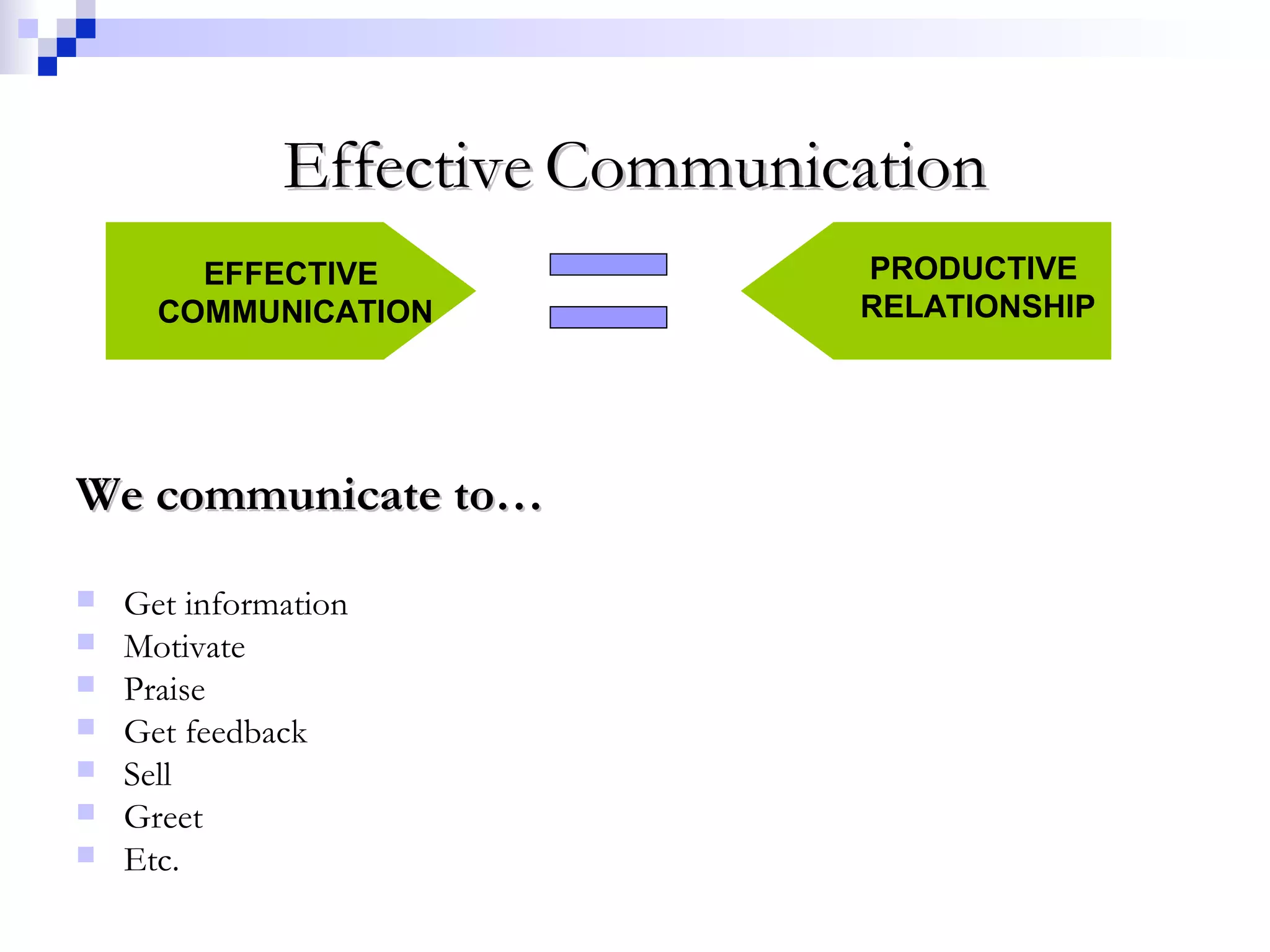
EffectiveEffective CommunicationCommunication
EFFECTIVE
COMMUNICATION
PRODUCTIVE
RELATIONSHIP
We communicate to…We communicate to…
 Get information
 Motivate
 Praise
 Get feedback
 Sell
 Greet
 Etc.
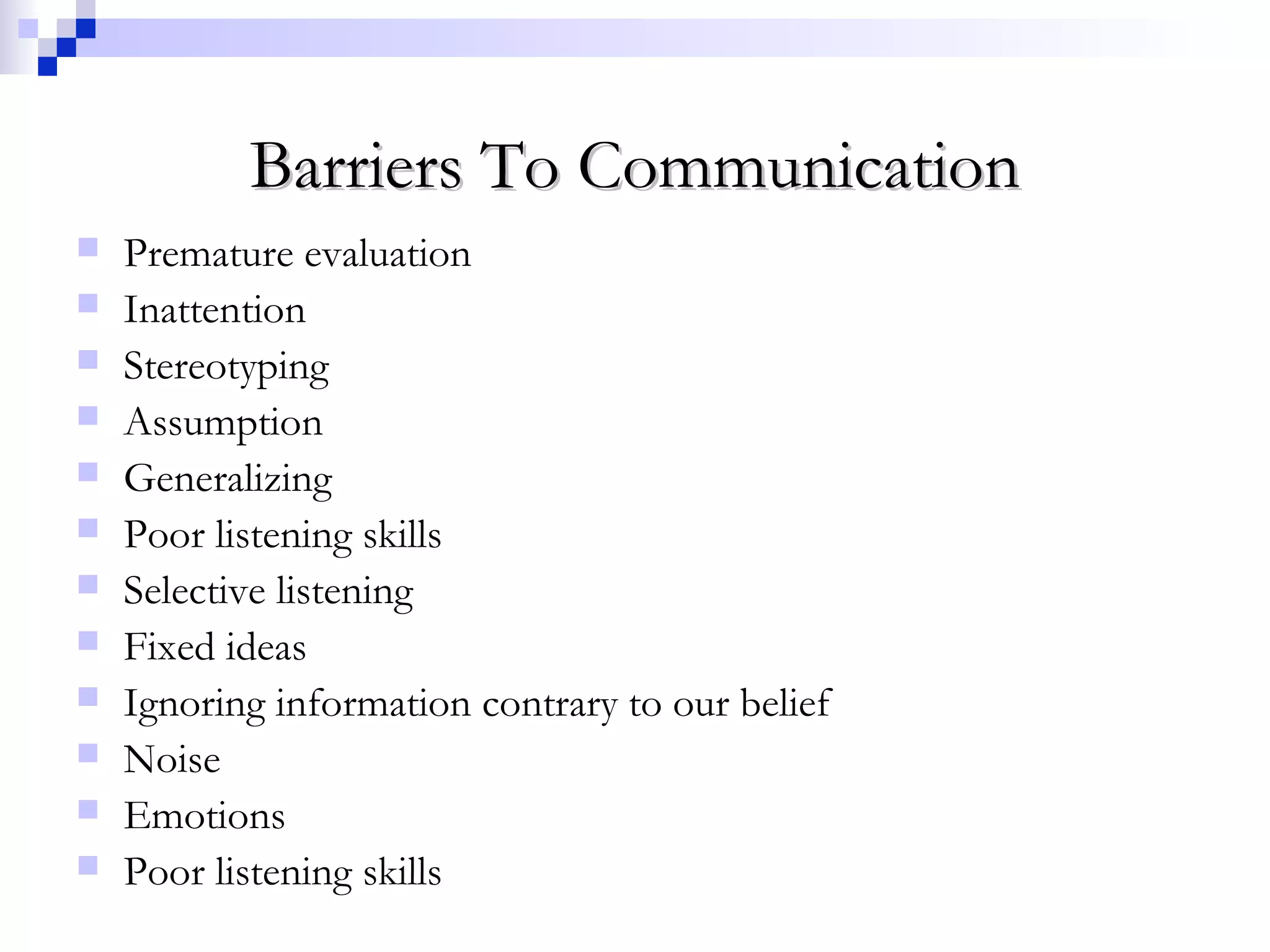
Barriers To CommunicationBarriers To Communication
 Premature evaluation
 Inattention
 Stereotyping
 Assumption
 Generalizing
 Poor listening skills
 Selective listening
 Fixed ideas
 Ignoring information contrary to our belief
 Noise
 Emotions
 Poor listening skills
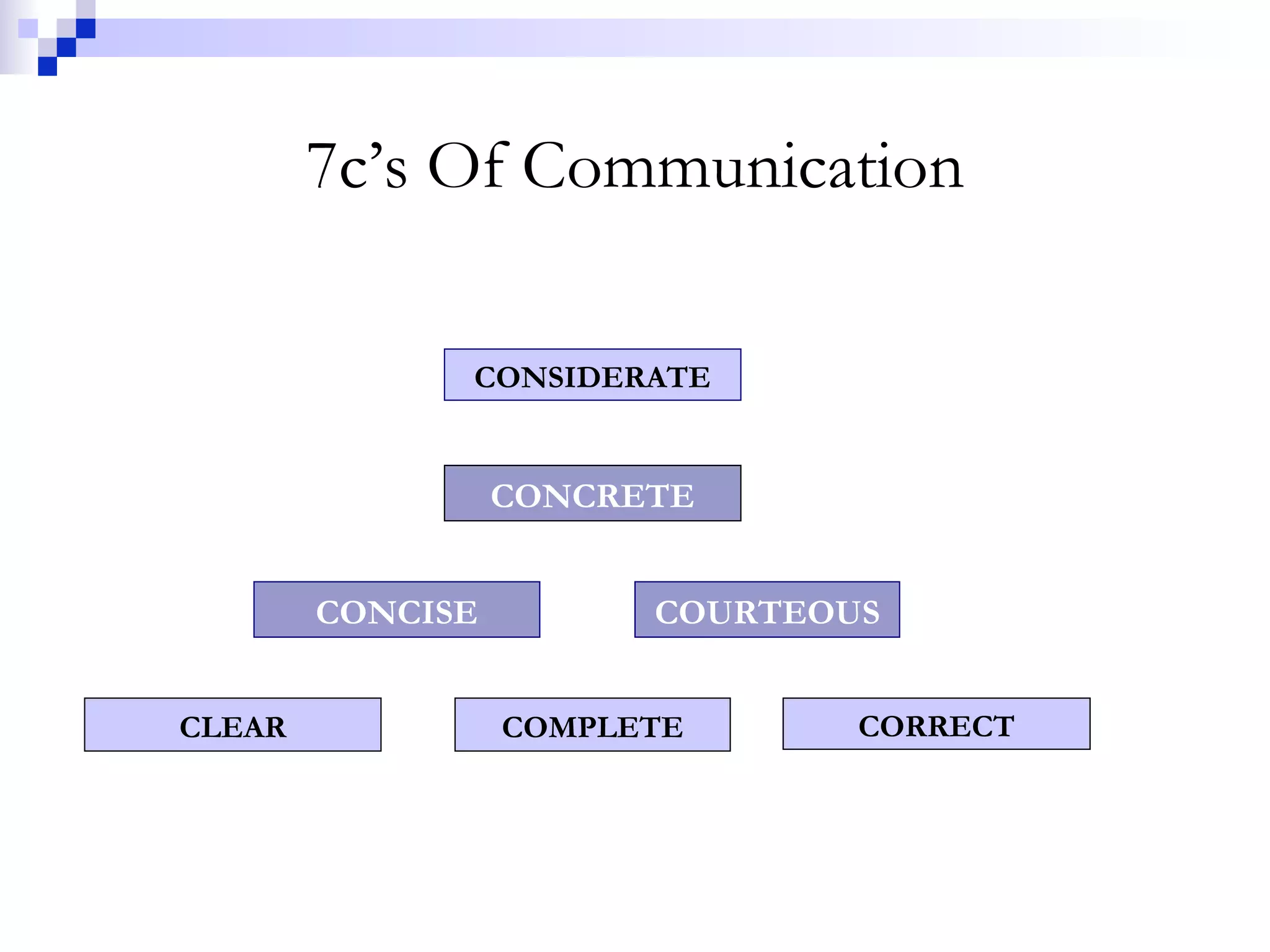
7c’s Of Communication
CLEAR COMPLETE CORRECT
CONCISE COURTEOUS
CONCRETE
CONSIDERATE
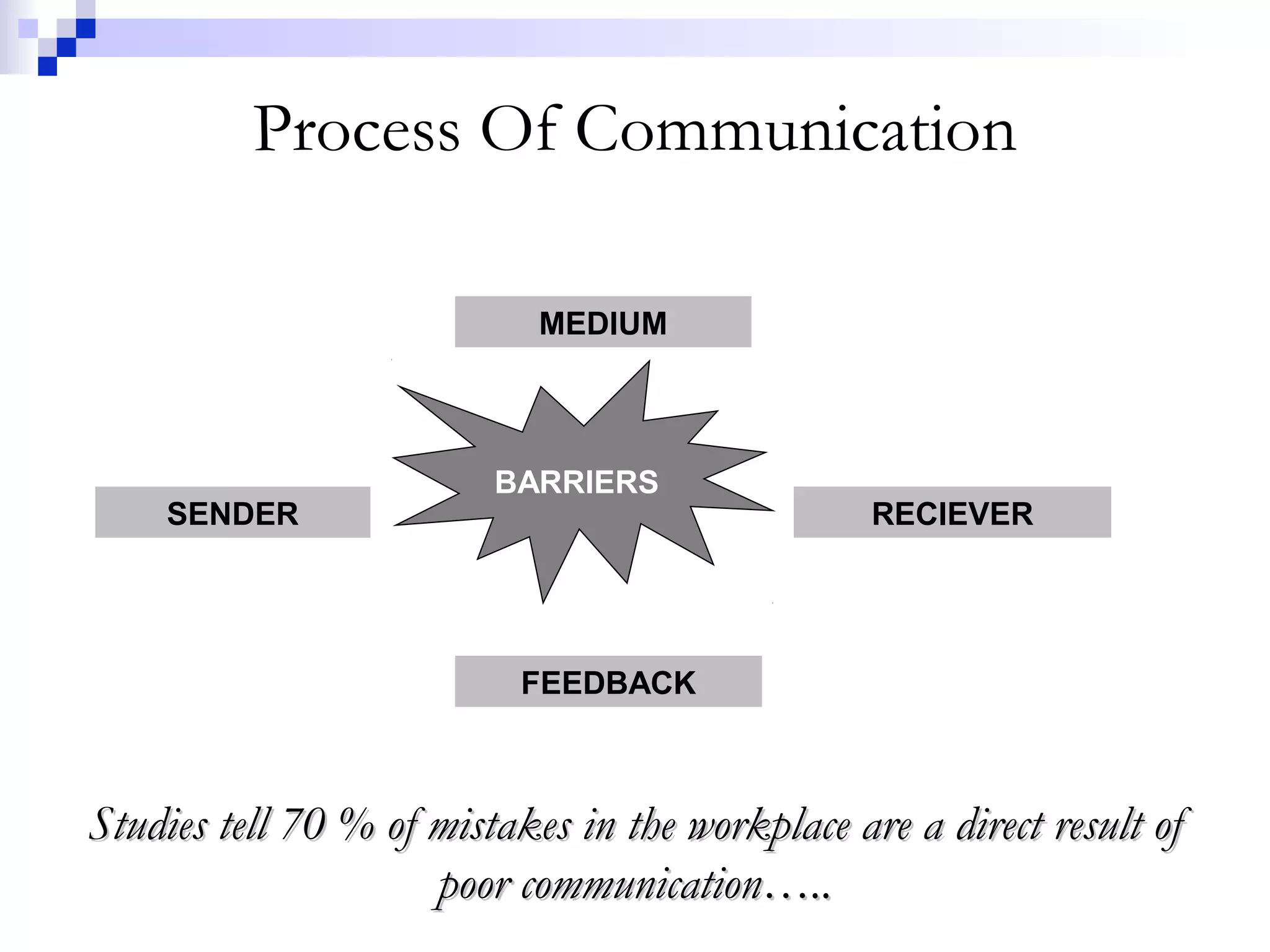
Process Of Communication
SENDER
MEDIUM
RECIEVER
FEEDBACK
BARRIERS
Studies tell 70 % of mistakes in the workplace are a direct result ofStudies tell 70 % of mistakes in the workplace are a direct result of
poor communication…..poor communication…..
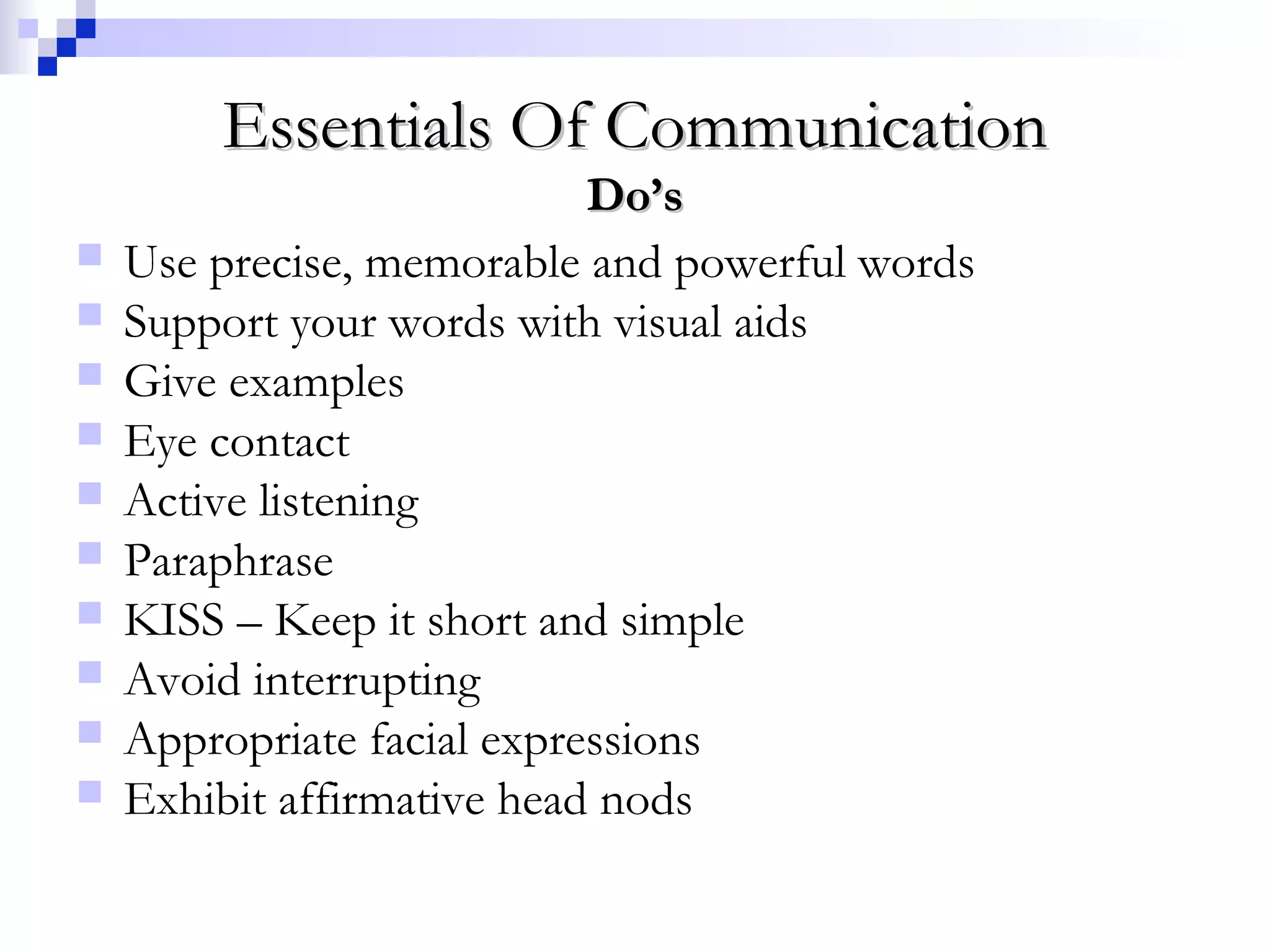
Essentials Of CommunicationEssentials Of Communication
Do’sDo’s
 Use precise, memorable and powerful words
 Support your words with visual aids
 Give examples
 Eye contact
 Active listening
 Paraphrase
 KISS – Keep it short and simple
 Avoid interrupting
 Appropriate facial expressions
 Exhibit affirmative head nods
Essentials Of CommunicationEssentials Of Communication
Don'tsDon'ts
 Do not use technical terms and terminologies
not understood by majority of people
 Do not speak too fast or too slow
 Do not speak in inaudible surroundings as you
wont be heard
 Do not assume that everybody understands you
 Do not interrupt the speaker.
Before communicating
Ask yourself…
 What is the main purpose/aim?
 Who will receive it?
 What is the likely attitude of the listener?
 How much does he need to know?
 Is my timing right?
 What is the main subject?
 Are the major points clear?
 Is there any ambiguity?
Telephone Etiquettes
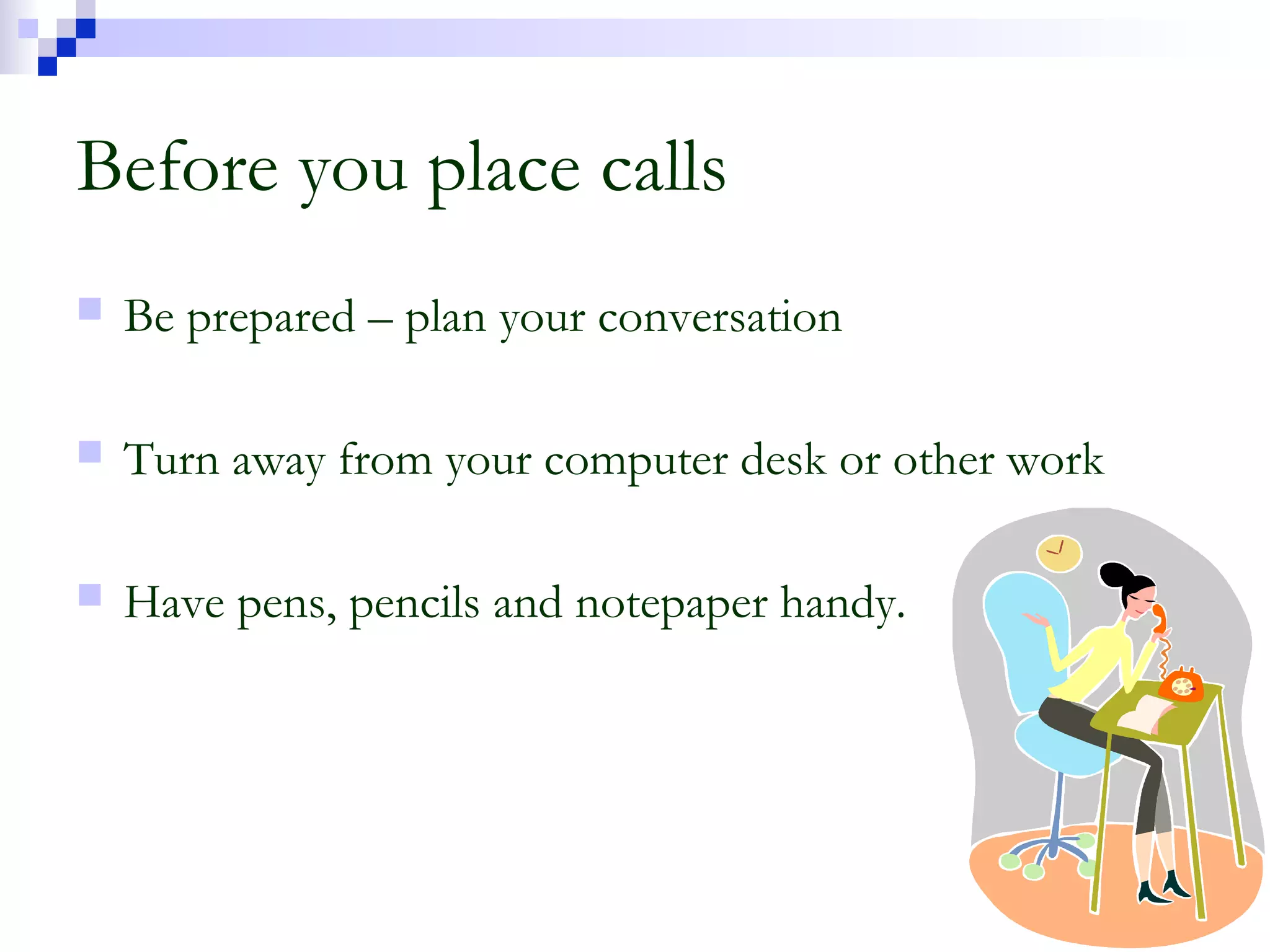
Before you place calls
 Be prepared – plan your conversation
 Turn away from your computer desk or other work
 Have pens, pencils and notepaper handy.
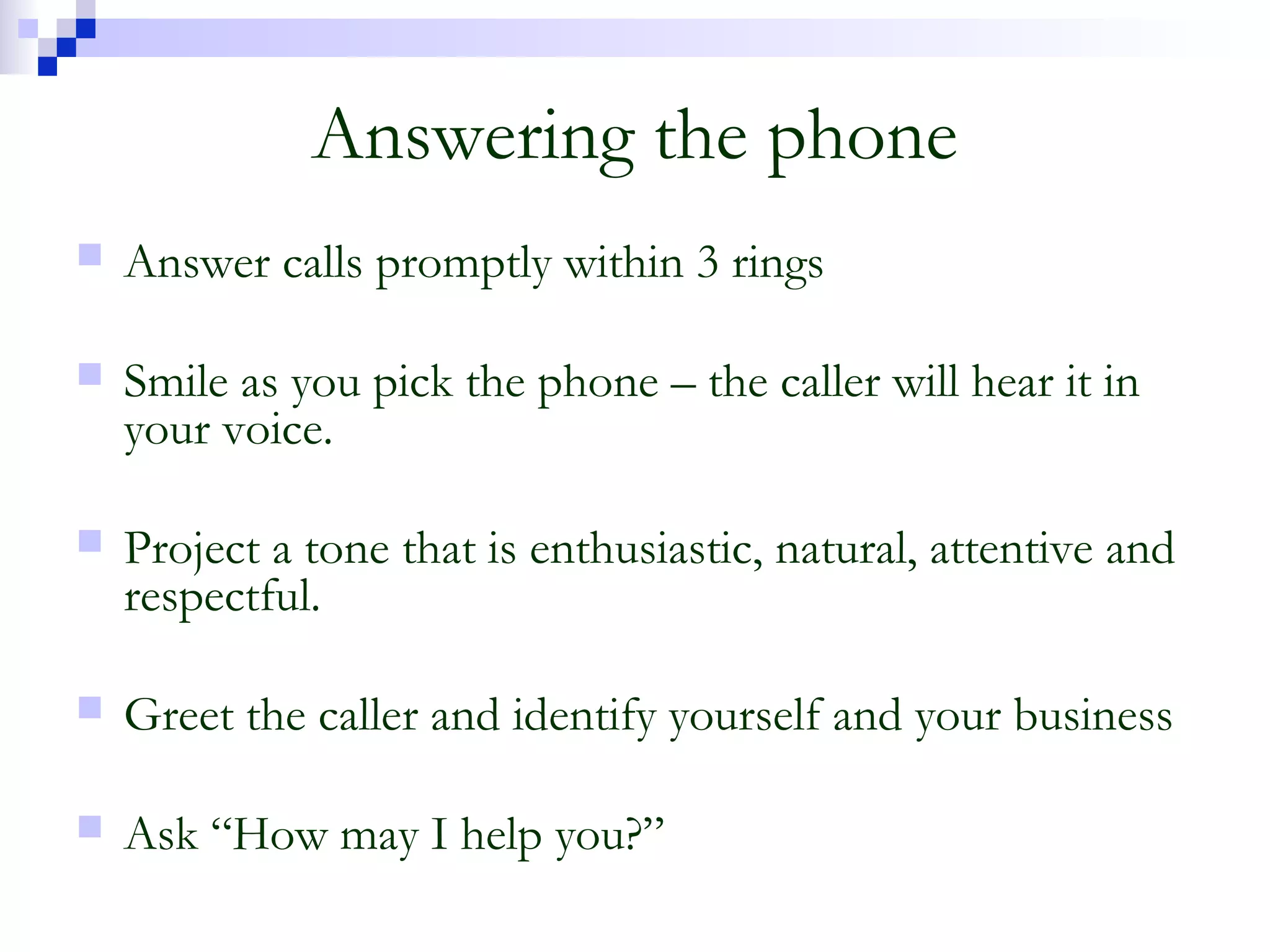
Answering the phone
 Answer calls promptly within 3 rings
 Smile as you pick the phone – the caller will hear it in
your voice.
 Project a tone that is enthusiastic, natural, attentive and
respectful.
 Greet the caller and identify yourself and your business
 Ask “How may I help you?”
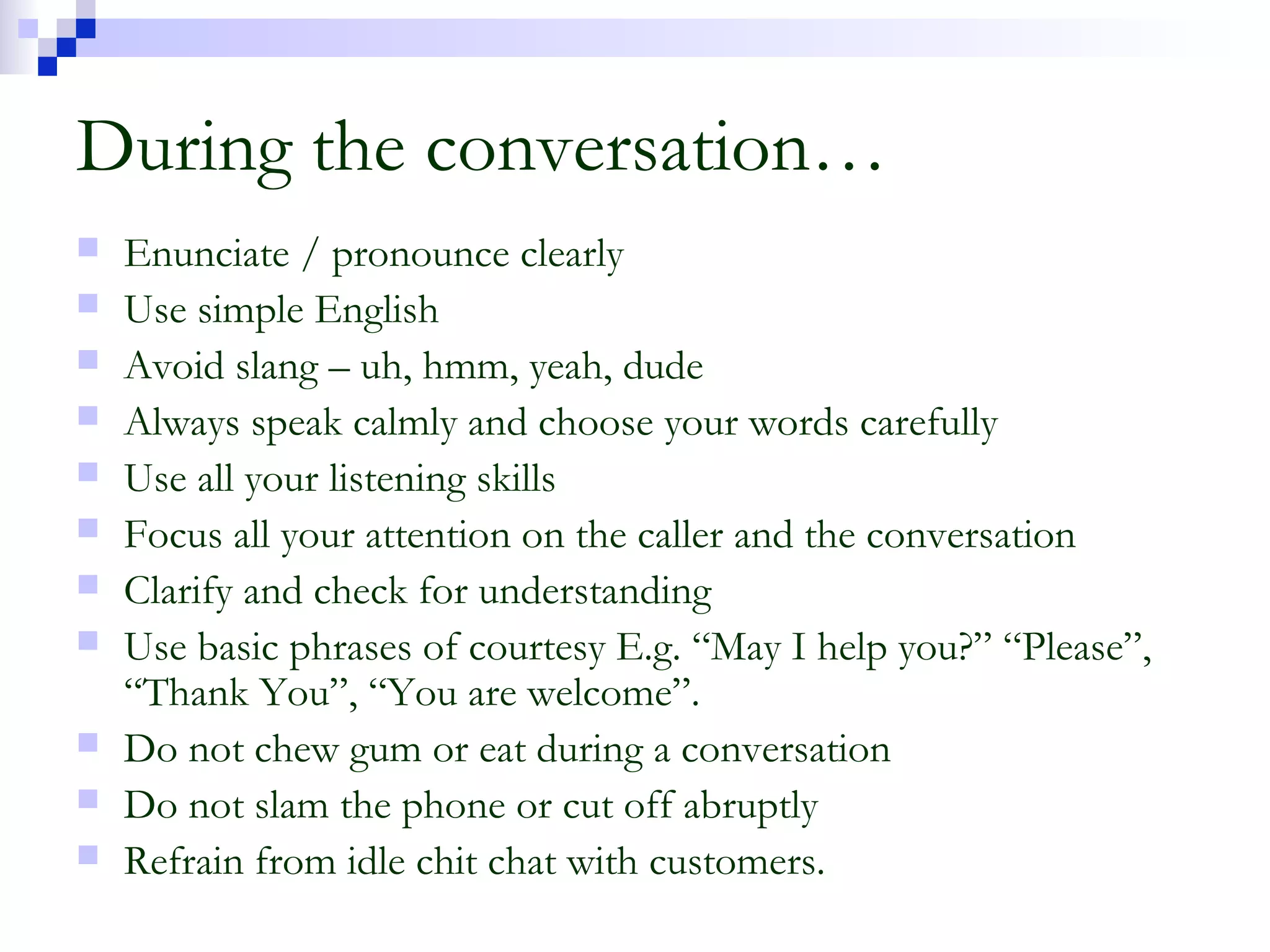
During the conversation…
 Enunciate / pronounce clearly
 Use simple English
 Avoid slang – uh, hmm, yeah, dude
 Always speak calmly and choose your words carefully
 Use all your listening skills
 Focus all your attention on the caller and the conversation
 Clarify and check for understanding
 Use basic phrases of courtesy E.g. “May I help you?” “Please”,
“Thank You”, “You are welcome”.
 Do not chew gum or eat during a conversation
 Do not slam the phone or cut off abruptly
 Refrain from idle chit chat with customers.
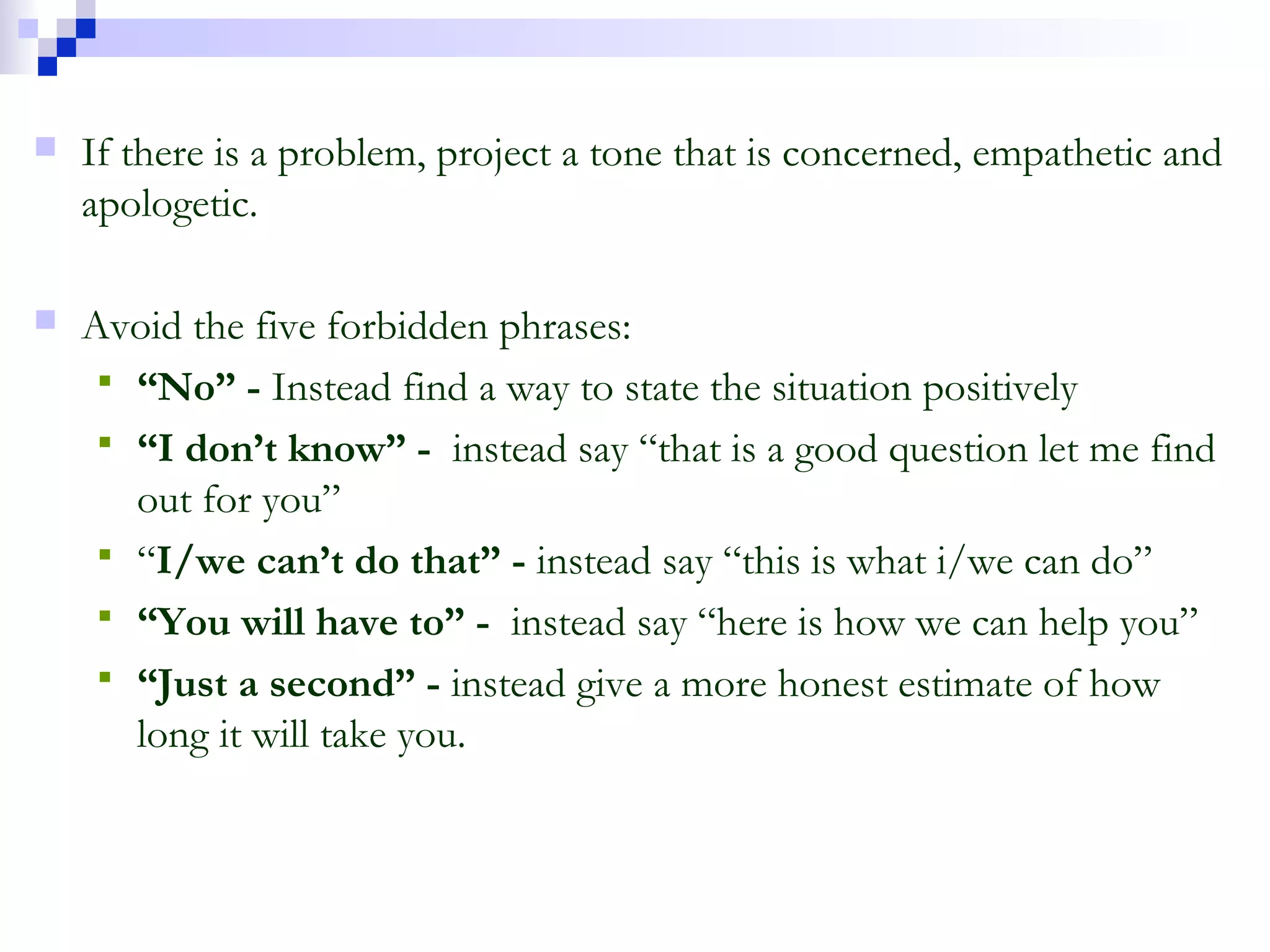
 If there is a problem, project a tone that is concerned, empathetic and
apologetic.
 Avoid the five forbidden phrases:
 “No” - Instead find a way to state the situation positively
 “I don’t know” - instead say “that is a good question let me find
out for you”
 “I/we can’t do that” - instead say “this is what i/we can do”
 “You will have to” - instead say “here is how we can help you”
 “Just a second” - instead give a more honest estimate of how
long it will take you.
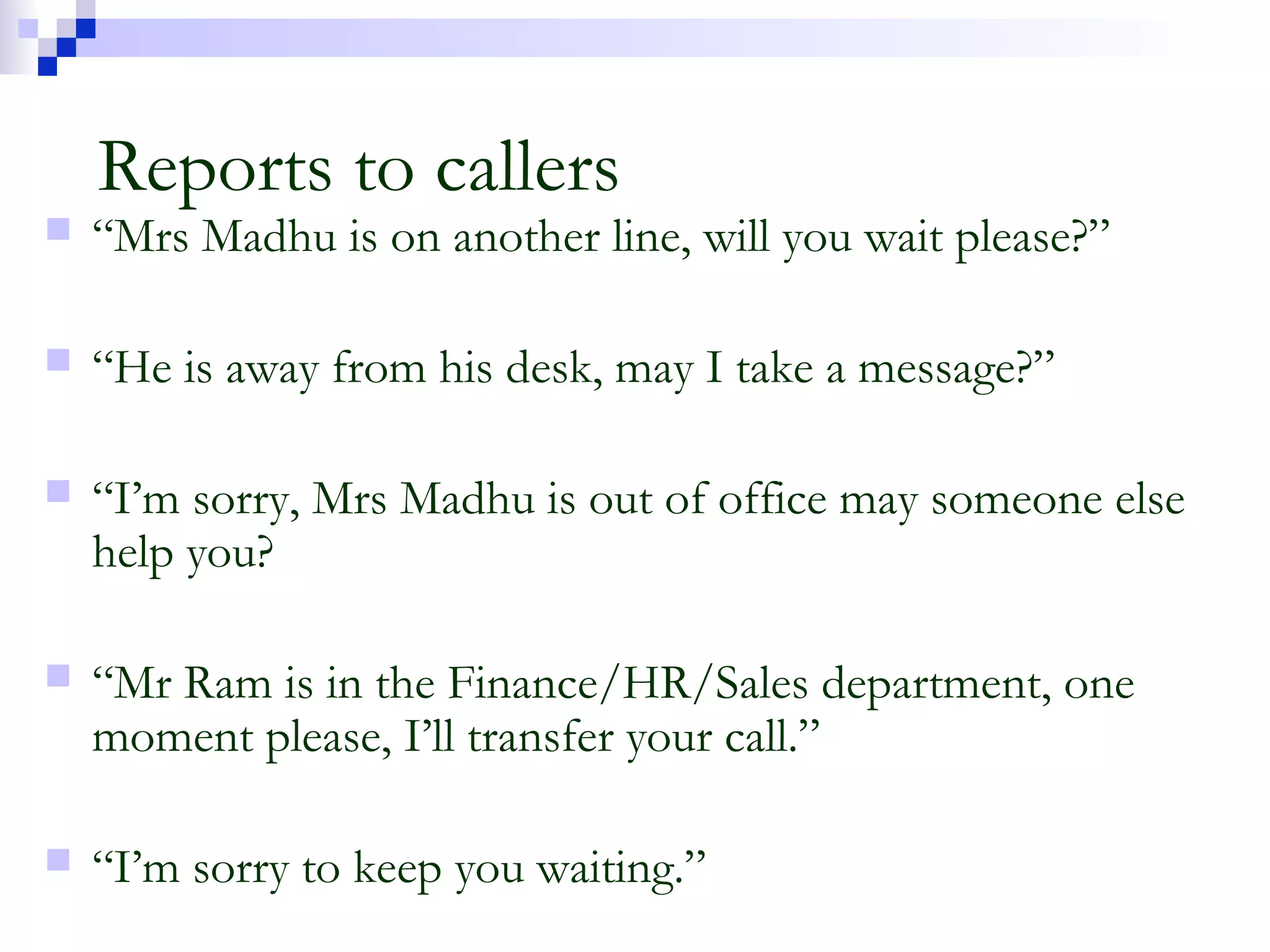
Reports to callers
 “Mrs Madhu is on another line, will you wait please?”
 “He is away from his desk, may I take a message?”
 “I’m sorry, Mrs Madhu is out of office may someone else
help you?
 “Mr Ram is in the Finance/HR/Sales department, one
moment please, I’ll transfer your call.”
 “I’m sorry to keep you waiting.”
Answering calls for others
 Identify yourself and the company or person for whom
you are answering and say “how may I help you?”
 Offer assistance in the absence of others say “she is not
in today perhaps I can be of assistance.
 Do not make commitments for others. Say “I’ll give
him your message when he returns.”
 Take accurate legible messages with time, date, reason
for call, urgency, the best time to reach them and all
other pertinent information. E.g. reports to caller.
Transferring Calls
 Explain the reason for the transfer – “let me connect you with
Mr./Ms./ Mrs. xyz in______ department.
 Know your extension numbers so that the caller is not kept
waiting.
 Mute the line if you are clarifying any information with your
colleague etc.
Obtaining the callers name
 “May I tell Mr. Rao who is calling please?”
 “May I say who is calling please?”
 “May I have your name please?”
Progress reports
 Mr Rao’s line is still busy do you wish to continue
waiting?
 “I’m sorry to keeo you waiting, may I check further and
call you back?”
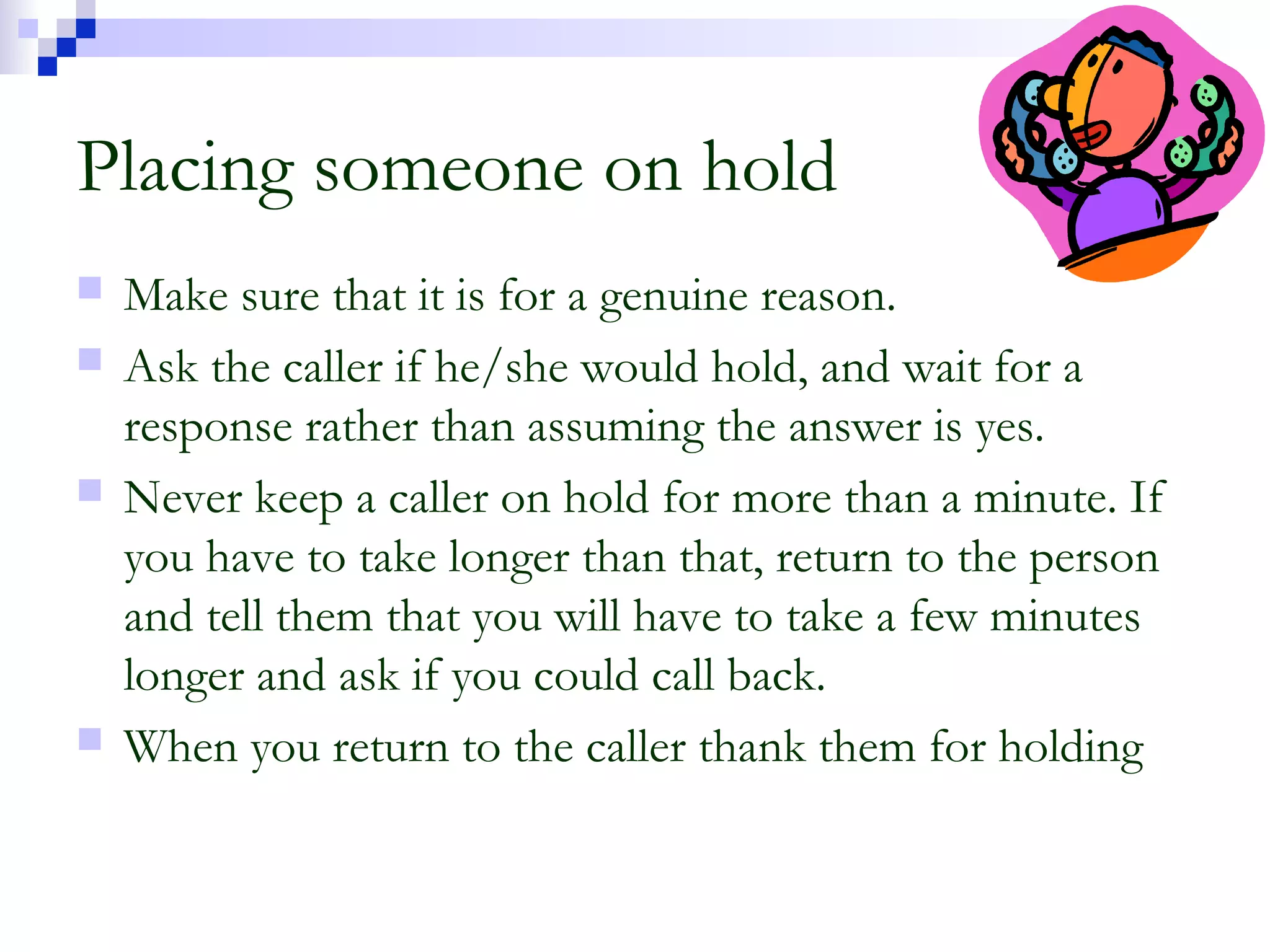
Placing someone on hold
 Make sure that it is for a genuine reason.
 Ask the caller if he/she would hold, and wait for a
response rather than assuming the answer is yes.
 Never keep a caller on hold for more than a minute. If
you have to take longer than that, return to the person
and tell them that you will have to take a few minutes
longer and ask if you could call back.
 When you return to the caller thank them for holding
Dealing with angry customers
 Listen; allow the caller to vent
 Empathize; acknowledge the person’s feelings
 Apologize when appropriate.
 Be positive
 Solve / suggest generate solutions that you can both agree on
and if reasonable do it.
 Remain calm and courteous, do not argue.
 Do not interrupt.
 Explain clearly do not make unrealistic promises.
 Act fast, acting quickly shows that you are sorry and that you will
handle the issue.
 Follow up get back to the caller to make sure the problem has
been solved.
Concluding the call
 End the conversation with an agreement on what is to
happen next; if you are to follow up do so immediately.
 Thank the caller for calling- for his time, invite the
caller to call again.
Listening skills
5 basic reasons we do not listen
 Listening is hard work
 Competition
 The rush for action
 Speed differences in the
rate of speaking and
understanding.
 Lack of training
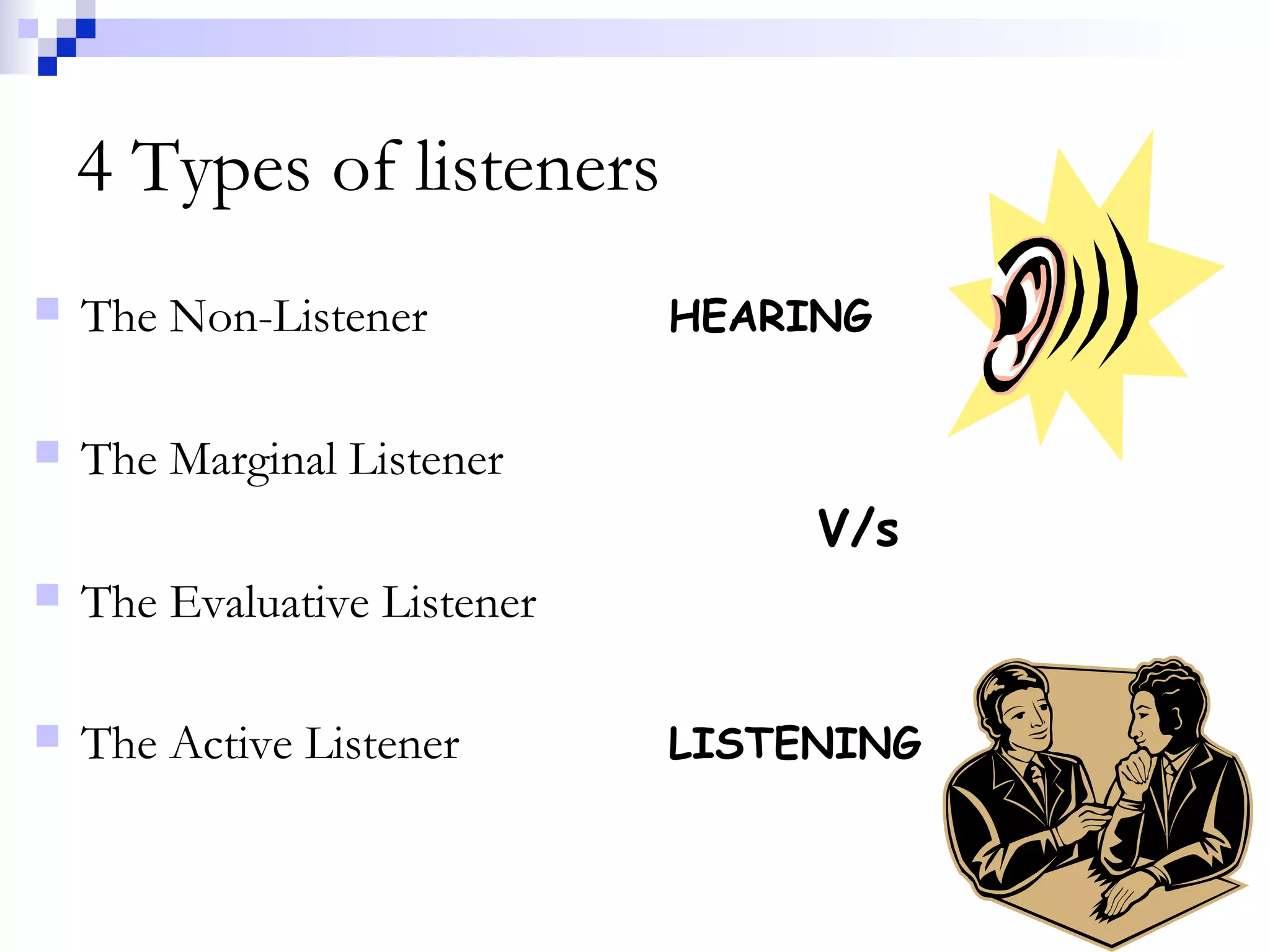
4 Types of listeners
 The Non-Listener HEARING
 The Marginal Listener
V/s
 The Evaluative Listener
 The Active Listener LISTENING
How to improve your listening
skills?
 Maintain eye contact with the instructor
 Focus on content than on the way that it is being said.
 Avoid selective listening
 Avoid distractions
 Ask questions to stay active and interested.
 Face the speaker
 Maintain eye contact
 Respond appropriately – say yes, nod, etc.
 Do not be preoccupied with your own thoughts.
Questioning
Types of questions
CLOSE ENDED
Generally result in short yes/no or other one word answers.
They should be used only when you want precise, quick
answers. Otherwise, they inhibit thought.
OPEN ENDED
They invite an actual explanation for a response. Questions
that begin with “how”, “what” and “why” are typical open
ended questions.
Closed Questions V/s Open Questions
 When did that happen?
 Was your trip successful?
 Did you like the candidate?
 Did you have a good
meeting?
 What led up to that?
 What did you manage to
accomplish on your trip?
 In what ways do you think
that candidate meets our
need?
 What happened at the
meeting?
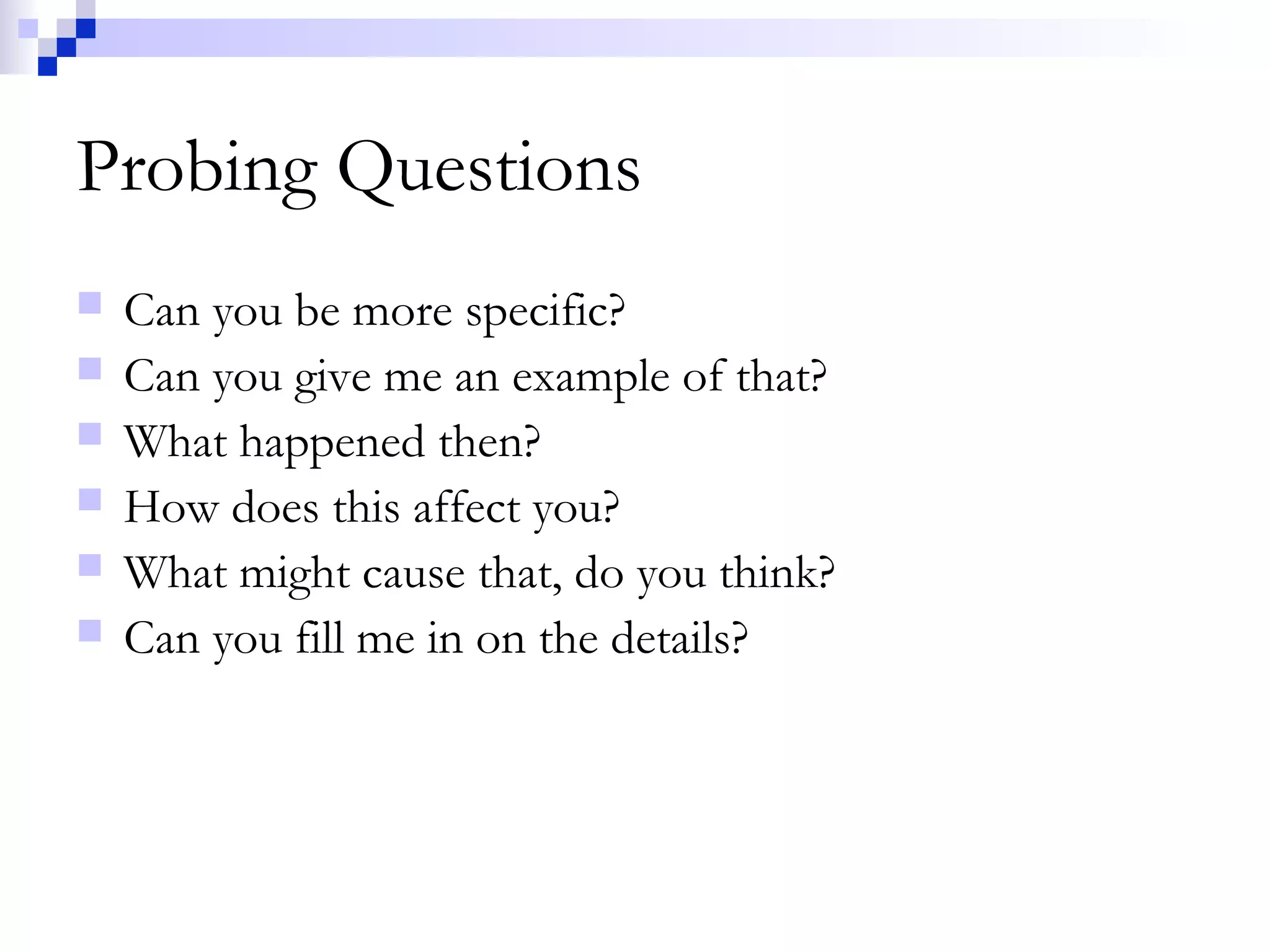
Probing Questions
 Can you be more specific?
 Can you give me an example of that?
 What happened then?
 How does this affect you?
 What might cause that, do you think?
 Can you fill me in on the details?
Thank You
Open To Queries

Developing effective communication skills seema

  • 1.
  • 2.
    A module on:  Basics of Communication  Telephone Etiquettes  Listening  Questioning
  • 3.
    Basics ofBasics of CommunicationCommunication Communicationis simply a two way process of exchangingCommunication is simply a two way process of exchanging ideas, information or transmitting verbal and non-verbalideas, information or transmitting verbal and non-verbal messages.messages.
  • 4.
    EffectiveEffective CommunicationCommunication EFFECTIVE COMMUNICATION PRODUCTIVE RELATIONSHIP We communicateto…We communicate to…  Get information  Motivate  Praise  Get feedback  Sell  Greet  Etc.
  • 5.
    Barriers To CommunicationBarriersTo Communication  Premature evaluation  Inattention  Stereotyping  Assumption  Generalizing  Poor listening skills  Selective listening  Fixed ideas  Ignoring information contrary to our belief  Noise  Emotions  Poor listening skills
  • 6.
    7c’s Of Communication CLEARCOMPLETE CORRECT CONCISE COURTEOUS CONCRETE CONSIDERATE
  • 7.
    Process Of Communication SENDER MEDIUM RECIEVER FEEDBACK BARRIERS Studiestell 70 % of mistakes in the workplace are a direct result ofStudies tell 70 % of mistakes in the workplace are a direct result of poor communication…..poor communication…..
  • 8.
    Essentials Of CommunicationEssentialsOf Communication Do’sDo’s  Use precise, memorable and powerful words  Support your words with visual aids  Give examples  Eye contact  Active listening  Paraphrase  KISS – Keep it short and simple  Avoid interrupting  Appropriate facial expressions  Exhibit affirmative head nods
  • 9.
    Essentials Of CommunicationEssentialsOf Communication Don'tsDon'ts  Do not use technical terms and terminologies not understood by majority of people  Do not speak too fast or too slow  Do not speak in inaudible surroundings as you wont be heard  Do not assume that everybody understands you  Do not interrupt the speaker.
  • 10.
    Before communicating Ask yourself… What is the main purpose/aim?  Who will receive it?  What is the likely attitude of the listener?  How much does he need to know?  Is my timing right?  What is the main subject?  Are the major points clear?  Is there any ambiguity?
  • 11.
  • 12.
    Before you placecalls  Be prepared – plan your conversation  Turn away from your computer desk or other work  Have pens, pencils and notepaper handy.
  • 13.
    Answering the phone Answer calls promptly within 3 rings  Smile as you pick the phone – the caller will hear it in your voice.  Project a tone that is enthusiastic, natural, attentive and respectful.  Greet the caller and identify yourself and your business  Ask “How may I help you?”
  • 14.
    During the conversation… Enunciate / pronounce clearly  Use simple English  Avoid slang – uh, hmm, yeah, dude  Always speak calmly and choose your words carefully  Use all your listening skills  Focus all your attention on the caller and the conversation  Clarify and check for understanding  Use basic phrases of courtesy E.g. “May I help you?” “Please”, “Thank You”, “You are welcome”.  Do not chew gum or eat during a conversation  Do not slam the phone or cut off abruptly  Refrain from idle chit chat with customers.
  • 15.
     If thereis a problem, project a tone that is concerned, empathetic and apologetic.  Avoid the five forbidden phrases:  “No” - Instead find a way to state the situation positively  “I don’t know” - instead say “that is a good question let me find out for you”  “I/we can’t do that” - instead say “this is what i/we can do”  “You will have to” - instead say “here is how we can help you”  “Just a second” - instead give a more honest estimate of how long it will take you.
  • 16.
    Reports to callers “Mrs Madhu is on another line, will you wait please?”  “He is away from his desk, may I take a message?”  “I’m sorry, Mrs Madhu is out of office may someone else help you?  “Mr Ram is in the Finance/HR/Sales department, one moment please, I’ll transfer your call.”  “I’m sorry to keep you waiting.”
  • 17.
    Answering calls forothers  Identify yourself and the company or person for whom you are answering and say “how may I help you?”  Offer assistance in the absence of others say “she is not in today perhaps I can be of assistance.  Do not make commitments for others. Say “I’ll give him your message when he returns.”  Take accurate legible messages with time, date, reason for call, urgency, the best time to reach them and all other pertinent information. E.g. reports to caller.
  • 18.
    Transferring Calls  Explainthe reason for the transfer – “let me connect you with Mr./Ms./ Mrs. xyz in______ department.  Know your extension numbers so that the caller is not kept waiting.  Mute the line if you are clarifying any information with your colleague etc.
  • 19.
    Obtaining the callersname  “May I tell Mr. Rao who is calling please?”  “May I say who is calling please?”  “May I have your name please?” Progress reports  Mr Rao’s line is still busy do you wish to continue waiting?  “I’m sorry to keeo you waiting, may I check further and call you back?”
  • 20.
    Placing someone onhold  Make sure that it is for a genuine reason.  Ask the caller if he/she would hold, and wait for a response rather than assuming the answer is yes.  Never keep a caller on hold for more than a minute. If you have to take longer than that, return to the person and tell them that you will have to take a few minutes longer and ask if you could call back.  When you return to the caller thank them for holding
  • 21.
    Dealing with angrycustomers  Listen; allow the caller to vent  Empathize; acknowledge the person’s feelings  Apologize when appropriate.  Be positive  Solve / suggest generate solutions that you can both agree on and if reasonable do it.  Remain calm and courteous, do not argue.  Do not interrupt.  Explain clearly do not make unrealistic promises.  Act fast, acting quickly shows that you are sorry and that you will handle the issue.  Follow up get back to the caller to make sure the problem has been solved.
  • 22.
    Concluding the call End the conversation with an agreement on what is to happen next; if you are to follow up do so immediately.  Thank the caller for calling- for his time, invite the caller to call again.
  • 23.
  • 24.
    5 basic reasonswe do not listen  Listening is hard work  Competition  The rush for action  Speed differences in the rate of speaking and understanding.  Lack of training
  • 25.
    4 Types oflisteners  The Non-Listener HEARING  The Marginal Listener V/s  The Evaluative Listener  The Active Listener LISTENING
  • 26.
    How to improveyour listening skills?  Maintain eye contact with the instructor  Focus on content than on the way that it is being said.  Avoid selective listening  Avoid distractions  Ask questions to stay active and interested.  Face the speaker  Maintain eye contact  Respond appropriately – say yes, nod, etc.  Do not be preoccupied with your own thoughts.
  • 27.
  • 28.
    Types of questions CLOSEENDED Generally result in short yes/no or other one word answers. They should be used only when you want precise, quick answers. Otherwise, they inhibit thought. OPEN ENDED They invite an actual explanation for a response. Questions that begin with “how”, “what” and “why” are typical open ended questions.
  • 29.
    Closed Questions V/sOpen Questions  When did that happen?  Was your trip successful?  Did you like the candidate?  Did you have a good meeting?  What led up to that?  What did you manage to accomplish on your trip?  In what ways do you think that candidate meets our need?  What happened at the meeting?
  • 30.
    Probing Questions  Canyou be more specific?  Can you give me an example of that?  What happened then?  How does this affect you?  What might cause that, do you think?  Can you fill me in on the details?
  • 31.