Downloaded 1,331 times
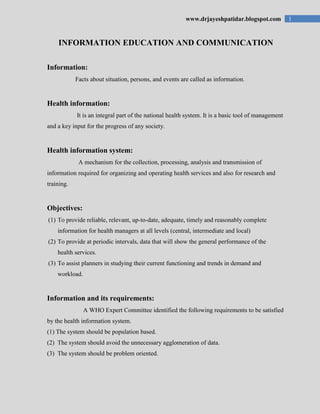
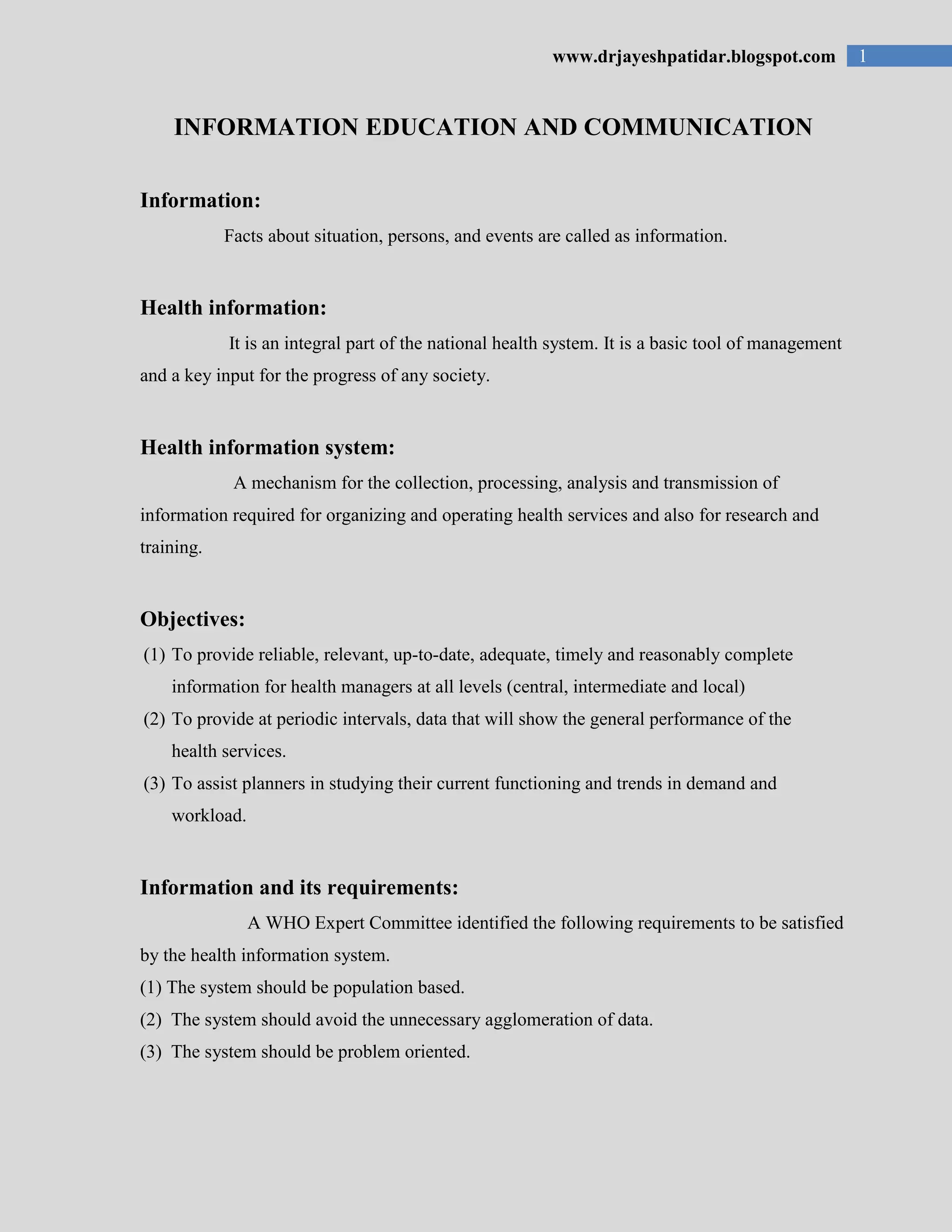
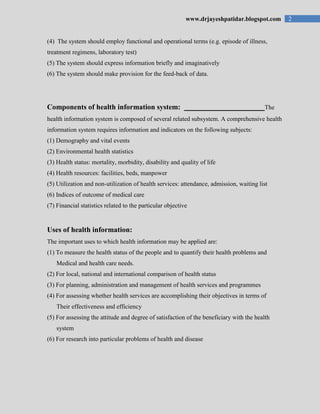
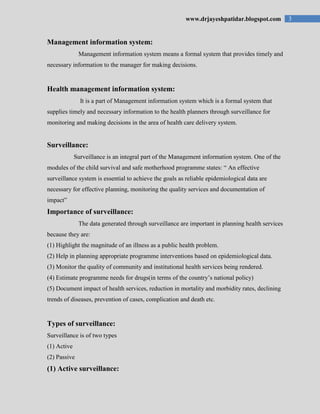


The document discusses health information systems, management information systems, surveillance, health education, and approaches to public health. It provides details on: 1. The objectives and requirements of effective health information systems, including being population-based and problem-oriented. 2. The components of health information systems, which include demography, health status, health resources utilization, and financial statistics. 3. The uses of health information for planning, administration, research, and assessing health services and programs. 4. The importance of surveillance for planning health services, monitoring quality, and documenting impact. 5. Principles of health education including interest, participation, known to unknown, comprehension, and reinforcement.


