Common Core 
State Standards 
& PARCC 
Monday September 8, 2014 
7:00 PM 
MOMS Club 
Common 
Core 
State 
Standards 
& 
PARCC
The Agenda 
Dr. Chris Van Woert 
● Introduction to the CCSS 
Jennifer Wnuk 
● ELA CCSS 
Melissa Cosgrove 
● NGSS supports CCSS ELA 
Michele Stanton 
● Math CCSS 
Dr. Chris Van Woert 
● PARCC and Accountability 
● Conclusion
Where did the 
Standards come 
from? The National Governors 
Association (NGA) and the 
Council of Chief State 
School Officers (CCSSO) 
led the development of the 
They are designed to set 
clear, consistent and high 
learning goals. 
*Originally adopted by 46 
states across the country. 
Common Core State 
Standards with the 
participation of educators 
throughout the country. 
The standards were 
adopted by the State of 
New Jersey in 2010.
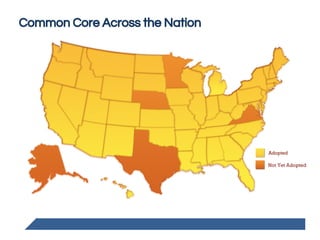
Common Core Across the Nation 
www.achievethecore.org 
*
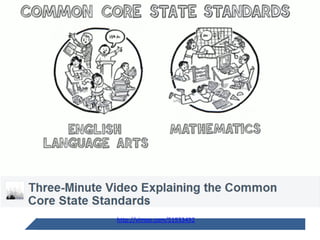
http://vimeo.com/51933492 
www.achievethecore.org *
The Common Core State 
Standards prepare 
students to succeed in 
college course work and 
future employment. 
The standards are NOT a 
curriculum. They identify 
what students should know 
and be able to do at the end 
of each grade level K - 12 in 
ELA and Math to ultimately 
be prepared for college and 
career readiness. 
The standards: 
- Set clear and consistent 
standards for every student; 
- Foster students development 
of critical thinking skills and 
ability to solve real-world 
problems rather than memorize 
facts; 
- Are benchmarked to academic 
standards from the highest 
performing countries; 
- Are the same standards that 
students will be tested on when 
they take the SAT or ACT 
college entrance exams.
ELA . . . K-5 
Shifts in ELA: 
● Regular practice with complex text and its academic 
language 
● Reading, writing and speaking grounded in evidence 
from text, both literary and informational 
● Building knowledge through content-rich nonfiction 
-Achieve the Core
A 6th Grade Example . . . 
NJCCCS (2004): Produce written work and oral work 
that demonstrate comprehension of informational materials. 
After CCSS (2010): Determine a central idea of a text 
and how it is conveyed through particular details; provide a 
summary of the text distinct from personal opinions or 
judgments.
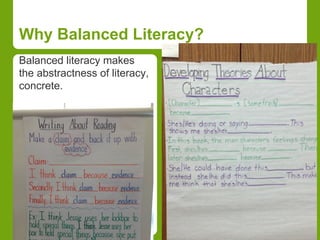
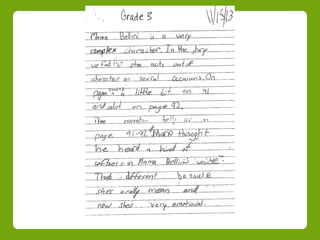
Why Balanced Literacy? 
Balanced literacy makes 
the abstractness of literacy, 
concrete.
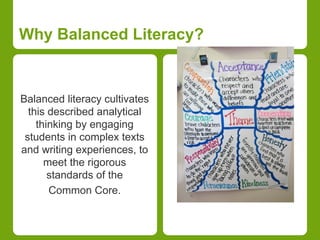
Why Balanced Literacy? 
Balanced literacy cultivates 
this described analytical 
thinking by engaging 
students in complex texts 
and writing experiences, to 
meet the rigorous 
standards of the 
Common Core.
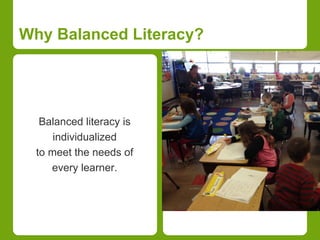
Why Balanced Literacy? 
Balanced literacy is 
individualized 
to meet the needs of 
every learner.
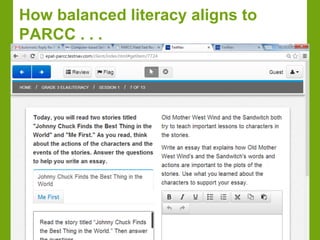
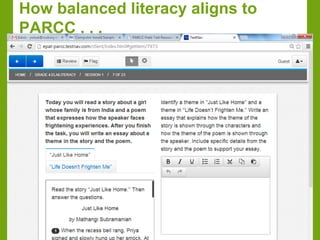
How balanced literacy aligns to 
PARCC . . .
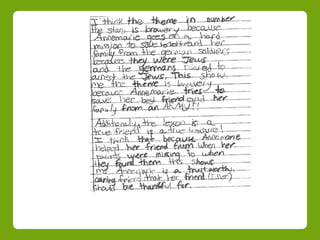
How balanced literacy aligns to 
PARCC . . .
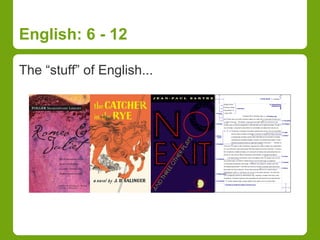
English: 6 - 12 
The “stuff” of English...
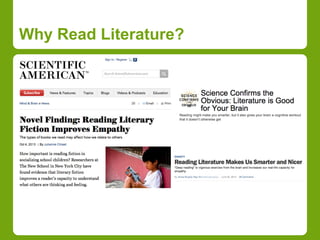
Why Read Literature?
ELA Common Core State Standards 
Reading Literature… 
● Determine a theme or central idea of a text and 
analyze its development… 
● Analyze how complex characters (e.g. those with 
multiple conflicting motivations) develop over the 
course of a text… 
● Analyze a particular point of view or cultural experience 
reflected in a work of literature from outside the United 
States...
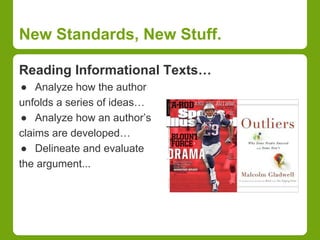
New Standards, New Stuff. 
Reading Informational Texts… 
● Analyze how the author 
unfolds a series of ideas… 
● Analyze how an author’s 
claims are developed… 
● Delineate and evaluate 
the argument...
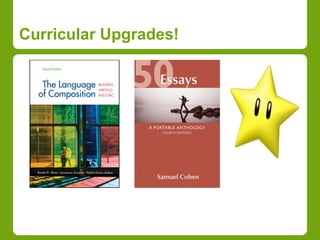
Curricular Upgrades!
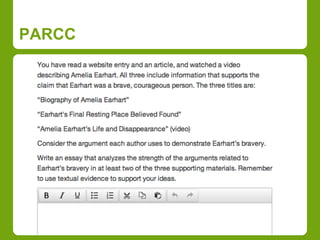
PARCC
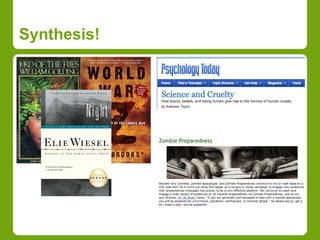
Synthesis!
The home connection . . . 
Preview the Curriculum Website: 
Parent Friendly Curriculum 
Parent Resources 
CCSS Roadmaps 
Websites: 
http://www.corestandards.org/ 
https://www.parcconline.org/ 
http://achievethecore.org/
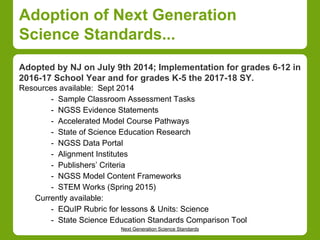
Adoption of Next Generation 
Science Standards... 
Adopted by NJ on July 9th 2014; Implementation for grades 6-12 in 
2016-17 School Year and for grades K-5 the 2017-18 SY. 
Resources available: Sept 2014 
- Sample Classroom Assessment Tasks 
- NGSS Evidence Statements 
- Accelerated Model Course Pathways 
- State of Science Education Research 
- NGSS Data Portal 
- Alignment Institutes 
- Publishers’ Criteria 
- NGSS Model Content Frameworks 
- STEM Works (Spring 2015) 
Currently available: 
- EQuIP Rubric for lessons & Units: Science 
- State Science Education Standards Comparison Tool 
Next Generation Science Standards
The Three Dimensional Vision... 
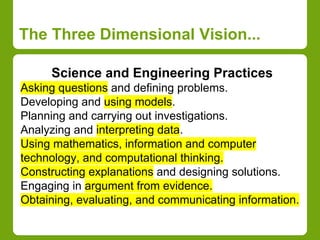
Science and Engineering Practices 
Asking questions and defining problems. 
Developing and using models. 
Planning and carrying out investigations. 
Analyzing and interpreting data. 
Using mathematics, information and computer 
technology, and computational thinking. 
Constructing explanations and designing solutions. 
Engaging in argument from evidence. 
Obtaining, evaluating, and communicating information.
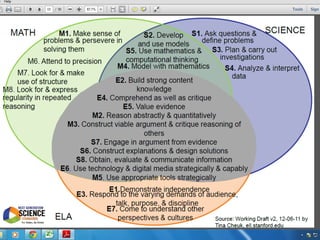
Blended Practices: 
One Mind One Practice
The Three Dimensional Vision... 
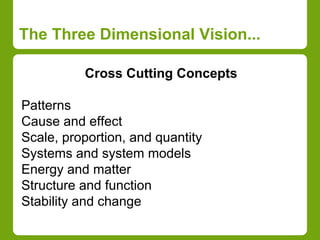
Cross Cutting Concepts 
Patterns 
Cause and effect 
Scale, proportion, and quantity 
Systems and system models 
Energy and matter 
Structure and function 
Stability and change
The Three Dimensional Vision... 
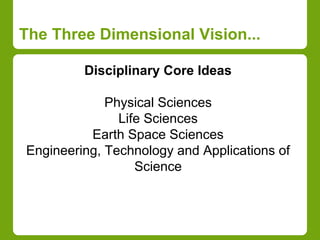
Disciplinary Core Ideas 
Physical Sciences 
Life Sciences 
Earth Space Sciences 
Engineering, Technology and Applications of 
Science
How can I help at home…. 
* Select a variety of genres for reading time. 
* Encourage questions and foster curiosity. 
* Create a maker space to develop a love for 
building, creating and discovering. 
* Apply learning in context; take advantage of 
“teachable-moments”.
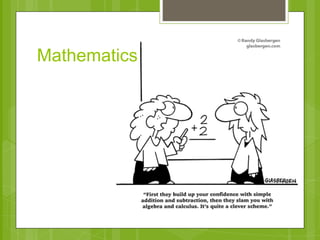
Mathematics
Mathematics Overview 
● The K-5 standards provide students 
with a solid foundation in whole 
numbers, fractions and decimals 
● The 6-8 standards describe robust 
learning in geometry, algebra, and 
probability and statistics
3 Shifts in Mathematics 
● Focus: 
● Focus strongly on where the 
standards focus. 
● Coherence: 
● Think across grades and link to major 
topics 
● Rigor: 
● Require fluency, application and deep 
understanding
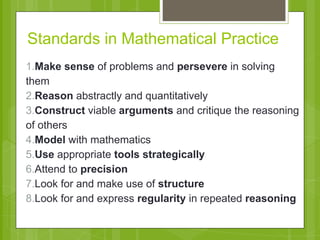
Standards in Mathematical Practice 
1.Make sense of problems and persevere in solving 
them 
2.Reason abstractly and quantitatively 
3.Construct viable arguments and critique the reasoning 
of others 
4.Model with mathematics 
5.Use appropriate tools strategically 
6.Attend to precision 
7.Look for and make use of structure 
8.Look for and express regularity in repeated reasoning
The Importance of 
Mathematical Practices
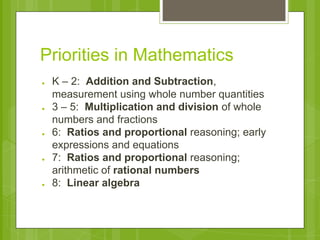
Priorities in Mathematics 
● K – 2: Addition and Subtraction, 
measurement using whole number quantities 
● 3 – 5: Multiplication and division of whole 
numbers and fractions 
● 6: Ratios and proportional reasoning; early 
expressions and equations 
● 7: Ratios and proportional reasoning; 
arithmetic of rational numbers 
● 8: Linear algebra
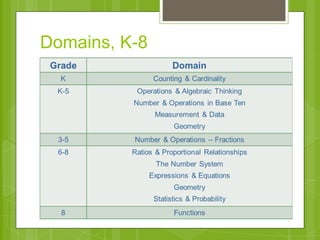
Domains, K-8
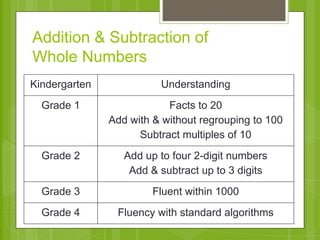
Addition & Subtraction of 
Whole Numbers 
Kindergarten Understanding 
Grade 1 Facts to 20 
Add with & without regrouping to 100 
Subtract multiples of 10 
Grade 2 Add up to four 2-digit numbers 
Add & subtract up to 3 digits 
Grade 3 Fluent within 1000 
Grade 4 Fluency with standard algorithms
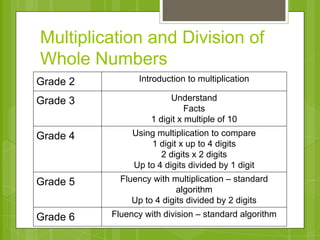
Multiplication and Division of 
Whole Numbers 
Grade 2 Introduction to multiplication 
Grade 3 Understand 
Facts 
1 digit x multiple of 10 
Grade 4 Using multiplication to compare 
1 digit x up to 4 digits 
2 digits x 2 digits 
Up to 4 digits divided by 1 digit 
Grade 5 Fluency with multiplication – standard 
algorithm 
Up to 4 digits divided by 2 digits 
Grade 6 Fluency with division – standard algorithm
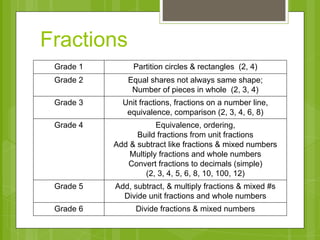
Fractions 
Grade 1 Partition circles & rectangles (2, 4) 
Grade 2 Equal shares not always same shape; 
Number of pieces in whole (2, 3, 4) 
Grade 3 Unit fractions, fractions on a number line, 
equivalence, comparison (2, 3, 4, 6, 8) 
Grade 4 Equivalence, ordering, 
Build fractions from unit fractions 
Add & subtract like fractions & mixed numbers 
Multiply fractions and whole numbers 
Convert fractions to decimals (simple) 
(2, 3, 4, 5, 6, 8, 10, 100, 12) 
Grade 5 Add, subtract, & multiply fractions & mixed #s 
Divide unit fractions and whole numbers 
Grade 6 Divide fractions & mixed numbers
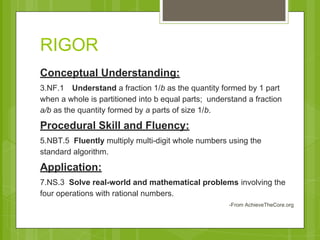
RIGOR 
Conceptual Understanding: 
3.NF.1 Understand a fraction 1/b as the quantity formed by 1 part 
when a whole is partitioned into b equal parts; understand a fraction 
a/b as the quantity formed by a parts of size 1/b. 
Procedural Skill and Fluency: 
5.NBT.5 Fluently multiply multi-digit whole numbers using the 
standard algorithm. 
Application: 
7.NS.3 Solve real-world and mathematical problems involving the 
four operations with rational numbers. 
-From AchieveTheCore.org
Conceptual Understanding 
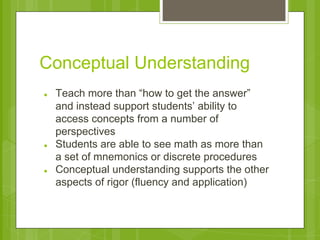
● Teach more than “how to get the answer” 
and instead support students’ ability to 
access concepts from a number of 
perspectives 
● Students are able to see math as more than 
a set of mnemonics or discrete procedures 
● Conceptual understanding supports the other 
aspects of rigor (fluency and application)
Conceptual Understanding 
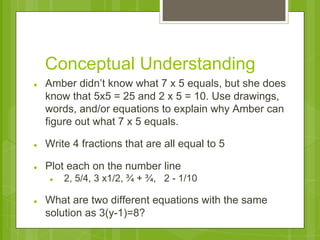
● Amber didn’t know what 7 x 5 equals, but she does 
know that 5x5 = 25 and 2 x 5 = 10. Use drawings, 
words, and/or equations to explain why Amber can 
figure out what 7 x 5 equals. 
● Write 4 fractions that are all equal to 5 
● Plot each on the number line 
● 2, 5/4, 3 x1/2, ¾ + ¾, 2 - 1/10 
● What are two different equations with the same 
solution as 3(y-1)=8?
Procedural Skills and Fluency 
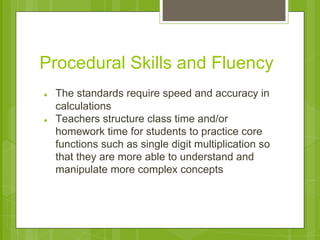
● The standards require speed and accuracy in 
calculations 
● Teachers structure class time and/or 
homework time for students to practice core 
functions such as single digit multiplication so 
that they are more able to understand and 
manipulate more complex concepts
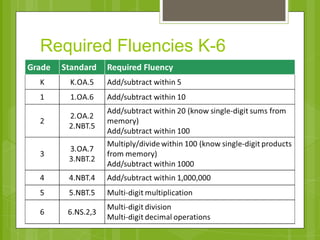
Required Fluencies K-6
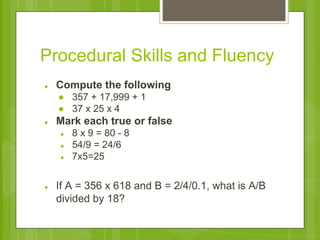
Procedural Skills and Fluency 
● Compute the following 
● 357 + 17,999 + 1 
● 37 x 25 x 4 
● Mark each true or false 
● 8 x 9 = 80 - 8 
● 54/9 = 24/6 
● 7x5=25 
● If A = 356 x 618 and B = 2/4/0.1, what is A/B 
divided by 18?
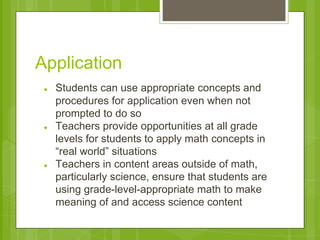
Application 
● Students can use appropriate concepts and 
procedures for application even when not 
prompted to do so 
● Teachers provide opportunities at all grade 
levels for students to apply math concepts in 
“real world” situations 
● Teachers in content areas outside of math, 
particularly science, ensure that students are 
using grade-level-appropriate math to make 
meaning of and access science content
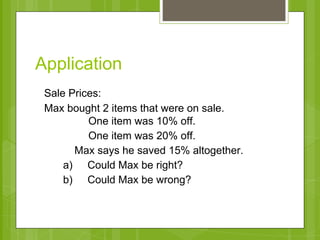
Application 
Sale Prices: 
Max bought 2 items that were on sale. 
One item was 10% off. 
One item was 20% off. 
Max says he saved 15% altogether. 
a) Could Max be right? 
b) Could Max be wrong?
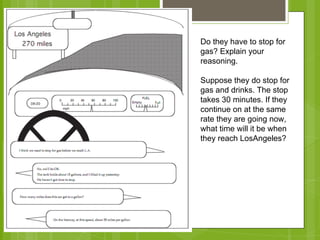
Do they have to stop for 
gas? Explain your 
reasoning. 
Suppose they do stop for 
gas and drinks. The stop 
takes 30 minutes. If they 
continue on at the same 
rate they are going now, 
what time will it be when 
they reach LosAngeles?
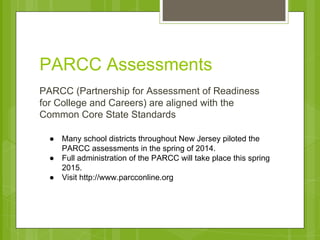
PARCC Assessments 
PARCC (Partnership for Assessment of Readiness 
for College and Careers) are aligned with the 
Common Core State Standards 
● Many school districts throughout New Jersey piloted the 
PARCC assessments in the spring of 2014. 
● Full administration of the PARCC will take place this spring 
2015. 
● Visit http://www.parcconline.org
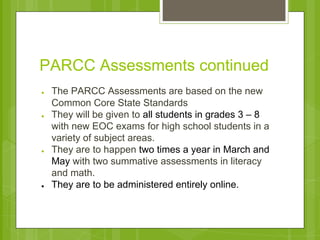
PARCC Assessments continued 
● The PARCC Assessments are based on the new 
Common Core State Standards 
● They will be given to all students in grades 3 – 8 
with new EOC exams for high school students in a 
variety of subject areas. 
● They are to happen two times a year in March and 
May with two summative assessments in literacy 
and math. 
● They are to be administered entirely online.
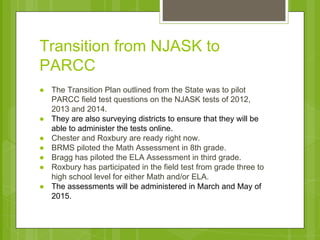
Transition from NJASK to 
PARCC 
● The Transition Plan outlined from the State was to pilot 
PARCC field test questions on the NJASK tests of 2012, 
2013 and 2014. 
● They are also surveying districts to ensure that they will be 
able to administer the tests online. 
● Chester and Roxbury are ready right now. 
● BRMS piloted the Math Assessment in 8th grade. 
● Bragg has piloted the ELA Assessment in third grade. 
● Roxbury has participated in the field test from grade three to 
high school level for either Math and/or ELA. 
● The assessments will be administered in March and May of 
2015.
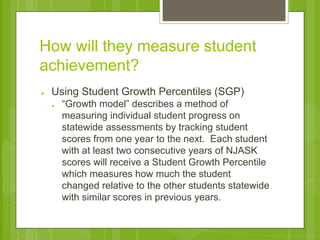
How will they measure student 
achievement? 
● Using Student Growth Percentiles (SGP) 
● “Growth model” describes a method of 
measuring individual student progress on 
statewide assessments by tracking student 
scores from one year to the next. Each student 
with at least two consecutive years of NJASK 
scores will receive a Student Growth Percentile 
which measures how much the student 
changed relative to the other students statewide 
with similar scores in previous years.
Thank you for attending!

Common Core Presentation - Moms Club of Roxbury- September 8, 2014

  • 1.
    Common Core StateStandards & PARCC Monday September 8, 2014 7:00 PM MOMS Club Common Core State Standards & PARCC
  • 2.
    The Agenda Dr.Chris Van Woert ● Introduction to the CCSS Jennifer Wnuk ● ELA CCSS Melissa Cosgrove ● NGSS supports CCSS ELA Michele Stanton ● Math CCSS Dr. Chris Van Woert ● PARCC and Accountability ● Conclusion
  • 3.
    Where did the Standards come from? The National Governors Association (NGA) and the Council of Chief State School Officers (CCSSO) led the development of the They are designed to set clear, consistent and high learning goals. *Originally adopted by 46 states across the country. Common Core State Standards with the participation of educators throughout the country. The standards were adopted by the State of New Jersey in 2010.
  • 4.
    Common Core Acrossthe Nation www.achievethecore.org *
  • 5.
  • 6.
    The Common CoreState Standards prepare students to succeed in college course work and future employment. The standards are NOT a curriculum. They identify what students should know and be able to do at the end of each grade level K - 12 in ELA and Math to ultimately be prepared for college and career readiness. The standards: - Set clear and consistent standards for every student; - Foster students development of critical thinking skills and ability to solve real-world problems rather than memorize facts; - Are benchmarked to academic standards from the highest performing countries; - Are the same standards that students will be tested on when they take the SAT or ACT college entrance exams.
  • 7.
    ELA . .. K-5 Shifts in ELA: ● Regular practice with complex text and its academic language ● Reading, writing and speaking grounded in evidence from text, both literary and informational ● Building knowledge through content-rich nonfiction -Achieve the Core
  • 8.
    A 6th GradeExample . . . NJCCCS (2004): Produce written work and oral work that demonstrate comprehension of informational materials. After CCSS (2010): Determine a central idea of a text and how it is conveyed through particular details; provide a summary of the text distinct from personal opinions or judgments.
  • 9.
    Why Balanced Literacy? Balanced literacy makes the abstractness of literacy, concrete.
  • 10.
    Why Balanced Literacy? Balanced literacy cultivates this described analytical thinking by engaging students in complex texts and writing experiences, to meet the rigorous standards of the Common Core.
  • 11.
    Why Balanced Literacy? Balanced literacy is individualized to meet the needs of every learner.
  • 12.
    How balanced literacyaligns to PARCC . . .
  • 14.
    How balanced literacyaligns to PARCC . . .
  • 16.
    English: 6 -12 The “stuff” of English...
  • 17.
  • 18.
    ELA Common CoreState Standards Reading Literature… ● Determine a theme or central idea of a text and analyze its development… ● Analyze how complex characters (e.g. those with multiple conflicting motivations) develop over the course of a text… ● Analyze a particular point of view or cultural experience reflected in a work of literature from outside the United States...
  • 19.
    New Standards, NewStuff. Reading Informational Texts… ● Analyze how the author unfolds a series of ideas… ● Analyze how an author’s claims are developed… ● Delineate and evaluate the argument...
  • 20.
  • 21.
  • 22.
  • 23.
    The home connection. . . Preview the Curriculum Website: Parent Friendly Curriculum Parent Resources CCSS Roadmaps Websites: http://www.corestandards.org/ https://www.parcconline.org/ http://achievethecore.org/
  • 24.
    Adoption of NextGeneration Science Standards... Adopted by NJ on July 9th 2014; Implementation for grades 6-12 in 2016-17 School Year and for grades K-5 the 2017-18 SY. Resources available: Sept 2014 - Sample Classroom Assessment Tasks - NGSS Evidence Statements - Accelerated Model Course Pathways - State of Science Education Research - NGSS Data Portal - Alignment Institutes - Publishers’ Criteria - NGSS Model Content Frameworks - STEM Works (Spring 2015) Currently available: - EQuIP Rubric for lessons & Units: Science - State Science Education Standards Comparison Tool Next Generation Science Standards
  • 25.
    The Three DimensionalVision... Science and Engineering Practices Asking questions and defining problems. Developing and using models. Planning and carrying out investigations. Analyzing and interpreting data. Using mathematics, information and computer technology, and computational thinking. Constructing explanations and designing solutions. Engaging in argument from evidence. Obtaining, evaluating, and communicating information.
  • 26.
    Blended Practices: OneMind One Practice
  • 27.
    The Three DimensionalVision... Cross Cutting Concepts Patterns Cause and effect Scale, proportion, and quantity Systems and system models Energy and matter Structure and function Stability and change
  • 28.
    The Three DimensionalVision... Disciplinary Core Ideas Physical Sciences Life Sciences Earth Space Sciences Engineering, Technology and Applications of Science
  • 29.
    How can Ihelp at home…. * Select a variety of genres for reading time. * Encourage questions and foster curiosity. * Create a maker space to develop a love for building, creating and discovering. * Apply learning in context; take advantage of “teachable-moments”.
  • 30.
  • 31.
    Mathematics Overview ●The K-5 standards provide students with a solid foundation in whole numbers, fractions and decimals ● The 6-8 standards describe robust learning in geometry, algebra, and probability and statistics
  • 32.
    3 Shifts inMathematics ● Focus: ● Focus strongly on where the standards focus. ● Coherence: ● Think across grades and link to major topics ● Rigor: ● Require fluency, application and deep understanding
  • 33.
    Standards in MathematicalPractice 1.Make sense of problems and persevere in solving them 2.Reason abstractly and quantitatively 3.Construct viable arguments and critique the reasoning of others 4.Model with mathematics 5.Use appropriate tools strategically 6.Attend to precision 7.Look for and make use of structure 8.Look for and express regularity in repeated reasoning
  • 34.
    The Importance of Mathematical Practices
  • 35.
    Priorities in Mathematics ● K – 2: Addition and Subtraction, measurement using whole number quantities ● 3 – 5: Multiplication and division of whole numbers and fractions ● 6: Ratios and proportional reasoning; early expressions and equations ● 7: Ratios and proportional reasoning; arithmetic of rational numbers ● 8: Linear algebra
  • 36.
  • 37.
    Addition & Subtractionof Whole Numbers Kindergarten Understanding Grade 1 Facts to 20 Add with & without regrouping to 100 Subtract multiples of 10 Grade 2 Add up to four 2-digit numbers Add & subtract up to 3 digits Grade 3 Fluent within 1000 Grade 4 Fluency with standard algorithms
  • 38.
    Multiplication and Divisionof Whole Numbers Grade 2 Introduction to multiplication Grade 3 Understand Facts 1 digit x multiple of 10 Grade 4 Using multiplication to compare 1 digit x up to 4 digits 2 digits x 2 digits Up to 4 digits divided by 1 digit Grade 5 Fluency with multiplication – standard algorithm Up to 4 digits divided by 2 digits Grade 6 Fluency with division – standard algorithm
  • 39.
    Fractions Grade 1Partition circles & rectangles (2, 4) Grade 2 Equal shares not always same shape; Number of pieces in whole (2, 3, 4) Grade 3 Unit fractions, fractions on a number line, equivalence, comparison (2, 3, 4, 6, 8) Grade 4 Equivalence, ordering, Build fractions from unit fractions Add & subtract like fractions & mixed numbers Multiply fractions and whole numbers Convert fractions to decimals (simple) (2, 3, 4, 5, 6, 8, 10, 100, 12) Grade 5 Add, subtract, & multiply fractions & mixed #s Divide unit fractions and whole numbers Grade 6 Divide fractions & mixed numbers
  • 40.
    RIGOR Conceptual Understanding: 3.NF.1 Understand a fraction 1/b as the quantity formed by 1 part when a whole is partitioned into b equal parts; understand a fraction a/b as the quantity formed by a parts of size 1/b. Procedural Skill and Fluency: 5.NBT.5 Fluently multiply multi-digit whole numbers using the standard algorithm. Application: 7.NS.3 Solve real-world and mathematical problems involving the four operations with rational numbers. -From AchieveTheCore.org
  • 41.
    Conceptual Understanding ●Teach more than “how to get the answer” and instead support students’ ability to access concepts from a number of perspectives ● Students are able to see math as more than a set of mnemonics or discrete procedures ● Conceptual understanding supports the other aspects of rigor (fluency and application)
  • 42.
    Conceptual Understanding ●Amber didn’t know what 7 x 5 equals, but she does know that 5x5 = 25 and 2 x 5 = 10. Use drawings, words, and/or equations to explain why Amber can figure out what 7 x 5 equals. ● Write 4 fractions that are all equal to 5 ● Plot each on the number line ● 2, 5/4, 3 x1/2, ¾ + ¾, 2 - 1/10 ● What are two different equations with the same solution as 3(y-1)=8?
  • 43.
    Procedural Skills andFluency ● The standards require speed and accuracy in calculations ● Teachers structure class time and/or homework time for students to practice core functions such as single digit multiplication so that they are more able to understand and manipulate more complex concepts
  • 44.
  • 45.
    Procedural Skills andFluency ● Compute the following ● 357 + 17,999 + 1 ● 37 x 25 x 4 ● Mark each true or false ● 8 x 9 = 80 - 8 ● 54/9 = 24/6 ● 7x5=25 ● If A = 356 x 618 and B = 2/4/0.1, what is A/B divided by 18?
  • 46.
    Application ● Studentscan use appropriate concepts and procedures for application even when not prompted to do so ● Teachers provide opportunities at all grade levels for students to apply math concepts in “real world” situations ● Teachers in content areas outside of math, particularly science, ensure that students are using grade-level-appropriate math to make meaning of and access science content
  • 47.
    Application Sale Prices: Max bought 2 items that were on sale. One item was 10% off. One item was 20% off. Max says he saved 15% altogether. a) Could Max be right? b) Could Max be wrong?
  • 48.
    Do they haveto stop for gas? Explain your reasoning. Suppose they do stop for gas and drinks. The stop takes 30 minutes. If they continue on at the same rate they are going now, what time will it be when they reach LosAngeles?
  • 49.
    PARCC Assessments PARCC(Partnership for Assessment of Readiness for College and Careers) are aligned with the Common Core State Standards ● Many school districts throughout New Jersey piloted the PARCC assessments in the spring of 2014. ● Full administration of the PARCC will take place this spring 2015. ● Visit http://www.parcconline.org
  • 50.
    PARCC Assessments continued ● The PARCC Assessments are based on the new Common Core State Standards ● They will be given to all students in grades 3 – 8 with new EOC exams for high school students in a variety of subject areas. ● They are to happen two times a year in March and May with two summative assessments in literacy and math. ● They are to be administered entirely online.
  • 51.
    Transition from NJASKto PARCC ● The Transition Plan outlined from the State was to pilot PARCC field test questions on the NJASK tests of 2012, 2013 and 2014. ● They are also surveying districts to ensure that they will be able to administer the tests online. ● Chester and Roxbury are ready right now. ● BRMS piloted the Math Assessment in 8th grade. ● Bragg has piloted the ELA Assessment in third grade. ● Roxbury has participated in the field test from grade three to high school level for either Math and/or ELA. ● The assessments will be administered in March and May of 2015.
  • 52.
    How will theymeasure student achievement? ● Using Student Growth Percentiles (SGP) ● “Growth model” describes a method of measuring individual student progress on statewide assessments by tracking student scores from one year to the next. Each student with at least two consecutive years of NJASK scores will receive a Student Growth Percentile which measures how much the student changed relative to the other students statewide with similar scores in previous years.
  • 53.
    Thank you forattending!