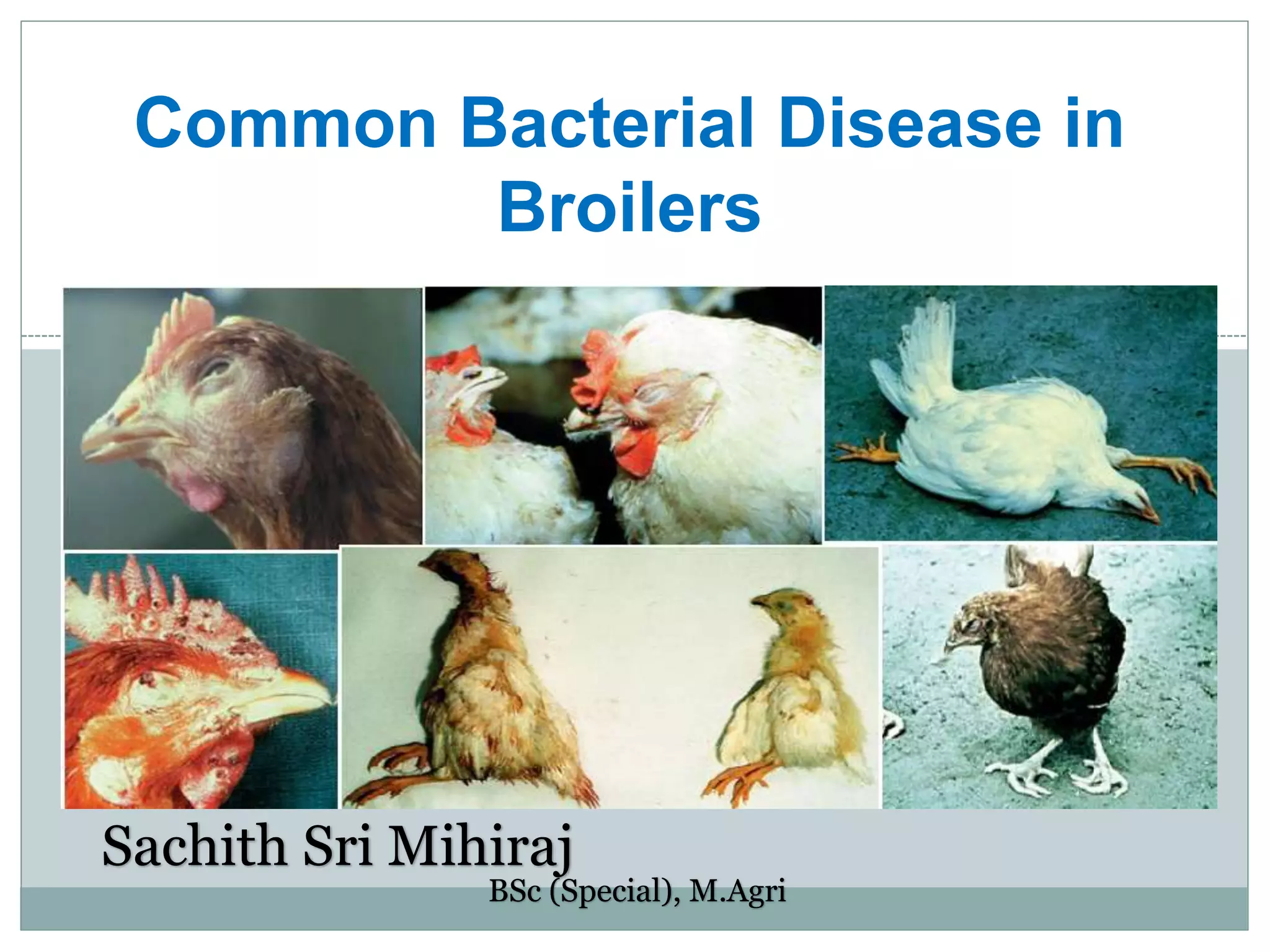
Common Bacterial Disease in
Broilers
Sachith Sri Mihiraj
BSc (Special), M.Agri
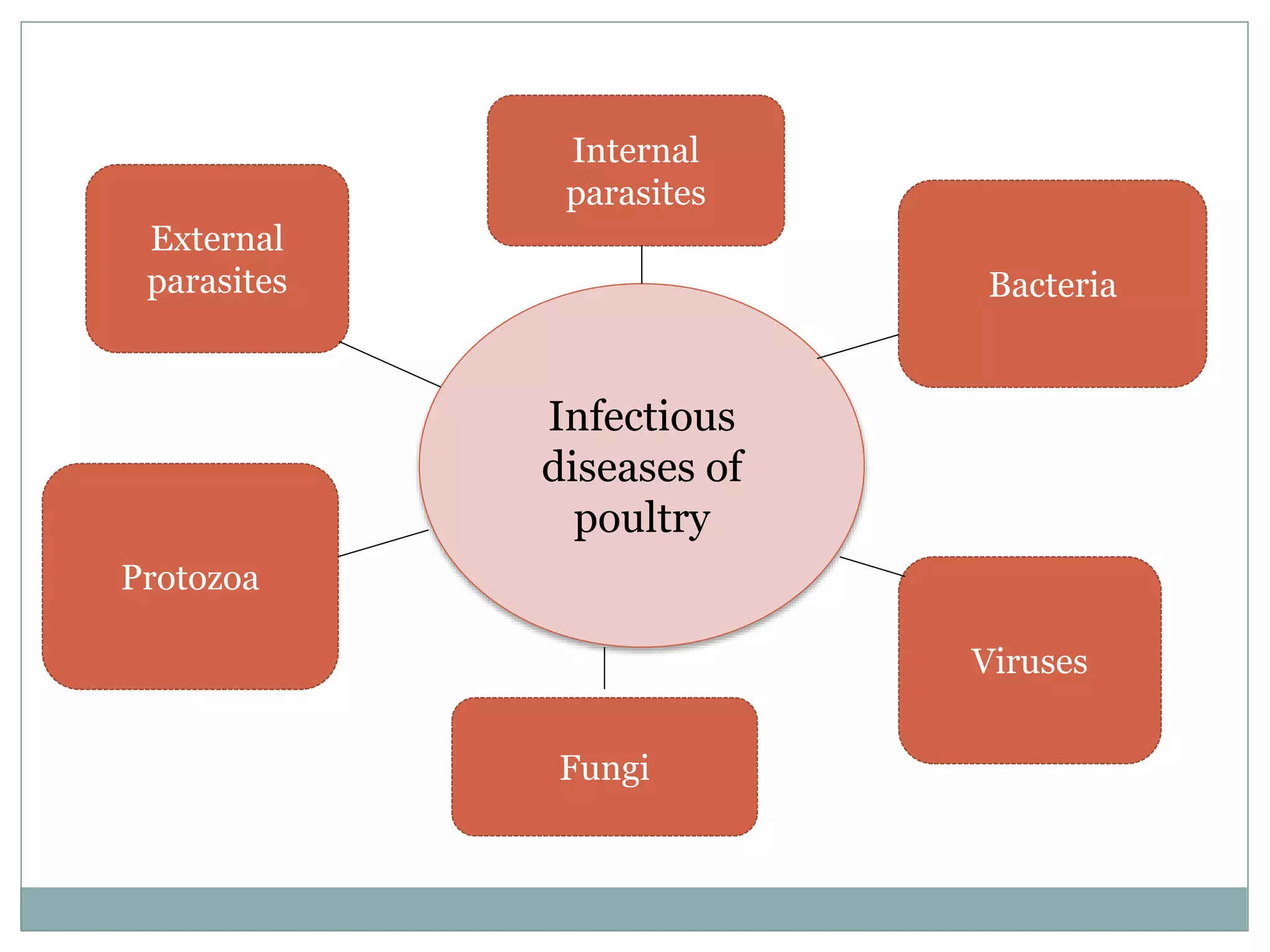
Infectious
diseases of
poultry
External
parasites
Internal
parasites
Bacteria
Protozoa
Fungi
Viruses
What is a bacterial disease???
 Bacterial Disease : It’s any of a variety of illnesses
caused by bacteria.
 Bacteria cause disease by;
i. Secreting or excreting toxins
ii. By producing toxins internally (which are released
when the bacteria disintegrate ,or by inducing
sensitivity to their antigenic properties.)
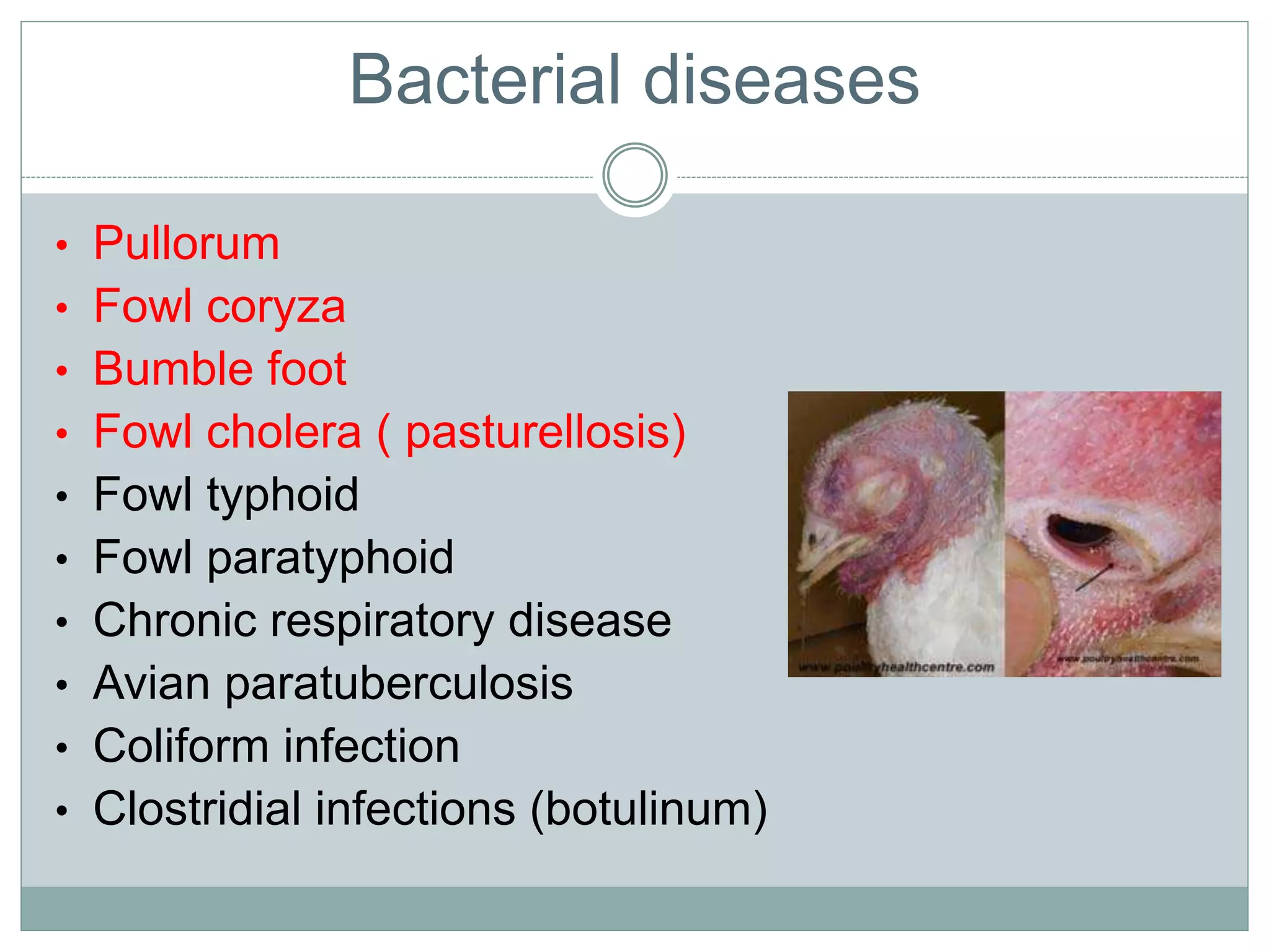
Bacterial diseases
• Pullorum
• Fowl coryza
• Bumble foot
• Fowl cholera ( pasturellosis)
• Fowl typhoid
• Fowl paratyphoid
• Chronic respiratory disease
• Avian paratuberculosis
• Coliform infection
• Clostridial infections (botulinum)
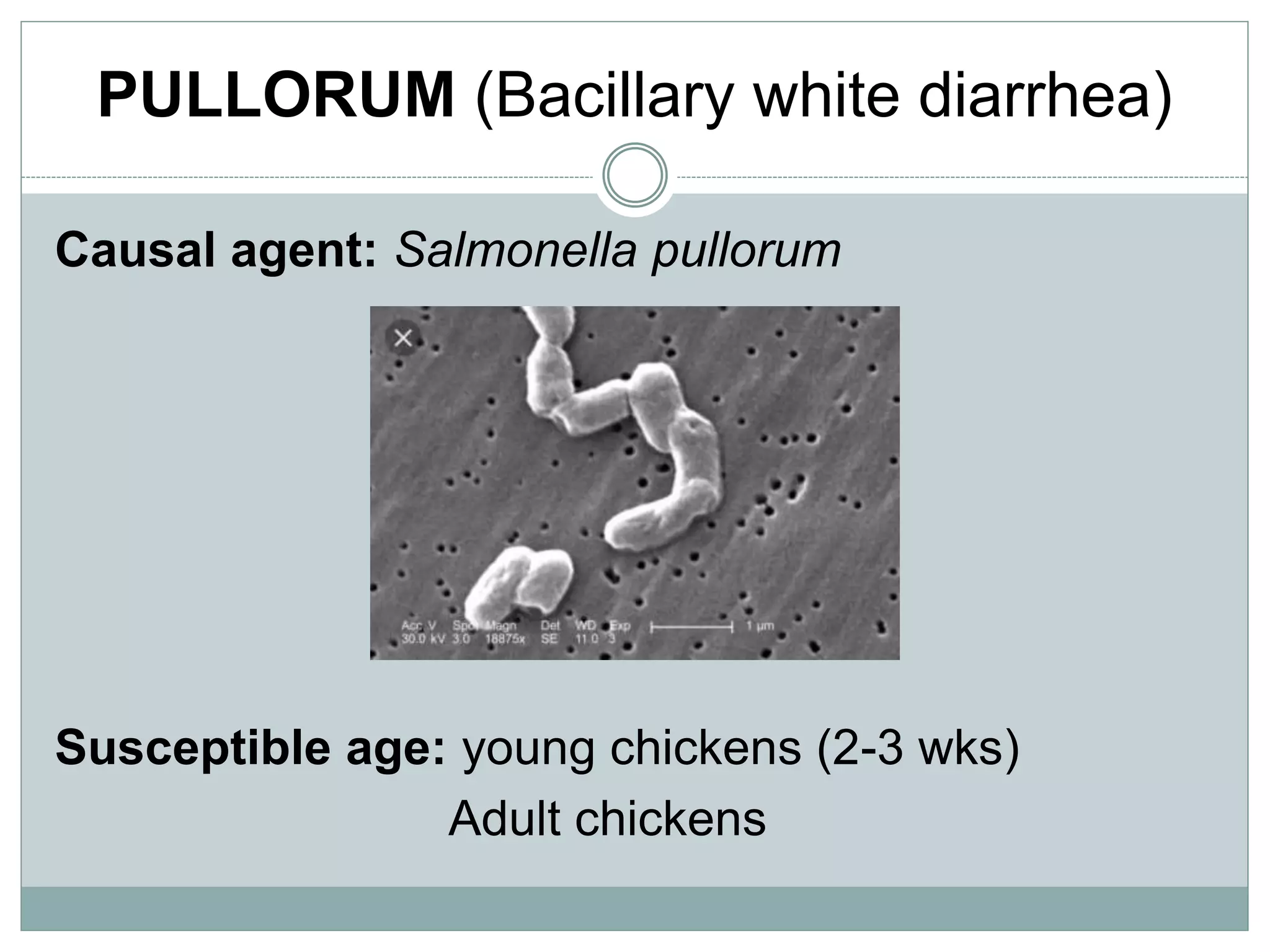
PULLORUM (Bacillary white diarrhea)
Causal agent: Salmonella pullorum
Susceptible age: young chickens (2-3 wks)
Adult chickens
 Vertical (transovarian)
 Direct or indirect contact with infected birds
 Fecal matter
 Contaminated feed, water, litter
 Via eggs
 Hatchery contaminations
Transmission:
Loss of appetite
Depression
Ruffled feathers
Closed eyes
Loud chirping
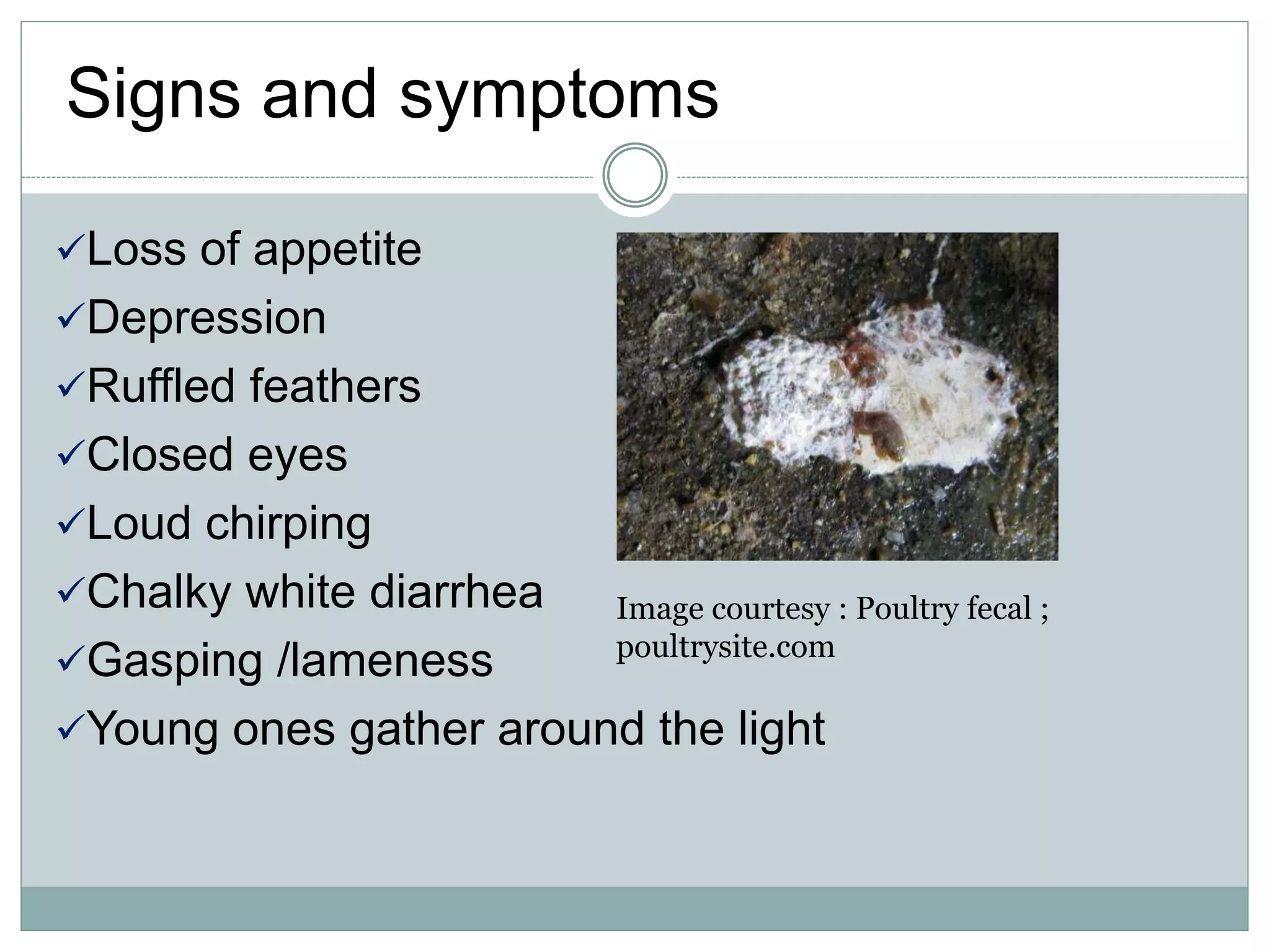
Chalky white diarrhea
Gasping /lameness
Young ones gather around the light
Signs and symptoms
Image courtesy : Poultry fecal ;
poultrysite.com
Treatments & prevention
• Parenteral injections
• Oral liquids:
Amoxycillin
Poteniated sulponamide
Tetracylines
Flouroquinolones
• Maintain cage sanitation
Some countries have special rules for salmonella
control:
1. Specific local standards for poultry houses and
equipment that must be approved
2. Investigating contamination
3. Compensated slaughter of contaminated flocks by
the state. Certain countries are considering
vaccination.
4. The use of "competitive flora" has also been
proposed to reduce the risk of contamination .
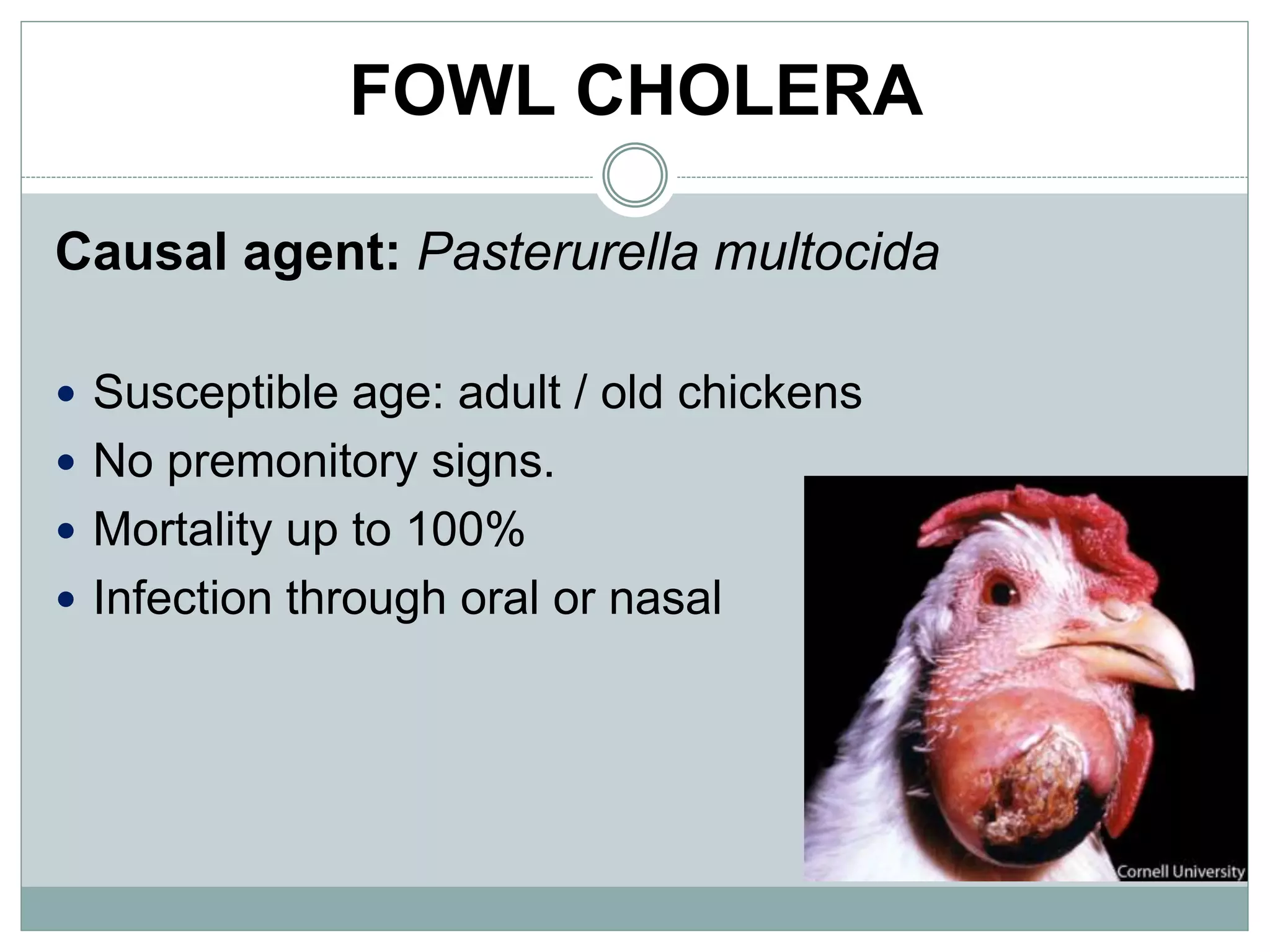
FOWL CHOLERA
Causal agent: Pasterurella multocida
 Susceptible age: adult / old chickens
 No premonitory signs.
 Mortality up to 100%
 Infection through oral or nasal
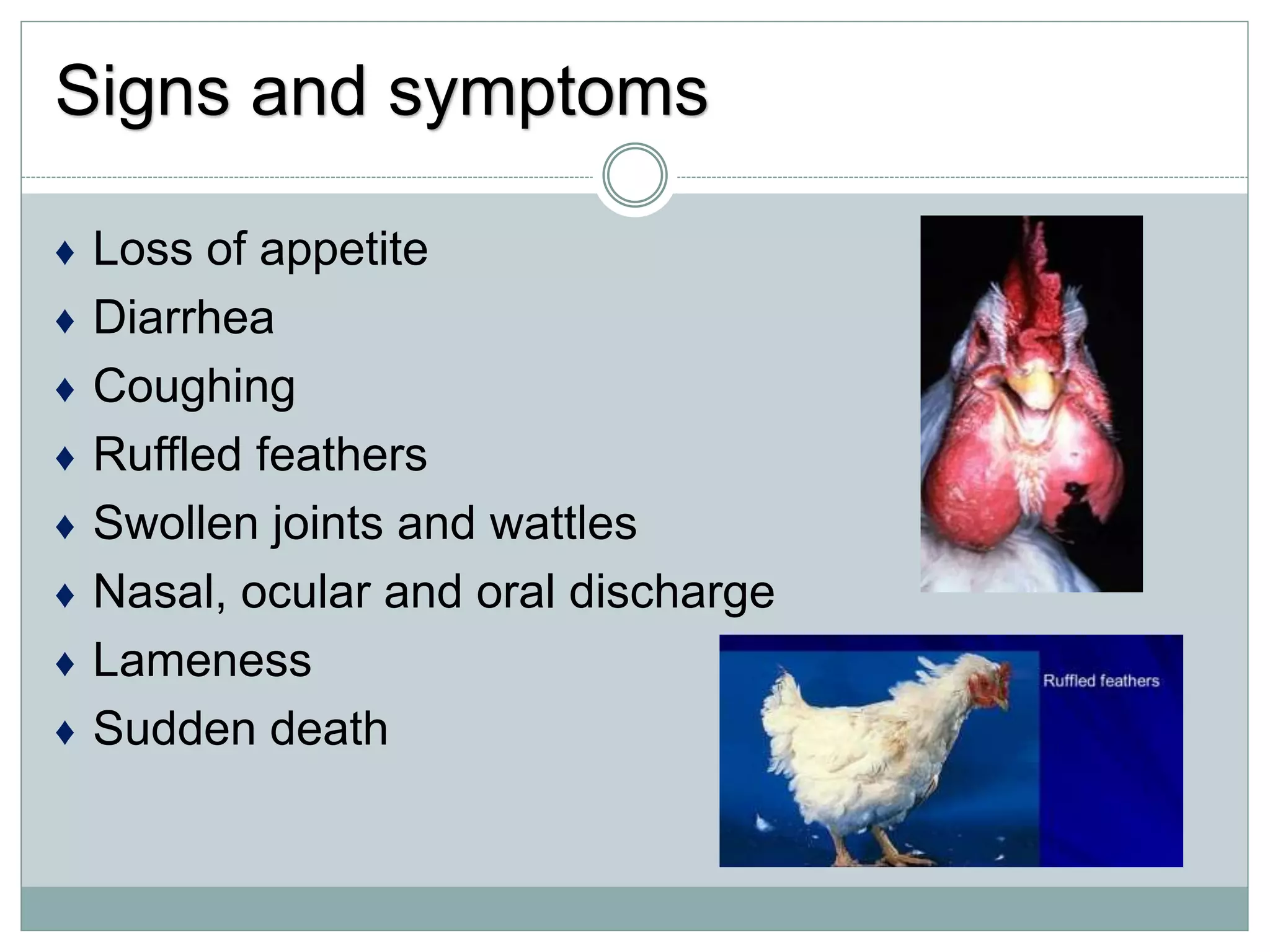
Signs and symptoms
♦ Loss of appetite
♦ Diarrhea
♦ Coughing
♦ Ruffled feathers
♦ Swollen joints and wattles
♦ Nasal, ocular and oral discharge
♦ Lameness
♦ Sudden death
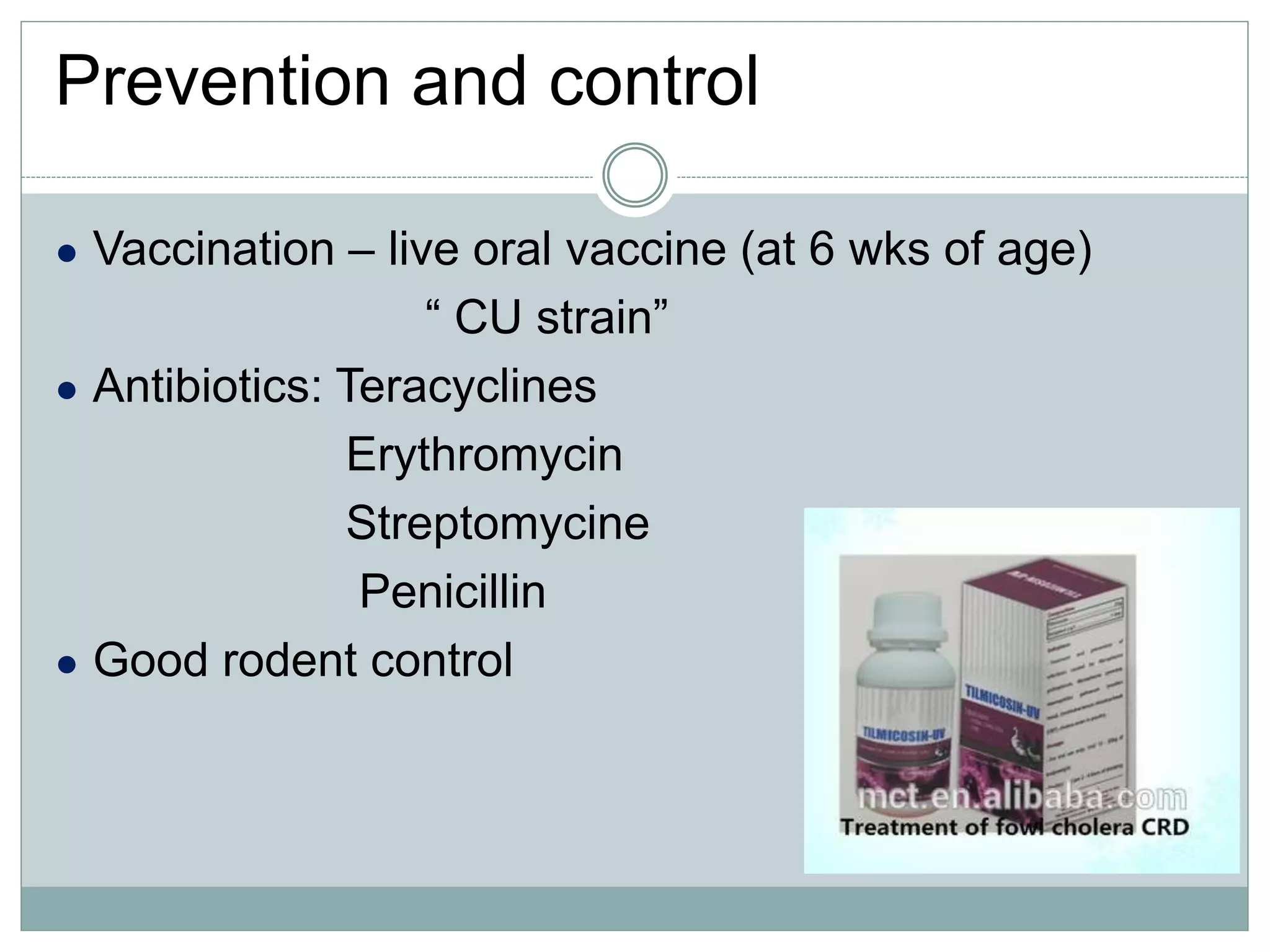
Prevention and control
● Vaccination – live oral vaccine (at 6 wks of age)
“ CU strain”
● Antibiotics: Teracyclines
Erythromycin
Streptomycine
Penicillin
● Good rodent control
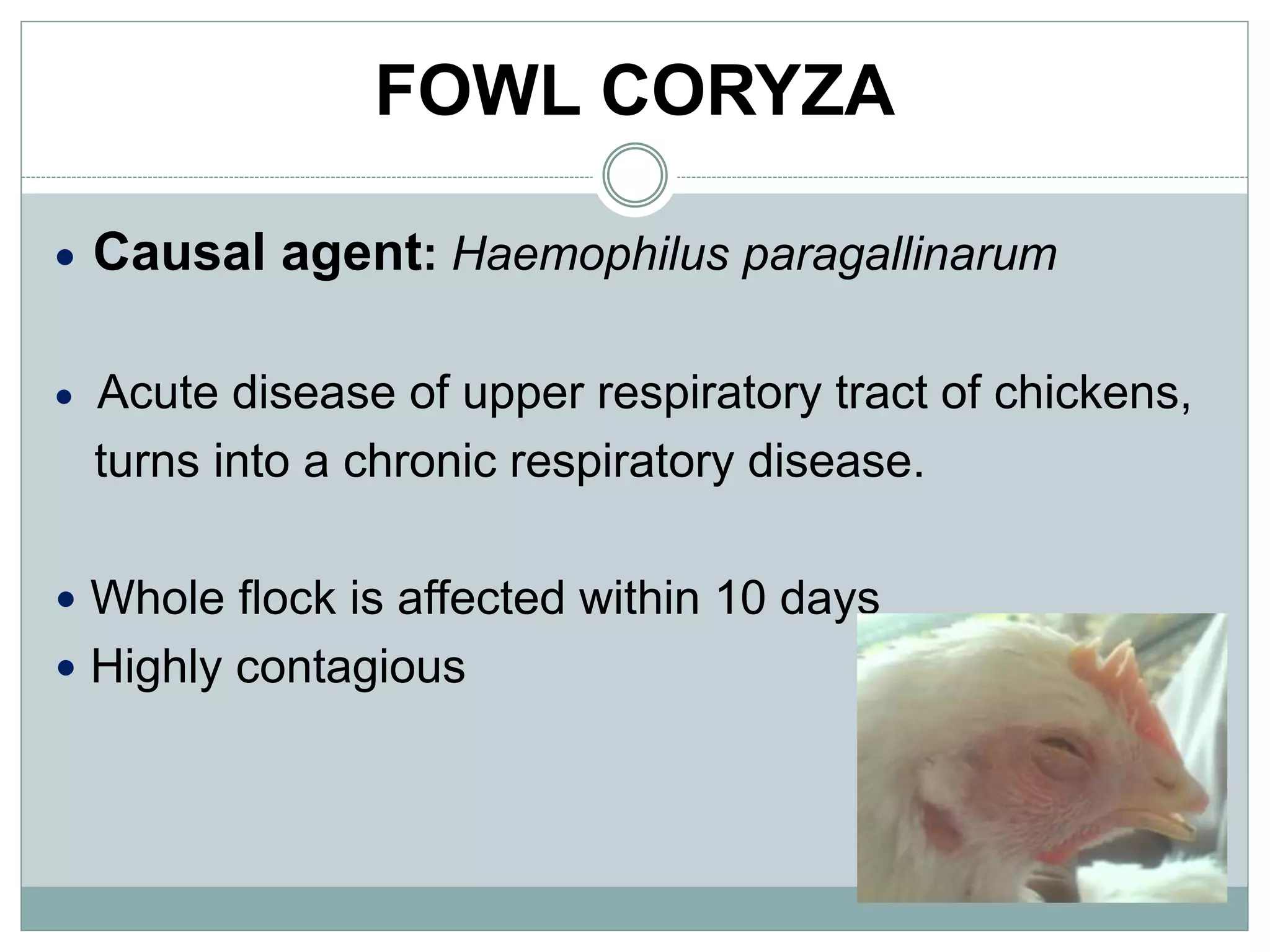
FOWL CORYZA
 Causal agent: Haemophilus paragallinarum
 Acute disease of upper respiratory tract of chickens,
turns into a chronic respiratory disease.
 Whole flock is affected within 10 days
 Highly contagious
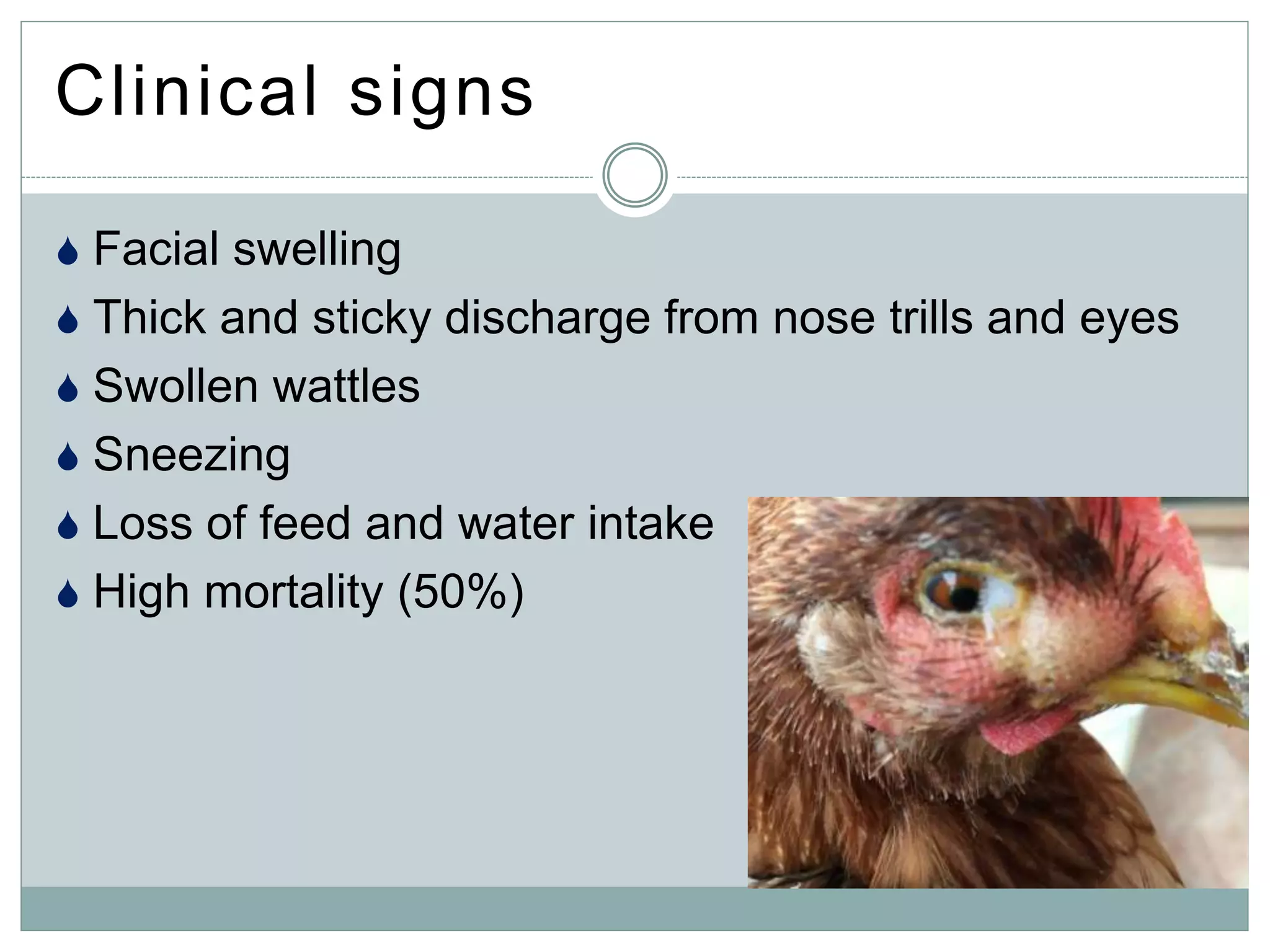
Clinical signs
 Facial swelling
 Thick and sticky discharge from nose trills and eyes
 Swollen wattles
 Sneezing
 Loss of feed and water intake
 High mortality (50%)
Transmission
 Direct bird to bird contact
 By breathing airborne bacteria
 Consuming contaminated feed and/ or water
 Birds that have recovered may shed the bacteria
 Not transmitted via eggs
Treatment and control
 Providing antibiotics
Gentamicin
Penicillin
Streptomycin
 Vaccination of chicks- Nobilis coryza
 Proper disinfection/ sanitation of cages
 Avoid mixing of unknown flocks
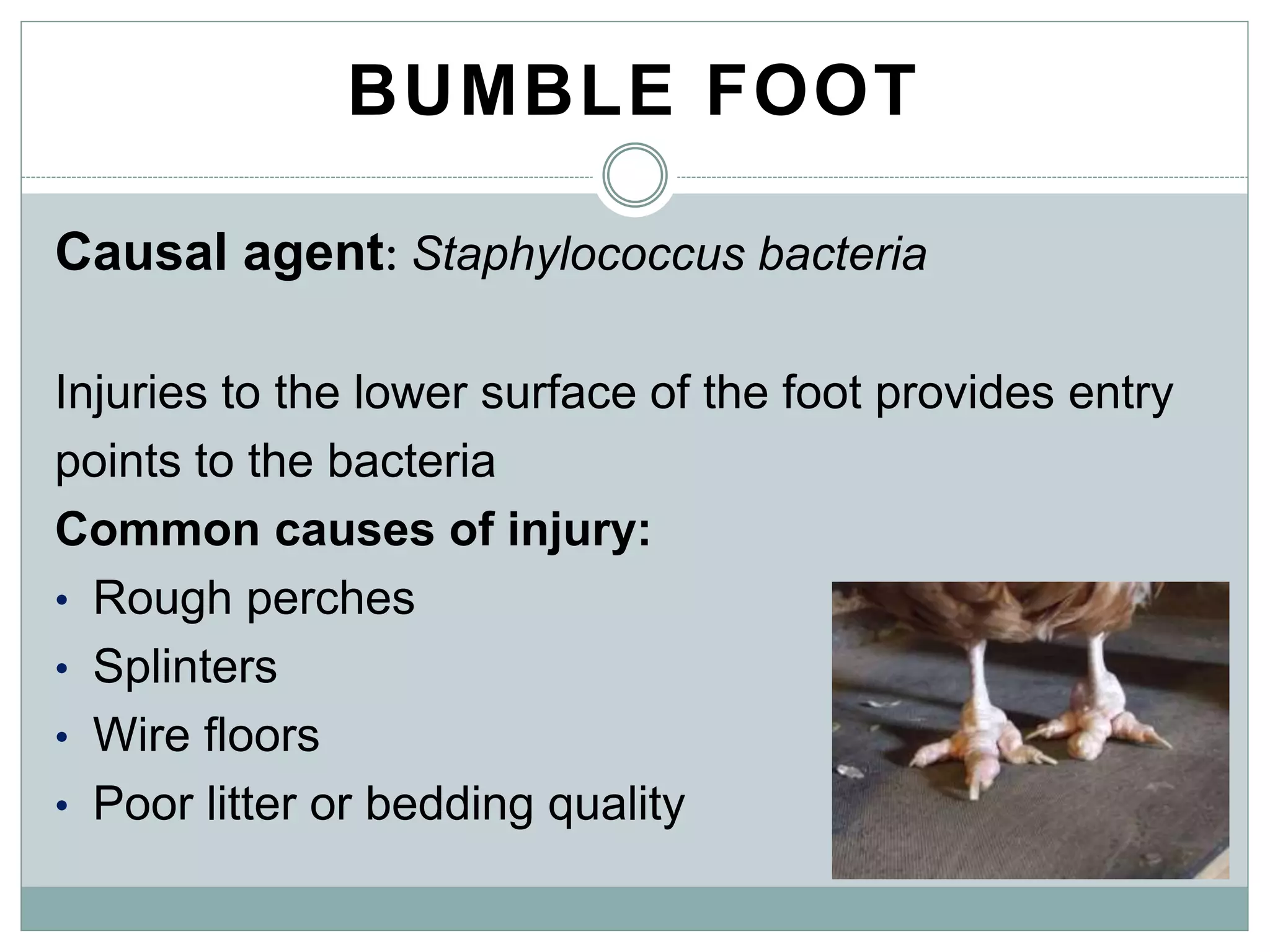
BUMBLE FOOT
Causal agent: Staphylococcus bacteria
Injuries to the lower surface of the foot provides entry
points to the bacteria
Common causes of injury:
• Rough perches
• Splinters
• Wire floors
• Poor litter or bedding quality
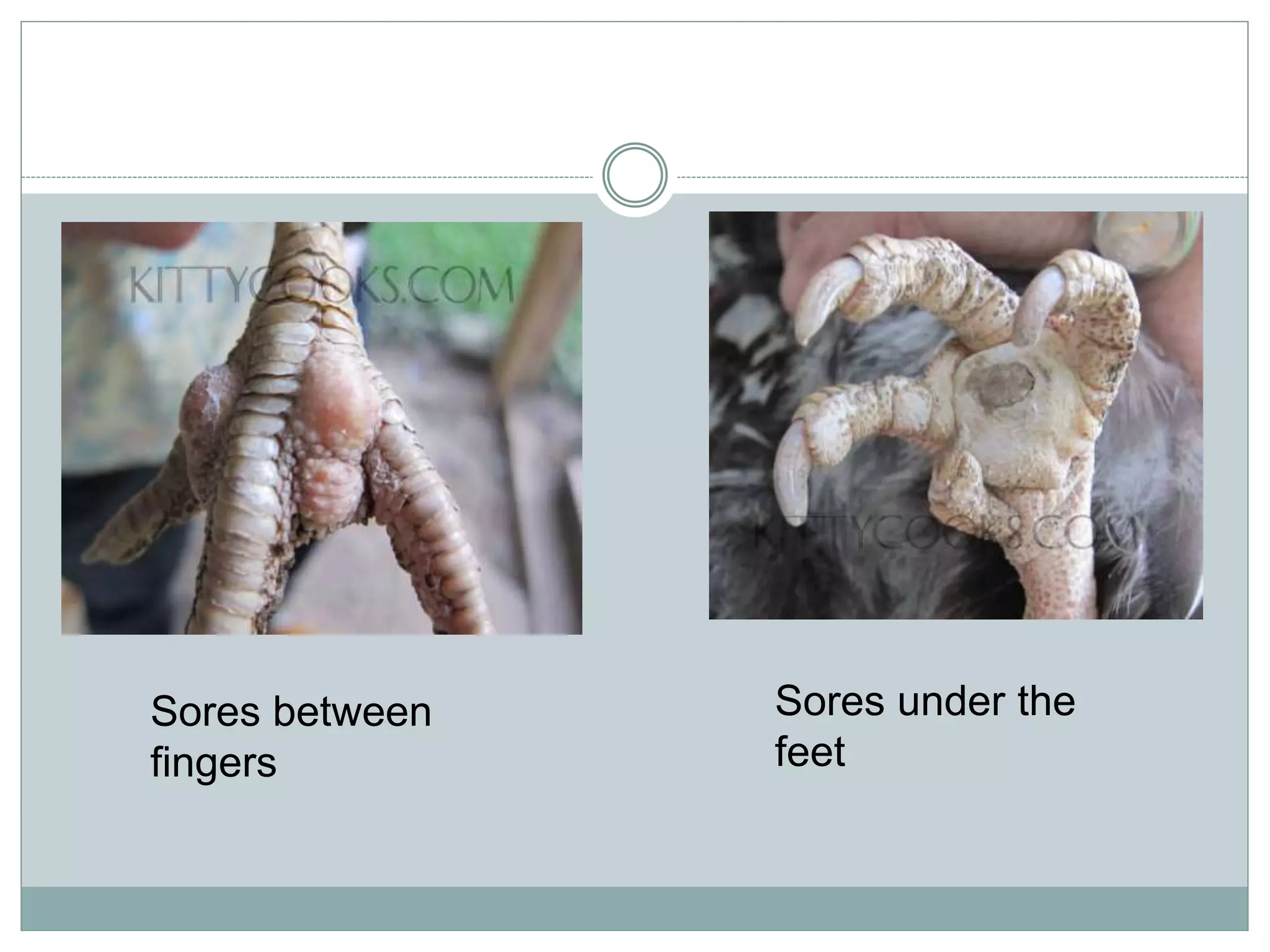
Sores between
fingers
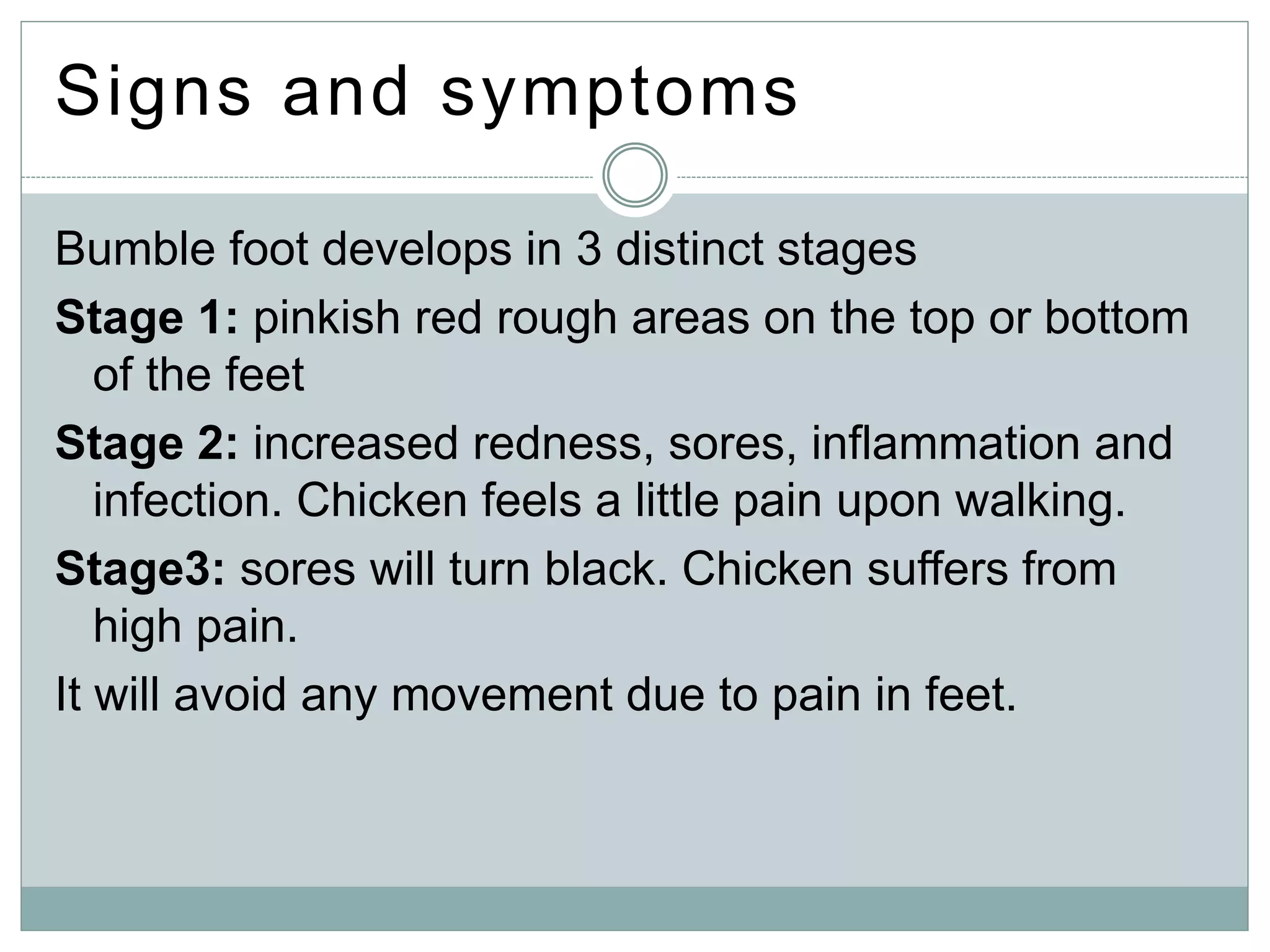
Sores under the
feet
Signs and symptoms
Bumble foot develops in 3 distinct stages
Stage 1: pinkish red rough areas on the top or bottom
of the feet
Stage 2: increased redness, sores, inflammation and
infection. Chicken feels a little pain upon walking.
Stage3: sores will turn black. Chicken suffers from
high pain.
It will avoid any movement due to pain in feet.
Treatments
 Soak foot in warm water and Epsom salts
 Disinfect with alcohol.
 If skin is open, drain pus from abscess.
 Flush abscess cavity with hydrogen peroxide to
cleanout pus and debris.
 Pack the cavity with antibiotic ointment .
 wrap the foot with gauze and elastic bandage.
 Repeat daily until foot heals.
Prevention and control
• Provide good quality litter or bedding.
• Keep bedding clean, dry, and deep.
• Keep perches less than 18 inches from the floor to
prevent foot damage due to impact from jumping.
• Remove potential sources of injury such as sharp
objects and/or surfaces
Common bacterial diseases in broilers

Common bacterial diseases in broilers

  • 1.
    Common Bacterial Diseasein Broilers Sachith Sri Mihiraj BSc (Special), M.Agri
  • 2.
  • 3.
    What is abacterial disease???  Bacterial Disease : It’s any of a variety of illnesses caused by bacteria.  Bacteria cause disease by; i. Secreting or excreting toxins ii. By producing toxins internally (which are released when the bacteria disintegrate ,or by inducing sensitivity to their antigenic properties.)
  • 4.
    Bacterial diseases • Pullorum •Fowl coryza • Bumble foot • Fowl cholera ( pasturellosis) • Fowl typhoid • Fowl paratyphoid • Chronic respiratory disease • Avian paratuberculosis • Coliform infection • Clostridial infections (botulinum)
  • 5.
    PULLORUM (Bacillary whitediarrhea) Causal agent: Salmonella pullorum Susceptible age: young chickens (2-3 wks) Adult chickens
  • 6.
     Vertical (transovarian) Direct or indirect contact with infected birds  Fecal matter  Contaminated feed, water, litter  Via eggs  Hatchery contaminations Transmission:
  • 7.
    Loss of appetite Depression Ruffledfeathers Closed eyes Loud chirping Chalky white diarrhea Gasping /lameness Young ones gather around the light Signs and symptoms Image courtesy : Poultry fecal ; poultrysite.com
  • 8.
    Treatments & prevention •Parenteral injections • Oral liquids: Amoxycillin Poteniated sulponamide Tetracylines Flouroquinolones • Maintain cage sanitation
  • 9.
    Some countries havespecial rules for salmonella control: 1. Specific local standards for poultry houses and equipment that must be approved 2. Investigating contamination 3. Compensated slaughter of contaminated flocks by the state. Certain countries are considering vaccination. 4. The use of "competitive flora" has also been proposed to reduce the risk of contamination .
  • 10.
    FOWL CHOLERA Causal agent:Pasterurella multocida  Susceptible age: adult / old chickens  No premonitory signs.  Mortality up to 100%  Infection through oral or nasal
  • 11.
    Signs and symptoms ♦Loss of appetite ♦ Diarrhea ♦ Coughing ♦ Ruffled feathers ♦ Swollen joints and wattles ♦ Nasal, ocular and oral discharge ♦ Lameness ♦ Sudden death
  • 12.
    Prevention and control ●Vaccination – live oral vaccine (at 6 wks of age) “ CU strain” ● Antibiotics: Teracyclines Erythromycin Streptomycine Penicillin ● Good rodent control
  • 13.
    FOWL CORYZA  Causalagent: Haemophilus paragallinarum  Acute disease of upper respiratory tract of chickens, turns into a chronic respiratory disease.  Whole flock is affected within 10 days  Highly contagious
  • 14.
    Clinical signs  Facialswelling  Thick and sticky discharge from nose trills and eyes  Swollen wattles  Sneezing  Loss of feed and water intake  High mortality (50%)
  • 15.
    Transmission  Direct birdto bird contact  By breathing airborne bacteria  Consuming contaminated feed and/ or water  Birds that have recovered may shed the bacteria  Not transmitted via eggs
  • 16.
    Treatment and control Providing antibiotics Gentamicin Penicillin Streptomycin  Vaccination of chicks- Nobilis coryza  Proper disinfection/ sanitation of cages  Avoid mixing of unknown flocks
  • 17.
    BUMBLE FOOT Causal agent:Staphylococcus bacteria Injuries to the lower surface of the foot provides entry points to the bacteria Common causes of injury: • Rough perches • Splinters • Wire floors • Poor litter or bedding quality
  • 18.
  • 19.
    Signs and symptoms Bumblefoot develops in 3 distinct stages Stage 1: pinkish red rough areas on the top or bottom of the feet Stage 2: increased redness, sores, inflammation and infection. Chicken feels a little pain upon walking. Stage3: sores will turn black. Chicken suffers from high pain. It will avoid any movement due to pain in feet.
  • 20.
    Treatments  Soak footin warm water and Epsom salts  Disinfect with alcohol.  If skin is open, drain pus from abscess.  Flush abscess cavity with hydrogen peroxide to cleanout pus and debris.  Pack the cavity with antibiotic ointment .  wrap the foot with gauze and elastic bandage.  Repeat daily until foot heals.
  • 21.
    Prevention and control •Provide good quality litter or bedding. • Keep bedding clean, dry, and deep. • Keep perches less than 18 inches from the floor to prevent foot damage due to impact from jumping. • Remove potential sources of injury such as sharp objects and/or surfaces

Editor's Notes

  • #11 large numbers of birds in a flock are found dead but in good body condition (4) Symptoms exhibits after 5 to 8 days of infection
  • #13 1) Includes pasturella multocida