Using Comics to Teach History Corinne Hatcher UIWP, 2011
Why? Cooperating teacher found nonfiction graphic novels in our collection
Students were finding in too easy to plagiarize Making graphic novels is fun
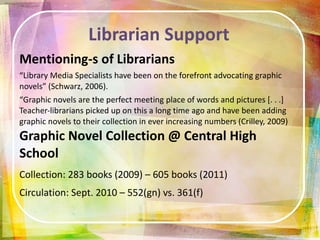
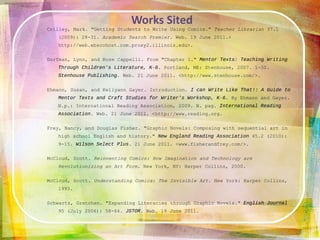
Librarian Support Mentioning-s of Librarians “ Library Media Specialists have been on the forefront advocating graphic novels” (Schwarz, 2006).
“ Graphic novels are the perfect meeting place of words and pictures [. . .] Teacher-librarians picked up on this a long time ago and have been adding graphic novels to their collection in ever increasing numbers (Crilley, 2009) Graphic Novel Collection @ Central High School Collection: 283 books (2009) – 605 books (2011)
Circulation: Sept. 2010 – 552(gn) vs. 361(f)
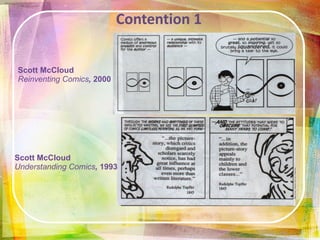
Contention 1 Scott McCloud Reinventing Comics ,  2000 Scott McCloud Understanding Comics ,  1993
Contention 2 Both traditional, alphabetic literacy and literacies such as information, visual, and media literacy can be well served by classroom engagement with the graphic novel (Schwarz, 2006)
Graphic novel compositions highlight composition processes, and a natural outcome of reading graphic novels is composing them.  When students are given the opportunity to marry words with images, they create new knowledge for themselves.  Writers with few skills experience a level of success they may not have ever had before, and advanced writers refine their skills in writing for precision.  Graphic novels and prose texts do not replace one another—they foster deeper understanding of both. (Frey and Fisher, 2010)
Contention 3 [Mentor texts are] invaluable models of outstanding writing.  They can be used for writing instruction  ( Ehmann and Gayer, 2009)
Mentor texts serve to show, not just tell, students how to write well ( Dorfman and Cappelli, 2007)
 
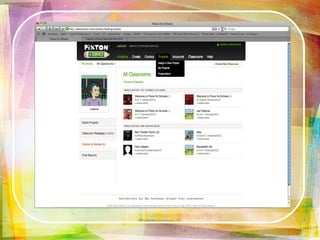
Pixton
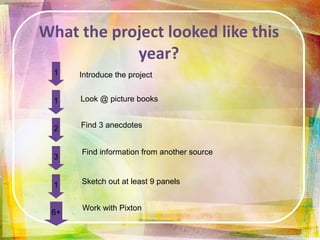
What the project looked like this year? Introduce the project Look @ picture books Find 3 anecdotes  Find information from another source Sketch out at least 9 panels  Work with Pixton 1 1 2 3 1 6+
 
 
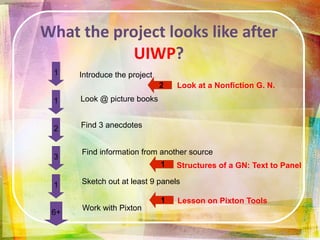
What the project looks like after  UIWP ? Introduce the project Look @ picture books Find 3 anecdotes  Find information from another source Sketch out at least 9 panels  Work with Pixton Lesson on Pixton Tools Look at a Nonfiction G. N. Structures of a GN: Text to Panel 1 1 2 3 1 6+ 2 1 1
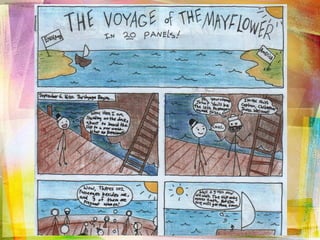
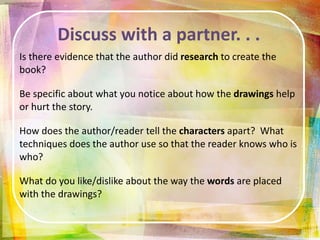
Discuss with a partner. . . Is there evidence that the author did  research  to create the book?
Be specific about what you notice about how the  drawings  help or hurt the story.

Writing with pictures

  • 1.
    Using Comics toTeach History Corinne Hatcher UIWP, 2011
  • 2.
    Why? Cooperating teacherfound nonfiction graphic novels in our collection
  • 3.
    Students were findingin too easy to plagiarize Making graphic novels is fun
  • 4.
    Librarian Support Mentioning-sof Librarians “ Library Media Specialists have been on the forefront advocating graphic novels” (Schwarz, 2006).
  • 5.
    “ Graphic novelsare the perfect meeting place of words and pictures [. . .] Teacher-librarians picked up on this a long time ago and have been adding graphic novels to their collection in ever increasing numbers (Crilley, 2009) Graphic Novel Collection @ Central High School Collection: 283 books (2009) – 605 books (2011)
  • 6.
    Circulation: Sept. 2010– 552(gn) vs. 361(f)
  • 7.
    Contention 1 ScottMcCloud Reinventing Comics , 2000 Scott McCloud Understanding Comics , 1993
  • 8.
    Contention 2 Bothtraditional, alphabetic literacy and literacies such as information, visual, and media literacy can be well served by classroom engagement with the graphic novel (Schwarz, 2006)
  • 9.
    Graphic novel compositionshighlight composition processes, and a natural outcome of reading graphic novels is composing them. When students are given the opportunity to marry words with images, they create new knowledge for themselves. Writers with few skills experience a level of success they may not have ever had before, and advanced writers refine their skills in writing for precision. Graphic novels and prose texts do not replace one another—they foster deeper understanding of both. (Frey and Fisher, 2010)
  • 10.
    Contention 3 [Mentortexts are] invaluable models of outstanding writing. They can be used for writing instruction ( Ehmann and Gayer, 2009)
  • 11.
    Mentor texts serveto show, not just tell, students how to write well ( Dorfman and Cappelli, 2007)
  • 12.
  • 13.
  • 14.
    What the projectlooked like this year? Introduce the project Look @ picture books Find 3 anecdotes Find information from another source Sketch out at least 9 panels Work with Pixton 1 1 2 3 1 6+
  • 15.
  • 16.
  • 17.
    What the projectlooks like after UIWP ? Introduce the project Look @ picture books Find 3 anecdotes Find information from another source Sketch out at least 9 panels Work with Pixton Lesson on Pixton Tools Look at a Nonfiction G. N. Structures of a GN: Text to Panel 1 1 2 3 1 6+ 2 1 1
  • 18.
    Discuss with apartner. . . Is there evidence that the author did research to create the book?
  • 19.
    Be specific aboutwhat you notice about how the drawings help or hurt the story.