 Shape

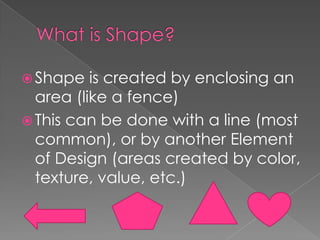
is created by enclosing an
area (like a fence)
 This can be done with a line (most
common), or by another Element
of Design (areas created by color,
texture, value, etc.)


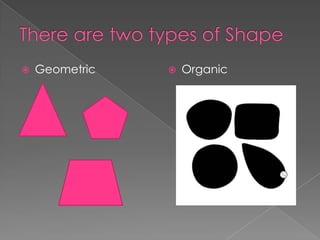
Geometric



Organic
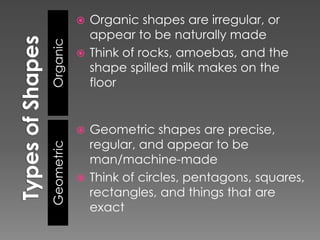
Organic shapes are irregular, or
appear to be naturally made
 Think of rocks, amoebas, and the
shape spilled milk makes on the
floor

Organic



Geometric shapes are precise,
regular, and appear to be
man/machine-made
 Think of circles, pentagons, squares,
rectangles, and things that are
exact

Geometric


 Usually

a combination of both
geometric and organic shapes
› My hair is an organic shape, but the

buttons on my cardigan are
geometric
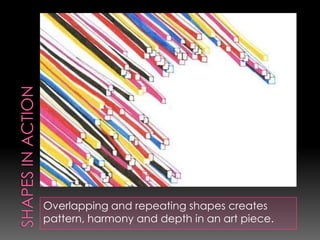
Overlapping and repeating shapes creates
pattern, harmony and depth in an art piece.


The use of repetition
› Repeating a specific element (color, line,

shape) throughout a piece



The use of rhythm
› Using repetition of one or more elements to

create a visual tempo or beat



The use of pattern
› Using shapes or lines over and over again
Sketching for the Seven
Shapes Project
 Scratch

paper
 Your 4H pencil
 Your gum eraser
 Your colored pencils






Think of shape that is
simple to draw but
interesting
Examples are arrows,
bowling pins, glue
bottles, simple shoes,
etc.
Write down three
ideas of shapes
you’d like to use





A circle, square,
triangle, etc. is
simple, but not
exciting.
Use your creativity!
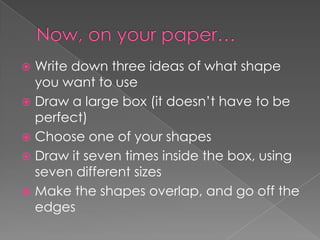
Write down three ideas of what shape
you want to use
 Draw a large box (it doesn’t have to be
perfect)
 Choose one of your shapes
 Draw it seven times inside the box, using
seven different sizes
 Make the shapes overlap, and go off the
edges

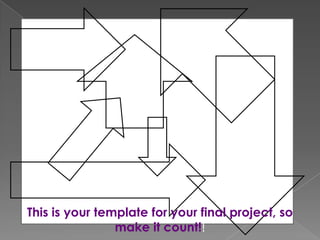
This is your template for your final project, so
make it count!!
Seven Shapes Project
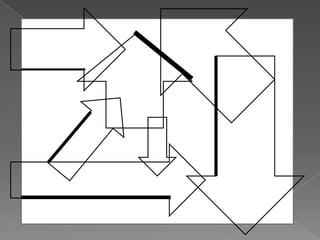
Get a larger Sharpie
 Choose which lines in the piece you’d
like to emphasis
 Use a ruler if the line is straight
 Go over SOME of the lines with the
Sharpie

Seven Shapes Project
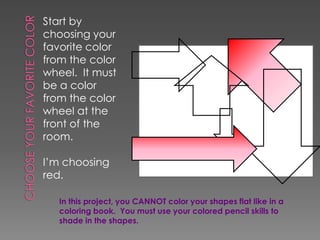
Start by
choosing your
favorite color
from the color
wheel. It must
be a color
from the color
wheel at the
front of the
room.
I’m choosing
red.
In this project, you CANNOT color your shapes flat like in a
coloring book. You must use your colored pencil skills to
shade in the shapes.
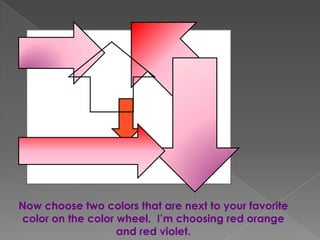
Now choose two colors that are next to your favorite
color on the color wheel. I’m choosing red orange
and red violet.
A

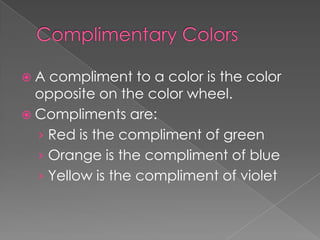
compliment to a color is the color
opposite on the color wheel.
 Compliments are:
› Red is the compliment of green
› Orange is the compliment of blue
› Yellow is the compliment of violet
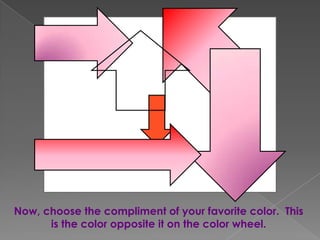
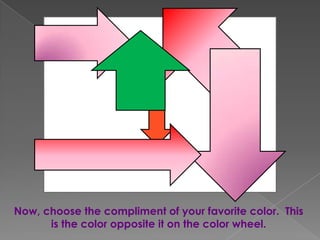
Now, choose the compliment of your favorite color. This
is the color opposite it on the color wheel.
Now, choose the compliment of your favorite color. This
is the color opposite it on the color wheel.

Seven shapes

  • 2.
     Shape is createdby enclosing an area (like a fence)  This can be done with a line (most common), or by another Element of Design (areas created by color, texture, value, etc.)
  • 3.
  • 4.
    Organic shapes areirregular, or appear to be naturally made  Think of rocks, amoebas, and the shape spilled milk makes on the floor Organic  Geometric shapes are precise, regular, and appear to be man/machine-made  Think of circles, pentagons, squares, rectangles, and things that are exact Geometric 
  • 5.
     Usually a combinationof both geometric and organic shapes › My hair is an organic shape, but the buttons on my cardigan are geometric
  • 6.
    Overlapping and repeatingshapes creates pattern, harmony and depth in an art piece.
  • 8.
     The use ofrepetition › Repeating a specific element (color, line, shape) throughout a piece  The use of rhythm › Using repetition of one or more elements to create a visual tempo or beat  The use of pattern › Using shapes or lines over and over again
  • 9.
    Sketching for theSeven Shapes Project
  • 10.
     Scratch paper  Your4H pencil  Your gum eraser  Your colored pencils
  • 11.
       Think of shapethat is simple to draw but interesting Examples are arrows, bowling pins, glue bottles, simple shoes, etc. Write down three ideas of shapes you’d like to use   A circle, square, triangle, etc. is simple, but not exciting. Use your creativity!
  • 12.
    Write down threeideas of what shape you want to use  Draw a large box (it doesn’t have to be perfect)  Choose one of your shapes  Draw it seven times inside the box, using seven different sizes  Make the shapes overlap, and go off the edges 
  • 13.
    This is yourtemplate for your final project, so make it count!!
  • 14.
  • 15.
    Get a largerSharpie  Choose which lines in the piece you’d like to emphasis  Use a ruler if the line is straight  Go over SOME of the lines with the Sharpie 
  • 17.
  • 18.
    Start by choosing your favoritecolor from the color wheel. It must be a color from the color wheel at the front of the room. I’m choosing red. In this project, you CANNOT color your shapes flat like in a coloring book. You must use your colored pencil skills to shade in the shapes.
  • 19.
    Now choose twocolors that are next to your favorite color on the color wheel. I’m choosing red orange and red violet.
  • 20.
    A compliment to acolor is the color opposite on the color wheel.  Compliments are: › Red is the compliment of green › Orange is the compliment of blue › Yellow is the compliment of violet
  • 21.
    Now, choose thecompliment of your favorite color. This is the color opposite it on the color wheel.
  • 22.
    Now, choose thecompliment of your favorite color. This is the color opposite it on the color wheel.