Download as PDF, PPTX


![Continuous Wave Functional Near Infrared (fNIR) Spectroscopy Imaging Systems
www.fnirdevices.com
4© fNIR Devices LLC. 2016
Functional Near-Infrared Monitor [fNIR]
>> Cortical activation-related to hemodynamic changes in
natural environments and diverse field conditions
Brain Activity Monitor](https://image.slidesharecdn.com/combiningopticalbrainimagingandphysiologicalsignalstostudycognitivefunction-160916153622/85/Combining-Optical-Brain-Imaging-and-Physiological-Signals-to-Study-Cognitive-Function-4-320.jpg)
![Continuous Wave Functional Near Infrared (fNIR) Spectroscopy Imaging Systems
www.fnirdevices.com
5© fNIR Devices LLC. 2016
Functional Near-Infrared Monitor [fNIR]
>> Cortical activation-related to hemodynamic changes in
natural environments and diverse field conditions
Brain Activity Monitor](https://image.slidesharecdn.com/combiningopticalbrainimagingandphysiologicalsignalstostudycognitivefunction-160916153622/85/Combining-Optical-Brain-Imaging-and-Physiological-Signals-to-Study-Cognitive-Function-5-320.jpg)
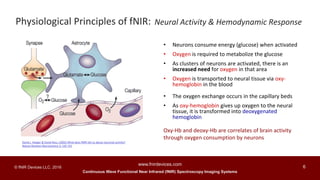
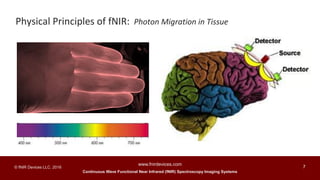
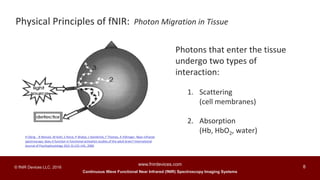
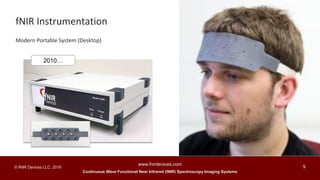
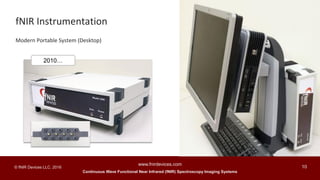
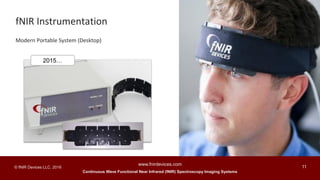
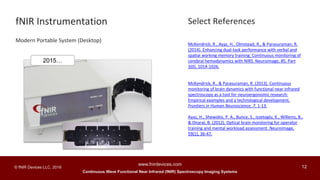
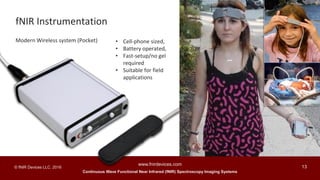
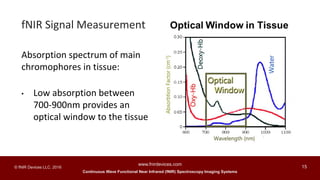
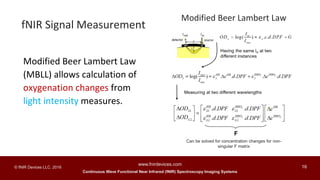
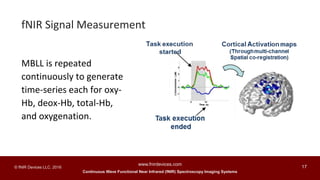
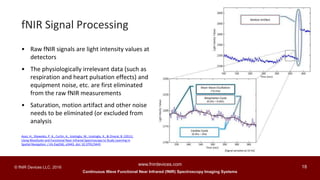
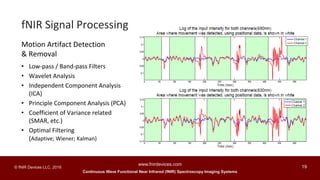
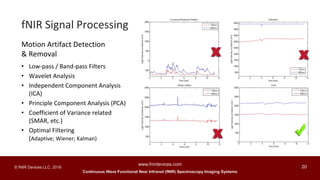


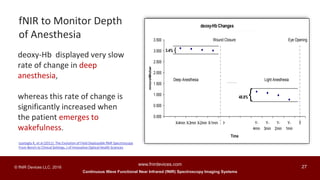
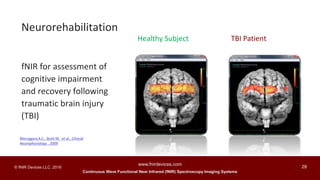
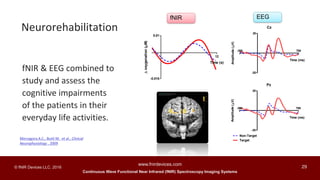



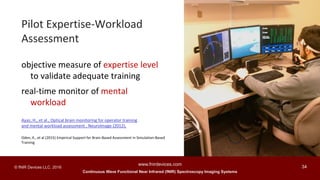

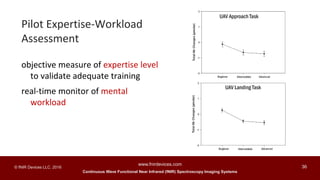

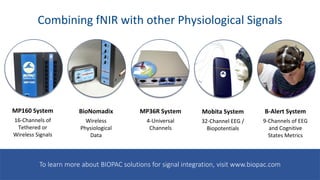


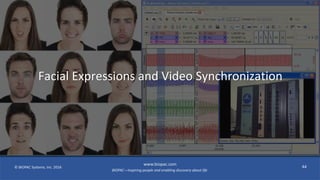

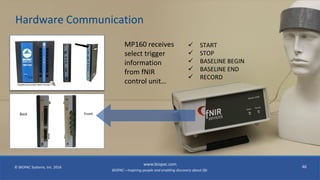


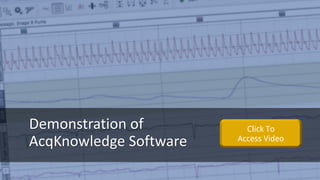


The document discusses the integration of functional near-infrared spectroscopy (fNIRS) in studying cognitive function through non-invasive optical brain imaging and physiological signals. It highlights the physiological and physical principles behind fNIRS, its modern applications in monitoring cognitive workload in different environments, and the technologies developed for improved brain monitoring. Research examples showcase its utility in assessing cognitive impairments, anesthesia depth, and workload during tasks like air traffic control.


