The Learning Brain:Is there a role for Neuroimaging ?
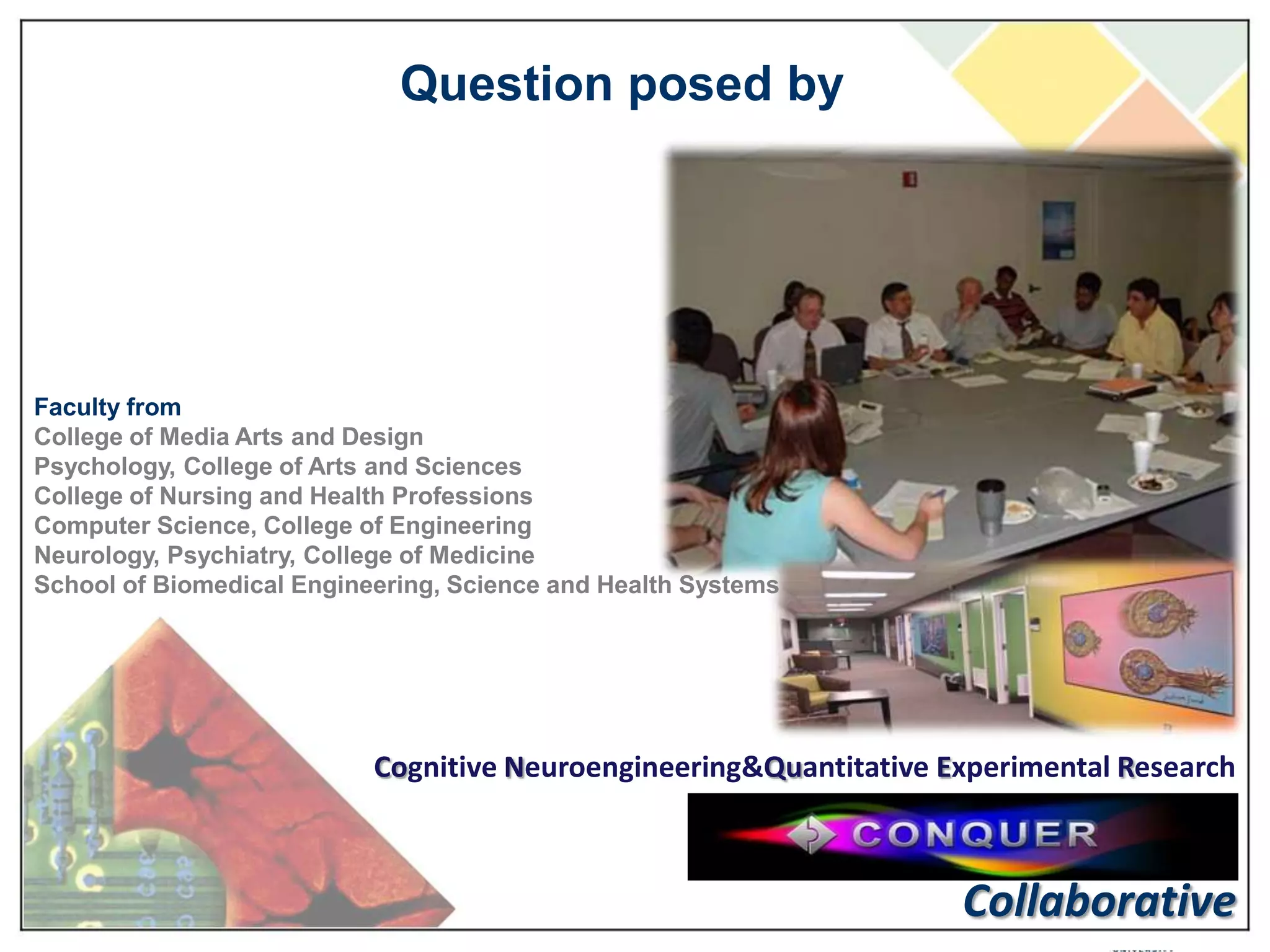
Question posed byFaculty fromCollege of Media Arts and DesignPsychology, College of Arts and SciencesCollege of Nursing and Health ProfessionsComputer Science, College of EngineeringNeurology, Psychiatry, College of MedicineSchool of Biomedical Engineering, Science and Health SystemsCognitive Neuroengineering & Quantitative Experimental ResearchCollaborative
Institute for Innovation in Teaching and LearningAnother “Drexel First” ?
What makes Drexel unique?... faculty from diverse disciplines pondering the future of learningWill it position Drexel for leadership in innovation in learning?… assessment of learning?The New EraCustomized and individualized Learning,
Learning Partners, Mentors, Coaches,
Virtual Environments, Networked Communities
New Rules of Engagement… Neuroimaging Proposition?Vast neuroimaging literature on learning and memory  … paradigms from cognitive psychology… lack of educational contextBrain areas associated with learning and memory… fMRI, PET not amenable to natural environments, … EEG not localizedFunctional Optical Brain ImagingSafe, Affordable
Portable, Wireless, Wearable
Deployable in learning environmentsCONQUERCollabOrativeCognitive Neuroengineering & Quantitative Experimental Research Collaborativea unique brain function research facility that houses human experiment rooms equipped with comprehensive suite of human brain activity monitoring modalities, such as near-infrared (NIR) based functional optical brain imaging [fNIR]	electroencephalogram [EEG]experimental protocol design tools and simulation technologies	sensor and device test & development labs
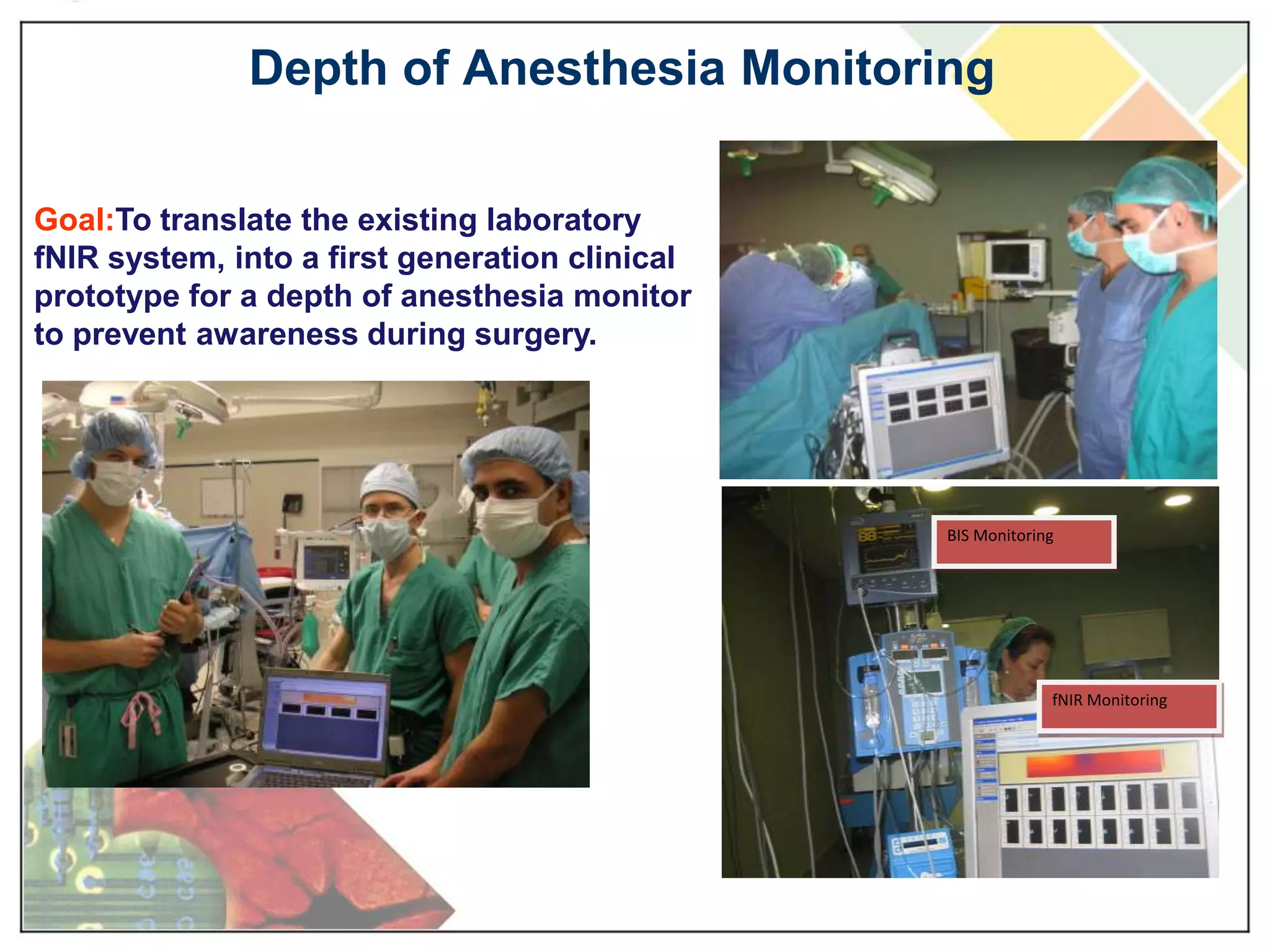
CONQUER CollabOrative(Cont’s)Cognitive Neuroengineering & Quantitative Experimental Research Collaborative Laboratoryemphasis on collaborative interdisciplinary international researchBrain in LearningLearning in virtual realityProblem solvingAcquisition and learning of motor skills Human Performance and TrainingCognitive workload assessmentTransition from novice to expert…Brain Computer Interface (BCI)Neurorehabilitation in Traumatic Brain injury… cognitive development… agingDepth of Anesthesia Pediatric monitoring…
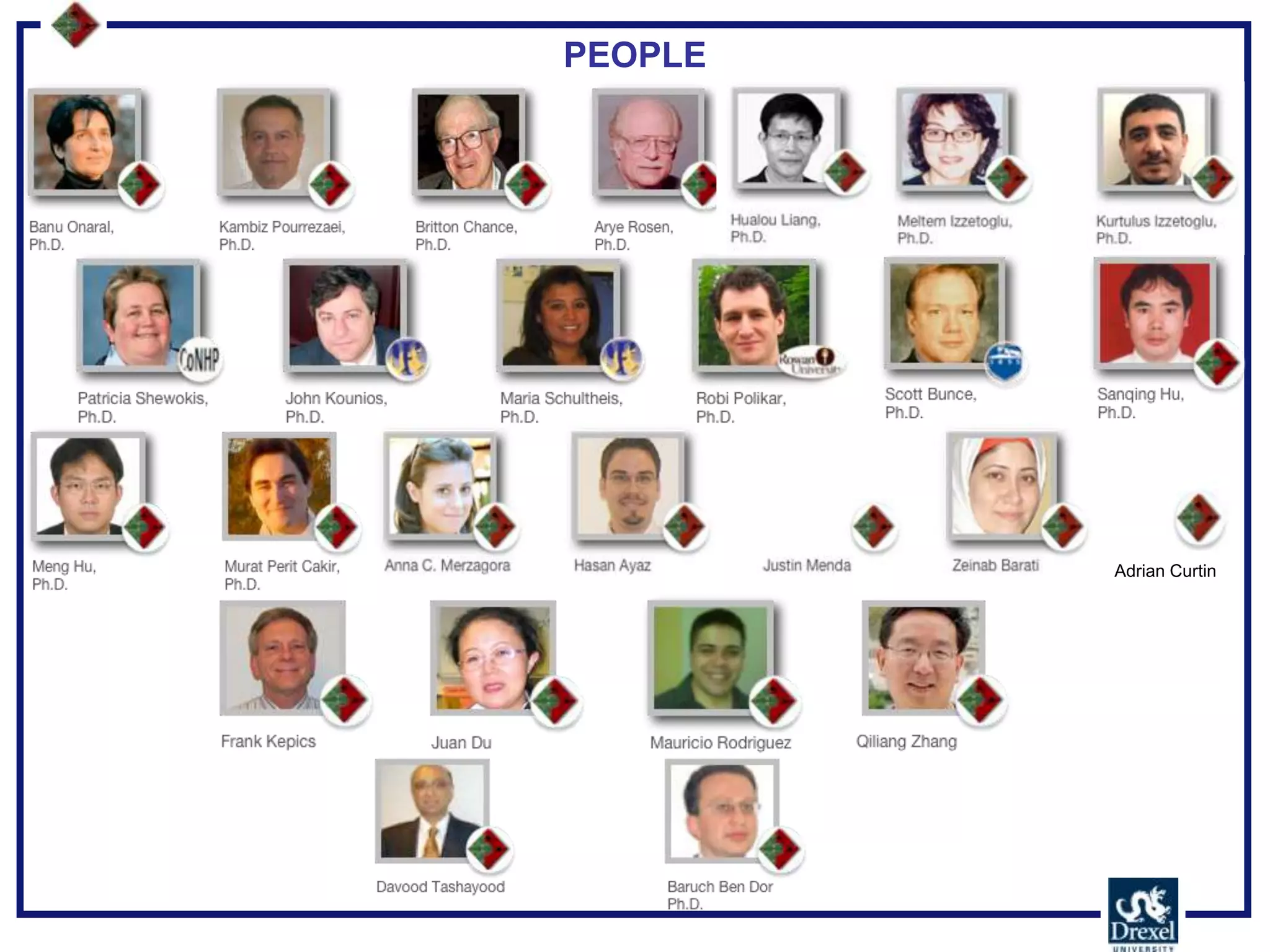
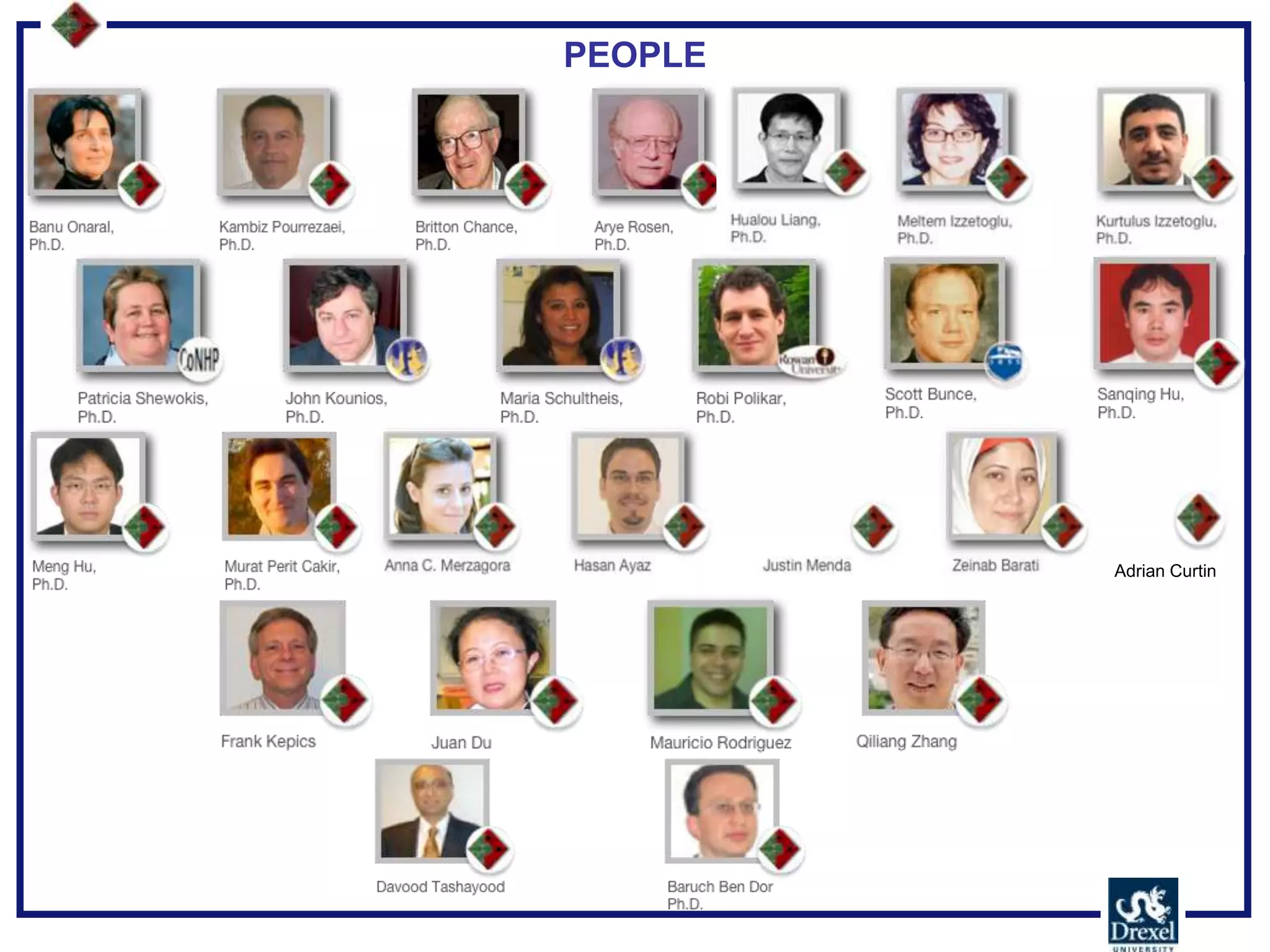
PEOPLEAdrian Curtin
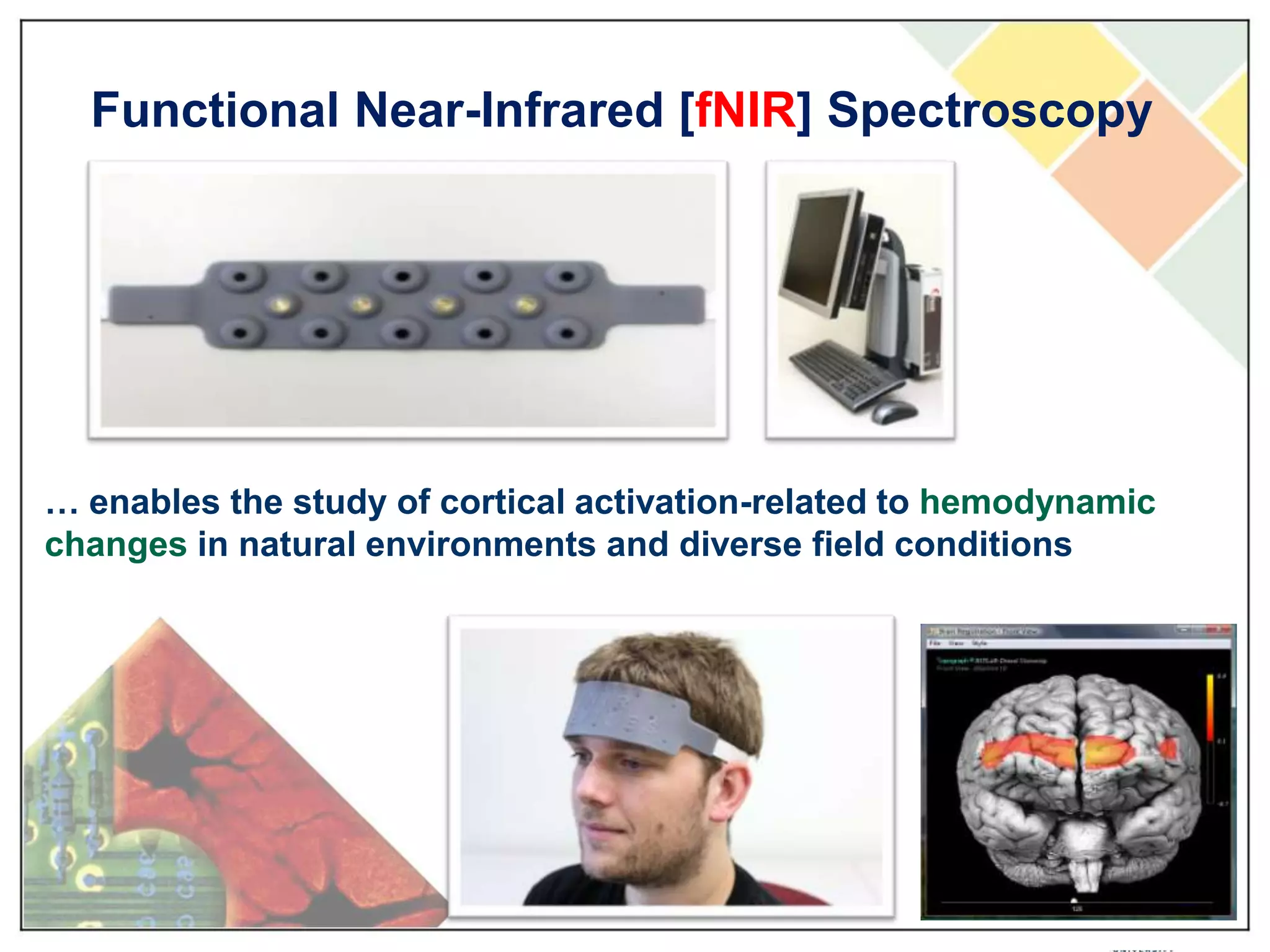
… enables the study of cortical activation-related to hemodynamic changes in natural environments and diverse field conditions Functional Near-Infrared [fNIR] Spectroscopy
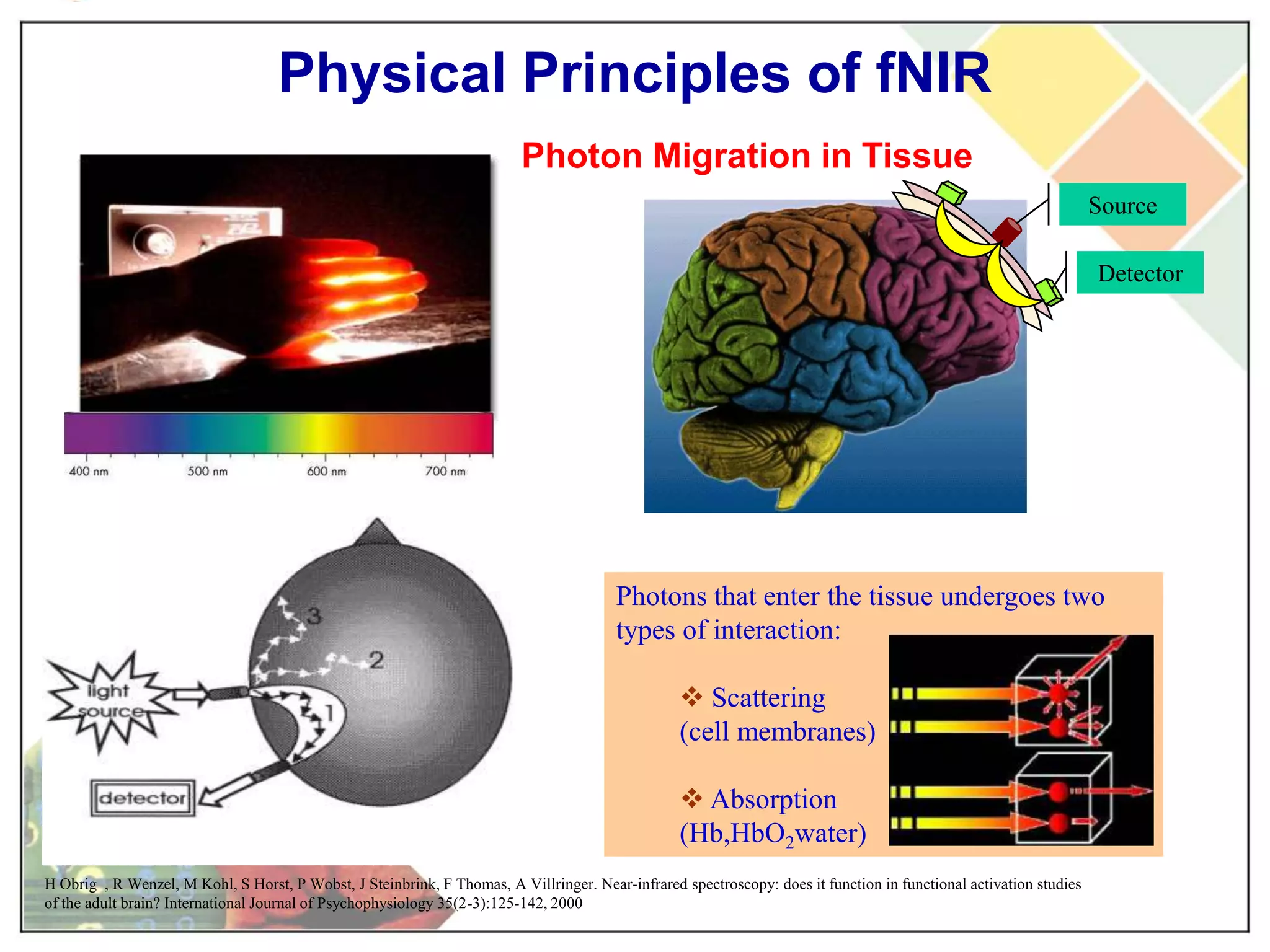
SourceDetectorPhysical Principles of fNIRPhoton Migration in TissuePhotons that enter the tissue undergoes two types of interaction: Scattering(cell membranes) Absorption(Hb,HbO2water)H Obrig  , R Wenzel, M Kohl, S Horst, P Wobst, J Steinbrink, F Thomas, A Villringer. Near-infrared spectroscopy: does it function in functional activation studies of the adult brain? International Journal of Psychophysiology 35(2-3):125-142, 2000
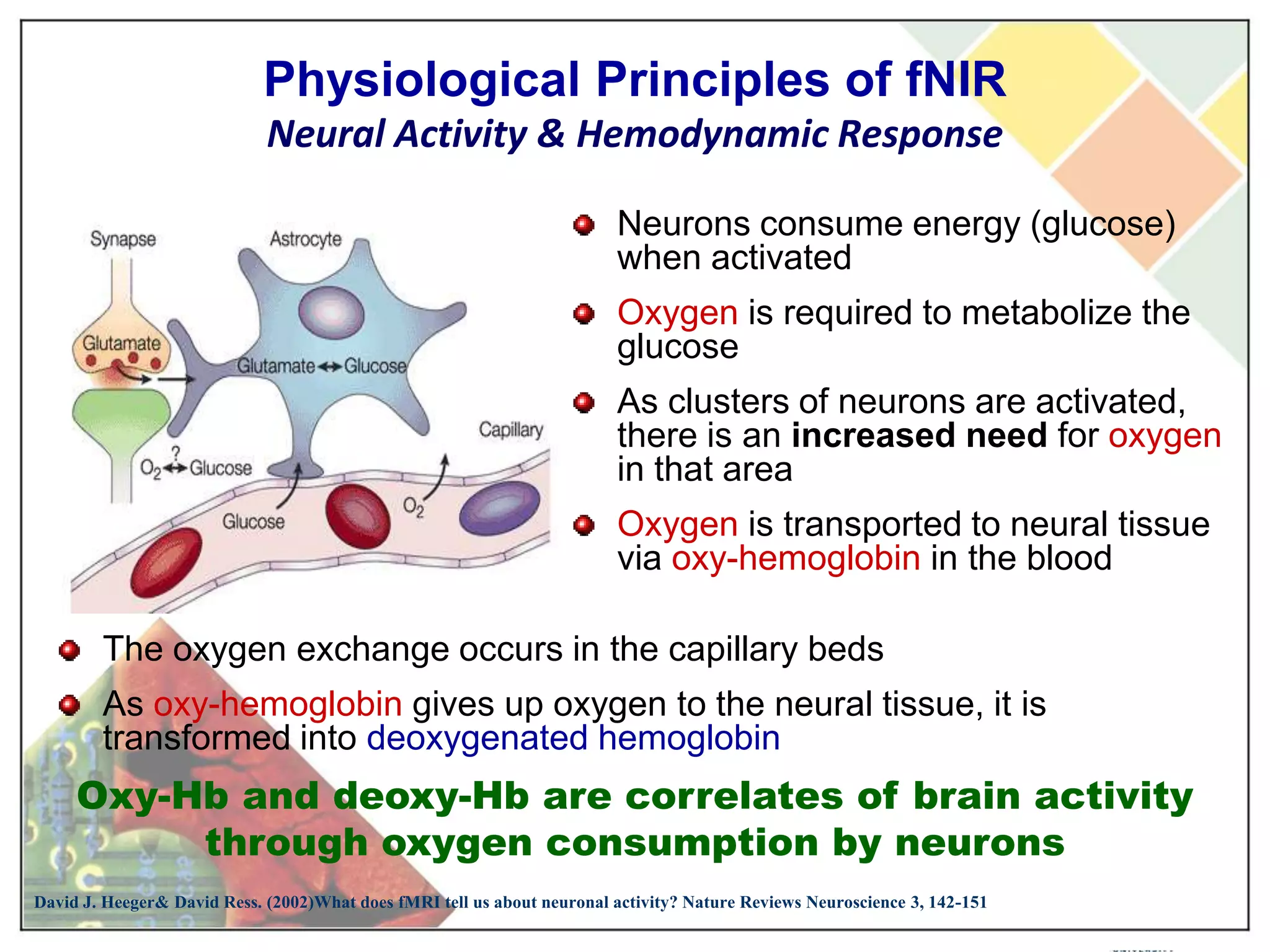
Physiological Principles of fNIR Neural Activity & Hemodynamic ResponseNeurons consume energy (glucose) when activatedOxygen is required to metabolize the glucoseAs clusters of neurons are activated, there is an increased need for oxygen in that areaOxygen is transported to neural tissue via oxy-hemoglobin in the bloodThe oxygen exchange occurs in the capillary bedsAs oxy-hemoglobin gives up oxygen to the neural tissue, it is transformed into deoxygenated hemoglobinOxy-Hb and deoxy-Hb are correlates of brain activity through oxygen consumption by neuronsDavid J. Heeger & David Ress. (2002)What does fMRI tell us about neuronal activity? Nature Reviews Neuroscience 3, 142-151
Near IRStimuli PresentationPeakOxygenationInitial DipPost stimulusundershootPrinciples of fNIR IIIOptical Window in Tissue.GIoI.GModifiedBeer-Lambert Law
Drexel fNIR InstrumentationfNIR Technology EvolutionWireless systemFiber-Based Full Head Research SystemContinuous WavePortable system2001-082008-
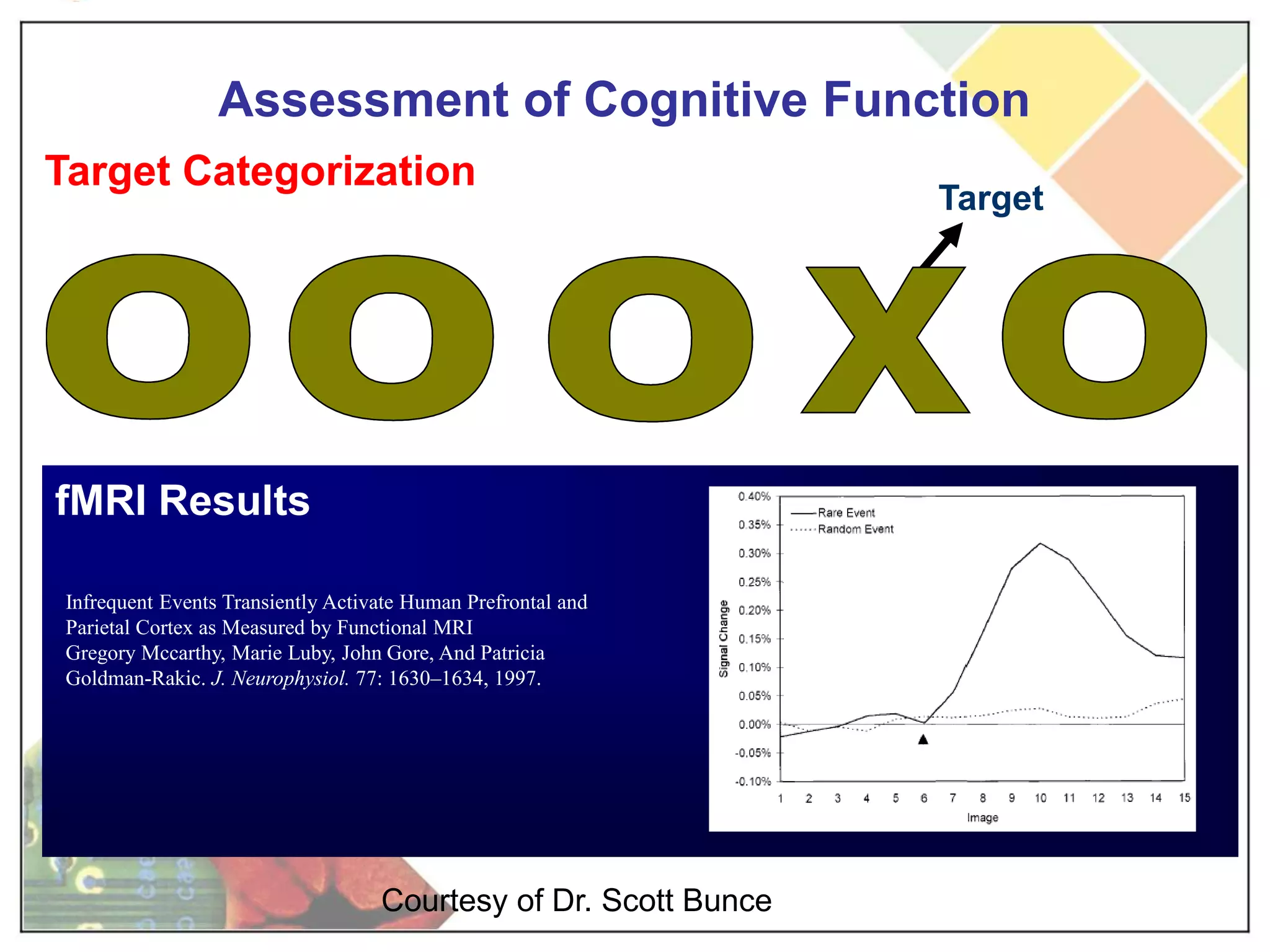
Assessment of Cognitive FunctionTarget CategorizationTargetfMRI ResultsInfrequent Events Transiently Activate Human Prefrontal and Parietal Cortex as Measured by Functional MRIGregory Mccarthy, Marie Luby, John Gore, And Patricia Goldman-Rakic. J. Neurophysiol. 77: 1630–1634, 1997.Courtesy of Dr. Scott Bunce
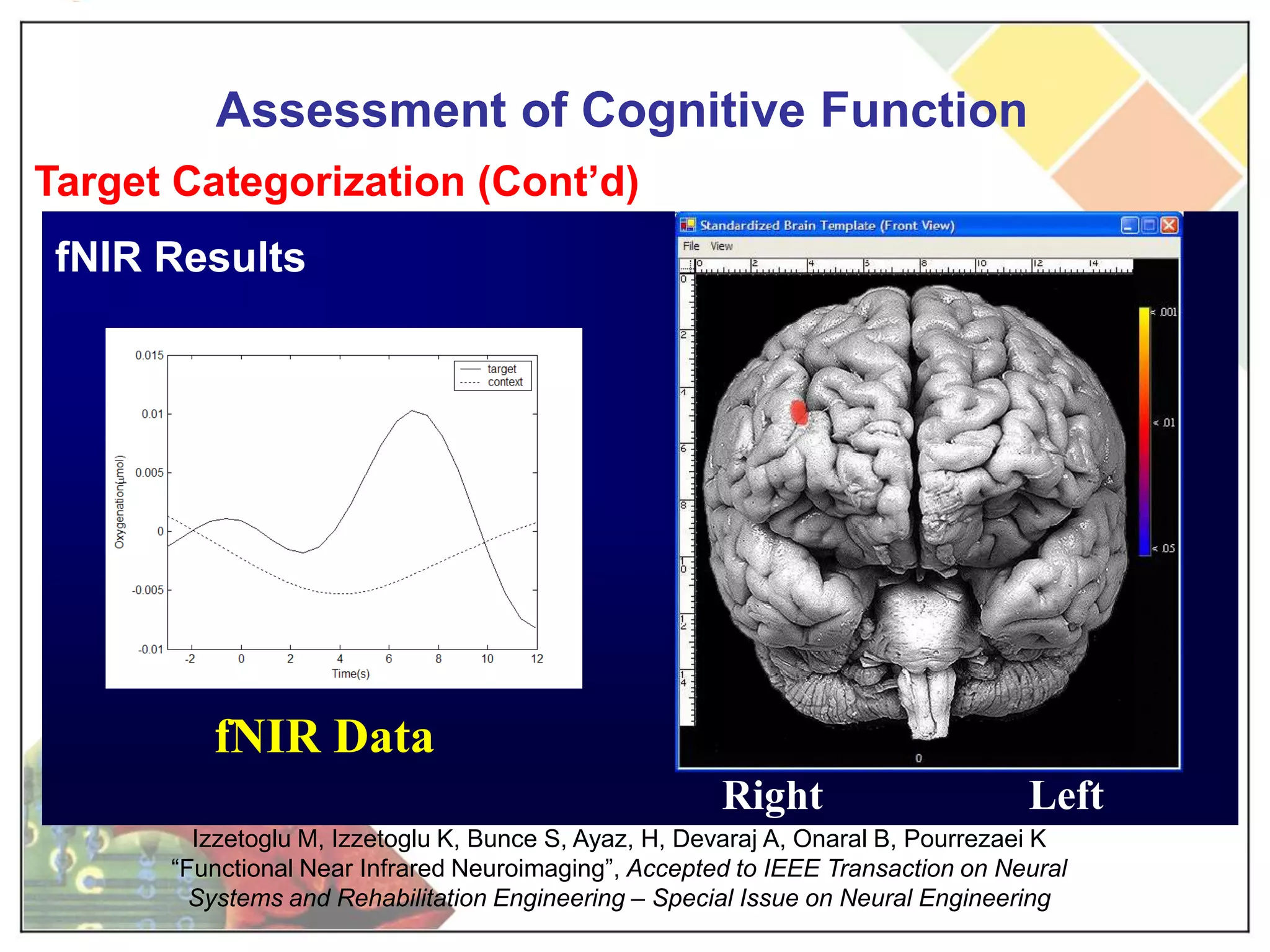
Assessment of Cognitive FunctionTarget Categorization (Cont’d)fNIR ResultsfNIR DataRightLeftIzzetoglu M, Izzetoglu K, Bunce S, Ayaz, H, Devaraj A, Onaral B, Pourrezaei K “Functional Near Infrared Neuroimaging”, Accepted to IEEE Transaction on Neural Systems and Rehabilitation Engineering – Special Issue on Neural Engineering
Assessment of Cognitive FunctionWorking Memory (n-back Task)
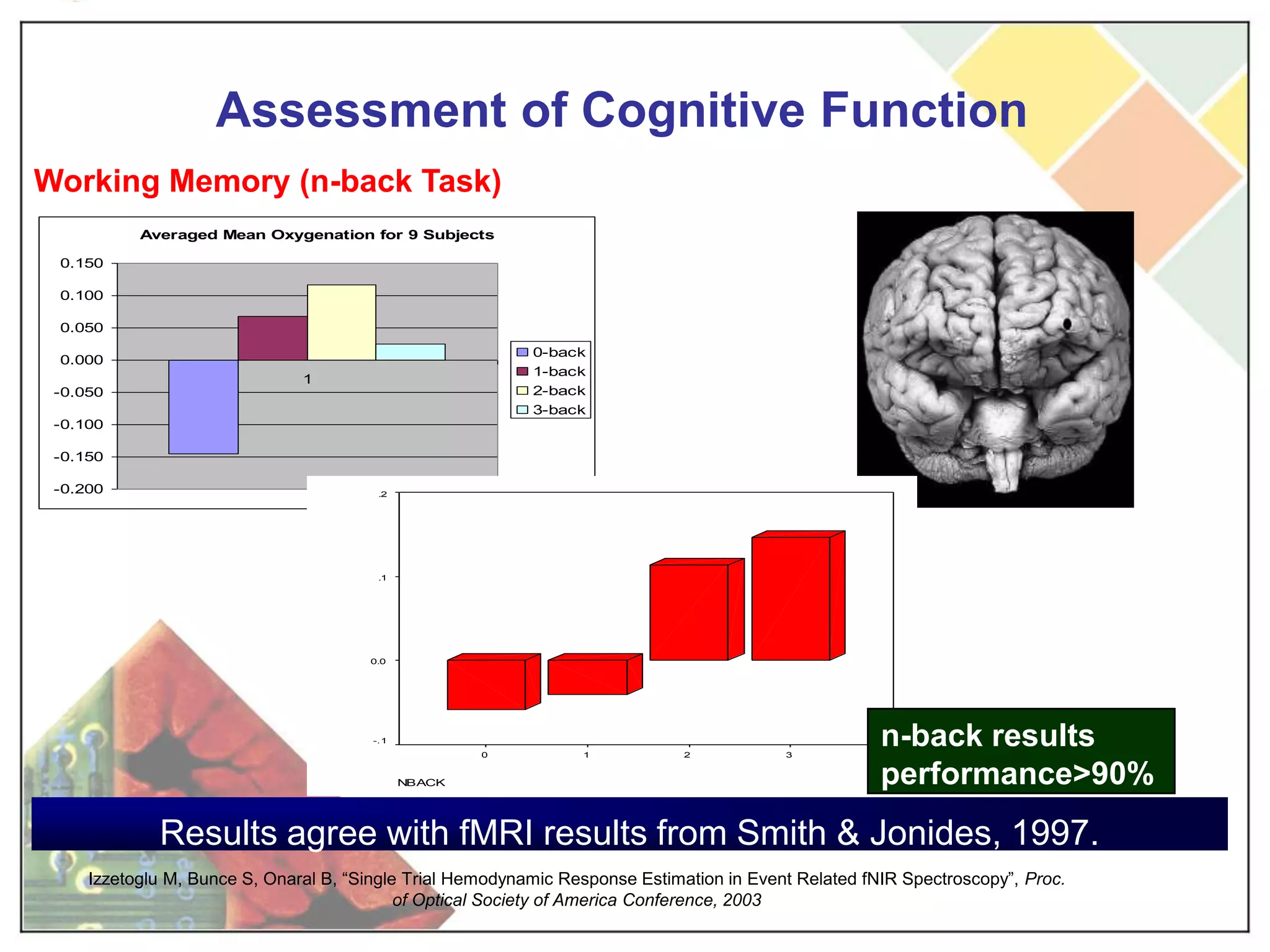
Assessment of Cognitive FunctionWorking Memory (n-back Task)n-back results performance>90%Results agree with fMRI results from Smith & Jonides, 1997.Izzetoglu M, Bunce S, Onaral B, “Single Trial Hemodynamic Response Estimation in Event Related fNIR Spectroscopy”, Proc. of Optical Society of America Conference, 2003
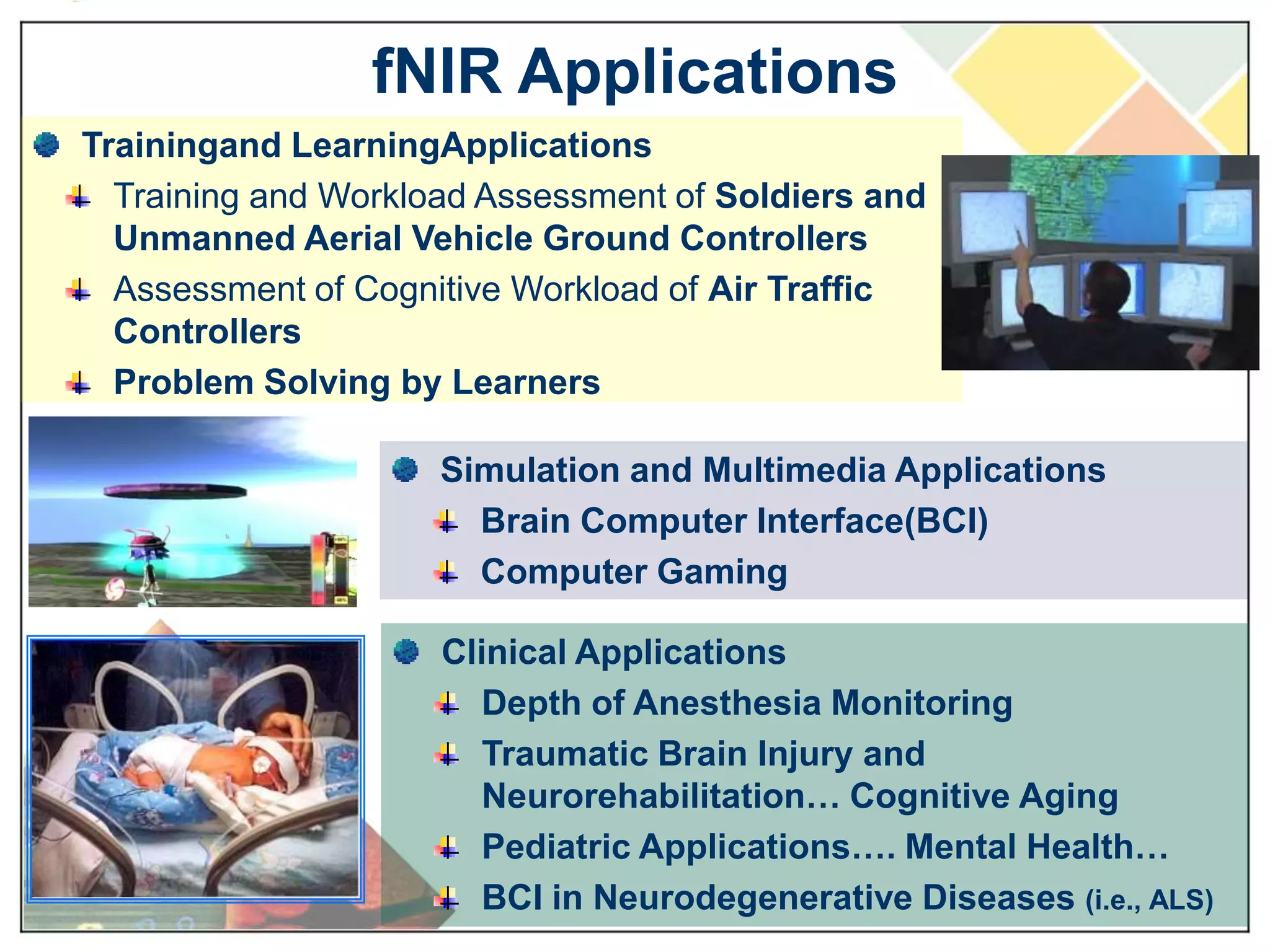
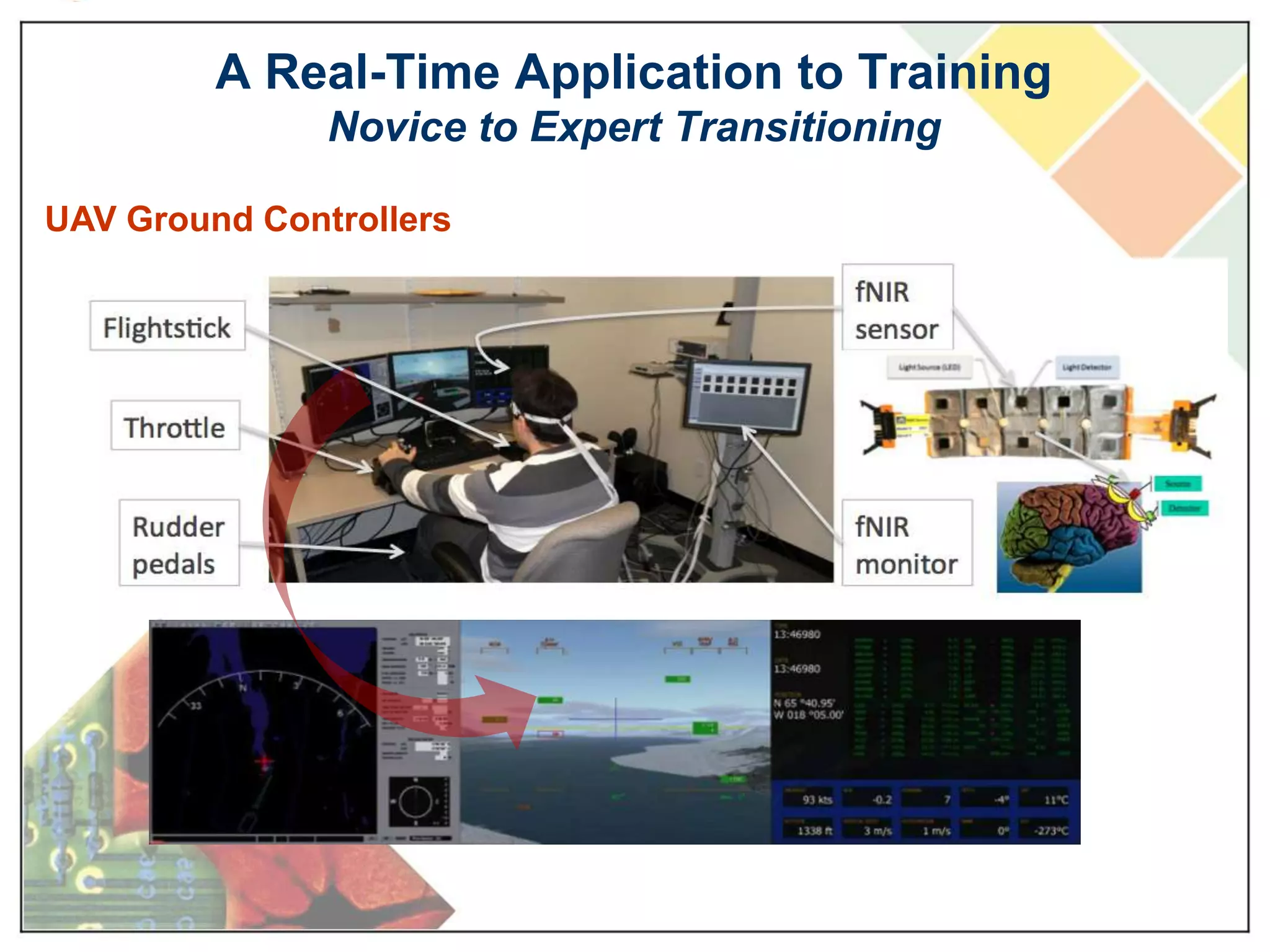
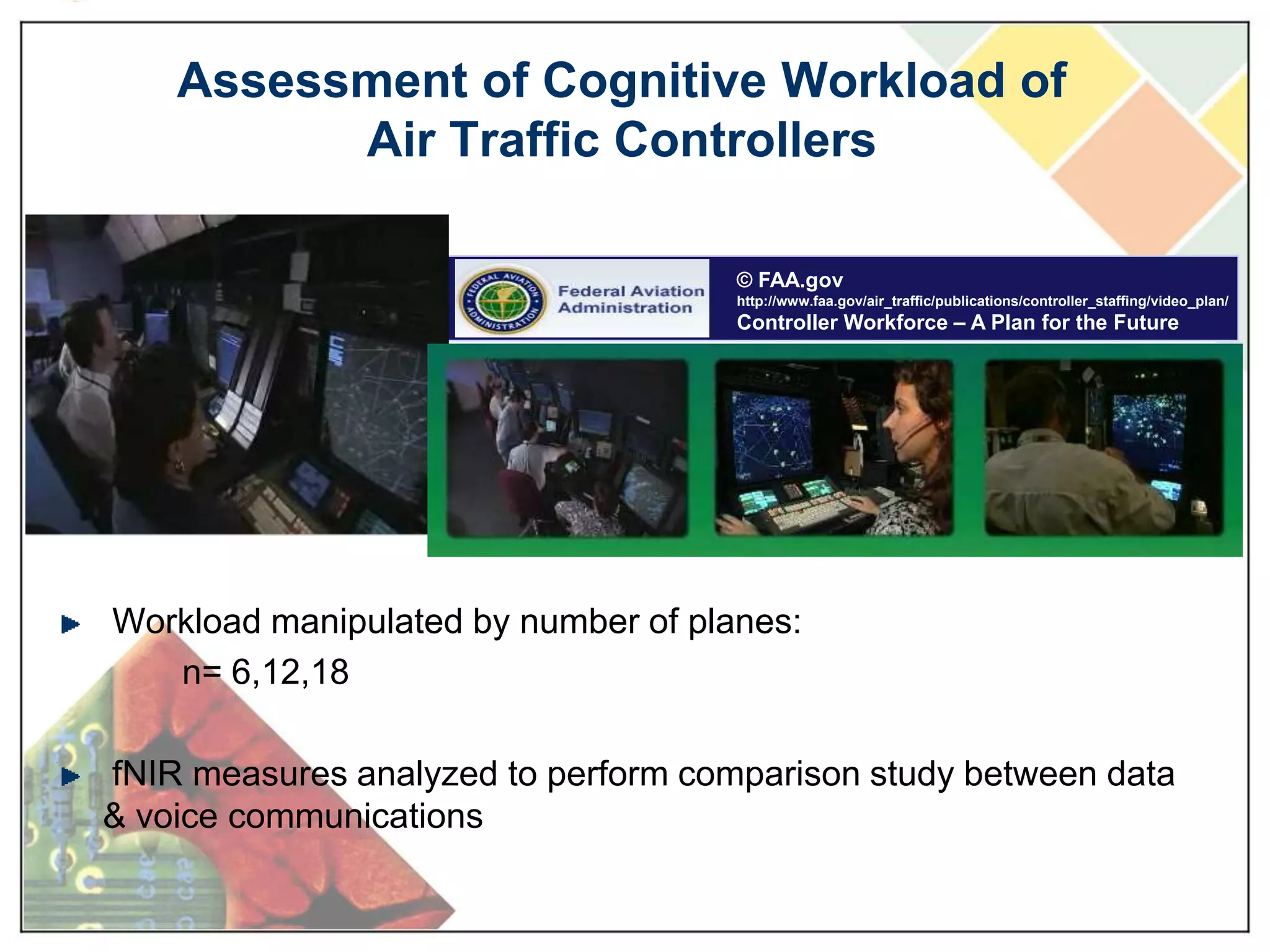
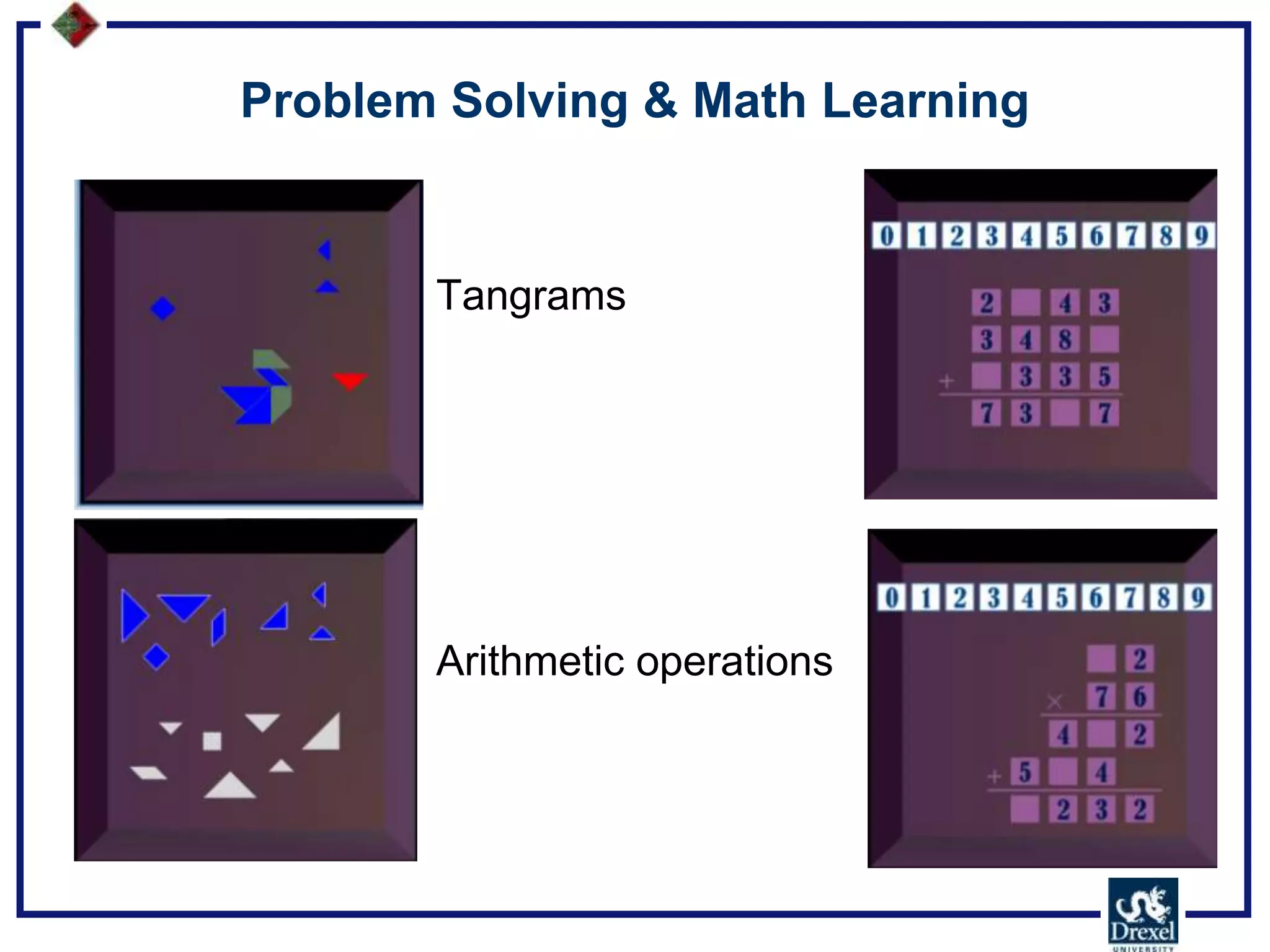
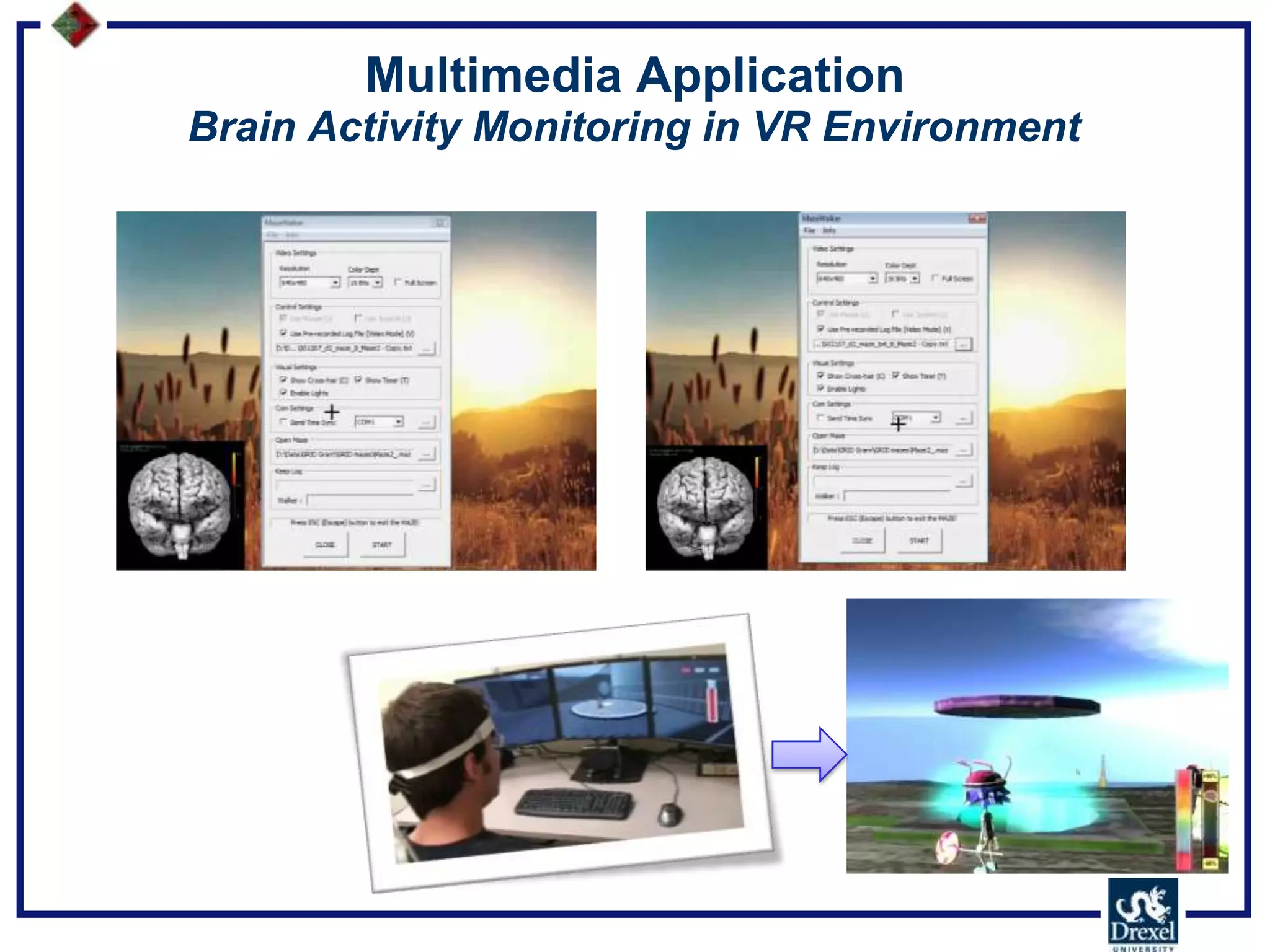
Application AreasfNIR ApplicationsTrainingand LearningApplicationsTraining and Workload Assessment of Soldiers and Unmanned Aerial Vehicle Ground Controllers Assessment of Cognitive Workload of Air Traffic ControllersProblem Solving by Learners Simulation and Multimedia ApplicationsBrain Computer Interface(BCI)Computer GamingClinical ApplicationsDepth of Anesthesia MonitoringTraumatic Brain Injury and  Neurorehabilitation… Cognitive AgingPediatric Applications…. Mental Health…BCI in Neurodegenerative Diseases (i.e., ALS)
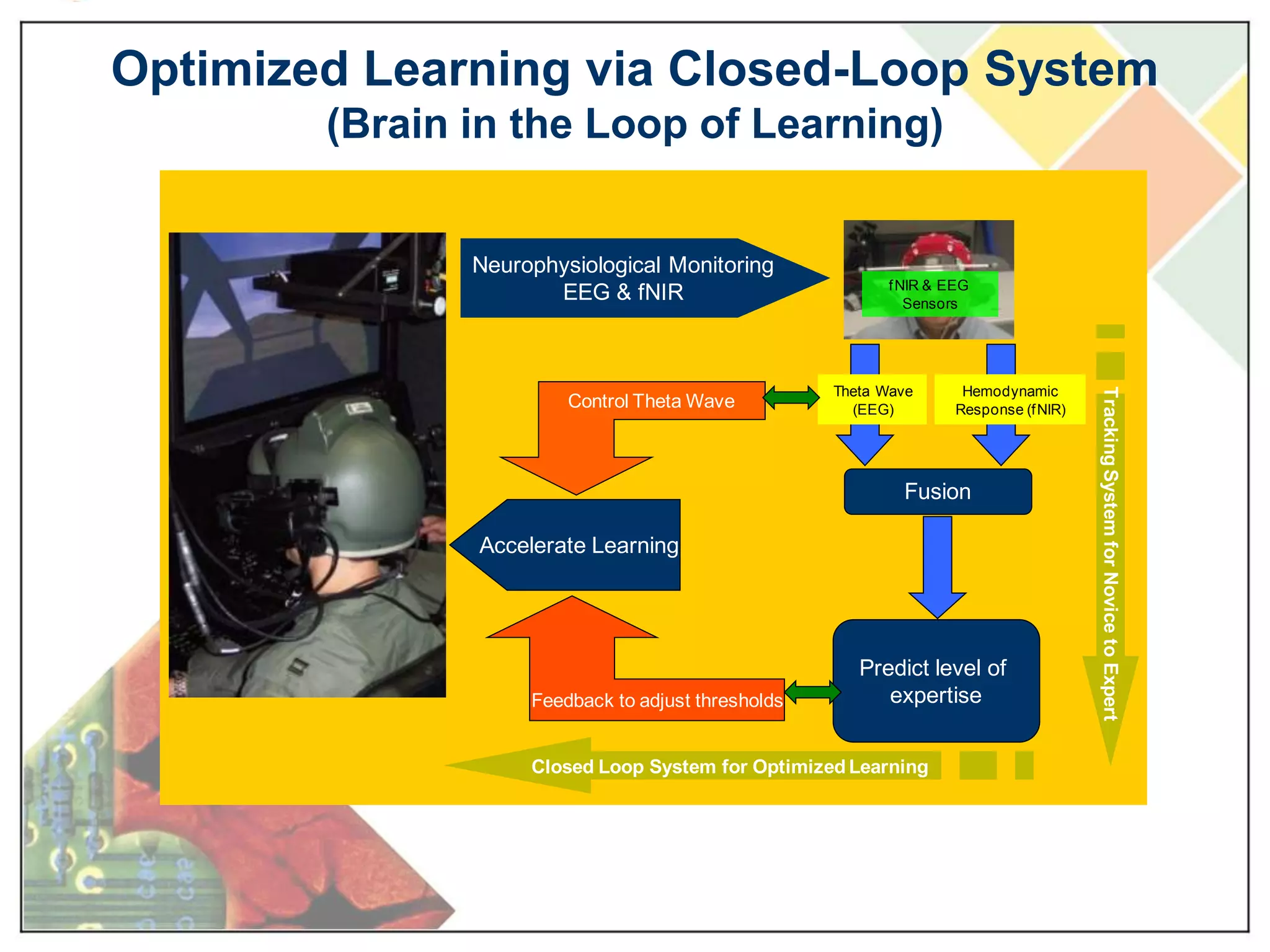
Optimized Learning via Closed-Loop System(Brain in the Loop of Learning)

Onaral IITL_Brainstorm25feb10v4

  • 1.
    The Learning Brain:Isthere a role for Neuroimaging ?
  • 2.
    Question posed byFacultyfromCollege of Media Arts and DesignPsychology, College of Arts and SciencesCollege of Nursing and Health ProfessionsComputer Science, College of EngineeringNeurology, Psychiatry, College of MedicineSchool of Biomedical Engineering, Science and Health SystemsCognitive Neuroengineering & Quantitative Experimental ResearchCollaborative
  • 3.
    Institute for Innovationin Teaching and LearningAnother “Drexel First” ?
  • 4.
    What makes Drexelunique?... faculty from diverse disciplines pondering the future of learningWill it position Drexel for leadership in innovation in learning?… assessment of learning?The New EraCustomized and individualized Learning,
  • 5.
  • 6.
  • 7.
    New Rules ofEngagement… Neuroimaging Proposition?Vast neuroimaging literature on learning and memory … paradigms from cognitive psychology… lack of educational contextBrain areas associated with learning and memory… fMRI, PET not amenable to natural environments, … EEG not localizedFunctional Optical Brain ImagingSafe, Affordable
  • 8.
  • 9.
    Deployable in learningenvironmentsCONQUERCollabOrativeCognitive Neuroengineering & Quantitative Experimental Research Collaborativea unique brain function research facility that houses human experiment rooms equipped with comprehensive suite of human brain activity monitoring modalities, such as near-infrared (NIR) based functional optical brain imaging [fNIR] electroencephalogram [EEG]experimental protocol design tools and simulation technologies sensor and device test & development labs
  • 10.
    CONQUER CollabOrative(Cont’s)Cognitive Neuroengineering& Quantitative Experimental Research Collaborative Laboratoryemphasis on collaborative interdisciplinary international researchBrain in LearningLearning in virtual realityProblem solvingAcquisition and learning of motor skills Human Performance and TrainingCognitive workload assessmentTransition from novice to expert…Brain Computer Interface (BCI)Neurorehabilitation in Traumatic Brain injury… cognitive development… agingDepth of Anesthesia Pediatric monitoring…
  • 11.
  • 12.
    … enables thestudy of cortical activation-related to hemodynamic changes in natural environments and diverse field conditions Functional Near-Infrared [fNIR] Spectroscopy
  • 13.
    SourceDetectorPhysical Principles offNIRPhoton Migration in TissuePhotons that enter the tissue undergoes two types of interaction: Scattering(cell membranes) Absorption(Hb,HbO2water)H Obrig  , R Wenzel, M Kohl, S Horst, P Wobst, J Steinbrink, F Thomas, A Villringer. Near-infrared spectroscopy: does it function in functional activation studies of the adult brain? International Journal of Psychophysiology 35(2-3):125-142, 2000
  • 14.
    Physiological Principles offNIR Neural Activity & Hemodynamic ResponseNeurons consume energy (glucose) when activatedOxygen is required to metabolize the glucoseAs clusters of neurons are activated, there is an increased need for oxygen in that areaOxygen is transported to neural tissue via oxy-hemoglobin in the bloodThe oxygen exchange occurs in the capillary bedsAs oxy-hemoglobin gives up oxygen to the neural tissue, it is transformed into deoxygenated hemoglobinOxy-Hb and deoxy-Hb are correlates of brain activity through oxygen consumption by neuronsDavid J. Heeger & David Ress. (2002)What does fMRI tell us about neuronal activity? Nature Reviews Neuroscience 3, 142-151
  • 15.
    Near IRStimuli PresentationPeakOxygenationInitialDipPost stimulusundershootPrinciples of fNIR IIIOptical Window in Tissue.GIoI.GModifiedBeer-Lambert Law
  • 16.
    Drexel fNIR InstrumentationfNIRTechnology EvolutionWireless systemFiber-Based Full Head Research SystemContinuous WavePortable system2001-082008-
  • 17.
    Assessment of CognitiveFunctionTarget CategorizationTargetfMRI ResultsInfrequent Events Transiently Activate Human Prefrontal and Parietal Cortex as Measured by Functional MRIGregory Mccarthy, Marie Luby, John Gore, And Patricia Goldman-Rakic. J. Neurophysiol. 77: 1630–1634, 1997.Courtesy of Dr. Scott Bunce
  • 18.
    Assessment of CognitiveFunctionTarget Categorization (Cont’d)fNIR ResultsfNIR DataRightLeftIzzetoglu M, Izzetoglu K, Bunce S, Ayaz, H, Devaraj A, Onaral B, Pourrezaei K “Functional Near Infrared Neuroimaging”, Accepted to IEEE Transaction on Neural Systems and Rehabilitation Engineering – Special Issue on Neural Engineering
  • 19.
    Assessment of CognitiveFunctionWorking Memory (n-back Task)
  • 20.
    Assessment of CognitiveFunctionWorking Memory (n-back Task)n-back results performance>90%Results agree with fMRI results from Smith & Jonides, 1997.Izzetoglu M, Bunce S, Onaral B, “Single Trial Hemodynamic Response Estimation in Event Related fNIR Spectroscopy”, Proc. of Optical Society of America Conference, 2003
  • 21.
    Application AreasfNIR ApplicationsTrainingandLearningApplicationsTraining and Workload Assessment of Soldiers and Unmanned Aerial Vehicle Ground Controllers Assessment of Cognitive Workload of Air Traffic ControllersProblem Solving by Learners Simulation and Multimedia ApplicationsBrain Computer Interface(BCI)Computer GamingClinical ApplicationsDepth of Anesthesia MonitoringTraumatic Brain Injury and Neurorehabilitation… Cognitive AgingPediatric Applications…. Mental Health…BCI in Neurodegenerative Diseases (i.e., ALS)
  • 22.
    Optimized Learning viaClosed-Loop System(Brain in the Loop of Learning)
  • 23.
    A Real-Time Applicationto TrainingNovice to Expert TransitioningUAV Ground Controllers
  • 24.
    Assessment of CognitiveWorkload of Air Traffic Controllers© FAA.gov http://www.faa.gov/air_traffic/publications/controller_staffing/video_plan/Controller Workforce – A Plan for the Future Workload manipulated by number of planes: n= 6,12,18 fNIR measures analyzed to perform comparison study between data & voice communications
  • 25.
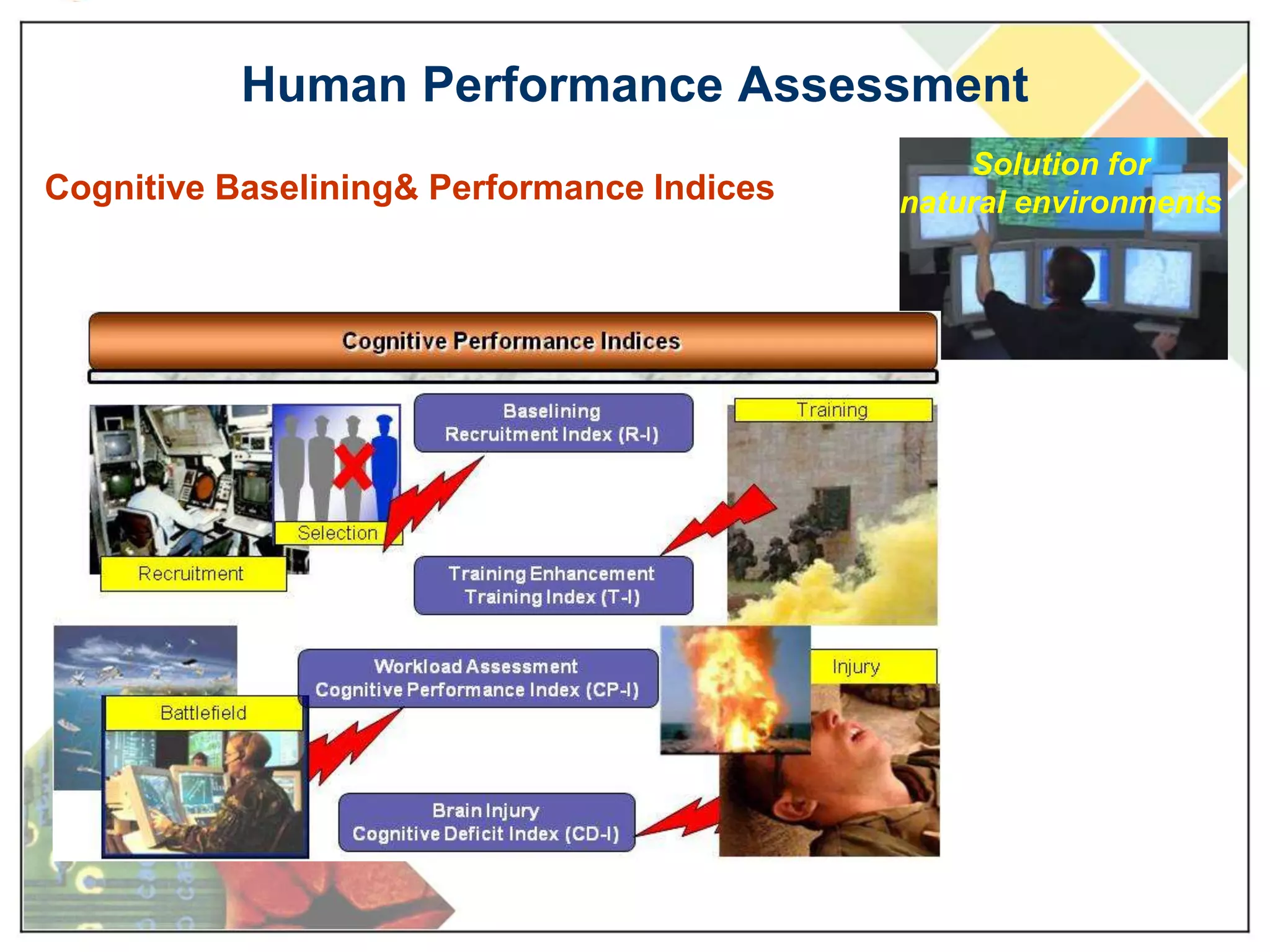
    Human Performance AssessmentSolutionfor natural environmentsCognitive Baselining & Performance Indices
  • 26.
    BIS MonitoringfNIR MonitoringDepthof Anesthesia MonitoringGoal:To translate the existing laboratory fNIR system, into a first generation clinical prototype for a depth of anesthesia monitor to prevent awareness during surgery.
  • 27.
    Problem Solving &Math LearningTangramsArithmetic operations
  • 28.
    Multimedia ApplicationBrain ActivityMonitoring in VR Environment
  • 29.