Color Scheme-

Color combinations
   based on color
wheel relationships
 that are known to
 be pleasing to the
       senses
A color scheme can either
 make or break a design


                  … is your home a
                  victim of a bad
                  scheme?
When the color is right, it can:
 Enhance feelings of health and wellbeing

 Create a feeling of temperature —
  make the space feel warmer or cooler

 Transform a space — make your
  space feel larger, or cozy & intimate

 Brighten dark areas

 Create mystery and romance
  in dull area

 Energize ‘boring’ areas
Monochromatic
 Related color scheme

 Using tints, tones or
 shades of the same color

 Example:
 royal blue,
 baby blue,
 slate blue,
 navy blue
Monochromatic
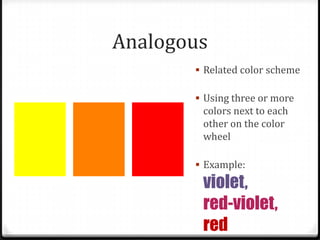
Analogous
        Related color scheme

        Using three or more
        colors next to each
        other on the color
        wheel

        Example:
        violet,
        red-violet,
        red
Analogous
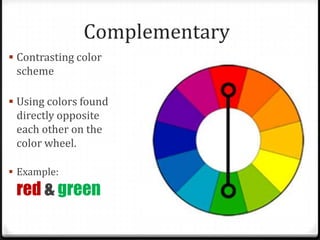
Complementary
 Contrasting color
 scheme

 Using colors found
 directly opposite
 each other on the
 color wheel.

 Example:
 red & green
Complementary
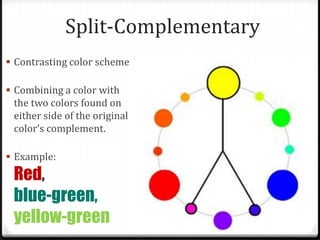
Split-Complementary
 Contrasting color scheme

 Combining a color with
 the two colors found on
 either side of the original
 color’s complement.

 Example:
 Red,
 blue-green,
 yellow-green
Split-Complementary
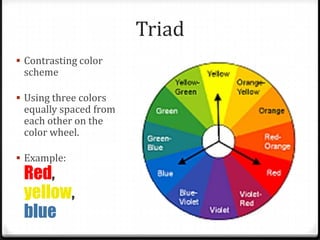
Triad
 Contrasting color
 scheme

 Using three colors
 equally spaced from
 each other on the
 color wheel.

 Example:
 Red,
 yellow,
 blue
Triad
Neutral
           Using only colors not
           found on the color
           wheel

           Example:
           beige, gray, white, cre
           am
Neutral
Neutral with an Accent

 Using all neutral
 colors except one
 (accent)

 Example:
 black,
 white,
 red
Neutral w/ an accent
m&m’s need your help!
1. Read instructions on the
   m&m’s Coloring Schemes worksheet

2. You may ONLY use colored pencils or crayons;
   NOT markers!!!
   (you will need to shade colors together)

3. There is a color wheel on the back of your
   worksheet you may need to use along with
   your notes to complete the worksheet.

Colorschemes

  • 2.
    Color Scheme- Color combinations based on color wheel relationships that are known to be pleasing to the senses
  • 3.
    A color schemecan either make or break a design … is your home a victim of a bad scheme?
  • 4.
    When the coloris right, it can:  Enhance feelings of health and wellbeing  Create a feeling of temperature — make the space feel warmer or cooler  Transform a space — make your space feel larger, or cozy & intimate  Brighten dark areas  Create mystery and romance in dull area  Energize ‘boring’ areas
  • 5.
    Monochromatic  Related colorscheme  Using tints, tones or shades of the same color  Example: royal blue, baby blue, slate blue, navy blue
  • 6.
  • 7.
    Analogous  Related color scheme  Using three or more colors next to each other on the color wheel  Example: violet, red-violet, red
  • 8.
  • 9.
    Complementary  Contrasting color scheme  Using colors found directly opposite each other on the color wheel.  Example: red & green
  • 10.
  • 11.
    Split-Complementary  Contrasting colorscheme  Combining a color with the two colors found on either side of the original color’s complement.  Example: Red, blue-green, yellow-green
  • 12.
  • 13.
    Triad  Contrasting color scheme  Using three colors equally spaced from each other on the color wheel.  Example: Red, yellow, blue
  • 14.
  • 15.
    Neutral  Using only colors not found on the color wheel  Example: beige, gray, white, cre am
  • 16.
  • 17.
    Neutral with anAccent  Using all neutral colors except one (accent)  Example: black, white, red
  • 18.
  • 19.
    m&m’s need yourhelp! 1. Read instructions on the m&m’s Coloring Schemes worksheet 2. You may ONLY use colored pencils or crayons; NOT markers!!! (you will need to shade colors together) 3. There is a color wheel on the back of your worksheet you may need to use along with your notes to complete the worksheet.