Color Wheel
COLOR
IS THE REFLECTION OF LIGHT
FROM A PIGMENTED SURFACE.
COLOR IS THE PERSONALITY
OF A DESIGN.
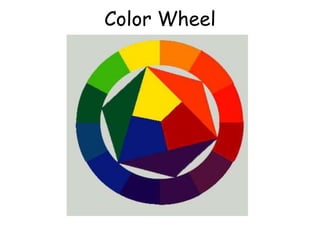
The Color Wheel
• The color wheel is divided into three
categories: primary, secondary, and tertiary.
• The three primary colors are red, yellow
and blue.
• These colors are considered to be
foundation colors because they are used to
create all other colors.
Color Wheel
• By combining two of the primary colors,
three secondary colors are formed. They
are orange, green and violet.
• The six tertiary colors are made by
combining a primary and an adjacent
secondary color. These colors are red-
orange, red-violet, yellow-green, yellow-
orange, blue-green and blue-violet.
Color Wheel
Cool and Warm Colors
• Colors are also divided into cool and
warm categories.
Warm
colors are
red,
orange and
yellow.
The cool
colors are
green, blue
and violet.
Color Terms
• Color Harmony: using colors in a pleasing
way.
• Color Scheme: the make up of colors
• Hue: color, any color
• Intensity: the brightness and dullness of a
color
• Value: the lightness or darkness of a color.
Value
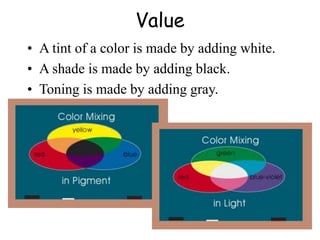
• A tint of a color is made by adding white.
• A shade is made by adding black.
• Toning is made by adding gray.
Color Schemes
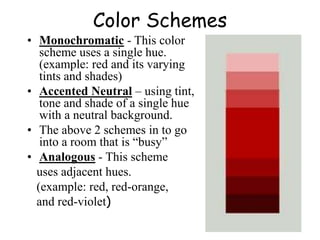
• Monochromatic - This color
scheme uses a single hue.
(example: red and its varying
tints and shades)
• Accented Neutral – using tint,
tone and shade of a single hue
with a neutral background.
• The above 2 schemes in to go
into a room that is “busy”
• Analogous - This scheme
uses adjacent hues.
(example: red, red-orange,
and red-violet)
Complementary Colors
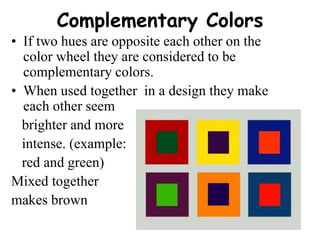
• If two hues are opposite each other on the
color wheel they are considered to be
complementary colors.
• When used together in a design they make
each other seem
brighter and more
intense. (example:
red and green)
Mixed together
makes brown
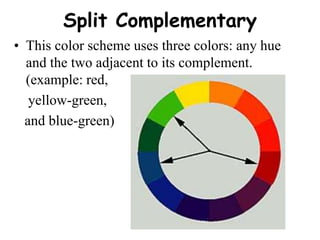
Split Complementary
• This color scheme uses three colors: any hue
and the two adjacent to its complement.
(example: red,
yellow-green,
and blue-green)
Triadic
• This scheme also uses three colors. They are
evenly spaced from each other.
(example: red, yellow, and blue)
Double Complement
• Made of colors that are adjacent to both direct
complements.
(example: yellow and
violet, blue and orange)
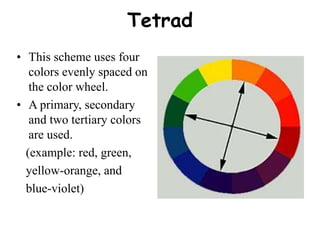
Tetrad
• This scheme uses four
colors evenly spaced on
the color wheel.
• A primary, secondary
and two tertiary colors
are used.
(example: red, green,
yellow-orange, and
blue-violet)
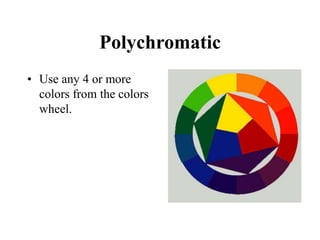
Polychromatic
• Use any 4 or more
colors from the colors
wheel.

ColorWheel.ppt

  • 1.
  • 2.
    COLOR IS THE REFLECTIONOF LIGHT FROM A PIGMENTED SURFACE. COLOR IS THE PERSONALITY OF A DESIGN.
  • 3.
    The Color Wheel •The color wheel is divided into three categories: primary, secondary, and tertiary. • The three primary colors are red, yellow and blue. • These colors are considered to be foundation colors because they are used to create all other colors.
  • 4.
    Color Wheel • Bycombining two of the primary colors, three secondary colors are formed. They are orange, green and violet. • The six tertiary colors are made by combining a primary and an adjacent secondary color. These colors are red- orange, red-violet, yellow-green, yellow- orange, blue-green and blue-violet.
  • 5.
  • 6.
    Cool and WarmColors • Colors are also divided into cool and warm categories. Warm colors are red, orange and yellow. The cool colors are green, blue and violet.
  • 7.
    Color Terms • ColorHarmony: using colors in a pleasing way. • Color Scheme: the make up of colors • Hue: color, any color • Intensity: the brightness and dullness of a color • Value: the lightness or darkness of a color.
  • 8.
    Value • A tintof a color is made by adding white. • A shade is made by adding black. • Toning is made by adding gray.
  • 9.
    Color Schemes • Monochromatic- This color scheme uses a single hue. (example: red and its varying tints and shades) • Accented Neutral – using tint, tone and shade of a single hue with a neutral background. • The above 2 schemes in to go into a room that is “busy” • Analogous - This scheme uses adjacent hues. (example: red, red-orange, and red-violet)
  • 10.
    Complementary Colors • Iftwo hues are opposite each other on the color wheel they are considered to be complementary colors. • When used together in a design they make each other seem brighter and more intense. (example: red and green) Mixed together makes brown
  • 11.
    Split Complementary • Thiscolor scheme uses three colors: any hue and the two adjacent to its complement. (example: red, yellow-green, and blue-green)
  • 12.
    Triadic • This schemealso uses three colors. They are evenly spaced from each other. (example: red, yellow, and blue)
  • 13.
    Double Complement • Madeof colors that are adjacent to both direct complements. (example: yellow and violet, blue and orange)
  • 14.
    Tetrad • This schemeuses four colors evenly spaced on the color wheel. • A primary, secondary and two tertiary colors are used. (example: red, green, yellow-orange, and blue-violet)
  • 15.
    Polychromatic • Use any4 or more colors from the colors wheel.