COLOR WHEEL
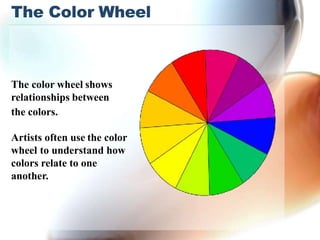
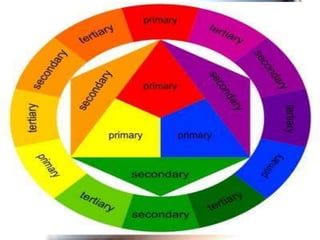
The Color Wheel
The color wheel shows
relationships between
the colors.
Artists often use the color
wheel to understand how
colors relate to one
another.
Primary Colors
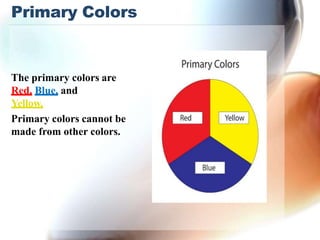
The primary colors are
Red, Blue, and
Yellow.
Primary colors cannot be
made from other colors.
Secondary Colors
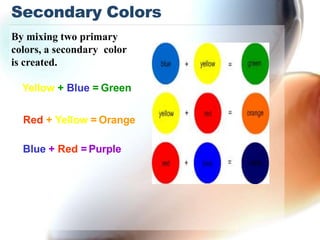
By mixing two primary
colors, a secondary color
is created.
Yellow + Blue = Green
Red + Yellow = Orange
Blue + Red = Purple
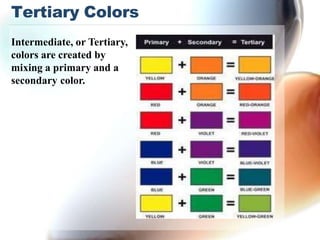
Tertiary Colors
Intermediate, or Tertiary,
colors are created by
mixing a primary and a
secondary color.
The Colors Wheel
1. Primary Colors
2. Secondary Colors
3. Tertiary Colors
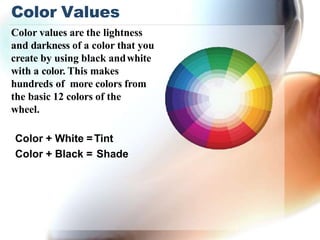
Color Values
Color values are the lightness
and darkness of a color that you
create by using black andwhite
with a color. This makes
hundreds of more colors from
the basic 12 colors of the
wheel.
Color + White =Tint
Color + Black = Shade
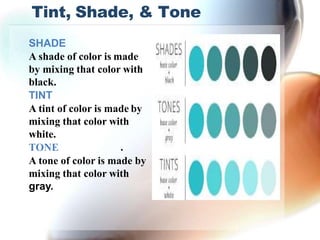
Tint, Shade, & Tone
.
SHADE
A shade of color is made
by mixing that color with
black.
TINT
A tint of color is made by
mixing that color with
white.
TONE
A tone of color is made by
mixing that color with
gray.
Color Schemes
• Monochromatic Colors Scheme
• Complementary Colors Scheme
• Split Complements Scheme
• Analogous colors Scheme
• Color Triads Scheme
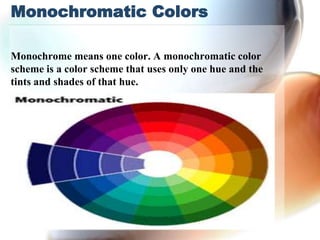
Monochromatic Colors
Monochrome means one color. A monochromatic color
scheme is a color scheme that uses only one hue and the
tints and shades of that hue.
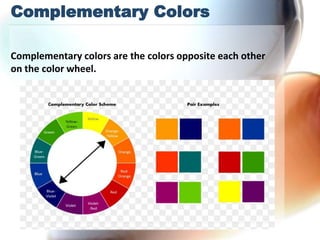
Complementary Colors
Complementary colors are the colors opposite each other
on the color wheel.
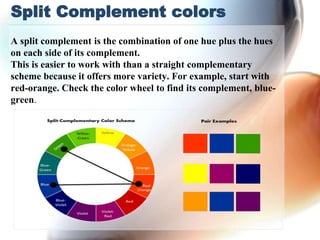
Split Complement colors
A split complement is the combination of one hue plus the hues
on each side of its complement.
This is easier to work with than a straight complementary
scheme because it offers more variety. For example, start with
red-orange. Check the color wheel to find its complement, blue-
green.
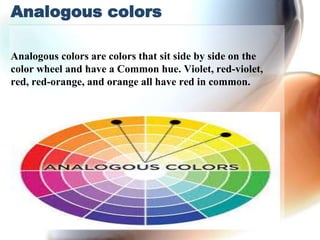
Analogous colors
Analogous colors are colors that sit side by side on the
color wheel and have a Common hue. Violet, red-violet,
red, red-orange, and orange all have red in common.
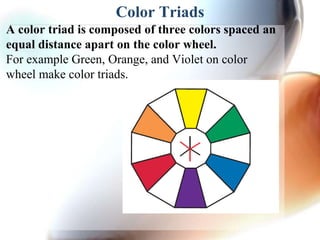
Color Triads
A color triad is composed of three colors spaced an
equal distance apart on the color wheel.
For example Green, Orange, and Violet on color
wheel make color triads.
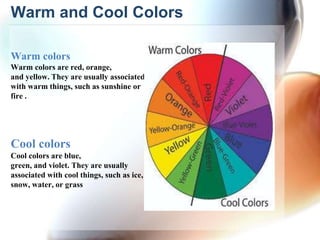
Warm and Cool Colors
Warm colors
Warm colors are red, orange,
and yellow. They are usually associated
with warm things, such as sunshine or
fire .
Cool colors
Cool colors are blue,
green, and violet. They are usually
associated with cool things, such as ice,
snow, water, or grass
color wheel

color wheel

  • 1.
  • 2.
    The Color Wheel Thecolor wheel shows relationships between the colors. Artists often use the color wheel to understand how colors relate to one another.
  • 3.
    Primary Colors The primarycolors are Red, Blue, and Yellow. Primary colors cannot be made from other colors.
  • 4.
    Secondary Colors By mixingtwo primary colors, a secondary color is created. Yellow + Blue = Green Red + Yellow = Orange Blue + Red = Purple
  • 5.
    Tertiary Colors Intermediate, orTertiary, colors are created by mixing a primary and a secondary color.
  • 6.
    The Colors Wheel 1.Primary Colors 2. Secondary Colors 3. Tertiary Colors
  • 7.
    Color Values Color valuesare the lightness and darkness of a color that you create by using black andwhite with a color. This makes hundreds of more colors from the basic 12 colors of the wheel. Color + White =Tint Color + Black = Shade
  • 8.
    Tint, Shade, &Tone . SHADE A shade of color is made by mixing that color with black. TINT A tint of color is made by mixing that color with white. TONE A tone of color is made by mixing that color with gray.
  • 9.
    Color Schemes • MonochromaticColors Scheme • Complementary Colors Scheme • Split Complements Scheme • Analogous colors Scheme • Color Triads Scheme
  • 10.
    Monochromatic Colors Monochrome meansone color. A monochromatic color scheme is a color scheme that uses only one hue and the tints and shades of that hue.
  • 11.
    Complementary Colors Complementary colorsare the colors opposite each other on the color wheel.
  • 12.
    Split Complement colors Asplit complement is the combination of one hue plus the hues on each side of its complement. This is easier to work with than a straight complementary scheme because it offers more variety. For example, start with red-orange. Check the color wheel to find its complement, blue- green.
  • 13.
    Analogous colors Analogous colorsare colors that sit side by side on the color wheel and have a Common hue. Violet, red-violet, red, red-orange, and orange all have red in common.
  • 14.
    Color Triads A colortriad is composed of three colors spaced an equal distance apart on the color wheel. For example Green, Orange, and Violet on color wheel make color triads.
  • 15.
    Warm and CoolColors Warm colors Warm colors are red, orange, and yellow. They are usually associated with warm things, such as sunshine or fire . Cool colors Cool colors are blue, green, and violet. They are usually associated with cool things, such as ice, snow, water, or grass