Downloaded 511 times


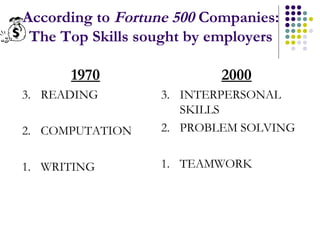


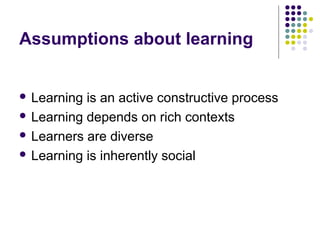
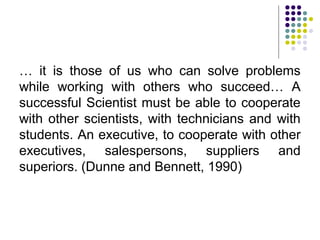

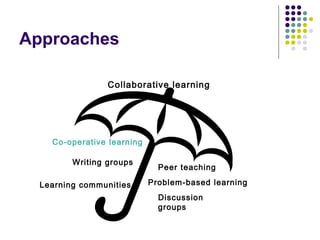





Collaborative learning involves students working together to achieve a common goal or task. It is an effective learning approach as students learn more through discussing concepts with others (70-95%) compared to traditional lectures (10-30%). Collaborative skills are in high demand by employers. The document discusses how collaborative learning fosters critical thinking, involvement, cooperation and building a community of learners. It provides educational goals and assumptions that support collaborative learning as an active and social process. Examples of collaborative approaches include cooperative learning, problem-based learning and discussion groups. The benefits of collaborative learning for students include improved academic achievement, confidence, social skills and motivation to learn.


