Downloaded 21 times



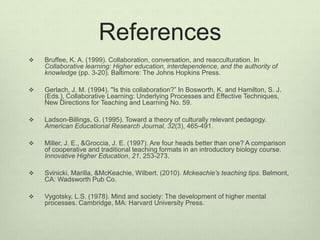

This document discusses the value of collaborative learning in classrooms and beyond. It defines collaborative learning as learning through natural social interactions where participants interact with each other. Research by Vygotsky found that social interaction plays an important role in cognitive development. More recent research has focused on the interactions themselves. Examples of collaborative learning in classrooms include student-led discussion groups, peer teaching, and team-based assignments. While collaborative learning has benefits, considerations like assessing individual learning must be made. Opportunities also exist to apply collaborative learning techniques outside the classroom in student organizations, seminars, and other activities.


