Collaborating towards classroom
communication for effective learning
What is collaborative learning?
 An approach to teaching and learning that involves
groups of learners working together to solve a
problem, complete a task or create a product. It is
based on the idea that learning is naturally a social
act in which the participants talk among themselves.
It is through talk or communication that learning
occurs.
Some approaches to collaborative
learning:
 Learners understand the information and relate this new knowledge to a
framework of prior knowledge.
 Learning requires a challenge that opens the door for the learners to actively
engage with his/her peers and to process and synthesize information rather
than memorize and regurgitate it.
 Learners benefit when exposed to different points of view from people with
different backgrounds.
 Learning flourishes in a social environment where conversation between
learners takes place. During this time, the learner creates a framework and
meaning to this discourse.
THE IMPORTANCE OF THE TOPIC
 THROUGH COLLABORATION STUDENTS TEND TO LEARN THROUGH DISCUSSION,
CLARIFICATION OF IDEAS, AND EVALUATION OF OTHERS.
 EFFECTIVE COLLABORATION TOWARDS PROMOTING CLASSROOM COMMUNICATION
FOR EFFECTIVE LEARNING INVOLVES ESTABLISHMENT OF GROUP GOALS, AS WELL AS
INDIVIDUAL ACCOUNTABILITY.
 COLLABORATION IS INFLUENCED BY THE QUALITY OF INTERACTIONS.
 INTERACTIVITY AND NEGOTIATION ARE ALSO IMPORTANT IN COLLABORATING.
 HOWEVER, SUCCESSFUL INTERPERSONAL COMMUNICATION MUST ALSO EXIST.
Collaboration or Co-operate learning.
 It requires working towards a common goal
 A process meant to facilitate the accomplishment of a specific end product
through working together.
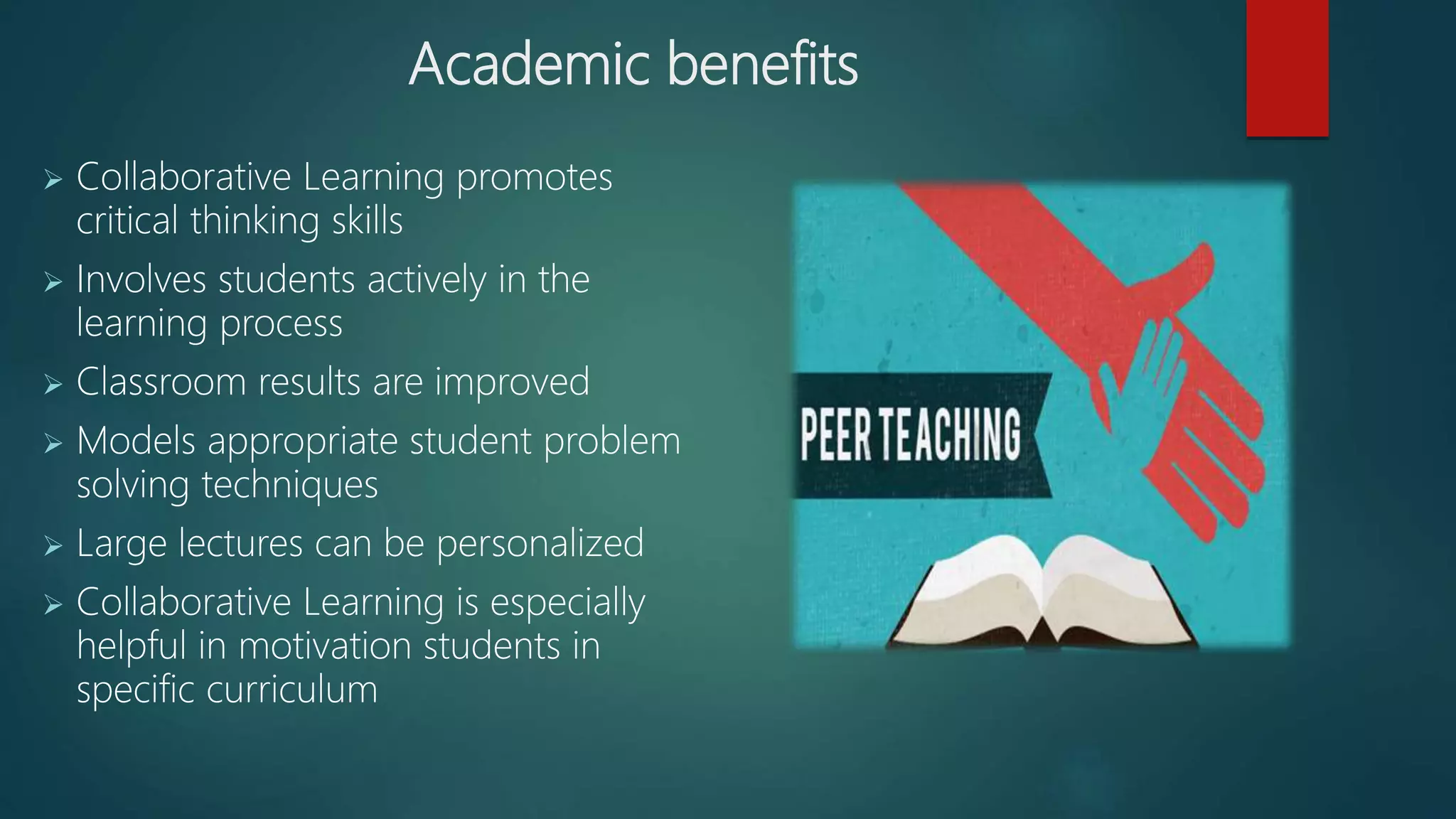
 E.g collective learning, peer teaching and learning or team learning.
 It aims at getting learners to take full responsibility for working together,
building knowledge together ,changing, evolving together and improving
together.
 It shifts the responsibility for learning to the learner in the role of
researcher and self-directed learning .
The benefits of collaborating
commutation in a classroom towards
learning
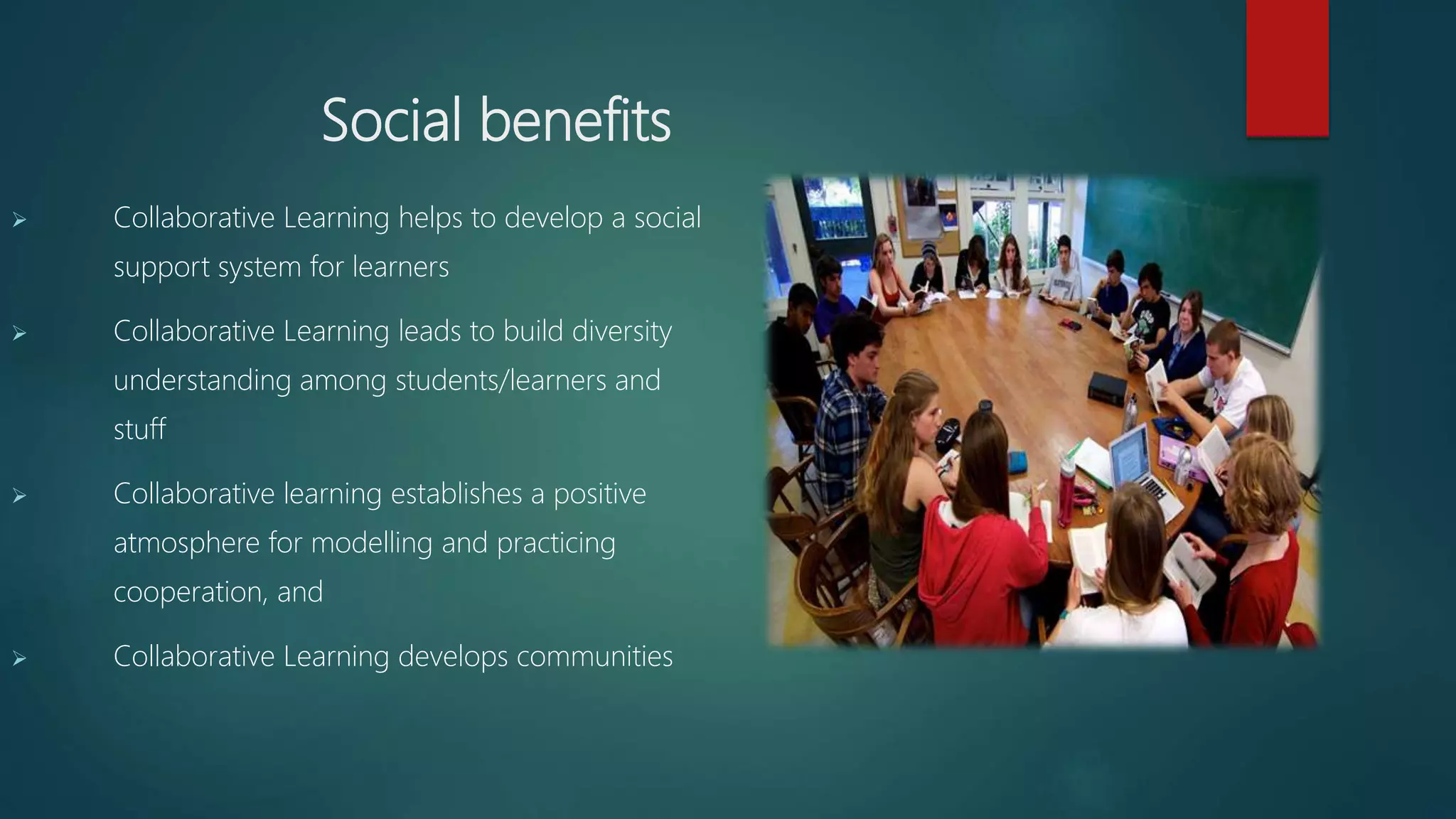
Social benefits
 Collaborative Learning helps to develop a social
support system for learners
 Collaborative Learning leads to build diversity
understanding among students/learners and
stuff
 Collaborative learning establishes a positive
atmosphere for modelling and practicing
cooperation, and
 Collaborative Learning develops communities
Psychological benefits
 Student centred instruction
increase students self esteem
 Cooperation reduces
anxiety and;
 Collaborative Learning
develops positive attitudes
towards teachers
Academic benefits
 Collaborative Learning promotes
critical thinking skills
 Involves students actively in the
learning process
 Classroom results are improved
 Models appropriate student problem
solving techniques
 Large lectures can be personalized
 Collaborative Learning is especially
helpful in motivation students in
specific curriculum

Collaborating towards effective classroom management

  • 1.
  • 2.
    What is collaborativelearning?  An approach to teaching and learning that involves groups of learners working together to solve a problem, complete a task or create a product. It is based on the idea that learning is naturally a social act in which the participants talk among themselves. It is through talk or communication that learning occurs.
  • 3.
    Some approaches tocollaborative learning:  Learners understand the information and relate this new knowledge to a framework of prior knowledge.  Learning requires a challenge that opens the door for the learners to actively engage with his/her peers and to process and synthesize information rather than memorize and regurgitate it.  Learners benefit when exposed to different points of view from people with different backgrounds.  Learning flourishes in a social environment where conversation between learners takes place. During this time, the learner creates a framework and meaning to this discourse.
  • 4.
    THE IMPORTANCE OFTHE TOPIC  THROUGH COLLABORATION STUDENTS TEND TO LEARN THROUGH DISCUSSION, CLARIFICATION OF IDEAS, AND EVALUATION OF OTHERS.  EFFECTIVE COLLABORATION TOWARDS PROMOTING CLASSROOM COMMUNICATION FOR EFFECTIVE LEARNING INVOLVES ESTABLISHMENT OF GROUP GOALS, AS WELL AS INDIVIDUAL ACCOUNTABILITY.  COLLABORATION IS INFLUENCED BY THE QUALITY OF INTERACTIONS.  INTERACTIVITY AND NEGOTIATION ARE ALSO IMPORTANT IN COLLABORATING.  HOWEVER, SUCCESSFUL INTERPERSONAL COMMUNICATION MUST ALSO EXIST.
  • 5.
    Collaboration or Co-operatelearning.  It requires working towards a common goal  A process meant to facilitate the accomplishment of a specific end product through working together.  E.g collective learning, peer teaching and learning or team learning.  It aims at getting learners to take full responsibility for working together, building knowledge together ,changing, evolving together and improving together.  It shifts the responsibility for learning to the learner in the role of researcher and self-directed learning .
  • 6.
    The benefits ofcollaborating commutation in a classroom towards learning
  • 7.
    Social benefits  CollaborativeLearning helps to develop a social support system for learners  Collaborative Learning leads to build diversity understanding among students/learners and stuff  Collaborative learning establishes a positive atmosphere for modelling and practicing cooperation, and  Collaborative Learning develops communities
  • 8.
    Psychological benefits  Studentcentred instruction increase students self esteem  Cooperation reduces anxiety and;  Collaborative Learning develops positive attitudes towards teachers
  • 9.
    Academic benefits  CollaborativeLearning promotes critical thinking skills  Involves students actively in the learning process  Classroom results are improved  Models appropriate student problem solving techniques  Large lectures can be personalized  Collaborative Learning is especially helpful in motivation students in specific curriculum