Introduction to Cloud Computing:
 Cloud computing is an environment where the computing

resources are outsource as a service through the internet.
 Services of cloud computing:
 I as S(Infrastructure as a service)
 P as S(Platform as a service)
 S as S(Software as a service)
Types of clouds:
 Hybrid cloud
 Private cloud
 Public cloud
Community cloud
What is Collaboration?
 Collaboration is a new emerging way of sharing and

co-authoring computer files through the use of cloud
computing.
Objective:
Providing Collaboration in Multi-cloud
Current Environment:
A client that wishes to simultaneously use from

multiple clouds must individually interact with each
cloud service gather intermediate results process the
collective data and generate final results.
 cloud mashups require pre established agreements
among providers as well as the use of custom-built,
proprietary tools that combine services through lowlevel, tightly controlled and constraining integration
techniques.
Disadvantages:
The following are the restrictions:
 Heterogeneity and tight coupling.
 Preestablished business agreements.

 Service delivery model.
Proposed System:
• I propose network of proxies to overcome these

restrictions
 Proxy is an edge-node-hosted software instance.
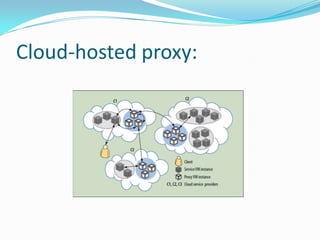
Cloud-hosted proxy:
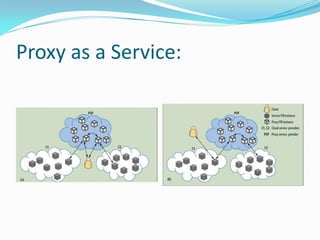
Proxy as a Service:
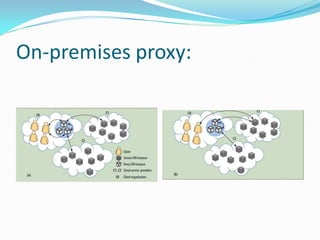
On-premises proxy:
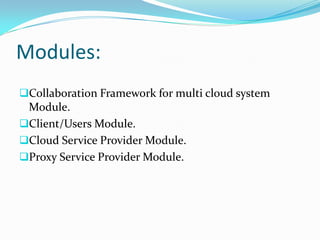
Modules:
Collaboration Framework for multi cloud system

Module.
Client/Users Module.
Cloud Service Provider Module.
Proxy Service Provider Module.
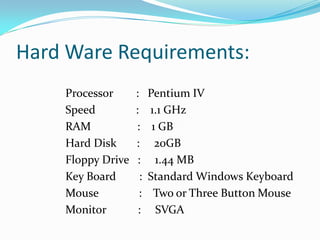
Hard Ware Requirements:
Processor
Speed
RAM
Hard Disk
Floppy Drive
Key Board
Mouse
Monitor

:
:
:
:
:
:
:
:

Pentium IV
1.1 GHz
1 GB
20GB
1.44 MB
Standard Windows Keyboard
Two or Three Button Mouse
SVGA
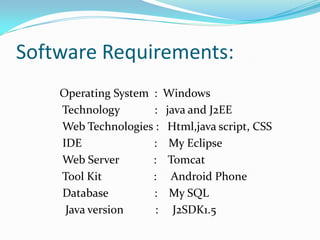
Software Requirements:
Operating System :
Technology
:
Web Technologies :
IDE
:
Web Server
:
Tool Kit
:
Database
:
Java version
:

Windows
java and J2EE
Html,java script, CSS
My Eclipse
Tomcat
Android Phone
My SQL
J2SDK1.5
Collaboration in multi cloud computing environments framework and security issues

Collaboration in multi cloud computing environments framework and security issues

  • 2.
    Introduction to CloudComputing:  Cloud computing is an environment where the computing resources are outsource as a service through the internet.  Services of cloud computing:  I as S(Infrastructure as a service)  P as S(Platform as a service)  S as S(Software as a service)
  • 3.
    Types of clouds: Hybrid cloud  Private cloud  Public cloud Community cloud
  • 4.
    What is Collaboration? Collaboration is a new emerging way of sharing and co-authoring computer files through the use of cloud computing.
  • 5.
  • 6.
    Current Environment: A clientthat wishes to simultaneously use from multiple clouds must individually interact with each cloud service gather intermediate results process the collective data and generate final results.  cloud mashups require pre established agreements among providers as well as the use of custom-built, proprietary tools that combine services through lowlevel, tightly controlled and constraining integration techniques.
  • 7.
    Disadvantages: The following arethe restrictions:  Heterogeneity and tight coupling.  Preestablished business agreements.  Service delivery model.
  • 8.
    Proposed System: • Ipropose network of proxies to overcome these restrictions  Proxy is an edge-node-hosted software instance.
  • 9.
  • 10.
    Proxy as aService:
  • 11.
  • 12.
    Modules: Collaboration Framework formulti cloud system Module. Client/Users Module. Cloud Service Provider Module. Proxy Service Provider Module.
  • 13.
    Hard Ware Requirements: Processor Speed RAM HardDisk Floppy Drive Key Board Mouse Monitor : : : : : : : : Pentium IV 1.1 GHz 1 GB 20GB 1.44 MB Standard Windows Keyboard Two or Three Button Mouse SVGA
  • 14.
    Software Requirements: Operating System: Technology : Web Technologies : IDE : Web Server : Tool Kit : Database : Java version : Windows java and J2EE Html,java script, CSS My Eclipse Tomcat Android Phone My SQL J2SDK1.5