MAHARASHTRA STATE BOARD OF TECHNICAL EDUCATION, MUMBAI
C. S. INSTITUTE OF TECHNOLOGY, DEORI DIST.-GONDIA
DEPARTMENT OF
COMPUTER ENGINEERING
A SEMINAR ON : CLOUD COMPUTING APPLICATION
Guided by:-
Miss. ************
Presented by:-
Chetan Sontakke
Mankuwar Sewata
INDEX
Introduction
Definition
History
Architecture of cloud computing
Service models
Application of cloud computing
Example of cloud computing
Advantages of cloud computing
Disadvantages of cloud computing
INTRODUCTION
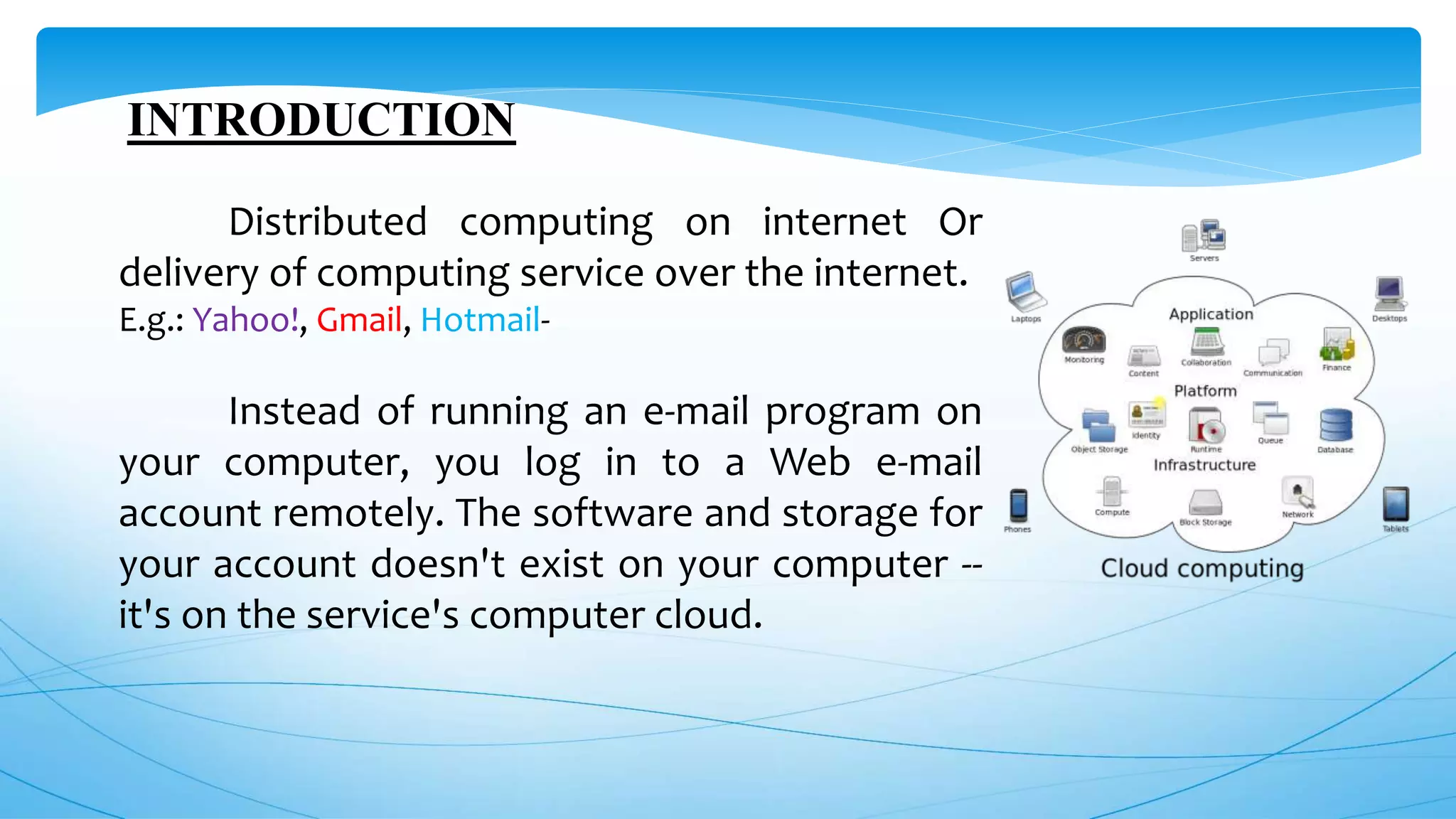
Distributed computing on internet Or
delivery of computing service over the internet.
E.g.: Yahoo!, Gmail, Hotmail-
Instead of running an e-mail program on
your computer, you log in to a Web e-mail
account remotely. The software and storage for
your account doesn't exist on your computer --
it's on the service's computer cloud.
What is Cloud Computing Application
Is an application program that functions in the cloud,
with some characteristics of a pure desktop app and some
characteristics of a pure Web application.
Definition of cloud computing
Cloud computing is a new form of Internet-based
computing that provides shared computer processing resources
and data to computers and other devices on demand. It is a
model for enabling ubiquitous, on-demand access to a shared
pool of configurable computing resources (e.g., computer
networks, servers, storage, applications and services)
History
 Concept evolved in 1950(IBM) called RJE (Remote Job Entry
Process).
 In 2006 Amazon provided First public cloud AWS(Amazon Web
Service).
 On March 1, 2011, IBM announced the IBM Smart Cloud framework
to support Smarter Planet.
 On June 7, 2012, Oracle announced the Oracle Cloud.
Goal of cloud computing:
• Reduced Spending on Technology Infrastructure
• Globalizing Workspace/ Easy Accessibility
• Improve Flexibility and Scalability:
• Better Resource Utilization
• Backup and Disaster Recovery
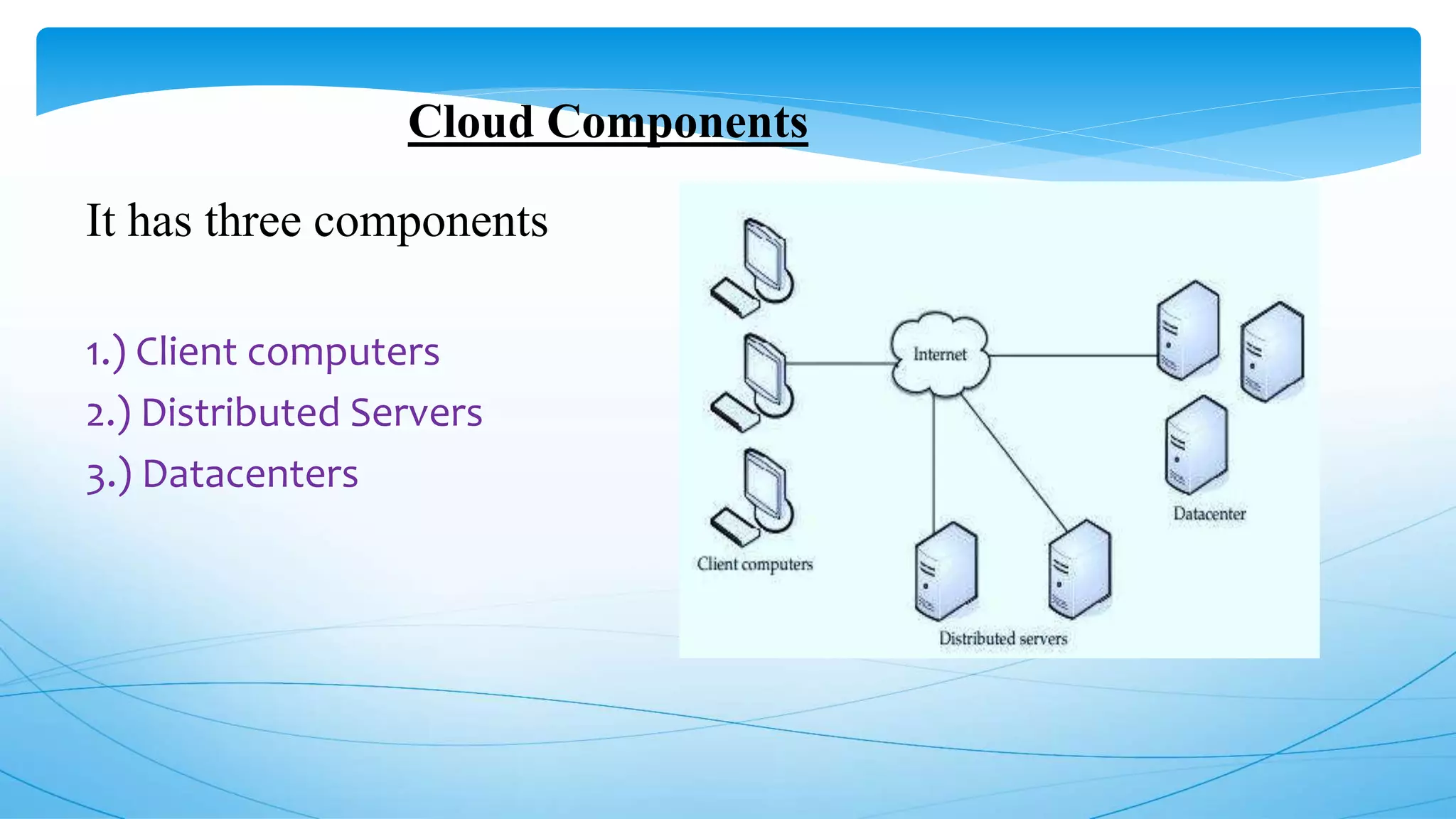
Cloud Components
It has three components
1.) Client computers
2.) Distributed Servers
3.) Datacenters
Clients
Clients are the device that the end user interact with cloud.
three types of clients:
1.) Mobile
2.) Thick
3.) Thin (Most Popular)
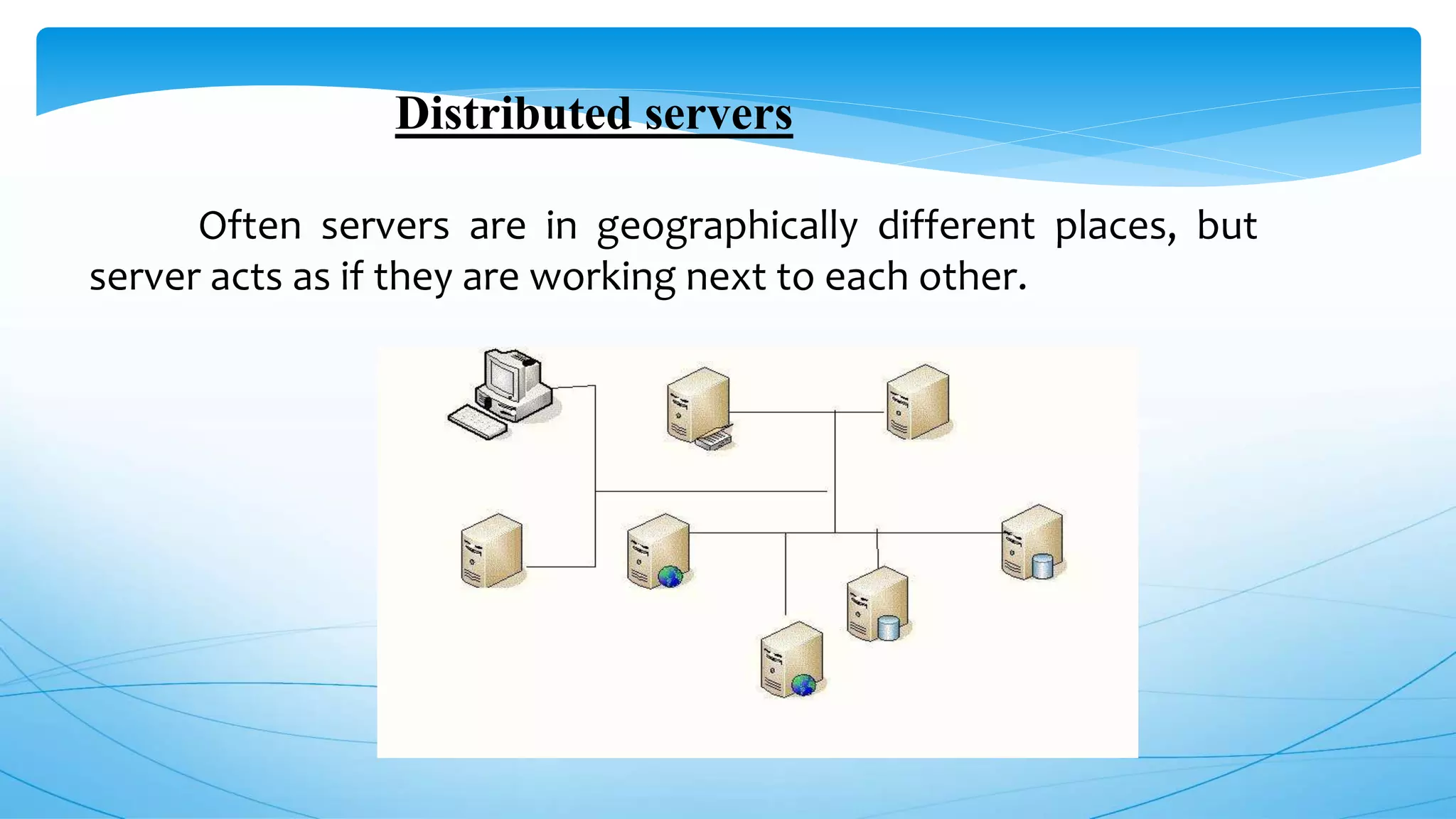
Distributed servers
Often servers are in geographically different places, but
server acts as if they are working next to each other.
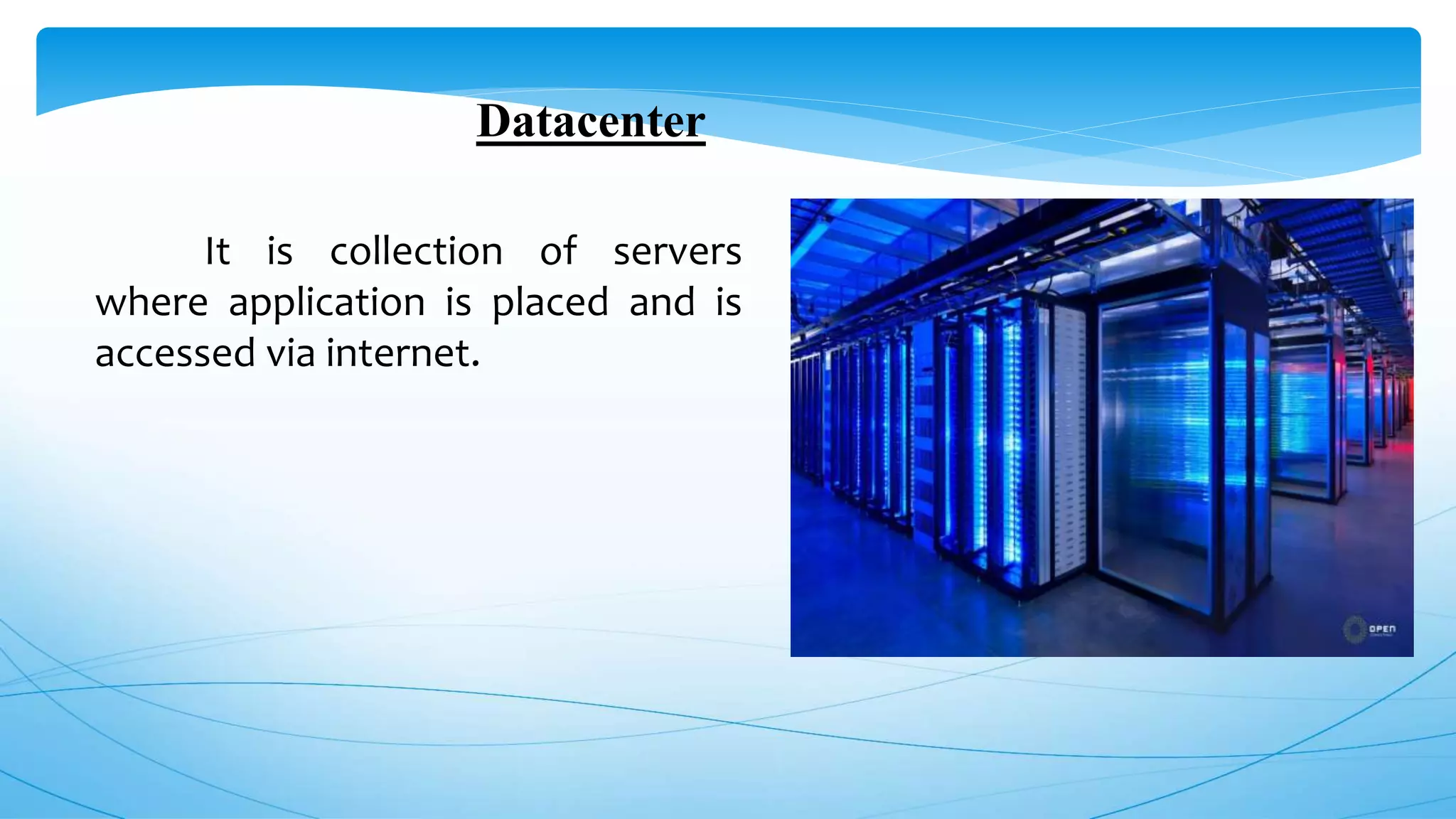
Datacenter
It is collection of servers
where application is placed and is
accessed via internet.
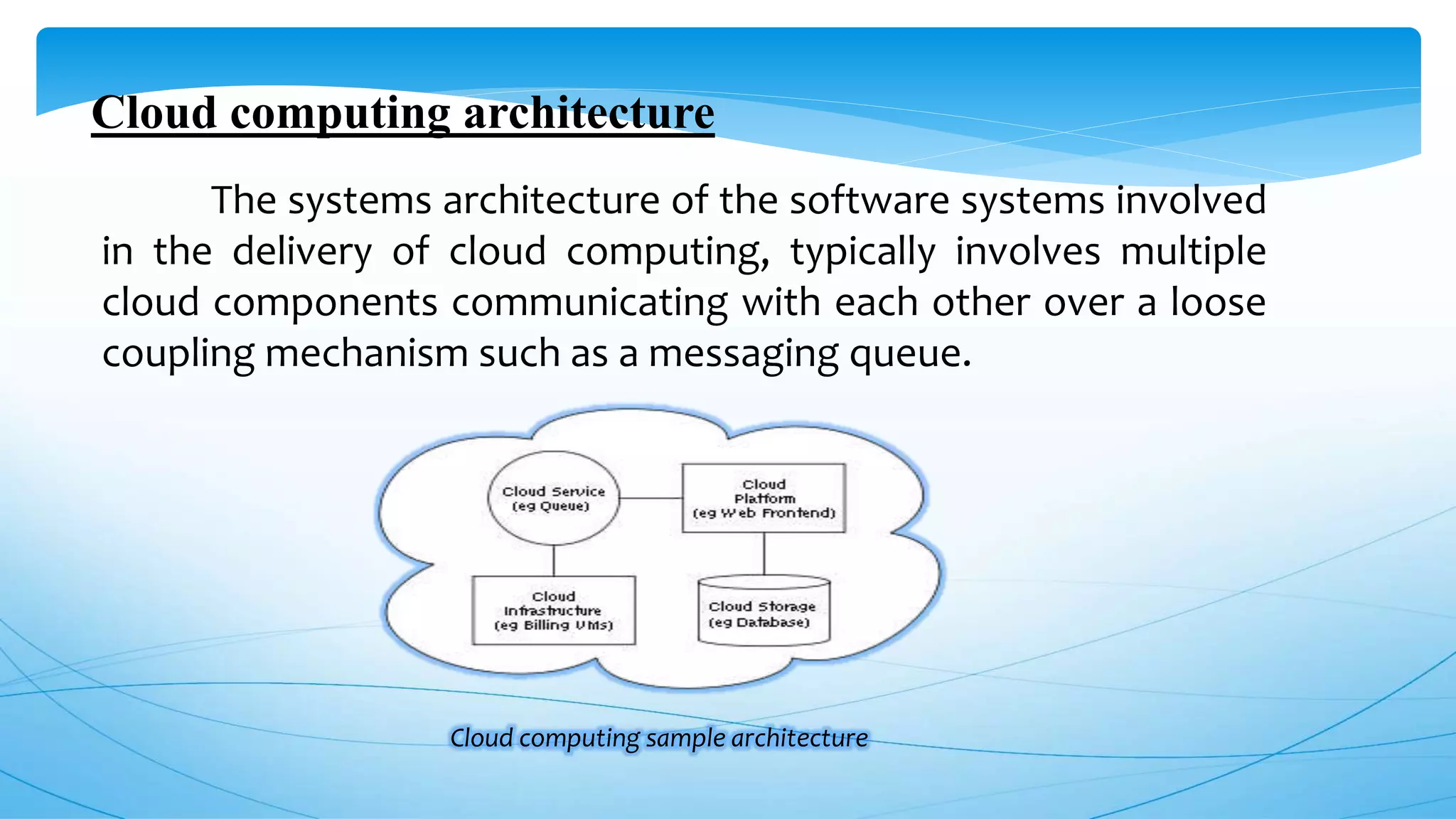
Cloud computing architecture
The systems architecture of the software systems involved
in the delivery of cloud computing, typically involves multiple
cloud components communicating with each other over a loose
coupling mechanism such as a messaging queue.
Cloud computing sample architecture
Service Models
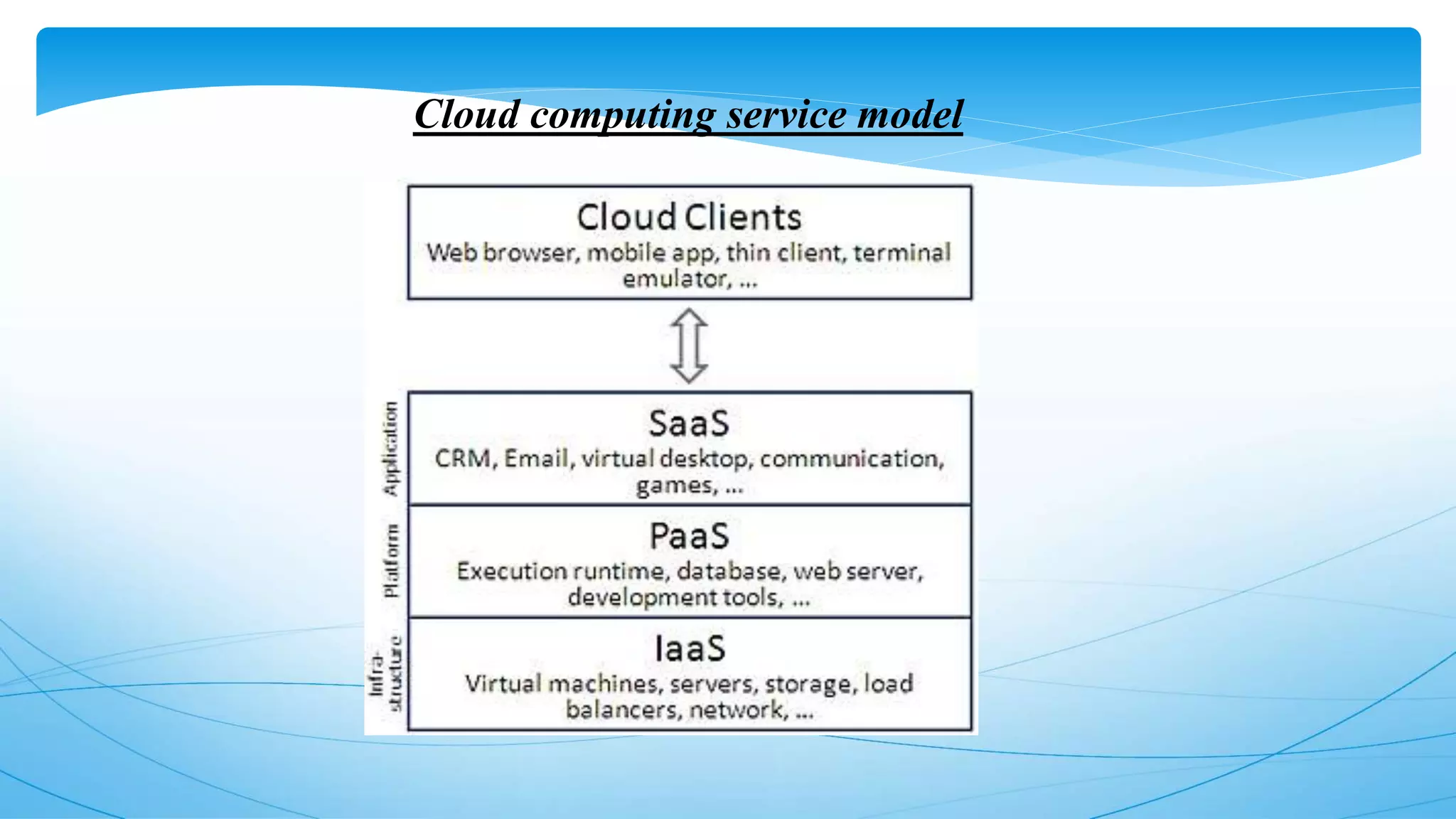
SaaS(Software as a service): Required software, Operating
system & network is provided.
PaaS(Platform as service): Operating system and network is
provided.
IaaS(Infrastructure as a service): just Network is provided.
Cloud computing service model
Application
• Social Networking sites.
• E-mail sites.
• Search Engines.
• Many more services OVER THE INTERNET.
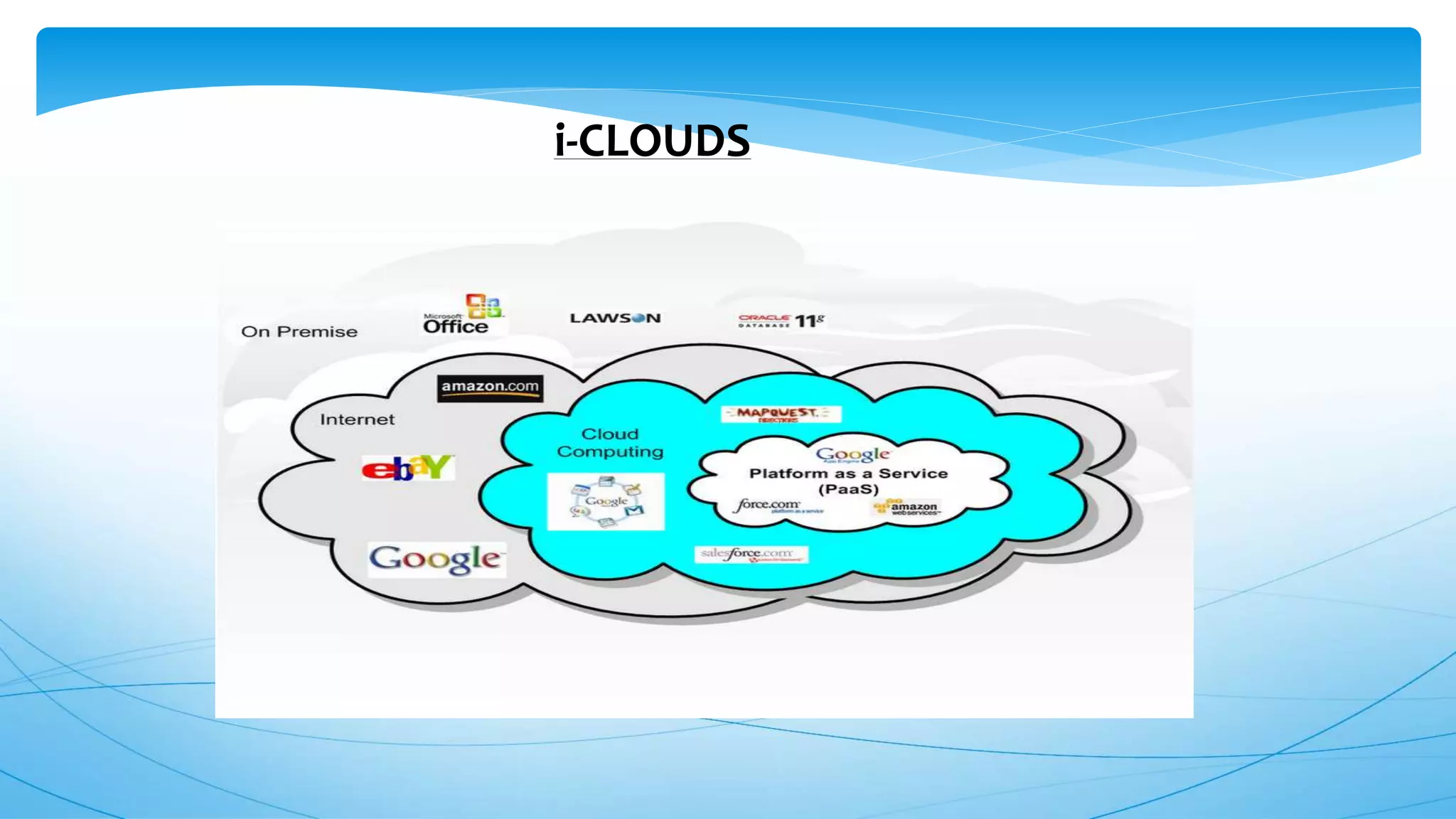
i-CLOUDS
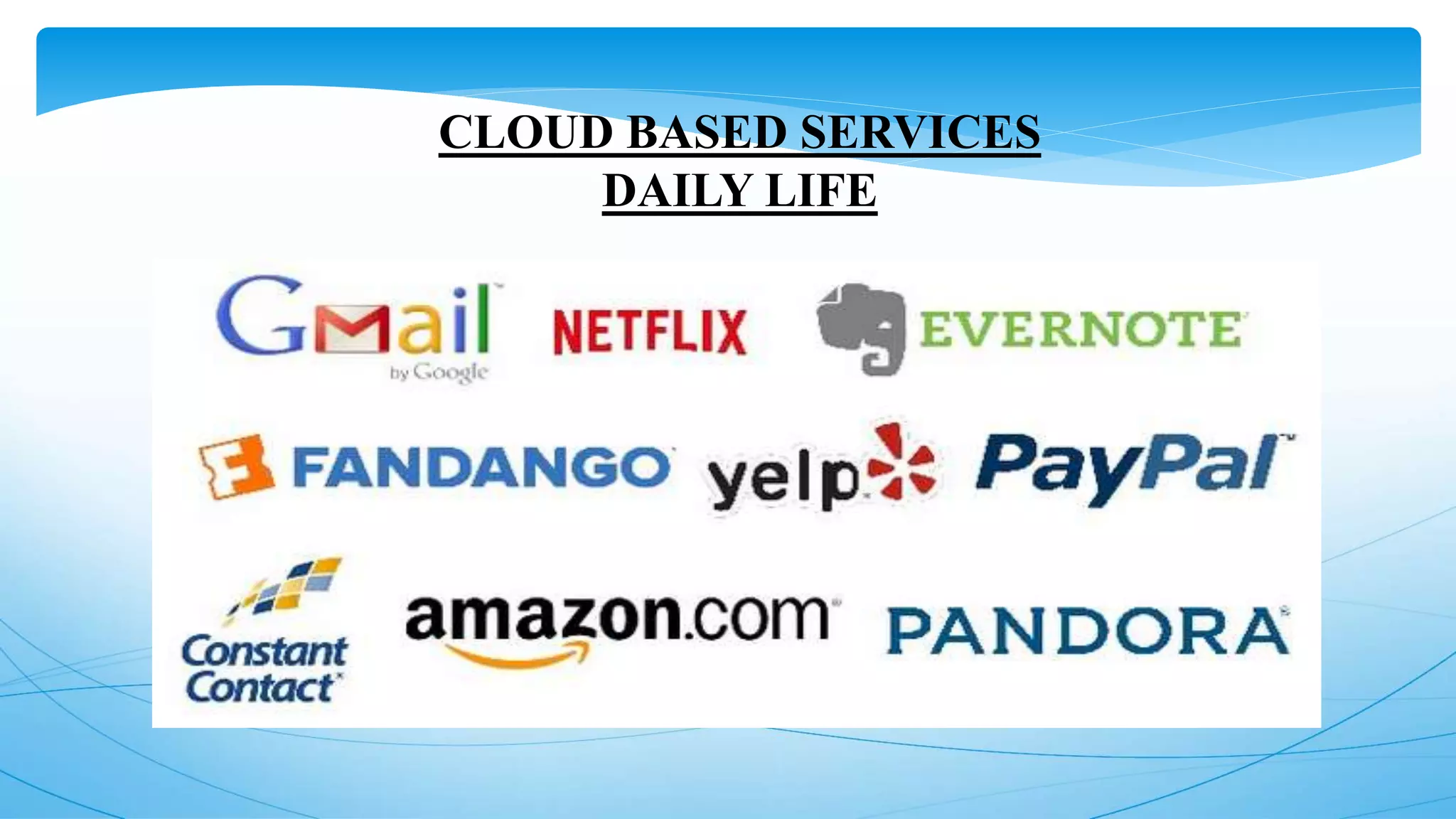
CLOUD BASED SERVICES
DAILY LIFE
Deployment of Cloud Service
 Public Cloud
 Private Cloud
 Community Cloud
 Hybrid Cloud(Combined Cloud)
Why cloud service is popular?
• Reduce the complexity of networks.
• Do not have to buy software licenses.
• Customization.
• Cloud providers that have specialized in a particular area
(such as e-mail) can bring advanced services that a single
company might not be able to afford or develop.
• scalability, reliability, and efficiency.
• Info. at cloud are not easily lost.
Advantages of cloud computing
 Cost Savings
 Reliability
 Manageability
 Strategic Edge
Disadvantages of Cloud Computing
 Downtime
 Security
 Vendor Lock-In
 Limited Control
Reference by:
www.Google.com
www.Wekipidia.com
study.com/cloud computing
www.rapidscale.com
Presentation on cloud computing

Presentation on cloud computing

  • 1.
    MAHARASHTRA STATE BOARDOF TECHNICAL EDUCATION, MUMBAI C. S. INSTITUTE OF TECHNOLOGY, DEORI DIST.-GONDIA DEPARTMENT OF COMPUTER ENGINEERING A SEMINAR ON : CLOUD COMPUTING APPLICATION Guided by:- Miss. ************ Presented by:- Chetan Sontakke Mankuwar Sewata
  • 2.
    INDEX Introduction Definition History Architecture of cloudcomputing Service models Application of cloud computing Example of cloud computing Advantages of cloud computing Disadvantages of cloud computing
  • 3.
    INTRODUCTION Distributed computing oninternet Or delivery of computing service over the internet. E.g.: Yahoo!, Gmail, Hotmail- Instead of running an e-mail program on your computer, you log in to a Web e-mail account remotely. The software and storage for your account doesn't exist on your computer -- it's on the service's computer cloud.
  • 4.
    What is CloudComputing Application Is an application program that functions in the cloud, with some characteristics of a pure desktop app and some characteristics of a pure Web application. Definition of cloud computing Cloud computing is a new form of Internet-based computing that provides shared computer processing resources and data to computers and other devices on demand. It is a model for enabling ubiquitous, on-demand access to a shared pool of configurable computing resources (e.g., computer networks, servers, storage, applications and services)
  • 5.
    History  Concept evolvedin 1950(IBM) called RJE (Remote Job Entry Process).  In 2006 Amazon provided First public cloud AWS(Amazon Web Service).  On March 1, 2011, IBM announced the IBM Smart Cloud framework to support Smarter Planet.  On June 7, 2012, Oracle announced the Oracle Cloud.
  • 6.
    Goal of cloudcomputing: • Reduced Spending on Technology Infrastructure • Globalizing Workspace/ Easy Accessibility • Improve Flexibility and Scalability: • Better Resource Utilization • Backup and Disaster Recovery
  • 7.
    Cloud Components It hasthree components 1.) Client computers 2.) Distributed Servers 3.) Datacenters
  • 8.
    Clients Clients are thedevice that the end user interact with cloud. three types of clients: 1.) Mobile 2.) Thick 3.) Thin (Most Popular)
  • 9.
    Distributed servers Often serversare in geographically different places, but server acts as if they are working next to each other.
  • 10.
    Datacenter It is collectionof servers where application is placed and is accessed via internet.
  • 11.
    Cloud computing architecture Thesystems architecture of the software systems involved in the delivery of cloud computing, typically involves multiple cloud components communicating with each other over a loose coupling mechanism such as a messaging queue. Cloud computing sample architecture
  • 12.
    Service Models SaaS(Software asa service): Required software, Operating system & network is provided. PaaS(Platform as service): Operating system and network is provided. IaaS(Infrastructure as a service): just Network is provided.
  • 13.
  • 14.
    Application • Social Networkingsites. • E-mail sites. • Search Engines. • Many more services OVER THE INTERNET.
  • 15.
  • 16.
  • 17.
    Deployment of CloudService  Public Cloud  Private Cloud  Community Cloud  Hybrid Cloud(Combined Cloud)
  • 18.
    Why cloud serviceis popular? • Reduce the complexity of networks. • Do not have to buy software licenses. • Customization. • Cloud providers that have specialized in a particular area (such as e-mail) can bring advanced services that a single company might not be able to afford or develop. • scalability, reliability, and efficiency. • Info. at cloud are not easily lost.
  • 19.
    Advantages of cloudcomputing  Cost Savings  Reliability  Manageability  Strategic Edge
  • 20.
    Disadvantages of CloudComputing  Downtime  Security  Vendor Lock-In  Limited Control
  • 21.