Introduction to Cloud
Computing
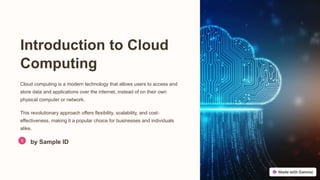
Cloud computing is a modern technology that allows users to access and
store data and applications over the internet, instead of on their own
physical computer or network.
This revolutionary approach offers flexibility, scalability, and cost-
effectiveness, making it a popular choice for businesses and individuals
alike.
by Sample ID
Benefits of Cloud Computing
Cost-Effective
Cloud computing eliminates the need for
upfront infrastructure investment, reducing
IT costs.
Scalability
Allows businesses to easily scale up or
down based on demand without physical
limitations.
Flexibility
Offers the flexibility to access data and
workloads from anywhere with an internet
connection.
Automatic Updates
Software updates and maintenance are
managed by the service provider, ensuring
seamless operations.
Types of cloud computing
services
• Infrastructure as a Service (IaaS): Offers virtualized computing
resources over the internet.
• Platform as a Service (PaaS): Provides a platform allowing
customers to develop, run, and manage applications.
• Software as a Service (SaaS): Delivers software applications
over the internet on a subscription basis.
Public Cloud vs. Private Cloud
Public Cloud
Public cloud services are provided over the
internet by a third-party cloud service provider.
They offer scalability, cost-efficiency, and require
no on-premises hardware maintenance.
Private Cloud
Private clouds are dedicated to a single
organization, offering greater control, security,
and customization. They are suitable for
sensitive data and compliance requirements.
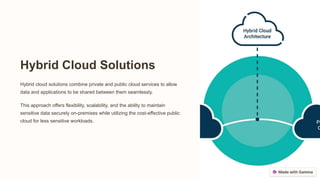
Hybrid Cloud Solutions
Hybrid cloud solutions combine private and public cloud services to allow
data and applications to be shared between them seamlessly.
This approach offers flexibility, scalability, and the ability to maintain
sensitive data securely on-premises while utilizing the cost-effective public
cloud for less sensitive workloads.
Cloud Computing Security
Data Encryption
Encryption of data
ensures that sensitive
information is
securely transmitted
and stored.
Network Security
Implementing firewalls
and secure networks
protects against
unauthorized access
and cyber threats.
Biometric
Authentication
Utilizing biometric
identifiers like
fingerprints enhances
access control and
identity verification.
Cloud Security
Measures
Advanced security
protocols and
monitoring to
safeguard cloud
infrastructure and
services.
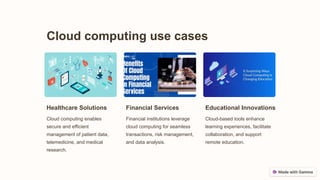
Cloud computing use cases
Healthcare Solutions
Cloud computing enables
secure and efficient
management of patient data,
telemedicine, and medical
research.
Financial Services
Financial institutions leverage
cloud computing for seamless
transactions, risk management,
and data analysis.
Educational Innovations
Cloud-based tools enhance
learning experiences, facilitate
collaboration, and support
remote education.
Cloud computing challenges
1
Data Security
Protecting sensitive information
2
Compliance & Regulations
Meeting legal requirements
3
Latency & Performance
Ensuring high-speed data access
4 Vendor Lock-in
Cloud computing presents challenges in data security, compliance with regulations, ensuring low latency
and high performance, and avoiding vendor lock-in to a specific cloud provider. These challenges require
careful planning and implementation to fully harness the benefits of cloud technology while mitigating
risks.
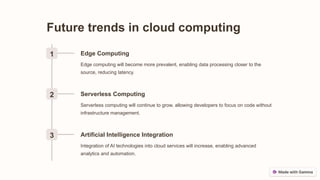
Future trends in cloud computing
1 Edge Computing
Edge computing will become more prevalent, enabling data processing closer to the
source, reducing latency.
2 Serverless Computing
Serverless computing will continue to grow, allowing developers to focus on code without
infrastructure management.
3 Artificial Intelligence Integration
Integration of AI technologies into cloud services will increase, enabling advanced
analytics and automation.
Conclusion
Cloud computing has revolutionized the way businesses operate, offering flexibility, scalability, and cost-
efficiency. It has transformed IT infrastructure and paved the way for future innovations. With its
continued evolution, cloud computing is poised to drive even greater advancements across industries.

Introduction-to-basics of Cloud-Computing.pptx

  • 1.
    Introduction to Cloud Computing Cloudcomputing is a modern technology that allows users to access and store data and applications over the internet, instead of on their own physical computer or network. This revolutionary approach offers flexibility, scalability, and cost- effectiveness, making it a popular choice for businesses and individuals alike. by Sample ID
  • 2.
    Benefits of CloudComputing Cost-Effective Cloud computing eliminates the need for upfront infrastructure investment, reducing IT costs. Scalability Allows businesses to easily scale up or down based on demand without physical limitations. Flexibility Offers the flexibility to access data and workloads from anywhere with an internet connection. Automatic Updates Software updates and maintenance are managed by the service provider, ensuring seamless operations.
  • 3.
    Types of cloudcomputing services • Infrastructure as a Service (IaaS): Offers virtualized computing resources over the internet. • Platform as a Service (PaaS): Provides a platform allowing customers to develop, run, and manage applications. • Software as a Service (SaaS): Delivers software applications over the internet on a subscription basis.
  • 4.
    Public Cloud vs.Private Cloud Public Cloud Public cloud services are provided over the internet by a third-party cloud service provider. They offer scalability, cost-efficiency, and require no on-premises hardware maintenance. Private Cloud Private clouds are dedicated to a single organization, offering greater control, security, and customization. They are suitable for sensitive data and compliance requirements.
  • 5.
    Hybrid Cloud Solutions Hybridcloud solutions combine private and public cloud services to allow data and applications to be shared between them seamlessly. This approach offers flexibility, scalability, and the ability to maintain sensitive data securely on-premises while utilizing the cost-effective public cloud for less sensitive workloads.
  • 6.
    Cloud Computing Security DataEncryption Encryption of data ensures that sensitive information is securely transmitted and stored. Network Security Implementing firewalls and secure networks protects against unauthorized access and cyber threats. Biometric Authentication Utilizing biometric identifiers like fingerprints enhances access control and identity verification. Cloud Security Measures Advanced security protocols and monitoring to safeguard cloud infrastructure and services.
  • 7.
    Cloud computing usecases Healthcare Solutions Cloud computing enables secure and efficient management of patient data, telemedicine, and medical research. Financial Services Financial institutions leverage cloud computing for seamless transactions, risk management, and data analysis. Educational Innovations Cloud-based tools enhance learning experiences, facilitate collaboration, and support remote education.
  • 8.
    Cloud computing challenges 1 DataSecurity Protecting sensitive information 2 Compliance & Regulations Meeting legal requirements 3 Latency & Performance Ensuring high-speed data access 4 Vendor Lock-in Cloud computing presents challenges in data security, compliance with regulations, ensuring low latency and high performance, and avoiding vendor lock-in to a specific cloud provider. These challenges require careful planning and implementation to fully harness the benefits of cloud technology while mitigating risks.
  • 9.
    Future trends incloud computing 1 Edge Computing Edge computing will become more prevalent, enabling data processing closer to the source, reducing latency. 2 Serverless Computing Serverless computing will continue to grow, allowing developers to focus on code without infrastructure management. 3 Artificial Intelligence Integration Integration of AI technologies into cloud services will increase, enabling advanced analytics and automation.
  • 10.
    Conclusion Cloud computing hasrevolutionized the way businesses operate, offering flexibility, scalability, and cost- efficiency. It has transformed IT infrastructure and paved the way for future innovations. With its continued evolution, cloud computing is poised to drive even greater advancements across industries.