Scope of Cloud
Computing
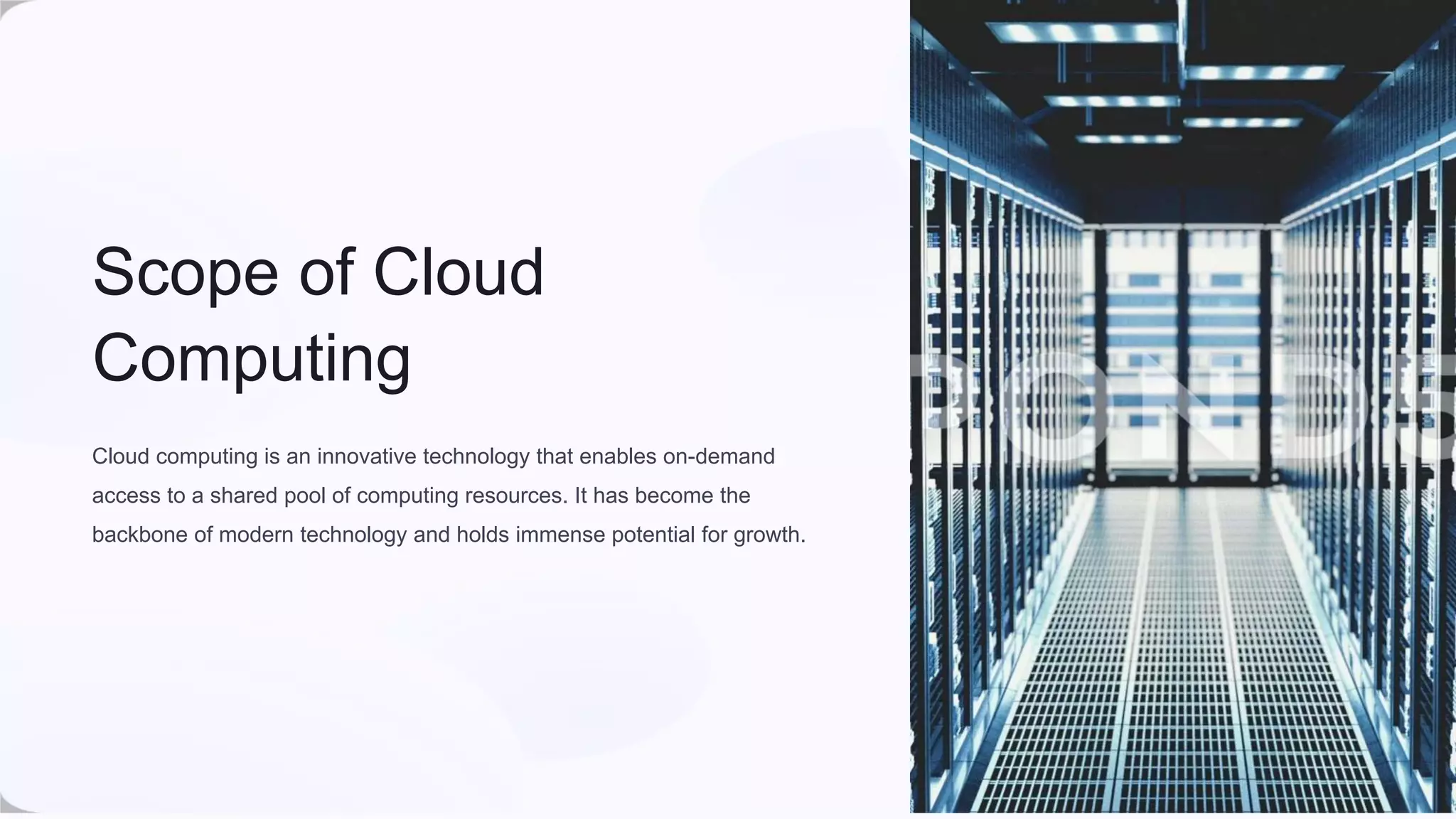
Cloud computing is an innovative technology that enables on-demand
access to a shared pool of computing resources. It has become the
backbone of modern technology and holds immense potential for growth.
Definition of Cloud Computing
1 Cloud Services
Cloud computing refers to the delivery of computing services such as storage, servers, databases, and software
over the internet (the cloud) on a pay-per-use basis.
2 Demand-based resource allocation
Cloud computing allows the distribution of computing resources to users on-demand.
3 Scalability and Flexibility
It provides the option to scale services up or down based on the user's requirements. This leads to cost-saving
and more flexible workloads.
Types of Cloud Computing
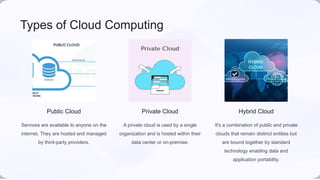
Public Cloud
Services are available to anyone on the
internet. They are hosted and managed
by third-party providers.
Private Cloud
A private cloud is used by a single
organization and is hosted within their
data center or on-premise.
Hybrid Cloud
It's a combination of public and private
clouds that remain distinct entities but
are bound together by standard
technology enabling data and
application portability.
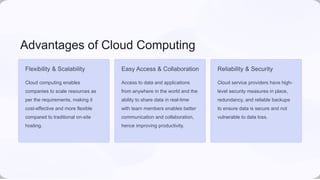
Advantages of Cloud Computing
Flexibility & Scalability
Cloud computing enables
companies to scale resources as
per the requirements, making it
cost-effective and more flexible
compared to traditional on-site
hosting.
Easy Access & Collaboration
Access to data and applications
from anywhere in the world and the
ability to share data in real-time
with team members enables better
communication and collaboration,
hence improving productivity.
Reliability & Security
Cloud service providers have high-
level security measures in place,
redundancy, and reliable backups
to ensure data is secure and not
vulnerable to data loss.
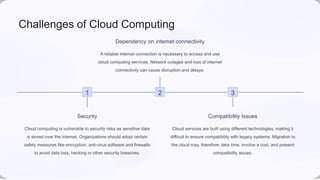
Challenges of Cloud Computing
1
Security
Cloud computing is vulnerable to security risks as sensitive data
is stored over the internet. Organizations should adopt certain
safety measures like encryption, anti-virus software and firewalls
to avoid data loss, hacking or other security breaches.
2
Dependency on internet connectivity
A reliable internet connection is necessary to access and use
cloud computing services. Network outages and loss of internet
connectivity can cause disruption and delays.
3
Compatibility Issues
Cloud services are built using different technologies, making it
difficult to ensure compatibility with legacy systems. Migration to
the cloud may, therefore, take time, involve a cost, and present
compatibility issues.
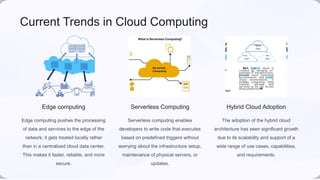
Current Trends in Cloud Computing
Edge computing
Edge computing pushes the processing
of data and services to the edge of the
network; it gets treated locally rather
than in a centralized cloud data center.
This makes it faster, reliable, and more
secure.
Serverless Computing
Serverless computing enables
developers to write code that executes
based on predefined triggers without
worrying about the infrastructure setup,
maintenance of physical servers, or
updates.
Hybrid Cloud Adoption
The adoption of the hybrid cloud
architecture has seen significant growth
due to its scalability and support of a
wide range of use cases, capabilities,
and requirements.
Conclusion
Cloud computing has become an essential part of the technology industry,
providing major benefits to both businesses and consumers. Proper
implementation, integration, and maintenance of cloud infrastructures can
lead to cost savings, competitive advantage, and efficiency.

Scope-of-Cloud-Computing.pptx

  • 1.
    Scope of Cloud Computing Cloudcomputing is an innovative technology that enables on-demand access to a shared pool of computing resources. It has become the backbone of modern technology and holds immense potential for growth.
  • 2.
    Definition of CloudComputing 1 Cloud Services Cloud computing refers to the delivery of computing services such as storage, servers, databases, and software over the internet (the cloud) on a pay-per-use basis. 2 Demand-based resource allocation Cloud computing allows the distribution of computing resources to users on-demand. 3 Scalability and Flexibility It provides the option to scale services up or down based on the user's requirements. This leads to cost-saving and more flexible workloads.
  • 3.
    Types of CloudComputing Public Cloud Services are available to anyone on the internet. They are hosted and managed by third-party providers. Private Cloud A private cloud is used by a single organization and is hosted within their data center or on-premise. Hybrid Cloud It's a combination of public and private clouds that remain distinct entities but are bound together by standard technology enabling data and application portability.
  • 4.
    Advantages of CloudComputing Flexibility & Scalability Cloud computing enables companies to scale resources as per the requirements, making it cost-effective and more flexible compared to traditional on-site hosting. Easy Access & Collaboration Access to data and applications from anywhere in the world and the ability to share data in real-time with team members enables better communication and collaboration, hence improving productivity. Reliability & Security Cloud service providers have high- level security measures in place, redundancy, and reliable backups to ensure data is secure and not vulnerable to data loss.
  • 5.
    Challenges of CloudComputing 1 Security Cloud computing is vulnerable to security risks as sensitive data is stored over the internet. Organizations should adopt certain safety measures like encryption, anti-virus software and firewalls to avoid data loss, hacking or other security breaches. 2 Dependency on internet connectivity A reliable internet connection is necessary to access and use cloud computing services. Network outages and loss of internet connectivity can cause disruption and delays. 3 Compatibility Issues Cloud services are built using different technologies, making it difficult to ensure compatibility with legacy systems. Migration to the cloud may, therefore, take time, involve a cost, and present compatibility issues.
  • 6.
    Current Trends inCloud Computing Edge computing Edge computing pushes the processing of data and services to the edge of the network; it gets treated locally rather than in a centralized cloud data center. This makes it faster, reliable, and more secure. Serverless Computing Serverless computing enables developers to write code that executes based on predefined triggers without worrying about the infrastructure setup, maintenance of physical servers, or updates. Hybrid Cloud Adoption The adoption of the hybrid cloud architecture has seen significant growth due to its scalability and support of a wide range of use cases, capabilities, and requirements.
  • 7.
    Conclusion Cloud computing hasbecome an essential part of the technology industry, providing major benefits to both businesses and consumers. Proper implementation, integration, and maintenance of cloud infrastructures can lead to cost savings, competitive advantage, and efficiency.