CONSTRUCTIVISM
JEAN PIAGET || JEROME BRUNER || LEV VYGOTSKY
Learner-centered
approach that
places importance
on the learner's
prior knowledge,
experiences, and
interactions with
their environment.
Constructivism
Learning is an active and dynamic process
where learners construct knowledge and
meaning from their experiences.
Learning is a process
of constructing
meaning rather than
simply acquiring
knowledge.
Learners are not
passive recipients of
information but
active participants in
their own learning.
Learners
benefit from
collaborating
with others,
engaging in
discussions, and
sharing ideas.
Learners are encouraged to
reflect on their learning
process, think critically about
their own thinking, and engage
in metacognitive strategies.
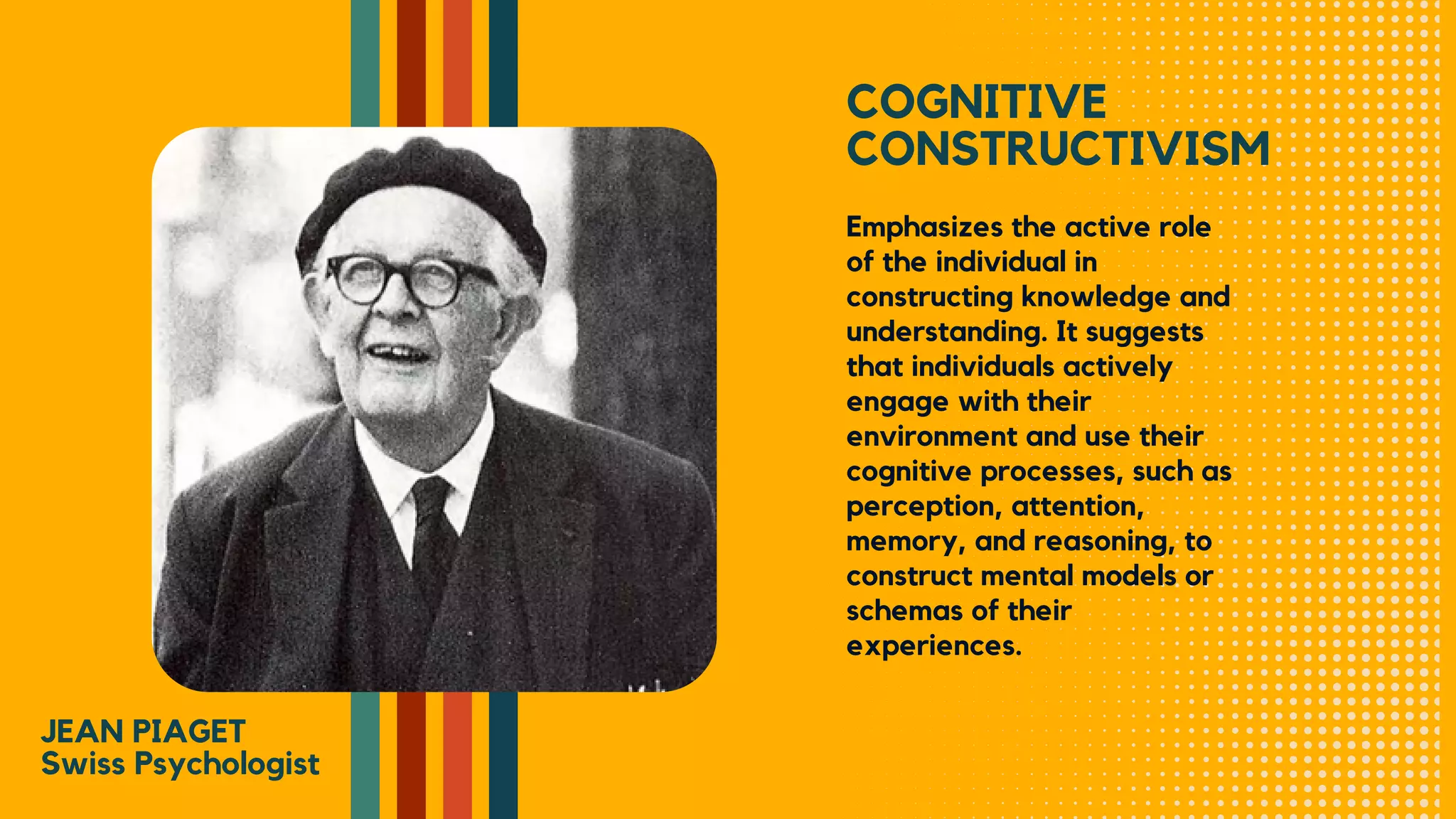
COGNITIVE
CONSTRUCTIVISM
Emphasizes the active role
of the individual in
constructing knowledge and
understanding. It suggests
that individuals actively
engage with their
environment and use their
cognitive processes, such as
perception, attention,
memory, and reasoning, to
construct mental models or
schemas of their
experiences.
JEAN PIAGET
Swiss Psychologist
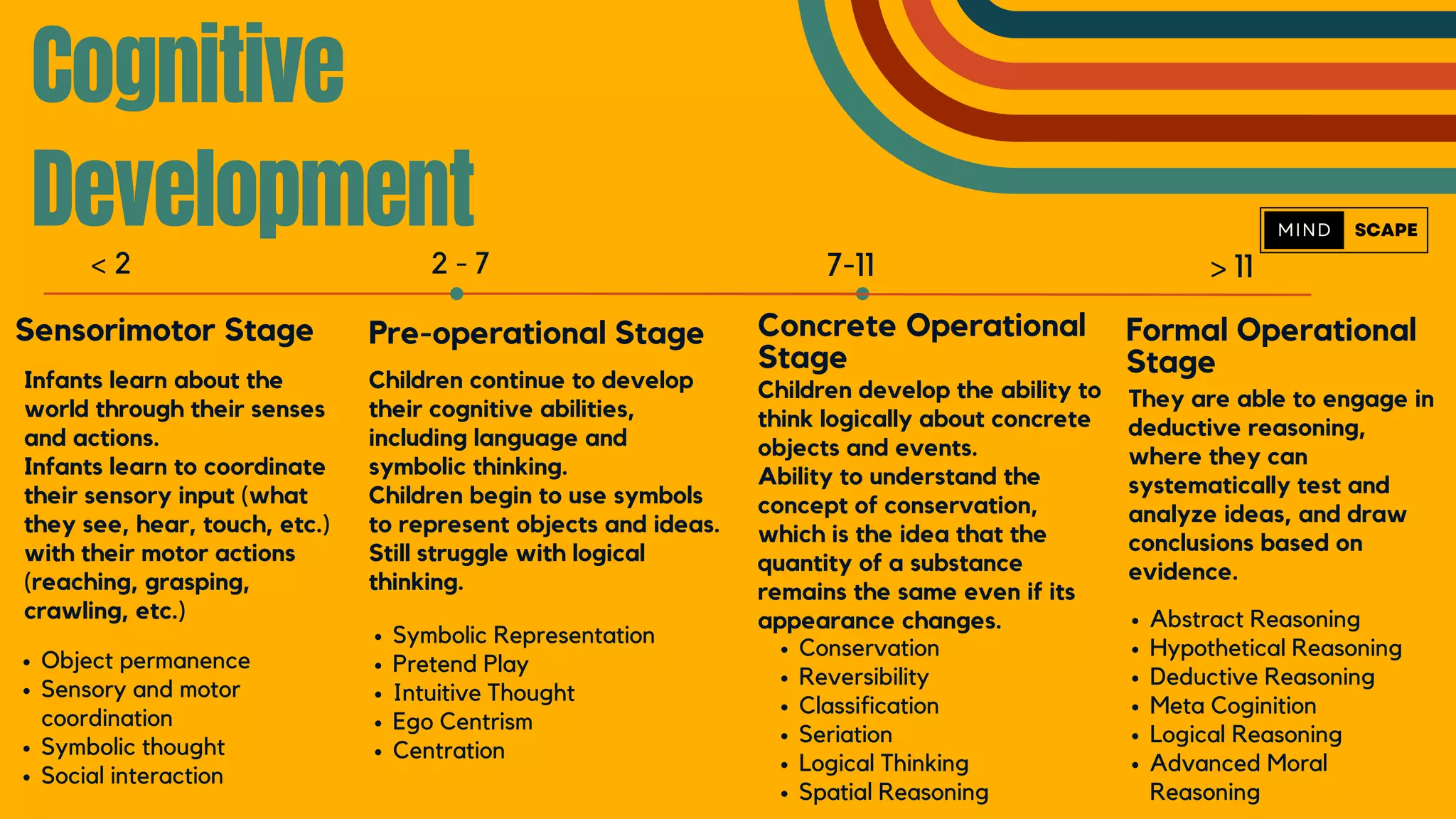
Cognitive
Development
Sensorimotor Stage
Infants learn about the
world through their senses
and actions.
Infants learn to coordinate
their sensory input (what
they see, hear, touch, etc.)
with their motor actions
(reaching, grasping,
crawling, etc.)
Pre-operational Stage
Children continue to develop
their cognitive abilities,
including language and
symbolic thinking.
Children begin to use symbols
to represent objects and ideas.
Still struggle with logical
thinking.
Concrete Operational
Stage
Children develop the ability to
think logically about concrete
objects and events.
Ability to understand the
concept of conservation,
which is the idea that the
quantity of a substance
remains the same even if its
appearance changes.
< 2 2 - 7 7-11
Object permanence
Sensory and motor
coordination
Symbolic thought
Social interaction
Symbolic Representation
Pretend Play
Intuitive Thought
Ego Centrism
Centration
Conservation
Reversibility
Classification
Seriation
Logical Thinking
Spatial Reasoning
Formal Operational
Stage
They are able to engage in
deductive reasoning,
where they can
systematically test and
analyze ideas, and draw
conclusions based on
evidence.
> 11
Abstract Reasoning
Hypothetical Reasoning
Deductive Reasoning
Meta Coginition
Logical Reasoning
Advanced Moral
Reasoning
COGNITIVE
STRUCTURE
Schema
The Building Blocks of
Knowledge.
Schemas are cognitive
frameworks or mental structures
that help us organize, interpret,
and understand the information
we encounter in the world.
They are essentially mental
representations of concepts,
categories, or knowledge
domains.
COGNITIVE
FUNCTIONING
Assimilation
Taking in new information and
incorporating it into existing
mental frameworks or schemas.
Accommodation
Modifying existing mental
frameworks or schemas to
incorporate new information.
Equilibrium
The balance between
assimilation and accommodation
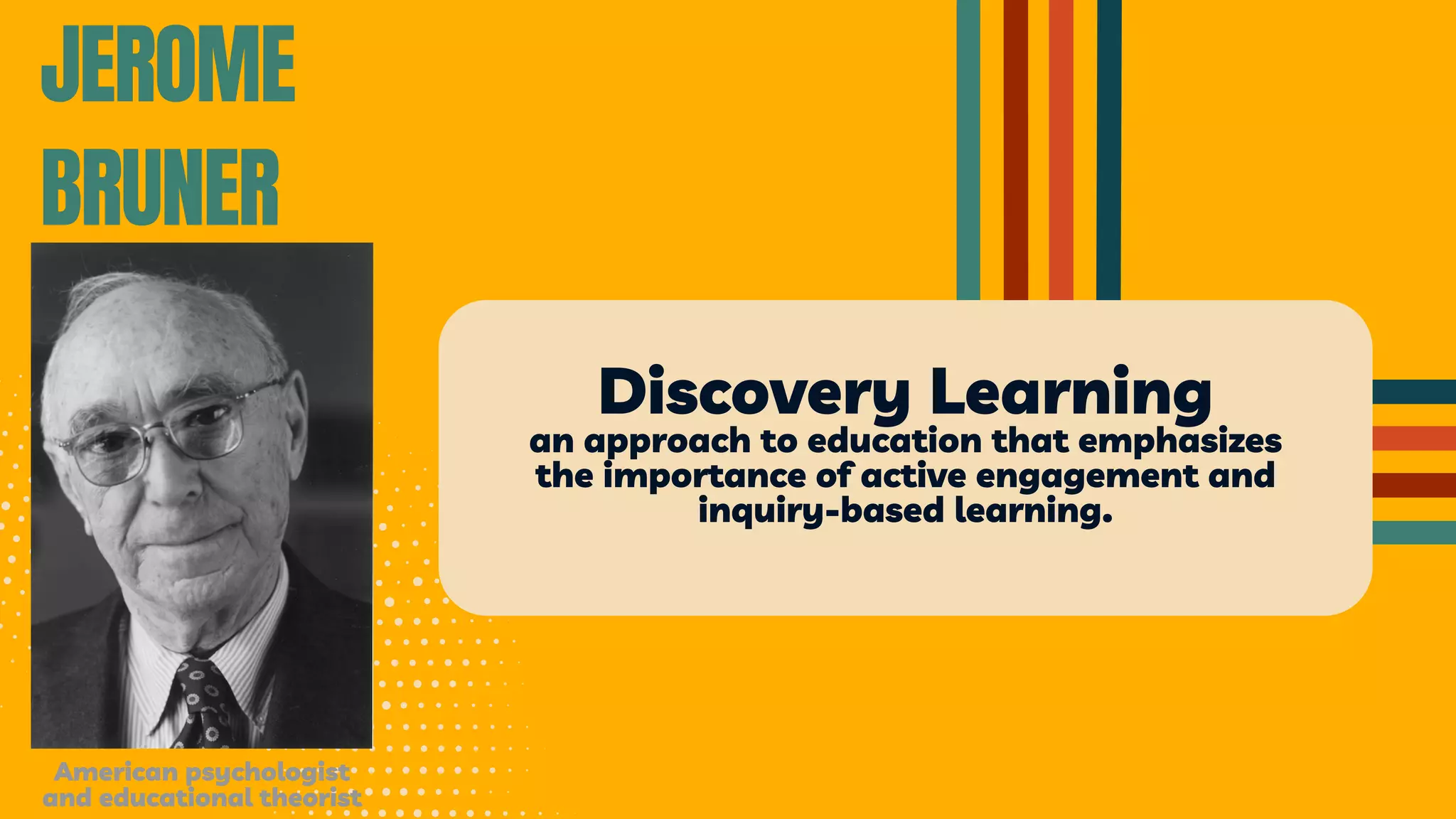
American psychologist
and educational theorist
JEROME
BRUNER
Discovery Learning
an approach to education that emphasizes
the importance of active engagement and
inquiry-based learning.
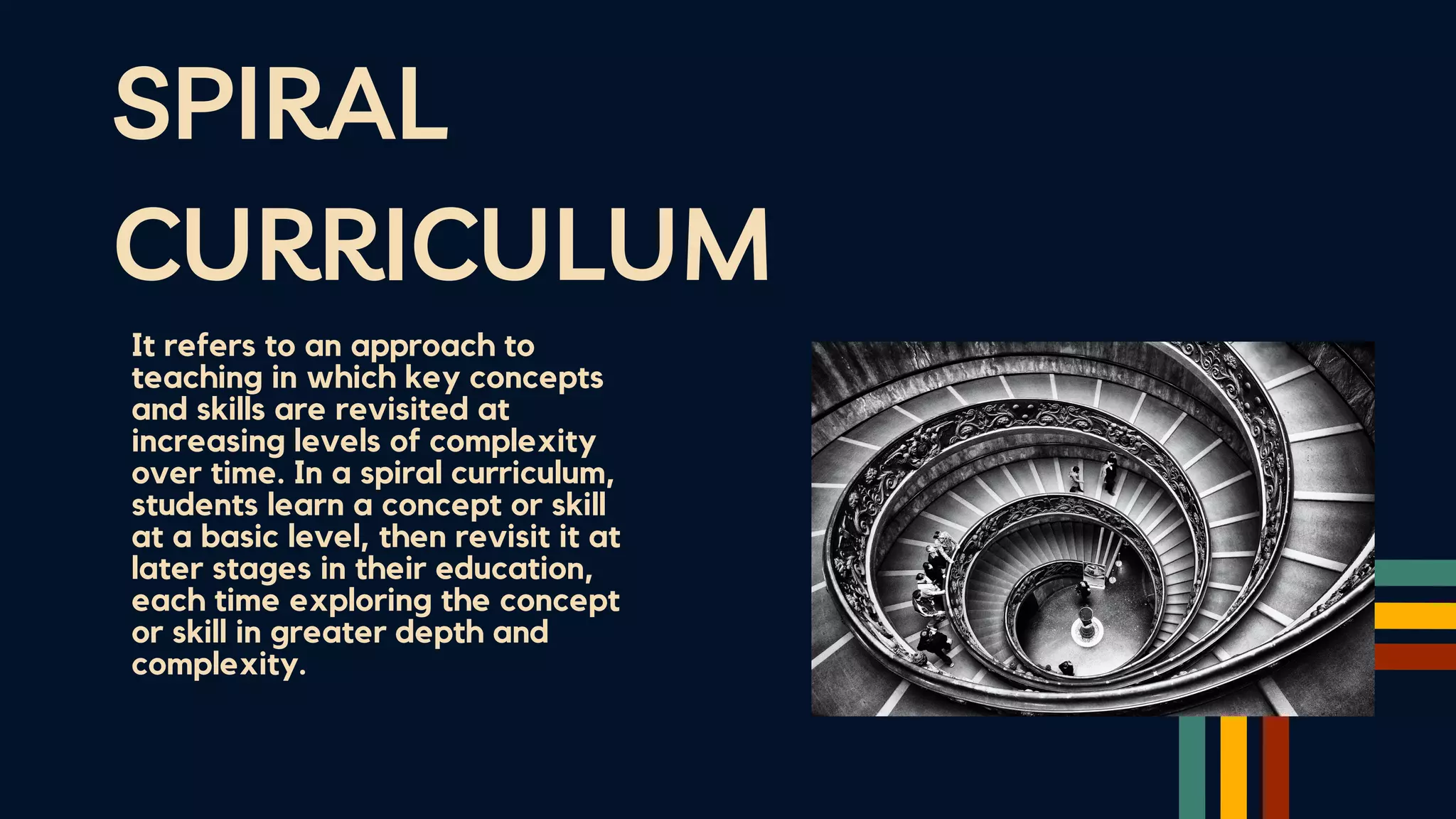
SPIRAL
CURRICULUM
It refers to an approach to
teaching in which key concepts
and skills are revisited at
increasing levels of complexity
over time. In a spiral curriculum,
students learn a concept or skill
at a basic level, then revisit it at
later stages in their education,
each time exploring the concept
or skill in greater depth and
complexity.
Cognitive
Theory
Enactive
representation
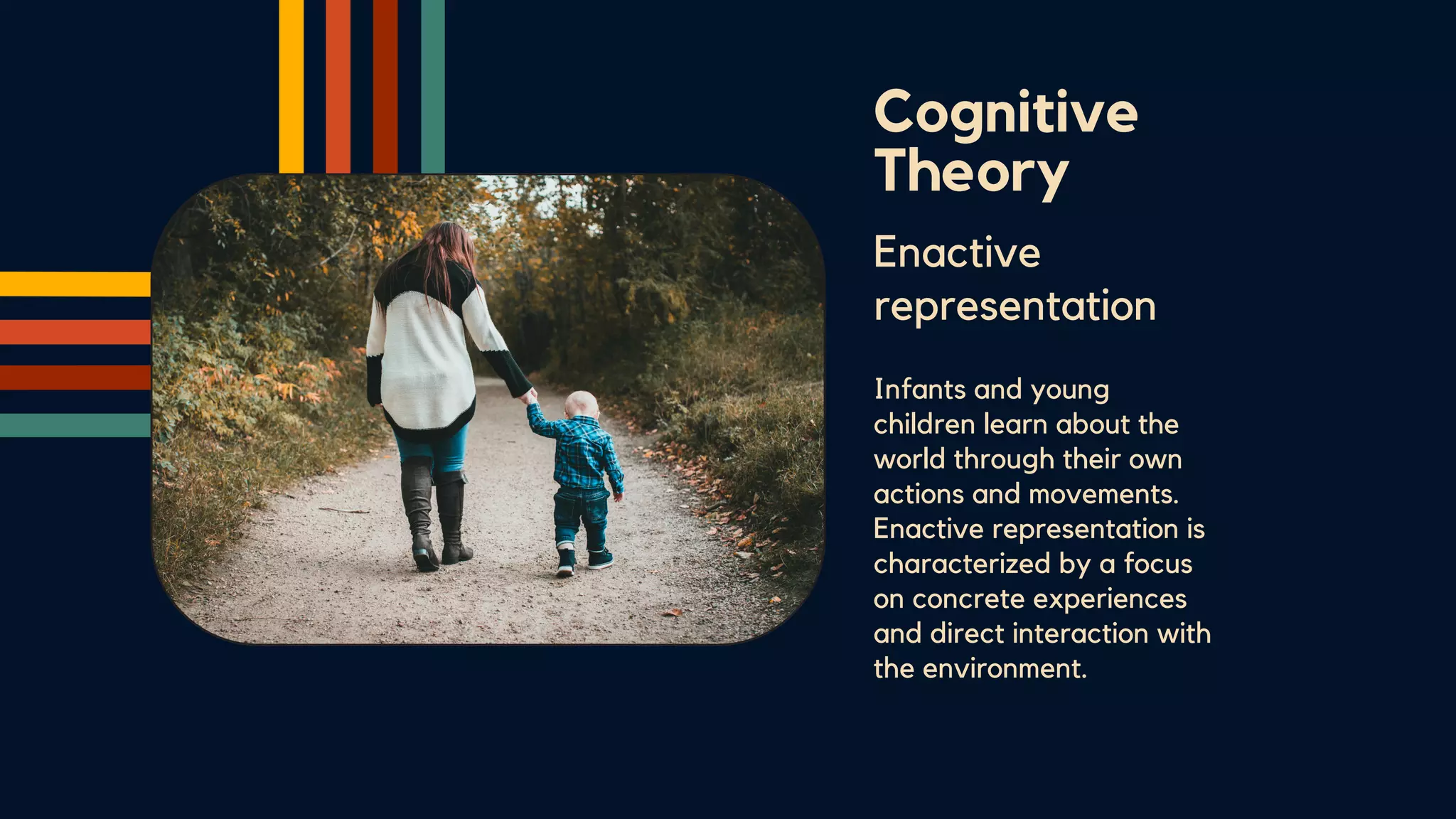
Infants and young
children learn about the
world through their own
actions and movements.
Enactive representation is
characterized by a focus
on concrete experiences
and direct interaction with
the environment.
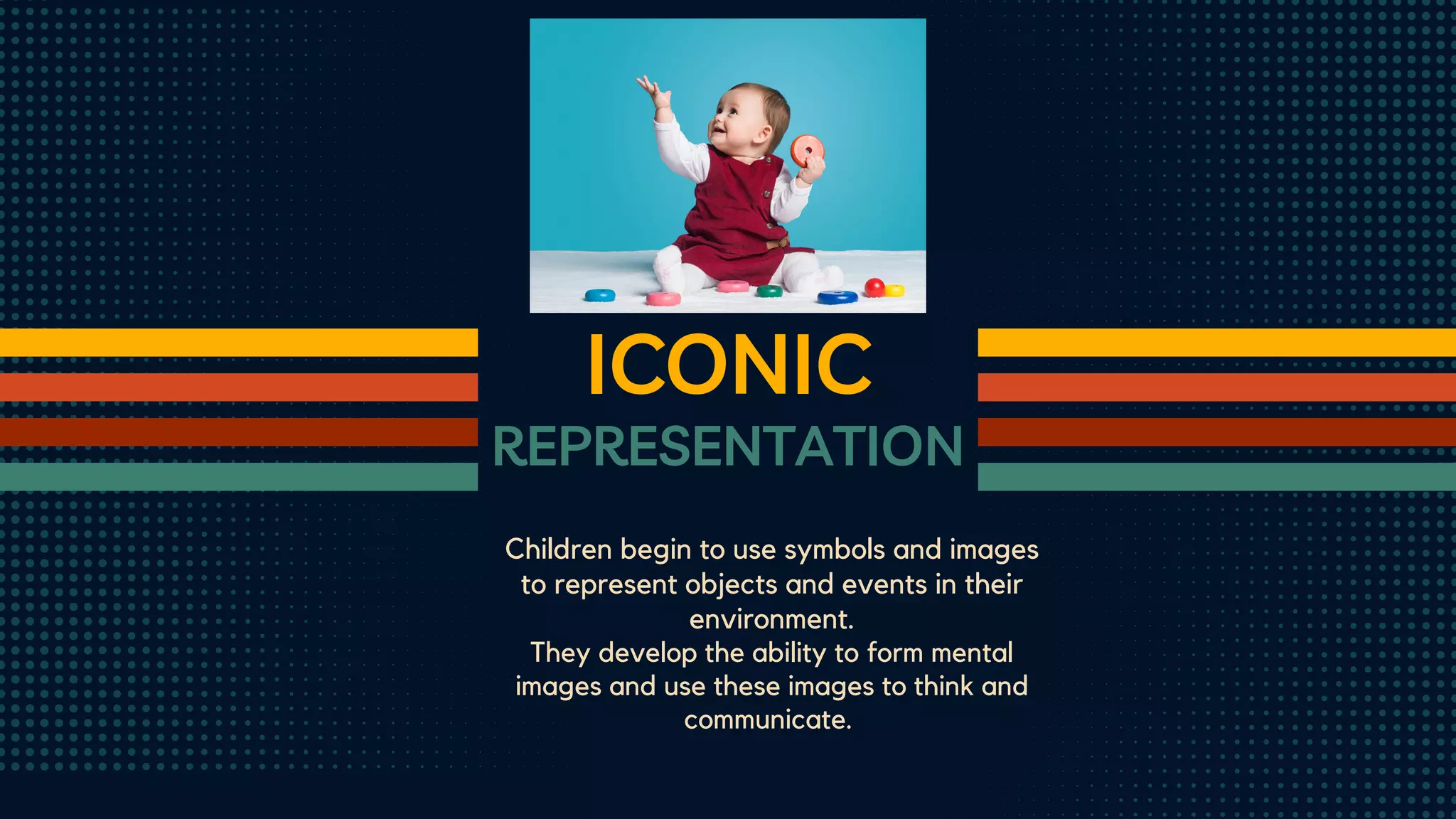
ICONIC
REPRESENTATION
Children begin to use symbols and images
to represent objects and events in their
environment.
They develop the ability to form mental
images and use these images to think and
communicate.
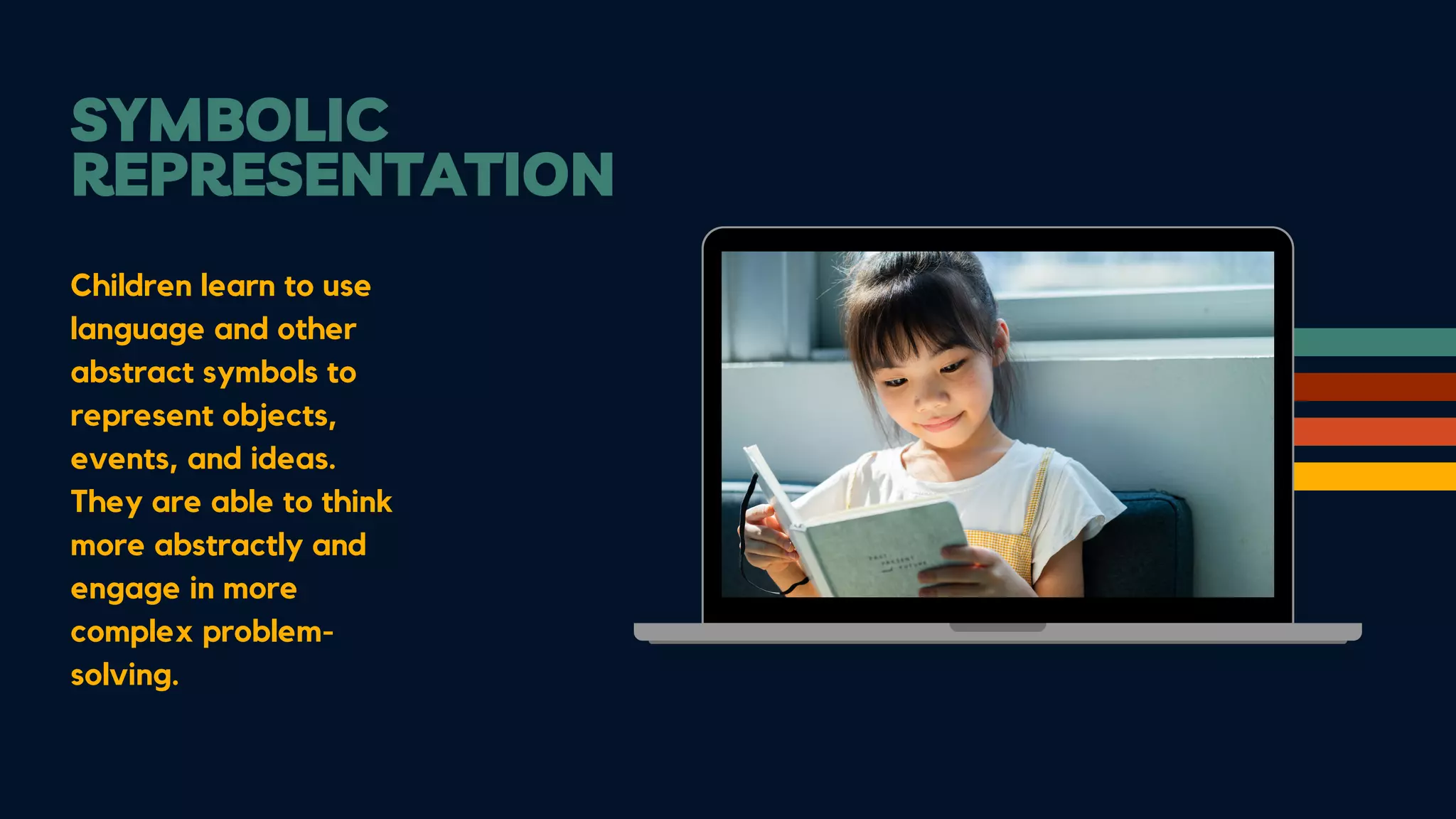
Children learn to use
language and other
abstract symbols to
represent objects,
events, and ideas.
They are able to think
more abstractly and
engage in more
complex problem-
solving.
SYMBOLIC
REPRESENTATION
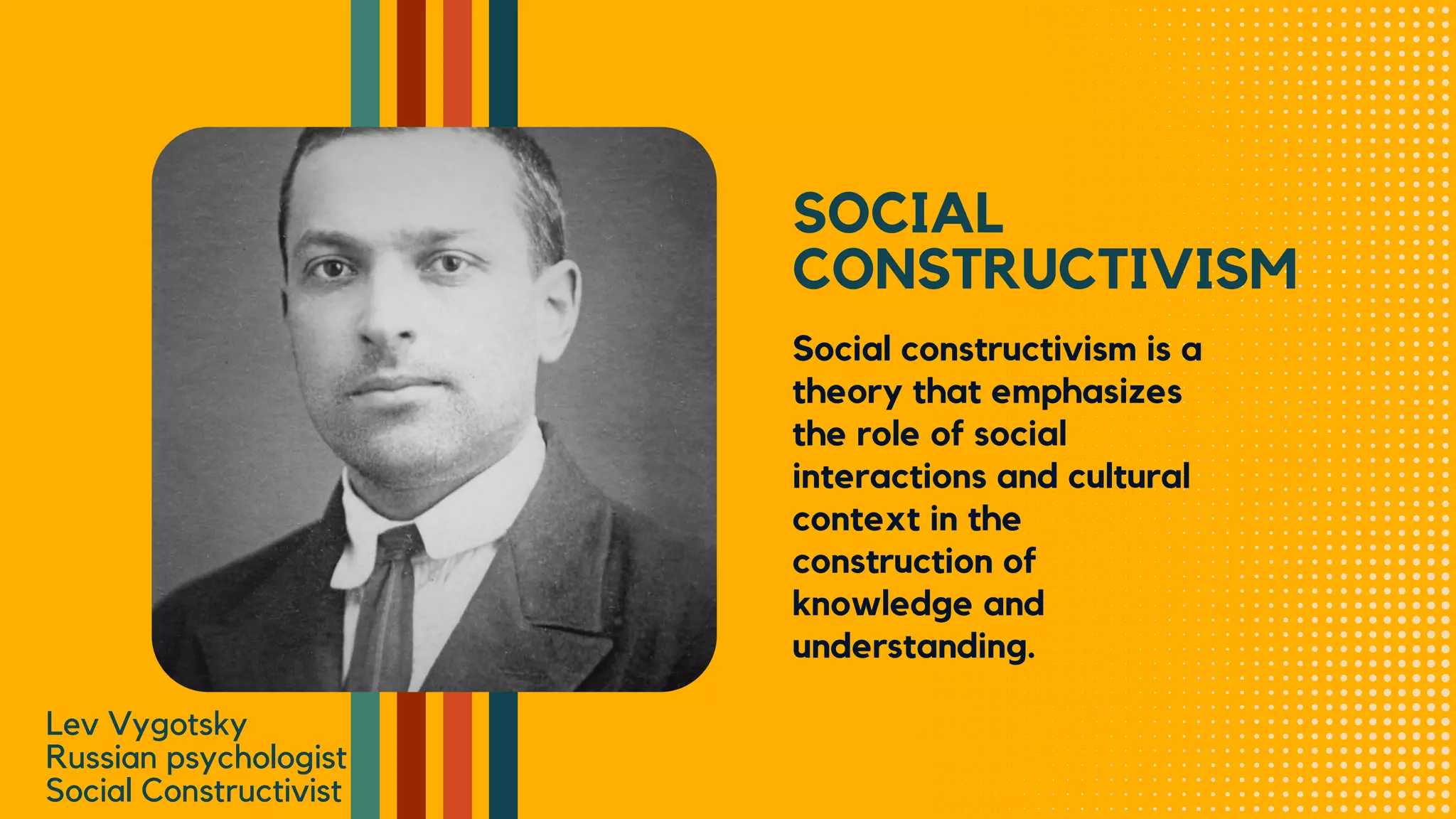
SOCIAL
CONSTRUCTIVISM
Social constructivism is a
theory that emphasizes
the role of social
interactions and cultural
context in the
construction of
knowledge and
understanding.
Lev Vygotsky
Russian psychologist
Social Constructivist
Learning is a collaborative process that
occurs through social interactions with
more knowledgeable Others, typically
parents, teachers, or peers.
Social interactions provide children with the
tools and resources they need to acquire
new knowledge and skills.
ZONE OF
PROXIMAL
DEVELOPMENT
(ZPD)
The ZPD refers to the range of tasks
or skills that a learner can
accomplish with the guidance and
support of a more knowledgeable
individual, typically a teacher,
parent, or peer.
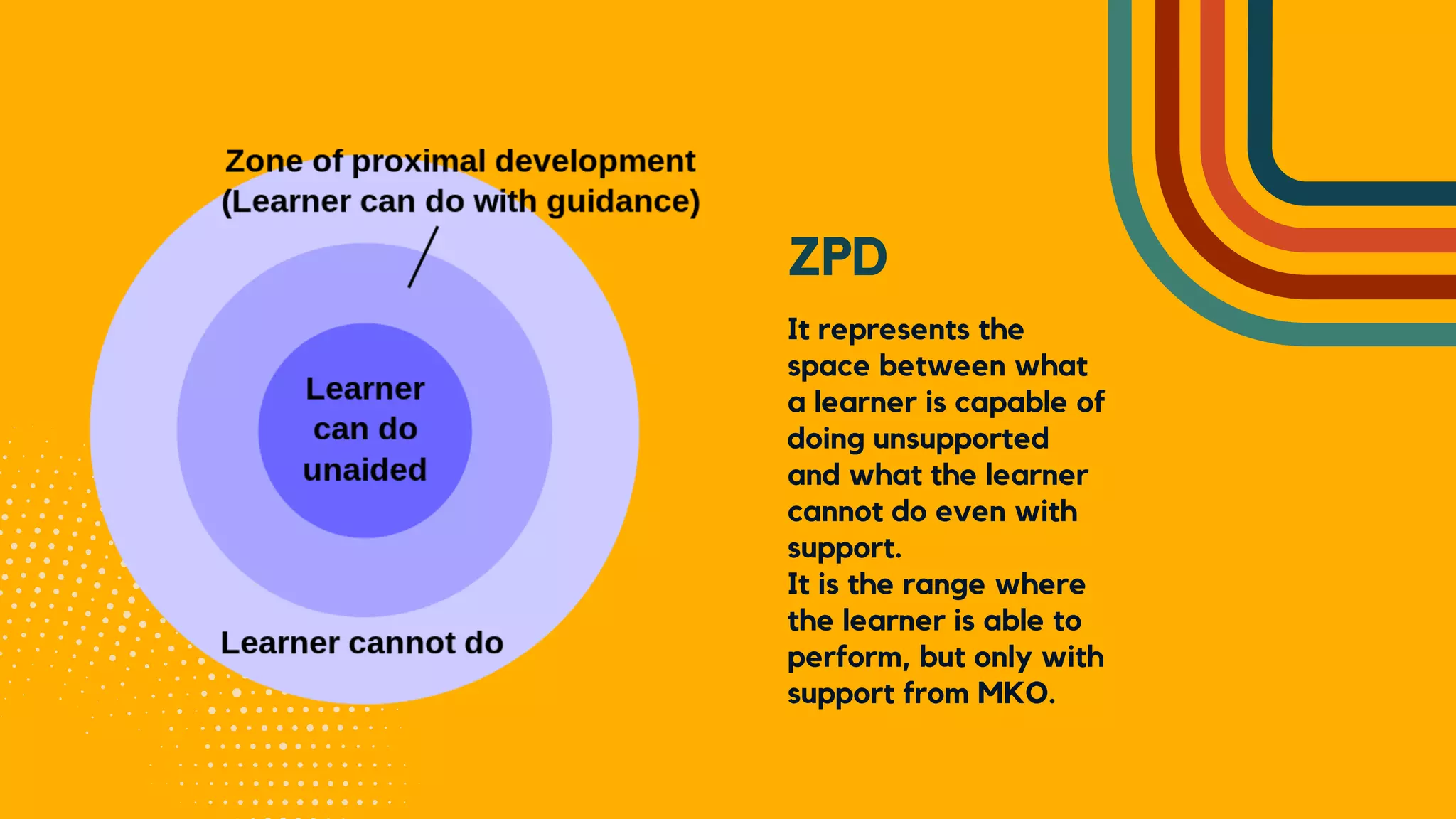
It represents the
space between what
a learner is capable of
doing unsupported
and what the learner
cannot do even with
support.
It is the range where
the learner is able to
perform, but only with
support from MKO.
ZPD
Scaffolding
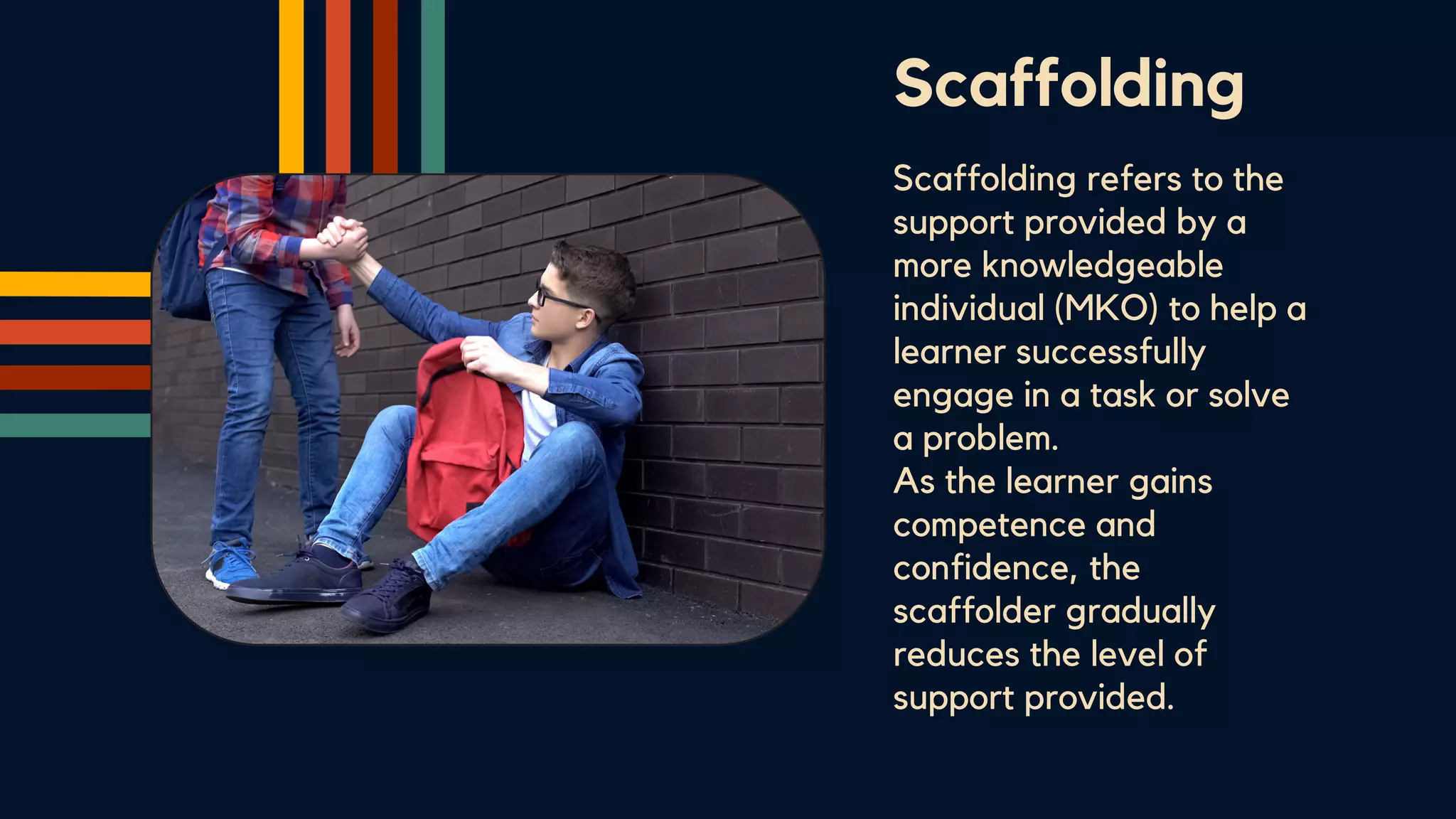
Scaffolding refers to the
support provided by a
more knowledgeable
individual (MKO) to help a
learner successfully
engage in a task or solve
a problem.
As the learner gains
competence and
confidence, the
scaffolder gradually
reduces the level of
support provided.
MKO
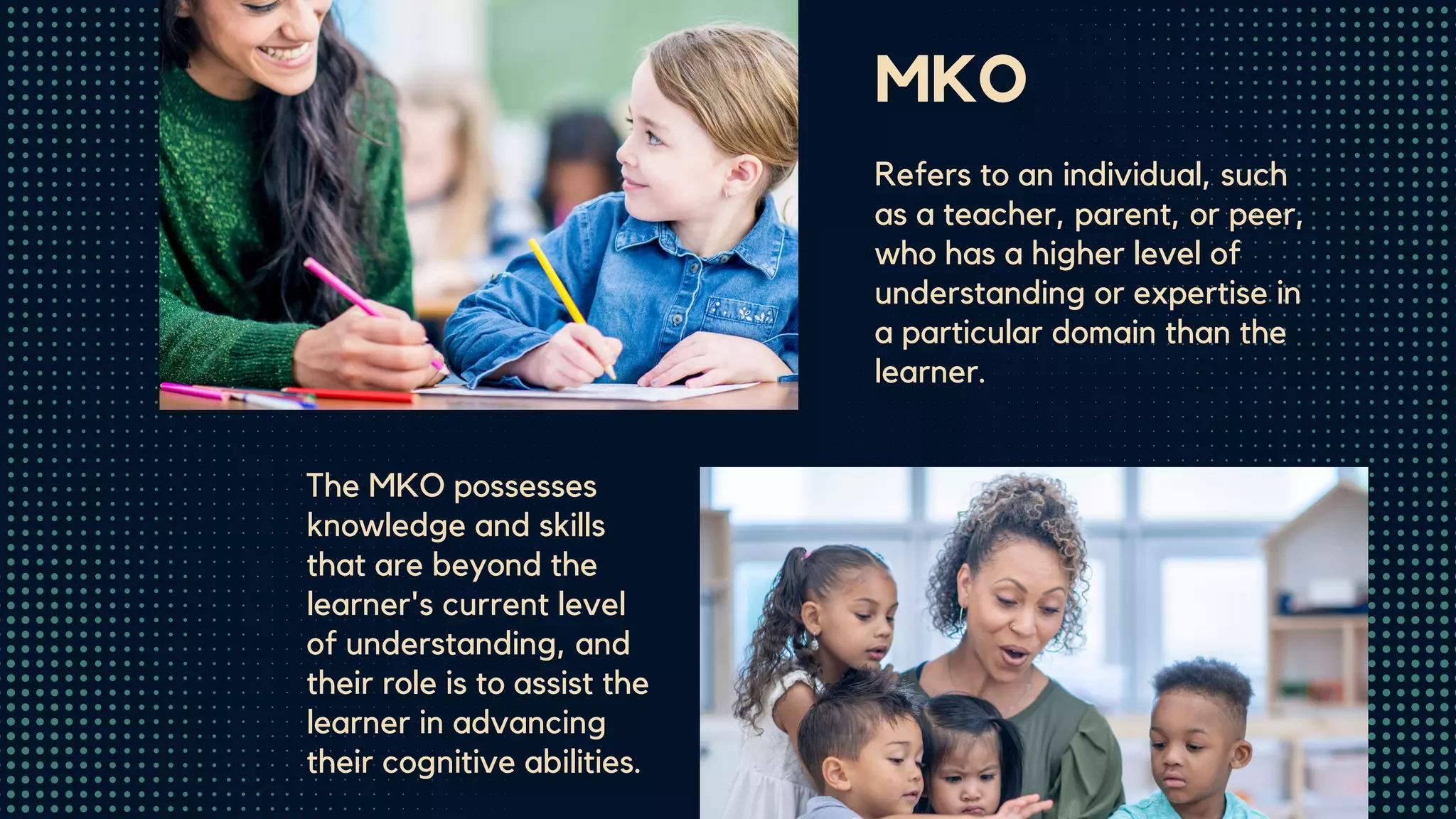
Refers to an individual, such
as a teacher, parent, or peer,
who has a higher level of
understanding or expertise in
a particular domain than the
learner.
The MKO possesses
knowledge and skills
that are beyond the
learner's current level
of understanding, and
their role is to assist the
learner in advancing
their cognitive abilities.
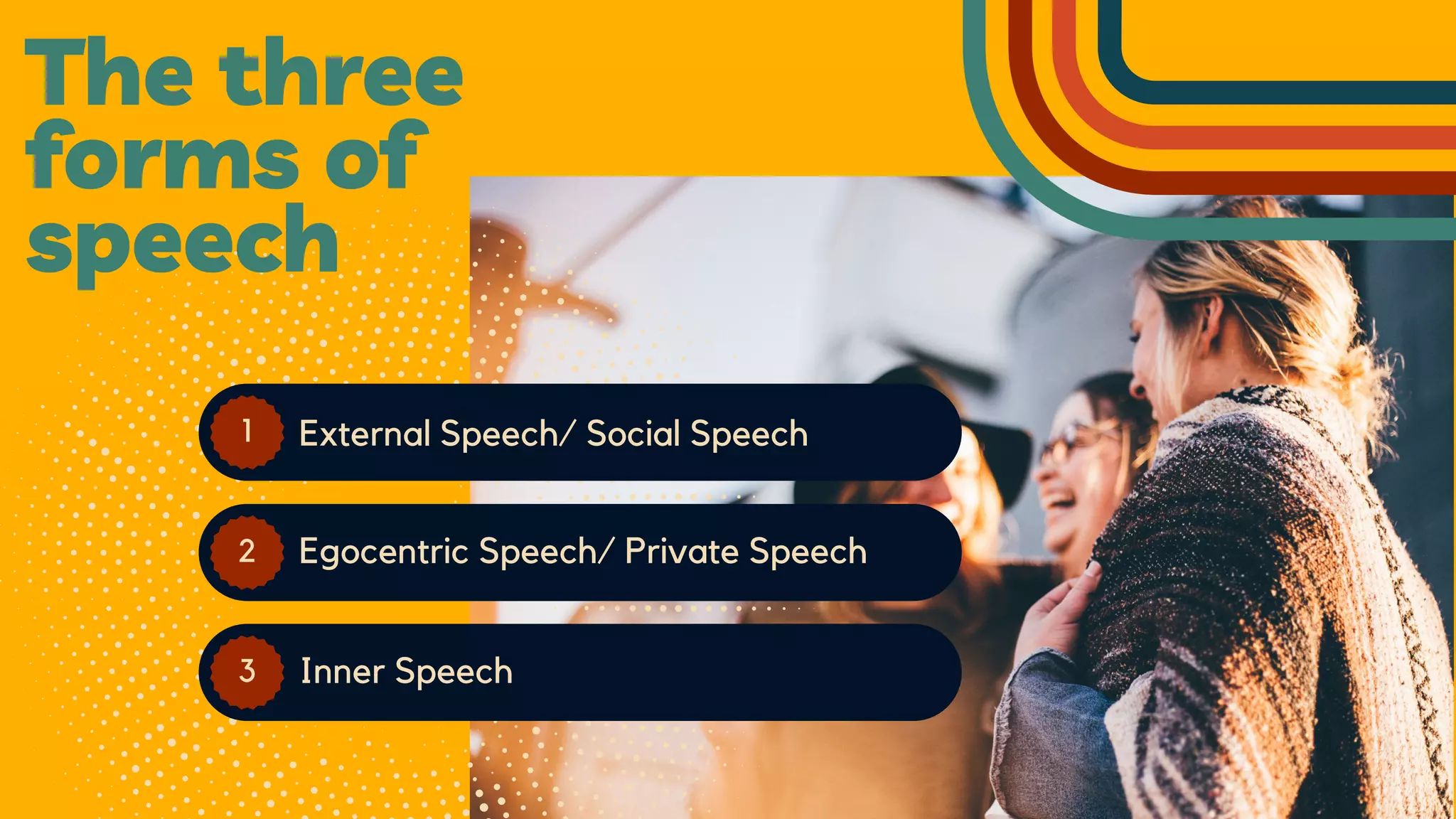
2 Egocentric Speech/ Private Speech
3 Inner Speech
The three
forms of
speech
1 External Speech/ Social Speech
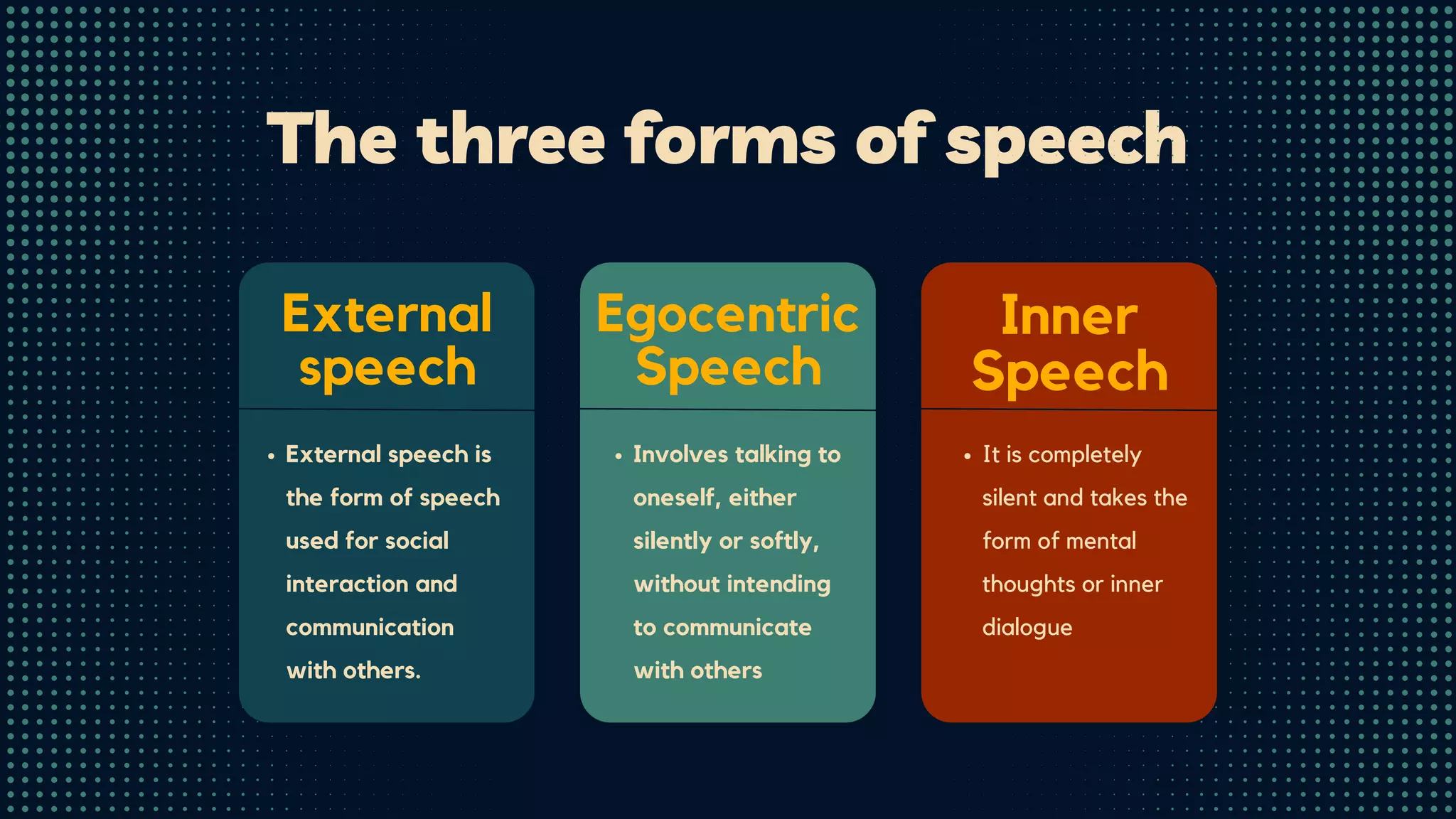
The three forms of speech
Egocentric
Speech
Inner
Speech
External
speech
External speech is
the form of speech
used for social
interaction and
communication
with others.
Involves talking to
oneself, either
silently or softly,
without intending
to communicate
with others
It is completely
silent and takes the
form of mental
thoughts or inner
dialogue
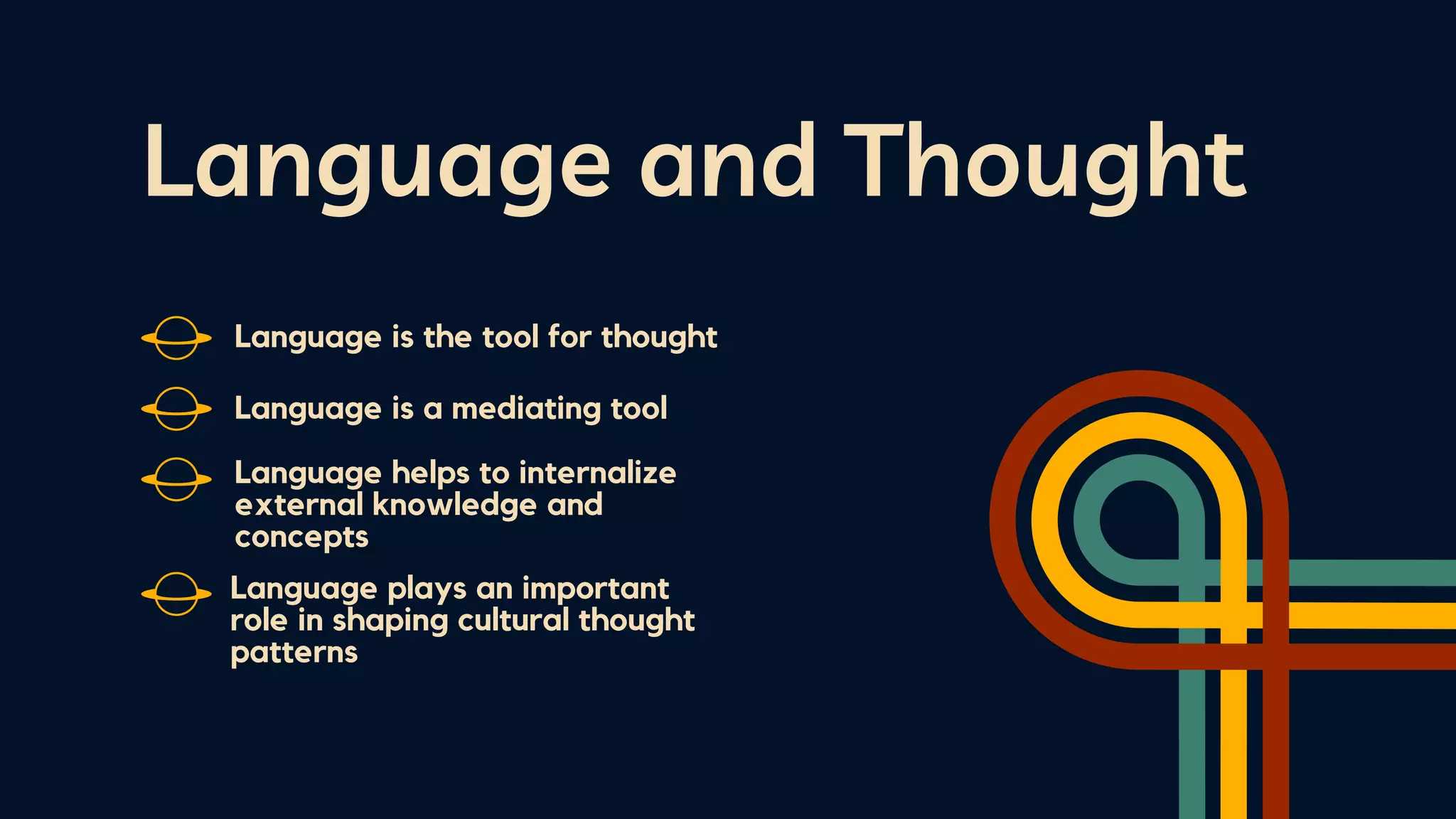
Language and Thought
Language is the tool for thought
Language is a mediating tool
Language helps to internalize
external knowledge and
concepts
Language plays an important
role in shaping cultural thought
patterns

Cognitive and Social Constructivism

  • 1.
    CONSTRUCTIVISM JEAN PIAGET ||JEROME BRUNER || LEV VYGOTSKY
  • 2.
    Learner-centered approach that places importance onthe learner's prior knowledge, experiences, and interactions with their environment. Constructivism Learning is an active and dynamic process where learners construct knowledge and meaning from their experiences. Learning is a process of constructing meaning rather than simply acquiring knowledge. Learners are not passive recipients of information but active participants in their own learning. Learners benefit from collaborating with others, engaging in discussions, and sharing ideas. Learners are encouraged to reflect on their learning process, think critically about their own thinking, and engage in metacognitive strategies.
  • 3.
    COGNITIVE CONSTRUCTIVISM Emphasizes the activerole of the individual in constructing knowledge and understanding. It suggests that individuals actively engage with their environment and use their cognitive processes, such as perception, attention, memory, and reasoning, to construct mental models or schemas of their experiences. JEAN PIAGET Swiss Psychologist
  • 4.
    Cognitive Development Sensorimotor Stage Infants learnabout the world through their senses and actions. Infants learn to coordinate their sensory input (what they see, hear, touch, etc.) with their motor actions (reaching, grasping, crawling, etc.) Pre-operational Stage Children continue to develop their cognitive abilities, including language and symbolic thinking. Children begin to use symbols to represent objects and ideas. Still struggle with logical thinking. Concrete Operational Stage Children develop the ability to think logically about concrete objects and events. Ability to understand the concept of conservation, which is the idea that the quantity of a substance remains the same even if its appearance changes. < 2 2 - 7 7-11 Object permanence Sensory and motor coordination Symbolic thought Social interaction Symbolic Representation Pretend Play Intuitive Thought Ego Centrism Centration Conservation Reversibility Classification Seriation Logical Thinking Spatial Reasoning Formal Operational Stage They are able to engage in deductive reasoning, where they can systematically test and analyze ideas, and draw conclusions based on evidence. > 11 Abstract Reasoning Hypothetical Reasoning Deductive Reasoning Meta Coginition Logical Reasoning Advanced Moral Reasoning
  • 5.
    COGNITIVE STRUCTURE Schema The Building Blocksof Knowledge. Schemas are cognitive frameworks or mental structures that help us organize, interpret, and understand the information we encounter in the world. They are essentially mental representations of concepts, categories, or knowledge domains.
  • 6.
    COGNITIVE FUNCTIONING Assimilation Taking in newinformation and incorporating it into existing mental frameworks or schemas. Accommodation Modifying existing mental frameworks or schemas to incorporate new information. Equilibrium The balance between assimilation and accommodation
  • 7.
    American psychologist and educationaltheorist JEROME BRUNER Discovery Learning an approach to education that emphasizes the importance of active engagement and inquiry-based learning.
  • 8.
    SPIRAL CURRICULUM It refers toan approach to teaching in which key concepts and skills are revisited at increasing levels of complexity over time. In a spiral curriculum, students learn a concept or skill at a basic level, then revisit it at later stages in their education, each time exploring the concept or skill in greater depth and complexity.
  • 9.
    Cognitive Theory Enactive representation Infants and young childrenlearn about the world through their own actions and movements. Enactive representation is characterized by a focus on concrete experiences and direct interaction with the environment.
  • 10.
    ICONIC REPRESENTATION Children begin touse symbols and images to represent objects and events in their environment. They develop the ability to form mental images and use these images to think and communicate.
  • 11.
    Children learn touse language and other abstract symbols to represent objects, events, and ideas. They are able to think more abstractly and engage in more complex problem- solving. SYMBOLIC REPRESENTATION
  • 12.
    SOCIAL CONSTRUCTIVISM Social constructivism isa theory that emphasizes the role of social interactions and cultural context in the construction of knowledge and understanding. Lev Vygotsky Russian psychologist Social Constructivist
  • 13.
    Learning is acollaborative process that occurs through social interactions with more knowledgeable Others, typically parents, teachers, or peers. Social interactions provide children with the tools and resources they need to acquire new knowledge and skills.
  • 14.
    ZONE OF PROXIMAL DEVELOPMENT (ZPD) The ZPDrefers to the range of tasks or skills that a learner can accomplish with the guidance and support of a more knowledgeable individual, typically a teacher, parent, or peer.
  • 15.
    It represents the spacebetween what a learner is capable of doing unsupported and what the learner cannot do even with support. It is the range where the learner is able to perform, but only with support from MKO. ZPD
  • 16.
    Scaffolding Scaffolding refers tothe support provided by a more knowledgeable individual (MKO) to help a learner successfully engage in a task or solve a problem. As the learner gains competence and confidence, the scaffolder gradually reduces the level of support provided.
  • 17.
    MKO Refers to anindividual, such as a teacher, parent, or peer, who has a higher level of understanding or expertise in a particular domain than the learner. The MKO possesses knowledge and skills that are beyond the learner's current level of understanding, and their role is to assist the learner in advancing their cognitive abilities.
  • 18.
    2 Egocentric Speech/Private Speech 3 Inner Speech The three forms of speech 1 External Speech/ Social Speech
  • 19.
    The three formsof speech Egocentric Speech Inner Speech External speech External speech is the form of speech used for social interaction and communication with others. Involves talking to oneself, either silently or softly, without intending to communicate with others It is completely silent and takes the form of mental thoughts or inner dialogue
  • 20.
    Language and Thought Languageis the tool for thought Language is a mediating tool Language helps to internalize external knowledge and concepts Language plays an important role in shaping cultural thought patterns