Cloud Computing The Journey to Cloud  CRIM Crystal Ball Conference April, 2011 Tom Wheatley, Distinguished Engineer IBM Global Technology Services
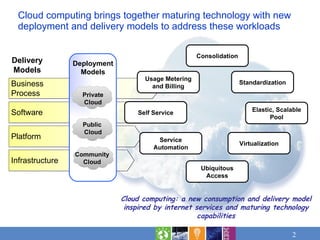
Cloud computing brings together maturing technology with new deployment and delivery models to address these workloads Cloud computing: a new consumption and delivery model inspired by internet services and maturing technology capabilities Virtualization Standardization Service Automation Consolidation Elastic, Scalable Pool Self Service Ubiquitous Access Usage Metering and Billing Business  Process Delivery Models Software Platform Infrastructure Deployment Models Private Cloud Public  Cloud Community  Cloud
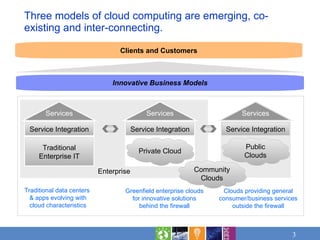
Three models of cloud computing are emerging, co-existing and inter-connecting. Enterprise Service Integration Service Integration Traditional Enterprise IT Services Services Service Integration Public Clouds Services Traditional data centers  & apps evolving with cloud characteristics Greenfield enterprise clouds for innovative solutions behind the firewall Clouds providing general consumer/business services outside the firewall Clients and Customers Innovative Business Models Community Clouds Private Cloud
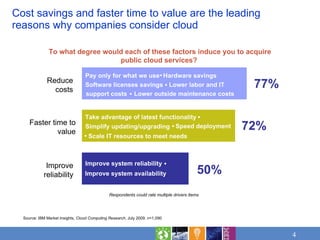
Cost savings and faster time to value are the leading reasons why companies consider cloud Respondents could rate multiple drivers items  50% 72% 77% Improve reliability Faster time to value Reduce costs Improve system availability Pay only for what we use Hardware savings Software licenses savings Lower labor and IT support costs  Lower outside maintenance costs Take advantage of latest functionality Simplify updating/upgrading Speed deployment Scale IT resources to meet needs • • • • Improve system reliability • • • To what degree would each of these factors induce you to acquire public cloud services?  Source: IBM Market Insights,  Cloud Computing Research , July 2009. n=1,090
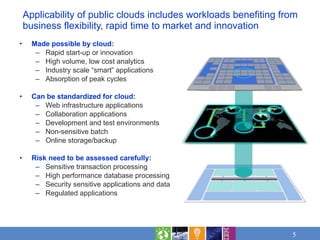
Applicability of public clouds includes workloads benefiting from business flexibility, rapid time to market and innovation  Made possible by cloud: Rapid start-up or innovation High volume, low cost analytics Industry scale “smart” applications Absorption of peak cycles   Can be standardized for cloud:   Web infrastructure applications Collaboration applications Development and test environments Non-sensitive batch Online storage/backup Risk need to be assessed carefully: Sensitive transaction processing  High performance database processing Security sensitive applications and data Regulated applications
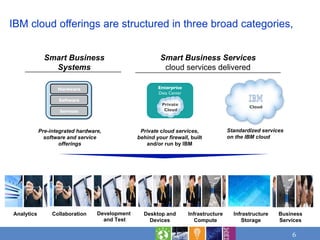
IBM cloud offerings are structured in three broad categories,  Analytics Collaboration Development  and Test Desktop and Devices Infrastructure Storage Infrastructure Compute Business Services Smart Business Services cloud services delivered Smart Business Systems Pre-integrated hardware, software and service offerings Hardware Software Services Cloud Standardized services   on the IBM cloud Enterprise Data Center Private  c loud services ,  behind your firewall,   built and/or run by IBM Private  Cloud
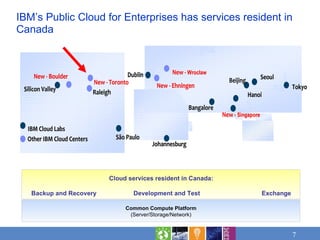
Common Compute Platform (Server/Storage/Network) IBM’s Public Cloud for Enterprises has services resident in Canada  Cloud services resident in Canada: Backup and Recovery  Development and Test  Exchange
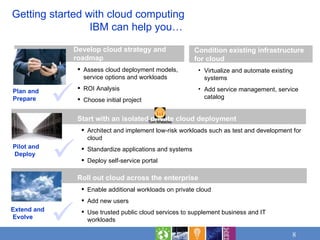
Develop cloud strategy and roadmap Assess cloud deployment models, service options and workloads ROI Analysis Choose initial project Getting started with cloud computing    IBM can help you… Start with an isolated private cloud deployment Architect and implement low-risk workloads such as test and development for cloud Standardize applications and systems Deploy self-service portal Roll out cloud across the enterprise  Enable additional workloads on private cloud Add new users Use trusted public cloud services to supplement business and IT workloads  Pilot and Deploy Extend and Evolve Plan and Prepare Condition existing infrastructure for cloud Virtualize and automate existing systems Add service management, service catalog   
Thank you! For more information, please visit: ibm.com/cloud Or contact me at: [email_address]

CloudOps evening presentation from IBM

  • 1.
    Cloud Computing TheJourney to Cloud CRIM Crystal Ball Conference April, 2011 Tom Wheatley, Distinguished Engineer IBM Global Technology Services
  • 2.
    Cloud computing bringstogether maturing technology with new deployment and delivery models to address these workloads Cloud computing: a new consumption and delivery model inspired by internet services and maturing technology capabilities Virtualization Standardization Service Automation Consolidation Elastic, Scalable Pool Self Service Ubiquitous Access Usage Metering and Billing Business Process Delivery Models Software Platform Infrastructure Deployment Models Private Cloud Public Cloud Community Cloud
  • 3.
    Three models ofcloud computing are emerging, co-existing and inter-connecting. Enterprise Service Integration Service Integration Traditional Enterprise IT Services Services Service Integration Public Clouds Services Traditional data centers & apps evolving with cloud characteristics Greenfield enterprise clouds for innovative solutions behind the firewall Clouds providing general consumer/business services outside the firewall Clients and Customers Innovative Business Models Community Clouds Private Cloud
  • 4.
    Cost savings andfaster time to value are the leading reasons why companies consider cloud Respondents could rate multiple drivers items 50% 72% 77% Improve reliability Faster time to value Reduce costs Improve system availability Pay only for what we use Hardware savings Software licenses savings Lower labor and IT support costs Lower outside maintenance costs Take advantage of latest functionality Simplify updating/upgrading Speed deployment Scale IT resources to meet needs • • • • Improve system reliability • • • To what degree would each of these factors induce you to acquire public cloud services? Source: IBM Market Insights, Cloud Computing Research , July 2009. n=1,090
  • 5.
    Applicability of publicclouds includes workloads benefiting from business flexibility, rapid time to market and innovation Made possible by cloud: Rapid start-up or innovation High volume, low cost analytics Industry scale “smart” applications Absorption of peak cycles Can be standardized for cloud: Web infrastructure applications Collaboration applications Development and test environments Non-sensitive batch Online storage/backup Risk need to be assessed carefully: Sensitive transaction processing High performance database processing Security sensitive applications and data Regulated applications
  • 6.
    IBM cloud offeringsare structured in three broad categories, Analytics Collaboration Development and Test Desktop and Devices Infrastructure Storage Infrastructure Compute Business Services Smart Business Services cloud services delivered Smart Business Systems Pre-integrated hardware, software and service offerings Hardware Software Services Cloud Standardized services on the IBM cloud Enterprise Data Center Private c loud services , behind your firewall, built and/or run by IBM Private Cloud
  • 7.
    Common Compute Platform(Server/Storage/Network) IBM’s Public Cloud for Enterprises has services resident in Canada Cloud services resident in Canada: Backup and Recovery Development and Test Exchange
  • 8.
    Develop cloud strategyand roadmap Assess cloud deployment models, service options and workloads ROI Analysis Choose initial project Getting started with cloud computing IBM can help you… Start with an isolated private cloud deployment Architect and implement low-risk workloads such as test and development for cloud Standardize applications and systems Deploy self-service portal Roll out cloud across the enterprise Enable additional workloads on private cloud Add new users Use trusted public cloud services to supplement business and IT workloads Pilot and Deploy Extend and Evolve Plan and Prepare Condition existing infrastructure for cloud Virtualize and automate existing systems Add service management, service catalog   
  • 9.
    Thank you! Formore information, please visit: ibm.com/cloud Or contact me at: [email_address]