Recommended Books:
1. Cloud Computing - Concepts, Technology & Architecture
Thomas Erl, Zaigham Mahmood & Ricardo Puttini
Pearson
2. Cloud Computing – Principal & Paradigms
Rajkumar Buyya, James Broberg & Andrej Goscinski
Wiley Publication
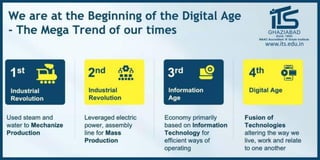
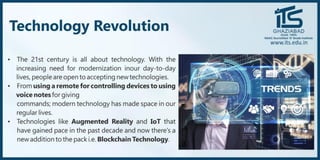
These are the first three industrial revolutions that transformed our
modern society. With each of these three advancements:
1. the steam engine
2. the age of science and
3. mass production, and
4. the rise of digital technology
Now all of us together, poised at the beginning of the Fourth
Industrial Revolution. But this time, the revolution is powered by
cloud, social, mobile, the Internet of things (IoT) and artificial
intelligence (AI), along with increasing computing power and data. -
The world around us fundamentally changed.
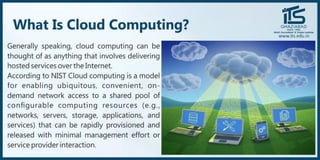
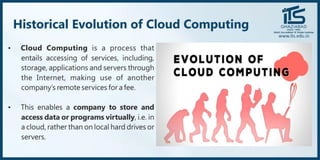
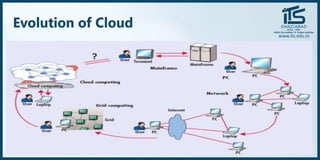
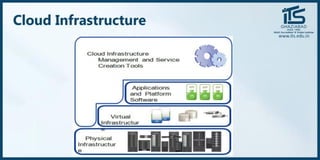
What is Cloud Computing
• Technologies such as Cluster, Grid, and now Cloud Computing, have all
aimed at allowing access to large amounts of Computing Power in a
fully Virtualized manner by aggregating resources and offerings in a
single system view.
• In addition, an important aim of these Technologies has been delivering
computing as a Utility.
• Utility Computing describes a business model for an On-Demand
delivery of Computing Power; consumers pay providers based on usages
(Pay-as-you-go), similar to the way we currently obtain services from
traditional public utility services, such as Electricity, Gas, Water, Telephony
etc.
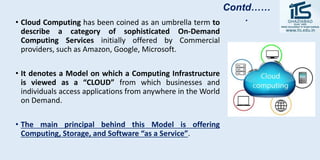
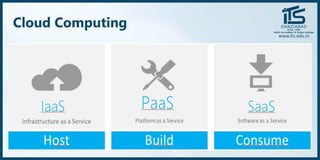
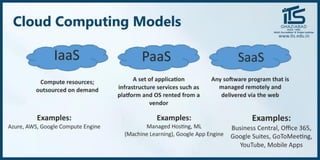
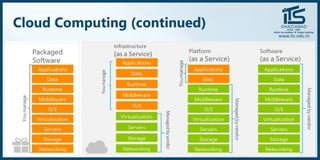
• Cloud Computing has been coined as an umbrella term to
describe a category of sophisticated On-Demand
Computing Services initially offered by Commercial
providers, such as Amazon, Google, Microsoft.
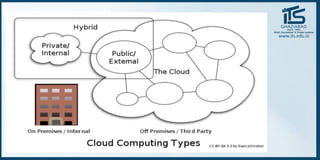
• It denotes a Model on which a Computing Infrastructure
is viewed as a “CLOUD” from which businesses and
individuals access applications from anywhere in the World
on Demand.
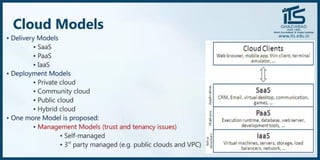
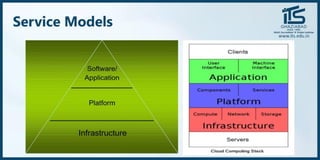
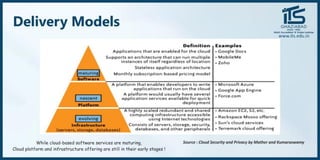
• The main principal behind this Model is offering
Computing, Storage, and Software “as a Service”.
Contd……
.
• Cloud is a Parallel and Distributed Computing System consisting of a collection of Inter-
connected and Virtualized Computers that are dynamically provisioned and presented as
one or more unified Computing Resources based on Service-level Agreement (SLA)
established through negotiation between the Service Providers and Consumer.
………R.K. Buyya
• Clouds are a large pool of easily usable and accessible virtualized Resources (such as
Hardware, Development Platforms and or Services). These Resources can be dynamically
reconfigured to adjust to a variable load (scale), allowing also for an optimum resource
utilization. This Pool of resource is typically exploited by a Pay-Per-Use Model in which
guarantees are offered by the Infrastructure provider by means of customized Service
Level Agreement (SLA). …… Vaquero
• Clouds are Hardware-based Services offering Compute, Network, and Storage Capacity
where Hardware Management is highly abstracted from the buyer, buyers incur
infrastructure costs as variable OPEX, and infrastructure capacity is highly elastic.
…….Mckinsey & Co. Report
Contd…….
Contd…….
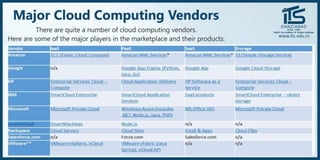
Major Cloud Player
1. Eucalyptus
Eucalyptus is a paid and open-source computer software for building Amazon Web
Services (AWS)-compatible private and hybrid cloud computing environments,
originally developed by the company Eucalyptus Systems.
Eucalyptus is an acronym for Elastic Utility Computing Architecture for Linking
Your Programs To Useful Systems. Eucalyptus enables pooling compute, storage,
and network resources that can be dynamically scaled up or down as application
workloads change. Mårten Mickos was the CEO of Eucalyptus. In September 2014,
Eucalyptus was acquired by Hewlett-Packard and then maintained by DXC
Technology. After DXC stopped developing the product in late 2017, AppScale
Systems forked the code and started supporting Eucalyptus customers.
Contd…
 The EUCALYPTUS Framework was one of the first Open-Source projects to focus on building IaaS Clouds.
It has been developed with the intent of providing an Open Source implementation nearly identical in functionality to
Amazon Web Services APIs.
It distinguishes itself from other tools because it provides a storage cloud API – emulating the Amazon S3 API – for
storing general user data and VM Images.
It provides following features:
 Linux-based controller with administrative Web Portal
 EC2-Compaitable (SOAP, Query) and S3-Compaitible (SOAP, REST) CLI
EC-2 is Amazon Elastic Compute Cloud is a part of Amazon.com's cloud-computing platform, Amazon Web Services, that allows
users to rent virtual computers on which to run their own computer applications.
S-3 Amazon Simple Storage Service (Amazon S3) is a scalable, high-speed, web-based cloud storage service. The service is
designed for online backup and archiving of data and applications on Amazon Web Services (AWS).
REST (Representational state transfer) is a software architectural style that was created to guide the design and
development of the architecture for the World Wide Web. REST defines a set of constraints for how the architecture of an Internet-
scale distributed hypermedia system, such as the Web, should behave.
 Web portal Interfaces; Xen, KVM and VMWare back ends
 Amazon EBS- Compatible Virtual Storage Devices
 Interface to Amazon EC2 Public Cloud and Virtual Networks
Contd…
2. Nimbus
• The Nimbus toolkit is built on top of the Globus framework. Nimbus provides most
features in common with other open sources VI managers, such as an EC2-compatible
front-end API, support to Xen, and a backend interface to Amazone EC2. However, it
distinguishes from others by providing a Globus Web Services Resources Framework
(WSRF) interface. It also provides a backend service, named Pilot, which spawns VMs
on clusters managed by a local resources manager (LRM) such as PBS and SGE.
• Nimbus' core was engineered around the Spring framework to be easily extensible,
thus allowing several internal components to be replaced and also eases the
integration with other systems.
• In summary, Nimbus provides the following features: Linux-based controller; EC2-
compatible (SOAP)and WSRF interfaces; Xen and KVM backend and a Pilot program to
spawn VMs through an LRM: interface to the Amazon EC2, public cloud; virtual
networks; one-click virtual clusters.
Contd…
3. Open Nebula
• OpenNebula is one of the most feature-rich open sources VI manager. It was initially
conceived to manage local virtual infrastructure, but has also included remote interfaces
that make it viable to build public clouds. Altogether, four programming APIs are available:
XML-RPC and libvirt for local international; a subset of EC2 (Query) APIs and the
OpenNebula Cloud API (OCA) for public access.
• Its architecture is modular, encompassing several specialized pluggable components. The
Care module orchestrates physical servers and their hypervisors, storage nodes, and
network fabric. Management operations are performed through pluggable Driver, which
interact with APIs of hypervisors, storage and network technologies, and public clouds.
The Scheduler module, which is in charge of assigning pending VMrequest to physical
host, offers dynamics resource allocation features. Administration can choose between
different scheduling objectives such as packing VMs in fewer hosts or keeping the load
balanced. Via integration with the Haizea lease scheduler [66], OpenNebula also supports
advance reservation of capacity and queuing of best-effort leases.
In summary, OpenNebula provides the following features:
 Linux-based controller
 CLI, XML-RPC
 EC2-compatible Query and
 OCA interfaces;
 Xen, KVM, and VMware backend
 Interface to public clouds (Amazon EC2, ElasticHosts) virtual networks
 Dynamic Resource Allocation
 Advance reservation of capacity
Contd…
4. CloudSim
CloudSim is an open-source framework, which is used to simulate cloud computing
infrastructure and services.
It is developed by the CLOUDS Lab organization and is written entirely in Java. It is used for
modelling and simulating a cloud computing environment as a means for evaluating a
hypothesis prior to software development in order to reproduce tests and results.
With the flexibility and generalizability of the CloudSim framework, it is easy to model heavy
cloud environments which would otherwise require experimentation on paid computing
infrastructures. Extensible capabilities of scaling the infrastructure and resources to fit any
scenario helps in fast and efficient research of several topics in cloud computing.
CloudSim has been used in several areas of research such as:
Task Scheduling Green Computing Resource Provisioning Secure Log Forensics
Features of CloudSim:
CloudSim provides support for simulation and modelling of:
1. Large scale virtualized Datacenters, servers and hosts.
2. Customizable policies for provisioning host to virtual machines.
3. Energy-aware computational resources.
4. Application containers and federated clouds (joining and
management of multiple public clouds).
5. Datacenter network topologies and message-passing
applications.
6. Dynamic insertion of simulation entities with stop and resume of
simulation.
7. User-defined allocation and provisioning policies.
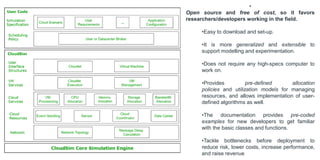
•
Open source and free of cost, so it favors
researchers/developers working in the field.
•Easy to download and set-up.
•It is more generalized and extensible to
support modelling and experimentation.
•Does not require any high-specs computer to
work on.
•Provides pre-defined allocation
policies and utilization models for managing
resources, and allows implementation of user-
defined algorithms as well.
•The documentation provides pre-coded
examples for new developers to get familiar
with the basic classes and functions.
•Tackle bottlenecks before deployment to
reduce risk, lower costs, increase performance,
and raise revenue
Cloud Computing - Introduction

Cloud Computing - Introduction

  • 3.
    Recommended Books: 1. CloudComputing - Concepts, Technology & Architecture Thomas Erl, Zaigham Mahmood & Ricardo Puttini Pearson 2. Cloud Computing – Principal & Paradigms Rajkumar Buyya, James Broberg & Andrej Goscinski Wiley Publication
  • 5.
    These are thefirst three industrial revolutions that transformed our modern society. With each of these three advancements: 1. the steam engine 2. the age of science and 3. mass production, and 4. the rise of digital technology Now all of us together, poised at the beginning of the Fourth Industrial Revolution. But this time, the revolution is powered by cloud, social, mobile, the Internet of things (IoT) and artificial intelligence (AI), along with increasing computing power and data. - The world around us fundamentally changed.
  • 20.
    What is CloudComputing • Technologies such as Cluster, Grid, and now Cloud Computing, have all aimed at allowing access to large amounts of Computing Power in a fully Virtualized manner by aggregating resources and offerings in a single system view. • In addition, an important aim of these Technologies has been delivering computing as a Utility. • Utility Computing describes a business model for an On-Demand delivery of Computing Power; consumers pay providers based on usages (Pay-as-you-go), similar to the way we currently obtain services from traditional public utility services, such as Electricity, Gas, Water, Telephony etc.
  • 21.
    • Cloud Computinghas been coined as an umbrella term to describe a category of sophisticated On-Demand Computing Services initially offered by Commercial providers, such as Amazon, Google, Microsoft. • It denotes a Model on which a Computing Infrastructure is viewed as a “CLOUD” from which businesses and individuals access applications from anywhere in the World on Demand. • The main principal behind this Model is offering Computing, Storage, and Software “as a Service”. Contd…… .
  • 23.
    • Cloud isa Parallel and Distributed Computing System consisting of a collection of Inter- connected and Virtualized Computers that are dynamically provisioned and presented as one or more unified Computing Resources based on Service-level Agreement (SLA) established through negotiation between the Service Providers and Consumer. ………R.K. Buyya • Clouds are a large pool of easily usable and accessible virtualized Resources (such as Hardware, Development Platforms and or Services). These Resources can be dynamically reconfigured to adjust to a variable load (scale), allowing also for an optimum resource utilization. This Pool of resource is typically exploited by a Pay-Per-Use Model in which guarantees are offered by the Infrastructure provider by means of customized Service Level Agreement (SLA). …… Vaquero • Clouds are Hardware-based Services offering Compute, Network, and Storage Capacity where Hardware Management is highly abstracted from the buyer, buyers incur infrastructure costs as variable OPEX, and infrastructure capacity is highly elastic. …….Mckinsey & Co. Report Contd…….
  • 28.
  • 67.
    Major Cloud Player 1.Eucalyptus Eucalyptus is a paid and open-source computer software for building Amazon Web Services (AWS)-compatible private and hybrid cloud computing environments, originally developed by the company Eucalyptus Systems. Eucalyptus is an acronym for Elastic Utility Computing Architecture for Linking Your Programs To Useful Systems. Eucalyptus enables pooling compute, storage, and network resources that can be dynamically scaled up or down as application workloads change. Mårten Mickos was the CEO of Eucalyptus. In September 2014, Eucalyptus was acquired by Hewlett-Packard and then maintained by DXC Technology. After DXC stopped developing the product in late 2017, AppScale Systems forked the code and started supporting Eucalyptus customers.
  • 68.
    Contd…  The EUCALYPTUSFramework was one of the first Open-Source projects to focus on building IaaS Clouds. It has been developed with the intent of providing an Open Source implementation nearly identical in functionality to Amazon Web Services APIs. It distinguishes itself from other tools because it provides a storage cloud API – emulating the Amazon S3 API – for storing general user data and VM Images. It provides following features:  Linux-based controller with administrative Web Portal  EC2-Compaitable (SOAP, Query) and S3-Compaitible (SOAP, REST) CLI EC-2 is Amazon Elastic Compute Cloud is a part of Amazon.com's cloud-computing platform, Amazon Web Services, that allows users to rent virtual computers on which to run their own computer applications. S-3 Amazon Simple Storage Service (Amazon S3) is a scalable, high-speed, web-based cloud storage service. The service is designed for online backup and archiving of data and applications on Amazon Web Services (AWS). REST (Representational state transfer) is a software architectural style that was created to guide the design and development of the architecture for the World Wide Web. REST defines a set of constraints for how the architecture of an Internet- scale distributed hypermedia system, such as the Web, should behave.  Web portal Interfaces; Xen, KVM and VMWare back ends  Amazon EBS- Compatible Virtual Storage Devices  Interface to Amazon EC2 Public Cloud and Virtual Networks
  • 69.
    Contd… 2. Nimbus • TheNimbus toolkit is built on top of the Globus framework. Nimbus provides most features in common with other open sources VI managers, such as an EC2-compatible front-end API, support to Xen, and a backend interface to Amazone EC2. However, it distinguishes from others by providing a Globus Web Services Resources Framework (WSRF) interface. It also provides a backend service, named Pilot, which spawns VMs on clusters managed by a local resources manager (LRM) such as PBS and SGE. • Nimbus' core was engineered around the Spring framework to be easily extensible, thus allowing several internal components to be replaced and also eases the integration with other systems. • In summary, Nimbus provides the following features: Linux-based controller; EC2- compatible (SOAP)and WSRF interfaces; Xen and KVM backend and a Pilot program to spawn VMs through an LRM: interface to the Amazon EC2, public cloud; virtual networks; one-click virtual clusters.
  • 70.
    Contd… 3. Open Nebula •OpenNebula is one of the most feature-rich open sources VI manager. It was initially conceived to manage local virtual infrastructure, but has also included remote interfaces that make it viable to build public clouds. Altogether, four programming APIs are available: XML-RPC and libvirt for local international; a subset of EC2 (Query) APIs and the OpenNebula Cloud API (OCA) for public access. • Its architecture is modular, encompassing several specialized pluggable components. The Care module orchestrates physical servers and their hypervisors, storage nodes, and network fabric. Management operations are performed through pluggable Driver, which interact with APIs of hypervisors, storage and network technologies, and public clouds. The Scheduler module, which is in charge of assigning pending VMrequest to physical host, offers dynamics resource allocation features. Administration can choose between different scheduling objectives such as packing VMs in fewer hosts or keeping the load balanced. Via integration with the Haizea lease scheduler [66], OpenNebula also supports advance reservation of capacity and queuing of best-effort leases.
  • 71.
    In summary, OpenNebulaprovides the following features:  Linux-based controller  CLI, XML-RPC  EC2-compatible Query and  OCA interfaces;  Xen, KVM, and VMware backend  Interface to public clouds (Amazon EC2, ElasticHosts) virtual networks  Dynamic Resource Allocation  Advance reservation of capacity
  • 72.
    Contd… 4. CloudSim CloudSim isan open-source framework, which is used to simulate cloud computing infrastructure and services. It is developed by the CLOUDS Lab organization and is written entirely in Java. It is used for modelling and simulating a cloud computing environment as a means for evaluating a hypothesis prior to software development in order to reproduce tests and results. With the flexibility and generalizability of the CloudSim framework, it is easy to model heavy cloud environments which would otherwise require experimentation on paid computing infrastructures. Extensible capabilities of scaling the infrastructure and resources to fit any scenario helps in fast and efficient research of several topics in cloud computing. CloudSim has been used in several areas of research such as: Task Scheduling Green Computing Resource Provisioning Secure Log Forensics
  • 73.
    Features of CloudSim: CloudSimprovides support for simulation and modelling of: 1. Large scale virtualized Datacenters, servers and hosts. 2. Customizable policies for provisioning host to virtual machines. 3. Energy-aware computational resources. 4. Application containers and federated clouds (joining and management of multiple public clouds). 5. Datacenter network topologies and message-passing applications. 6. Dynamic insertion of simulation entities with stop and resume of simulation. 7. User-defined allocation and provisioning policies.
  • 74.
    • Open source andfree of cost, so it favors researchers/developers working in the field. •Easy to download and set-up. •It is more generalized and extensible to support modelling and experimentation. •Does not require any high-specs computer to work on. •Provides pre-defined allocation policies and utilization models for managing resources, and allows implementation of user- defined algorithms as well. •The documentation provides pre-coded examples for new developers to get familiar with the basic classes and functions. •Tackle bottlenecks before deployment to reduce risk, lower costs, increase performance, and raise revenue