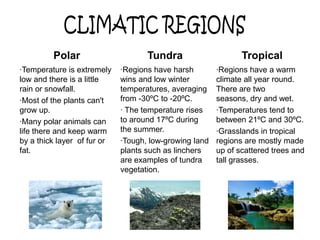
Polar                      Tundra                     Tropical
·Temperature is extremely    ·Regions have harsh        ·Regions have a warm
low and there is a little    wins and low winter        climate all year round.
rain or snowfall.            temperatures, averaging    There are two
·Most of the plants can't    from -30ºC to -20ºC.       seasons, dry and wet.
grow up.                     · The temperature rises    ·Temperatures tend to
·Many polar animals can      to around 17ºC during      between 21ºC and 30ºC.
life there and keep warm     the summer.                ·Grasslands in tropical
by a thick layer of fur or   ·Tough, low-growing land   regions are mostly made
fat.                         plants such as linchers    up of scattered trees and
                             are examples of tundra     tall grasses.
                             vegetation.
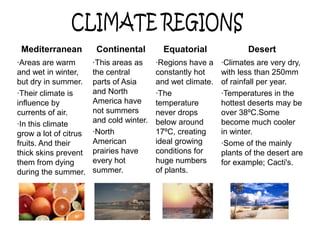
Mediterranean          Continental         Equatorial              Desert
·Areas are warm        ·This areas as     ·Regions have a    ·Climates are very dry,
and wet in winter,     the central        constantly hot     with less than 250mm
but dry in summer.     parts of Asia      and wet climate.   of rainfall per year.
·Their climate is      and North          ·The               ·Temperatures in the
influence by           America have       temperature        hottest deserts may be
currents of air.       not summers        never drops        over 38ºC.Some
·In this climate       and cold winter.   below around       become much cooler
grow a lot of citrus   ·North             17ºC, creating     in winter.
fruits. And their      American           ideal growing      ·Some of the mainly
thick skins prevent    prairies have      conditions for     plants of the desert are
them from dying        every hot          huge numbers       for example; Cacti's.
during the summer.     summer.            of plants.
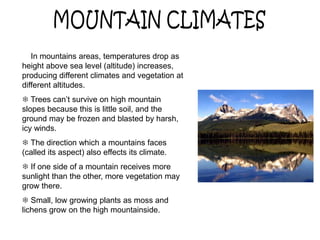
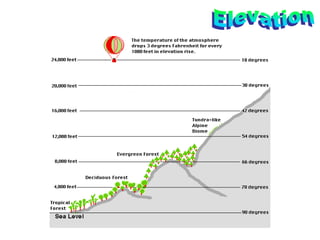
 In mountains areas, temperatures drop as
height above sea level (altitude) increases,
producing different climates and vegetation at
different altitudes.
 Trees can’t survive on high mountain
slopes because this is little soil, and the
ground may be frozen and blasted by harsh,
icy winds.
 The direction which a mountains faces
(called its aspect) also effects its climate.
 If one side of a mountain receives more
sunlight than the other, more vegetation may
grow there.
 Small, low growing plants as moss and
lichens grow on the high mountainside.
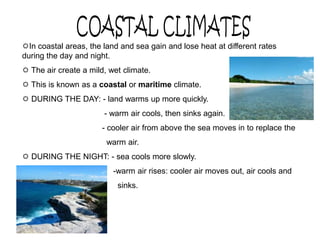
In coastal areas, the land and sea gain and lose heat at different rates
during the day and night.
 The air create a mild, wet climate.
 This is known as a coastal or maritime climate.
 DURING THE DAY: - land warms up more quickly.
                       - warm air cools, then sinks again.
                       - cooler air from above the sea moves in to replace the
                        warm air.
 DURING THE NIGHT: - sea cools more slowly.
                          -warm air rises: cooler air moves out, air cools and
                           sinks.
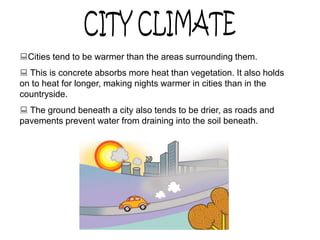
Cities tend to be warmer than the areas surrounding them.
 This is concrete absorbs more heat than vegetation. It also holds
on to heat for longer, making nights warmer in cities than in the
countryside.
 The ground beneath a city also tends to be drier, as roads and
pavements prevent water from draining into the soil beneath.
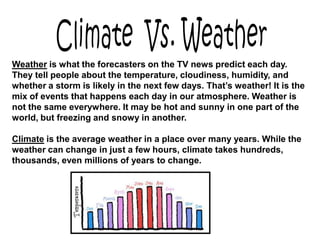
Weather is what the forecasters on the TV news predict each day.
They tell people about the temperature, cloudiness, humidity, and
whether a storm is likely in the next few days. That’s weather! It is the
mix of events that happens each day in our atmosphere. Weather is
not the same everywhere. It may be hot and sunny in one part of the
world, but freezing and snowy in another.

Climate is the average weather in a place over many years. While the
weather can change in just a few hours, climate takes hundreds,
thousands, even millions of years to change.
Identify five factors
 that affect climate
    and explain
      how each
   affects climate.
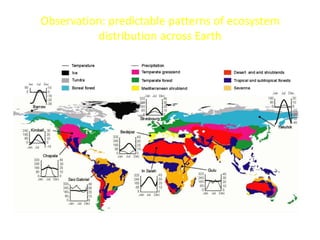
Observation: predictable patterns of ecosystem
          distribution across Earth
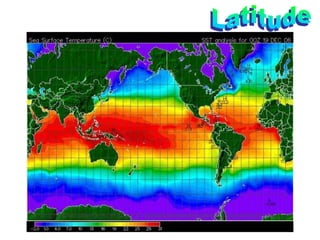
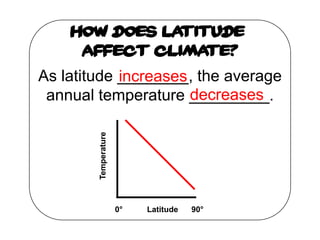
How does latitude
     affect climate?
As latitude ________, the average
            increases
                      decreases
 annual temperature _________.
        Temperature


                      0°   Latitude   90°
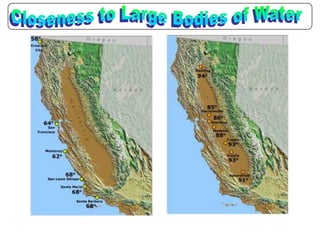
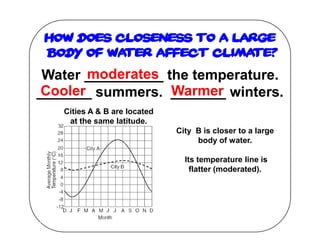
How does closeness to a large
 body of water affect climate?
        moderates
 Water __________ the temperature.
 Cooler            Warmer
_______ summers. _______ winters.
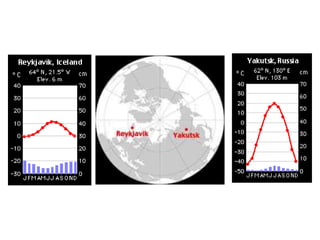
   Cities A & B are located
    at the same latitude.
                              City B is closer to a large
                                   body of water.

                                Its temperature line is
                                  flatter (moderated).
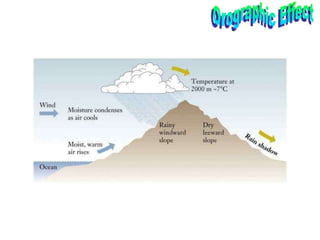
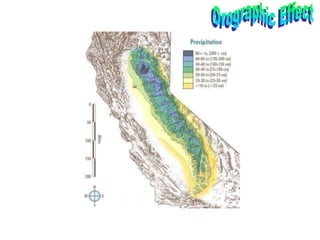
The leeward
                             sides of the
                            Adirondacks &
                               Catskills
                            receive much
                                 less
                             precipitation


The windward sides of the
 Adirondacks & Catskills
receive a great deal more
      precipitation
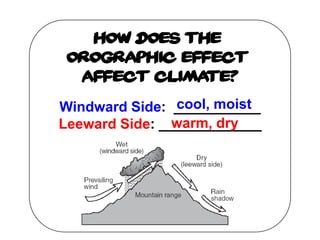
How does the
 Orographic Effect
  affect climate?
                cool, moist
Windward Side: ___________
                warm, dry
Leeward Side: _____________
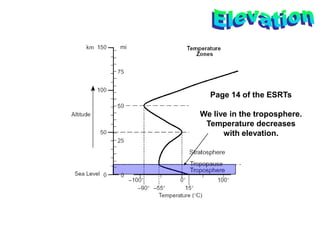
Page 14 of the ESRTs

We live in the troposphere.
 Temperature decreases
      with elevation.
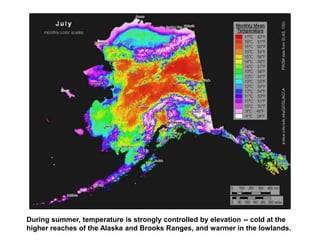
During summer, temperature is strongly controlled by elevation -- cold at the
higher reaches of the Alaska and Brooks Ranges, and warmer in the lowlands.
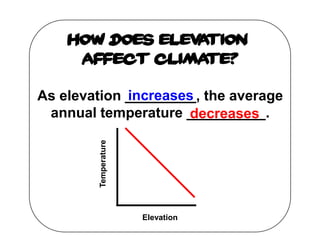
How does elevation
     affect climate?

             increases
As elevation _________, the average
 annual temperature __________.
                      decreases
        Temperature


                      Elevation
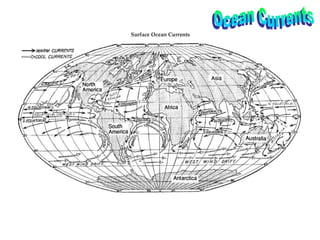
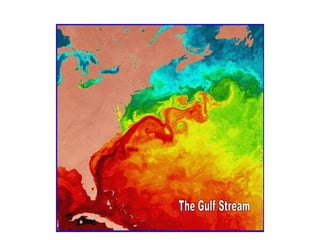
How do ocean currents
   affect climate?

Warm Currents: warmer climate
 Cold Currents: cooler climate
Climate interactions

  • 2.
    Polar Tundra Tropical ·Temperature is extremely ·Regions have harsh ·Regions have a warm low and there is a little wins and low winter climate all year round. rain or snowfall. temperatures, averaging There are two ·Most of the plants can't from -30ºC to -20ºC. seasons, dry and wet. grow up. · The temperature rises ·Temperatures tend to ·Many polar animals can to around 17ºC during between 21ºC and 30ºC. life there and keep warm the summer. ·Grasslands in tropical by a thick layer of fur or ·Tough, low-growing land regions are mostly made fat. plants such as linchers up of scattered trees and are examples of tundra tall grasses. vegetation.
  • 3.
    Mediterranean Continental Equatorial Desert ·Areas are warm ·This areas as ·Regions have a ·Climates are very dry, and wet in winter, the central constantly hot with less than 250mm but dry in summer. parts of Asia and wet climate. of rainfall per year. ·Their climate is and North ·The ·Temperatures in the influence by America have temperature hottest deserts may be currents of air. not summers never drops over 38ºC.Some ·In this climate and cold winter. below around become much cooler grow a lot of citrus ·North 17ºC, creating in winter. fruits. And their American ideal growing ·Some of the mainly thick skins prevent prairies have conditions for plants of the desert are them from dying every hot huge numbers for example; Cacti's. during the summer. summer. of plants.
  • 4.
     In mountainsareas, temperatures drop as height above sea level (altitude) increases, producing different climates and vegetation at different altitudes.  Trees can’t survive on high mountain slopes because this is little soil, and the ground may be frozen and blasted by harsh, icy winds.  The direction which a mountains faces (called its aspect) also effects its climate.  If one side of a mountain receives more sunlight than the other, more vegetation may grow there.  Small, low growing plants as moss and lichens grow on the high mountainside.
  • 5.
    In coastal areas,the land and sea gain and lose heat at different rates during the day and night.  The air create a mild, wet climate.  This is known as a coastal or maritime climate.  DURING THE DAY: - land warms up more quickly. - warm air cools, then sinks again. - cooler air from above the sea moves in to replace the warm air.  DURING THE NIGHT: - sea cools more slowly. -warm air rises: cooler air moves out, air cools and sinks.
  • 6.
    Cities tend tobe warmer than the areas surrounding them.  This is concrete absorbs more heat than vegetation. It also holds on to heat for longer, making nights warmer in cities than in the countryside.  The ground beneath a city also tends to be drier, as roads and pavements prevent water from draining into the soil beneath.
  • 7.
    Weather is whatthe forecasters on the TV news predict each day. They tell people about the temperature, cloudiness, humidity, and whether a storm is likely in the next few days. That’s weather! It is the mix of events that happens each day in our atmosphere. Weather is not the same everywhere. It may be hot and sunny in one part of the world, but freezing and snowy in another. Climate is the average weather in a place over many years. While the weather can change in just a few hours, climate takes hundreds, thousands, even millions of years to change.
  • 8.
    Identify five factors that affect climate and explain how each affects climate.
  • 10.
    Observation: predictable patternsof ecosystem distribution across Earth
  • 11.
    How does latitude affect climate? As latitude ________, the average increases decreases annual temperature _________. Temperature 0° Latitude 90°
  • 14.
    How does closenessto a large body of water affect climate? moderates Water __________ the temperature. Cooler Warmer _______ summers. _______ winters. Cities A & B are located at the same latitude. City B is closer to a large body of water. Its temperature line is flatter (moderated).
  • 17.
    The leeward sides of the Adirondacks & Catskills receive much less precipitation The windward sides of the Adirondacks & Catskills receive a great deal more precipitation
  • 18.
    How does the Orographic Effect affect climate? cool, moist Windward Side: ___________ warm, dry Leeward Side: _____________
  • 20.
    Page 14 ofthe ESRTs We live in the troposphere. Temperature decreases with elevation.
  • 21.
    During summer, temperatureis strongly controlled by elevation -- cold at the higher reaches of the Alaska and Brooks Ranges, and warmer in the lowlands.
  • 22.
    How does elevation affect climate? increases As elevation _________, the average annual temperature __________. decreases Temperature Elevation
  • 25.
    How do oceancurrents affect climate? Warm Currents: warmer climate Cold Currents: cooler climate