



These are measures of various physiological
statistics in order to assess the most basic
body functions.
The act of taking vital signs normally entails
recording body temperature, pulse rate
(or heart rate), blood
pressure, and respiratory rate, but may also
include other measurements like pain. Vital
signs often vary by age.






What is body temperature?
Body temperature is a measure of the body's ability to
generate and get rid of heat. The body is very good at
keeping its temperature within a narrow, safe range in
spite of large variations in temperatures outside the
body.
Where is body temperature measured?
Your body temperature can be measured in many
locations on your body. The mouth, ear, armpit, and
rectum are the most commonly used places.
Temperature can also be measured on your forehead.

What is normal body temperature?

37 ° Celsius




What is a pulse?
It is a tactile arterial palpation of
the heartbeat.
What is normal pulse rate?

80 bpm!!!

Age Group

Normal Value

Infant

120 – 160 bpm

Child

80 – 100 bpm

Adult

60 – 100 bpm
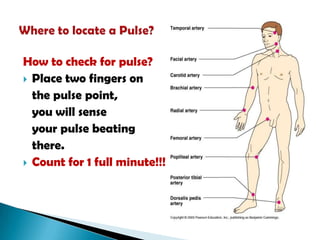
How to check for pulse?
 Place two fingers on
the pulse point,
you will sense
your pulse beating
there.
 Count for 1 full minute!!!




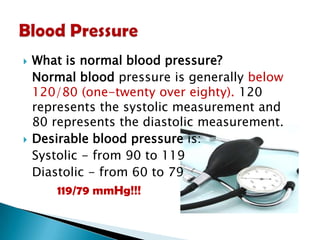
What is normal blood pressure?
Normal blood pressure is generally below
120/80 (one-twenty over eighty). 120
represents the systolic measurement and
80 represents the diastolic measurement.
Desirable blood pressure is:
Systolic - from 90 to 119
Diastolic - from 60 to 79
119/79 mmHg!!!


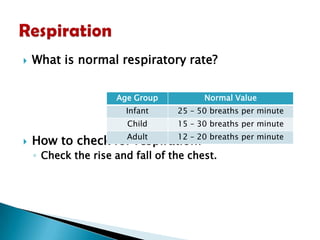
What is normal respiratory rate?
Age Group
Infant

25 – 50 breaths per minute

Child



Normal Value
15 – 30 breaths per minute

Adult
12 – 20
How to check for respiration? breaths per minute

◦ Check the rise and fall of the chest.






Pain is an unpleasant sensory and emotional
experience associated with actual or potential
tissue damage.
An unpleasant feeling often caused by
intense or damaging stimuli.
It is a major symptom in many medical
conditions, and can significantly interfere
with a person's quality of life and general
functioning.
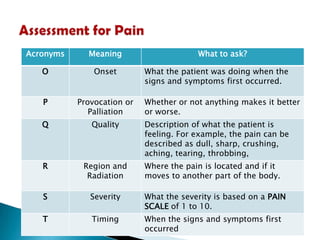
Acronyms

Meaning

What to ask?

O

Onset

P

Provocation or
Palliation

Q

Quality

R

Region and
Radiation

S

Severity

What the severity is based on a PAIN
SCALE of 1 to 10.

T

Timing

When the signs and symptoms first
occurred

What the patient was doing when the
signs and symptoms first occurred.
Whether or not anything makes it better
or worse.
Description of what the patient is
feeling. For example, the pain can be
described as dull, sharp, crushing,
aching, tearing, throbbing,

Where the pain is located and if it
moves to another part of the body.

Vital signs

  • 2.
      These are measuresof various physiological statistics in order to assess the most basic body functions. The act of taking vital signs normally entails recording body temperature, pulse rate (or heart rate), blood pressure, and respiratory rate, but may also include other measurements like pain. Vital signs often vary by age.
  • 3.
       What is bodytemperature? Body temperature is a measure of the body's ability to generate and get rid of heat. The body is very good at keeping its temperature within a narrow, safe range in spite of large variations in temperatures outside the body. Where is body temperature measured? Your body temperature can be measured in many locations on your body. The mouth, ear, armpit, and rectum are the most commonly used places. Temperature can also be measured on your forehead. What is normal body temperature? 37 ° Celsius
  • 4.
      What is apulse? It is a tactile arterial palpation of the heartbeat. What is normal pulse rate? 80 bpm!!! Age Group Normal Value Infant 120 – 160 bpm Child 80 – 100 bpm Adult 60 – 100 bpm
  • 5.
    How to checkfor pulse?  Place two fingers on the pulse point, you will sense your pulse beating there.  Count for 1 full minute!!!
  • 6.
      What is normalblood pressure? Normal blood pressure is generally below 120/80 (one-twenty over eighty). 120 represents the systolic measurement and 80 represents the diastolic measurement. Desirable blood pressure is: Systolic - from 90 to 119 Diastolic - from 60 to 79 119/79 mmHg!!!
  • 7.
     What is normalrespiratory rate? Age Group Infant 25 – 50 breaths per minute Child  Normal Value 15 – 30 breaths per minute Adult 12 – 20 How to check for respiration? breaths per minute ◦ Check the rise and fall of the chest.
  • 8.
       Pain is anunpleasant sensory and emotional experience associated with actual or potential tissue damage. An unpleasant feeling often caused by intense or damaging stimuli. It is a major symptom in many medical conditions, and can significantly interfere with a person's quality of life and general functioning.
  • 9.
    Acronyms Meaning What to ask? O Onset P Provocationor Palliation Q Quality R Region and Radiation S Severity What the severity is based on a PAIN SCALE of 1 to 10. T Timing When the signs and symptoms first occurred What the patient was doing when the signs and symptoms first occurred. Whether or not anything makes it better or worse. Description of what the patient is feeling. For example, the pain can be described as dull, sharp, crushing, aching, tearing, throbbing, Where the pain is located and if it moves to another part of the body.