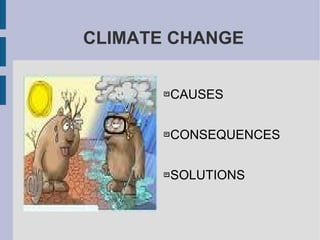
CLIMATE CHANGE CAUSES CONSEQUENCES SOLUTIONS
CAUSES
CHLOROFLUOROCARBONS .(CFCs) Chlorofluorocarbons (CFCs)  are gases  used in refrigerant and aerosols: a gas containing carbon (sometimes hydrogen,) chlorine, and fluorine, used as a refrigerant and aerosol propellant.
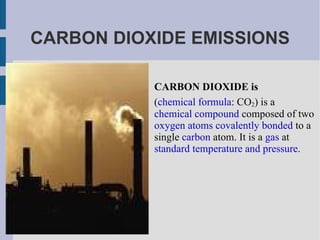
CARBON DIOXIDE EMISSIONS CARBON DIOXIDE is ( chemical formula : CO 2 ) is a  chemical compound  composed of two  oxygen   atoms   covalently bonded  to a single  carbon  atom. It is a  gas  at  standard temperature and pressure .
DEFORESTATION Deforestation is the conversion of forested areas to non-forested areas. The main sources of deforestation in the Amazon are human settlement and development of the land
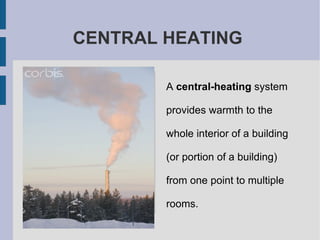
CENTRAL HEATING  A  central-heating  system provides warmth to the whole interior of a building (or portion of a building) from one point to multiple rooms.
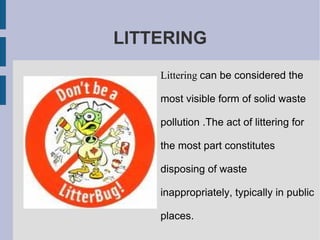
Littering  can be considered the most visible form of solid waste pollution .The act of littering for the most part constitutes disposing of waste inappropriately, typically in public places.  LITTERING
CONSEQUENCES
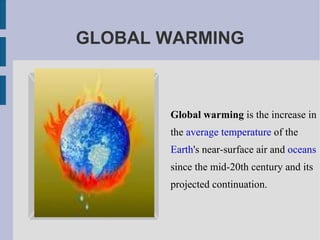
GLOBAL WARMING Global warming  is the increase in the  average temperature  of the  Earth 's near-surface air and  oceans  since the mid-20th century and its projected continuation.
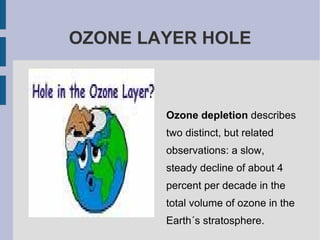
OZONE LAYER HOLE Ozone depletion  describes two distinct, but related observations: a slow, steady decline of about 4 percent per decade in the total volume of ozone in the Earth´s stratosphere.
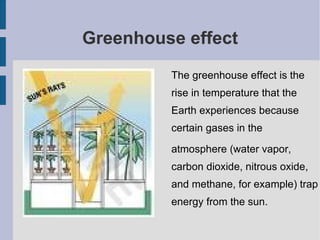
Greenhouse effect The greenhouse effect is the rise in temperature that the Earth experiences because certain gases in the  atmosphere (water vapor, carbon dioxide, nitrous oxide, and methane, for example) trap energy from the sun.
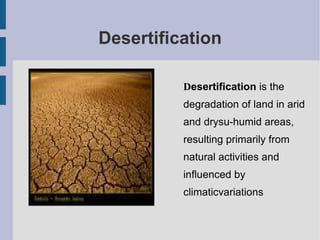
Desertification D esertification  is the degradation of land in arid and drysu-humid areas, resulting primarily from natural activities and influenced by climaticvariations
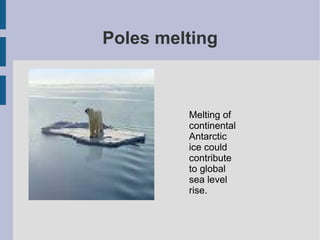
Poles melting Melting of continental Antarctic ice could contribute to global sea level rise.
“Solutions”
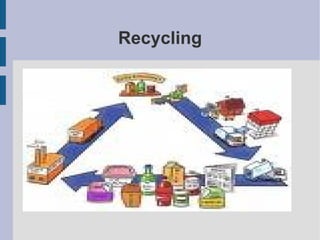
Recycling
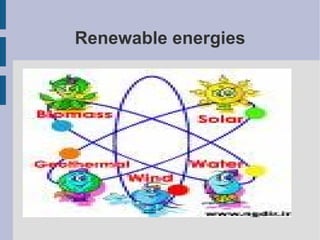
Renewable energies
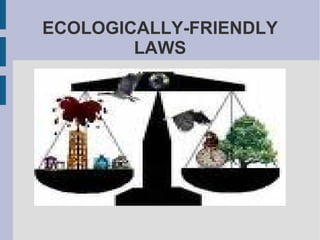
ECOLOGICALLY-FRIENDLY LAWS
INTERNATIONAL PROTOCOLS
... and the star
EDUCATION
...AND A GOAL...

Climate Change

  • 1.
    CLIMATE CHANGE CAUSESCONSEQUENCES SOLUTIONS
  • 2.
  • 3.
    CHLOROFLUOROCARBONS .(CFCs) Chlorofluorocarbons(CFCs) are gases used in refrigerant and aerosols: a gas containing carbon (sometimes hydrogen,) chlorine, and fluorine, used as a refrigerant and aerosol propellant.
  • 4.
    CARBON DIOXIDE EMISSIONSCARBON DIOXIDE is ( chemical formula : CO 2 ) is a chemical compound composed of two oxygen atoms covalently bonded to a single carbon atom. It is a gas at standard temperature and pressure .
  • 5.
    DEFORESTATION Deforestation isthe conversion of forested areas to non-forested areas. The main sources of deforestation in the Amazon are human settlement and development of the land
  • 6.
    CENTRAL HEATING A central-heating system provides warmth to the whole interior of a building (or portion of a building) from one point to multiple rooms.
  • 7.
    Littering canbe considered the most visible form of solid waste pollution .The act of littering for the most part constitutes disposing of waste inappropriately, typically in public places. LITTERING
  • 8.
  • 9.
    GLOBAL WARMING Globalwarming is the increase in the average temperature of the Earth 's near-surface air and oceans since the mid-20th century and its projected continuation.
  • 10.
    OZONE LAYER HOLEOzone depletion describes two distinct, but related observations: a slow, steady decline of about 4 percent per decade in the total volume of ozone in the Earth´s stratosphere.
  • 11.
    Greenhouse effect Thegreenhouse effect is the rise in temperature that the Earth experiences because certain gases in the atmosphere (water vapor, carbon dioxide, nitrous oxide, and methane, for example) trap energy from the sun.
  • 12.
    Desertification D esertification is the degradation of land in arid and drysu-humid areas, resulting primarily from natural activities and influenced by climaticvariations
  • 13.
    Poles melting Meltingof continental Antarctic ice could contribute to global sea level rise.
  • 14.
  • 15.
  • 16.
  • 17.
  • 18.
  • 19.
  • 20.
  • 21.