



A Presentation for
                the U of W ESLTCP Program


Joanne Pettis
 All   classes are, to a degree multilevel

 Mostadult EAL programs have multilevel
 classes

 Number
       of classes or programs in a
 community is a factor
 Instructional


 Group   Dynamics

 Teacher   attitude
I AM THE ONLY ONE
RESPONSIBLE FOR THE
LANGUAGE MY S's LEARN
 Flexibility


 Diversity


 Interaction
 Ss

  ◦ responsibility to self and others
 Ts

  ◦ build community
  ◦ Maximize learning opportunities
  ◦ Something for everyone
 Helpsin community building and
 cohesiveness

 Provides   focus and purpose

 Creates   interest

 Reduces/streamlines   prep time
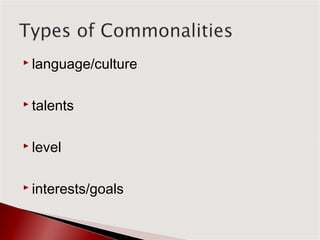
 language/culture


 talents


 level


 interests/goals
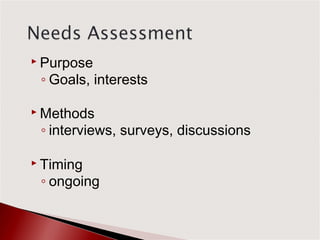
 Purpose

 ◦ Goals, interests

 Methods

 ◦ interviews, surveys, discussions

 Timing

 ◦ ongoing
 Why   & When?

 Types
 Why?


 Considerations


 Activities   to form Groups
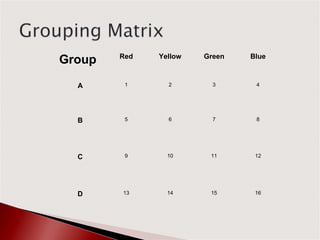
Red   Yellow   Green   Blue
Group
  A      1      2        3      4


  B      5      6        7      8


  C      9      10      11      12


  D     13      14      15      16
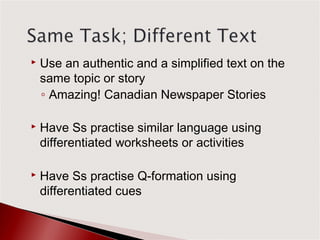
 Same   task; different text

 Same   text; different task
   Use an authentic and a simplified text on the
    same topic or story
    ◦ Amazing! Canadian Newspaper Stories

   Have Ss practise similar language using
    differentiated worksheets or activities

   Have Ss practise Q-formation using
    differentiated cues
 Newspaper    article
 ◦ Re-order sections
 ◦ Find and circle words
 ◦ Answer comprehension questions
 ◦ Fill in missing words

 Differentiated   dictation
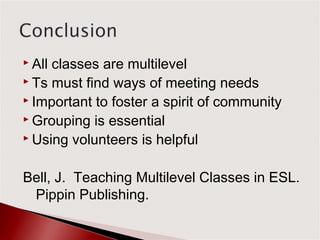
 Allclasses are multilevel
 Ts must find ways of meeting needs
 Important to foster a spirit of community
 Grouping is essential
 Using volunteers is helpful


Bell, J. Teaching Multilevel Classes in ESL.
 Pippin Publishing.

Teaching Multilevel Classes in Adult ESL

  • 1.
    A Presentation for the U of W ESLTCP Program Joanne Pettis
  • 2.
     All classes are, to a degree multilevel  Mostadult EAL programs have multilevel classes  Number of classes or programs in a community is a factor
  • 4.
     Instructional  Group Dynamics  Teacher attitude
  • 5.
    I AM THEONLY ONE RESPONSIBLE FOR THE LANGUAGE MY S's LEARN
  • 7.
  • 8.
     Ss ◦ responsibility to self and others  Ts ◦ build community ◦ Maximize learning opportunities ◦ Something for everyone
  • 9.
     Helpsin communitybuilding and cohesiveness  Provides focus and purpose  Creates interest  Reduces/streamlines prep time
  • 10.
     language/culture  talents level  interests/goals
  • 11.
     Purpose ◦Goals, interests  Methods ◦ interviews, surveys, discussions  Timing ◦ ongoing
  • 12.
     Why & When?  Types
  • 13.
     Why?  Considerations Activities to form Groups
  • 14.
    Red Yellow Green Blue Group A 1 2 3 4 B 5 6 7 8 C 9 10 11 12 D 13 14 15 16
  • 15.
     Same task; different text  Same text; different task
  • 16.
    Use an authentic and a simplified text on the same topic or story ◦ Amazing! Canadian Newspaper Stories  Have Ss practise similar language using differentiated worksheets or activities  Have Ss practise Q-formation using differentiated cues
  • 17.
     Newspaper article ◦ Re-order sections ◦ Find and circle words ◦ Answer comprehension questions ◦ Fill in missing words  Differentiated dictation
  • 18.
     Allclasses aremultilevel  Ts must find ways of meeting needs  Important to foster a spirit of community  Grouping is essential  Using volunteers is helpful Bell, J. Teaching Multilevel Classes in ESL. Pippin Publishing.

Editor's Notes

  • #2 Teaching Multlevel Classes Joanne Pettis, Coordinator Adult EAL Curriculum Development & Implementation Joanne.Pettis@gov.mb.ca
  • #3 Teaching Multlevel Classes Joanne Pettis, Coordinator Adult EAL Curriculum Development & Implementation Joanne.Pettis@gov.mb.ca Reality of Multilevel Teaching Describe Teaching Contexts in MB Discuss multilevel situation All classes are ML to a degree (4 skills, not usually equal across the board) In some communities or programs One/two classes for all Ls
  • #4 Teaching Multlevel Classes Joanne Pettis, Coordinator Adult EAL Curriculum Development & Implementation Joanne.Pettis@gov.mb.ca ACTIVITY: Have Ps brainstorm the biggest problems they may face in multilevel teaching, add any missing.
  • #5 Teaching Multlevel Classes Joanne Pettis, Coordinator Adult EAL Curriculum Development & Implementation Joanne.Pettis@gov.mb.ca Challenges - Instructional: Curriculum and Lesson Planning to meet all Ss needs Materials and activities Assessment and evaluation Group Dynamics Creating a community of learners with a sense of belonging Designing learning experiences for different Ss that can co-occur Teacher Attitude (Super T syndrome) Discuss and point out some advantages, such as:
  • #6 Teaching Multlevel Classes Joanne Pettis, Coordinator Adult EAL Curriculum Development & Implementation Joanne.Pettis@gov.mb.ca Ask Ps if they agree or disagree
  • #8 Teaching Multlevel Classes Joanne Pettis, Coordinator Adult EAL Curriculum Development & Implementation Joanne.Pettis@gov.mb.ca Advantages Flexibility – in grouping and resources Diversity – of life & ed. experiences Interaction – and support for learning Will try to address challenges and use the advantages to the max
  • #9 Teaching Multlevel Classes Joanne Pettis, Coordinator Adult EAL Curriculum Development & Implementation Joanne.Pettis@gov.mb.ca Teacher/Student Roles in Language Learning Have Ps discuss the degree to which they agree with this statement. ASK P’s WHAT THEY THINK THEIR S's OPINION IS re TEACHER’S ROLE, Do Ps agree? WHAT do Ps see as THEIR ROLE AND WHAT IS THEIR L’s ROLE IN LEARNING ENGLISH? WHAT CAN THEY DO TO INFORM THEIR S's OF THEIR RESPOSIBILITIES TO THEMSELVES AND THEIR FELLOW L’s? Points: in any ESL class the S's must accept responsibility for their own learning and should develop a sense of resp. for their classmates particularly important in a multilevel class Part of teaching is community building - collective responsibility This should be a ground rule in the classroom NB This doesn't mean you can exploit your advanced Ss!
  • #10 Teaching Multlevel Classes Joanne Pettis, Coordinator Adult EAL Curriculum Development & Implementation Joanne.Pettis@gov.mb.ca Finding Commonalities Importance & usefulness of finding commonalities in any class – community building – but in ML classes it is critical creates interest reduces/streamlines prep time
  • #11 Teaching Multlevel Classes Joanne Pettis, Coordinator Adult EAL Curriculum Development & Implementation Joanne.Pettis@gov.mb.ca T wants to know & address individual needs, goals and learning characteristics, but trying to develop ILP for each S will drive you to exhaustion There are various kinds of commonalities you can take advantage of, such as: language/culture talents level interests/goals
  • #12 Teaching Multlevel Classes Joanne Pettis, Coordinator Adult EAL Curriculum Development & Implementation Joanne.Pettis@gov.mb.ca Helpful to conduct a NA to identify some of these goals and interests as well as many other things. In MB, all classes are expected to conduct NA In ESP programs and in CBLT, NA are particularly important This is one way of building class cohesiveness and commitment too. As these courses evolve during the term, the Ts are encouraged to conduct on-going NA so they can revise their plans in response to changing needs. Hand out Principles of NA for their information. Many ways of conducting a Needs Assessment - interviews, surveys, discussions, etc. Will demonstrate one method, based on the process used in the CBLT classes. Show blank paper with YOU in middle and explain the CBLT NA form. ACTIVITY: Demonstrate a NA process (CBLT model). Have Ps imagine they are in another country that is not English-speaking. Have Ps choose 5 themes that they would want to learn the target language for. Have them then prioritize those topics. Debrief
  • #13 Teaching Multlevel Classes Joanne Pettis, Coordinator Adult EAL Curriculum Development & Implementation Joanne.Pettis@gov.mb.ca Whole Group Activities Once you have a clear set of your Ss you can begin to plan activities. Even in a ML class there are lots of things you can do as a whole group to help develop cohesiveness, such as: Greetings and catch up at the beginning of a class Concluding class Warm-ups and reviews LEA stories to capture class events HAND OUT LIST OF WHOLE GROUP ACTIVITIES AND GO THROUGH LIST QUICKLY
  • #14 Teaching Multlevel Classes Joanne Pettis, Coordinator Adult EAL Curriculum Development & Implementation Joanne.Pettis@gov.mb.ca Grouping Ss Why would you form groups in your class? BRAINSTORM IDEAS There are times when you can do whole group activities but constantly trying to teach the whole class as one group means trying to teach just to the middle and that's a disservice to Ss and will probably make you feel bad too; However it's also impossible to try to develop 20 different lessons; there are times when you need to split the class in to groups You can make different types of groups random groups equal ability groups similar interests based on gender specific skills There are different ways of splitting Ss into groups. Random groups – count off; self selection, people at each table IF POSSIBLE USE A STRATEGY THAT ENCOURAGES Ss TO USE LANGUAGE IN THE PROCESS SYSTEMATIC GROUPING ACTIVITY: Demonstrate Using Cards Handout a word card to each P. Each word has a partner. Ss circulate and discuss their word with each other. They find the other person with the partner word. After they have matched their word cards, they with their partner for the next activity You used 2 matching cards (province and capitol city). How could you add another category if you wanted groups of three? How could you make, say, groups of 5 or 6 or 10 using this kind of activity? Discuss how you could use different categories related to content Ls having been focused on, such as grammar topics, vocabulary (words or idioms), punctuation marks, immigrant serving agencies, employment services, etc. EXPLAIN TOOLBOX how to sort Ls into WITH HIGH CARDS ON TOP AND LOW ON BOTTOM
  • #15 Teaching Multlevel Classes Joanne Pettis, Coordinator Adult EAL Curriculum Development & Implementation Joanne.Pettis@gov.mb.ca Jill Bell suggests having different groupings that Ss see themselves as belonging to and suggests they the minimum arrangement is to have equal ability groups and mixed ability grouping at a minimum. She suggests a quick way to do this is: Red Yellow Green Blue A-1 2 3 4 B – 5 6 7 8 C – 9 10 11 12 D – 13 14 15 16 ASK Ps FOR OTHER SUGGESTIONS FOR FORMING GROUPS
  • #16 Teaching Multlevel Classes Joanne Pettis, Coordinator Adult EAL Curriculum Development & Implementation Joanne.Pettis@gov.mb.ca Once you have formed groups, you can begin to differentiate activities. Groups around language or culture might develop presentations for class, each Ss taking on a different role. Same for interest groups, etc. When you have beginner, middle and high groups in your class, you can do a variety of things: Same task; different text Same text; different task Note: using volunteers in the classroom is extremely valuable if you have a range of Ss
  • #17 Teaching Multlevel Classes Joanne Pettis, Coordinator Adult EAL Curriculum Development & Implementation Joanne.Pettis@gov.mb.ca You can use equal level groups to: Do same task with text of different length or complexity Example – In a unit on grocery shopping, Distribute food picture and word cards and have Ps form groups (Put one group of cards in one box and one group in another. Depending on level of Ss, have them select card from box A or B. Once in groups, give activities to work on collaboratively. A – fruit activities; B – vegetable activities Other Suggestions: Lower Ss might be given a one paragraph text and higher level given a text of greater length. Lower Ss might have missing words at bottom of text or fewer words to fill in. Create differentiated worksheets to practise the same language Have Ss practise requests. The low Ss use direct strategies (May I have a…) Upper Ss use indirect strategies (Gee, that coffee smells delicious! Is this seat taken?) Drawing out Language Activity Cloze exercises LEA stories or group sentence making DEMONSTRATE Picture Story
  • #18 Teaching Multlevel Classes Joanne Pettis, Coordinator Adult EAL Curriculum Development & Implementation Joanne.Pettis@gov.mb.ca Same text; different task Often Ts have Ss interact with the same material but require them to perform differently. Example – with a newspaper article, one group gets article cut into strips and have to reorganize it; another group has to find certain words and circle them. Another group has to answer Qs about the text. ACTIVITY- DIFFERENTIATED DICTATION Debrief Jill Bell suggests giving lower Ss the text with the initial letter missing from some words. Other suggestions When dictating, say a word then use the word in a sentence and then repeat both. Lower Ss write the word; higher Ss write the sentence. Writing - Refer to drawing activity in previous handout. Explain how Ss can write a story using a traditional narrative structure. Higher Ss write a paragraph; lower Ss complete sentence stems in paragraph format.