Activities and  lessons Valeria Nemi 2 nd  Form Teaching Training Course Teacher: Liliana Cretón
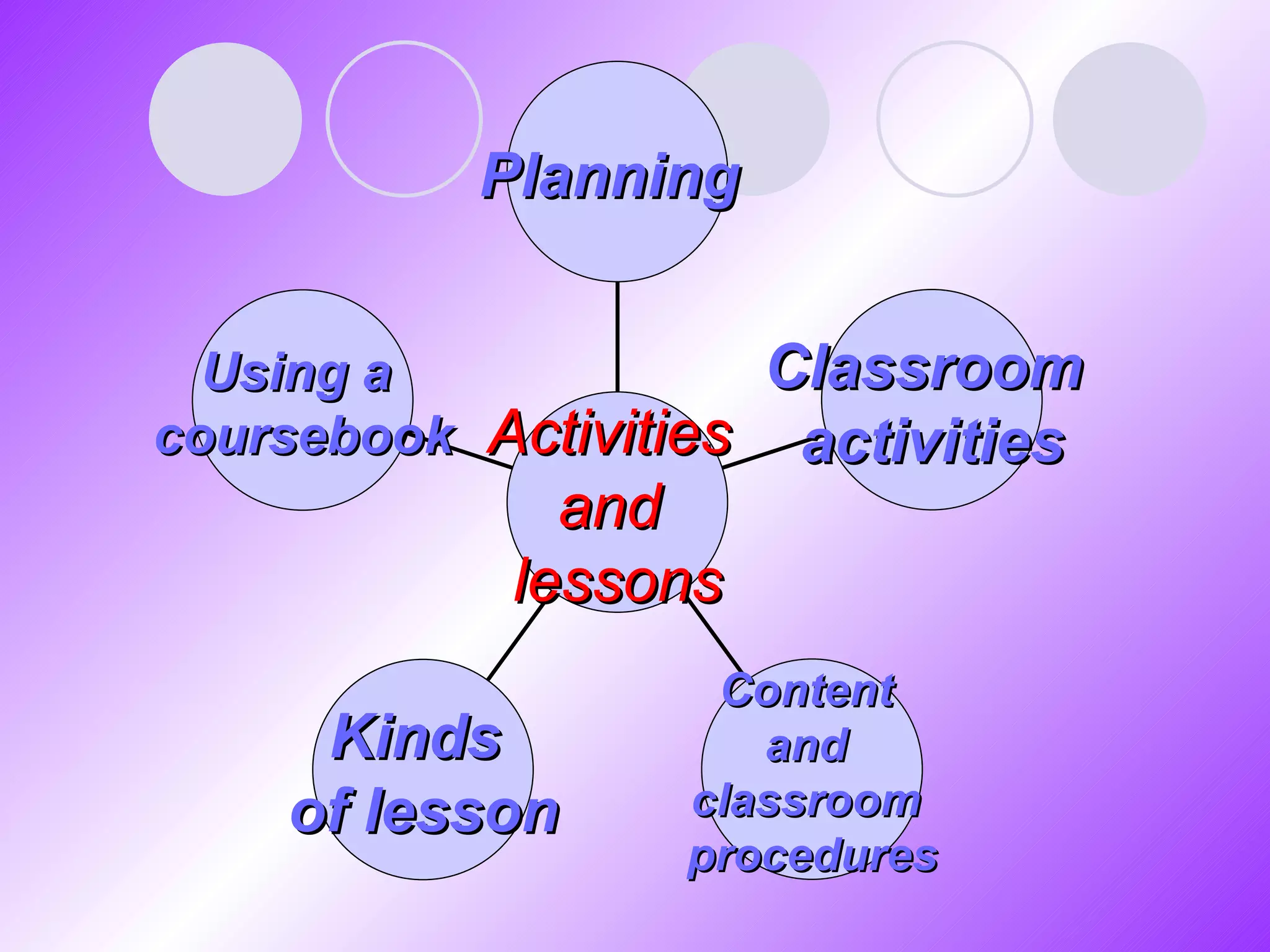
Using a  coursebook Kinds  of lesson Content  and  classroom  procedures Classroom  activities Planning   Activities  and  lessons
Planning before the lesson Familiarize yourself with the material and the activity  Imagine how it will look in class Think through any potential problems in the procedures Decide how many organizational steps are involved How long it will probably take What help students might need What the teacher’s role will be at each stage
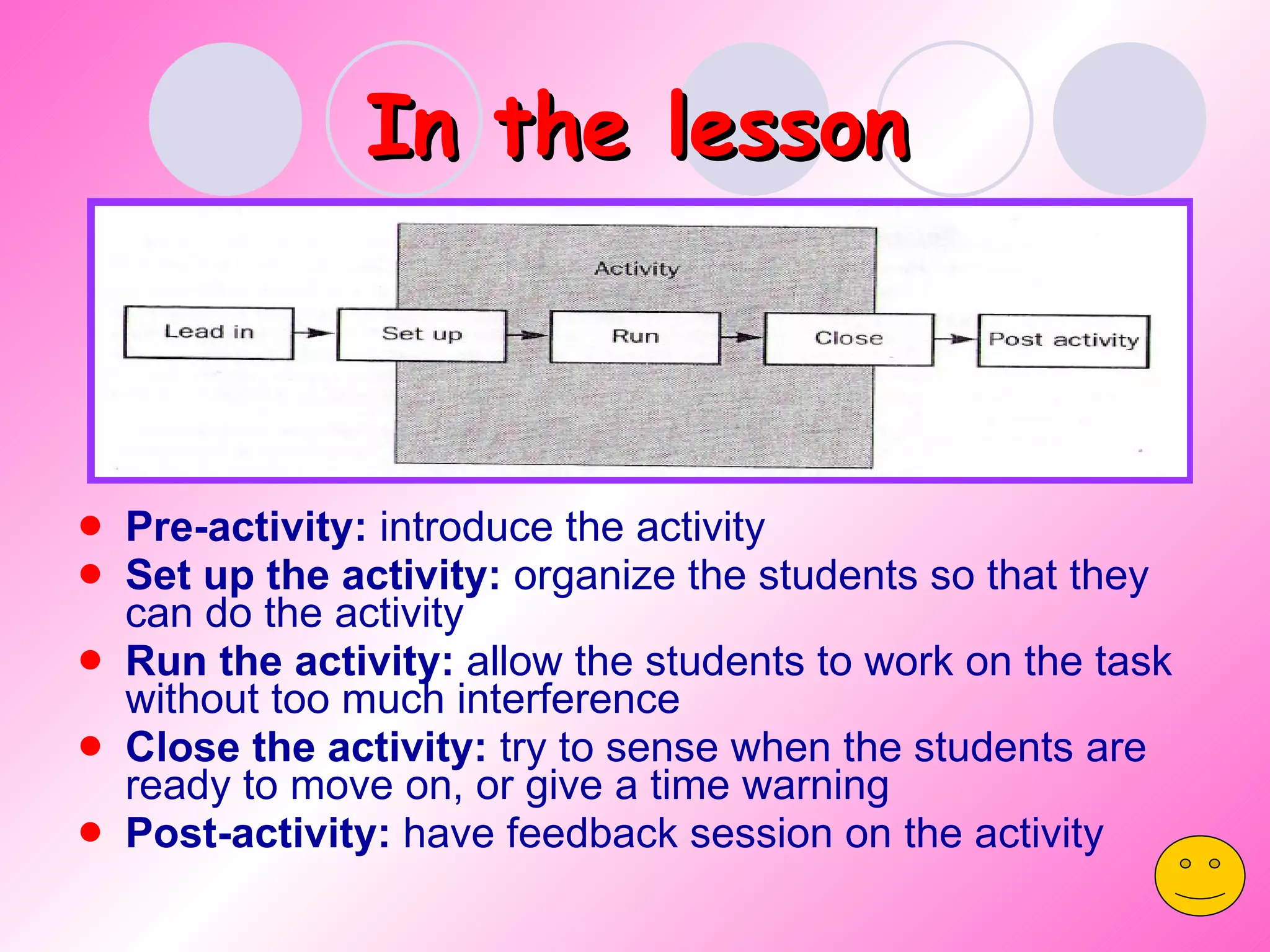
In the lesson Pre-activity:  introduce the activity Set up the activity:  organize the students so that they can do the activity Run the activity:  allow the students to work on the task without too much interference Close the activity:  try to sense when the students are ready to move on, or give a time warning Post-activity:  have feedback session on the activity
Classroom   activities A basic skill in teaching EFL is to be able to  prepare ,  set up  and  run  a single classroom activity. In order to prepare a classroom activity you will have to: Choose to use the material exactly as the printed instructions tell you Imagine a variation of the activity to suit your class and its needs
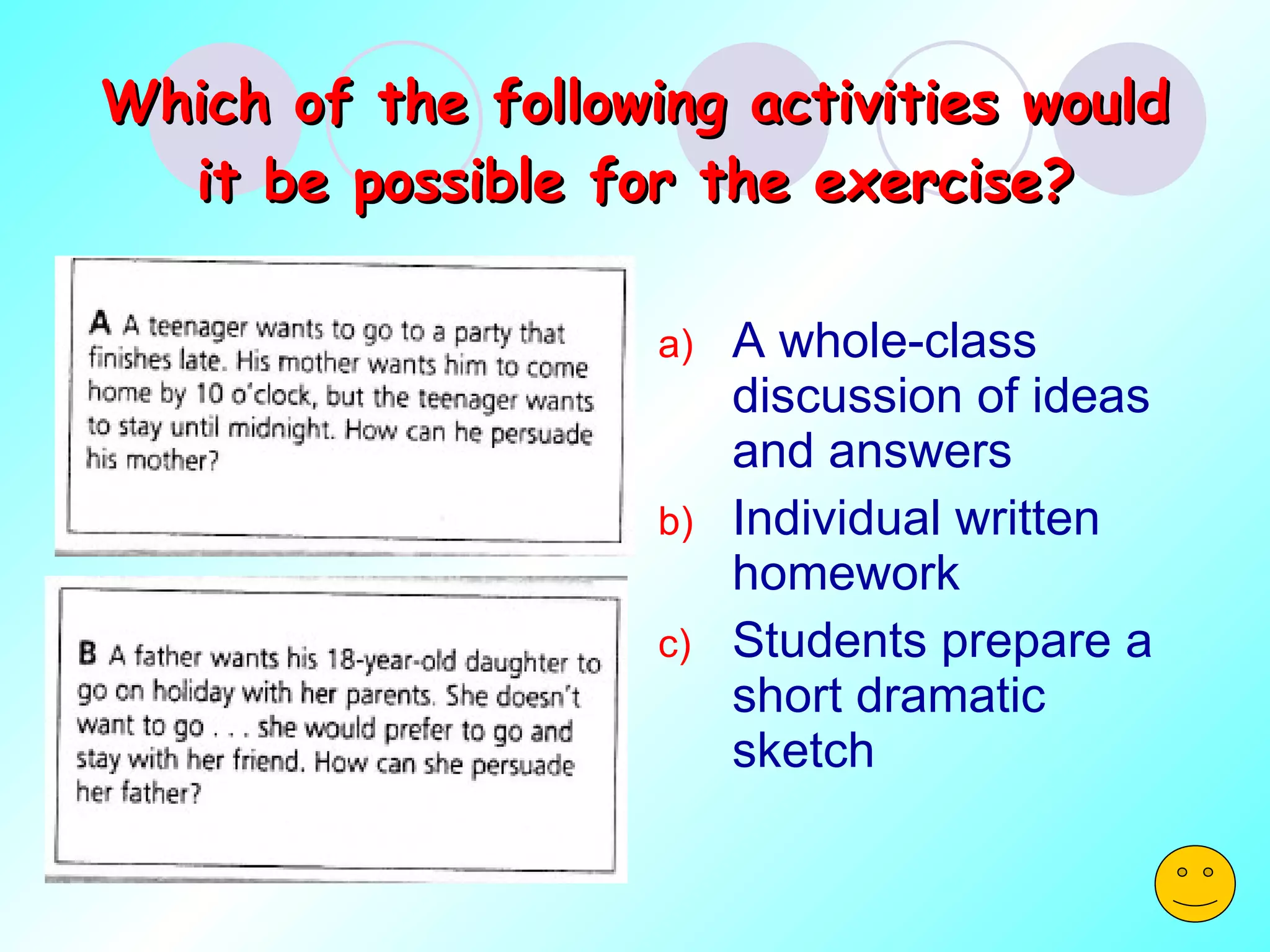
Which of the following activities would it be possible for the exercise? A whole-class discussion of ideas and answers Individual written homework Students prepare a short dramatic sketch
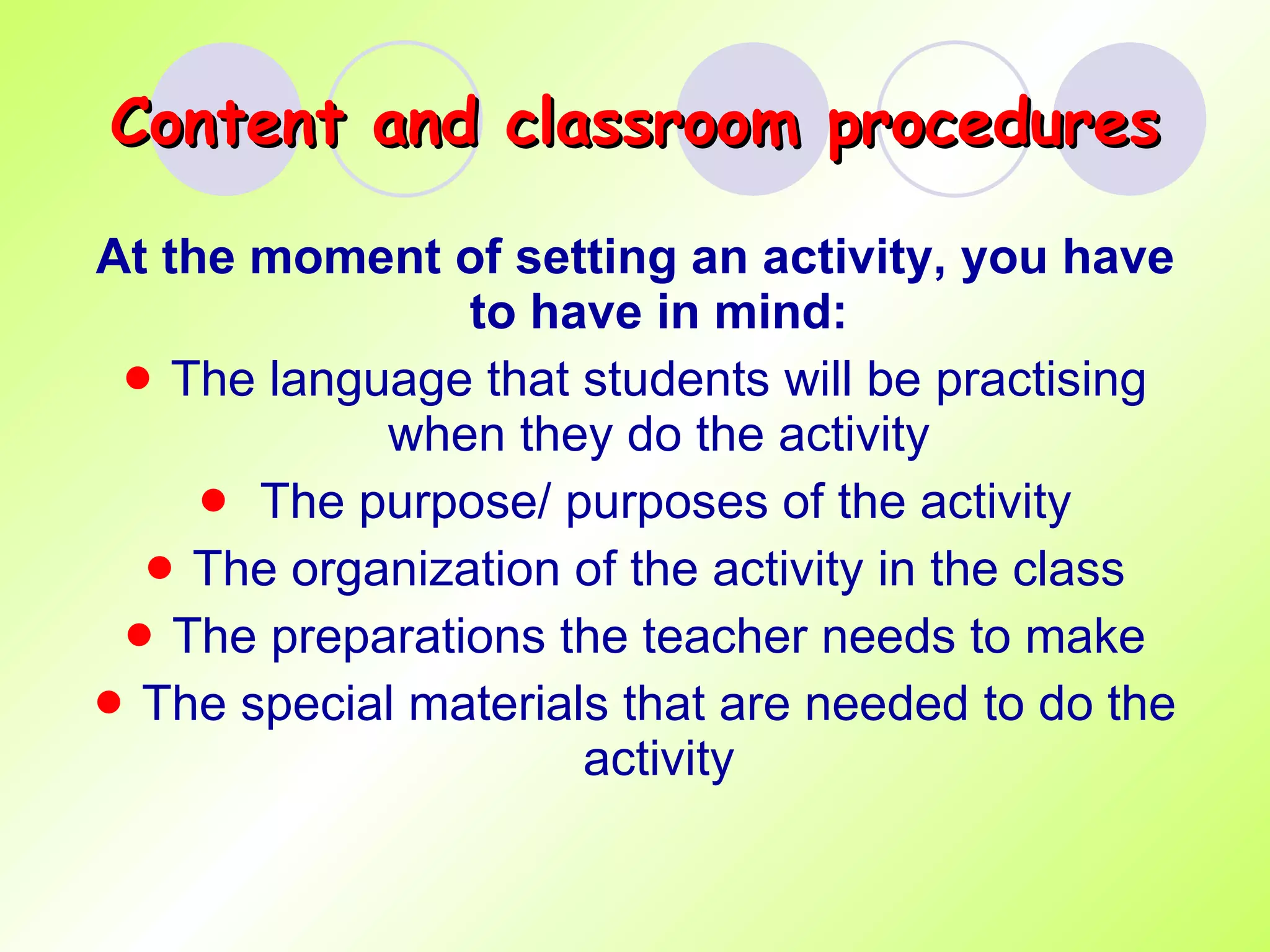
Content and classroom procedures At the moment of setting an activity, you have to have in mind: The language that students will be practising when they do the activity The purpose/ purposes of the activity The organization of the activity in the class The preparations the teacher needs to make The special materials that are needed to do the activity
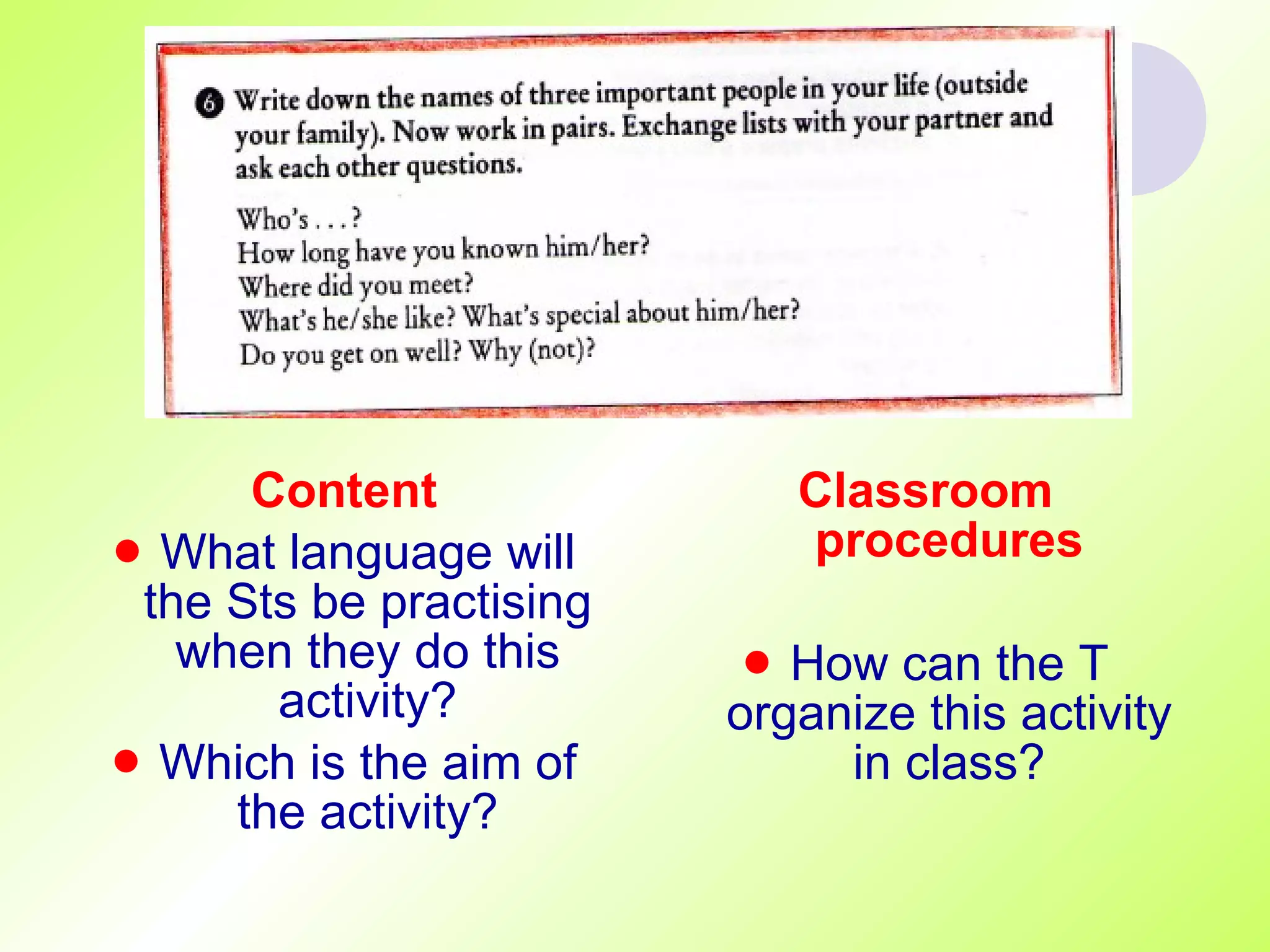
Content What language will the Sts be practising when they do this activity? Which is the aim of the activity? Classroom procedures How can the T organize this activity in class?
Something to remember Classroom arrangement Noisy moments in the class Diversions inside the classroom Let them work on their own
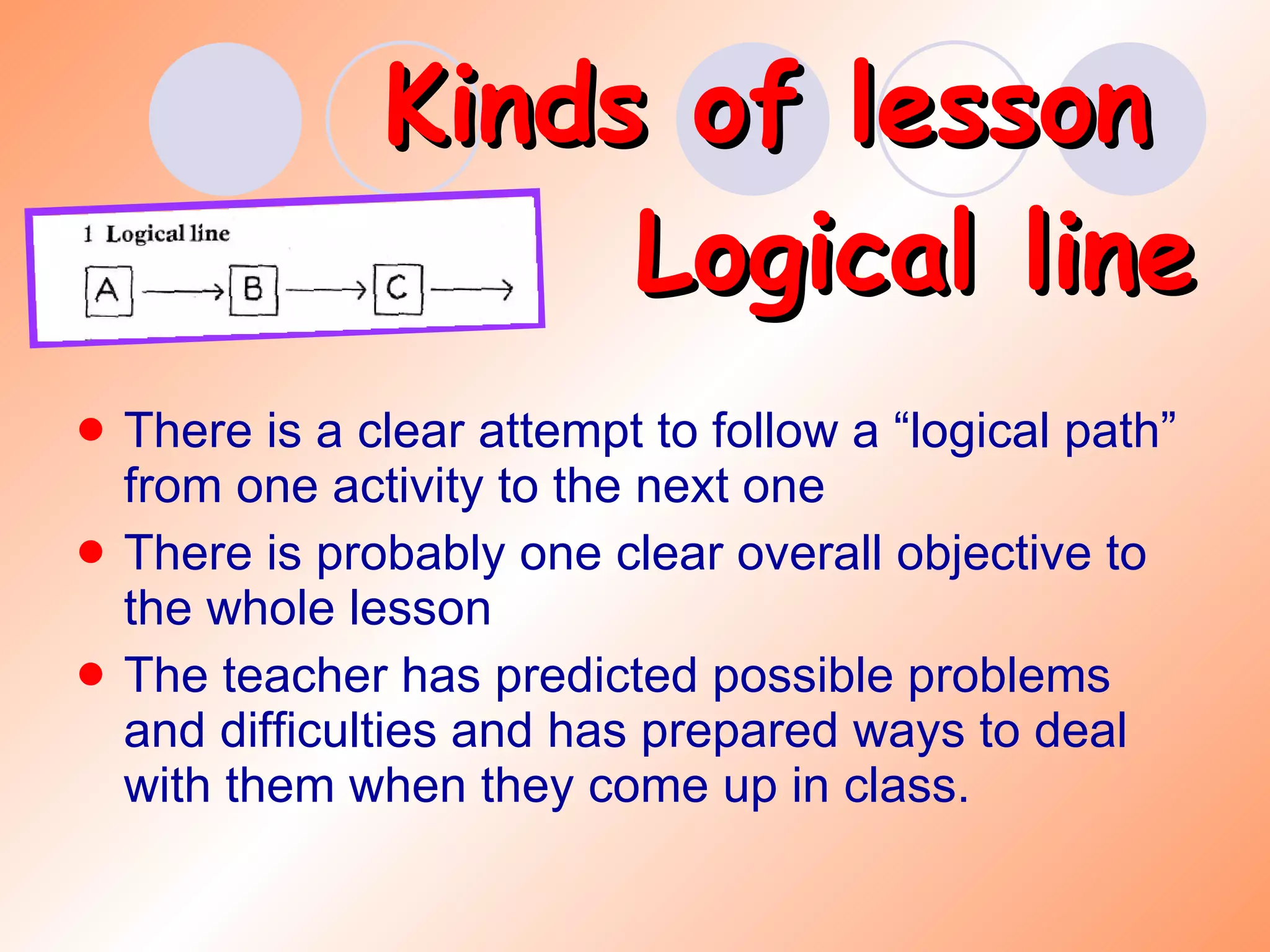
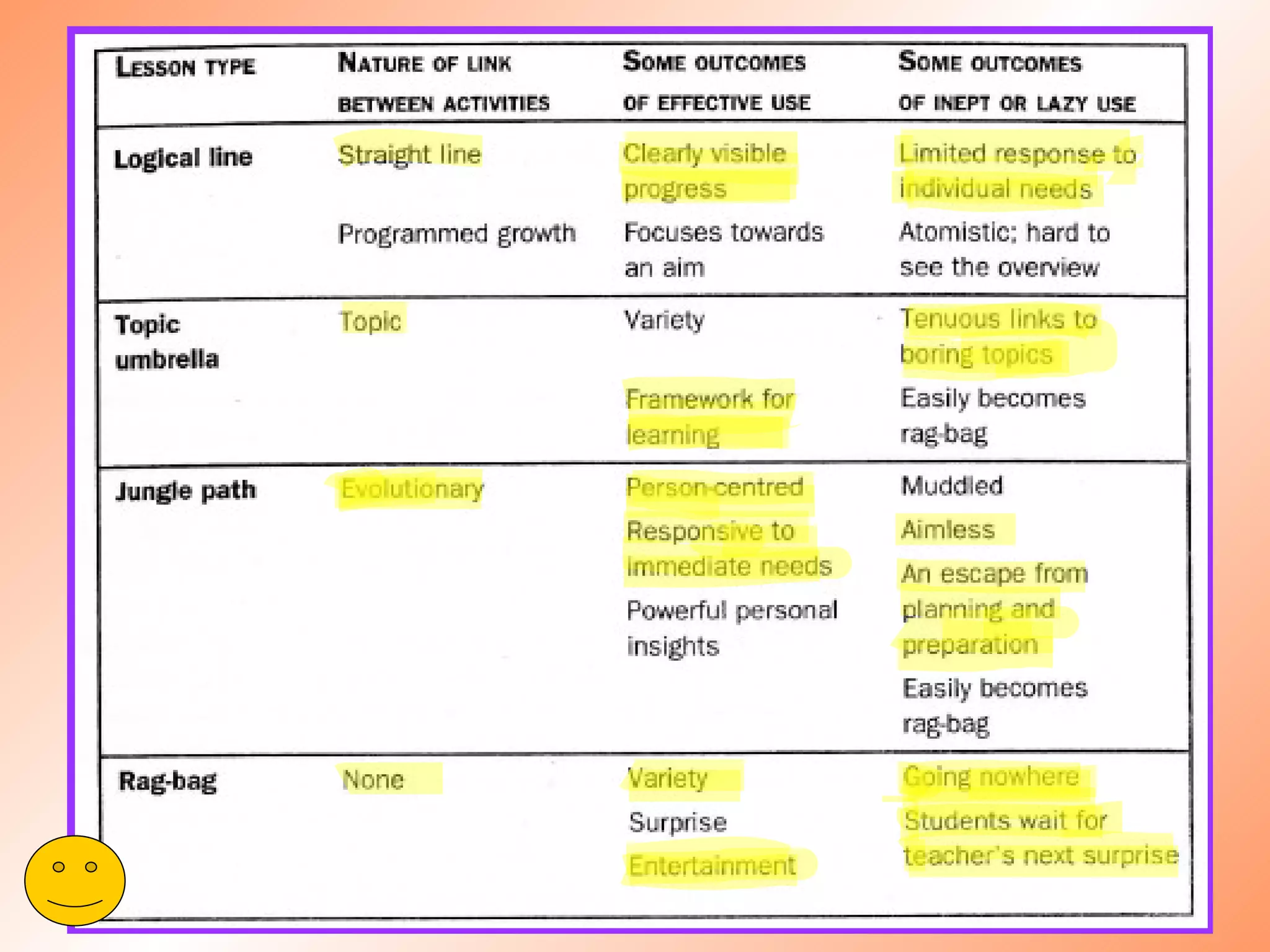
Kinds of lesson  Logical line There is a clear attempt to follow a “logical path” from one activity to the next one There is probably one clear overall objective to the whole lesson The teacher has predicted possible problems and difficulties and has prepared ways to deal with them when they come up in class.
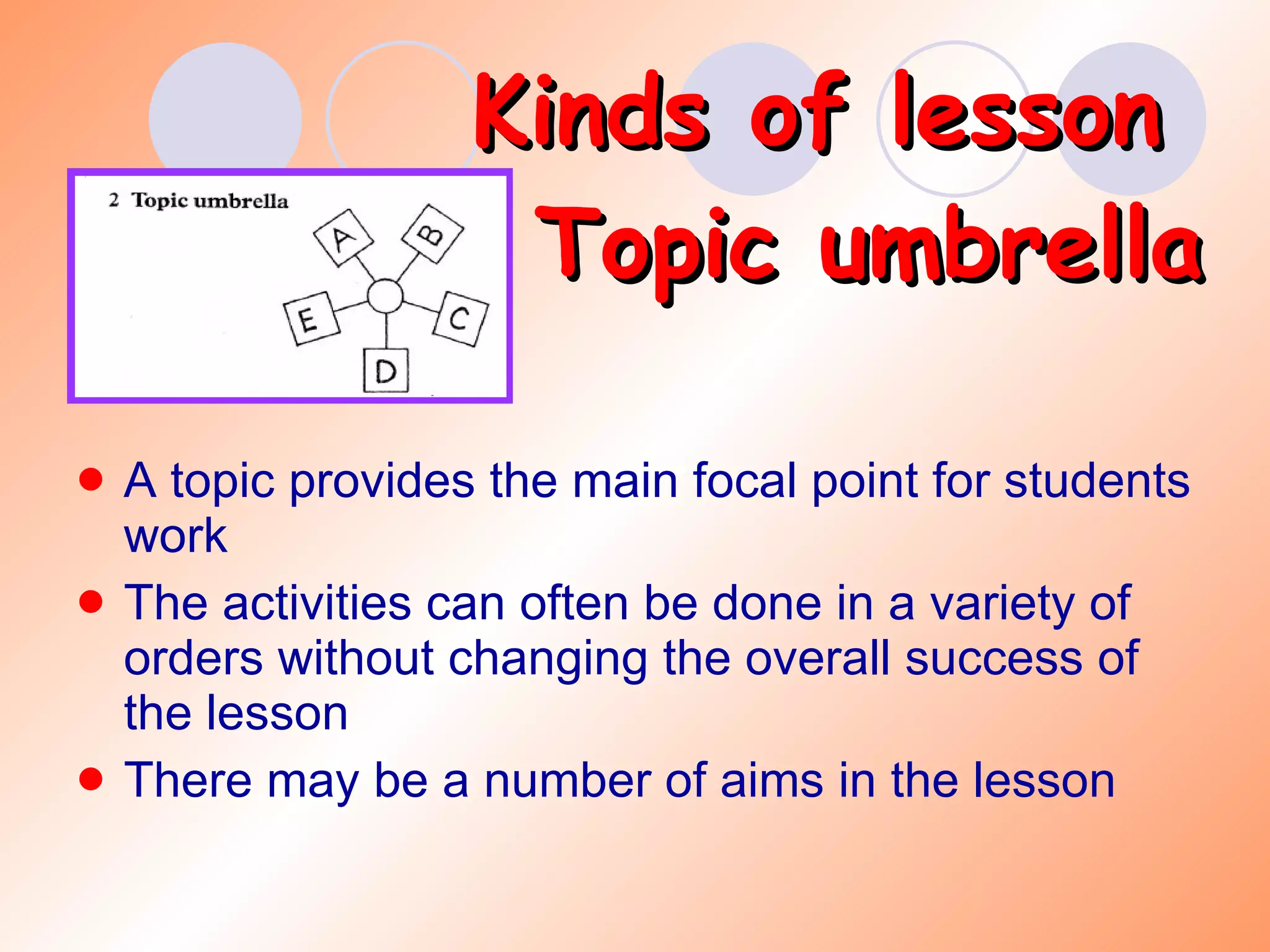
Kinds of lesson  Topic umbrella A topic provides the main focal point for students work The activities can often be done in a variety of orders without changing the overall success of the lesson There may be a number of aims in the lesson
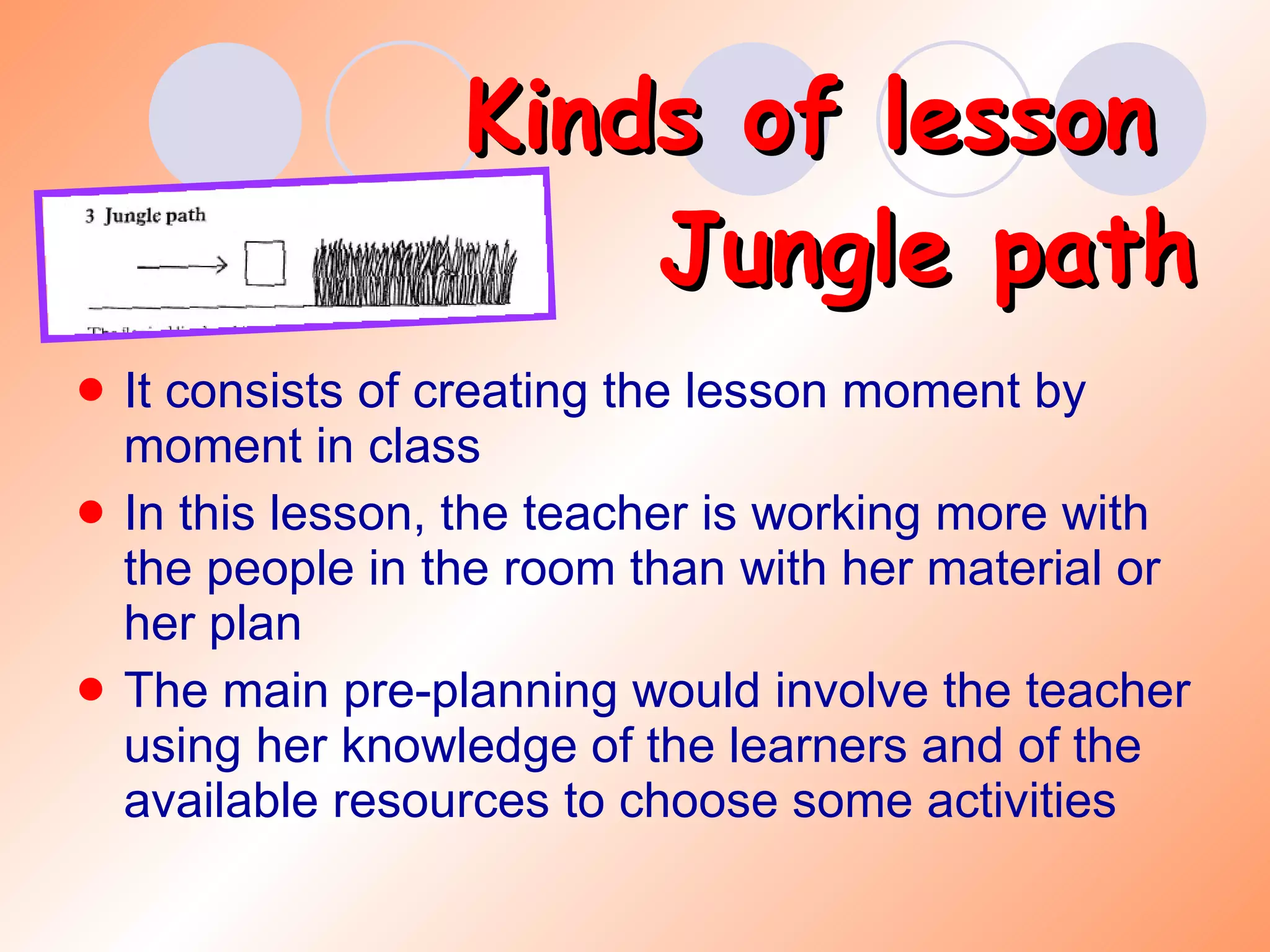
Kinds of lesson  Jungle path It consists of creating the lesson moment by moment in class In this lesson, the teacher is working more with the people in the room than with her material or her plan The main pre-planning would involve the teacher using her knowledge of the learners and of the available resources to choose some activities
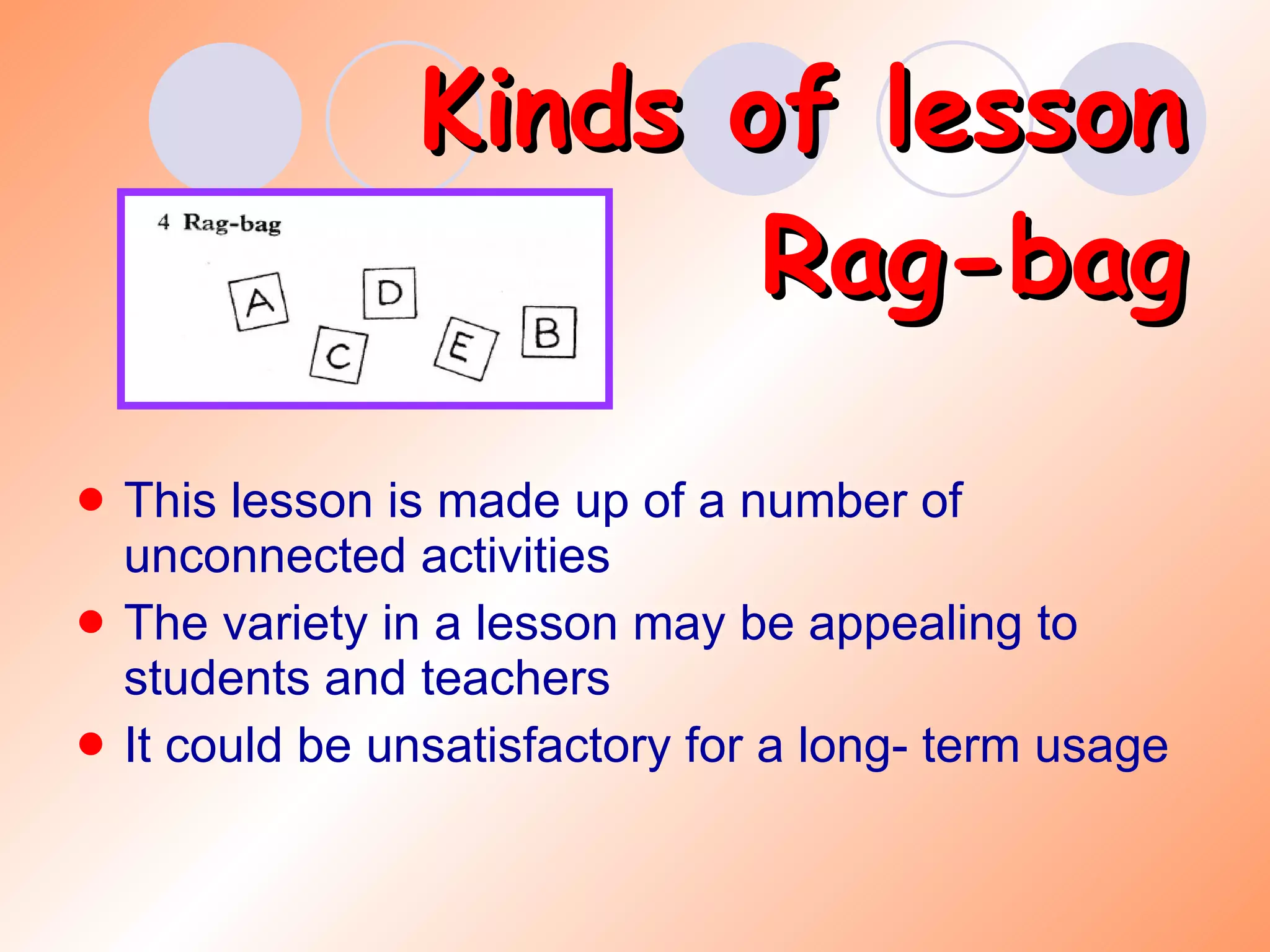
Kinds of lesson Rag-bag This lesson is made up of a number of unconnected activities The variety in a lesson may be appealing to students and teachers It could be unsatisfactory for a long- term usage
 
Using a coursebook It could be a good source of exploitable material.  Coursebooks are written: To give less experienced teachers support and guidance and the control of a well-organized syllabus To give more experienced teachers material to work from
Using a coursebook as a resource Select Reject Teach Exploit Supplement
Sources Learning teaching, Chapter 4: “Activities and lessons”,  Jim Scrivener The   Practice of English Language Teaching, Chapter 4 “Popular methodologies”, Chapter  21 “ Planning Lessons”, Jeremy Harmer http://www.teachingenglish.org.uk/talk/questions/course-books , Forum: Coursebooks http://www.teachingenglish.org.uk/think/articles/teaching-without-a-coursebook , Article: “Teaching without a coursebook”
Thank  you!!

Activities And Lessons

  • 1.
    Activities and lessons Valeria Nemi 2 nd Form Teaching Training Course Teacher: Liliana Cretón
  • 2.
    Using a coursebook Kinds of lesson Content and classroom procedures Classroom activities Planning Activities and lessons
  • 3.
    Planning before thelesson Familiarize yourself with the material and the activity Imagine how it will look in class Think through any potential problems in the procedures Decide how many organizational steps are involved How long it will probably take What help students might need What the teacher’s role will be at each stage
  • 4.
    In the lessonPre-activity: introduce the activity Set up the activity: organize the students so that they can do the activity Run the activity: allow the students to work on the task without too much interference Close the activity: try to sense when the students are ready to move on, or give a time warning Post-activity: have feedback session on the activity
  • 5.
    Classroom activities A basic skill in teaching EFL is to be able to prepare , set up and run a single classroom activity. In order to prepare a classroom activity you will have to: Choose to use the material exactly as the printed instructions tell you Imagine a variation of the activity to suit your class and its needs
  • 6.
    Which of thefollowing activities would it be possible for the exercise? A whole-class discussion of ideas and answers Individual written homework Students prepare a short dramatic sketch
  • 7.
    Content and classroomprocedures At the moment of setting an activity, you have to have in mind: The language that students will be practising when they do the activity The purpose/ purposes of the activity The organization of the activity in the class The preparations the teacher needs to make The special materials that are needed to do the activity
  • 8.
    Content What languagewill the Sts be practising when they do this activity? Which is the aim of the activity? Classroom procedures How can the T organize this activity in class?
  • 9.
    Something to rememberClassroom arrangement Noisy moments in the class Diversions inside the classroom Let them work on their own
  • 10.
    Kinds of lesson Logical line There is a clear attempt to follow a “logical path” from one activity to the next one There is probably one clear overall objective to the whole lesson The teacher has predicted possible problems and difficulties and has prepared ways to deal with them when they come up in class.
  • 11.
    Kinds of lesson Topic umbrella A topic provides the main focal point for students work The activities can often be done in a variety of orders without changing the overall success of the lesson There may be a number of aims in the lesson
  • 12.
    Kinds of lesson Jungle path It consists of creating the lesson moment by moment in class In this lesson, the teacher is working more with the people in the room than with her material or her plan The main pre-planning would involve the teacher using her knowledge of the learners and of the available resources to choose some activities
  • 13.
    Kinds of lessonRag-bag This lesson is made up of a number of unconnected activities The variety in a lesson may be appealing to students and teachers It could be unsatisfactory for a long- term usage
  • 14.
  • 15.
    Using a coursebookIt could be a good source of exploitable material. Coursebooks are written: To give less experienced teachers support and guidance and the control of a well-organized syllabus To give more experienced teachers material to work from
  • 16.
    Using a coursebookas a resource Select Reject Teach Exploit Supplement
  • 17.
    Sources Learning teaching,Chapter 4: “Activities and lessons”, Jim Scrivener The Practice of English Language Teaching, Chapter 4 “Popular methodologies”, Chapter 21 “ Planning Lessons”, Jeremy Harmer http://www.teachingenglish.org.uk/talk/questions/course-books , Forum: Coursebooks http://www.teachingenglish.org.uk/think/articles/teaching-without-a-coursebook , Article: “Teaching without a coursebook”
  • 18.