SUBWAY SANDWICH SHOP CASE 
Alika Koshy 
Ribhu Vashishtha
What is the case about ? 
• Subway Sandwich Shops around the world. 
• The Sandwich Restaurant Industry 
• Subway History 
• Subway’s Customer Analysis 
• Subway’s Promotion Strategy
What is the case about ? 
• Three big questions for deli firms:- 
– How to develop and keep a differential advantage 
in a highly competitive and dynamic market while 
maintaining: 
• Sales Growth 
• Profitability 
– What mix of the 4Ps to adopt and why? 
– How to deal with the growing competition?
FIVE FORCES MODEL
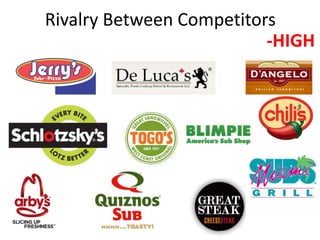
Rivalry Between Competitors 
-HIGH
Bargaining Power of Suppliers 
• LOW 
• Volume is critical to suppliers 
• Low cost of switching suppliers
Bargaining Power of Buyers 
• LOW 
• Buyers require special customization
Threat of New Entrants 
-HIGH
Threat of Substitutes 
1. Convenience shops 
2. Mid range restaurants 
3. Pre cooked food 
4. Health food shops 
-HIGH
Symptoms, Issues, Problems 
• Bad management 
• Poor location 
• Franchisees are battling franchisors for more 
control over their businesses. 
• Franchisors are fighting back to preserve their 
profits.
Actions taken 
• In addition to individual location efforts to 
increase sales, all Subway franchises 
contribute 2.5 percent (some markets elect to 
contribute more than this percentage) of 
weekly sales to the Subway Franchisee 
Advertising Fund Trust (SFAFT). 
• 99% of this advertising budget is allocated for 
TV advertising and the remaining 1% for print, 
radio, digital, outdoor advertising.
Actions to be taken 
• To increase per outlet sales, Subway should: 
– Promote their offerings for hours other than lunch 
and snacks as well, for e.g. breakfast, dinner, late 
night meals. 
• To expand outlets, Subway can: 
– Open outlets in supermarkets, malls, multiplexes, 
schools, colleges, amusement parks, hospitals, 
airports, bus stops, etc.
Actions to be taken 
• Increase the variety of their subs and 
sandwiches pertaining to various markets of 
the world. 
• Offer their food & beverages at various price 
points (low, medium and high) in major 
markets like India and China. 
• Introduce a combo of meals like kids meal, 
health meal, etc.
Subway’s Brand Positioning 
• Offers “fresh, healthy and affordable fast 
food”
Who is the average Subway customer? 
MALE
What does he want? 
• Quality 
• Great taste 
• Value for money 
• Healthy food 
• Sufficient quantity
Loyalty 
Engagement 
Attachment 
Value for money 
Eat fresh 
Customized Product 
4. Relationship 
What about you & me? 
Fit 
Great taste 
Filling 
Completely satisfying 
Health conscious 
Young 
Single 
Busy Professionals 
Submarine Sandwich Joint 
3. Response 
What about you? 
2. Meaning 
What are you? 
1. Identity 
Who are you?
Customer Profiles 
1. Subway: Prefer take away 
2. Quizno’s: Prefer eat-in 
3. McDonald’s: Prefer eating with family 
4. Blimpie Drive-in: Young adults with children
Promotional Activities 
• Sponsoring of the New York marathon. 
• “Love your heart” campaign in Ireland. 
• Donations to Heart Research UK and the Subway 
Healthy Heart grant scheme, which supports 
communities to help them lead healthier 
lifestyles. 
• Endorsement by Michael Phelps and his portrayal 
as Subway’s “Famous Fan” 
• Formulation of the “Subway Diet” plan to help 
people lose weight.
Promotional Activities 
• According to the new “Talking About” option, 
Subway outranks every brand on Facebook, 
including Facebook itself.
Promotional Activities 
• Focus on: 
– Food Quality & Food Safety 
– Sustainable Sourcing Practices 
– Local Sourcing 
– Animal Welfare 
– Forced Labour & Human Trafficking 
– Streamlining Supply Chain
Thank You.

Subway sandwich shop case

  • 1.
    SUBWAY SANDWICH SHOPCASE Alika Koshy Ribhu Vashishtha
  • 2.
    What is thecase about ? • Subway Sandwich Shops around the world. • The Sandwich Restaurant Industry • Subway History • Subway’s Customer Analysis • Subway’s Promotion Strategy
  • 3.
    What is thecase about ? • Three big questions for deli firms:- – How to develop and keep a differential advantage in a highly competitive and dynamic market while maintaining: • Sales Growth • Profitability – What mix of the 4Ps to adopt and why? – How to deal with the growing competition?
  • 4.
  • 5.
  • 6.
    Bargaining Power ofSuppliers • LOW • Volume is critical to suppliers • Low cost of switching suppliers
  • 7.
    Bargaining Power ofBuyers • LOW • Buyers require special customization
  • 8.
    Threat of NewEntrants -HIGH
  • 9.
    Threat of Substitutes 1. Convenience shops 2. Mid range restaurants 3. Pre cooked food 4. Health food shops -HIGH
  • 10.
    Symptoms, Issues, Problems • Bad management • Poor location • Franchisees are battling franchisors for more control over their businesses. • Franchisors are fighting back to preserve their profits.
  • 11.
    Actions taken •In addition to individual location efforts to increase sales, all Subway franchises contribute 2.5 percent (some markets elect to contribute more than this percentage) of weekly sales to the Subway Franchisee Advertising Fund Trust (SFAFT). • 99% of this advertising budget is allocated for TV advertising and the remaining 1% for print, radio, digital, outdoor advertising.
  • 12.
    Actions to betaken • To increase per outlet sales, Subway should: – Promote their offerings for hours other than lunch and snacks as well, for e.g. breakfast, dinner, late night meals. • To expand outlets, Subway can: – Open outlets in supermarkets, malls, multiplexes, schools, colleges, amusement parks, hospitals, airports, bus stops, etc.
  • 13.
    Actions to betaken • Increase the variety of their subs and sandwiches pertaining to various markets of the world. • Offer their food & beverages at various price points (low, medium and high) in major markets like India and China. • Introduce a combo of meals like kids meal, health meal, etc.
  • 14.
    Subway’s Brand Positioning • Offers “fresh, healthy and affordable fast food”
  • 15.
    Who is theaverage Subway customer? MALE
  • 16.
    What does hewant? • Quality • Great taste • Value for money • Healthy food • Sufficient quantity
  • 17.
    Loyalty Engagement Attachment Value for money Eat fresh Customized Product 4. Relationship What about you & me? Fit Great taste Filling Completely satisfying Health conscious Young Single Busy Professionals Submarine Sandwich Joint 3. Response What about you? 2. Meaning What are you? 1. Identity Who are you?
  • 18.
    Customer Profiles 1.Subway: Prefer take away 2. Quizno’s: Prefer eat-in 3. McDonald’s: Prefer eating with family 4. Blimpie Drive-in: Young adults with children
  • 19.
    Promotional Activities •Sponsoring of the New York marathon. • “Love your heart” campaign in Ireland. • Donations to Heart Research UK and the Subway Healthy Heart grant scheme, which supports communities to help them lead healthier lifestyles. • Endorsement by Michael Phelps and his portrayal as Subway’s “Famous Fan” • Formulation of the “Subway Diet” plan to help people lose weight.
  • 20.
    Promotional Activities •According to the new “Talking About” option, Subway outranks every brand on Facebook, including Facebook itself.
  • 21.
    Promotional Activities •Focus on: – Food Quality & Food Safety – Sustainable Sourcing Practices – Local Sourcing – Animal Welfare – Forced Labour & Human Trafficking – Streamlining Supply Chain
  • 22.

Editor's Notes

  • #3 A surprising 78.7 percent of all adults have patronized a fast-food or drive-in restaurant in the last 30 days (Table 1–1). And, some 31 percent of those same adults went 14 or more times to such a restaurant during that same time period (Table 1–1), making heavy users of the category. Demographically, heavy users are also more likely to be male, young, single, and live in the Northeast (Table 1–2).
  • #7 When suppliers are reliant on high volumes, they have less bargaining power, because a producer can threaten to cut volumes and hurt the supplier’s profits. This can positively affect Subway. The easier it is to switch suppliers, the less bargaining power they have. Low supplier switching costs positively affect Subway.
  • #8 When customers require special customizations, they are less likely to switch to producers who have difficulty meeting their demands. Buyer customization positively affects Subway. When there are large numbers of customers, no one customer tends to have bargaining leverage. Limited bargaining leverage helps Subway.