 17 yo male restrained

driver presents packaged
by EMS, involved in car vs
tree, head-on MVC at
approx 35-40 mph. No
LOC, no airbag
deployment, broken
windshield. Pt did
ambulate on scene. C/o
cervical neck pain.

 AFVSS

 Gen: WDWN, A&Ox4
 HEENT: NC/AT, PERRL,

TMs intact
 Neck: C6-C7 CMT without
step-offs, trachea midline.
 Neuro: CNs 2-12 intact, Nml
5/5 motor strength and
sensation x 4. Nml reflexes.
 MSK: No thoracic/lumbar
TTP/step-offs. No gross signs
of trauma. Long bones and
joints palpated without
tenderness or instability.
C6 spinous process fracture. No facet or laminar fracture seen
 Lateral C-spine radiograph, or CT
 Analgesics
 Philadelphia C-collar on discharge to be worn for at

least 10 days
 Early follow-up with Orthopedics, 1-2 weeks
 Non-operative management if fracture is isolated and
presence of instability has been ruled out
 Clay Shoveler’s Fracture is considered stable
 Caused by intense flexion against a contracted

posterior erector spinal muscle; MC due to
deceleration MVCs
 Most common at C7 > C6> T1
 If avulsion frx is not limited to spinous process but
extends into lamina, there is greater potential for
spinal cord injury
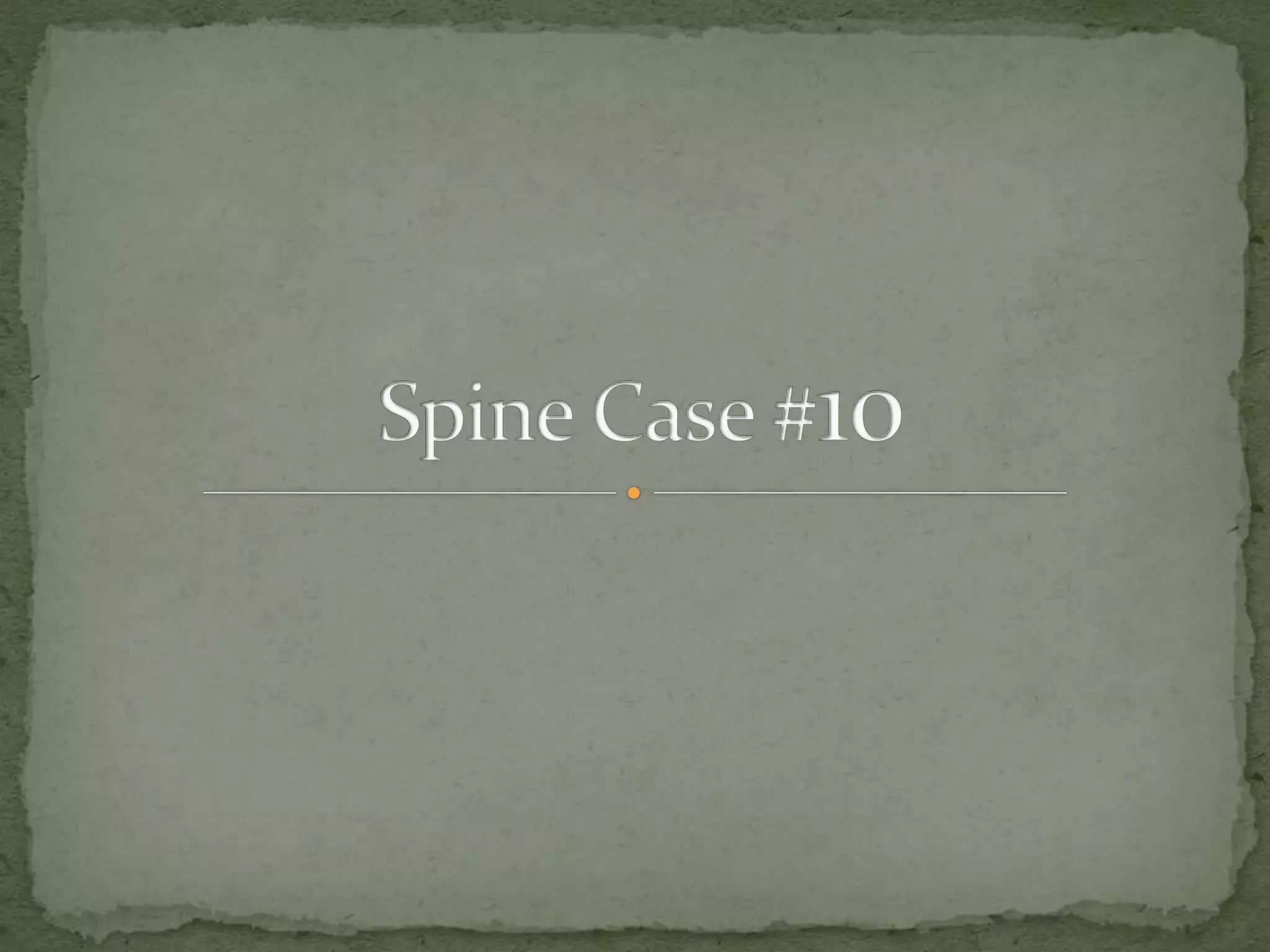
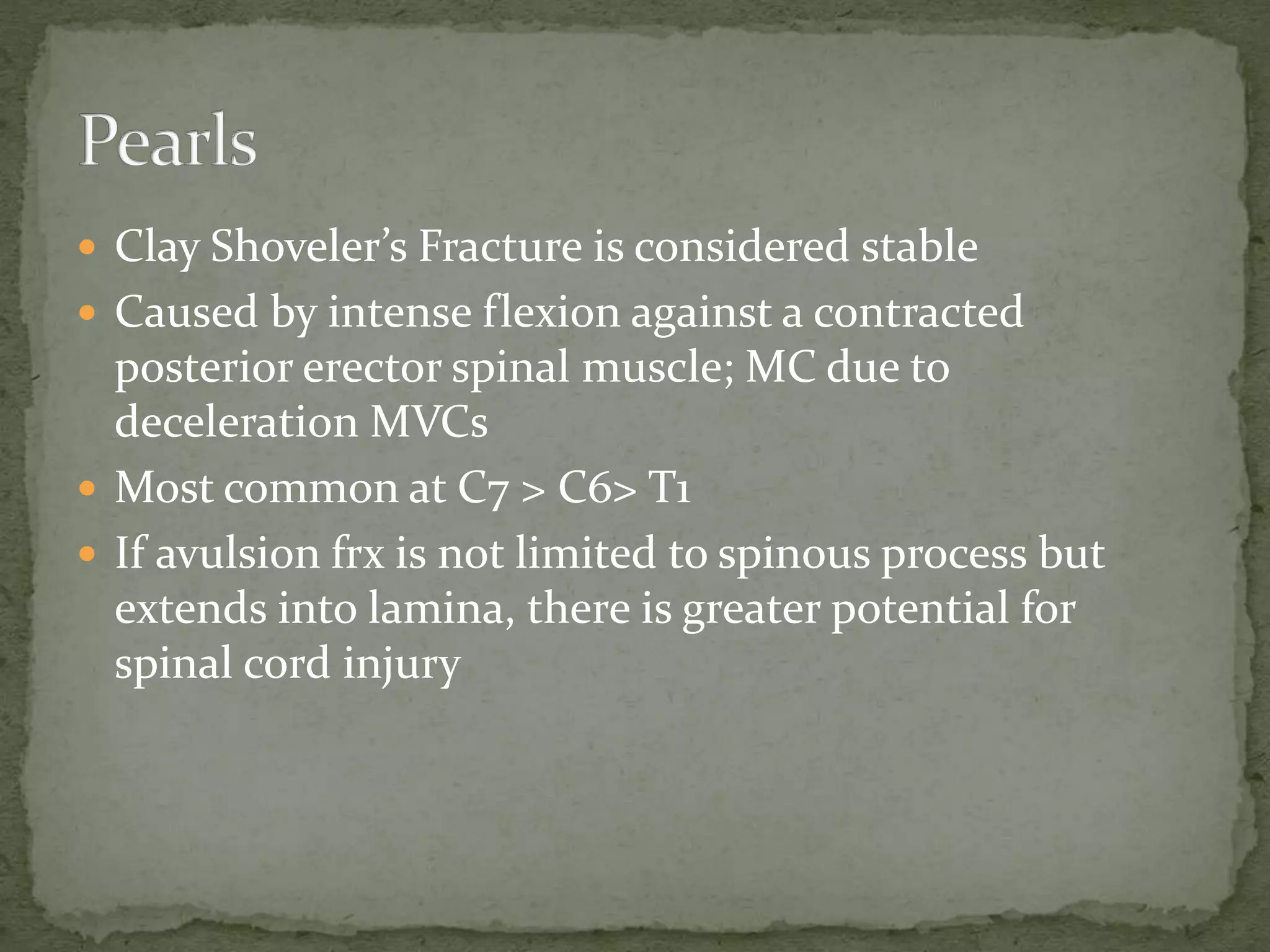
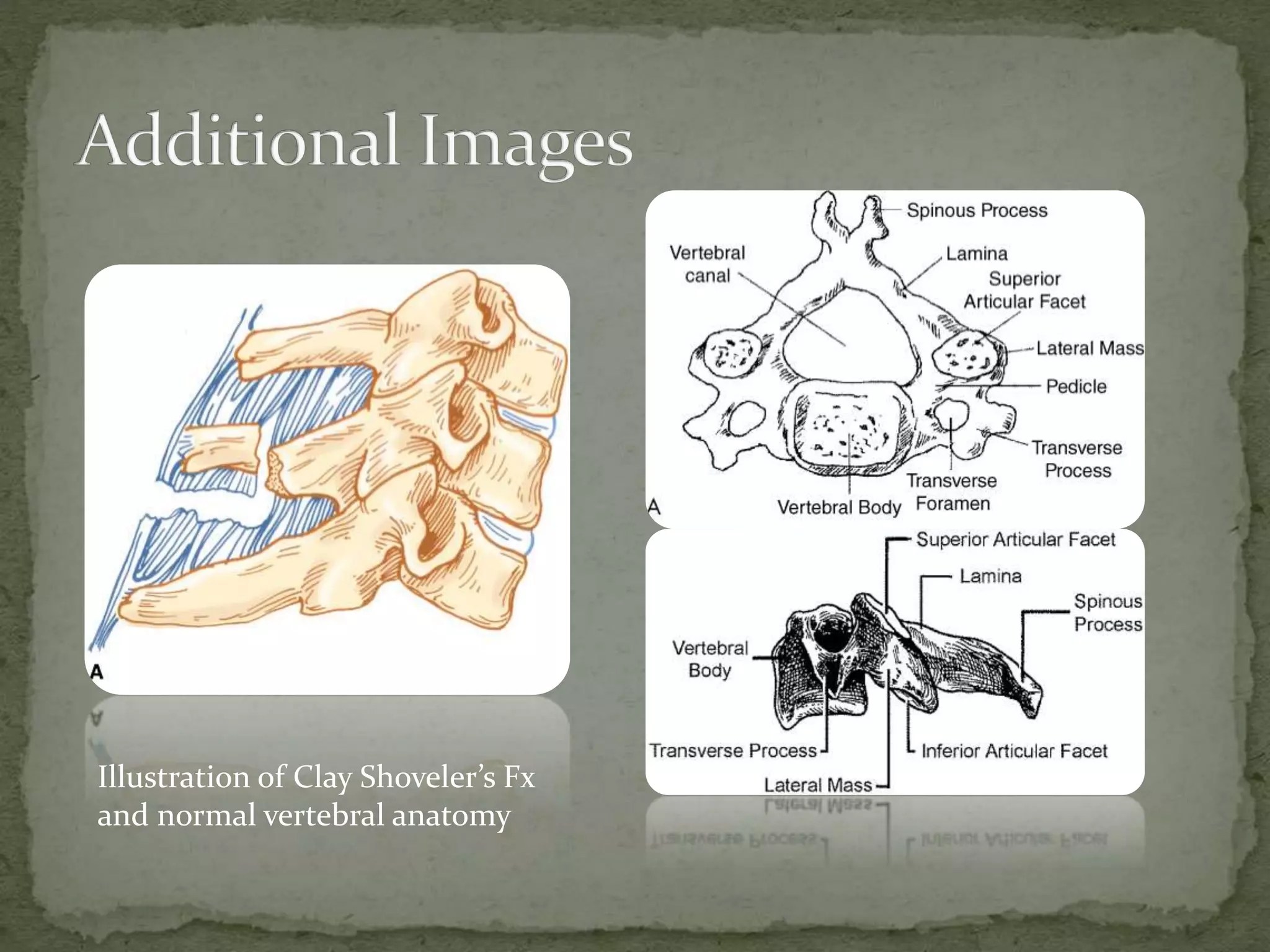
Illustration of Clay Shoveler’s Fx
and normal vertebral anatomy
 Schwartz DT: Emergency Radiology: Case Studies:

http://www.accessemergencymedicine.com
 Simon RR, Sherman SC: Emergency Orthopedics, 6th
ed. Chapter 9: Cervical Spine Trauma.
www.accessemergencymedicine.com
 Tintinalli’s Emergency Medicine: A Comprehensive
Study Guide, 7th ed. Chapter 255: Spine and Spinal
Cord Trauma
 http://radiopaedia.org/cases/barbell-injury-tocervical-spine-c6-clay-shoveler-fracture-1

Clay Shoveler's Fracture

  • 2.
     17 yomale restrained driver presents packaged by EMS, involved in car vs tree, head-on MVC at approx 35-40 mph. No LOC, no airbag deployment, broken windshield. Pt did ambulate on scene. C/o cervical neck pain.  AFVSS  Gen: WDWN, A&Ox4  HEENT: NC/AT, PERRL, TMs intact  Neck: C6-C7 CMT without step-offs, trachea midline.  Neuro: CNs 2-12 intact, Nml 5/5 motor strength and sensation x 4. Nml reflexes.  MSK: No thoracic/lumbar TTP/step-offs. No gross signs of trauma. Long bones and joints palpated without tenderness or instability.
  • 4.
    C6 spinous processfracture. No facet or laminar fracture seen
  • 5.
     Lateral C-spineradiograph, or CT  Analgesics  Philadelphia C-collar on discharge to be worn for at least 10 days  Early follow-up with Orthopedics, 1-2 weeks  Non-operative management if fracture is isolated and presence of instability has been ruled out
  • 6.
     Clay Shoveler’sFracture is considered stable  Caused by intense flexion against a contracted posterior erector spinal muscle; MC due to deceleration MVCs  Most common at C7 > C6> T1  If avulsion frx is not limited to spinous process but extends into lamina, there is greater potential for spinal cord injury
  • 8.
    Illustration of ClayShoveler’s Fx and normal vertebral anatomy
  • 9.
     Schwartz DT:Emergency Radiology: Case Studies: http://www.accessemergencymedicine.com  Simon RR, Sherman SC: Emergency Orthopedics, 6th ed. Chapter 9: Cervical Spine Trauma. www.accessemergencymedicine.com  Tintinalli’s Emergency Medicine: A Comprehensive Study Guide, 7th ed. Chapter 255: Spine and Spinal Cord Trauma  http://radiopaedia.org/cases/barbell-injury-tocervical-spine-c6-clay-shoveler-fracture-1