Look around in your
house. You will find
household waste
such as fruit and
vegetable peelings,
paper, plastic cans,
plastic bottles, etc.
some of this waste
can break down into
useful nutrients but
some cannot.
biogradable waste
non-biogradable waste
Waste can be classified as
biodegradable and non-
biodegradable on whether or
not it can break down. Let’s
find out about both types.
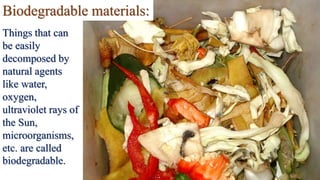
Biodegradable materials:
Things that can
be easily
decomposed by
natural agents
like water,
oxygen,
ultraviolet rays of
the Sun,
microorganisms,
etc. are called
biodegradable.
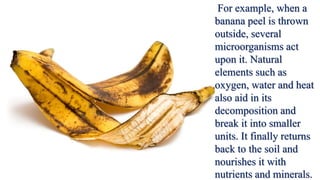
For example, when a
banana peel is thrown
outside, several
microorganisms act
upon it. Natural
elements such as
oxygen, water and heat
also aid in its
decomposition and
break it into smaller
units. It finally returns
back to the soil and
nourishes it with
nutrients and minerals.
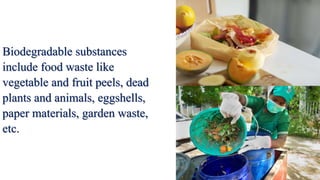
Biodegradable substances
include food waste like
vegetable and fruit peels, dead
plants and animals, eggshells,
paper materials, garden waste,
etc.
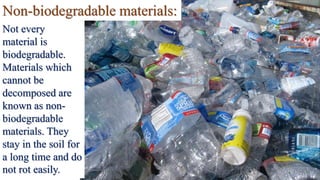
Non-biodegradable materials:
Not every
material is
biodegradable.
Materials which
cannot be
decomposed are
known as non-
biodegradable
materials. They
stay in the soil for
a long time and do
not rot easily.
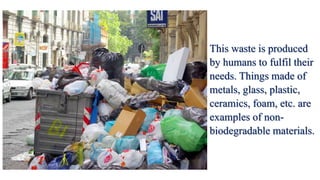
This waste is produced
by humans to fulfil their
needs. Things made of
metals, glass, plastic,
ceramics, foam, etc. are
examples of non-
biodegradable materials.
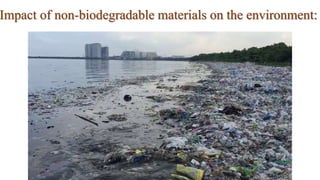
Impact of non-biodegradable materials on the environment:
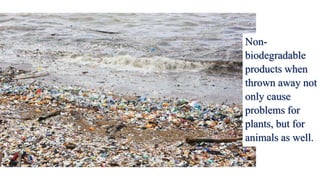
Non-
biodegradable
products when
thrown away not
only cause
problems for
plants, but for
animals as well.
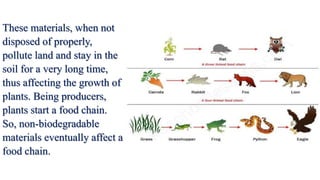
These materials, when not
disposed of properly,
pollute land and stay in the
soil for a very long time,
thus affecting the growth of
plants. Being producers,
plants start a food chain.
So, non-biodegradable
materials eventually affect a
food chain.
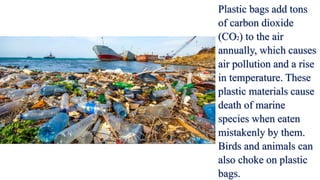
Plastic bags add tons
of carbon dioxide
(CO2) to the air
annually, which causes
air pollution and a rise
in temperature. These
plastic materials cause
death of marine
species when eaten
mistakenly by them.
Birds and animals can
also choke on plastic
bags.
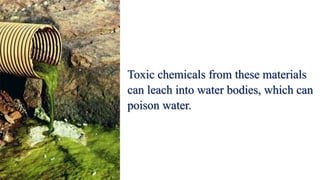
Toxic chemicals from these materials
can leach into water bodies, which can
poison water.
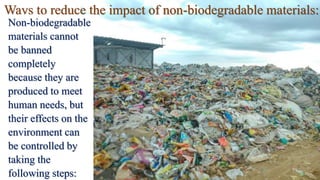
Ways to reduce the impact of non-biodegradable materials:
Non-biodegradable
materials cannot
be banned
completely
because they are
produced to meet
human needs, but
their effects on the
environment can
be controlled by
taking the
following steps:
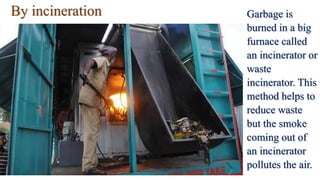
By incineration Garbage is
burned in a big
furnace called
an incinerator or
waste
incinerator. This
method helps to
reduce waste
but the smoke
coming out of
an incinerator
pollutes the air.
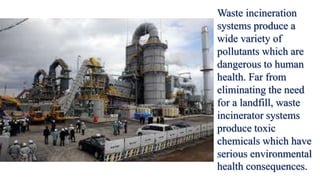
Waste incineration
systems produce a
wide variety of
pollutants which are
dangerous to human
health. Far from
eliminating the need
for a landfill, waste
incinerator systems
produce toxic
chemicals which have
serious environmental
health consequences.
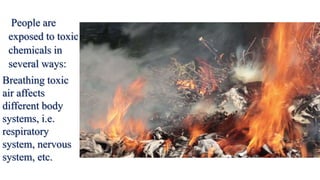
People are
exposed to toxic
chemicals in
several ways:
Breathing toxic
air affects
different body
systems, i.e.
respiratory
system, nervous
system, etc.
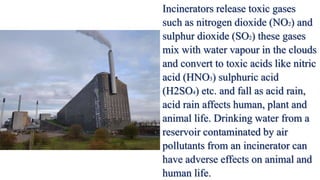
Incinerators release toxic gases
such as nitrogen dioxide (NO2) and
sulphur dioxide (SO2) these gases
mix with water vapour in the clouds
and convert to toxic acids like nitric
acid (HNO3) sulphuric acid
(H2SO4) etc. and fall as acid rain,
acid rain affects human, plant and
animal life. Drinking water from a
reservoir contaminated by air
pollutants from an incinerator can
have adverse effects on animal and
human life.
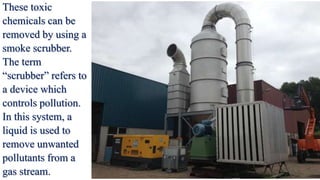
These toxic
chemicals can be
removed by using a
smoke scrubber.
The term
“scrubber” refers to
a device which
controls pollution.
In this system, a
liquid is used to
remove unwanted
pollutants from a
gas stream.
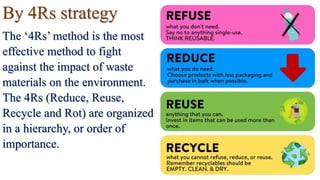
By 4Rs strategy
The ‘4Rs’ method is the most
effective method to fight
against the impact of waste
materials on the environment.
The 4Rs (Reduce, Reuse,
Recycle and Rot) are organized
in a hierarchy, or order of
importance.
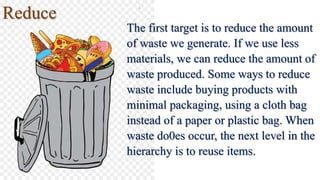
Reduce
The first target is to reduce the amount
of waste we generate. If we use less
materials, we can reduce the amount of
waste produced. Some ways to reduce
waste include buying products with
minimal packaging, using a cloth bag
instead of a paper or plastic bag. When
waste do0es occur, the next level in the
hierarchy is to reuse items.
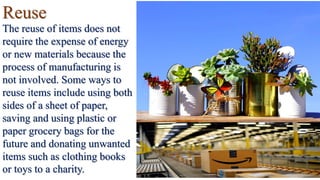
Reuse
The reuse of items does not
require the expense of energy
or new materials because the
process of manufacturing is
not involved. Some ways to
reuse items include using both
sides of a sheet of paper,
saving and using plastic or
paper grocery bags for the
future and donating unwanted
items such as clothing books
or toys to a charity.
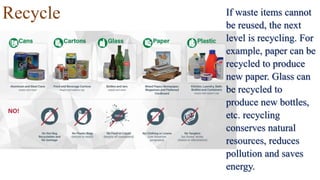
Recycle If waste items cannot
be reused, the next
level is recycling. For
example, paper can be
recycled to produce
new paper. Glass can
be recycled to
produce new bottles,
etc. recycling
conserves natural
resources, reduces
pollution and saves
energy.
Rot
Organic materials
(originally living
plants or animals)
that cannot be reused
or recycled can be
decomposed (rot) to
produce compost, a
rich soil material that
increases soil
productiveness and
helps plants grow.

Chapter fighting pollution

  • 2.
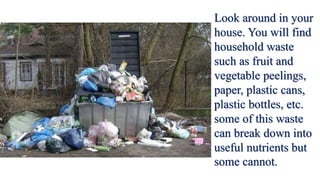
    Look around inyour house. You will find household waste such as fruit and vegetable peelings, paper, plastic cans, plastic bottles, etc. some of this waste can break down into useful nutrients but some cannot.
  • 3.
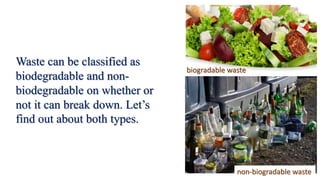
    biogradable waste non-biogradable waste Wastecan be classified as biodegradable and non- biodegradable on whether or not it can break down. Let’s find out about both types.
  • 4.
    Biodegradable materials: Things thatcan be easily decomposed by natural agents like water, oxygen, ultraviolet rays of the Sun, microorganisms, etc. are called biodegradable.
  • 5.
    For example, whena banana peel is thrown outside, several microorganisms act upon it. Natural elements such as oxygen, water and heat also aid in its decomposition and break it into smaller units. It finally returns back to the soil and nourishes it with nutrients and minerals.
  • 6.
    Biodegradable substances include foodwaste like vegetable and fruit peels, dead plants and animals, eggshells, paper materials, garden waste, etc.
  • 7.
    Non-biodegradable materials: Not every materialis biodegradable. Materials which cannot be decomposed are known as non- biodegradable materials. They stay in the soil for a long time and do not rot easily.
  • 8.
    This waste isproduced by humans to fulfil their needs. Things made of metals, glass, plastic, ceramics, foam, etc. are examples of non- biodegradable materials.
  • 9.
    Impact of non-biodegradablematerials on the environment:
  • 10.
    Non- biodegradable products when thrown awaynot only cause problems for plants, but for animals as well.
  • 11.
    These materials, whennot disposed of properly, pollute land and stay in the soil for a very long time, thus affecting the growth of plants. Being producers, plants start a food chain. So, non-biodegradable materials eventually affect a food chain.
  • 12.
    Plastic bags addtons of carbon dioxide (CO2) to the air annually, which causes air pollution and a rise in temperature. These plastic materials cause death of marine species when eaten mistakenly by them. Birds and animals can also choke on plastic bags.
  • 13.
    Toxic chemicals fromthese materials can leach into water bodies, which can poison water.
  • 14.
    Ways to reducethe impact of non-biodegradable materials: Non-biodegradable materials cannot be banned completely because they are produced to meet human needs, but their effects on the environment can be controlled by taking the following steps:
  • 15.
    By incineration Garbageis burned in a big furnace called an incinerator or waste incinerator. This method helps to reduce waste but the smoke coming out of an incinerator pollutes the air.
  • 16.
    Waste incineration systems producea wide variety of pollutants which are dangerous to human health. Far from eliminating the need for a landfill, waste incinerator systems produce toxic chemicals which have serious environmental health consequences.
  • 17.
    People are exposed totoxic chemicals in several ways: Breathing toxic air affects different body systems, i.e. respiratory system, nervous system, etc.
  • 18.
    Incinerators release toxicgases such as nitrogen dioxide (NO2) and sulphur dioxide (SO2) these gases mix with water vapour in the clouds and convert to toxic acids like nitric acid (HNO3) sulphuric acid (H2SO4) etc. and fall as acid rain, acid rain affects human, plant and animal life. Drinking water from a reservoir contaminated by air pollutants from an incinerator can have adverse effects on animal and human life.
  • 19.
    These toxic chemicals canbe removed by using a smoke scrubber. The term “scrubber” refers to a device which controls pollution. In this system, a liquid is used to remove unwanted pollutants from a gas stream.
  • 20.
    By 4Rs strategy The‘4Rs’ method is the most effective method to fight against the impact of waste materials on the environment. The 4Rs (Reduce, Reuse, Recycle and Rot) are organized in a hierarchy, or order of importance.
  • 21.
    Reduce The first targetis to reduce the amount of waste we generate. If we use less materials, we can reduce the amount of waste produced. Some ways to reduce waste include buying products with minimal packaging, using a cloth bag instead of a paper or plastic bag. When waste do0es occur, the next level in the hierarchy is to reuse items.
  • 22.
    Reuse The reuse ofitems does not require the expense of energy or new materials because the process of manufacturing is not involved. Some ways to reuse items include using both sides of a sheet of paper, saving and using plastic or paper grocery bags for the future and donating unwanted items such as clothing books or toys to a charity.
  • 23.
    Recycle If wasteitems cannot be reused, the next level is recycling. For example, paper can be recycled to produce new paper. Glass can be recycled to produce new bottles, etc. recycling conserves natural resources, reduces pollution and saves energy.
  • 24.
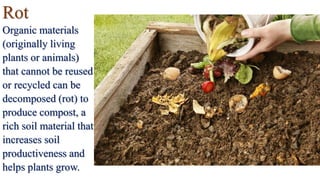
    Rot Organic materials (originally living plantsor animals) that cannot be reused or recycled can be decomposed (rot) to produce compost, a rich soil material that increases soil productiveness and helps plants grow.