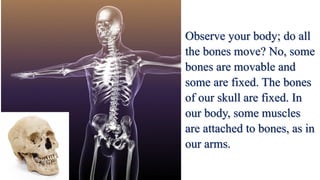
Observe your body; do all
the bones move? No, some
bones are movable and
some are fixed. The bones
of our skull are fixed. In
our body, some muscles
are attached to bones, as in
our arms.
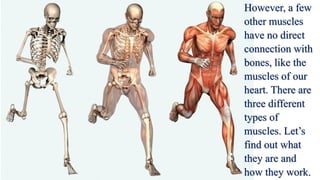
However, a few
other muscles
have no direct
connection with
bones, like the
muscles of our
heart. There are
three different
types of
muscles. Let’s
find out what
they are and
how they work.
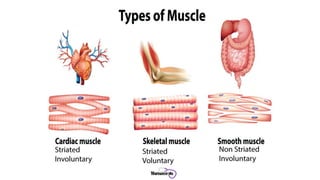
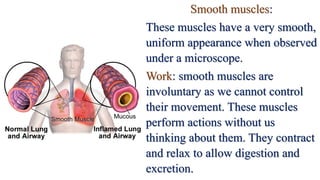
Smooth muscles:
These muscles have a very smooth,
uniform appearance when observed
under a microscope.
Work: smooth muscles are
involuntary as we cannot control
their movement. These muscles
perform actions without us
thinking about them. They contract
and relax to allow digestion and
excretion.
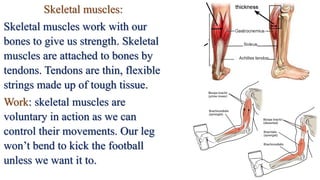
Skeletal muscles:
Skeletal muscles work with our
bones to give us strength. Skeletal
muscles are attached to bones by
tendons. Tendons are thin, flexible
strings made up of tough tissue.
Work: skeletal muscles are
voluntary in action as we can
control their movements. Our leg
won’t bend to kick the football
unless we want it to.
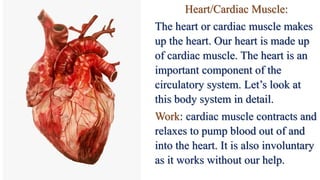
Heart/Cardiac Muscle:
The heart or cardiac muscle makes
up the heart. Our heart is made up
of cardiac muscle. The heart is an
important component of the
circulatory system. Let’s look at
this body system in detail.
Work: cardiac muscle contracts and
relaxes to pump blood out of and
into the heart. It is also involuntary
as it works without our help.
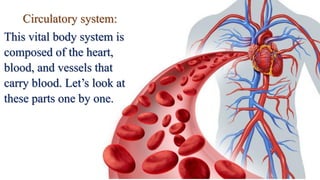
Circulatory system:
This vital body system is
composed of the heart,
blood, and vessels that
carry blood. Let’s look at
these parts one by one.
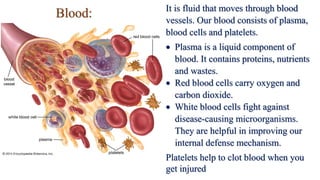
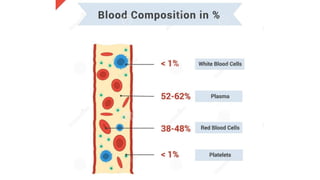
It is fluid that moves through blood
vessels. Our blood consists of plasma,
blood cells and platelets.
 Plasma is a liquid component of
blood. It contains proteins, nutrients
and wastes.
 Red blood cells carry oxygen and
carbon dioxide.
 White blood cells fight against
disease-causing microorganisms.
They are helpful in improving our
internal defense mechanism.
Platelets help to clot blood when you
get injured
Blood:
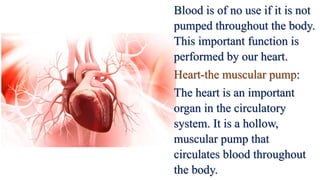
Blood is of no use if it is not
pumped throughout the body.
This important function is
performed by our heart.
Heart-the muscular pump:
The heart is an important
organ in the circulatory
system. It is a hollow,
muscular pump that
circulates blood throughout
the body.
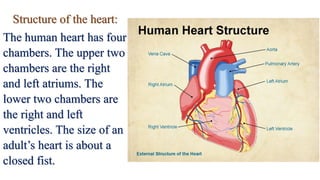
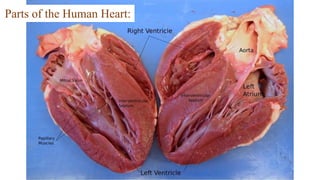
Structure of the heart:
The human heart has four
chambers. The upper two
chambers are the right
and left atriums. The
lower two chambers are
the right and left
ventricles. The size of an
adult’s heart is about a
closed fist.
Parts of the Human Heart:
Dual circulatory system:
Our heart performs two
circulations: one from the heart
to the lungs and the other from
the heart to all other body parts.
Circulation of deoxygenated blood:
1.Deoxygenated blood from the body
enters the heart through the right atrium.
2.It is then pumped into the right
ventricle. There is a valve present
between the right atrium and the right
ventricle. It is known as tricuspid valve,
as it has 3 flaps. The function of the
heart’s valves is to control the flow of
blood.
3.The right ventricle contracts and blood
is pumped into the lungs to take oxygen.
Circulation of oxygenated blood:
1.After getting oxygenated, blood
enters the left atrium.
2.The left atrium pumps this blood
into the left ventricle. The valve
present between the left atrium
and left ventricle is called
biscuspid or mitral valve, as it has
2 flaps.
3.The left ventricle pumps blood to
the aorta and to the rest of the
body.
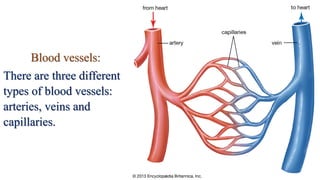
Blood vessels:
There are three different
types of blood vessels:
arteries, veins and
capillaries.
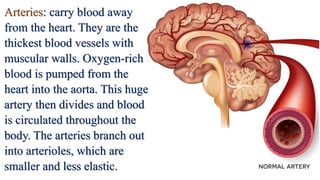
Arteries: carry blood away
from the heart. They are the
thickest blood vessels with
muscular walls. Oxygen-rich
blood is pumped from the
heart into the aorta. This huge
artery then divides and blood
is circulated throughout the
body. The arteries branch out
into arterioles, which are
smaller and less elastic.
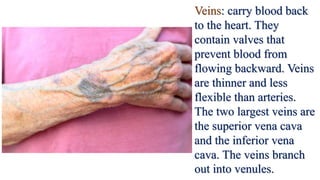
Veins: carry blood back
to the heart. They
contain valves that
prevent blood from
flowing backward. Veins
are thinner and less
flexible than arteries.
The two largest veins are
the superior vena cava
and the inferior vena
cava. The veins branch
out into venules.
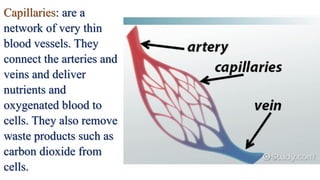
Capillaries: are a
network of very thin
blood vessels. They
connect the arteries and
veins and deliver
nutrients and
oxygenated blood to
cells. They also remove
waste products such as
carbon dioxide from
cells.
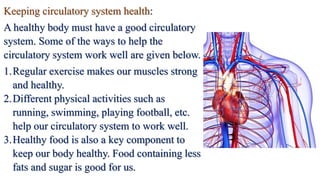
Keeping circulatory system health:
A healthy body must have a good circulatory
system. Some of the ways to help the
circulatory system work well are given below.
1.Regular exercise makes our muscles strong
and healthy.
2.Different physical activities such as
running, swimming, playing football, etc.
help our circulatory system to work well.
3.Healthy food is also a key component to
keep our body healthy. Food containing less
fats and sugar is good for us.

Circulatory system chapter class four science

  • 2.
    Observe your body;do all the bones move? No, some bones are movable and some are fixed. The bones of our skull are fixed. In our body, some muscles are attached to bones, as in our arms.
  • 3.
    However, a few othermuscles have no direct connection with bones, like the muscles of our heart. There are three different types of muscles. Let’s find out what they are and how they work.
  • 5.
    Smooth muscles: These muscleshave a very smooth, uniform appearance when observed under a microscope. Work: smooth muscles are involuntary as we cannot control their movement. These muscles perform actions without us thinking about them. They contract and relax to allow digestion and excretion.
  • 6.
    Skeletal muscles: Skeletal muscleswork with our bones to give us strength. Skeletal muscles are attached to bones by tendons. Tendons are thin, flexible strings made up of tough tissue. Work: skeletal muscles are voluntary in action as we can control their movements. Our leg won’t bend to kick the football unless we want it to.
  • 7.
    Heart/Cardiac Muscle: The heartor cardiac muscle makes up the heart. Our heart is made up of cardiac muscle. The heart is an important component of the circulatory system. Let’s look at this body system in detail. Work: cardiac muscle contracts and relaxes to pump blood out of and into the heart. It is also involuntary as it works without our help.
  • 8.
    Circulatory system: This vitalbody system is composed of the heart, blood, and vessels that carry blood. Let’s look at these parts one by one.
  • 9.
    It is fluidthat moves through blood vessels. Our blood consists of plasma, blood cells and platelets.  Plasma is a liquid component of blood. It contains proteins, nutrients and wastes.  Red blood cells carry oxygen and carbon dioxide.  White blood cells fight against disease-causing microorganisms. They are helpful in improving our internal defense mechanism. Platelets help to clot blood when you get injured Blood:
  • 11.
    Blood is ofno use if it is not pumped throughout the body. This important function is performed by our heart. Heart-the muscular pump: The heart is an important organ in the circulatory system. It is a hollow, muscular pump that circulates blood throughout the body.
  • 12.
    Structure of theheart: The human heart has four chambers. The upper two chambers are the right and left atriums. The lower two chambers are the right and left ventricles. The size of an adult’s heart is about a closed fist.
  • 13.
    Parts of theHuman Heart:
  • 14.
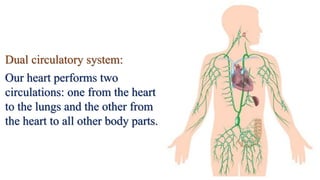
    Dual circulatory system: Ourheart performs two circulations: one from the heart to the lungs and the other from the heart to all other body parts.
  • 15.
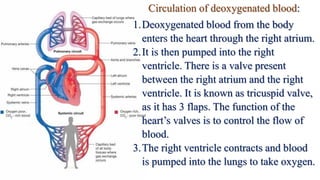
    Circulation of deoxygenatedblood: 1.Deoxygenated blood from the body enters the heart through the right atrium. 2.It is then pumped into the right ventricle. There is a valve present between the right atrium and the right ventricle. It is known as tricuspid valve, as it has 3 flaps. The function of the heart’s valves is to control the flow of blood. 3.The right ventricle contracts and blood is pumped into the lungs to take oxygen.
  • 16.
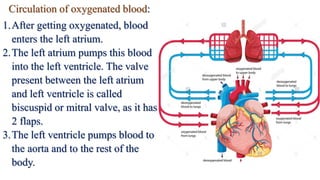
    Circulation of oxygenatedblood: 1.After getting oxygenated, blood enters the left atrium. 2.The left atrium pumps this blood into the left ventricle. The valve present between the left atrium and left ventricle is called biscuspid or mitral valve, as it has 2 flaps. 3.The left ventricle pumps blood to the aorta and to the rest of the body.
  • 17.
    Blood vessels: There arethree different types of blood vessels: arteries, veins and capillaries.
  • 18.
    Arteries: carry bloodaway from the heart. They are the thickest blood vessels with muscular walls. Oxygen-rich blood is pumped from the heart into the aorta. This huge artery then divides and blood is circulated throughout the body. The arteries branch out into arterioles, which are smaller and less elastic.
  • 19.
    Veins: carry bloodback to the heart. They contain valves that prevent blood from flowing backward. Veins are thinner and less flexible than arteries. The two largest veins are the superior vena cava and the inferior vena cava. The veins branch out into venules.
  • 20.
    Capillaries: are a networkof very thin blood vessels. They connect the arteries and veins and deliver nutrients and oxygenated blood to cells. They also remove waste products such as carbon dioxide from cells.
  • 21.
    Keeping circulatory systemhealth: A healthy body must have a good circulatory system. Some of the ways to help the circulatory system work well are given below. 1.Regular exercise makes our muscles strong and healthy. 2.Different physical activities such as running, swimming, playing football, etc. help our circulatory system to work well. 3.Healthy food is also a key component to keep our body healthy. Food containing less fats and sugar is good for us.