This Powerpoint is a compilation of
presentations found on the Internet.
Unfortunately, the authors did not include
their names on their work.
Classification of Living Things
What is classification?
Classification is the grouping of
living organisms according to
similar structures and functions.
Early classification systems
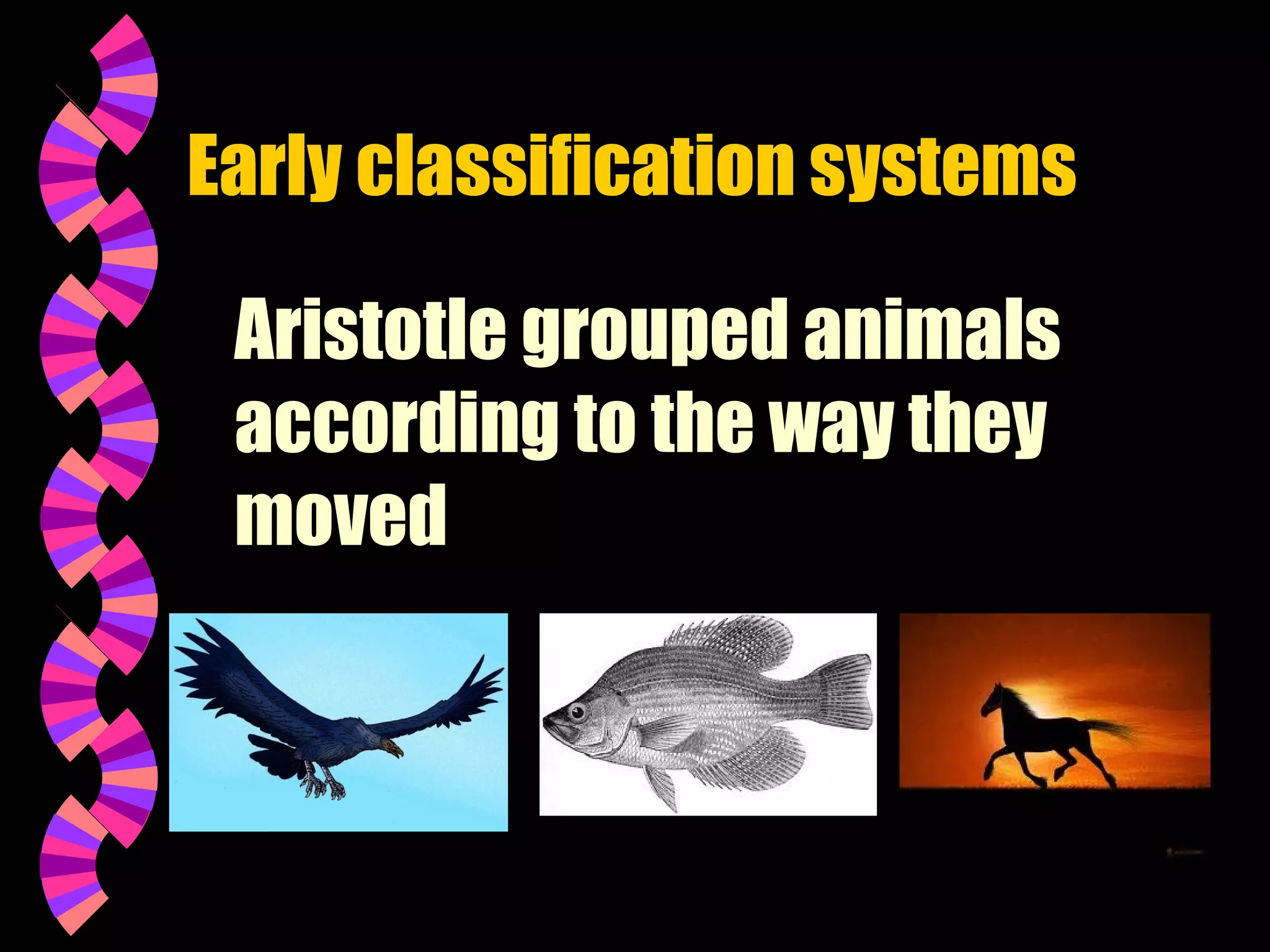
Aristotle grouped animals
according to the way they
moved
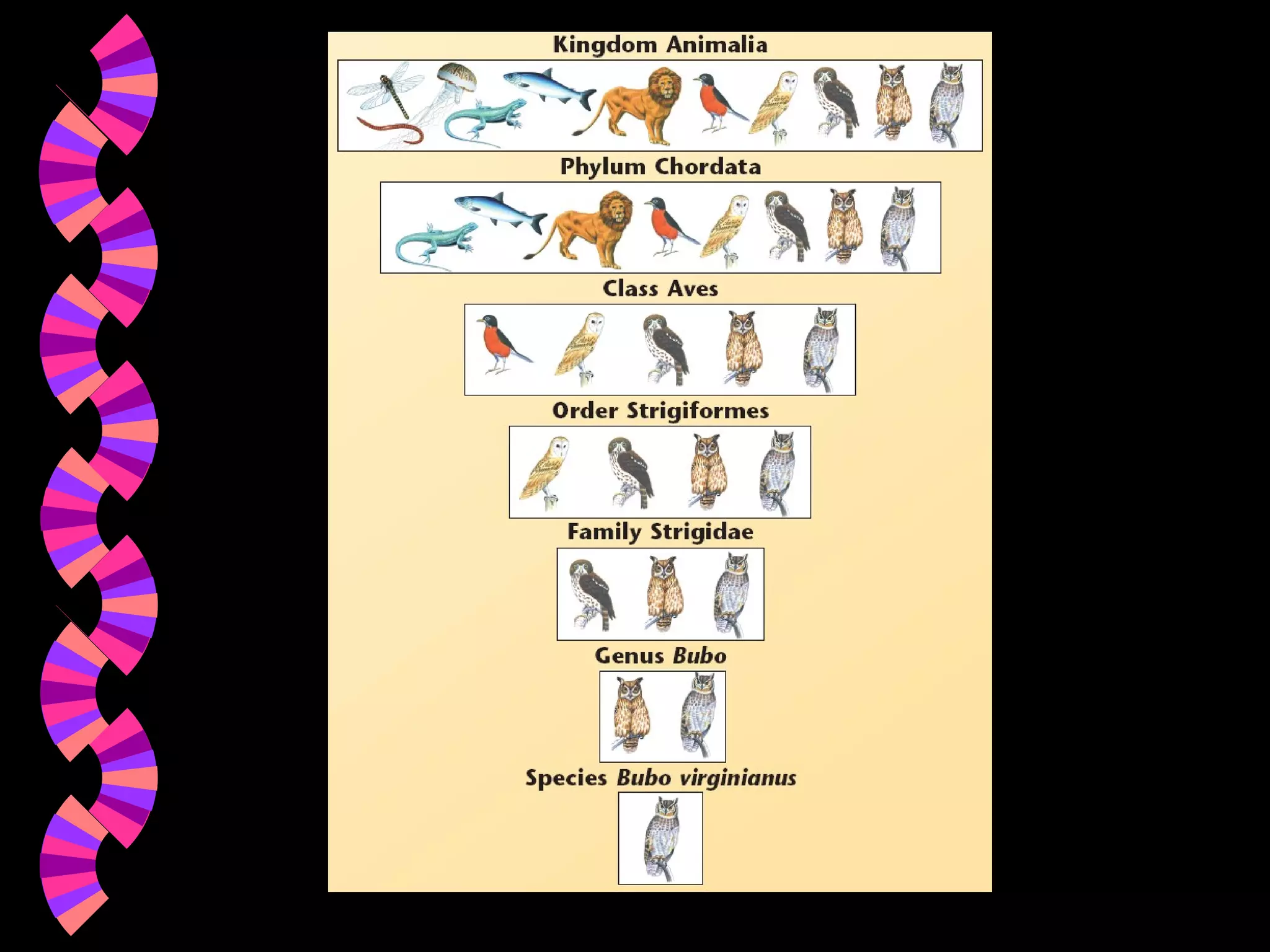
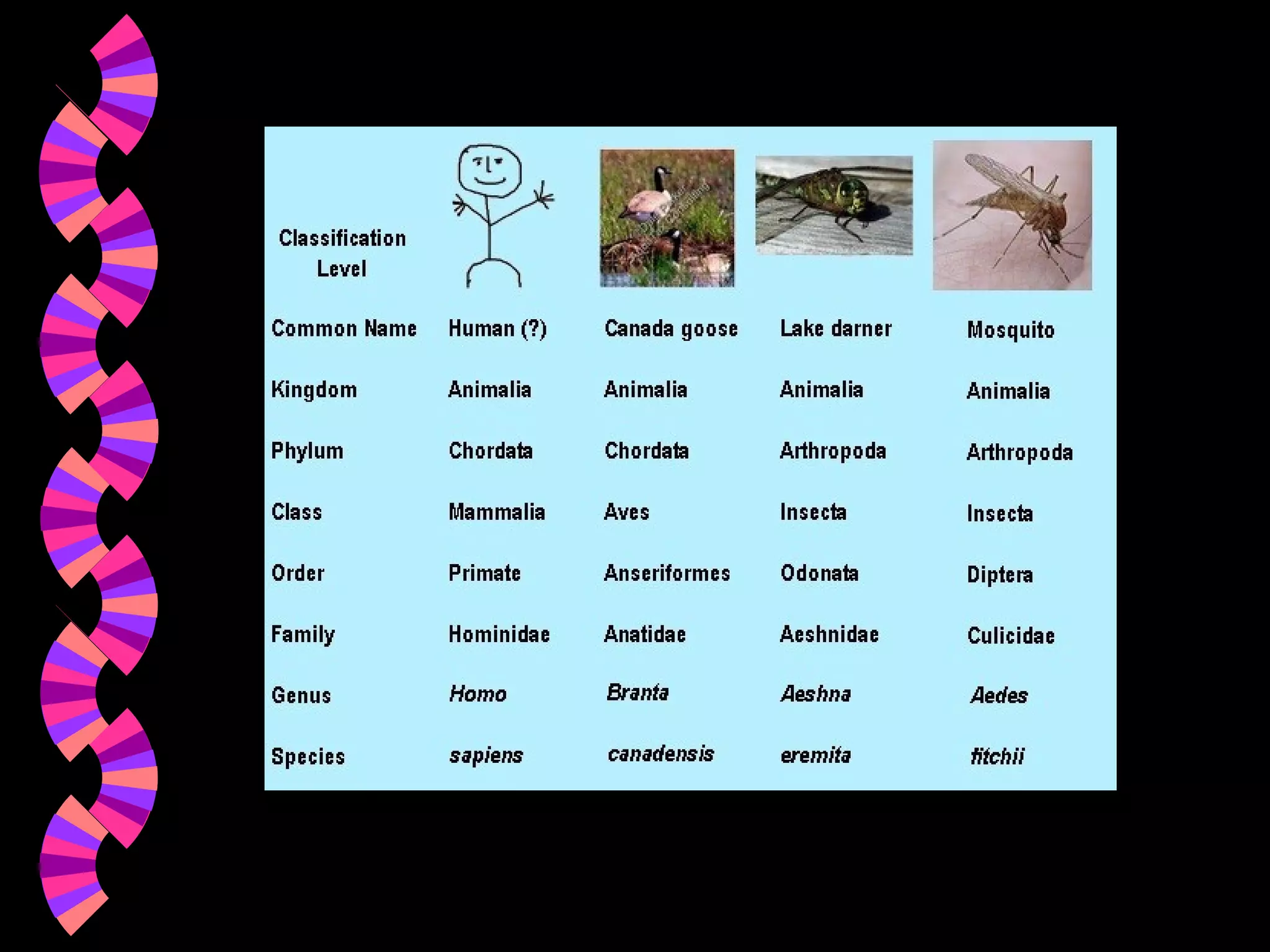
The modern classification
system :
Developed by Carolus Linnaeus
Consists of 7 levels:
Kingdom
Family
Phylum
Genus
Class
Species
Order
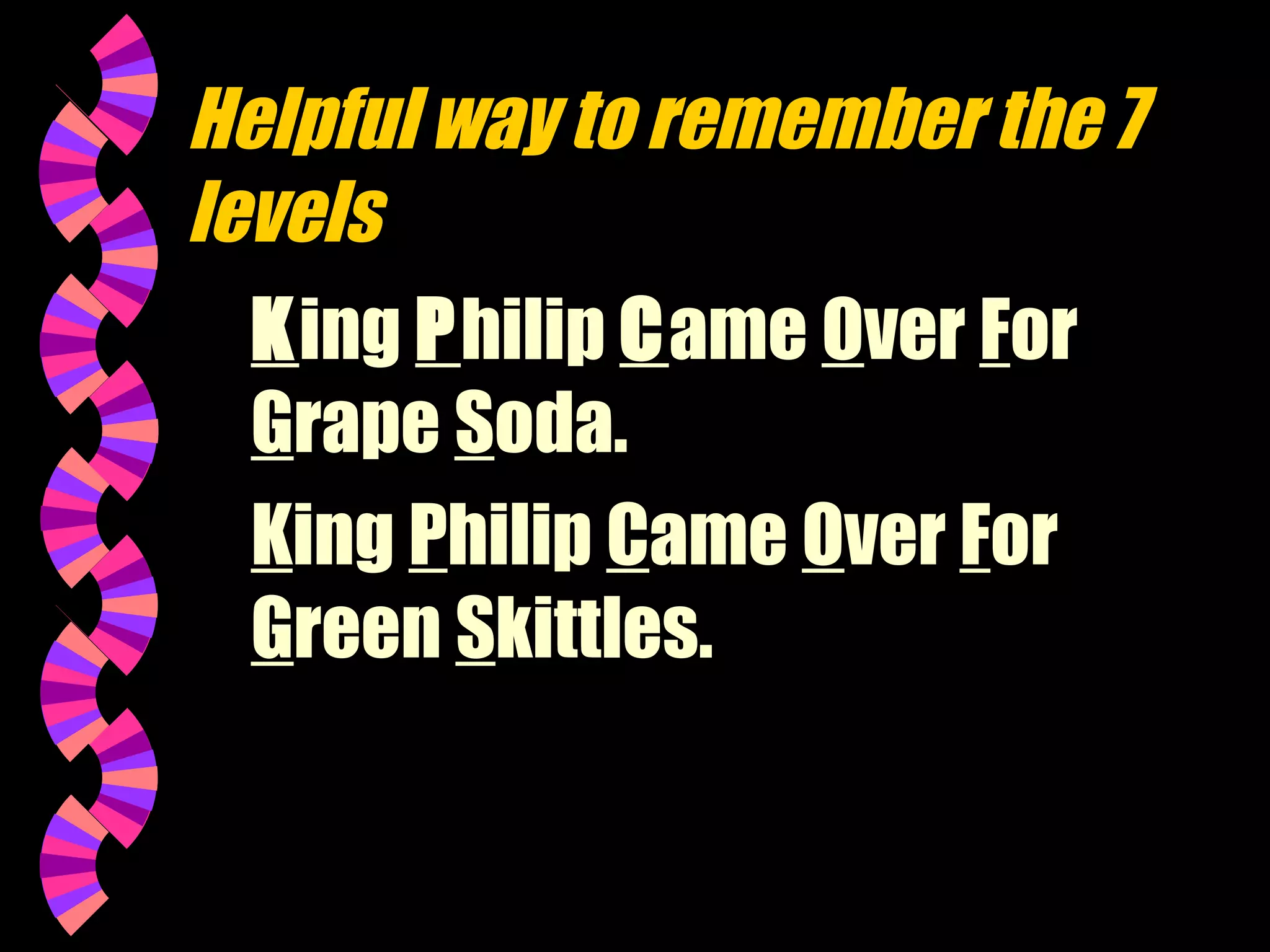
Helpful way to remember the 7
levels
King Philip Came Over For
Grape Soda.
King Philip Came Over For
Green Skittles.
Binomial Nomenclature
Developed by Carolus Linnaeus
Two-name system:
• First name is the organism’s
genus
• Second name is the organism’s
species
What rules are used to write
scientific names?
The first letter of the genus is ALWAYS
capitalized
The first letter of the species is NEVER
capitalized
Scientific names of organisms are
always italicized or underlined
Using the Classification System
Field guides help identify organisms.
-they highlight differences between similar
organisms (like trees)
Taxonomic Key (Dichotomous Key)
-paired statements that describe the
physical characteristics of different
organisms
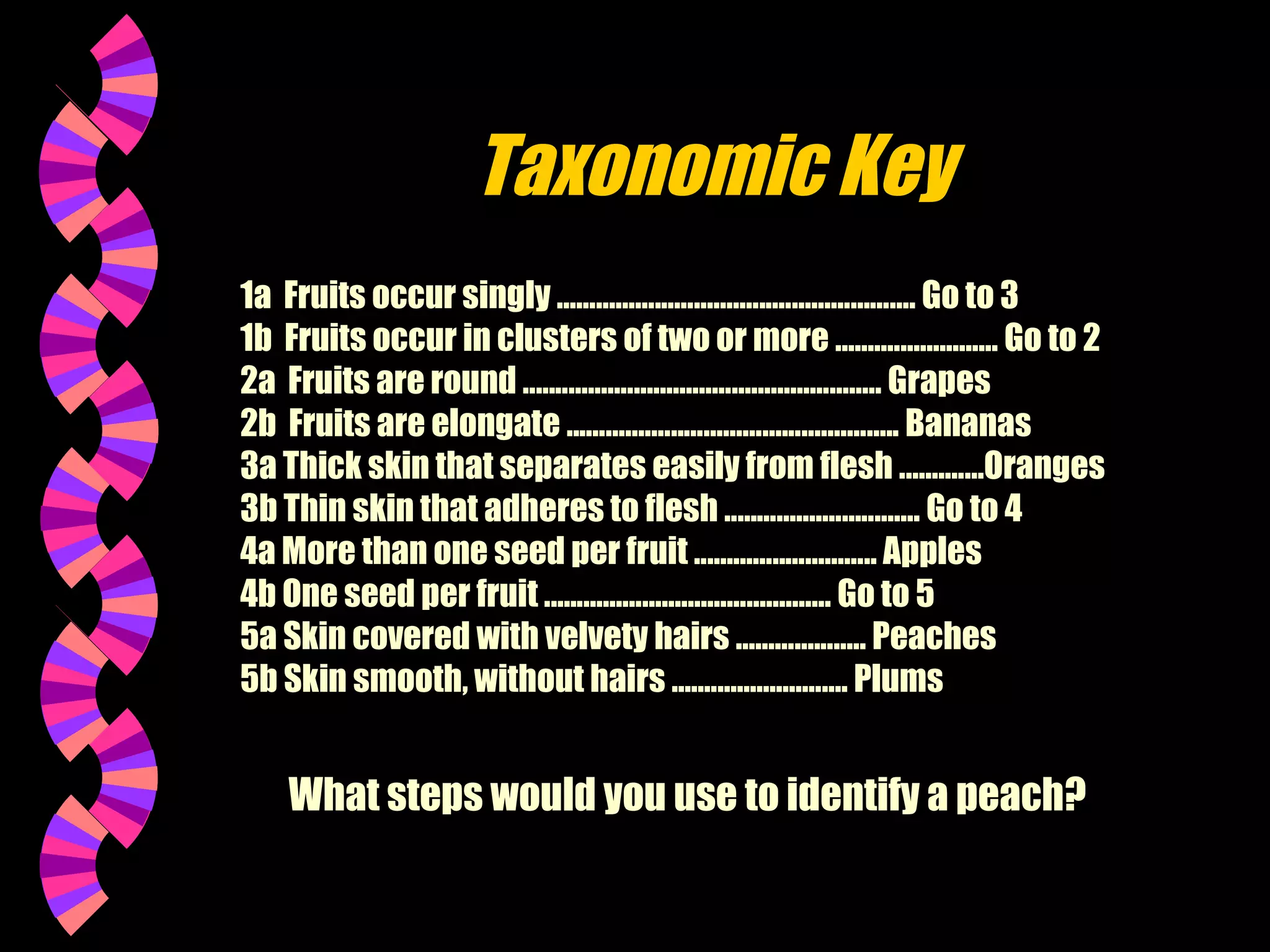
Taxonomic Key
1a Fruits occur singly ....................................................... Go to 3
1b Fruits occur in clusters of two or more ......................... Go to 2
2a Fruits are round ....................................................... Grapes
2b Fruits are elongate ................................................... Bananas
3a Thick skin that separates easily from flesh .............Oranges
3b Thin skin that adheres to flesh .............................. Go to 4
4a More than one seed per fruit ............................ Apples
4b One seed per fruit ............................................ Go to 5
5a Skin covered with velvety hairs .................... Peaches
5b Skin smooth, without hairs ........................... Plums

What steps would you use to identify a peach?

Classification

  • 1.
    This Powerpoint isa compilation of presentations found on the Internet. Unfortunately, the authors did not include their names on their work.
  • 2.
  • 3.
    What is classification? Classificationis the grouping of living organisms according to similar structures and functions.
  • 4.
    Early classification systems Aristotlegrouped animals according to the way they moved
  • 5.
    The modern classification system: Developed by Carolus Linnaeus Consists of 7 levels: Kingdom Family Phylum Genus Class Species Order
  • 8.
    Helpful way toremember the 7 levels King Philip Came Over For Grape Soda. King Philip Came Over For Green Skittles.
  • 9.
    Binomial Nomenclature Developed byCarolus Linnaeus Two-name system: • First name is the organism’s genus • Second name is the organism’s species
  • 10.
    What rules areused to write scientific names? The first letter of the genus is ALWAYS capitalized The first letter of the species is NEVER capitalized Scientific names of organisms are always italicized or underlined
  • 11.
    Using the ClassificationSystem Field guides help identify organisms. -they highlight differences between similar organisms (like trees) Taxonomic Key (Dichotomous Key) -paired statements that describe the physical characteristics of different organisms
  • 12.
    Taxonomic Key 1a Fruitsoccur singly ....................................................... Go to 3 1b Fruits occur in clusters of two or more ......................... Go to 2 2a Fruits are round ....................................................... Grapes 2b Fruits are elongate ................................................... Bananas 3a Thick skin that separates easily from flesh .............Oranges 3b Thin skin that adheres to flesh .............................. Go to 4 4a More than one seed per fruit ............................ Apples 4b One seed per fruit ............................................ Go to 5 5a Skin covered with velvety hairs .................... Peaches 5b Skin smooth, without hairs ........................... Plums What steps would you use to identify a peach?