WATER
One of the most valuable resources for mankind
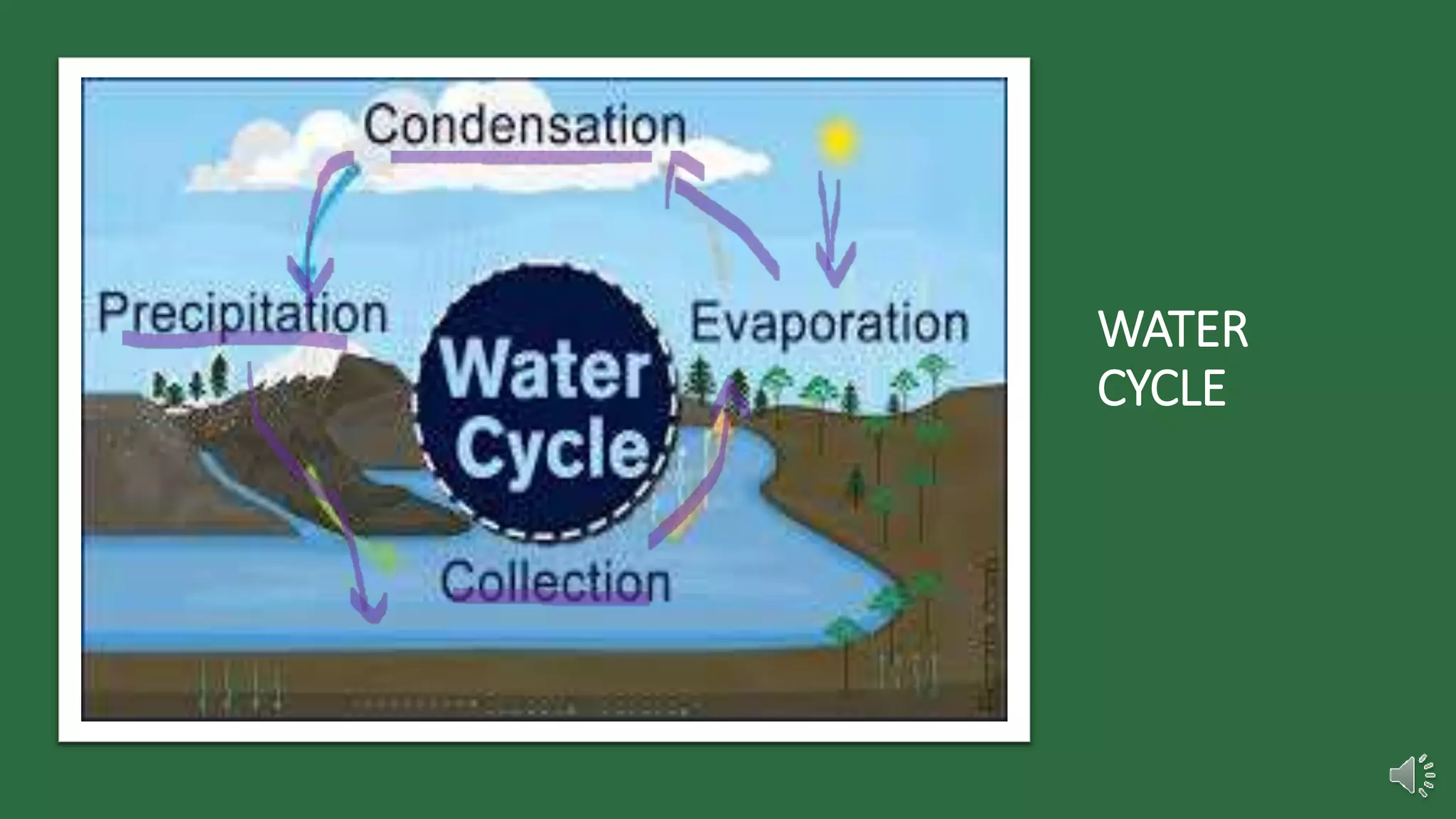
WATER
CYCLE
Water cycle
• Water cycle is the process by which water continually
changes its form and circulates between oceans,
atmosphere and land.
• The water flows down to steams or drains.
• The sun's heat causes evaporation of water into water
vapor.
• When the water vapor cools down, it condenses and forms
clouds.
• From the clouds it falls on the land or sea in the form of
rain, snow or sleet, hailstones etc.
• It is also known as hydrological cycle.
HYDROSPHERE
The hydrosphere is the
combined mass of water found
on, under, and above the surface
of a planet, minor
planet or natural satellite.
Although Earth's hydrosphere has
been around for about 4 billion
years, it continues to change in
shape. This is caused by seafloor
spreading and continental drift ,
which rearranges the land and
ocean
HYDROSPHERE
COMPRISES OF
:
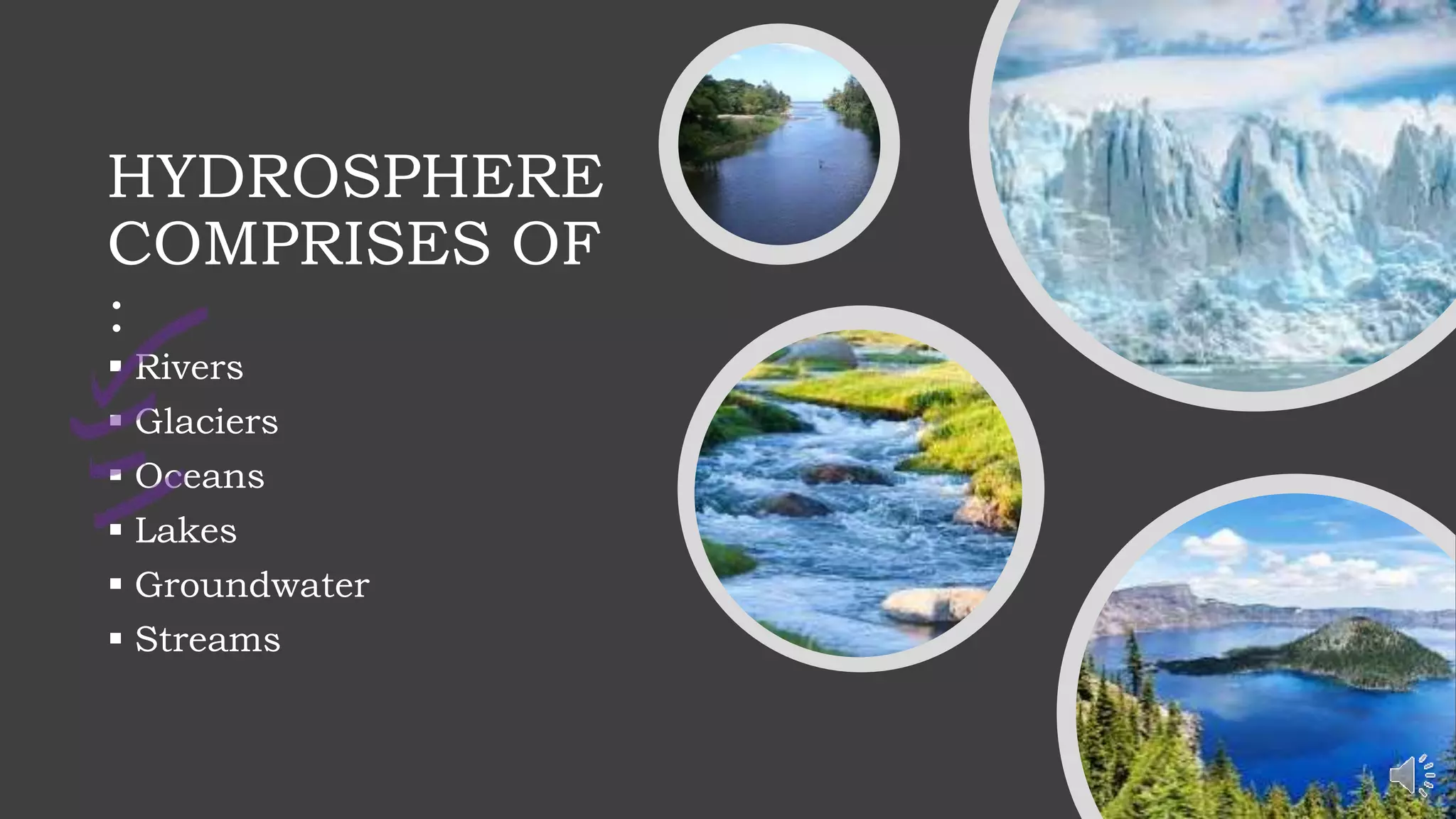
 Rivers
 Glaciers
 Oceans
 Lakes
 Groundwater
 Streams
Water can
be of :
Solid state
Liquid state
Gaseous state
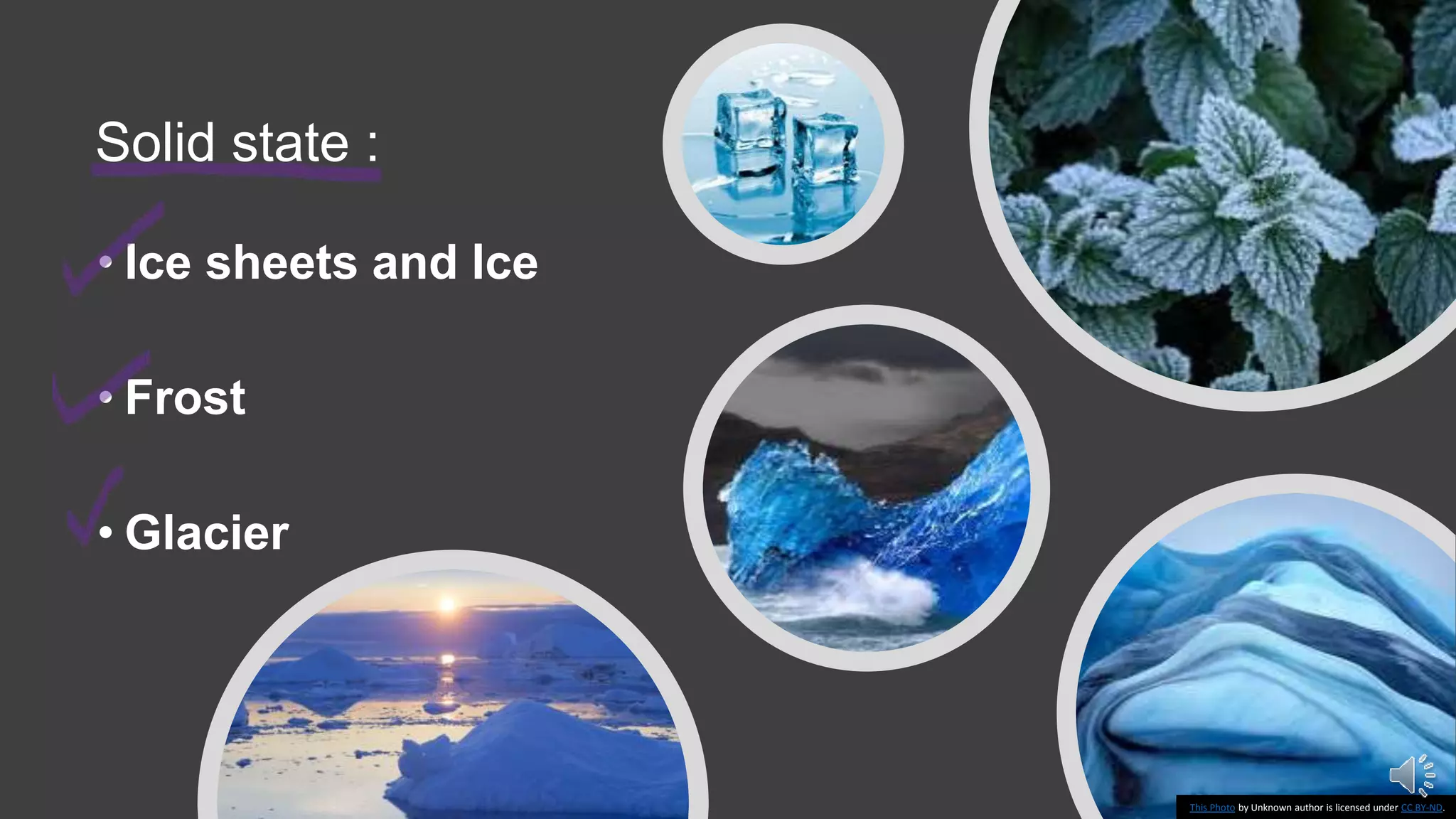
Solid state :
• Ice sheets and Ice
• Frost
• Glacier
This Photo by Unknown author is licensed under CC BY-ND.
Ice sheets are
found in :
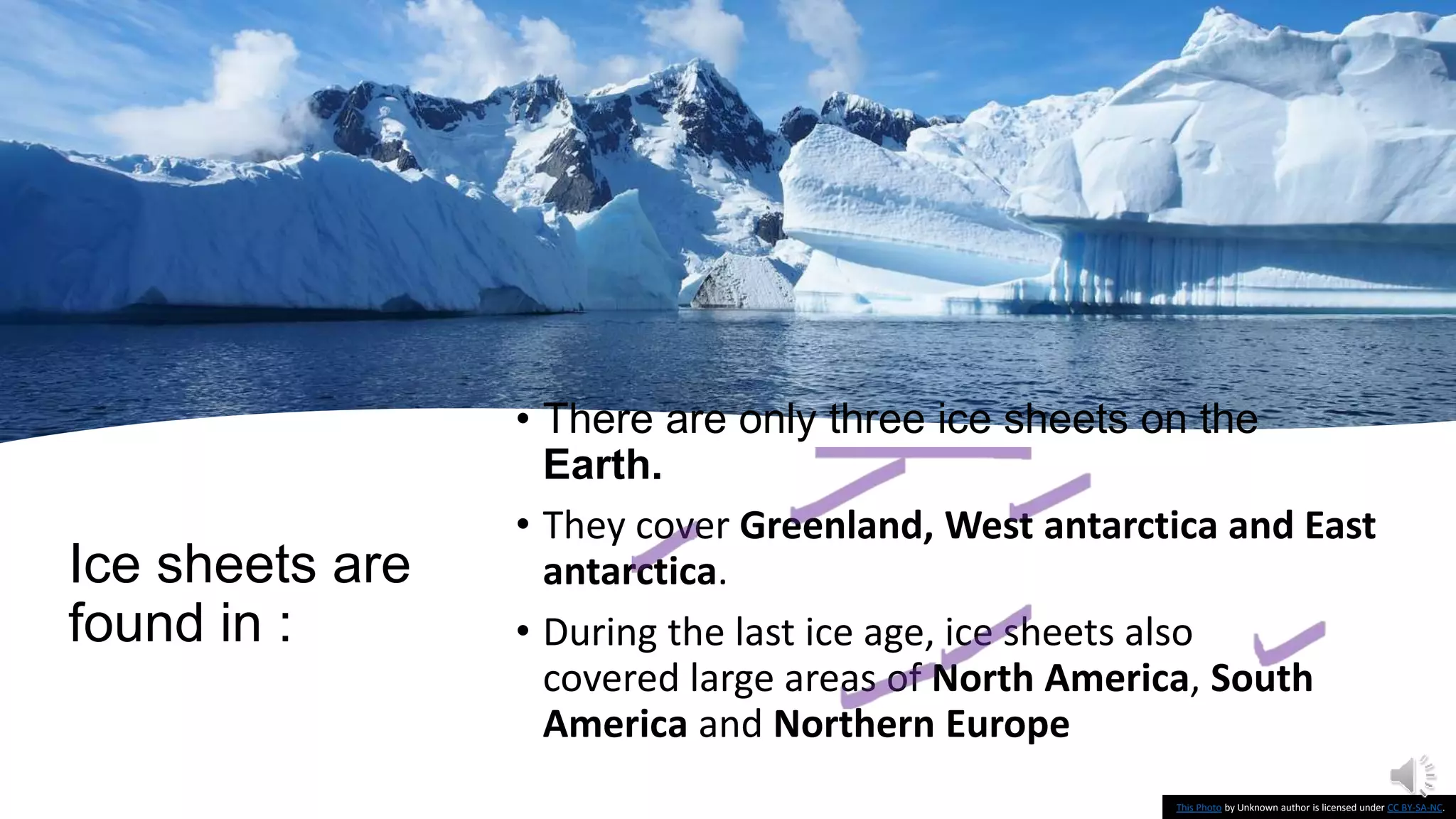
• There are only three ice sheets on the
Earth.
• They cover Greenland, West antarctica and East
antarctica.
• During the last ice age, ice sheets also
covered large areas of North America, South
America and Northern Europe
This Photo by Unknown author is licensed under CC BY-SA-NC.
Frost is found in :
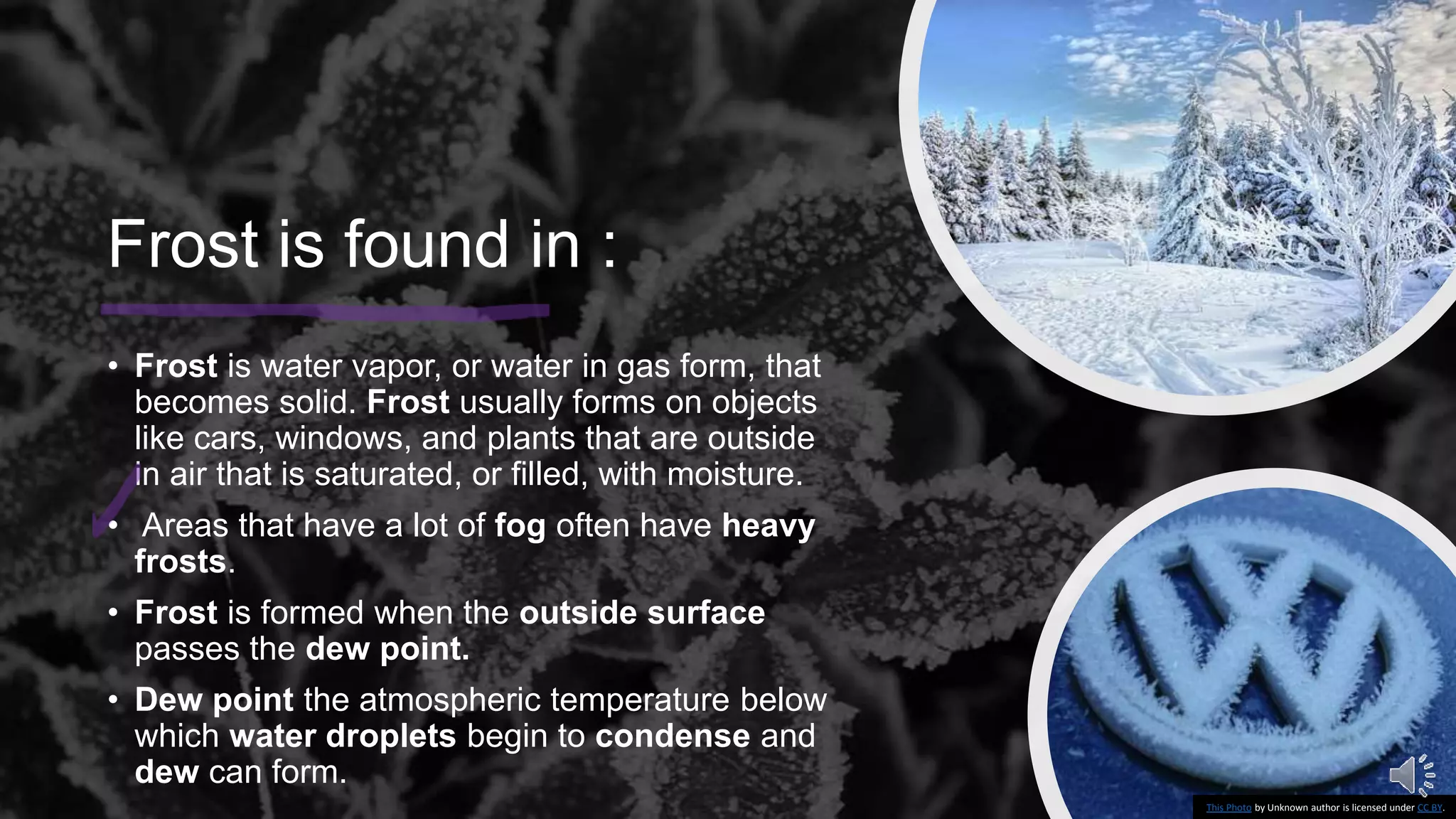
• Frost is water vapor, or water in gas form, that
becomes solid. Frost usually forms on objects
like cars, windows, and plants that are outside
in air that is saturated, or filled, with moisture.
• Areas that have a lot of fog often have heavy
frosts.
• Frost is formed when the outside surface
passes the dew point.
• Dew point the atmospheric temperature below
which water droplets begin to condense and
dew can form.
This Photo by Unknown author is licensed under CC BY.
Glacier is found in :
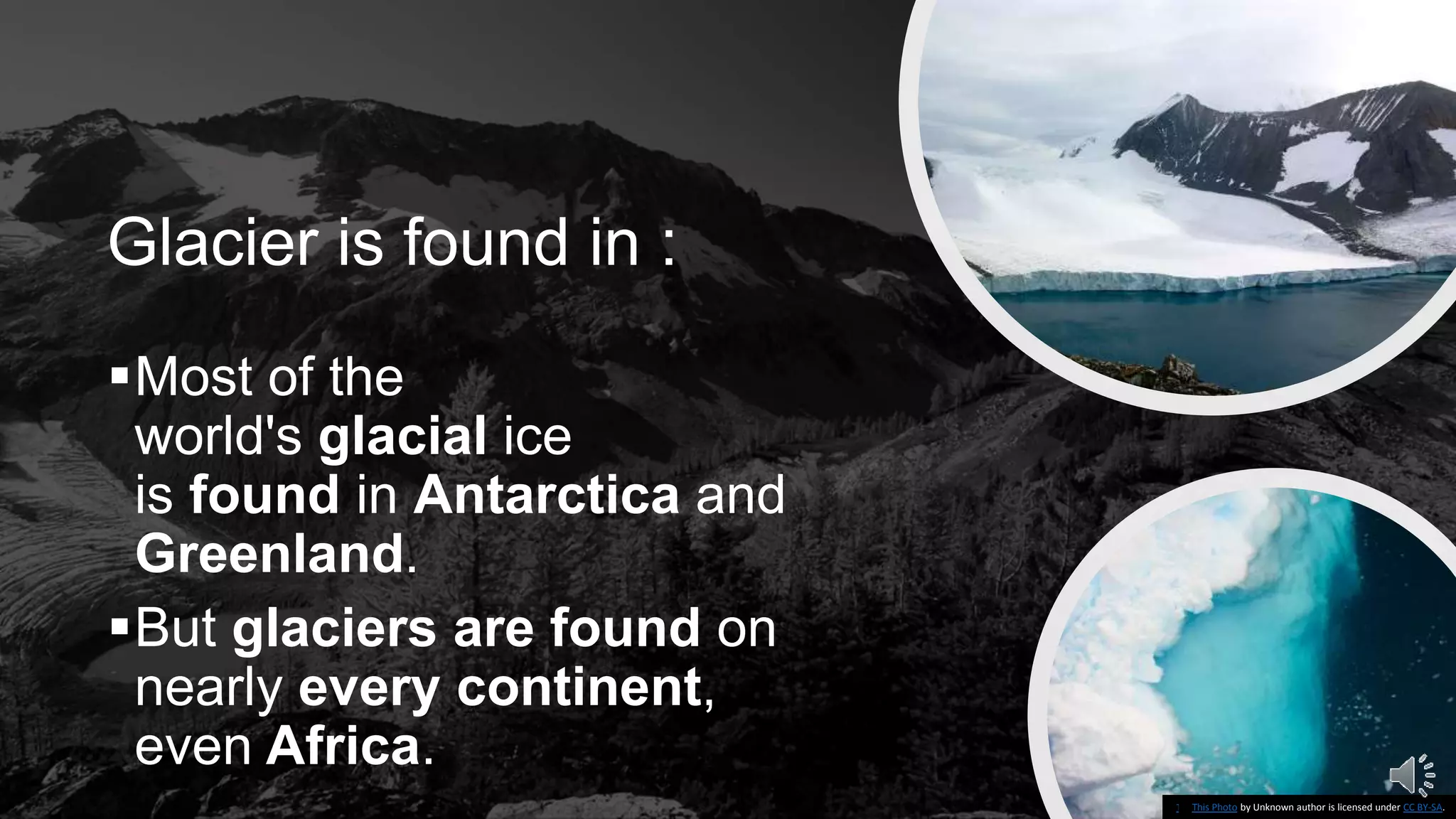
Most of the
world's glacial ice
is found in Antarctica and
Greenland.
But glaciers are found on
nearly every continent,
even Africa.
This Photo by Unknown author is licensed under CC BY-SA-NC.This Photo by Unknown author is licensed under CC BY-SA.
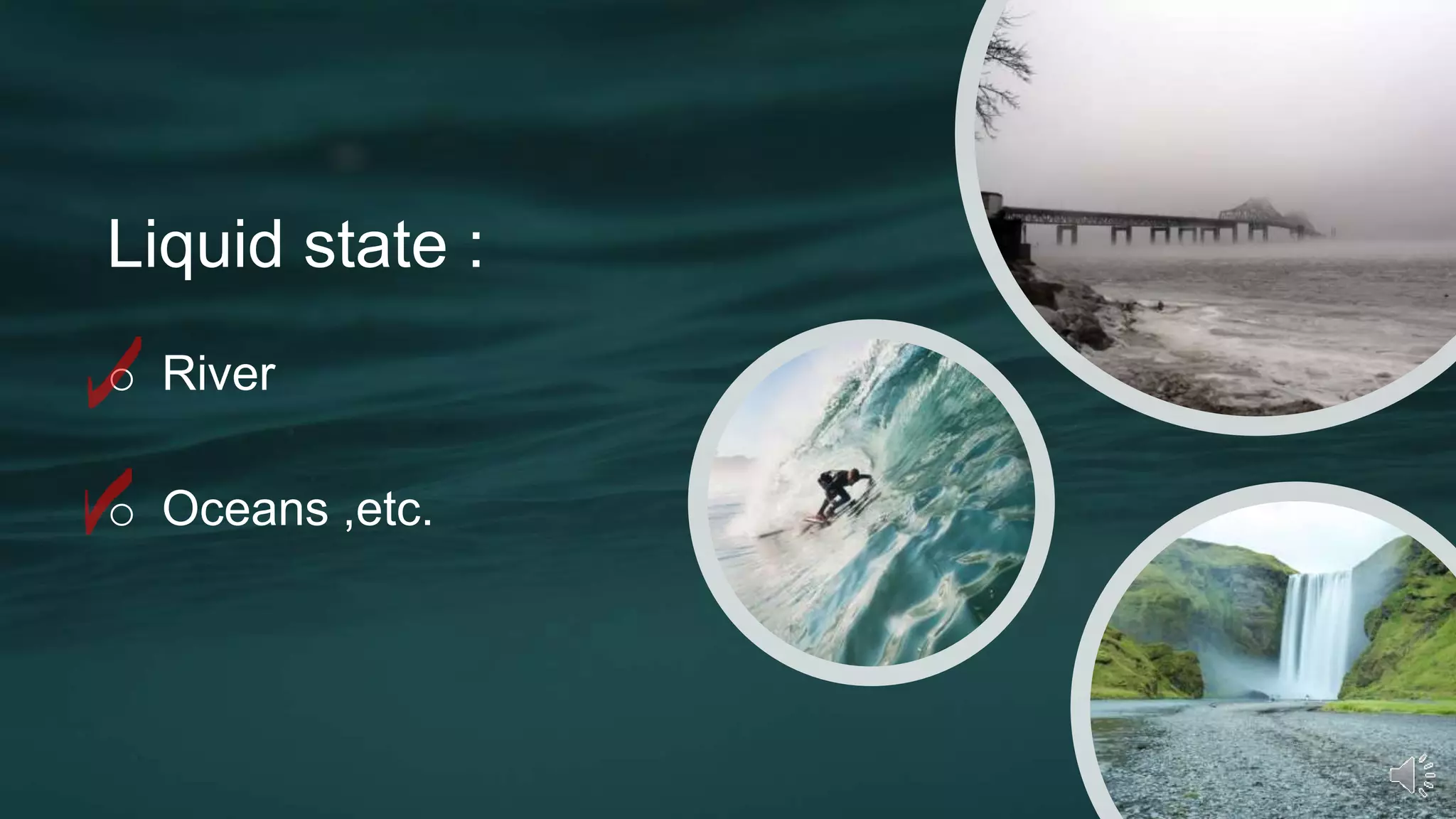
Liquid state :
o River
o Oceans ,etc.
Rivers are
found in :
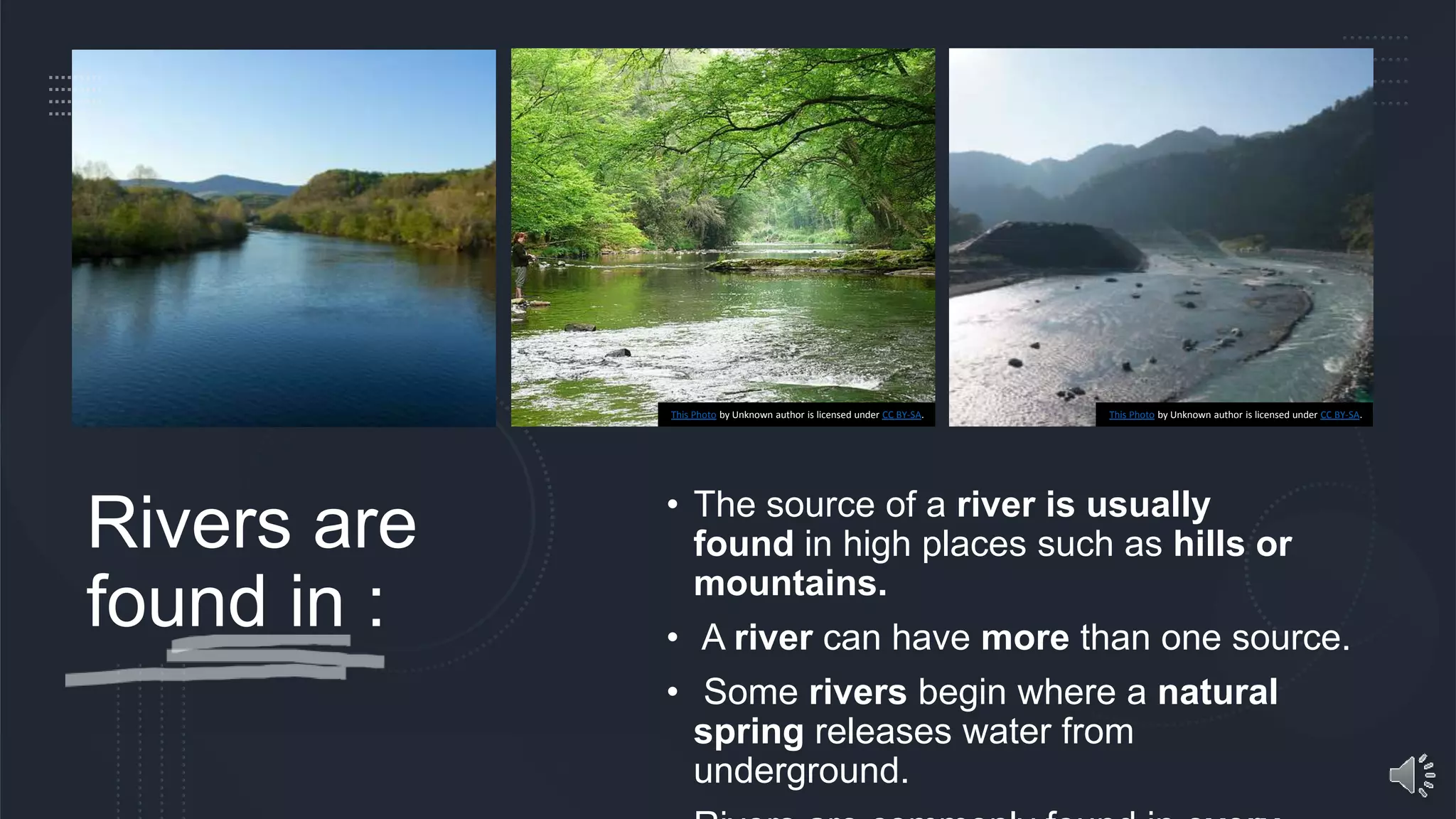
• The source of a river is usually
found in high places such as hills or
mountains.
• A river can have more than one source.
• Some rivers begin where a natural
spring releases water from
underground.
This Photo by Unknown author is licensed under CC BY-SA. This Photo by Unknown author is licensed under CC BY-SA.
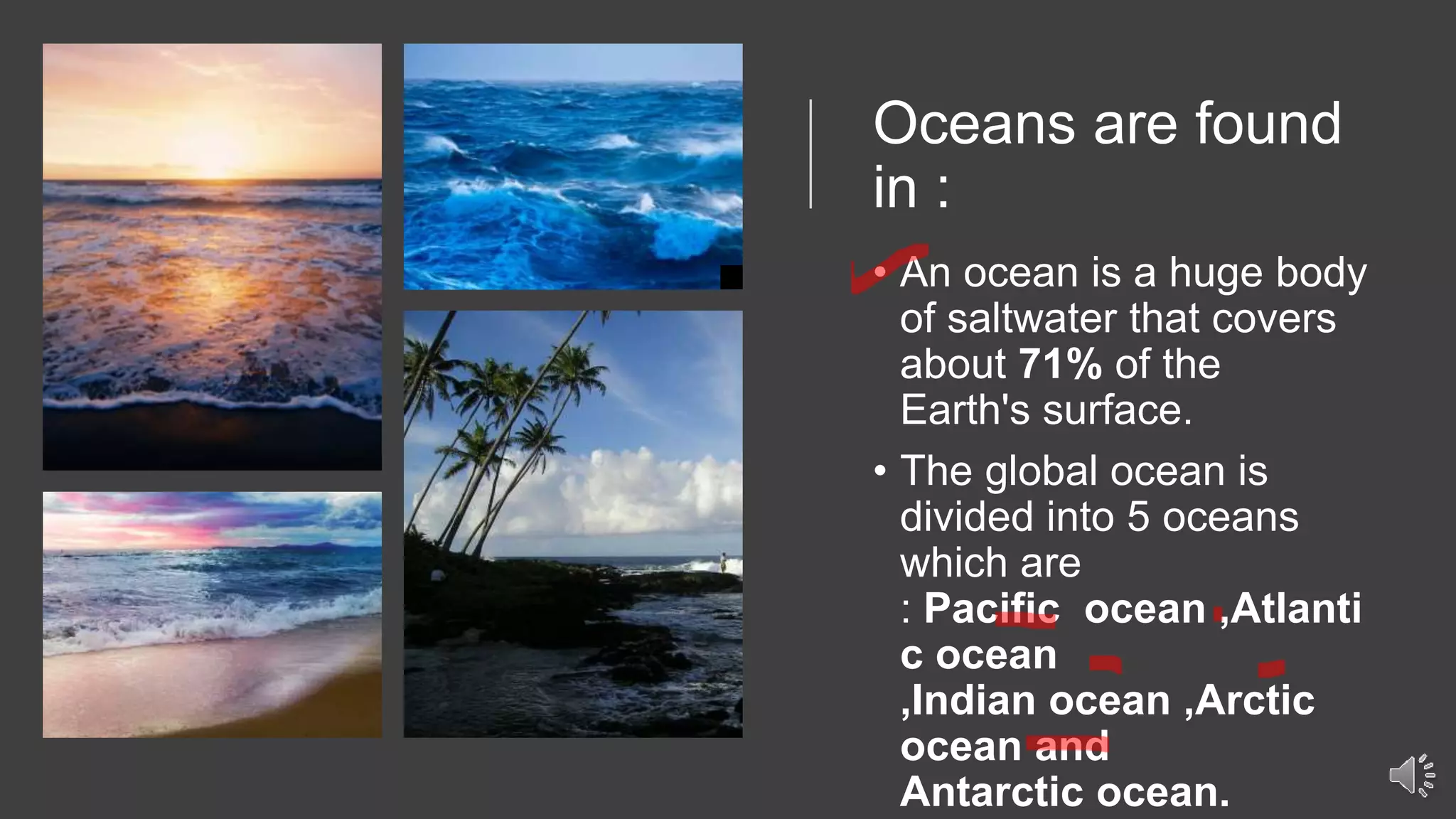
Oceans are found
in :
• An ocean is a huge body
of saltwater that covers
about 71% of the
Earth's surface.
• The global ocean is
divided into 5 oceans
which are
: Pacific ocean ,Atlanti
c ocean
,Indian ocean ,Arctic
ocean and
Antarctic ocean.
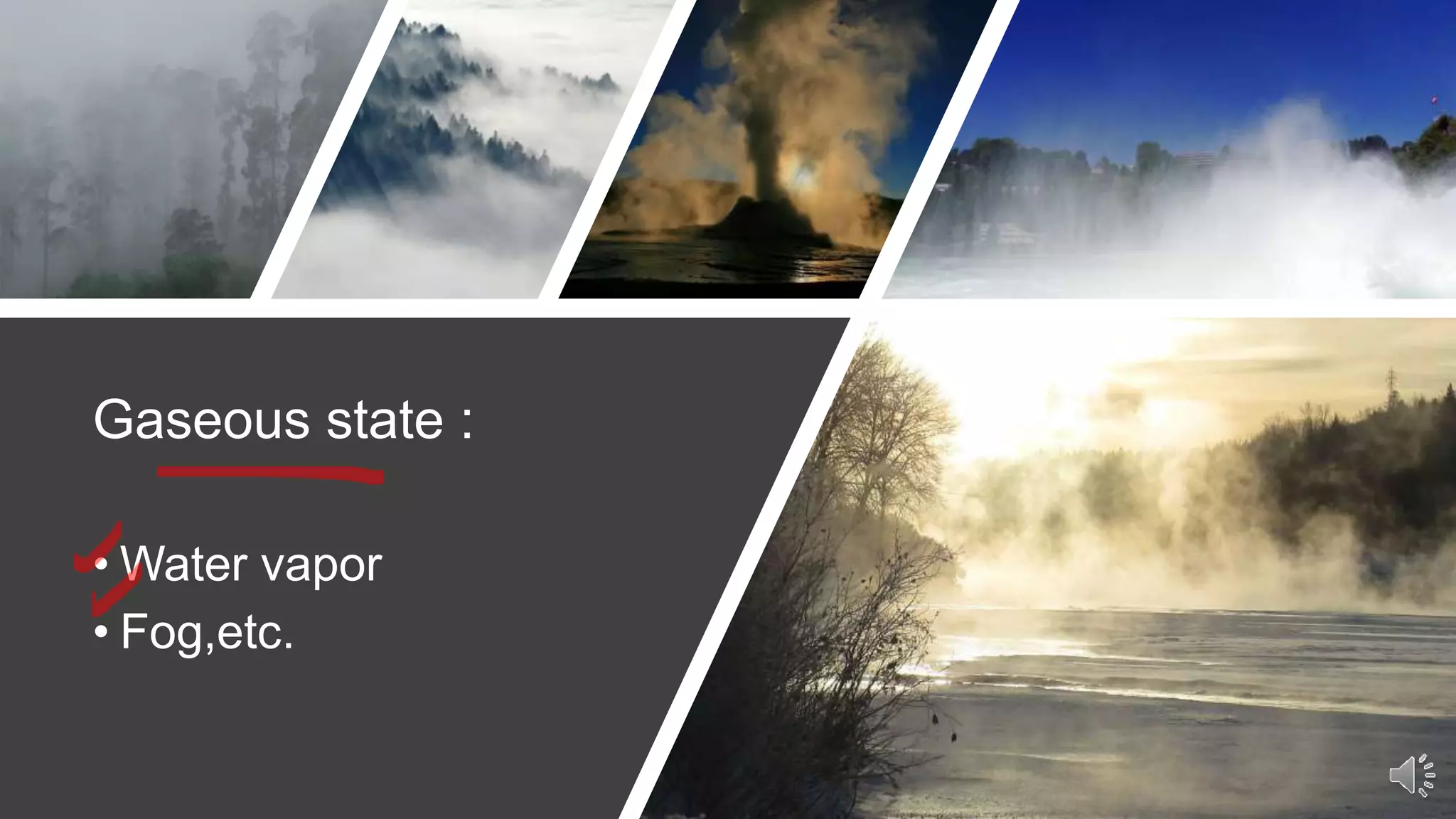
Gaseous state :
• Water vapor
• Fog,etc.
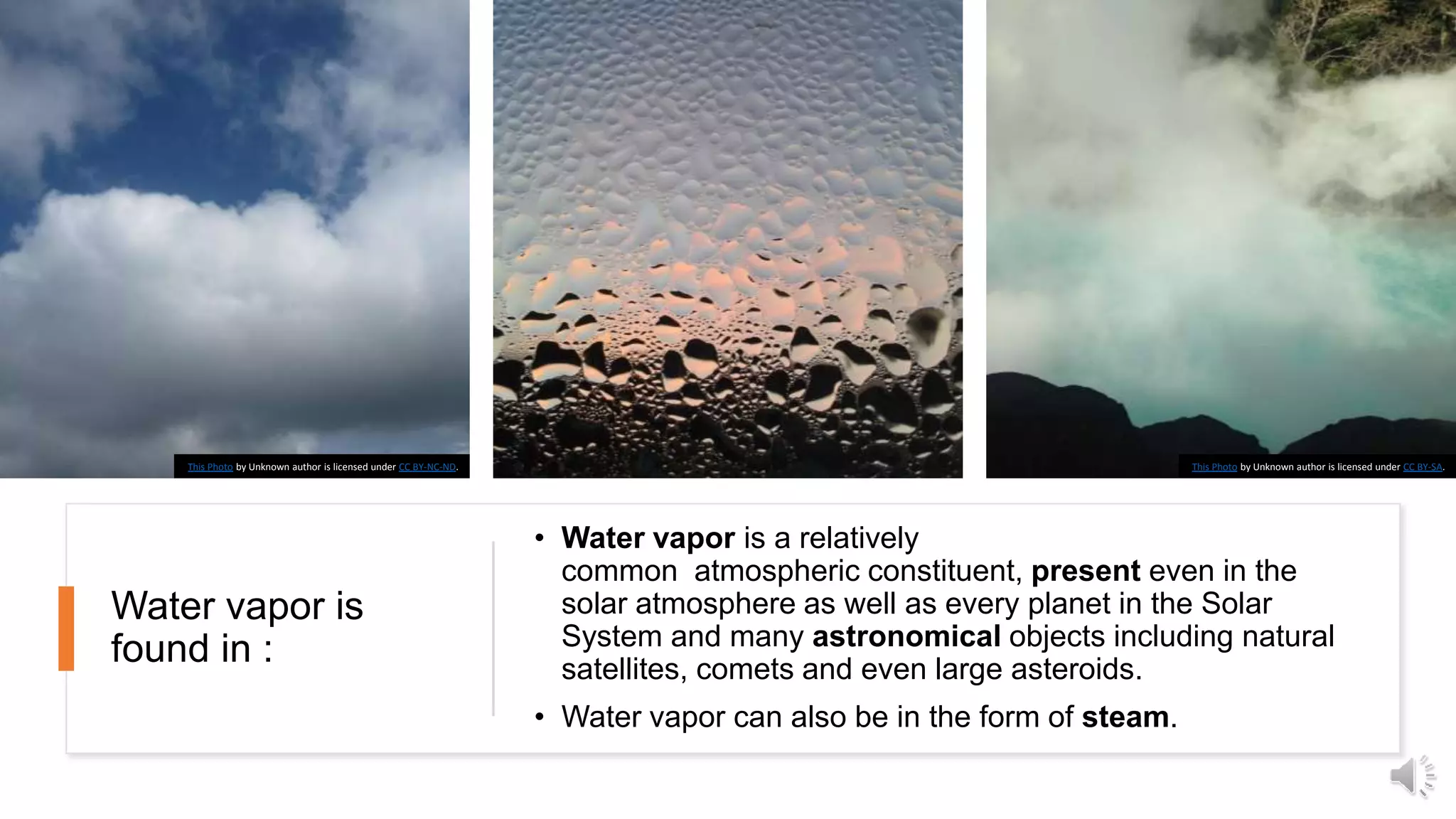
Water vapor is
found in :
• Water vapor is a relatively
common atmospheric constituent, present even in the
solar atmosphere as well as every planet in the Solar
System and many astronomical objects including natural
satellites, comets and even large asteroids.
• Water vapor can also be in the form of steam.
This Photo by Unknown author is licensed under CC BY-SA.This Photo by Unknown author is licensed under CC BY-NC-ND.
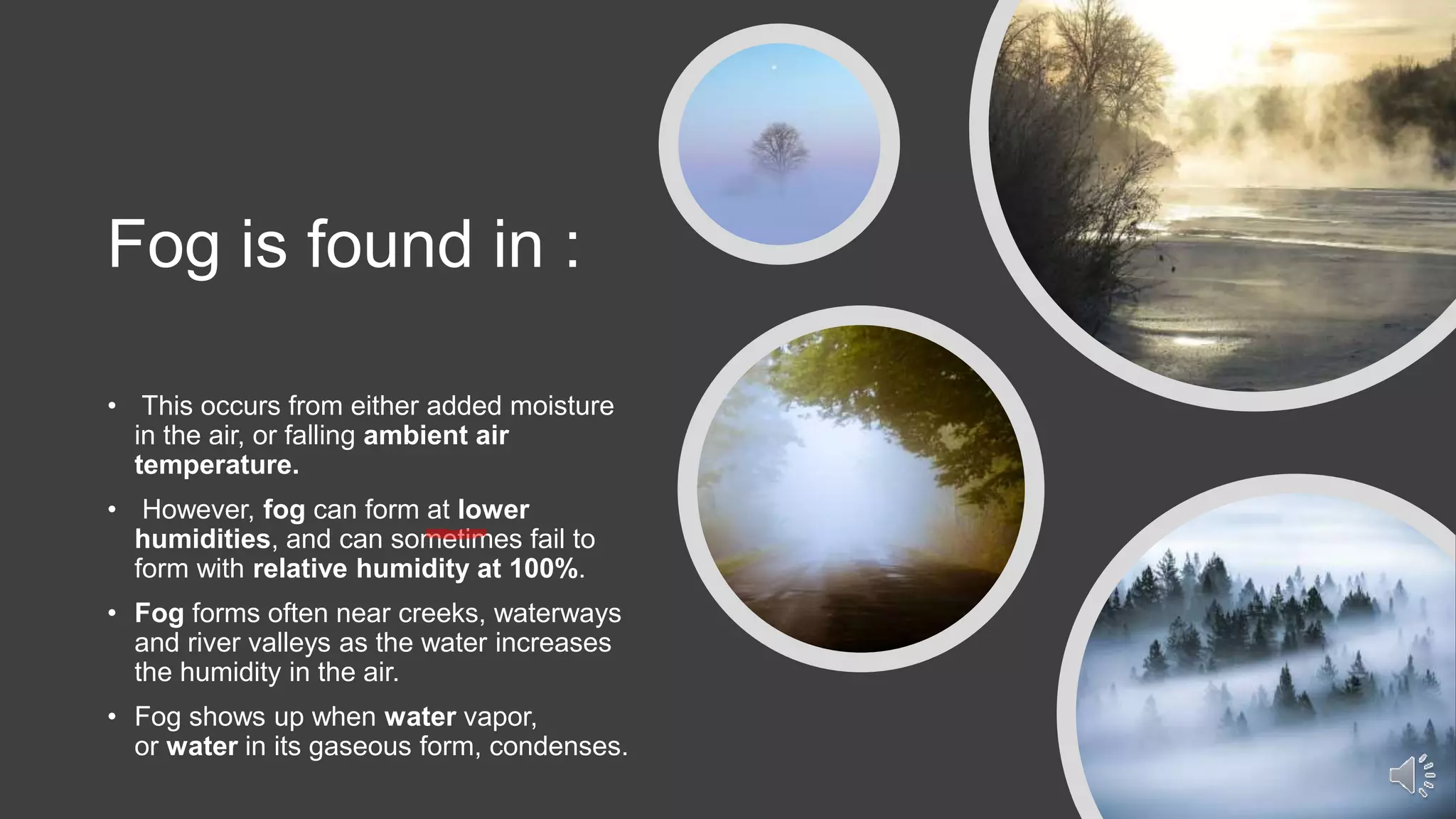
Fog is found in :
• This occurs from either added moisture
in the air, or falling ambient air
temperature.
• However, fog can form at lower
humidities, and can sometimes fail to
form with relative humidity at 100%.
• Fog forms often near creeks, waterways
and river valleys as the water increases
the humidity in the air.
• Fog shows up when water vapor,
or water in its gaseous form, condenses.
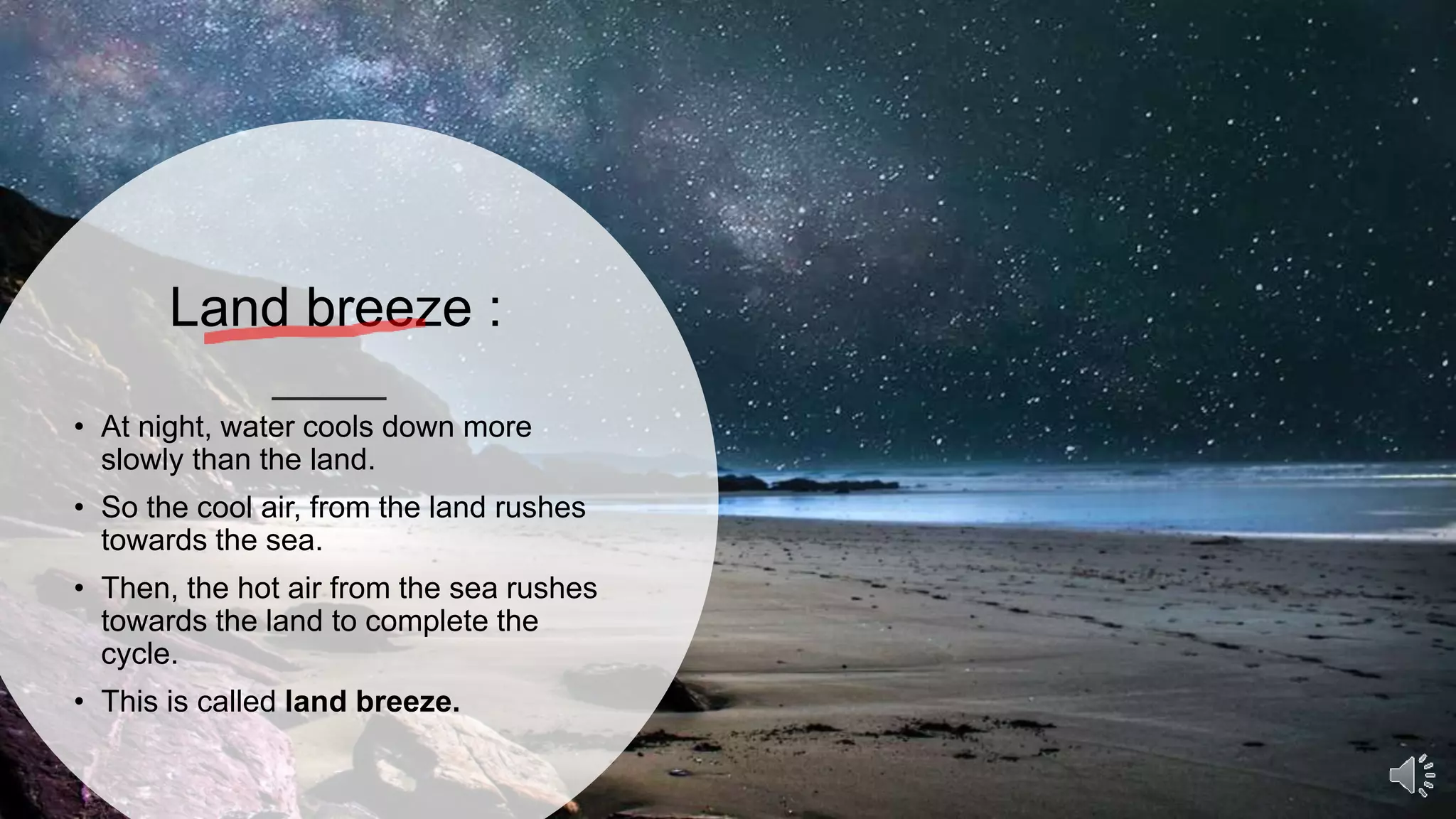
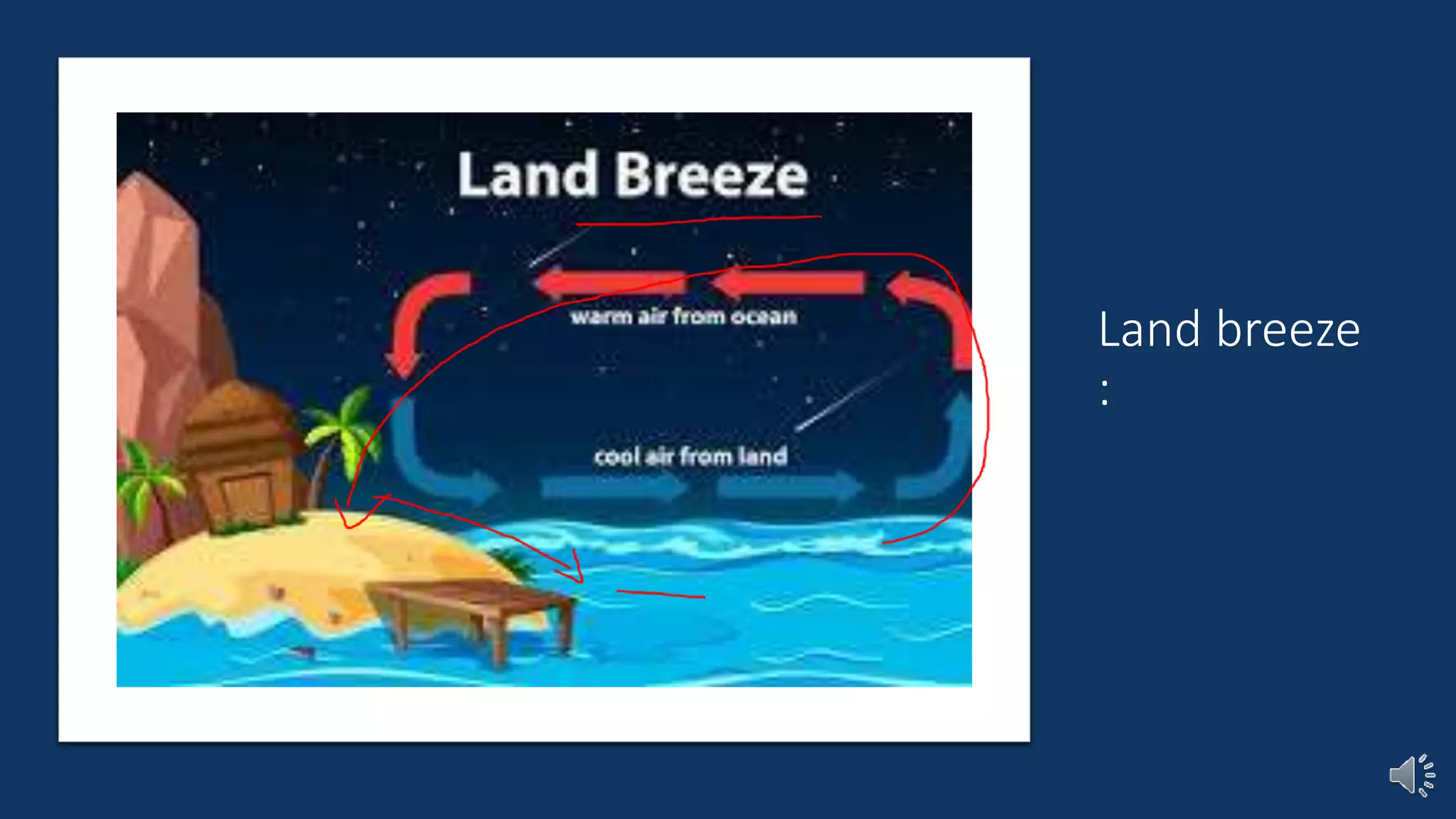
Land breeze :
• At night, water cools down more
slowly than the land.
• So the cool air, from the land rushes
towards the sea.
• Then, the hot air from the sea rushes
towards the land to complete the
cycle.
• This is called land breeze.
Land breeze
:
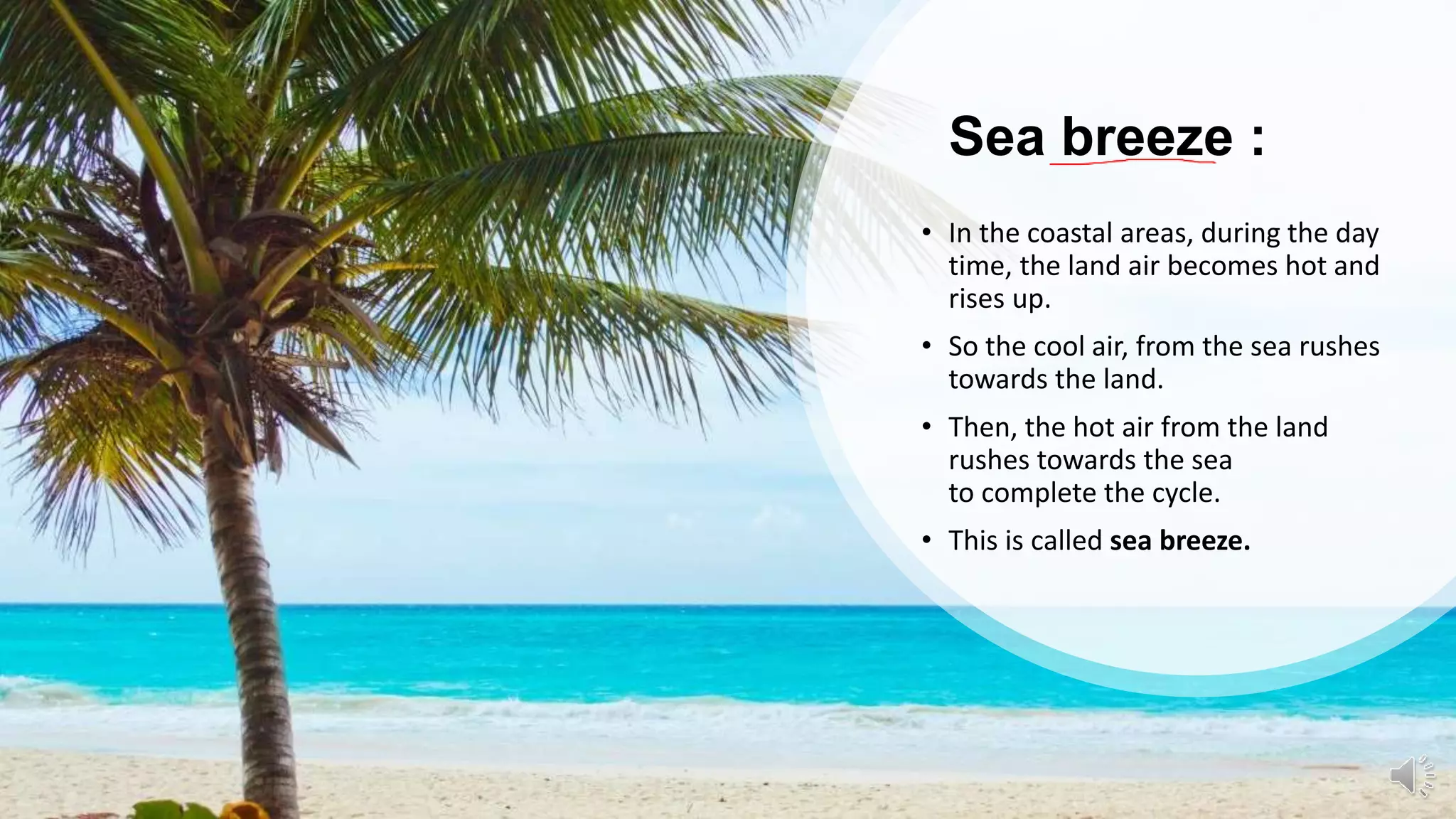
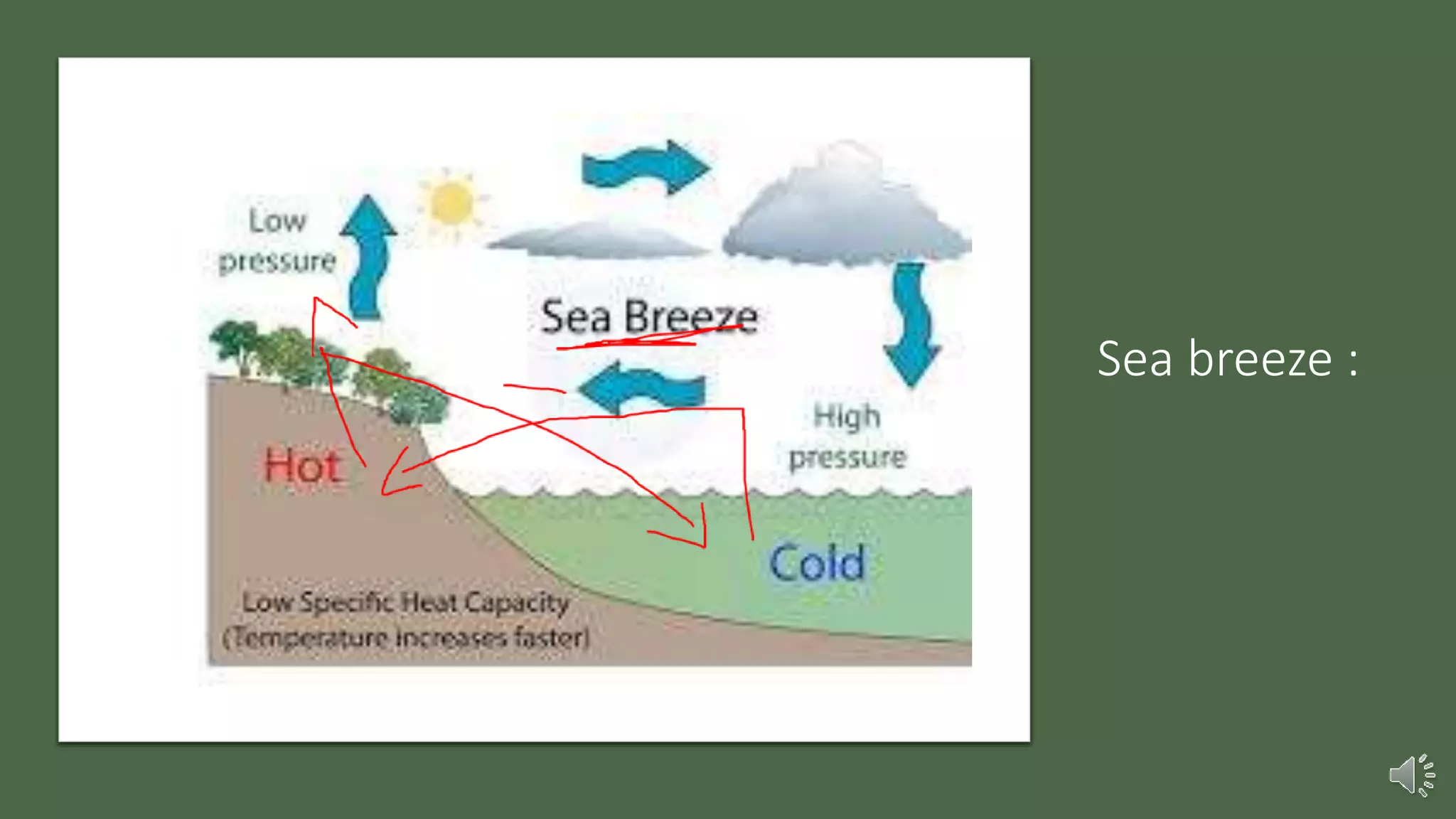
Sea breeze :
• In the coastal areas, during the day
time, the land air becomes hot and
rises up.
• So the cool air, from the sea rushes
towards the land.
• Then, the hot air from the land
rushes towards the sea
to complete the cycle.
• This is called sea breeze.
Sea breeze :
References :
• Physics study material class 7, Chapter-heat(Chaitanya)
• Social study material class 7, Chapter-water (Chaitanya)
• www.livescience.com
• www.nationalgeographic.org
• nsidc.org
• en.wikipedia.org
THANK YOU
Presented by Shargam Mohan
Class 7 C4"A"

Class-7 Our environment Chapter-5 water

  • 1.
    WATER One of themost valuable resources for mankind
  • 2.
  • 3.
    Water cycle • Watercycle is the process by which water continually changes its form and circulates between oceans, atmosphere and land. • The water flows down to steams or drains. • The sun's heat causes evaporation of water into water vapor. • When the water vapor cools down, it condenses and forms clouds. • From the clouds it falls on the land or sea in the form of rain, snow or sleet, hailstones etc. • It is also known as hydrological cycle.
  • 4.
    HYDROSPHERE The hydrosphere isthe combined mass of water found on, under, and above the surface of a planet, minor planet or natural satellite. Although Earth's hydrosphere has been around for about 4 billion years, it continues to change in shape. This is caused by seafloor spreading and continental drift , which rearranges the land and ocean
  • 5.
    HYDROSPHERE COMPRISES OF :  Rivers Glaciers  Oceans  Lakes  Groundwater  Streams
  • 6.
    Water can be of: Solid state Liquid state Gaseous state
  • 7.
    Solid state : •Ice sheets and Ice • Frost • Glacier This Photo by Unknown author is licensed under CC BY-ND.
  • 8.
    Ice sheets are foundin : • There are only three ice sheets on the Earth. • They cover Greenland, West antarctica and East antarctica. • During the last ice age, ice sheets also covered large areas of North America, South America and Northern Europe This Photo by Unknown author is licensed under CC BY-SA-NC.
  • 9.
    Frost is foundin : • Frost is water vapor, or water in gas form, that becomes solid. Frost usually forms on objects like cars, windows, and plants that are outside in air that is saturated, or filled, with moisture. • Areas that have a lot of fog often have heavy frosts. • Frost is formed when the outside surface passes the dew point. • Dew point the atmospheric temperature below which water droplets begin to condense and dew can form. This Photo by Unknown author is licensed under CC BY.
  • 10.
    Glacier is foundin : Most of the world's glacial ice is found in Antarctica and Greenland. But glaciers are found on nearly every continent, even Africa. This Photo by Unknown author is licensed under CC BY-SA-NC.This Photo by Unknown author is licensed under CC BY-SA.
  • 11.
    Liquid state : oRiver o Oceans ,etc.
  • 12.
    Rivers are found in: • The source of a river is usually found in high places such as hills or mountains. • A river can have more than one source. • Some rivers begin where a natural spring releases water from underground. This Photo by Unknown author is licensed under CC BY-SA. This Photo by Unknown author is licensed under CC BY-SA.
  • 13.
    Oceans are found in: • An ocean is a huge body of saltwater that covers about 71% of the Earth's surface. • The global ocean is divided into 5 oceans which are : Pacific ocean ,Atlanti c ocean ,Indian ocean ,Arctic ocean and Antarctic ocean.
  • 14.
    Gaseous state : •Water vapor • Fog,etc.
  • 15.
    Water vapor is foundin : • Water vapor is a relatively common atmospheric constituent, present even in the solar atmosphere as well as every planet in the Solar System and many astronomical objects including natural satellites, comets and even large asteroids. • Water vapor can also be in the form of steam. This Photo by Unknown author is licensed under CC BY-SA.This Photo by Unknown author is licensed under CC BY-NC-ND.
  • 16.
    Fog is foundin : • This occurs from either added moisture in the air, or falling ambient air temperature. • However, fog can form at lower humidities, and can sometimes fail to form with relative humidity at 100%. • Fog forms often near creeks, waterways and river valleys as the water increases the humidity in the air. • Fog shows up when water vapor, or water in its gaseous form, condenses.
  • 17.
    Land breeze : •At night, water cools down more slowly than the land. • So the cool air, from the land rushes towards the sea. • Then, the hot air from the sea rushes towards the land to complete the cycle. • This is called land breeze.
  • 18.
  • 19.
    Sea breeze : •In the coastal areas, during the day time, the land air becomes hot and rises up. • So the cool air, from the sea rushes towards the land. • Then, the hot air from the land rushes towards the sea to complete the cycle. • This is called sea breeze.
  • 20.
  • 21.
    References : • Physicsstudy material class 7, Chapter-heat(Chaitanya) • Social study material class 7, Chapter-water (Chaitanya) • www.livescience.com • www.nationalgeographic.org • nsidc.org • en.wikipedia.org
  • 22.
    THANK YOU Presented byShargam Mohan Class 7 C4"A"