Poonam Mudaliar
Geography
Water
In this chapter
❑The Water Cycle
❑The distribution of
water in %
❑Ocean Circulation
❑Waves
❑Tides
❑Currents
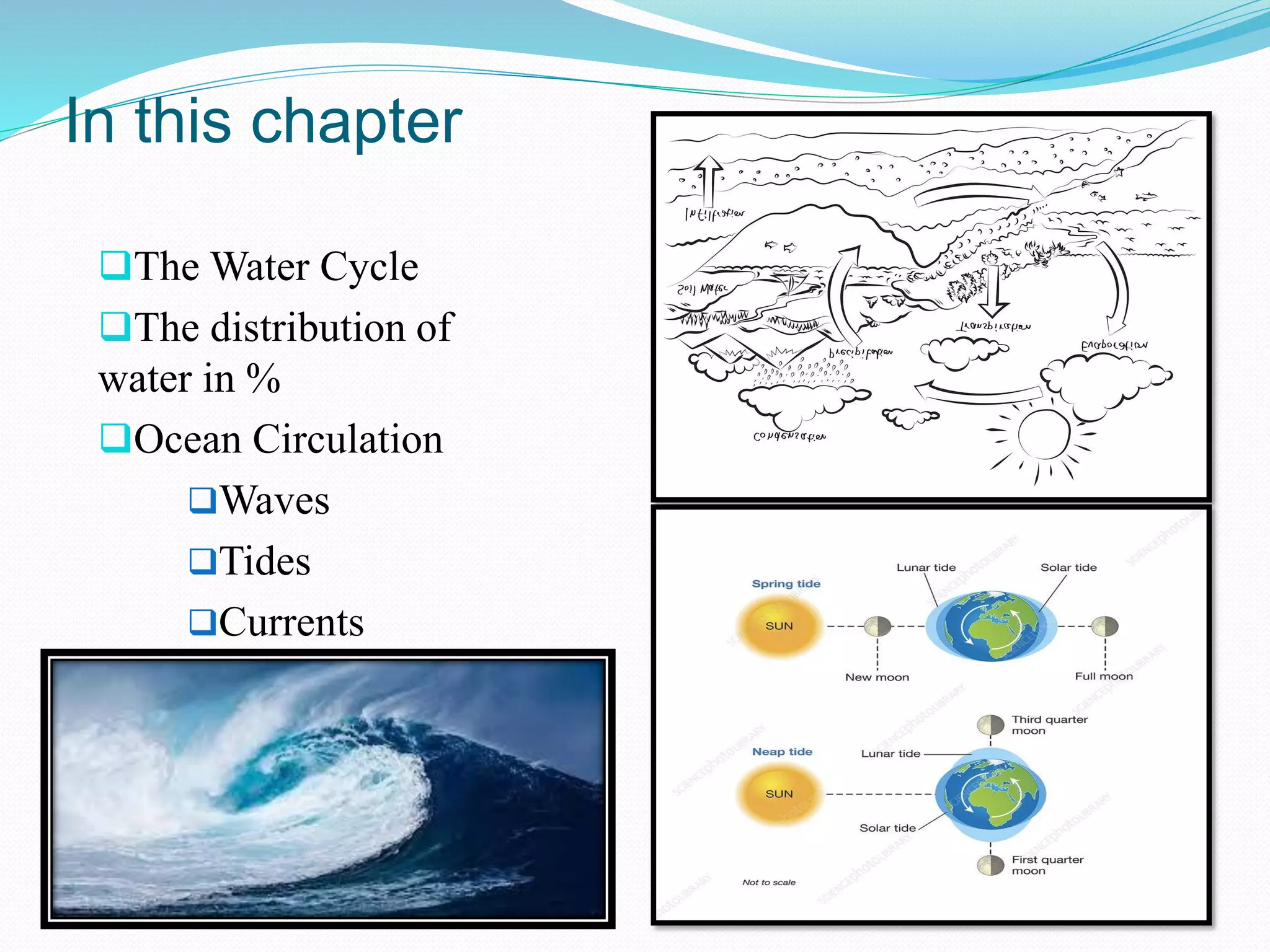
The Water Cycle
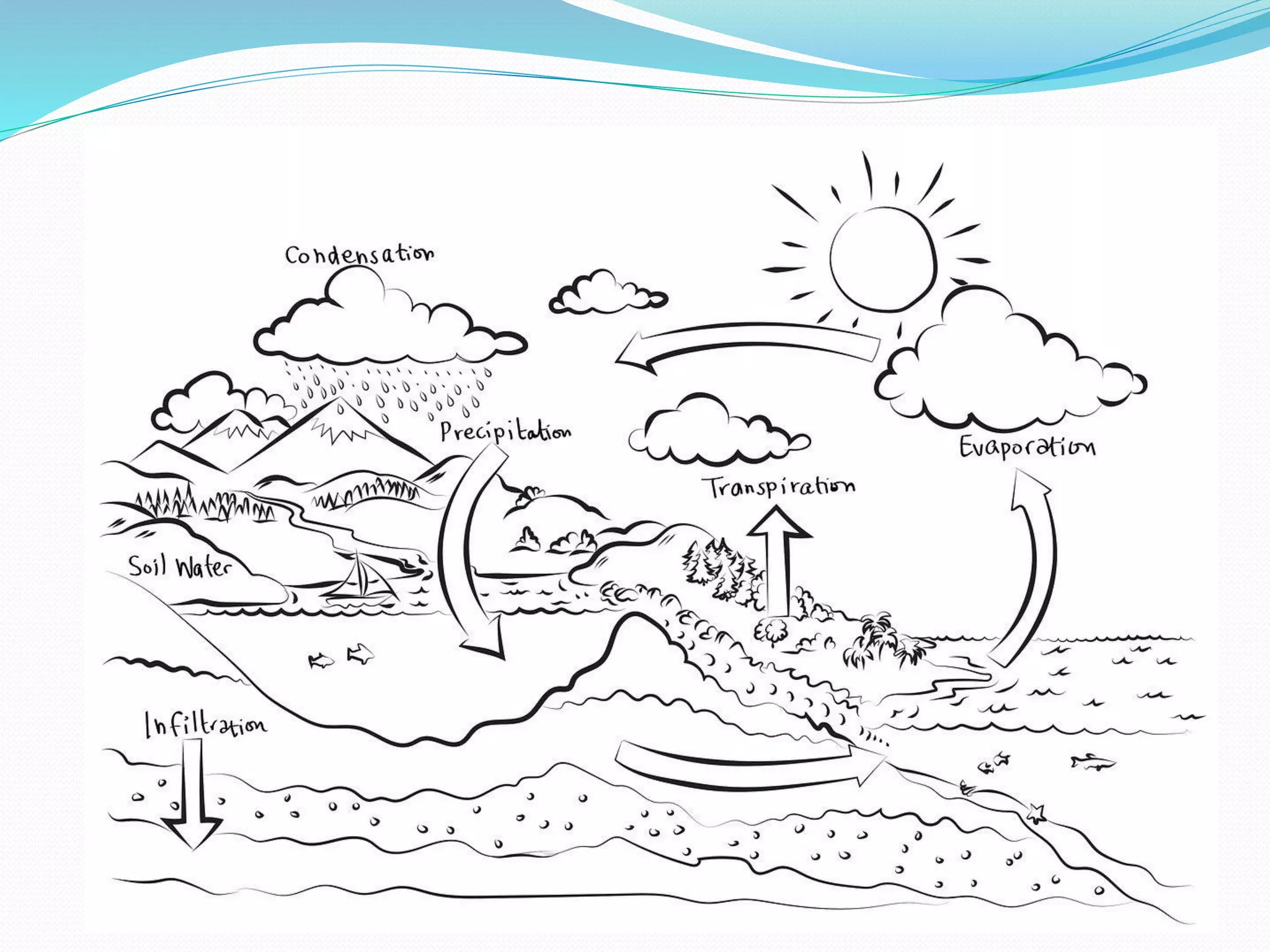
The sun’s heat Cause evaporation of water into
vapour. When vapour cools down, It condenses .and
forms clouds. Form there it may fall on the land or sea in
the form of rain , snow or sleet.
The process by which water continually changes its
form and circulates between oceans , atmosphere and land
is known as the water cycle .
The major sources of fresh water are the rivers, ponds
, springs and glaciers.
The ocean bodies and the seas contain salty water.
The water of the oceans is salty or saline as it contains
large amount of dissolved salts. Most of the salt that we
eat.
The three-fourth of the earth surface is covered
by water. If there is more water then land on this
earth, but so many countries face water scarcity. Thus
because the water available on the earth.
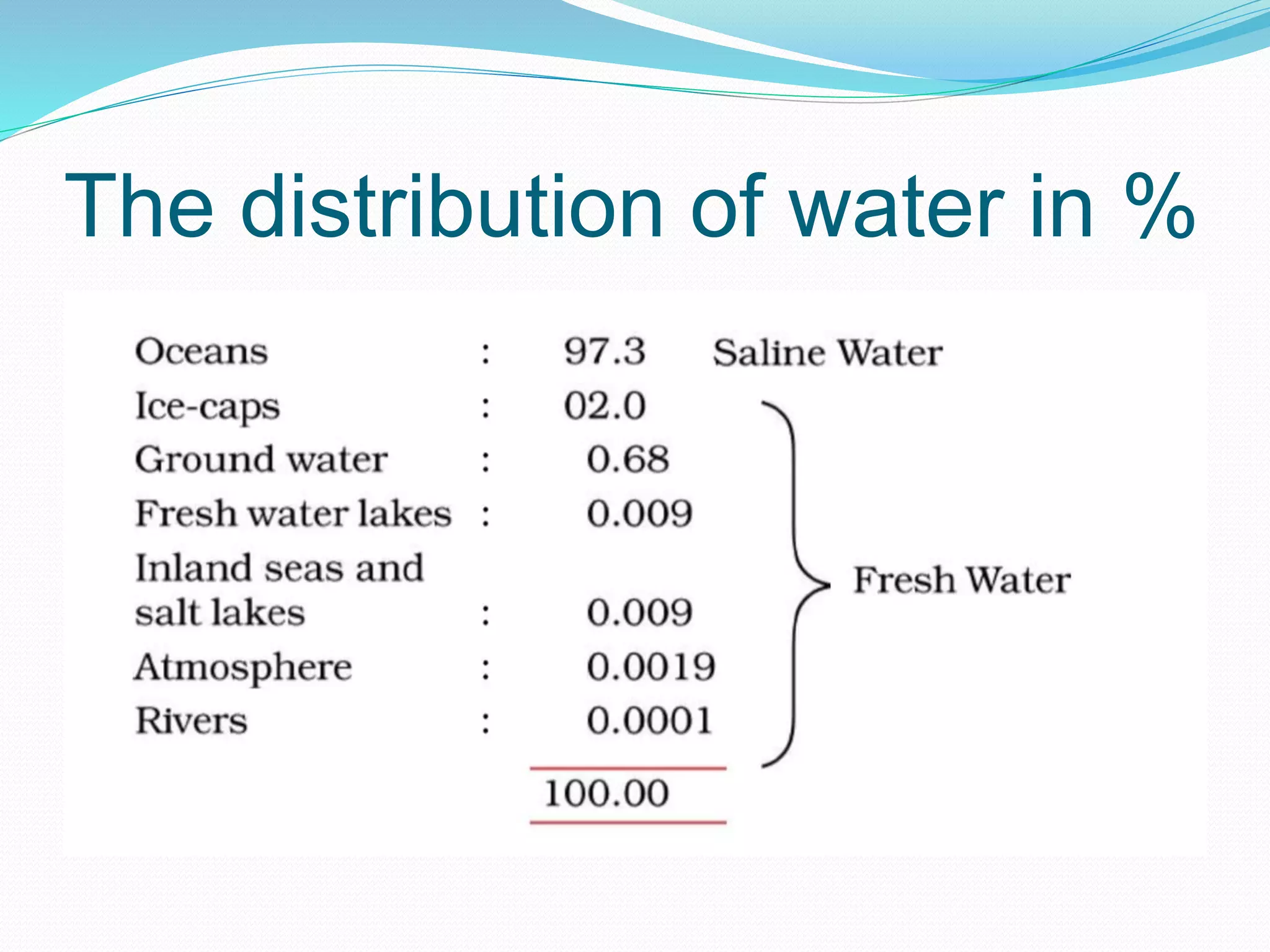
The distribution of water in %
Ocean Circulation
The movement that occur in oceans can be broadly
categorised as:
 Waves
 Tides
 Currents
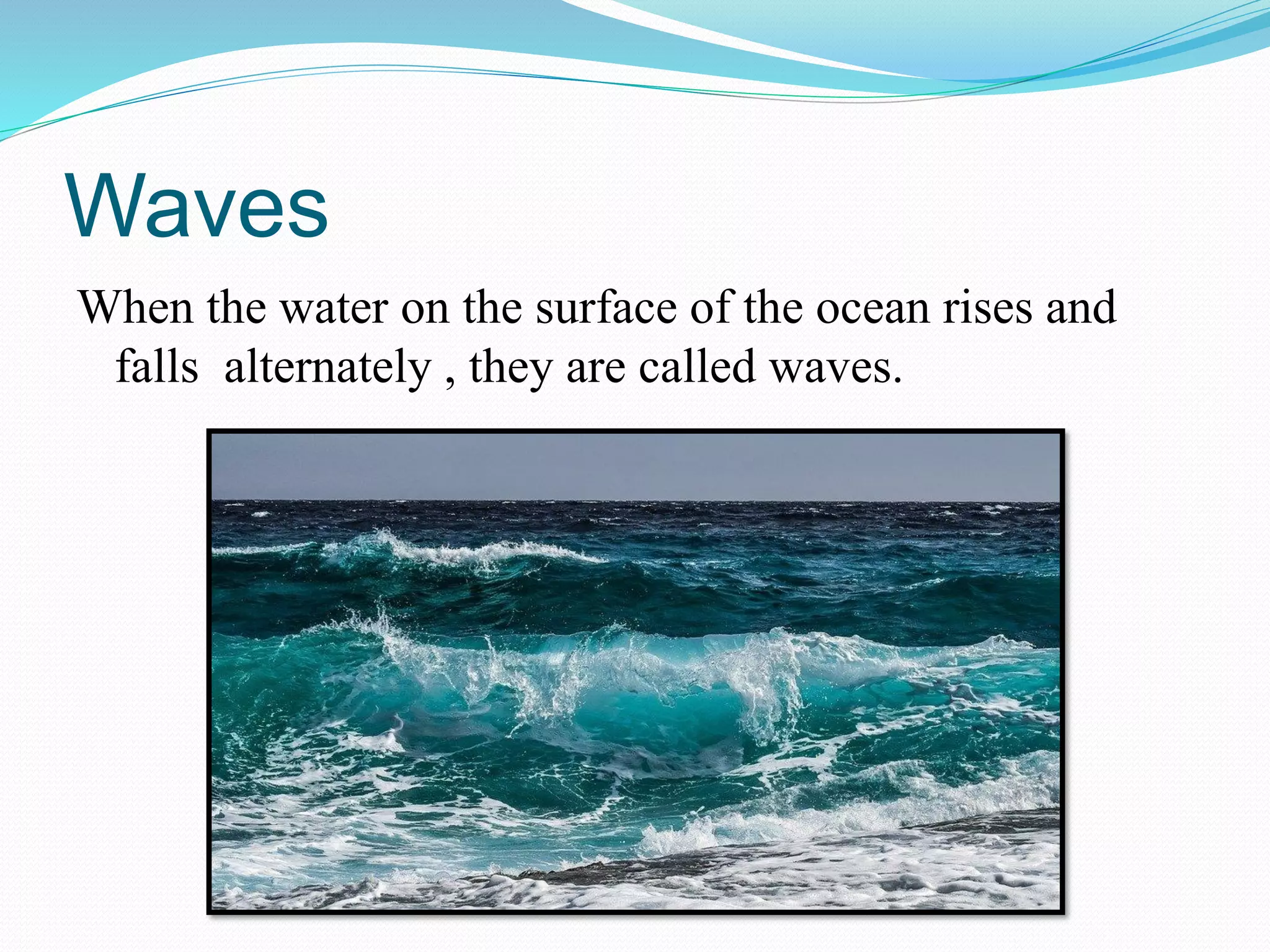
Waves
When the water on the surface of the ocean rises and
falls alternately , they are called waves.
Tides
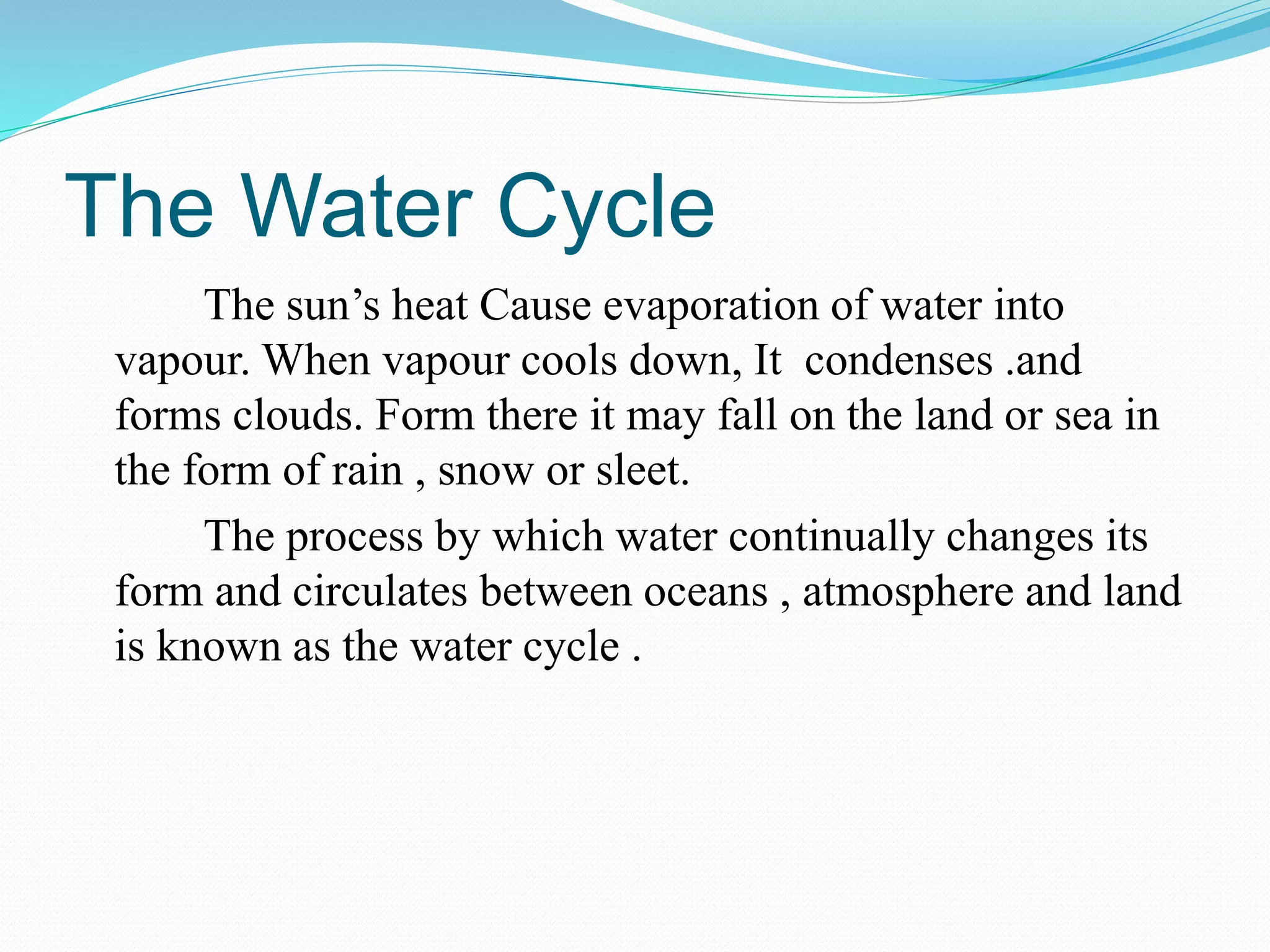
Spring tides and neap tides
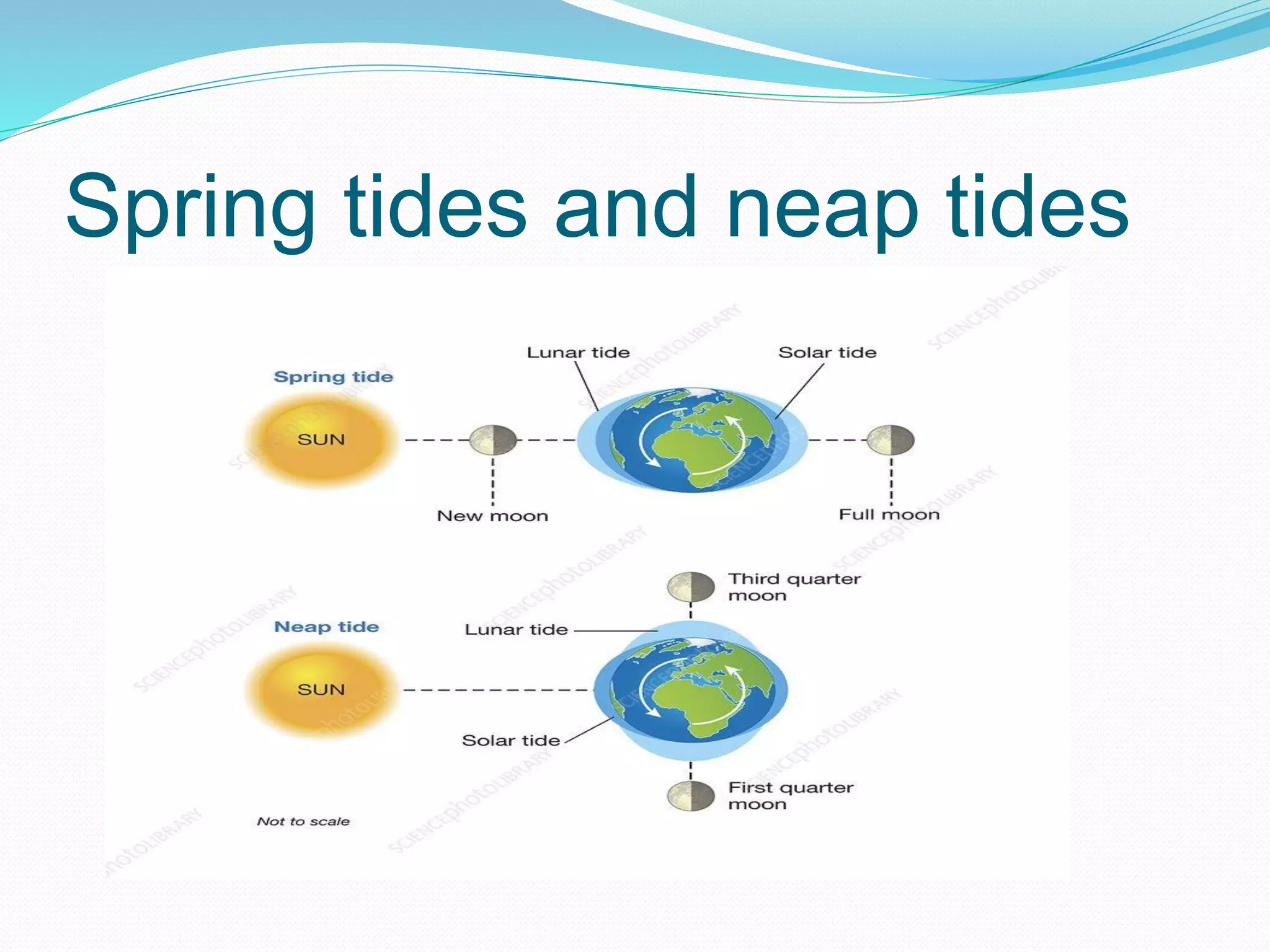
The strong gravitational pull exerted by the sun and the
moon on the earth’s surface causes the tides. The water of
the earth closer to the influence of the moon’s
gravitational force and causes high tides. During the full
moon and new moon days the sun ,the moon and the earth
are in the same line and the tides are highest . These tides
are called spring tides.
when the moon is in first and last quarter ,
the ocean water get drawn in diagonally
opposite directions by the gravitational
pull of sun and moon resulting in low
tides. These tide are called neap tides.
Spring tides and neap tides
High tides help in navigation. They raise the
water lavel close to the shores. This helps the ships to
arrive at the harbour more easily . The high tides also
help in fishing. Many more fish come closer to the
shore during the high tide. This rise and fall of water
due to tides is being used to generate electricity in
some places.
Ocean Currents
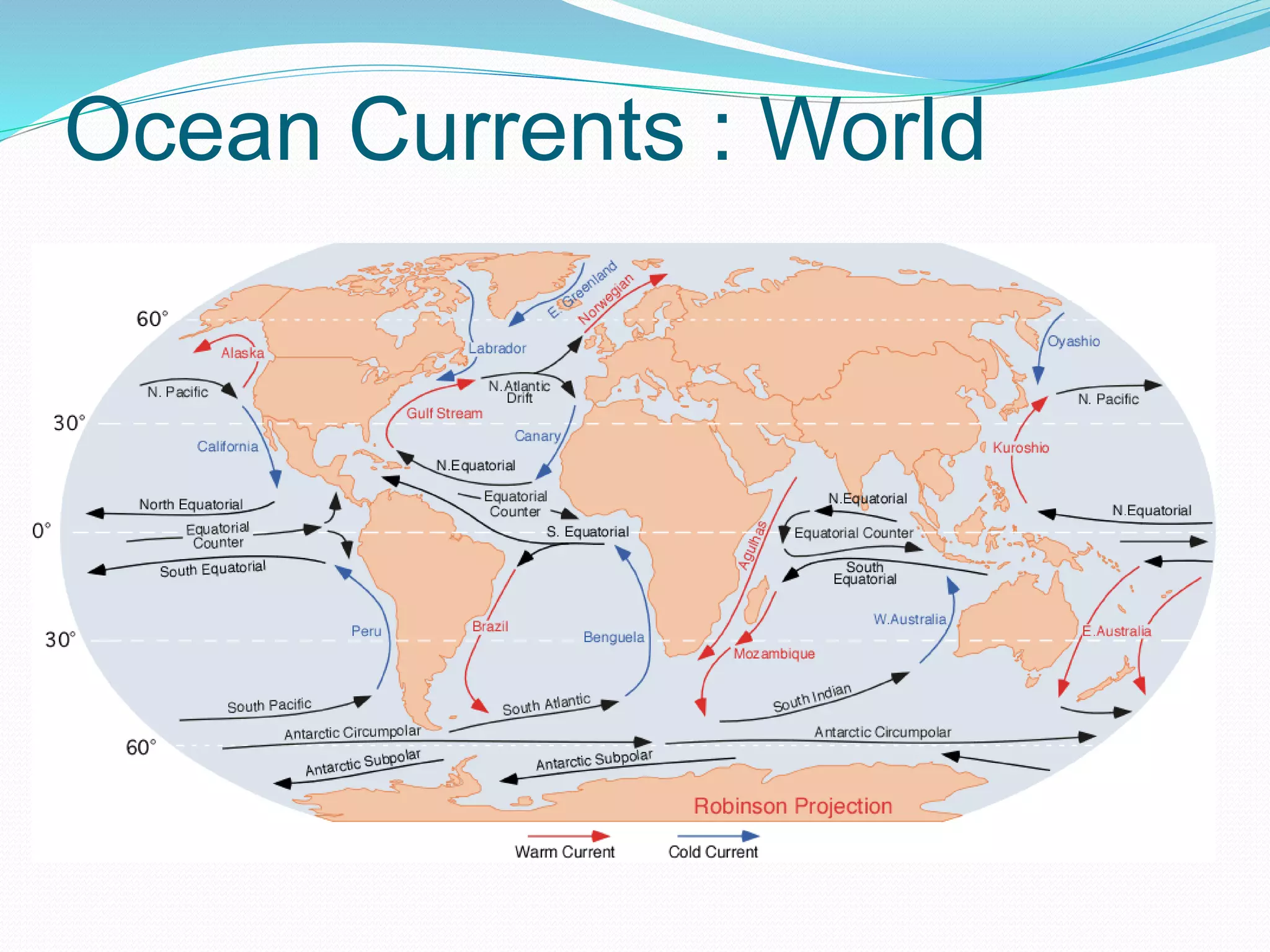
Ocean currents are streams of water flowing
constantly on the ocean surface in definite directions . The
ocean currents are may be warm or cold .
Generally, the warm ocean currents originate near the
equator and move towards the poles.
The cold currents carry water from polar or higher
latitudes to tropical or lower latitudes.
Ocean Currents : World
Warm and cold Currents
The Labrador Ocean current is cold current while
the Gulf Stream is a warm current. The ocean current
influence the temperature condition of the area. Warm
currents bring about warm temperature over land
surface. The area where the warm and cold currents
meet provide the best fishing grounds of the world.
Seas around Japan and the eastern coast of North
America are such examples. The areas where a warm
and cold currents meet also experience foggy weather
making it difficult for navigation.
Warm and cold Currents
Seas around Japan and the eastern coast of North
America are such examples. The areas where a warm
and cold currents meet also experience foggy weather
making it difficult for navigation.
We
Learned
❑The Water Cycle
❑The distribution
of water in %
❑Ocean
Circulation
❑Waves
❑Tides
❑Currents

Class 7 ch 5 water-pdf

  • 1.
  • 2.
  • 3.
  • 4.
    In this chapter ❑TheWater Cycle ❑The distribution of water in % ❑Ocean Circulation ❑Waves ❑Tides ❑Currents
  • 5.
    The Water Cycle Thesun’s heat Cause evaporation of water into vapour. When vapour cools down, It condenses .and forms clouds. Form there it may fall on the land or sea in the form of rain , snow or sleet. The process by which water continually changes its form and circulates between oceans , atmosphere and land is known as the water cycle .
  • 7.
    The major sourcesof fresh water are the rivers, ponds , springs and glaciers. The ocean bodies and the seas contain salty water. The water of the oceans is salty or saline as it contains large amount of dissolved salts. Most of the salt that we eat.
  • 8.
    The three-fourth ofthe earth surface is covered by water. If there is more water then land on this earth, but so many countries face water scarcity. Thus because the water available on the earth.
  • 9.
  • 10.
    Ocean Circulation The movementthat occur in oceans can be broadly categorised as:  Waves  Tides  Currents
  • 11.
    Waves When the wateron the surface of the ocean rises and falls alternately , they are called waves.
  • 14.
  • 15.
    Spring tides andneap tides
  • 16.
    Spring tides andneap tides The strong gravitational pull exerted by the sun and the moon on the earth’s surface causes the tides. The water of the earth closer to the influence of the moon’s gravitational force and causes high tides. During the full moon and new moon days the sun ,the moon and the earth are in the same line and the tides are highest . These tides are called spring tides.
  • 17.
    when the moonis in first and last quarter , the ocean water get drawn in diagonally opposite directions by the gravitational pull of sun and moon resulting in low tides. These tide are called neap tides. Spring tides and neap tides
  • 18.
    High tides helpin navigation. They raise the water lavel close to the shores. This helps the ships to arrive at the harbour more easily . The high tides also help in fishing. Many more fish come closer to the shore during the high tide. This rise and fall of water due to tides is being used to generate electricity in some places.
  • 19.
    Ocean Currents Ocean currentsare streams of water flowing constantly on the ocean surface in definite directions . The ocean currents are may be warm or cold . Generally, the warm ocean currents originate near the equator and move towards the poles. The cold currents carry water from polar or higher latitudes to tropical or lower latitudes.
  • 20.
  • 21.
    Warm and coldCurrents The Labrador Ocean current is cold current while the Gulf Stream is a warm current. The ocean current influence the temperature condition of the area. Warm currents bring about warm temperature over land surface. The area where the warm and cold currents meet provide the best fishing grounds of the world. Seas around Japan and the eastern coast of North America are such examples. The areas where a warm and cold currents meet also experience foggy weather making it difficult for navigation.
  • 22.
    Warm and coldCurrents Seas around Japan and the eastern coast of North America are such examples. The areas where a warm and cold currents meet also experience foggy weather making it difficult for navigation.
  • 23.
    We Learned ❑The Water Cycle ❑Thedistribution of water in % ❑Ocean Circulation ❑Waves ❑Tides ❑Currents