CHAPTER-4
REPRODUCTIV
E HEALTH
- AJAY GAUTAM
CLASS – XII
REPRODUCTIVE HEALTH
• It is the state of physical, emotional,
behavioral and social fitness for leading a
reproductive life.
• According to WHO, A total well being in all
apects of reproduction.
• To achieve this family planning”
initiated in 1951.
• REPRODUCTIVE HEALTH –
PROBLEM AND STRATEGIES:
• In Indian culture discussing about
knowledge of sex and reproductive health is
• Early marriage as soon as girls attains
puberty.
• The teen age girl is not fit to bear foetus.
• After marriage, the career of lady is blocked
in lot of family.
• Maternal and infant mortality rate are high
in early marriages.
• There is little knowledge about personal
hygiene to avoid sexually transmitted
diseases.
• Number of program are lanched
under reproductive and child health
care (RCH).
• Awareness programme are conducted
for both male and female to lead
healthy reproductive life.
• Awareness creating about fertility
regulating method.
• Awareness creating about personal
hygiene,
• Preventing and Protecting against
STRATIGIES
• The increase in size and growth of
human population is called population
explosion.
• The reason for high population explosion
are,
1. Decline in death rate.
2. Longer life span.
3. Decline in maternal mortality rate.
4. Decline in infant mortality rate.
POPULATION EXPLOSION AND BIRTH CONTROL:
• Family welfare and family planning programs
comes forward to avoid uncontrolled human
population explosion.
• The contraception is the main aim of the birth
control.
• Prevention of conception or fertilization of ovum
during sexual inter course is called contraception.
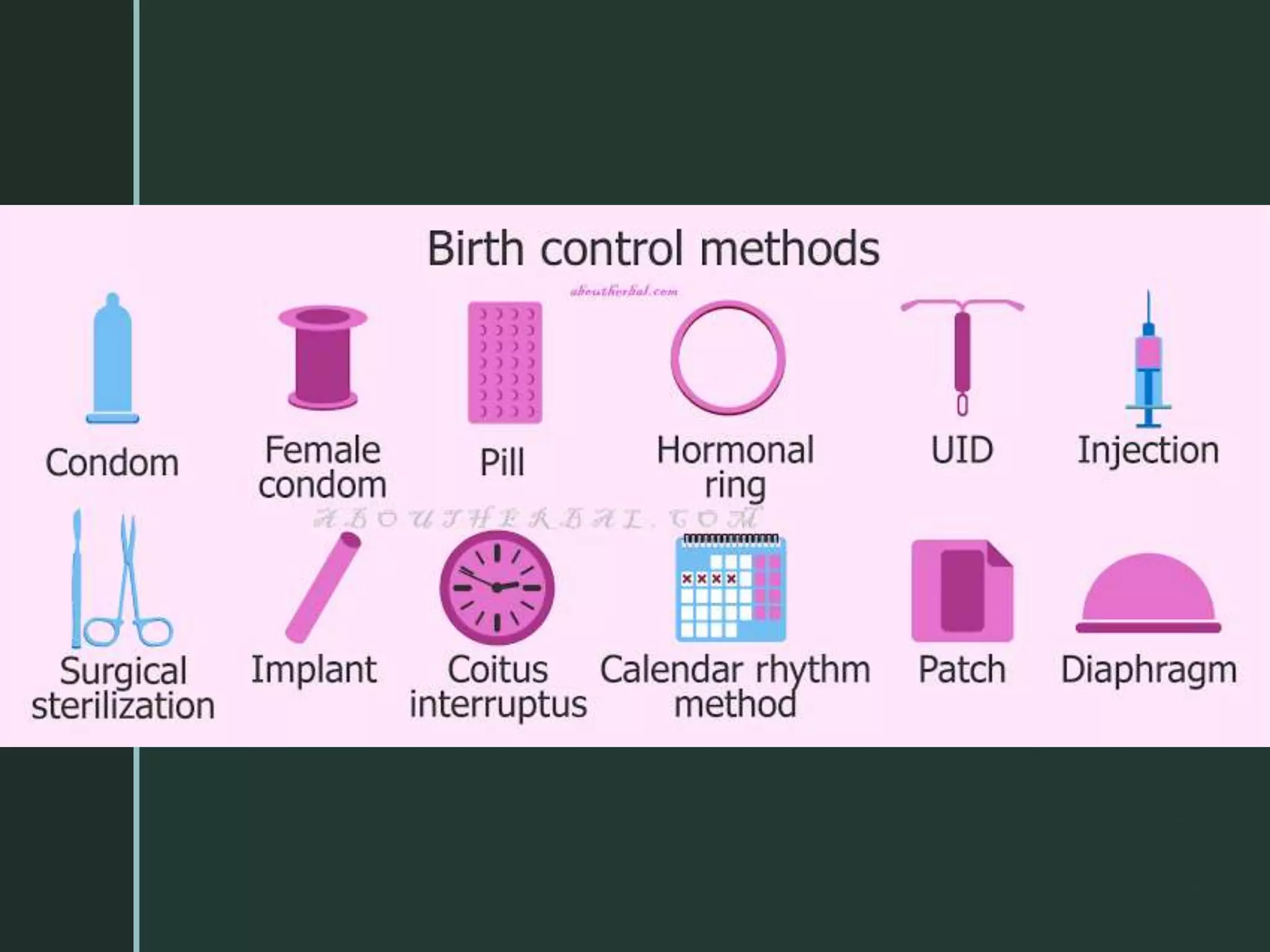
The different types of contraception are,
• Natural method.
• Barrier method.
• Intra uterine device [IUD’s].
• Oral contraception.
• Injection and implantation.
BIRTH CONTROL
• Natural methods:
• It work on the principle of avoiding
chances of ovum and sperms meeting.
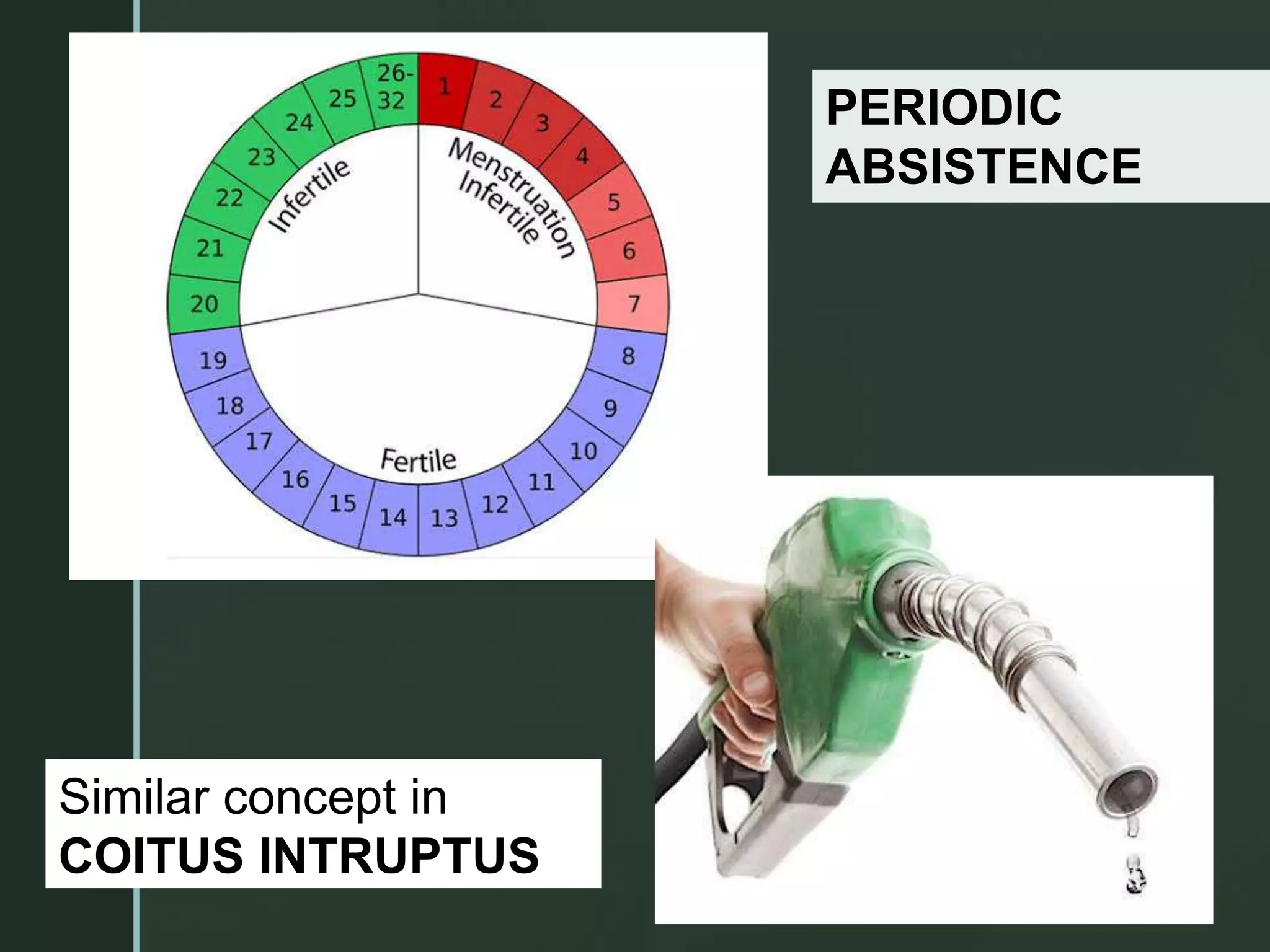
• Periodic abstinence:
• Is a method in which couple avoid or abstain
coitus form day 10 to 17 of the menstrual
cycle when ovulation could be expected.
• Withdrawal or coitus interruption:
• In this method male partner withdraws his
penis from the vagina just before ejaculation
to avoid insemination.
Similar concept in
COITUS INTRUPTUS
PERIODIC
ABSISTENCE
• It cause due to intense lactation for about
six months after parturition.
• No menstruation occurs during lactation
period. Hence chance of fertilization is
abent.
LACTATIONAL AMENORRHEA
PHYSICAL CONTRACEPTIVES OR BARRIER
METHODS
This method prevents contact of sperm and ovum by
barrier. Such methods available both for male and
female.
• Condom are barriers made of
thin rubber latex sheath.
• The male condom is used to
cover the penis. It is used just
before coitus so that semen not
entered into the female
reproductive tract.
• It also prevents AIDS and STDs.
• The female condoms are
Diaphragm, cervical caps and
vaults made of rubber latex.
• These are inserted into the
female reproductive tract to
cover the cervix.
CONDOMS
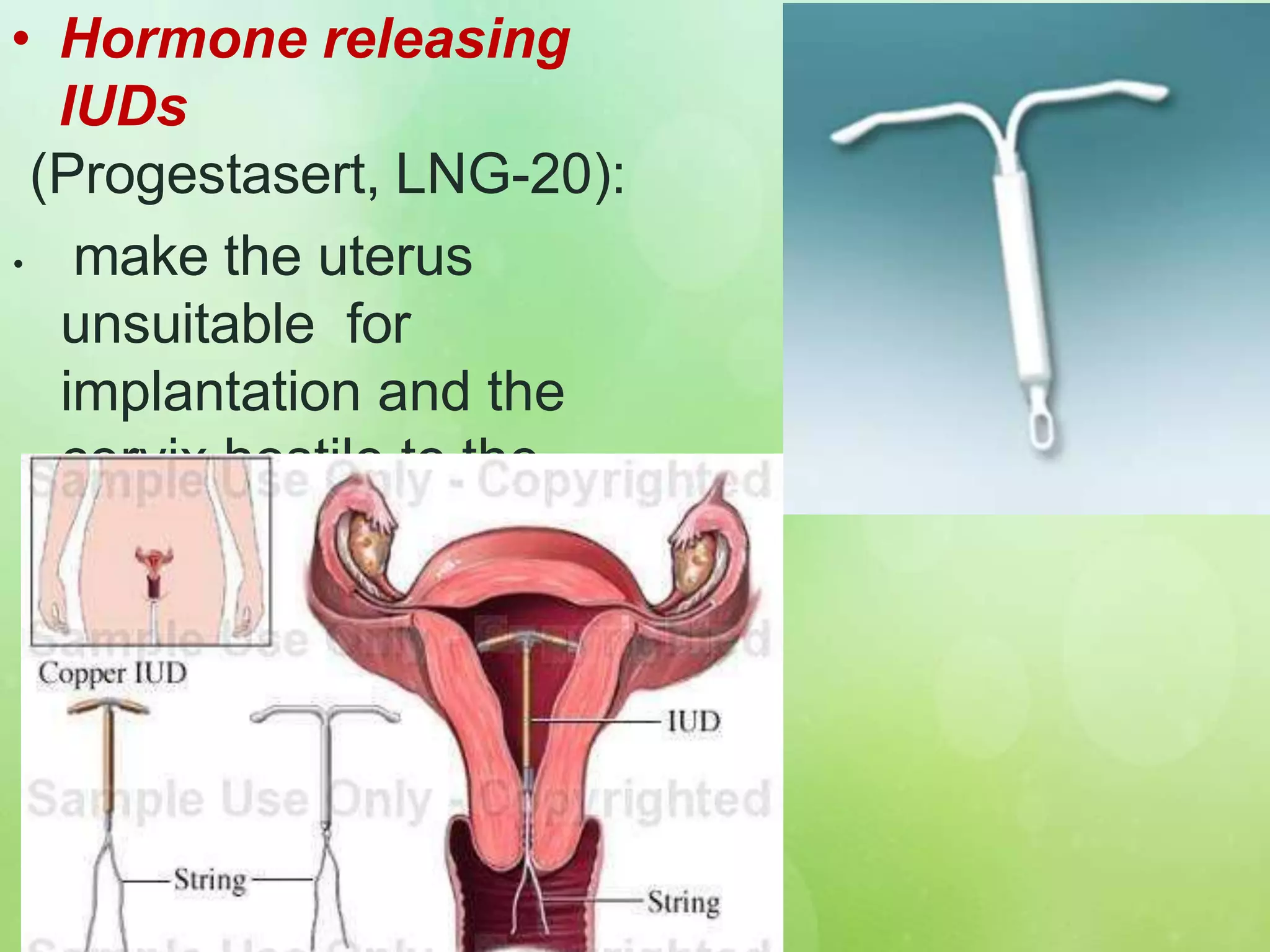
• Intra Uterine Devices
(IUDs ):
• These devices are only
used by female. doctor or
by expert nurses insert
these into the uterus
through vagina.
• Different types of IUDs are,
• Non-medicated IUDs
e.g. Lippes loop: Acts as
barrier.
• Copper releasing IUDs
(CuT, Cu7, Multiload
375):
• Cu ion released
suppresses sperm
• Hormone releasing
IUDs
(Progestasert, LNG-20):
• make the uterus
unsuitable for
implantation and the
cervix hostile to the
sperm.
• Oral contraceptives: This methods is for
female only.
• These are used in the form of tablets popularly
called pills.
• It contain progestogens or progestogen-
estrogen. Combination.
CHEMICAL CONTRACEPTIVES
• Pills have to be taken daily for a period of 21
days started within first five days of
menstruation.
• Saheli- a non steroidal preparation used as
oral contraceptive pills.
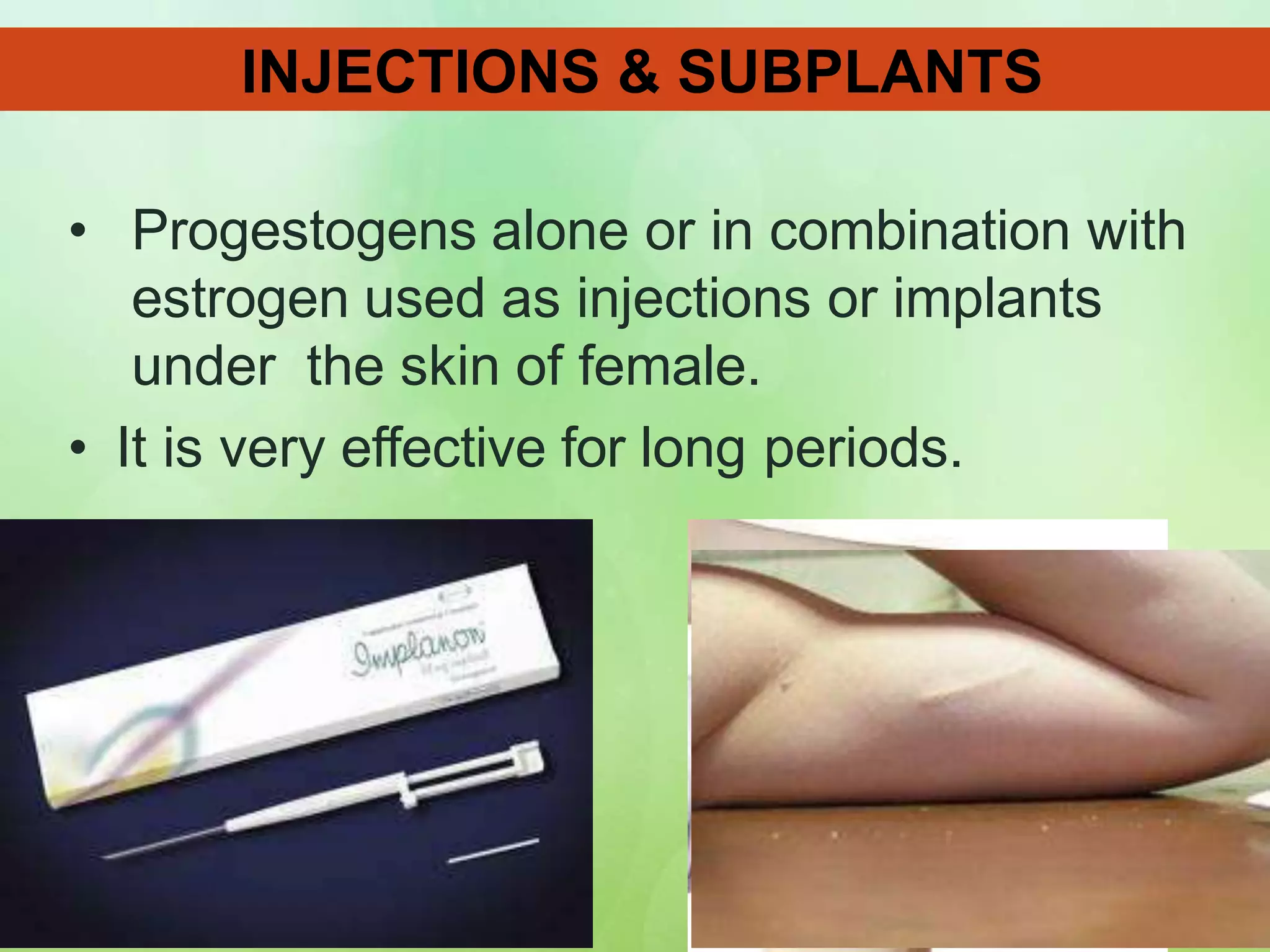
• Progestogens alone or in combination with
estrogen used as injections or implants
under the skin of female.
• It is very effective for long periods.
INJECTIONS & SUBPLANTS
• These methods are used within 72 hours of
coitus, casual in unprotected intercourse.
• Administration of progestogens or
progestogen- estrogen combination.
EMERGENCY CONTRACEPTIVES
• It is also called as
sterilization method
advised to both male and
female partner.
• It is permanent method
to prevent pregnancy.
• Sterilization surgery in
male is called
‘vasectomy,
• In vasectomy, a small part
of the vas deferens is
SURGICAL METHOD
• Sterilization
surgery in
female is called
‘Tubectomy’
• In Tubectomy a
small part of the
fallopian tube is
removed or tied
up.

Class -XII chapter - 4 Reproductive Health

  • 1.
  • 2.
    REPRODUCTIVE HEALTH • Itis the state of physical, emotional, behavioral and social fitness for leading a reproductive life. • According to WHO, A total well being in all apects of reproduction. • To achieve this family planning” initiated in 1951. • REPRODUCTIVE HEALTH – PROBLEM AND STRATEGIES: • In Indian culture discussing about knowledge of sex and reproductive health is
  • 3.
    • Early marriageas soon as girls attains puberty. • The teen age girl is not fit to bear foetus. • After marriage, the career of lady is blocked in lot of family. • Maternal and infant mortality rate are high in early marriages. • There is little knowledge about personal hygiene to avoid sexually transmitted diseases.
  • 4.
    • Number ofprogram are lanched under reproductive and child health care (RCH). • Awareness programme are conducted for both male and female to lead healthy reproductive life. • Awareness creating about fertility regulating method. • Awareness creating about personal hygiene, • Preventing and Protecting against STRATIGIES
  • 5.
    • The increasein size and growth of human population is called population explosion. • The reason for high population explosion are, 1. Decline in death rate. 2. Longer life span. 3. Decline in maternal mortality rate. 4. Decline in infant mortality rate. POPULATION EXPLOSION AND BIRTH CONTROL:
  • 6.
    • Family welfareand family planning programs comes forward to avoid uncontrolled human population explosion. • The contraception is the main aim of the birth control. • Prevention of conception or fertilization of ovum during sexual inter course is called contraception. The different types of contraception are, • Natural method. • Barrier method. • Intra uterine device [IUD’s]. • Oral contraception. • Injection and implantation. BIRTH CONTROL
  • 8.
    • Natural methods: •It work on the principle of avoiding chances of ovum and sperms meeting. • Periodic abstinence: • Is a method in which couple avoid or abstain coitus form day 10 to 17 of the menstrual cycle when ovulation could be expected. • Withdrawal or coitus interruption: • In this method male partner withdraws his penis from the vagina just before ejaculation to avoid insemination.
  • 9.
    Similar concept in COITUSINTRUPTUS PERIODIC ABSISTENCE
  • 10.
    • It causedue to intense lactation for about six months after parturition. • No menstruation occurs during lactation period. Hence chance of fertilization is abent. LACTATIONAL AMENORRHEA PHYSICAL CONTRACEPTIVES OR BARRIER METHODS This method prevents contact of sperm and ovum by barrier. Such methods available both for male and female.
  • 11.
    • Condom arebarriers made of thin rubber latex sheath. • The male condom is used to cover the penis. It is used just before coitus so that semen not entered into the female reproductive tract. • It also prevents AIDS and STDs. • The female condoms are Diaphragm, cervical caps and vaults made of rubber latex. • These are inserted into the female reproductive tract to cover the cervix. CONDOMS
  • 12.
    • Intra UterineDevices (IUDs ): • These devices are only used by female. doctor or by expert nurses insert these into the uterus through vagina. • Different types of IUDs are, • Non-medicated IUDs e.g. Lippes loop: Acts as barrier. • Copper releasing IUDs (CuT, Cu7, Multiload 375): • Cu ion released suppresses sperm
  • 13.
    • Hormone releasing IUDs (Progestasert,LNG-20): • make the uterus unsuitable for implantation and the cervix hostile to the sperm.
  • 14.
    • Oral contraceptives:This methods is for female only. • These are used in the form of tablets popularly called pills. • It contain progestogens or progestogen- estrogen. Combination. CHEMICAL CONTRACEPTIVES
  • 15.
    • Pills haveto be taken daily for a period of 21 days started within first five days of menstruation. • Saheli- a non steroidal preparation used as oral contraceptive pills.
  • 16.
    • Progestogens aloneor in combination with estrogen used as injections or implants under the skin of female. • It is very effective for long periods. INJECTIONS & SUBPLANTS
  • 17.
    • These methodsare used within 72 hours of coitus, casual in unprotected intercourse. • Administration of progestogens or progestogen- estrogen combination. EMERGENCY CONTRACEPTIVES
  • 18.
    • It isalso called as sterilization method advised to both male and female partner. • It is permanent method to prevent pregnancy. • Sterilization surgery in male is called ‘vasectomy, • In vasectomy, a small part of the vas deferens is SURGICAL METHOD
  • 19.
    • Sterilization surgery in femaleis called ‘Tubectomy’ • In Tubectomy a small part of the fallopian tube is removed or tied up.